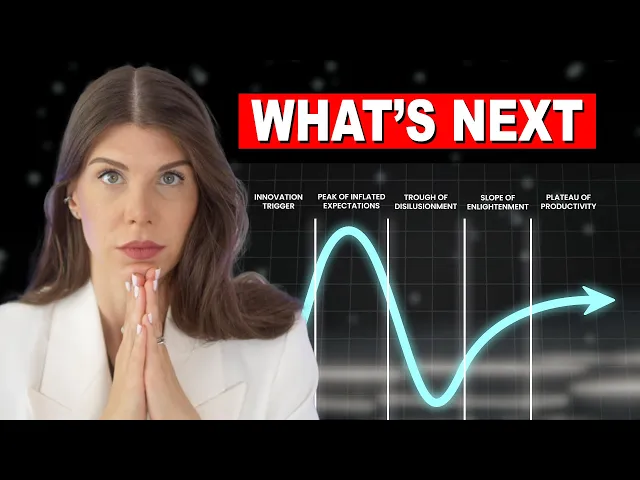
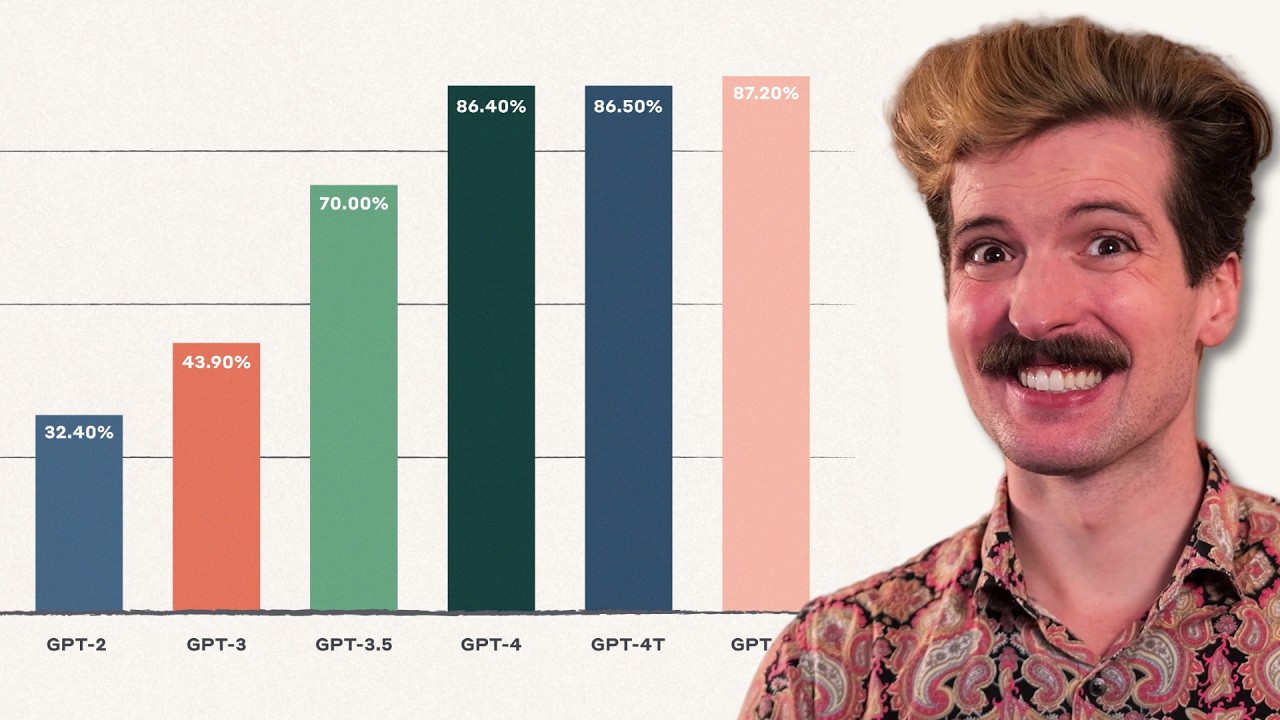
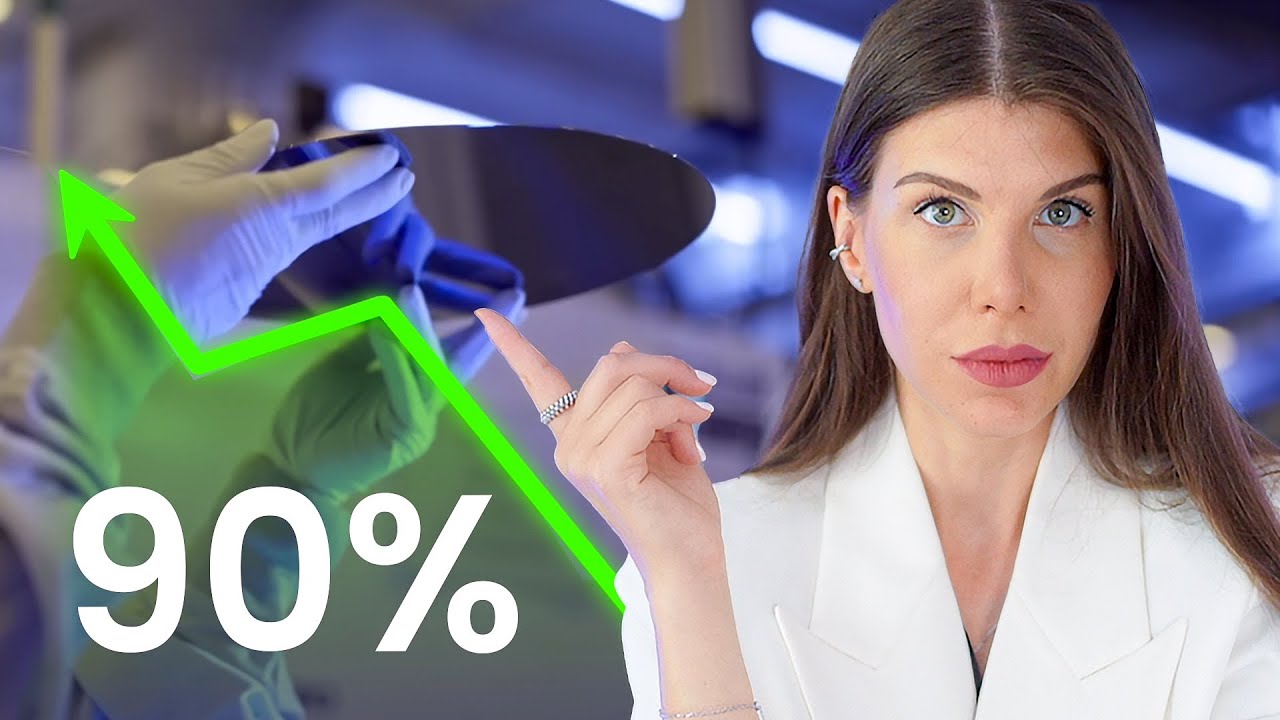
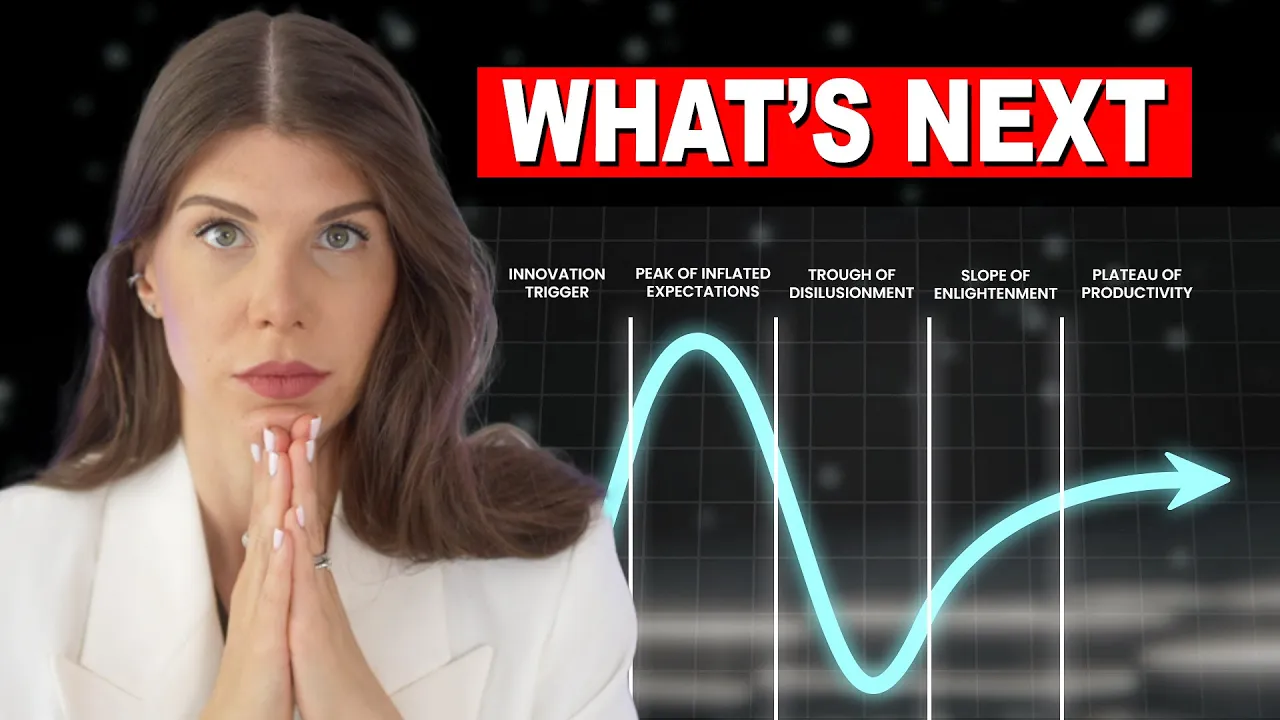
this video is sponsored by Babbel everyone is talking about AI now and there are mostly two points of view some researchers believe that we will achieve Artificial General Intelligence by 2028 well other are skeptical and believe that we might be reaching some sort of a plateau very soon this is the new AI hype cycle created by Gartner and when I first looked at it I was like wow this is really interesting here they basically plot the hype around emerging technologies and how it progresses over time for example some emerging technologies like Quantum AI or AGI are still in this first phase called Innovation Trigger one of the biggest trends of the last years Embodied AI is also here like the new Figure O2 robot that gives Open AI language model a body typically at this phase the excitement is rising and the trick is in the beginning is really easy to generate this "wow effect" but what comes after that then there is a point at which some of the technologies reach a peak of expectations when everyone around and the media is talking about this technology and it receives substantial investments for example right now it's happening with Foundational Models where we have top four companies with the most powerful models like Google Meta Anthropic and Open AI so we can say that it's at the peak of expectations and AI Technologies are moving very fast through this cycle and it's giving a huge huge boost to other technologies like AI hardware and we will talk about this trend in more details in a moment but what often happens afterwards right after the peak is that technology enters the valley of disappointment now if you listen to guys like Sam Altman and others according to them we are at this exponential curve for AI but are we really if we take Moore's law for example which is basically an observation that the number of transistors in a silicon chip doubles roughly every 2 years for the same price we used to see it as a line on a logarithmic scale right but when we look at it on a linear scale we truly start to appreciate the power of exponents what's actually happens on this plot that they getting more computing power along the way but when we go back to AI technology and make a reality check we are not there yet if we look at this figure by Anthropic one thing is obvious here we are reaching a sort of a plateau you know the improvement from from GPT3 to GPT4 was huge and it's now getting smaller and smaller even though we invest more and more effort money and GPU Computing there and then if we look at it as performance vs computing power it's almost like we are putting in exponentially more computing power and getting linear performance improvements so that's a really bad sign current industry estimates indicate that the computing power for AI tasks will increase 100 to 1000 times over the next 5 years we see lots of new AI chip startups appearing and raising huge investment rounds like Groq who just closed a $640 million investment round and Cerebras is also doing great but there is one problem so what I learned from many years in the chip design R&D that hardware implementation requires lots of hard choices especially now because now there are two major contradicting trends in the AI Hardware from one point of view there is a very strong drive towards building AI accelerators as general as possible but from the other point of you there is also very strong push for efficiency and the way to make AI training more efficient is to use specialized AI chips socalled AI ASICs Application Specific Integrated Circuits where the most of the Silicon area is devoted to the kind of hardcoded operations and such designs mostly ignore many other operations which are typically done by a CPU or GPU and this is one of the biggest trends in the Silicon space at the moment the problem is it's really hard to make predictions especially about the future and according to Yann LeCun "If you are interested in building the next generation of AI systems don't work on LLMs" and nobody knows when the next AI algorithm will come out which totally change the way we do things so in case of ASICs there are huge risks that that you might be missing the next wave I've talked about this in depth in my previous videos so if you want to stay up to date with the most important trends in technology subscribe to the channel for example this is exactly what happened to the startup Graphcore which has been recently acquired they went all in too early on the wrong technology on convolutional neural networks and this is exactly what Etched startup is doing right now going all in in transformers but not that type let me know what you think in the comments if you've been watching me for a while you know that my background is in engineering I worked in microchip R&D for the last 7-8 years I don't think I've mentioned it on the channel yet but this fall I will be starting an MBA in Italy and at the moment I speak fluent German and fluent English but my level of Italian is like at "Ciao ragazzi! " thanks to today's sponsor Babble I've already made quite some progress with Italian Babbel is one of the top language learning apps in the world and what I like about it that it's designed to prepare you for the real world situations for example after using Babbel for 3 weeks I can already manage something like this "Mi chiamo Anastasiia. Sono innamorata della tecnologia e del business.
Piacere di conoscerti. " so I know many Italians are watching me please let me know how well I did with that and also let me know which languages you would like to learn and why with Babbel you can learn 14 languages including German Spanish French and Italian among others click on my link below and save up to 60% on your subscription today thank you Babbel for sponsoring this video so Foundational Models and AI Hardware are clearly at the peak in the second season of Gartner's AI cycle but as a chart indicates what often happens afterwards is disillusionment that's what we all notice right now happening with the generative AI so more specialized models which are used to create new type of content like images text and recently videos have you noticed how everyone become less and less excited about them recently the thing is that there was quite a lot of value promised and now we hear more and more how there is little value being generated some researchers from MIT estimated that just 5% of all the tasks will be affected and Gen Ai will improve the productivity just by 0. 5% and what's interesting that the technology itself is getting better and better every single day but people are getting even more disappointed because it seems that it has little to do with the technology itself it's more to do with the perception of the technology by people and by the market sometime ago Goldman Sachs estimated that with Generative AI we would be able to increase worker productivity by about 9% and could potentially automate as much as 25% of all occupations over the next decade now one of the recent more pessimistic outlooks suggests that gen AI will improve productivity by just 1.