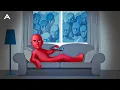
In the 1870s, a young woman named Emily rarely left her home, spending most of her time isolated. People assumed she was a depressed loner who had intentionally shut herself off from the world for no reason. But when she died, her younger sister discovered nearly 1,800 poems hidden in her room.
A poems that would change literature forever. That woman was Emily Dickinson. And while the world saw her as a recluse, she wasn't alone at all.
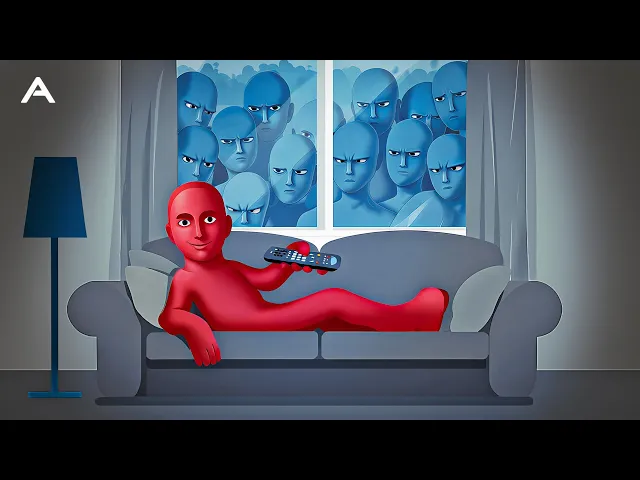
She had built an entire universe within the four walls of her own home. Stories like hers challenge the idea that a life spent in isolation is automatically a wasted life. They make you pause and ask, "Well, what if staying indoors isn't a symptom of something broken, but a response to a world that feels too loud, too fast, and too demanding?
And if that's true, then the real question isn't why they never leave. It's what they're escaping from and what they're building instead. " This is the psychology of people who never leave home.
Emily Dickinson's withdrawal was not the first of its kind. Throughout history, you'll always find people who step away from society on purpose. Monks isolated themselves in monasteries, not because they were broken, but because they believed that solitude could lead to enlightenment.
And some of history's greatest thinkers did something similar. Take Isaac Newton for example. During the plagues, he left Cambridge and returned to his family's manor.
Far from the noise and distractions of the city. And it was in that isolation that he made some of the biggest breakthroughs in human history. He developed calculus and began forming the laws of motion.
People like this have always existed on the edges of society, retreating from the world for spiritual or intellectual reasons. And for most of history, that kind of isolation was seen as meaningful, even admirable. But sadly, today isolation doesn't look like enlightenment.
And that's because we live in a fundamentally different world. Back then, the world was more connected than we imagine. Not in the modern sense through phones or Wi-Fi, but through necessity.
Communities were smaller, but daily life was a lot more communal. You worked near people. You lived near people.
You depended on these people. Being social wasn't just a personality trait. It was almost necessary for survival.
So, when someone chose isolation, it felt meaningful. a monk retreating into a monastery, a scholar disappearing into their study, a poet locking herself away in her bedroom. It was a departure from the ordinary.
And because of that, it looked almost sacred. But today, solitude isn't rare anymore. Selfisolation is less mysterious because it's everywhere.
Monasteries have been replaced by studio apartments. And instead of isolation being a dramatic choice, it's starting to feel like the default setting. It's like the world is evolving past its social origins and drifting into an era of individuality.
And nowhere is this more visible than in Japan. Right now, a new social archetype has been rising fast. The Hiki Kumori.
Uh, Hiki Kumori is a person who withdraws from society, often for years, choosing to live almost entirely in a single room. Technically, there are cases where they actually live in a family home, but it's not like what you'd expect. Even their family members barely get to interact with them except for when they're providing meals or other essential needs.
Japan's government officially acknowledges the issue, stating that to qualify as a Hiki Kumori, an individual needs to experience this total rejection of outsiders for at least 6 months. Because whatever a Hikamorei is, it can't be the same kind of isolation as Newton or the monks. This isn't a retreat for enlightenment.
This is a retreat for survival. And that's what makes this so unsettling. Yes, there might have been a time we needed more out ofthe-box thinkers, but now if you stop and take it all in, it feels like we are creating millions of boxes unknowingly.
Each new one is totally different from the last. To some, individual boxes are the only way to make sense of the world today. To others, we need to recognize and let each other in, even if it means that we have to share that box.
But one thing that we can all agree on is that the world isn't what it once was. And the strangest part is how sudden this feels. Even though society has been slowly pushing people into isolation for years by misunderstanding them, stereotyping them, and making assumptions about what's really happening behind the door.
Why don't you just go out more? This question feels less like an invitation to explore the outdoors and more like a reminder that outside is just another box that you don't really belong in. When someone asks that, you probably get a sinking feeling in your stomach.
One that says, "Oh, here we go again. " Instead of diving into a back and forth, you say that you just love to stay indoors and you hope you hope it's enough to just end the conversation. And sometimes it is.
Other times people pry and then you're dragged into a little dance of suggestions, activities, and other things that might get you to be normal. And for the most part, it's no big deal. But sometimes these conversations really stay with you.
You reflect on them, but ultimately nothing really changes. The world just isn't what it once was. While this phenomenon is widespread, there are various reasons driving the decision to selfisolate.
We'll explore the most common ones over the course of this episode. But before that, I need to point out the most glaring red flag in this discussion. You see, the biggest misconception about people who prefer to stay indoors is that they're too weak to face the world.
And I want to say that couldn't be further from reality. Take this for example. In Sicily, a mob boss called Binu ran the mafia from 1993 until 2006.
Binu was not like your typical mafia boss for one unexpected reason. Many of his top associates never actually saw his face. He was nicknamed the ghost, as he managed his entire empire in isolation, never using a telephone or showing off wealth.
Instead, he communicated through tiny handwritten notes that were delivered by a small, trusted network of associates. Unlike what stereotypes indicate, isolation doesn't automatically imply a lack of agency or influence on the world. Compared to everyone else, there's something different going on in the psyche of individuals that willingly retreat.
To better grasp what that is, we need to understand how the outside became dangerous in the first place. Think about the last time you felt comfortable going outdoors. For most of us, we instantly think of childhood where you played with friends and came home without constant supervision.
To some, this brighteyed reality began to crack after a specific incident. Perhaps it was a bully or a snarky remark about your appearance. But that incident did one thing.
It seeped deep within you and began to create a domino effect, one that you can't even begin to attribute to a singular childhood moment. That's because it is a slow fracture that builds on itself until it feels like a crack that was always present. The human mind is a spectacular archavist but a terrible librarian.
Here's what I mean. An archive requires additional external context to create meaning. But a library simply preserves the entire body of work within its pages.
Because of its archival nature, the mind files every moment of shame and every incident on the outside is evidence of danger. And that's the problem. Even some incidents that might count as a totally different experience within a different context may register in your mind as something that's bad.
Have you ever interacted with a rude cashier? Perhaps they made a negative remark in your presence. In that instance, you might have felt a little sad about the interaction and then you proceeded to move on.
But that's not easy for some. There are times when this bad interaction feels less like a random incident and more like a confirmation that everyone outside is terrible. And once this happens along with a few other bad experiences, the evidence piles up really quickly.
Then it begins to ruin your confidence. Simple interactions become poisoned, and you start to think twice about everything. After a while, you find yourself avoiding that specific store in anticipation of a cashier you had one bad experience with.
The inner frustration only gets worse as more incidents occur. Maybe you wave to someone you knew across the street and they ignored you. At this point, you're playing everything up in your head to be a lot worse than it really is.
Soon enough, you start to feel like nothing good can come from stepping outside your home. What happens next is subtle but damaging. A subconscious no starts to emerge from within.
It's like the pre-exhaustion that hits you when a friend asks to go out for drinks. You're not being lazy. Life is just starting to seem a lot more hostile than ever.
So rather than dealing with the disappointment of feeling awkward at the bar, you turn down the invitation. Our digital world makes it even easier to give up on the outdoors. Why bother with a neighborhood that feels hostile when you could stay indoors and socialize online?
And slowly but surely, this creates a barrier between you and the real world. The brain doesn't need logic to influence a shift in your behavior. It needs patterns.
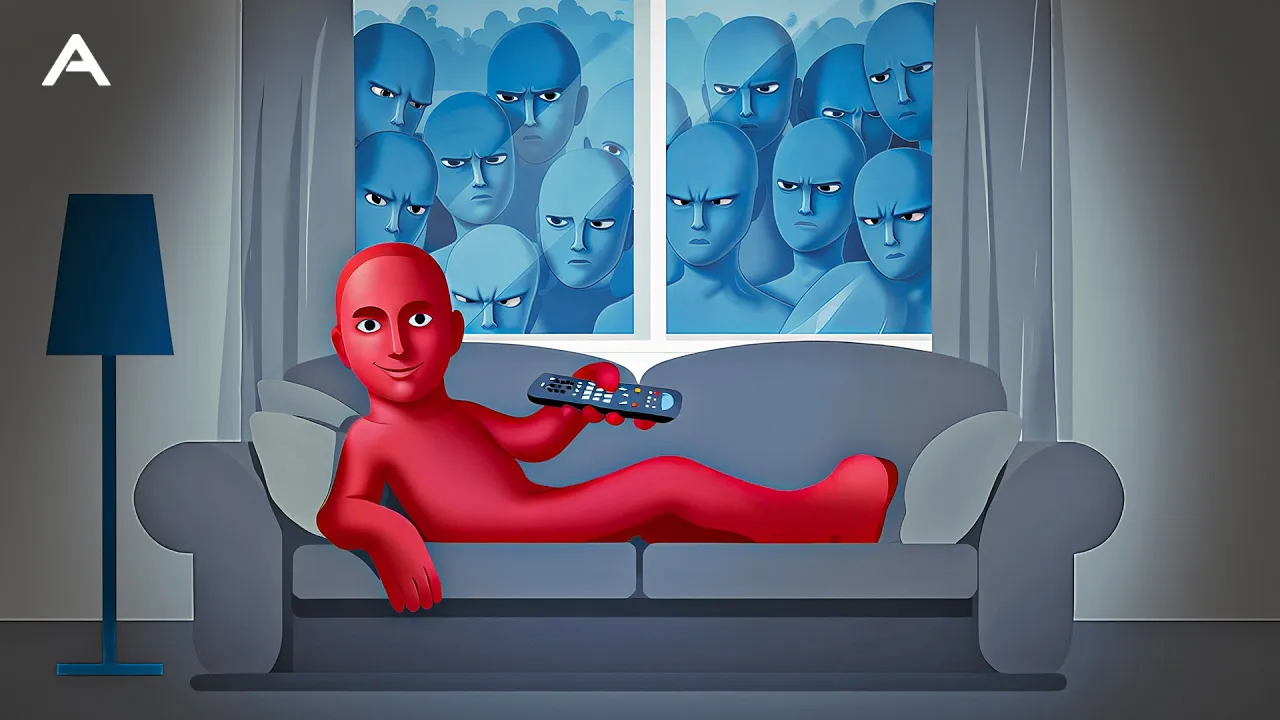
Once a pattern is established subconsciously, you begin to justify every decision you make. So, by staying indoors, you manage to build a shield of armor around yourself. To the selfisolated, home is a safe haven from the metaphorical flying knives waiting to poke at you.
So, this sanctuary prevents any obvious harm from coming your way, but its primary function isn't peacekeeping. It's more like a quarantine of the mind. Instead of creating practical ways to keep you safe, it totally shuts you away from the outside.
To understand it better, psychologists have a clear term for this. Avoidance. Avoidance feels like a conscious choice to a person who never leaves their home.
For them, it isn't a symptom of a bigger problem at all. It just feels like the single best route to survival. But the truth isn't ever that simple.
It's best to picture avoidance as a welloiled machine ready to protect you from subconscious harm. And here's how the avoidance machine fires itself up. First comes the alarm and this starts in the amygdala.
The amygdala is a major part of the brain responsible for processing emotions, especially emotions tied to memories. It's like your brain's guardian, responsible for remembering every past sting or jolt of fear. Its job is to keep you safe.
And the primary way it does that is through reinforcement. Every time you avoid crowded streets, social gatherings, or simple trips to the store, you feel a wave of relief. From there, the amygdala gets a powerful message.
Well, good. That was a threat, and your avoidance saved you. So, its role isn't just to remember the danger.
It's also responsible for strengthening your default response to that danger. Therefore, the world outside starts to feel like a war zone in your mind. Next, there's the surge of relief that comes from avoidant behavior.
As bad as it is, it's such a satisfying reward. However, you should know that it's also a chemical prize your brain dispenses for staying put. Dopamine is often mislabeled as just the pleasure chemical in our brains, but it's also worth associating it with reinforcement.
As a reinforcement chemical, it tends to say, "Do that again. " So, you'll naturally begin to enjoy taking the easy path of avoidance compared to facing things head-on. For most people who stay indoors due to avoidance alone, their home eventually transforms into a cage.
One that also plays the role of reward chamber. In its final form, decay happens. And not a physical decay, but a psychological decay.
Your prefrontal cortex begins to weaken. And that's a serious problem. After all, it's responsible for long-term benefits.
You know how going to the gym kind of makes your muscles hurt, but you still do it because it's good for you? That's all thanks to the preffrontal cortex. But if you've developed avoidance to a deeper extent, your prefrontal cortex starts to get quieter.
Well, soon enough, even your brain gets silent about delayed gratification. At this stage, nothing in you argues for gradual exposure or a balanced life anymore. the avoidance machine's logic wins and you end up seeing it as the default way of life.
The problem here is that it creates a self-perpetuating feedback loop. Take this scenario for example. While a lazy person might wake up late and arrive late to a lecture consistently, an avoidant person experiences it very differently.
Uh let's say you miss an 8:00 a. m. lecture taught by a very strict professor.
It happens to everyone once in a while, but as an avoidant, you probably dread the idea of getting called out for not showing up to class, so you skip class again. The following week, you start to feel worried because you've skipped twice now. A part of you wants to come clean and fix your slate, but another voice in your head compels you to skip for a third time to avoid getting in trouble.
And so, you skip a few more times. Each new moment builds up what was initially a little mistake, and soon enough you realize that you've missed an entire semester, and the repercussions then start to really kick in. At the worst possible end of this sequence of skips, you might end up not even finishing college.
This sounds like an exaggeration, but avoidance can spiral beyond the control of many people. Initially, yeah, you made a genuine mistake, but your avoidant mind exaggerated what the consequences could look like, so you doubled down by avoiding them. But by doing that, you actually end up creating the terrible consequences that you initially feared.
This self-perpetuating feedback loop is also known as the anxiety avoidance cycle. According to research, you can actually still have a heightened amydala response even when threats are consistently avoided. The direct result of this fact is that people stuck in avoidance cycles are still at risk of developing clinical disorders.
Some of the most common ones include social anxiety disorder or SAD. There's also PTSD and of course depression. The problem with relying on avoidance is that your behavior eventually turns simple worries into chronic clinical issues.
So far, what we've talked about is the more common route for people who never leave their home. However, that's not what it's like for everyone. For some, the core conflict is not with the world itself.
It's with a relentless invisible clock that they cannot seem to ignore. These people don't fear the grocery store or awkward interactions or parties. Instead, they fear a countdown that begins the moment they cross the front door.
Internally, their body sets a non-negotiable curfew. They can be out communicating with people in exchanging genuine interactions, but deep down they are only a guest to the outside world. After that internal timer runs out, their welcome wears thinner with every passing minute.
It's very, very simple and very easy to use the word introvert to describe such people. But this behavior is linked to a bunch of conditions that make staying indoors a coping mechanism like agorophobia. It's a fear of situations where escape might be difficult.
And that's not just limited to physical escape. I mean, let's take stadiums for example. If you're watching a football game in a soldout arena, a part of you rationally fears an emergency and the possibility of a stampede.
It's terrifying. Agorophobic people are different, though. Their condition is more linked to feelings of being trapped, embarrassed, or ashamed.
People that struggle with it might find themselves only ever feeling like a real person in the comfort of their own home. Outside, it's like they're in manual mode. They are constantly too aware to let life play out on its own.
In extreme cases, they might even need to rehearse common social interactions prior to stepping out. The constant panic surrounding their perceived helplessness is hard for anyone else to understand. But but if you look into how it tends to begin, you might sympathize with them a little better.
You see, agorophobia often emerges from extremely stressful events, especially things like a divorce, losing a loved one, or losing your job. When these incidents occur, a major feeling that plays out is helplessness. And where can one even begin?
Without any anchors tying them to a sense of control, that's where agorophobia begins to settle in. So if a person's phobia is worsened by factors they might run into outdoors, then staying indoors is quite literally a lifeline for safety. There are many other conditions and factors driving a desire to stay indoors, especially when there's a chance that exposure might trigger negative effects.
When you factor in things like OCD, Tourette's, and various forms of overstimulation, indoor life starts to feel like the best solution to many. So, what about people that aren't struggling with mental health conditions? There's no doctor's note hindering them from engaging with life beyond their home.
If that's the case, then what gives? Earlier, we illustrated the value of an inner world designed within your home, a place where you can create a unique kind of fulfillment. From this angle, Emily Dickinson's hidden poems highlight a beauty in isolation that the world overlooks.
Even though she rejected society's expectations, she still found her fulfillment internally. Unlike Emily, most isolated people don't have a strong idea of what their version of happiness looks like. Instead, they just realize that home is their only safe zone.
It helps to look at life like a Shakespearean play. If you open your mind up, it's not far-fetched to argue that every social interaction comes with a predetermined script. Take a moment to think about it.
How are you? Well, I'm fine. To some people, wearing the default costumes of human interaction feels like chipping away at every crumb of individuality.
Rehearsing your lines, polite greetings, small talk, the whole thing just feels like an act. Pretending like you're everyone else, it's exhausting. Every errand or moment spent outside is experienced with so much awareness.
And as someone that gets drained easily, you start to weigh the cost. It'll take me 3 hours of authentic energy to perform acting normal for an hour. Carl Young once described the persona as a kind of mask designed on the one hand to make a definitive impression upon others and on the other to conceal the true nature of the individual.
People who never leave their homes are still very capable of developing close bonds or enjoying a fun gathering. It's just that their social battery operates on a different set of rules. And there are many reasons driving this distinction, but it majorly comes down to a high degree of internal self-awareness.
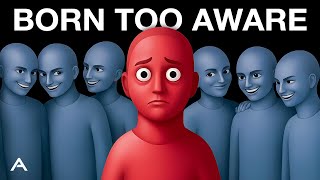
When a mind is extremely aware of the difference between how it feels and how it's expected to behave, it tends to lean into authenticity more than serving those expectations. Their isolation is a philosophical stance, not a psychological one. So they choose to withdraw not from people but from the inauthentic roles they have to play when with those people.
Unfortunately, the world sees this behavior as a rejection of its tribal conventions. So most times selfisolated people never get to experience any lasting connections until they go through the consequences of being seen as the weirdest person in the room. But even revealing your true self can be risky.
Before she was Lady Gaga, Stefani Germanata was specifically targeted by bullies for her perceived weirdness and musical ambitions. Her peers even created a private Facebook group titled Stefani Germanata, You'll Never Be Famous. Jokes on them.
Naturally, she selfisolated and focused on her craft as a means of survival. It's an invisible tragedy when you have so much to say and offer, but the cost of showing it is the very energy that gets mocked by the outside. Some isolated people aren't hiding from life.
They're preserving the most vital parts of themselves for when the curtains of performance finally fall. Not everyone is lucky enough to rise above the problems that come with being different. There's a sinister consequence that creeps in when you embrace the isolated lifestyle.
Soon enough, staying at home transitions from a choice into a necessity for you. Your inner monologue goes from, "I don't go out to," I am someone who doesn't belong out there. Eventually, skipping parties, declining invitations, and avoiding errands, they all compound.
The home stays a sanctuary, but it also transforms into a mirror that shifts your identity. Instead of possessing desires in the outside world, you think of everything from a place of avoidance above all else. So leaving the house begins to feel like leaving yourself behind.
Do you ever wonder why so many people are opting to live this way? Was it co did staying indoors involuntarily make us realize that the outside world is overrated? Or could it have been something else entirely?
Well, truth is co didn't create this new reality. It only held up a mirror that showed us just how fragmented our world has been all along. Work from home exposed the obsolete nature of most offices.
Delivery services revealed a level of convenience that only exists when we aren't forced to step outside for survival. Entertainment transitioned into streaming services, so cinemas now look like a relic. Slowly, we realized that every pillar of public life was never that necessary.
And that's when we fell into a a carelessly planned digitized reality, trading a normal life for one that is entirely accessible from a smartphone. Take a second to think about it. Back in the day, people had to wait for the circus to roll into town to get any large-scale entertainment.
Well, now the circus is bare for all to see whenever we open up a social media app. Although the pandemic is gone now, the outdoors reputation has never really recovered. I think it would be incomplete to finish this video only talking about the individual because the truth is there are a lot of people who would love to go outside but sincerely just have nowhere to go.
For most of us after college, you suddenly find yourself thrown into a world that isn't designed for your well-being. At college or university, the experience is a smooth blend between education and socializing. There's always an event or a club that can keep you engaged.
Many people found their lifelong friends and partners at college for a reason. The environment is easily a top choice for anyone engaging in self-discovery. After college though, your options shrink completely and that's when you realize that campuses are walled off from the rest of society and the real world is not nearly as welcoming.
This hostile reality is a lot to take in. So, you make a little bit of effort at first, and that's when the problems really start to reveal themselves. In the United States, walkable cities are quickly becoming unaffordable for the average Joe.
So, people don't even get to explore their local communities anymore. It's like everywhere you go, there's some ridiculous monument under construction or or poorly maintained community areas. The world used to be a place with neutral and accessible grounds for public life.
We didn't need to find online communities to feel like we belonged. Now, we rarely get to experience the joys of simply being among others without an agenda. It's especially a tragedy for adults who rarely get to meet their peers.
In the few moments where a bunch of adults are in the same location, it's just awful timing. Nobody wants to strike up a conversation during a long commute to work. It's an uncomfortable and exhausting time to interact, especially when you have other things on your mind.
The third space served as a way to ease the pressure of performance in life. Work demands a certain image from you. Home represents a place to exist without a persona.
But the middle ground is something we find ourselves lacking now. These spaces allowed us to linger, to find inspiration, to embrace spontaneity. Are there third spaces that still exist?
Yes. Are they practical? Rarely.
Take the United States for example. Park benches are designed to be uncomfortable. Libraries are underfunded.
If anything, expensive luxury apartments are the only places with remnants of what was once available to the public. Things like a lounge and a communal pool, but then nobody ever uses it because you've spent all your time working to be able to afford to live in those places. Let's compare this to Europe and you immediately find an undeniable contrast.
In Europe, third spaces are a part of the architecture. You'll find public parks and local coffee shops that have stood the test of time. You might even get to sip a cup of tea in a local spot where five generations have kept it running smoothly.
Cities are walkable. Transport is designed to connect people in ways that don't feel alarming. Next to the United States and Canada, there's an obvious difference.
In one, missing the bus could mean ruining the rest of your day. Just think about it for a second. In the other, you have at least three cheap alternatives for getting to your location.
Now, Asia is a complex case, specifically East Asia. These societies have mastered the art of third spaces. Yet, life comes with so much societal pressure to perform in these public spaces that it sort of cancels out the benefits.
Combine that with an astronomical demand of a brutal work culture, and it's obvious why their third spaces fail to provide the relaxation that they were designed to promote. Comparing what third spaces are like across the globe reveals something really interesting to me. Rebuilding third spaces doesn't come down to a lack of real estate.
The real issue is that we've redefined life to mean an individualistic experience. So, we choose to abandon shared responsibilities and carve a way forward completely solo. When you sustain the solo lifestyle long enough, you realize that the true cost is silent.
Your knees slowly stiffen. Your spine curves beyond what is considered healthy. Slowly but surely, the world shrinks to the path between your bed, your desk, and your door.
Necessary movements that once structured a healthy lifestyle become abandoned. There's no walk to the bus or a climb up the office stairs or a quick errand around the corner and that's all gone. The daily commute was your only consistent walk.
Remove the reason and that walk disappears. As the world outside shrinks, so too does your sense of time. Days blur into nights, weeks vanish completely unremarked, and months slip away with no audience or ceremony.
Without any errands, walks, or social anchors, the calendar falls apart. You might even begin to experience life as a loop where yesterday is today and tomorrow might as well be next year. Living like this only amplifies your feelings of isolation.
In turn, the idea of venturing out into the world feels foreign. Imagine experiencing a life outside of time, then abruptly engaging with routines. It would seem almost alien to attempt.
We're not just dealing with a psychological choice. For many, they never even realized it was a choice to begin with. We've built a society that perfectly accommodates the retreat.
And as a result, we have new concerns to address like needs. A neat is a short word for those not in education, employment, or training. It sounds like an unfulfilling way to live, but becoming a neat isn't something people work towards.
Life just kind of happens to you. You'll often find that a neat stopped their education after high school. Maybe their grades weren't good enough for a decent college or the riskto-reward ratio of higher education seemed too uncertain to pursue.
Either way, they end up just getting by for a while. Maybe they get a job or rely on their parents, but inevitably something in them just can't find a good enough reason for trying so hard to keep up. And sure, it's easy to imagine why.
The news cycle is always so negative, and the whole world seems like a landmine of problems. So, of course, neats stay indoors, relying entirely on their family, friends, or social support programs for survival. They are a direct contrast to the hustle culture mentality that's so prevalent today.
Both exist on opposite ends of a spectrum that clearly doesn't have a sustainable middle ground. The world where you could get one job to support your family is totally gone. Same with the world where a college degree can earn you a fulfilling life immediately.
Not all neats will cite these problems as their reasons for embracing the lifestyle. But as a response to the current climate, a neat's lifestyle directly correlates with the uncertainty of a world that has left an entire generation behind. We've built a society that perfectly accommodates the retreat.
Inevitably, we are also seeing the end point of a society with needs. Japan's Hiki Kumori from earlier have experienced the complete extent of withdrawal. Their exit from society isn't measured in days, but in months and years.
These are individuals living in rooms that are completely devoid of any re-entering society. Hikamorei aren't always fully reliant on friends and family. Some of them have jobs and make a stable living, but their withdrawal is more like an ideological protest instead of a necessity.
Naturally, Neats and Hikamorei share a high chance of anxiety and depression. And as much as it looks like a personal failure on the part of the affected individual, the frequency of these issues shows otherwise. When you put it into perspective, it's the natural end point of living in a system that erases a shared physical world.
When we turn on our smartphones, we technically have the whole world at our fingertips. Yet, we collectively understand that it's not quite the same as physical interaction. At first glance, knowing someone online rarely offers depth compared to the physical friendships that we build over a long period of time.
But what if we've gotten it backwards? What if the screen was never just an escape from connection? What if it was the first and only path to it?
You see, there are entire generations of people that have only ever found real connection from the interactions they made online. Consider niche communities, for example. If you are the only one that cares about wood carving in your town, well, online wood carving communities might feel a lot more genuine to you, especially if you're able to find relatable goals, problems, and tips.
Shared communities from the digital world are often underestimated. For someone whose social anxiety is paralyzing, an online community is a social training ground, a place where they get to practice being a person without the immediate consequences of embarrassment or awkward stairs. Instead, they get to experience what it's like to have a voice, a role, and stakes that genuinely matter to them.
Discord servers get a lot of bad rep, and in some cases, rightfully so. But these niche forums serve as sanctuaries from a world that otherwise feels alienating. In a world that rewards broad, generic charm, the digital realm has places to embrace self-discovery through your highs and lows.
Being true to yourself is something everyone wants on paper, I think, but it usually means looking really weird to everyone else. The person isolated in their home isn't choosing between reality and a fantasy. They are only navigating between two different types of reality.
The first is an endless demanding physical experience and the second is selfisolation masked as independence. So the choice isn't between living in the real world and living in the fake world. It's a question of where and under whose terms life is allowed to happen.
Although it has its downsides, there is a kind of solitude that enlarges your perspective. At the start of this video, we introduced Emily Dickinson and her interesting approach to the limited time we have here on this planet. Her take on solitude was one of highly internal self-presence.
Rather than escaping from reality, she redirected her energy into a richer, more complex inner world. The solitude of a higher internal world creates a special kind of home. One where unbroken thoughts begin to evolve into art that keeps your soul satisfied.
When the noise of the crowd fully drowns out, you can finally hear the quiet song of your own mind, guiding your life to a place that finally feels authentic. Emily Dickinson didn't write nearly 1,800 poems in spite of her solitude. It was because of her solitude that she wrote them.
Her room became an observatory and a fertile ground for ideas. The person who can find meaning in the quiet is not avoiding life. They are only stepping away from what society says a fulfilling life should look like.
But we must go back to a world where this is a pursuit limited for those in search of a higher calling and not the default. One of the best things about staying home is that you have all the time in the world to learn new skills, improve yourself, and become a better person overall. And the best way I've found to do that is through Brilliant, the sponsor of today's episode.
Brilliant is one of the most effective ways to learn online. And it turns time spent at home from something that might just be boring into something that's genuinely exciting while still being productive. Instead of passive lectures or endless videos, Brilliant teaches through active problem solving.
It's a learning method research consistently shows leads to deeper understanding. You're constantly engaging, you're testing ideas, and you're having those moments where things finally click. The platform strikes a great balance between interactive problems, motivating challenges, and just the right amount of encouragement to keep you going.
Brilliant also personalizes your learning. It starts you at the right level based on what you already know and lets you progress at your own pace. That's a big reason that we've partnered with Brilliant on on this channel for years.
We genuinely use it and it genuinely works. I used to think I was not a math person, but Brilliant completely changed that for me. It made me realize that most people aren't really bad at math.
They just were taught it poorly. I've had countless aha moments that finally unlocked concepts that I've struggled with for years. And it's not just math.
Brilliant also covers computer science, logic, and even AI. Breaking down complex ideas into something surprisingly intuitive. I'm sure you've had self-improvement as one of your New Year's resolutions.
Brilliant is the best way to achieve this. You can build better habits, learn a new skill, and use your time more intentionally. It also makes a great gift for younger siblings and relatives who are already glued to their phones anyway.
Instead of mindless scrolling, Brilliant gives them something challenging, interactive, and genuinely educational to do with their phones. To learn for free on Brilliant for a full 30 days, go to brilliant. org/apperture.
Scan the QR code on screen or click the link in the description. You also get 20% off an annual premium subscription, which gives you unlimited daily access to everything on Brilliant.