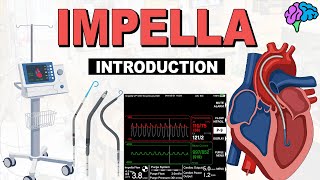
[Music] you all right and welcome back to our next lesson in our series on hemodynamics and in this lesson we are gonna talk about everybody's favorite working in the ICU which is our invasive monitoring so as we all know invasive monitoring is very common in the ICU especially these days we have very sick very complex patients and the various forms of invasive monitoring that we have available to us can really tell us a lot about what's going on with our patients with their hemodynamics how their hemodynamics are responding to the various treatments that we're putting
in place as well as how their blood flow is being impacted by other forms of treatments that we're doing for them so there's a lot of valuable great information that can come from the various invasive monitoring techniques that we have available to us but at the end of the day just remember that it all goes back to the basics so just because certain numbers are telling you certain things on the monitor you still need to look at your patient and see does the patient line up with what you're seeing on the monitor you could have
great numbers on the monitor and your patient not look so hot and there's probably something going on on the flip side the numbers could look awful on the monitor but look at your patient is your patient fine are they doing okay and if so it might not be telling you the full story all right so we're gonna we're going to talk about a few different types of invasive monitoring the first one that we're going to talk about is our CVP so our CVP is going to be giving us a representation of our right atrial pressure
or basically the venous return to the heart essentially our preload and this is going to be the right heart preload the nice thing about CVP is if you have a central line in place you can simply use one the lumens on your central line in order to obtain a CVP and when you have a patient that you're monitoring their CVP up on the monitor you're gonna see a waveform that looks something like this now when we talk about the normal values for CVP it really depends on the source that you're looking at but on average
typically you're going to be looking for numbers to be between two and ten millimeters of mercury now like I said since the CVP is essentially measuring our preload and if we think about situations in which our CVP or our preload is going to be increased these would be things like fluid overload so if you had too much fluid you would have a high preload another situation in which you might see an increased CVP would be is if your patient is having cardiac tamponade so in this scenario here the tamponade is preventing the heart from being
able to beat effectively so we are gonna get a backup as blood is not passing through the heart so this will increase our CVP and another situation in which you might see an increased CVP would be in right heart dysfunction so similar concept with the cardiac tamponade the right heart is not functioning appropriately therefore it's not moving the blood across to the lungs and into the left side of the heart therefore you're gonna get a back up heading into it now on the flip side some cases in which you might see decreased CVP or decreased
preload would be things like dehydration volume loss and this can be either fluid or blood and lastly vino dilation and this is essentially dilation of the veins that cause pulling of the blood not allowing it to be returned to the right atrium all of these things are going to contribute to a decreased volume returning to the heart therefore a decreased preload and you will be able to measure this with a decreased CVP all right so moving on and talking about the different forms of invasive monitoring the next one that we are going to talk about
is the arterial line so the arterial line or a line as it's commonly referred is essentially a catheter that is sitting inside of an artery and typically our common spots are going to be either our radial or femoral sometimes you can do a brachial or even a pedal a line but it's going to give us a direct and more importantly a real-time representation of systolic and diastolic as well as giving us a calculated mean arterial pressure and the real beauty of the a line is the fact that it is real time so this is great
if you're on any sort of azo active medication that you need to see real time what are the effects of this medication and whereas my pressure currently yet now typically the the waveform that you will see will look something similar to this now not the the greatest of drawings but essentially this is going to be our systolic blood pressure right here we're gonna have our diastolic blood pressure and then here you're gonna have your dicrotic notch and it's going to be important that you evaluate this waveform to ensure that you're getting an optimal and accurate
reading if the waveform becomes under damped or whipped a lot of times you'll see a peaking a very high systolic that goes significantly above the rest of your waveform sometimes you also see a even lower diastolic so when you're comparing these numbers to your manual cuff you'll see a higher systolic and a lower diastolic that will be one indication that you are under damped or not accurate you can also be over damped or beginning to flatten and this is then going to you're gonna lose the nice picture of your waveform you may lose seeing your
dicrotic notch your systolic is going to lower your your diastolic may come up and again it's not going to be an accurate number which if you're titrating vasoactive medications it's going to be important that you do have an accurate waveform now if the waveform is accurate and you have discrepancies between your a line and your manual cuff first you obviously want to troubleshoot your your a line and your transducer and all of that is is fine and taken into account then the a line is going to be a more accurate representation of your blood pressure
because it's directly in the artery it's giving you a direct representation of actual pressures into a waveform and numbers that we can see on our monitor where as opposed to the automatic blood pressure cuffs that most monitors use are actually calculated values and I won't go into the the complex nature of how they work but know that it's not like when you listen or you auscultate with a manual blood sure it works in a different manner and it's calculating out your systolic and diastolic and your mean arterial pressure so again if you're a line waveform
is good and those numbers differ from your manual blood pressure cuff you want to be going off of your a line because it is going to be the truer more accurate number all right now moving on the next form of monitoring that we're going to talk about is a system called the flow tract now this is a proprietary system that is developed by Edwards life science it does require its own transducer to be used in place of the typical ones that are often used as well as its own monitor setup but in my opinion it
is a pretty neat form of monitoring that we have available to us and the nice thing about it is it simply uses a lines and the setups that we use for a lines - the transducer just like we we do with any other patient so we can actually get a lot more information and a better picture about our patient's hemodynamics simply from the arterial line which before was only giving us our systolic diastolic and our mean arterial pressure now the purpose of this lesson isn't to go through all the bells and whistles of what the
flow track can and can't do but I do want to give you a basic understanding of some of the the numbers and the information that it can give to you so this is going to be a representation of the newer model flow track you might be familiar with the older model it's referred to as the vigil AO it will give you all the same numbers just not in as newer of a user interface but this is our screen that we have here on the side you've got a series of options and buttons that you can
select and this is all on a touch screen and there's different screens that you can flip through and everybody sort of seems to like their own particular setup and you can certainly customize things as you wish but one of the screens will kind of show you some of your values right along here and it will give you numbers through here that correspond with different values and whatever the the value is that you are monitoring and so with the vigil a or the flow track there's really three additional hemodynamic values that you are going to be
able to get from the flow track above and beyond just your normal pressures that you would get with an arterial line and those are going to be your your stroke volume or your stroke volume index it's gonna be your cardiac output and cardiac index and then another value that we're going to talk about here in a minute which is called stroke volume variance now for the stroke volume and stroke volume index obviously with these index numbers you enter in the patient's height and weight and that will give a body surface area and allows us to
calculate out these index values but the way that the flow tract is able to determine what your patient's stroke volume is is they have their own proprietary algorithm that the computer and their monitor uses and it sits there and it assesses points and values along the arterial line tracing and what they've done is they've found a relationship between your pulse pressure and stroke volume and so by constantly assessing the tracing of the arterial line and looking at the patient's pulse pressure they're then able to do calculations and determine what the patient's stroke volume is now
on to the cardiac output and cardiac index now once again we know our cardiac output is equal to our heart rate times our stroke volume and since now we know our stroke volume based on our relationship with the pulse pressure which the flow track is able to determine and it can also determine a heart rate based off the artery line tracing we now can determine what our patients cardiac output or cardiac indexes again all just off of an arterial line and so the final hemodynamic value that we're able to get from the flow track is
what we call the stroke volume variance and basically stroke volume variance is another form of monitoring that can give us an idea of a patient's preload so just as we talked about the CVP being an indication for preload a stroke volume variance on a patient can also tell you about their preload the normal value for your SV V is going to be less than 13 so there's a saying high and dry so if they are 13 and above it tells us that the patient has decreased preload decreased volume they probably would respond to volume and
the concept behind how this is able to tell us about volume status is because of a thing called pulsus paradoxus and this is essentially a variation in your pulse with respiration essentially with the less volume that you have in your vasculature this will lead to a greater variance in your blood pressure with each breath and to essentially draw this out this may be something that you you may have noticed on an a-line tracing on the monitor before but didn't think anything about it but sometimes and as an exaggerated example with your a line and these
waveforms aren't going to be the greatest but with your a line sometimes you'll notice variation as you're going and you'll kind of see this up and down movement and these ups and downs will correspond with breaths being delivered by a ventilator so if you think about event is delivering positive pressure so as a breath is being delivered to the patient this is going to increase the intrathoracic pressure this is going to put pressure on the superior and inferior vena cava which is going to decrease venous return to the heart which is going to impact your
cardiac output so you're going to see a decreasing your blood pressure then as expiration happens that pressure is released the vena cava is able to expand the blood is able to get back to the heart and you're gonna see your blood pressure rise and the concept of pulsus paradoxus is as you have more fluid in your vasculature you see less variation so if you then are depleted or low on volume you're gonna see more of this variation which is why on our SBV if the variation is high it means that they are low on their
preload now as great as svv is it does have some limitations especially in terms of using the flow tract to monitor it and some of these limitations are going to be spontaneous breaths so if a patient is taking spontaneous breaths that that is going to render our svv inaccurate if the patient has an open chest also if they have any arrhythmias commonly atrial fibrillation in which we have an irregular heart rate that that is going to yield our stroke volume variance as inaccurate and if any of these cases do exist there is a simple little
trick called passive leg raise that you're able to do in which you raise the patient's legs up at a 45 degree angle and this essentially gives a mini bolus temporary effects that only lasts until you late raise the legs back down and if in doing so you see your stroke volume and your cardiac output and prove it may be an indicator that your patient may be responsive to fluid all right so that just about sums up everything that we're going to talk about with the flow tract has the potential to provide a lot of insight
into your patients but do know that it does have some limitations but you do get a lot of information for no more invasive of a lion than an arterial line which oftentimes many of our patients have already so moving on we're gonna move to the last form of invasive monitoring that we are going to talk about and that is going to be our Swan or our PA or pulmonary artery catheter now the Swan or the PA cath has had its ups and downs over the years when it comes to studies in terms of whether it
is an effective form of monitoring our patients hemodynamics or not but they certainly are something that are used in a lot of environments particularly in cardiovascular ICUs and with open heart patients so they definitely still have their place in the practice that we can't provide for our patients and essentially what the the Swan is or the PA catheter is is it's a it's a very long catheter that is inserted through an introducer that will go in through the vena cava it will pass through the right atrium of the heart into the right ventricle and come
out and sit into the pulmonary artery at various points along the catheter there are ports that enable us to either infuse medications or to get pressure readings which can give us different pressures at different locations throughout the anatomy of the heart and the vasculature which can give us more of a picture of the chemo dynamics of our patient so with the Swan catheter there's going to be four main values that we are able to obtain from the catheter itself the first one is going to be our right atrial pressure or our CVP the next one
is going to be our pulmonary artery pressure the next one after that will be our pulmonary capillary wedge pressure and finally the last one will be our cardiac output and cardiac index so for our right atrial pressure our CVP again the waveform is going to look just like we talked about with the CVP already and the same normal values are going to apply to this as well 2 to 10 millimeters of mercury all right now so for our pulmonary artery pressure essentially the tip of the catheter is sitting in the Maneri artery and at the
very tip of the catheter there is a port in order for us to be able to measure pressure typically on the monitor you will see a waveform that looks something similar to this and similar to an arterial line you are going to have a systolic and a diastolic pressure with this and the normals for that are going to be twenty to thirty over ten to twenty and really you can think about the pulmonary artery pressure as almost being like an a-line for the right side of the heart and if you do have an increase in
your pulmonary artery pressure it could be an indication of a few different things the first one could be some sort of atrial or septal defect you would also have an increase in patients with pulmonary hypertension you would also see an increase if your patients were having left ventricular failure and similarly too when you have an increase in your CVP when the right heart is failing if the left heart is failing you're again going to have that backup of fluid and volume and blood that is going to create more resistance and the right heart is going
to have to be stronger in order to eject blood against that pressure and finally you may have an increased pulmonary artery pressure if your patient has either mitral stenosis or regurgitation and now with this you have either an incompetent valve to where blood is filling backwards out of the left ventricle and going back into the pulmonary vein or in the case of mitral stenosis enough blood is just not able to pass through that valve and causing that backup as well all right so moving on to our pulmonary capillary wedge pressure this pressure is a intermittent
pressure that we are able to achieve by inflating a all balloon that sits at the end of the catheter what this will do is this will include the pulmonary artery with the tip that we use to monitor pressure being distally to the balloon this will prevent any flow coming from the right side of the heart and will give us an indirect measurement of preload on the left side of the heart so if you think of a CVP for the left side of the heart that is what the pulmonary capillary wedge pressure is going to be
once you inflate the balloon you're going to see a pressure that looks very similar to a CVP with the waveform looking like this the values are going to be a little bit different and your normal your normal range on this is going to be 8 to 12 and again that's millimeters of mercury and based on what your red wedge pressure is you can either be in a state where you have a normal pressure and elevated pressure or a decreased wedge pressure if it's elevated this could be things like fluid overload could be a or deque
stenosis or aortic regurgitation could be mitral stenosis left ventricular failure could be cardiac tamponade or constrictive pericarditis cases where you might find a low wedge pressure would be hypovolemia or vasodilation now not all facilities nor all physicians will want you to get a pulmonary capillary wedge pressure but it is important to note that if you are getting wedge pressures that you don't leave the balloon inflated you need to inflate the balloon get your numbers and then deflate it because when the balloon is inflated you are essentially creating an obstruction in part of the pulmonary artery
all right finally the last hemodynamic value that we are going to be able to get from the Swan or the PA cath is going to be our cardiac output or cardiac index now depending on the equipment that is being used you can either get a continuous or intermittent cardiac index or cardiac output the continuous cardiac output tends to be the more common types but there are usually some of the older swans or PA casts which you used to do bolus of fluid in order to get your cardiac output reading lastly you may come across some
catheters that do have a pulse oximetry light that can give you your venous oxygen saturation but that is something that's going to be beyond the scope of this hemodynamics lesson now one last important thing to note is that with all of these values that you're able to plug that information into calculations which can give you your SVR and your PVR now your SVR and your PVR which is your systemic vascular resistance and your pulmonary vascular resistance these are going to be numbers that give you indications or clues as to your patients afterload now some monitors
and some setups will take all the information and you plug in any additional information that's missing into their calculations and it will spit out all sorts of values to you but with your SVR you're looking for a number that's going to be between 800 and 1,200 if it's below 800 this is telling you that your vessels are very dilated and you have very low resistance and usually in these cases you are also going to have a low blood pressure as opposed to if you are greater than 1200 this is telling you that those vessels are
very clamped down so you have greater resistance and typically you're gonna find a greater blood pressure but this is also creating greater force for the heart to beat against which may impact your cardiac output but this just about covers all the information that you will get from the Swan and pa cath as well as this concludes this lesson covering the different forms of invasive monitoring for our next lesson we're going to look at how we optimize treatment in order to manipulate our patients hemodynamics