The latest decision by United States President Donald Trump to hike tariffs on steel and aluminum imports has sparked swift and strong condemnation from key trade partners: the European Union, Canada, and Mexico. With the tariffs set to take effect on March 12th, these nations are preparing firm countermeasures, potentially reigniting past trade conflicts. Trump's move increases the tariff rate on aluminum from 10% to 25% and removes previous exemptions for countries like Canada, Mexico, and South Korea.
This abrupt shift eliminates quota deals and hundreds of specific tariff exclusions affecting millions of tons of metal imports. Unsurprisingly, the European Union, Canada, and Mexico have deemed the decision unjustified and harmful to global trade. European Commission President Ursula von der Leyen stated that these tariffs had been suspended under a truce—a high-profile product and symbol of American manufacturing.
She is preparing firm and proportionate countermeasures. These actions aim to protect European industries, uphold fair trade, and send a clear signal that the EU will not accept what it deems unjustified trade restrictions. One of the most immediate steps under consideration is reactivating tariffs that were originally imposed in 2018 during the first wave of Trump's trade wars.
These tariffs had been suspended under a truce between European Commission President Ursula von der Leyen and then-President Joe Biden. If reinstated, they would target a range of US exports that are politically and economically significant. Key US exports that could face renewed tariffs include various American goods in a market, such as bourbon whiskey—a major American export, particularly from states like Kentucky, which has political implications for US lawmakers; Harley-Davidson motorcycles—a high-profile product and symbol of American manufacturing; motorboats—another industry that could be hit by retaliatory duties; peanut butter—a commonly exported US good with a strong consumer market in Europe; and Levi's jeans—a culturally significant product, particularly for American fashion and branding in Europe.
If these tariffs are reinstated, they could be applied as early as April 2025, after the current suspension period ends. In addition to reinstating the 2018 tariffs, the European Union is considering agricultural product duties aimed at US exports. According to reports, the European Commission has drawn up a list of American goods valued at €4.
8 billion ($5. 2 billion) that could be subjected to tariffs ranging from 25% to 50%. Potential sectors that could be targeted include steel and aluminum products—a direct countermeasure to Trump's move affecting American metals exported to the EU—and agricultural products, such as orange juice, corn, and dairy products that have significant export value.
Technology and industrial goods could also be included, potentially involving tariffs on US-made machinery, semiconductors, and other tech-related exports. By targeting key US industries, the European Union aims to pressure Washington into reconsidering the tariffs while minimizing damage to European consumers and businesses. Special safeguard measures are to prevent market distortions on subsidized imports from China, which has been aards to prevent a flood of excess steel and aluminum into its markets.
Since Trump's tariffs restrict US imports, metals that would have been sold in the US may now be redirected to Europe, leading to oversupply and price disruptions. To counteract potential market distortions, the EU may impose import quotas on steel and aluminum from other countries to stabilize the domestic market. They might also increase trade restrictions on subsidized imports from China, which has been accused of overproducing steel and disrupting global trade.
Additionally, the EU may support EU-based manufacturers with subsidies or incentives to ensure they remain competitive. Canada's strong opposition includes a trade defense tariff plan in response to Trump's 25% tariffs on motorcycles, cosmetics, and pulp and paper, with Canada supplying nearly 80% of US aluminum imports in 2014. Its industries stand to suffer significant losses under Trump's policy.
The Canadian government is likely to explore counter-tariffs targeting key US industries, particularly those with a high economic dependence on Canadian resources. Canada may also choose to reactivate its original tariff plan in response to Trump's 25% tariffs on Canadian goods. This plan involves imposing 25% tariffs on $155 billion worth of US exports.
The first phase includes tariffs on $30 billion worth of goods effective February 4th, 2025, coinciding with the US tariff implementation. The targeted products encompass a wide range of American exports, including orange juice, peanut butter, wine, spirits, beer, coffee, appliances, apparel, footwear, motorcycles, cosmetics, and pulp and paper. A detailed list of these goods will be made available shortly.
Beyond these plans, Canada has already begun diversifying its oil and goods exports, not only to the EU but also to Southeast Asia, to reduce reliance on the US market and minimize the potential impact of the tariffs. Canada ships oil to China rather than the US. Recent developments suggest that Canada is modifying its oil export strategies in response to shifting trade dynamics with the United States and growing demand from Asian markets, notably China.
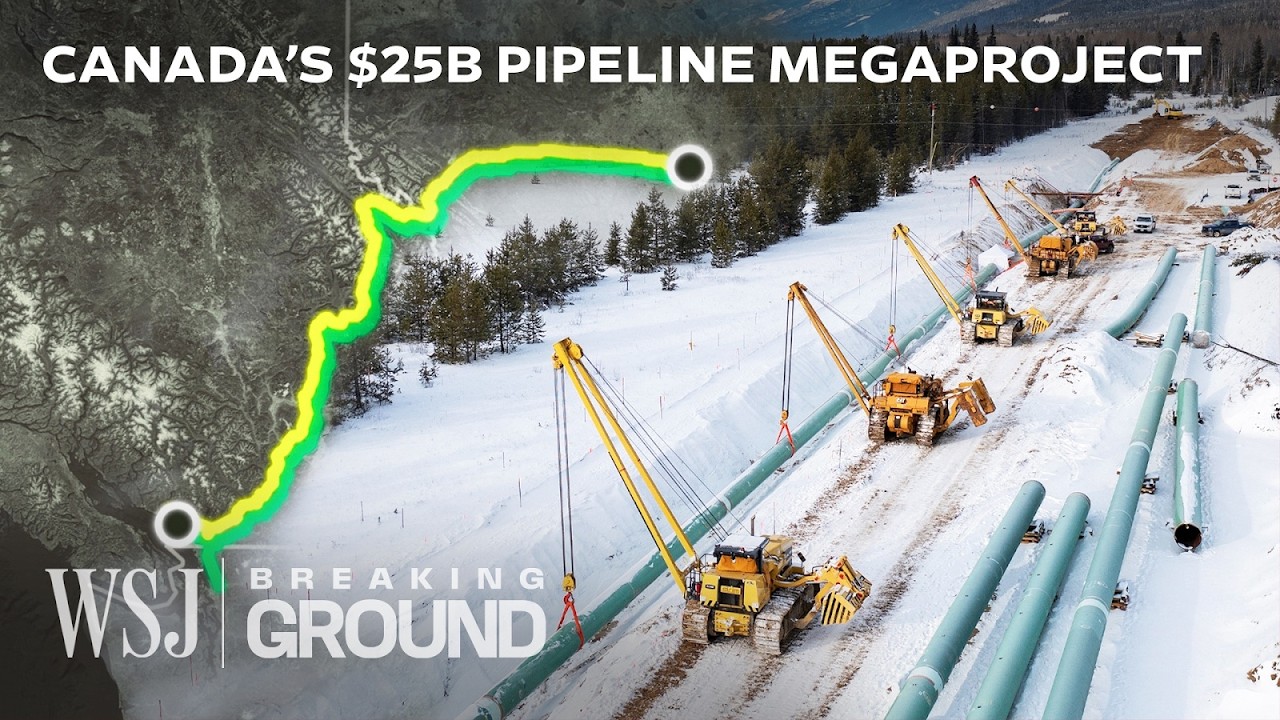
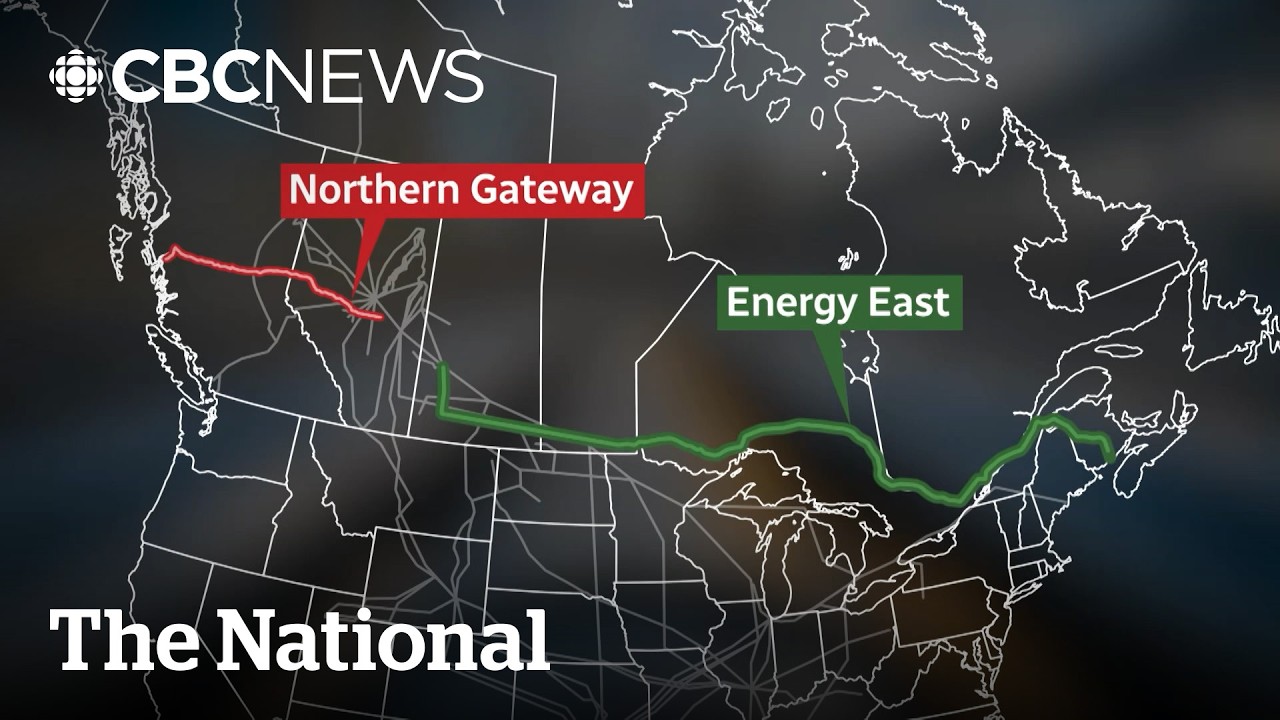
Canadian pipeline operator Trans Mountain expects a significant increase in demand due to these tariffs. It began operations in May 2024, securing several high-demand Asian markets. The expansion of the Trans Mountain pipeline, which has tripled the volume of crude oil moved from Alberta to Canada's Pacific Coast, reaching a capacity of 890,000 barrels per day, grants Canadian producers greater access to Asian markets and reduces their reliance on the United States.
Recently, major refiners in China, Japan, South Korea, and Brunei have purchased cargoes from the expanded pipeline. For example, in September 2024, Chinese private refiner Rongsheng Petrochemical secured several shipments of Canadian crude. Canada's strategic shift toward Asia is propelled by several factors: market diversification, and reducing dependence on the United States market to help mitigate risks.
Arising from trade disputes and tariff impositions, demand alignment in Asian countries, particularly China, is witnessing growing demand for heavy crude oil, which aligns well with Canada's export profile. Economic advantages of entering high-demand Asian markets offer Canadian producers opportunities for better pricing and an expanded customer base. Canada’s climate commitments and oil production, with environmental commitments, action implementing measures such as a nationwide carbon tax, continue to invest heavily in oil extraction projects.
The Trans Mountain pipeline has come to symbolize this contradiction, as it enables increased oil exports to global markets, especially China. Critics argue that these investments undermine Canada's emissions reduction targets and underscore the challenge of balancing economic growth with environmental commitments. Canada plays a vital role in the global oil sector, producing 1.
75 million barrels per day, also 11. 7 million barrels per day with 604s, underlining Canada’s significant role in the global market. The top oil-producing nations and their estimated daily production figures are: 1.
United States: 12. 91 million barrels per day, representing 22% of global production; 2. Saudi Arabia: 11.
13 million barrels per day, or 11%; 3. Russia: 10. 75 million barrels per day, also 11%; 4.
Canada: 5. 76 million barrels per day, making up 6%; 5. China: 5.
26 million barrels per day, at 5%. Together, these five countries produce over half of the world's total oil. Canada's oil production in context: Over recent decades, Canada's oil production has grown considerably.
In 2019, the nation produced an average of 4. 7 million barrels per day, with 64% coming from unconventional oil sands. By 2023, production had risen to roughly 5.
76 million barrels per day, cementing Canada’s status as the fourth largest oil producer globally. Canada’s oil reserves: Canada possesses the world's third-largest proven oil reserves, estimated at approximately 180 billion barrels and primarily located in Alberta's oil sands. This enormous reserve base underpins Canada’s significant role in the global energy landscape.
A large share of Canada's oil production is destined for export. In 2023, crude oil exports reached a record 4 million barrels per day, representing 81% of total production. Notably, 98% of these exports were sent to the United States, emphasizing the interconnected nature of the North American energy market.
Canada's export economy is varied, spanning multiple destinations for these exports and covering a wide range of industrial and technological products. Key categories include gold, diamonds, and platinum, primarily from mining. A broad range of products from telecommunications devices was valued at roughly $43.
40 billion, forming a major part of the country's export revenue. This segment covers crude oil, petroleum gas, and refined petroleum products. The United States remains the primary destination for these exports, reinforcing the integrated North American energy market.
Vehicles: The automotive industry is a significant driver of Canadian exports, with vehicles generating about $63. 6 billion in export revenue in 2023. This includes passenger cars, SUVs, and light trucks.
Most of these vehicles are produced in Ontario and Quebec, with a large share exported to the United States. Machinery, including nuclear reactors and boilers: Exports of machinery cover a wide range of industrial and technological equipment, contributing approximately $42. 46 billion.
Canada's abundant mineral resources have made it a leading exporter of precious stones and metals, with exports valued at around $26. 74 billion. Electronic equipment: This category, which spans consumer electronics to industrial devices, was valued at approximately $16.
01 billion in 2023. Key export destinations include the United States and Mexico, supported by trade agreements like the Canada-United States-Mexico Agreement, also known as CUSMA. Let's take a quick pause.
If you've enjoyed the video so far, could we ask a small favor? Hitting the like button helps us reach a broader audience, and sharing your thoughts or feedback in the comments makes an even bigger impact. Thank you for watching; now let's dive back in.
Canada and China have cultivated a robust trading relationship, resulting in a trade deficit of $36. 7 billion. The surge is attributed to increased imports, while iron ore exports to China totaled $2.
5 billion, representing a 12. 93% decline from pre-pandemic levels. Key import commodities have included cereals like wheat and barley, which have seen rising exports.
Canada's imports of goods and electronics totaled around $62. 1 billion, leading to a trade deficit of $36. 7 billion for Canada in 2023.
Canada's exports to China were approximately $22. 6 billion, with key commodities making significant contributions to this trade. Here is a detailed breakdown of these major export categories: - Oilseeds and oleaginous fruits: $3.
84 billion, led by canola. This category experienced an impressive year-over-year growth rate of 75. 21%, attributed to increased demand following the lifting of COVID-19 restrictions in China and the normalization of market access for Canadian producers.
In the first quarter of 2023, canola exports reached $1. 27 billion, marking a 331. 65% jump compared to the same period the previous year.
- Ores, slag, and ash: $3. 58 billion. This segment comprises various metal ores, with iron and copper as key contributors.
Iron ore exports to China totaled $2. 5 billion, a 15. 58% increase year-over-year, while copper exports amounted to $1.
6 billion, up 13. 57%. These metals are vital for China's industrial activities, ensuring steady demand.
- Mineral fuels and oils: $2. 4 billion. Coal is a major component of this category.
In 2023, Canadian coal exports to China were valued at $3. 04 billion, representing a 12. 93% decline from the previous year, partly due to renewed coal trade with Australia, which heightened competition.
- Pulp of wood and related materials: $2. 3 billion. Chemical wood pulp exports reached $2.
21 billion in 2023, growing modestly by 1. 98% year-over-year. This steady demand underscores China's ongoing need for raw materials in its paper and packaging sectors.
- Cereals: $1. 49 billion. Cereals, including wheat and barley, have seen rising exports to China, driven by shifting food consumption patterns and the need to supplement domestic production.
Between 2023, these trends have shaped Canada's trade dynamics with China. 2019 and 2023 serial exports from Canada to China grew at an annual rate of 19% in 2022. Canada's imports from China reached a record high of nearly 100 billion CAD, a 16% increase from the previous year.
This surge highlights the deepening economic ties between the two nations. Key import commodities: Canada's imports from China encompass a broad range of products. In 2022, the primary import categories were consumer goods valued at 31 billion CAD.
This category includes a wide spectrum of items such as household products, clothing, and personal care items. Electronic and electrical equipment imports in this sector were worth 28 billion CAD, underscoring China's role as a major supplier of electronics to Canada. These figures illustrate the important role that consumer goods and electronics play in Canada's import portfolio from China, reflecting strong demand within the Canadian market.
For anyone unfamiliar with the reasons behind these strategic moves and the escalating tensions between Canada and the United States, here is a brief overview of the background. In December 2024, during a meeting at Mar-a-Lago, tensions escalated following a series of remarks, including, "What I'd like to see Canada become our fifth state with much lower taxes and vastly improved. .
. " What's that all about? These declarations referred to Canada as the 51st state of the United States.
He even referred to Trudeau as "Governor Justin Trudeau of the great state of Canada" and expressed a keen interest in continuing discussions on tariffs and trade. In early 2025, disputes between Canada and the United States escalated following a series of remarks and policy proposals from U. S.
President Donald Trump. Central to the controversy were Trump's suggestions that Canada consider statehood as the 51st member of the U. S.
, along with his administration's imposition of steep tariffs on Canadian products. At a press conference at Mar-a-Lago on January 7, 2025, when asked if Canadian Prime Minister Justin Trudeau could propose a solution to avert the looming tariffs, President Trump replied, "What I'd like to see Canada become our 51st state. " Further cementing this stance, President Trump took to his social media platform, Truth Social, and declared, "We spend hundreds of billions of dollars subsidizing Canada.
Why? There is no justification. We have everything we need: unlimited energy, our own car manufacturing, and more lumber than we could ever use.
Without this enormous subsidy, Canada would no longer be a viable nation—harsh but true. Thus, Canada should become our beloved 51st state, with much lower taxes and vastly improved military protection for its people and no tariffs. " Alongside these remarks, President Donald Trump made additional statements that further strained U.
S. -Canada relations. In January 2025, he commented, "They don't essentially have a military; they have a very small military.
" He also stated, "We're spending hundreds of billions a year to protect Canada. " Furthermore, Trump criticized Canada for allegedly barring U. S.
banks from operating, asking, "What's that all about? " These declarations coincided with his administration's decision to impose a 25% tariff on Canadian goods, with a reduced 10% tariff on energy exports, which the U. S.
government defended as necessary to address issues such as illegal immigration and drug trafficking. President Donald Trump's assertion that the United States subsidizes Canada reflects a misunderstanding of market forces and consumer choices. It is also important to note that the U.
S. gains substantial advantages from this trade arrangement. The economic bonds between the U.
S. and Canada are deeply intertwined and mutually beneficial. In 2023, Canada exported 77% of its goods to the United States and imported nearly half of its goods from the U.
S. , making them each other's largest trading partners. This robust trade relationship supports millions of jobs and contributes significantly to the GDP of both countries.
It is also important to note that the U. S. gains substantial advantages from this arrangement: Canada is the largest energy supplier to the U.
S. , providing crude oil, natural gas, and electricity—an energy trade that is crucial for American industries and consumers. Moreover, the vast difference in population sizes between the United States and Canada plays a major role in their trade dynamics.
As of 2024, the U. S. population stood at approximately 339 million—more than eight times Canada's roughly 40 million residents.
This enormous disparity results in a larger consumer market in the U. S. , driving higher demand for goods and services, including imports from Canada, thereby creating a trade deficit that reflects market size differences rather than any form of subsidization.
Former President Donald Trump's claim that American banks do not offer a full range of banking services is misleading. Several notable U. S.
-based banks are key players in financing wealth management in Canada. While Canadian financial regulations impose rigorous banking regulations, these rules apply equally to domestic and foreign institutions, ensuring financial stability. U.
S. banks are permitted to operate in Canada through two main avenues: Firstly, they can establish Schedule 2 banks, which are subsidiaries of foreign banks that are allowed to accept deposits and offer a full range of banking services. Several notable U.
S. -based banks, including Citibank Canada, JP Morgan Bank Canada, and AMEX Bank of Canada, operate in this category. Secondly, U.
S. banks may function as Schedule 3 banks, branches of foreign banks licensed to carry out specific banking activities primarily in corporate and investment banking. Examples include Bank of America National Association, Wells Fargo Bank National Association, and Citibank N.
A. These institutions are key players in financing wealth management and investment banking across Canada. Recent data indicate that there are 16 U.
S. -based bank subsidiaries and branches in Canada, collectively holding approximately CAD 13 billion in assets. For example, JP Morgan Chase, one of the largest American financial institutions, plays a significant role in this landscape.
Has maintained a presence in Canada for over a century and currently employs around 600 people in major cities such as Toronto, Vancouver, Calgary, and Montreal. While Canadian financial regulations impose certain requirements on foreign banks, they do not bar U. S.
banks from operating in the country; rather, these standards ensure that all institutions, whether domestic or foreign, adhere to high levels of stability and consumer protection. Thus, Trump's statement misrepresents the actual state of U. S.
bank operations in Canada. President Donald Trump has asserted that significant fentanyl production cases are smuggled from Canada into the United States, a claim he has used to justify tariffs on Canadian imports. While evidence exists of fentanyl production and trafficking within Canada, most fentanyl entering the U.
S. originates from Mexico. Mexican cartels typically manufacture fentanyl using precursor chemicals from China and smuggle it into the U.
S. via well-established routes. Canadian law enforcement has identified cases of domestic fentanyl production, notably in British Columbia, and acknowledges that some of these drugs may be trafficked internationally, including into the U.
S. However, comprehensive data on the total volume of fentanyl smuggled into the U. S.
remains limited. Seizure statistics indicate that most fentanyl interdictions occur along the U. S.
-Mexico border, suggesting that the northern border with Canada is a less significant route for fentanyl smuggling. That's all for this video; thank you for watching. We sincerely appreciate you joining us today.
If our content resonated with you or sparked inspiration, please consider expressing your support by liking it and subscribing to stay connected with our community. Your support holds immense value for us. You can watch another video from our channel, which is now on the screen.