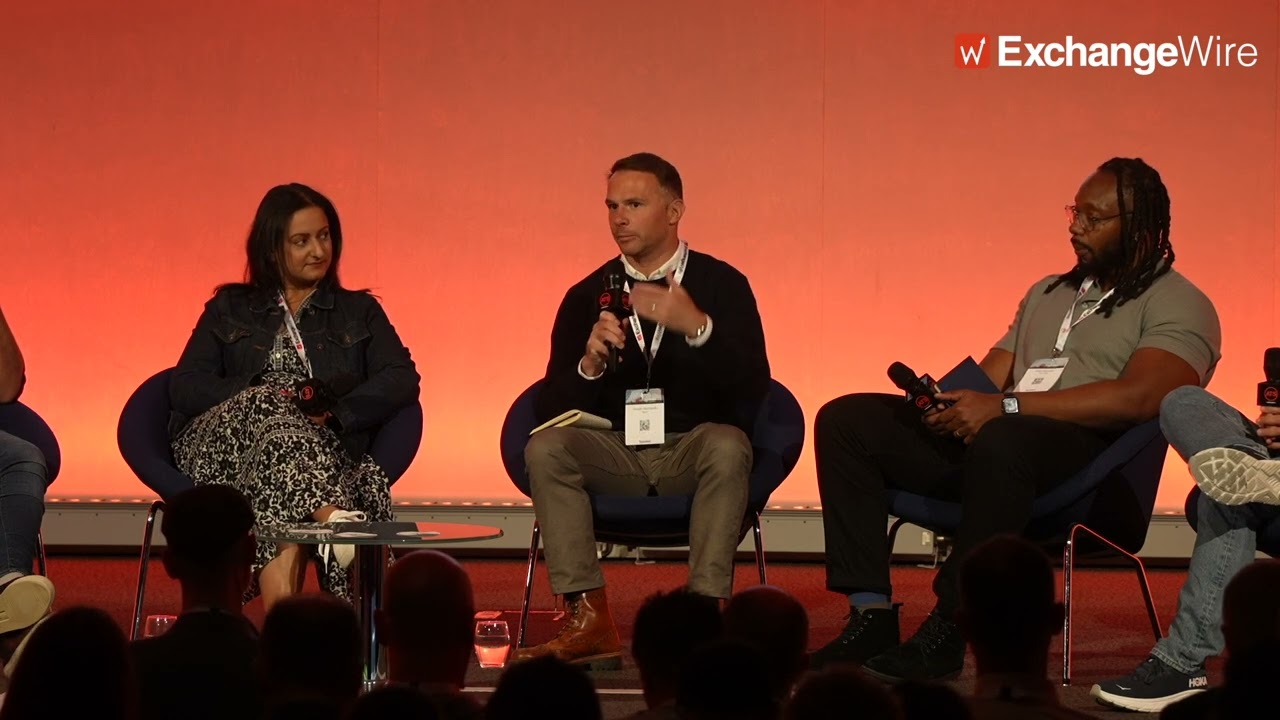
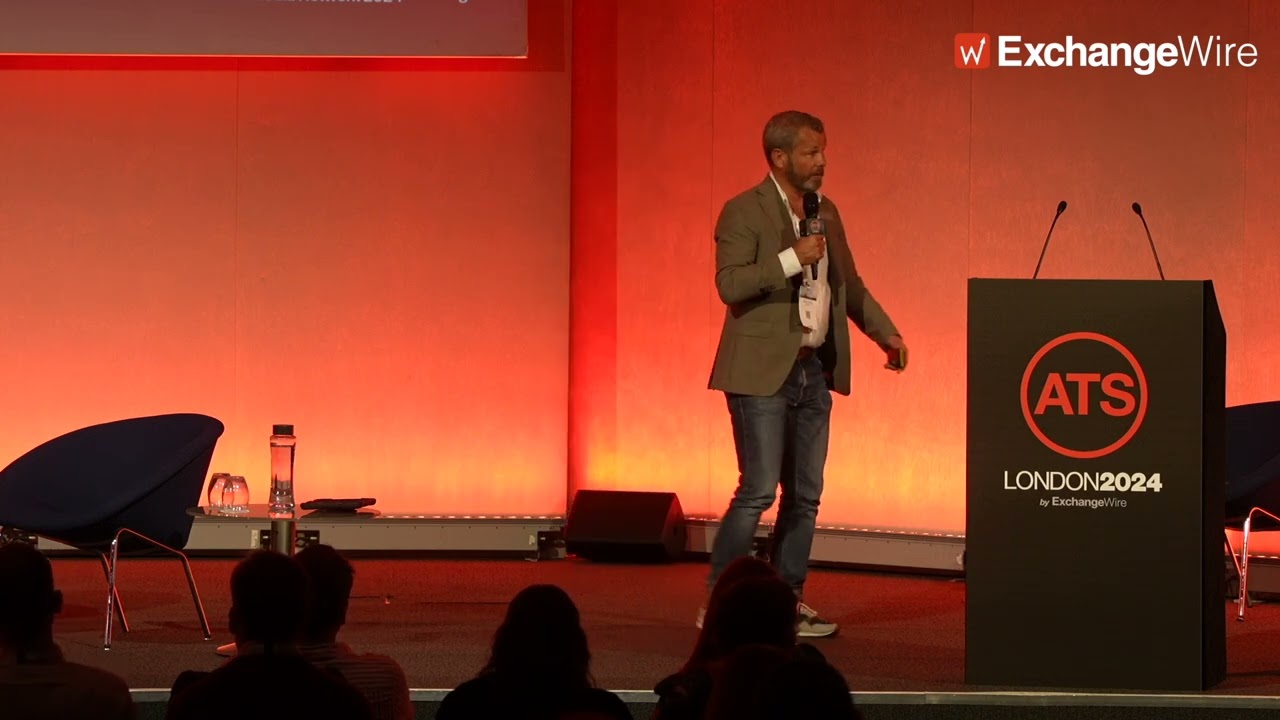
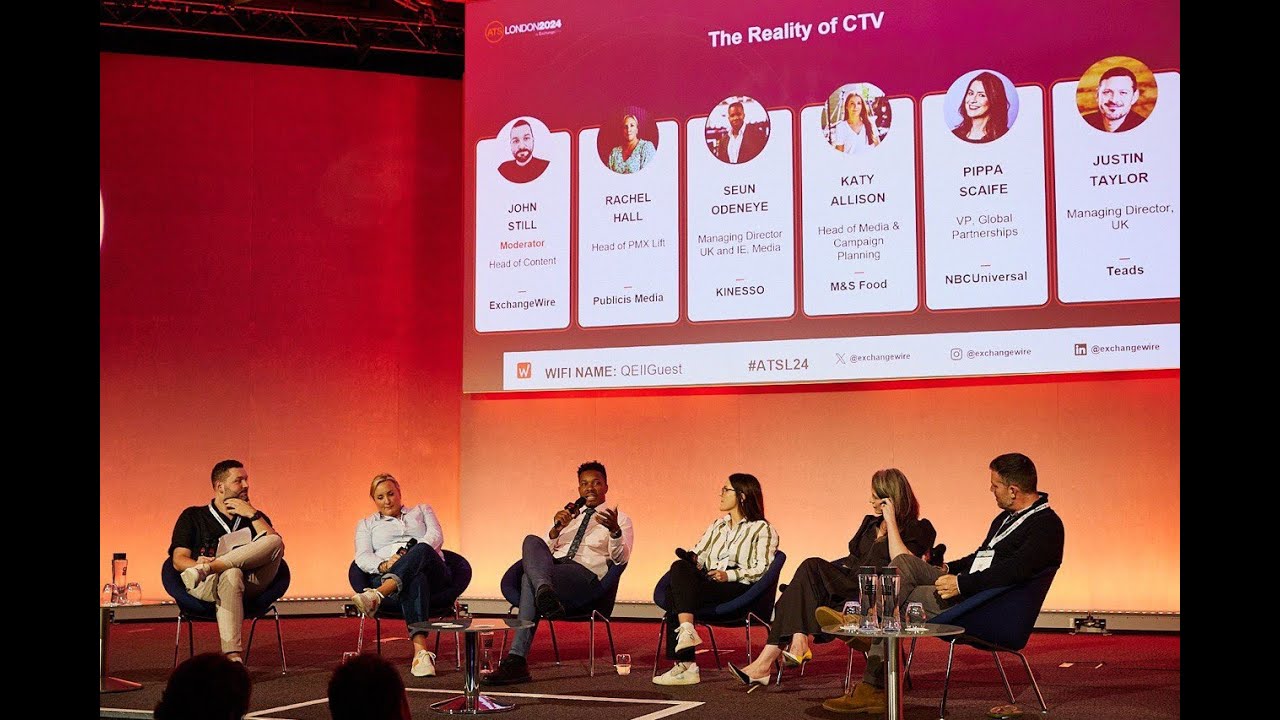
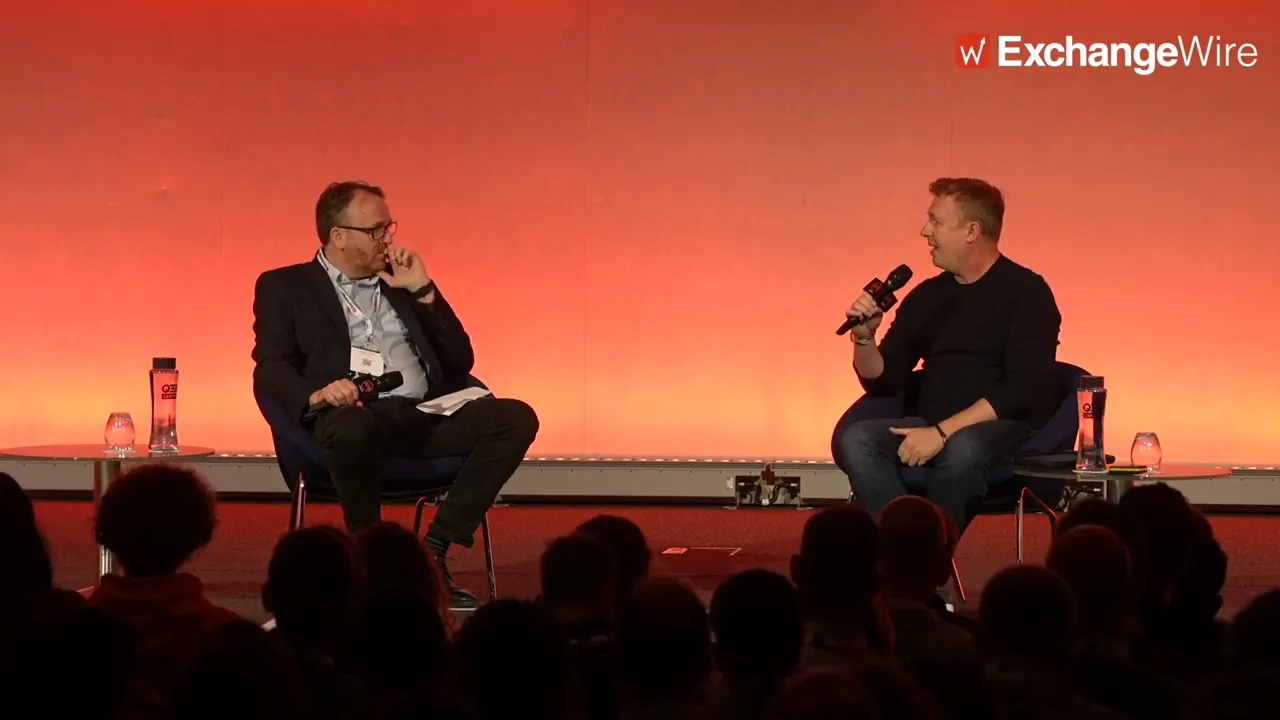
[Music] I do love these days Jeff this is like get on stage and all these fine people rad Tech are sitting in front of us waiting for something amazing to happen uh no pressure no pressure anyway F first of all thank you for doing this today uh I I know you're you're a very busy man you're you're a CE of a $50 billion company uh you've a bigger on tourage than people I employ so it's just great to have you here at the at the show um it what what a time to have you come
on stage probably the most pivotal year we've seen in adtech in ever really we're I think so so so we might as well just jump straight into it like so the the the industry is in complete flux we have we have um privacy issues we have cookie deprecation we have a massive seismic trial happening right now in parallel with this event this week so I want to talk to you about like how a company like to trade desk navigates that how other companies should be thinking about navigating this sort of like Meer o of booby
traps yeah I mean for for us as simple as it sounds and as fundamental as it sounds we we haven't really changed much I mean uh a lot of people sometimes have asked uh how we've managed to uh not pivot our business again and again and I think one of the reasons why many adtech companies have failed is that they pivoted again and again and they sort of follow the flavor of the month and we I mean the business plan that we wrote 15 years ago is the exact same thing that we're executing today uh
we still look at the North Stars of things like price Discovery and competitive markets and things like that and we're still doing exactly the same thing that we did back then so figuring out what your Niche is what your goal is and then sticking to it doesn't mean that you don't have to ask yourself every day what am I wrong about and what things do I need to change uh uh but on the big things we just kept saying hey we're still right about this and let's keep going yeah so just just digging into that
I always think the thesis of a good company is just doing it and doing really well and iterating on that I do I think you're right a lot of companies have kind of made the mistake of trying to do everything instead of doing one thing really well and I think that's like we first met I remember this is is going to make you laugh I actually told Jeff he was too late to the DS DSP party um H how how wrong could one man be uh a 50 billion you w the only one yeah but
he's one of the few to admit it though there's so many people on San Hill Road that are like I knew it was going to work I and there's so many people I've encountered that to be fair that told me at the time this will never work and now say I knew it was going to work to be fair to me there was like 10 dsps at that stage including invite like invite was had had we had less funding than all the rest of them yeah so what what why did you win like I'm just
curious what did you do right every did wrong um well I I I think there's a couple things that that we did right uh uh uh one we never declared war on the agencies like a bunch of dsps uh were challenging agencies and we always looked at them as allies we still look at them as allies they're really critical Partners uh and we think that people underestimated especially their staying power so partnering with agencies another and I had this debate with a lot of people in adtec trying to be both buy side and sell side
I I think that's that's doomed even in Google's case to me at the core of the case that is going on right now is them being buy side uh being by side s side and everything in between and everything in between yeah exactly uh um so the fact that we just focused on the buy side made it easier for us to partner with um and I suppose the other thing that you you did really well was you championed sort of the open internet and I sort of that seg nice into the next question around this
sort of evolution of the open internet you've always been an advocate like when you're on on TV when you're on stage you talk about the importance of an open internet the importance of a free press the importance of sort of uh oxygenating um these sites that kind of give uh Civil Society sort of the basis to work to work uh in a good country every day but you now have sort of had an evolution at the Ida I want to talk about this premium open internet versus the open internet which you sort of started talking
about yeah so uh I'm so glad we get to talk about this because a lot of people have suggested that oh the trade desk has pivoted they're now talking about the premium internet instead of uh the open internet as if those are different things uh uh and that's not the way that I look at it I I sometimes use the analogy of of like bowling pins where the pin at the very front is called the Kingpin uh uh and uh I think the Kingpin is the premium content uh of the open internet so uh uh
there are hundreds of thousands of sites and destinations but the way that you shape the open internet is really determined by the premium parts of the internet and to me those are three categories uh uh one is uh CTV or the premium content of television the second is is audio and the the premium content of audio all of all of those companies including especially Pandora and Spotify need uh uh an open internet need digital ads uh they themselves have gone head to head with apple sort of in the audio world it's more Apple in the
rest of ads it's of course Google that you have to worry about and they've they've done their part in fighting for the open internet but then there's the one that arguably plays the the most important role for society even though we all love uh the the premium content of CTV and and and music uh and that's journalism so hundreds thousands across the world but hundreds in in the United States have gone out of business in the last few years simply because of the fact that Facebook and Google have essentially abandon them they used to be
the primary uh support for journalism and providing ads for them and admittedly uh journalistic Outlets have done a pretty bad job of transitioning to the internet uh they've they've always had sort of a mindset of if we just do our job and focus on uh great journalism that that the revenue will take care of itself and that's not a good way to live uh uh but when you combine the power of Google and and Facebook and and apple uh that's really put them under Fire so if we take care of those three we think the
rest of the opening internet just like the Kingpin and bowling will take care of itself and so we talk about the premium internet because that is how that goes goes the rest of the open internet yeah but you got blowback from certain people around you being the Arbiters of deciding what the premium internet is versus what the market should how do you how do you respond to that because I I feel that because you you partner with sincera um to to sim and I was like I I know the sincer guys pretty well and I
felt trade Des got a bit of a bad rap because anybody could do sincer right like effectively what the trade desk was doing was creating the best parts of of the open internet let's be honest most of the open internet is dog right it's no no offense like but Shakespeare websites and crap like that like no one an MFA come on let's let's be let's call it SP of spade here and absolute garbage but there's chunks of the of the open which are have value so I mean how do you sort of push back against
those sort of um concerns from from certain quot I honestly I I don't sweat it too much uh so uh uh I was actually to be honest totally Blown Away by how many people especially parts of the premium open internet and the biggest names in TV which I respect all of them but how many of them a day or two after we published the sellers and Publishers list and the global 100 we're like I can't believe we're only number six this is and I'm like I didn't think anybody would care get any calls going how
do I become number two yes that's a lot of questions around that and to me the more the more we were discussing is this more premium than that right the better because no one was saying you know what I think YouTube is more premium than Paramount they weren't and no one was discussing oh I think YouTube is more premium than Spotify yeah like we were all discussing how premium is premium and and the reason why everyone was passionate was either because they had a dog in the hunt they owned that they thought we are the
best or because of the content that they love and the fact that we were creating discussion around the content that people love was underscoring our very point which is that the open internet has the very best of media all the stuff we love is on the open internet but you weren't telling people you have to buy this it's a subjective thing if uh Holding Group say to you I'm going to buy all this stuff including the no like that's the part it's almost you you you were accused of being this is now the open a
premium internet you must do this and I was like oh no that's not how it works like no you buy what you want we were just highlighting uh we're essentially putting together an ad or a brochure for the open internet we're saying here's some of the best and the fact that some were like we should be on that list well let's promote it let's talk about how you can be better and then some that were on the list that wanted to be higher on the list well let's talk about how you can be better all
of those discussions to me are healthy but it underscored our very point which is that the best of the internet is in the open internet yeah uh and that we need to take very seriously how significant the collection of that is because that's where I don't think we've had enough discussion we've said oh my God it's a must buy to be on YouTube it's a must buy to be on on Facebook nobody can compete with that size and scale but you put that list together and you immediately say oh my God this is bigger than
any wal Garden this collection is bigger than any wal garden and if you had to go a life without music and television or you had to go a life without YouTube it's not a hard decision yeah well what about sort of the comparisons to Google which I find bit ridiculous but like you get people who comp compare like is to trade that's new Google I'm going no it doesn't have an ad server no doesn't have the cell a space program yeah I mean do you do you laugh or do you get annoyed by those type
of things or like what what's your reaction to that so so when when Sundar first compared us and said that he viewed us as a competitor I was incredibly flattered uh and I've joked that even in David and Goliath David was at least 30 or 40% of the size of Goliath uh this is more like David and the Ant or something like that in the sense that we're 2% of Google's market cap on any given day 2% so when when he made that comparison uh uh I was flattered uh because I view Google and apple
not only as the most powerful companies in the history of the world but also as the most successful so the fact that they view us as a threat is fantastic uh and flattering and and uh yeah it's just I can't think of a better word than flattering the the the places where I get really offended or upset is when people say that our behaviors are like Google's because they are not and they also underestimate uh uh what we're doing so uh uh sometimes people will say things like well the trade desk is now throwing its
weight around like in making a list of the global 100 who are they to make a list it's just a bloody list EX exactly I tell you what I'll make a list up next week and people that's right I actually have the Kieran 100 it's class exactly it's not brand safe but it's all right I mean uh DV and is will have a meltdown In fairness you'll never Ser an ad across some with the content I sorry all good but uh uh I what we really what we're really trying to do and what we've always
been trying to do is get enough influence and I guess you can say power to affect the ecosystem for the better and so when people say oh the trade desk made this move and it benefits them well yeah it does most companies are in the business of trying to do better than they did yesterday but also don't we benefit other people in the ecosystem and what we tried to do is make it so that our ecosystem is full of win-wins we can't do anything in a fair market where there isn't a win-win the definition of
sustainability I think is that you provide more value than you extract that's always been our philosophy so I I you know in the I sometimes joke this shorthand is Frodo wasn't an simply because he took the ring all the way to Mordor and the fact that he hung onto the ring is not a a flaw in his character and nobody writes their Senator and says please do nothing instead you're saying please do something good you have the power to have influence please do something with that and what I'm pleading with our team to do all
the time is hey we're in this position where we have more power than we thought we would in the open internet now let's make it better let's improve the world let's improve the ecosystem let's make it so others can win too but what Google I believe has done and what I've seen we what I think we've seen as they've been on trial is that every turn when they had power and influence they said what's in our best interest and to hell with everyone else I mean I actually was told something this morning I'll bring up
in the next panel and is blow your bloody mind what they're doing anyway that's for another that's for another panel but um the the but the the think about the encroachment you talk about the demarcation between buy and sell side right there was a story around a TV project you're working on right that made people go oh are you encroaching on Roku or somebody else's territory um I suppose maybe people talk about u uid 2 and they think oh you're encroaching on live Ram's territory uh I mean what I mean is that where that's coming
from because I I think that you're right to sort of um to frame this is like you're trying to build your business but it's not it should be compared to some of the stuff that Google is doing which is incredibly monopolistic it's just the Natural Evolution of the space yeah um I I think the mistake that Google has made and I think the mistake that many companies in adtech have made is they've tried to be uh uh the player uh I'll call it the offensive player the one with the ball the referee and the defensive
player they've tried to be all three or if you prefer the courtroom a prosecutor defense attorney and the judge and jury where you run the auction you represent the cide you represent the buy side uh We've focused on representing the buy side and by doing that we believe you have to play fairly and you have to recognize there are other players in the ecosystem that are trying to play their role I think it's a mistake for anybody to try to be all three of those even though in some cases like in Google Apple Facebook and
to some extent Amazon you can try and you can get there for a while but then eventually you run into problems and in some ways your own success breeds a whole bunch of dilemma we've said we are always on the buy side we will always be on the buy side we will never own content and I I don't look at live ramp as a competitor I look at them as a partner I don't look at Roku as a competitor I look at them as a partner so they are they wrong about the TV story is
something completely different or yeah so uh uh they are wrong right they are wrong right and you can see that in our partnership with Roku uh um so it doesn't mean that we don't have to obsess about Supply chains yeah we do and we have to make certain that the supply chain of the open internet is better than that of Wal Gardens and that is one thing that wal Gardens have going for them is that by controlling the whole supply chain you can make it short that is I would say the way Amazon became successful
is Jeff Bezos obsessed about Supply chains so we do have to obsess about that while never leaving the buy side only Mantra where we do not want to own content because the way we've competed with Google is we've said we are going to objectively buy the internet so we don't care if we uh if we buy Yahoo or Hulu we just want to objectively figure out on behalf of Nike which one to buy if we lose that objectivity we think we lose the very best of what we have and the fact that many of the
most premium content providers in the world in audio and and CTV have come to us and said what if we gave you all of our content could you monetize it better because understandably many of them don't want to be in ads they're like that's too confusing keep us out of it just cut me a check just cut me a check at the end of the core and in every case we've said we we never want to own it even though you have some of the most premium content in the world it will compromise our objectivity
and we're not willing to compromise our objectivity so if we can say no to the most premium content in the world why would we ever go to try to create it or why would we say no to the or say yes to the 10th biggest or the 50th yeah would shifting gears here because I want to talk about the doj trial because we have to talk about it sure uh I'll be talking about this all day uh I've been predicting it for 10 years now it's my day uh my week you Ed this event very
well me I timed the 14 years I knew this would happen today so it's fine um just talking me from a from a from your point of view what do you think are the best remedies for the industry what there's probably the the the trade desk for you and one for the industry what do you think should happen right because I think I think Google has are teing up the hive off addex and gam I'm I've got enough evidence now to put together a good rumor not a story because I have no sources uh put
a good rumor together that would be believable after a couple of points but um I want to get your opinion as to what should happen and what what needs to happen yeah so uh first of all let me just frame the conversation tragically as an industry whenever we have a conversation we have to start by defining words that's how bad we've done as an industry at creating acronyms and and words that mean different things to all of us by the way the biggest comp the biggest defense that Google has in this trial is complexity uh
uh and by the way they're trying to use that to their their advantage uh by especially leaning on their own the O their own complexity or the complexity that they created because AdSense has being renamed 14 times uh uh from gam to pmax to like just so many things that you L need a degree to keep up with all these things yeah oh yeah or a secret like Dakota ring or something uh uh but I I think it's important to step outside of the words that they've created and the Nuance that often contradicts each other
and is full of and instead uh uh to just talk about it in in common terms they have represented they have been the prosecuting attorney the defense attorney and the judge and jury the remedy is to say you have to quit at least one of those jobs you can't be all three uh and the one that makes the least amount of money is judge and jury and it does that in every Forum we use the sports analogy the refs make the least amount of money uh uh so they uh they may decide to get out
of the adex business for that very reason uh uh but they may also choose to get out of the sell side uh uh in the sense that they're representing sellers other than themselves because they should strategically just focus on monetizing google.com and YouTube uh uh that that's what's in their best interest because their cost of good sold is essentially zero but if they were to do that then the uh monetizing of other websites would would go away and then you have to figure out what to do with dfp which I do think is what is
really going to be discussed about spinning out it's going to be extremely difficult because it's so integrated the second they bought double click they began rewriting it and made it fully integrated so it it will take a bunch of work for them to do that but in the simplest terms they need to get out of one of those businesses and it's most likely going to be the cell side so that you think that's where it's most logical to happen um um so just want to shift gears again and we are going to talk a bit
more about the do doj trial later on so want to talk about your focus on CTV right that's been probably the the the the the foundation of the huge success that trade over the last couple years how how has that success been achieved why why the focus on CTV and obviously the obvious sort of uh uh macro Trends around changing consumer habits Etc but like it's a big old Beast to try and take on a very traditional uh industry like TV so entrenched and sort of it's it's sort of antiquated measurement and targeting and all
the rest of it but so I just want to talk about that for for for a couple minutes and talk about your approach to it and where you see that going uh um as we as we move into sort of this shift yeah so uh to me Global advertising is almost a trillion dollar industry today uh about half of that around the world is spent in some form of Premium video or premium audio uh uh and premium video I think will represent about half of it on its own uh uh premium audio still doesn't get
its fair share I I think there's so much to come in in audio and it it it there's so much potential there as well but uh but you know when we talk about Google in ads I think you can make the argument that Google doesn't make its money in ads that they're not really in advertising and it just depends on we're back to defining words what the definition of advertising is to you and to me if it's the winning of hearts and Minds it's this dialogue between a business and their customers or potential customers and
they make you want to feel something nothing is more effective at making you want to feel something than moving picture and sound as it relates to ads and so it's because of the effectiveness of video ads that and we saw that with programmatic where you can personalize those that this really has the potential to be the most effective advertising at scale potentially in the history of the world a and that what when what Google does is actually navigation after you've done advertising and you've won the hearts and minds and you type in bu iPhone uh
they're charging you for that which is navigation but the the work has already been done to win hearts and minds and who doesn't want more of those more people typing in by iPhone and so they've created an unbelievable product I think it's an amazing machine for both information and for navigation or a navigation form of advertising but the heavy lifting has done more up funnel where you're trying to win hearts and minds and we just viewed CTV as the most effective place to do that so let's go there and yes it will come with problems
measurement Legacy and the first people that we talked about with it were like this will never happen 20 years maybe they made the same mistake I did Jeff let's doubting you the goost um understandably it's it's a very big industry that didn't want to change but I looked at CTV and said this one's being driven by consumers and that's different than anything programmatic had ever seen before because when you think about like running an auction on priority 7 in in dfp on display ads at the bottom of the page that actually an auction is not
the best way to to monetize that inventory uh the best way to or the best time to use an auction is when you have uh more uh demand for that inventory so the premium stuff is most prone to an auction and what should have been auctioned and that is part of the reason why the premium internet is so important to the open internet and to programmatic because that is the place where an auction belongs most and the premium stuff in CTV and audio are where that belongs it's a nice so so that want to talk
quickly about cookie deprecation consequences for the industry and some of the stuff that you're working on so let's talk about that um you you said it would never happen um a lot of us thought that as well but where does that leave the industry right now like it feels to me like we're we're sitting waiting for someone to make up the Mind who can never make up the mind because they're busy looking other stuff like so yeah I I'm I'm also glad we're talking about this because I think it's really important that everyone in the
room have a plan and I've said before every Advertiser needs to have an identity plan and every adver or every publisher needs to have an identity plan and an authentication plan authentication being getting people to log in so unless you're in CTV or audio where you 100% of your users are logged in uh uh you have to be thinking about how do I get logins or make it easy for people to log in so that you can provide personalization part of the reason why that authentication strategy is is important is is because going back to
like how powerful Google and apple have become uh in some ways you can blame Wall Street for having created these monsters in in Google and apple because those two companies are graded as growth companies and they're massive and they're being asked to grow and so the reason they have to be Draconian and and make policies where they have to eat the whole pie if you will is because at their scale the only way they can continue growth rates like they've put up in the past is to grow and take all of it they need to
take all of it so the thing to me that is so concerning about the discussion around identity is that both of them have the most uh significant single sign on in the world with Apple and Google and Apple has been using it to tax advertising without getting into advertising for a long time so it makes sense to me that as they're graded on growth and they're saying okay we we've got to do things worldwide and to as many people or as many sites as possible we essentially have to control the internet that they will look
for an opportunity to own authentication and what we've been trying to say is uh uh the relationship between a a media company or a a a newspaper or journalistic outlet and their consumer is sacred they should have one directly between them and that's why we created uid 2 an open pass so that this could live outside of Google and apple and if you pin somebody's preferences to the most benign piece of pii possible then you can make that live outside of the control of Google and apple which is critical to the open internet so I'm
worried that people look at the the delay of the deprecation of cookies and say oh we have more time to live oh nothing to do here oh good now I don't have to do anything if that's your reaction you're in trouble uh uh because they're still coming for you it's just the Privacy pressure on them as well as the antitrust pressure on them made them say we didn't create cookies we can delay this a and say it wasn't us and so I don't believe that was because they were trying to help you out and I
don't think that any of us should have a strategy that is oh I bet Google will look out for me in the long run I just don't think that's a good strategy I mean let's be honest you that's never going to happen go don't really care about us um one last question I mean I was given 12 questions here uh Jeff I I literally would need an hour and a half with you on the stage because there's so much to talk about but it would be aiss me not to take this opportunity to talk about
um In The Pen andad Tech as Rachel talked about in in before this uh um Sit Down You're like you are the standard bearer of adtech you're you know you are the greatest of all time in my book uh you are like you know Boris was smarter In fairness Boris from IP web he's the smartest uh maybe a few more commercial minded people but you are the ultimate mix you've taken a company to you know to be able to compete with Google there's not many people that could take a punch of Google right I do
but it's like me like kicking someone TS I'm just a little guy right you know what I mean like what what difference Google just don't give a about me but you go publicly go Toe to Toe them which is impressive and that's why I admire you guys so much because you're the only company could do it thank you so the question for you is where where do you see the health of independent we're at this Crossroads that could could could change the industry completely if let's say the doj goes really really hard and demands of
Google split out dfp and addex split them out completely the ad server Market gets completely regenerated but I want to talk about independent attic where do you see it now what what do you see the opportunities for for the for this space so uh I think no matter what happens in the trial uh uh things are are going to be better for the open internet going forward and and whether it's because Google's afraid of having to go through this again even if they won I mean the CMA is watching there are Regulators all over the
world watching this and they're not done yet uh so uh I do believe that Google's behavior is going to change and the market will get fairer it may not be totally fair but it will get fairer a and I I've always said the trade desk managed to win in an unfair Market imagine what we could do in a fair market but also this is a trillion dollar industry it there is so much opportunity in this space there always money to be made in this always a and as a market changes you know what happens is
big companies are are slow lower to move and change and that creates room for smaller companies I believe there's more opportunity for smaller companies than there's ever been before the the global financial crisis made it so that Venture capitalists sat on the sidelines and then they infused a bunch of money into all the dsps all at once right afterwards but that was when it was very nent and since then there hasn't been nearly as much investment in in independent adtech and there should be more what do you think that the case I think it's because
there were enough uh uh Venture capitalists that lost but I also think it's because our space is extremely complicated yeah I always think that Venture Capital capitalists who invest in adtech don't know when to win and don't know when to lose so they they're angry because they don't know why they lost or won exactly and there's so many big companies like I always wondered why Salesforce never got in this space and uh uh uh I I knew the Corp dub teams well and I would always ask them and they said it's because your space is
so complicated every time we make a list of all the things to go by we're like this one I get and this one will make money your space I don't know and so so many so many companies and Venture capitalists have passed over it because of its complexity that does that then sort of uh support the idea that adte needs to be independent it can't be owned by it can't be just an add-on it needs to be independent because the because we're like sort of you just you just alluded to right trillion dollar business where
the glue that glues all those bits and pieces together so there has to be some level of Independence there and that's the way it should be yeah I do think that lots of adte uh uh the majority of it will be independent but there are there are lots of ways that it can be an ancillary business I mean we didn't talk about retail Media or or retail companies getting into adtech they're a critical component and it's not because their primary business is adte it it's an ancillary business to them running a retail shop and if
they're not doing it I believe their core business is at risk so I think it's actually it depends on the industry it depends on the company but more and more companies will be in advertising some will be full-time and that's where independent adtech is in in play and some will be part-time which is where retailers are for instance but even companies like content owners whether it's journalism whether it's Spotify whether it's Netflix ads are a part-time job for them they're in the business of making amazing content content that the world wants and needs uh so
uh uh having it as a part-time job is fine too we just need to make it possible for for so many different types of companies to participate and that's why we've been arguing forever we just want a fair market we think we can win in a fair market and that's what I don't understand about big Tech in the abstract is why haven't they said we're so big of course we can win we're fine with a fair market why did they have to cheat because they have to maintain theow the illusion of growth and let's be
honest you uh both I think Google and Facebook have flagged that they're going to start paying dividends which suggested the growth stories about the end Jeff I better wrap up a five minutes over I really appreciate your time um I could sit here for hours and chat we didn't even touching the retail stuff we can do it again maybe next year the year after let's do it again yeah I really appreciate ladies and gentlemen Jeff Green Round of Applause please [Music]