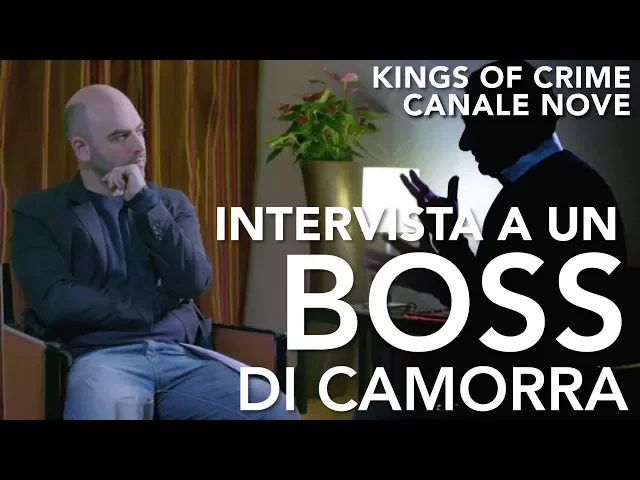
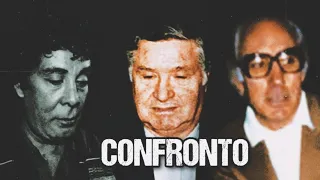
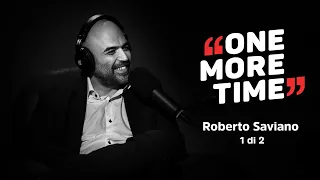
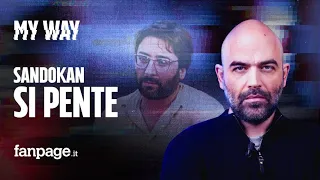
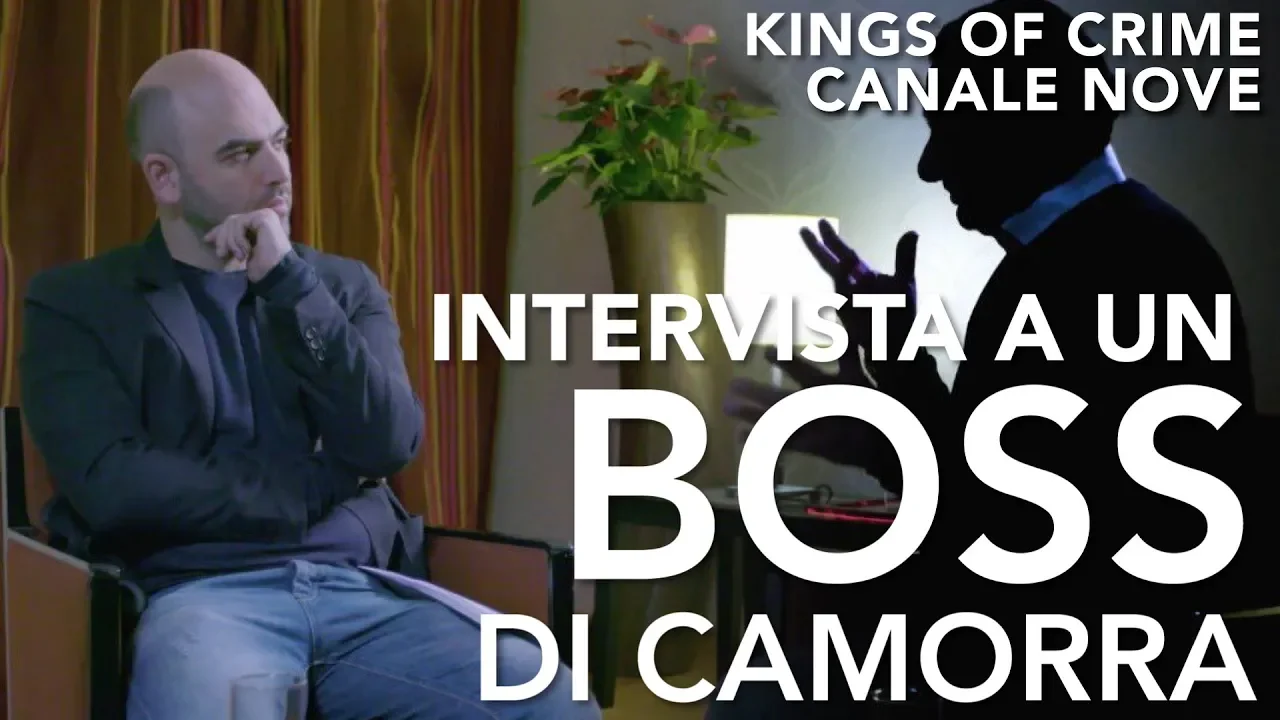
<i>2016. Roberto Saviano,</i> <i>in a secret location,</i> <i>meets boss Maurizio Prestieri,</i> <i>today turned state's evidence. </i> Along came my brother Raffaele, the head of our family, and said: "Maurì, take your drug-dealing spot and give it to Papele and his brothers".
To Raffaele Abbinante and his brothers. I got mad at my brother, but, like a true Camorra man, he said: "I don't give a fuck if you get angry because when I'm going home and you're behind me, I won't even turn around because you're my brother, I need to worry about these guys who aren't my brothers. I have to take care of my friends.
You can get pissed off all you want but if you're behind me tonight, I won't even turn around! " SELF-PORTRAIT OF A BOSS <i>I've often been</i> <i>face-to-face with bosses. </i> <i>As a kid I met them,</i> <i>I saw them testify in court,</i> <i>I've met with those</i> <i>turned state's evidence</i> <i>who explained why the Camorra</i> <i>had sentenced me to death.
</i> <i>Preparing an episode</i> <i>on Paolo Di Lauro,</i> <i>I interviewed his right-hand man</i> <i>and most intimate confident,</i> <i>Maurizio Prestieri. </i> <i>After serving more than 20 years</i> <i>of prison and house arrest,</i> <i>he's now turned state's evidence</i> <i>and lives in a secret locality. </i> <i>The words of a boss</i> <i>must always be filtered, measured.
</i> <i>They often send a double message. </i> <i>To interpret Prestieri's words,</i> <i>I asked for help from Anti-Mafia</i> <i>Prosecutor, Franco Roberti. </i> THE CLAN "We're all born good" Maurizio Prestieri was an important element of the Di Lauro clan.
He handled the drug-dealing spots in Secondigliano in Naples. He was an important character in that Camorra group. After his brother's death he rose in the consideration of Paolo Di Lauro, boss of the Di Lauro clan.
When he decided to collaborate, in 2008, he made an important contribution, helping us see the drug-dealing situation in Secondigliano, one of the biggest drug markets in Europe. At least at that time. He also helped us see the dynamics inside the Di Lauro clan, the conflict with Amato Pagano's breakaway group.
If I ask: "Who's Maurizio Prestieri? " what would you say? Maurizio Prestieri, like all Naples kids, was a good kid.
We're all born good. Some contorted minds think being born in Naples, you'll be in the Camorra. Not true, you could make pizzas!
Why the Camorra? Naples has lots of things. Maurizio Prestieri was born a Neapolitan "street urchin", because at 9 his father died.
My father died of a heart attack at 38 leaving 8 kids, all little ones, who had to find their bread, which, when there's a father, he does that. My brother, Raffaele, rest his soul, began breaking the law, he had family responsibilities. He was the oldest, he was 16.
He began with petty theft. I quit school after the fourth grade. My first theft was when I was working for Don Vincenzo, the milkman.
He'd give me 1,000 lire a week, my family bought ten pieces of bread, that meant saving us from hunger. . .
I don't mean metaphorical hunger, but belly hunger. My first petty theft was stealing the milkman's truck, the one I worked with. I ran off with the truck and all the milk.
Essentially. . .
a very troubled childhood. Then Raffaele began to do petty theft and that was the late 1970s. My brother had already done several heists of 30, 40 million lire, which at the time.
. . - Banks?
- No. Back then, factories gave pay envelopes. .
. - Pay envelopes. - Yes, but with cash inside.
No checks in those days. My brother Tommaso and I would follow but with different tasks. I'd steal gas, we'd commit a crime, like set a car on fire.
. . I was just a kid!
Raffaele was 17. We'd begin in Miezz'all'Arc, in the heart of the old Secondigliano. Aniello La Monica, Domenico Silvestri.
. . Most of them are deceased now.
Paolo Di Lauro, Abbinante Raffaele, Pariante Rosario, Micillo Paolo and my brother Raffaele. They began creating a "system". In this first nucleus, you're all under Aniello La Monica.
All of us! - Did you know Aniello La Monica? - Yes, I knew him.
. . Aniello La Monica was a criminal.
He woke up as a criminal and went to bed as a criminal. He was bloodthirsty, a dictator. .
. a pure dictator. - Linked to the Nuvolettas.
- Of Marano. A family tied to Cosa Nostra. The only family in Campania tied to Cosa Nostra.
The Nuvolettas, historically a Mafia family, also in behavior, because they wore caps, rifles. . .
Almost a Sicilian element. . .
He'd come for you, go with you. Acid was always boiling to dissolve someone in those big pots used for canning tomatoes. They were full of acid to put people in.
Mafia style. Encounters were organized, they'd talk, behind them a guy was going down, being put in acid, after boiling for a couple of hours his flesh dissolved, leaving just his teeth. Teeth didn't dissolve.
So, Aniello La Monica: first, the money from cement, then heroin you buy in Milan. Secondigliano becomes a heroin center. No, it had already begun in the clan, then Aniello La Monica died, he had the idea, but couldn't make it work.
- Why did you kill him? - He died of arrogance. He didn't realize those around him had grown, they'd stolen his craft, understand?
So, Di Lauro decided it, with my brother's okay. . .
The murder already was decided, then my brother was arrested and it was done. How was it done? It's interesting.
La Monica lived in Piazza Zanardelli. They called Aniello La Monica: "Anié, c'mon down! " With a simple excuse.
Aniello had finished lunch. He came down. They made their move: Raffaele Abbinante, Domenico Silvestri and Di Lauro Paolo.
Aniello came down the stairs, walked out his front door. As soon as he was out, a Fiat 132. .
. Back then it was luxury car. They ran him down, then got out and shot him.
Raffaele Prestieri and Paolo Di Lauro took over the clan. Business started booming. It started booming because we each managed a drug-dealing spot.
I had six or seven at that time, all kinds, open 24/7. In other words, all kinds. Cocaine, sometimes heroin and even smoke.
We bought wholesale, selling both wholesale and retail. The spot at "Sette Palazzi" was my spot for a time. That spot retailed 3 thousand pieces a day.
Three thousand at 50 thousand lire, what's that a day? 150 million a day. A month?
4 and a half billion a month. 3 and a half billion profit. Calculating drugs and expenses: 3 billion.
Then, as happens. . .
A spot like that can't last long because you get zillions of zombies, addicts looking for drugs. . .
What do you do? To "lower" it a little, or else it all blows up, you take 1 kilo of stuff and instead of cutting it with 1 kilo of lactose, you cut it with 4 kilos of lactose. The addicts buy it, shoot it up.
. . "It doesn't do nothin'!
" And they blame themselves: "Maybe it's my fault, today isn't. . .
Because the stuff's good here". The next day you sell him the good stuff again. And he thinks: "God, so, yesterday it was me.
. . " Do this five or six times a month, it's another 400 million you rake in at zero expense, it costs nothing, you're selling water at 50,000 a piece.
THE BLOOD FEUD "I had this guy's son killed" In Mugnano and Scampia, the 1990 and 2000 feuds, were the object of intense contrast by the Naples Prosecutor and Police Force. One imagines that criminal strategies set up by the bosses, the Camorra heads, should prevail, lucidly, over feelings of resentment and hate, instead, very often, it's hate, irrational sentiments, that determine certain choices. .
. even certain feuds, certain murders. Is that when the first real conflict with Rocco began?
I was in prison, that morning, May 18, 1992. My brother was outside the cafe, Rosario, my younger brother, was going to the sauna, we were a bit crazy for saunas, beauty treatments. .
. - Looks were fundamental. - We had no fucking thing to do.
Rosario saw my brother Raffaele who was back from Montecarlo so he stopped, and was there too. The order came to shoot. They killed my brother Raffaele, my brother Rosario, Aniello Quarto, a clan collector for the building sites, Abate Domenico, a kid who used to hang around us, Murolo Francesco, who was like a brother to me, they wounded a man from Castellammare, Cimmino, and a street cop.
I was in jail and saw two helicopters take off, Carabinieri and Police. I said: "That's no blitz at 11 am, something big must have happened". Out of the corner of my eye, there are cells on the prison walkway and one guy from a cell turns to another.
I can just read his lips, he says: "Two of Prestieri's brothers have been killed" pointing to me. "Two of Prestieri's brothers have been killed". I called the guard and went into my cell.
Because we're embarrassed. Why? Because a Camorra man feels embarrassed, he has a veiled embarrassment, he's embarrassed to feel bad, to be seen crying.
He's embarrassed. . .
understand? It's deep-rooted in Camorra people. - Your image must always be.
. . - Strong.
You mustn't let on that you're weak. So, the first thing is to run into your cell, alone. I turned on the TV and the news was saying that Raffaele and Tommaso had been killed.
Just imagine, in that environment, with death hanging in the air. . .
Two minutes later a fine May rain started, gloomy! Huge sadness, without consolation. I went back over our childhood, my brothers.
. . I have all this background in my mind, memories of when we were kids.
. . I cried all night.
My pain renewed in the morning when I read the papers, Tommaso wasn't killed, Rosario was. It started over, it's like all three were dead. Because you cried for two, the next day you cry for the other, you've cried for all three.
It's something. . .
Sometimes I hear someone who learns they killed his son, he hears on TV that they killed a son or a brother. I can imagine how that person feels. I even smell the odor of blood, I was three meters away.
Powerless. For me, the more they killed, the better, it was like a revenge. The thirst for revenge never got quenched, it was a foolish thing because my brothers would never be back.
It wasn't like, if you killed 15, one would come back! Or killing 30 both would return. .
. nothing changed. When they took Negri and tortured him, burning him alive behind my cell in Secondigliano.
Negri had taken part in the massacre and was to be killed: a blow to the head and then burned. But they got a brainstorm. They decided to bring him alive, they didn't kill him, then set him on fire.
Alive. Alive, in the car trunk. .
. you could hear his screams. Right when.
. . but they didn't last long.
It was done so you'd hear him. For the clan, Rocchino indicated your brothers. For the clan, it was Rocchino, but Rocchino had been a logistic support.
- What did they do to him? - Rocchino was murdered. He was murdered by Abbinante Antonio.
It was a gory murder. Abbinante Antonio went into the club where the regulars played, aimed his gun, everyone ran. Rocchino took the shot, fell to the ground, but didn't die.
The gun jammed. When a semiautomatic jams it tends to push the slide back. .
. Leaving the barrel out and the slide back. Abbinante Antonio, in one second, being a formidable killer, if he appears, if you see him.
. . you're done.
You can run to the Carabinieri, he'll go there too. A formidable killer. He let the regulars leave, with his gun jammed, he sat on Rocchino and with the gun barrel, not the handle.
. . With the barrel, he sat on him.
. . - In his face.
- On his head. He busted it open. Once his skull was busted open, the barrel was in his brain and it was over.
That's how he killed him. I got out of prison and was called by Abbinante Raffaele and Abbinante Antonio, who had a gift for me and they gave me the gun with Rocchino's brains still stuck to the barrel. That's the gift!
They took a rag, unfolded it, they showed me, then they put it under the tap, they rinsed it and said: "Here, it's that guy's brain". But then. .
. after a few weeks, his son was killed too. I had his son killed.
Rocchino's son was killed because. . .
There's the reason, that tomorrow, this guy could retaliate. Was it your idea or was it proposed? I got the idea and made the proposal.
But my boss was Di Lauro. And Di Lauro gave me this advice: "Maurì don't go yourself, because if you do, 30 minutes later, since you just left prison, they'll be at your door. " I organized it: I took Fusco Francesco, who was a relative, and a friend who's now dead, pointing out the target at the cemetery that Sunday morning.
He was killed while paying respects to his father. Yes, it was the first Sunday after the murder. - Pasquale wasn't in the Camorra.
- No. That didn't stop you. No, it didn't, but stupidly.
. . It's revenge that comes to nothing, but, at that moment, it seemed to lessen the pain.
It's true, you get nothing in return, it's just another life wasted, you get no return. Pasquale was shot to death. With a caliber 38.
- Before his mother. - Before his mother. .
. - His mother wasn't killed. - No.
Were you ordered not to kill her? The order was to kill just him, then. .
. If we're talking macabre, if you kill a woman's son before her eyes. .
. - It's much worse. - It's better if you kill her.
If you kill my son and leave me alive it's best you kill me, it's less painful. Like always in Mafia affairs, one episode of your story has always struck me. I'll let you tell it.
An innocent person gets killed by mistake. How did that go? We were supposed to kill a kid, he was bothering the building sites in Marano.
We were in Melito, on Marrone Street, I was down, as logistic support near the scene of the crime. There was the nephew of an entrepreneur who knew the victim, but we didn't know him. The killers were on a scooter parked at the top of the stairs, because there was another way out.
The crime scene was at the foot of these stairs. For the entrepreneur's nephew the signal was. .
. a hand-shake, the one he said hello to, shaking his hand, that was the victim. It was all ready, we were waiting for this one to come and shake his hand, a kid came.
This idiot, because he was an idiot, knowing how the thing was to go. . .
A kid came and this guy shook his hand. The killers went down and started shooting. As they're shooting, he shouted: "No, no!
" The kid was on the ground, still alive, but he'd taken a few shots. The killer with the gun, this guy shouting, the other on the ground. .
. He didn't know what to do. .
. and fired another four rounds. - Killing him.
- Yes. What struck me about this story was the mother of this kid, a postal worker. .
. One day I was reading the paper: "Camorra murder in Melito, boy with a clean record is killed". The boy's mother went on various programs to say her son was not in the Camorra but no one believed her.
ROBERTO SAVIANO TELLS OF THE LIVES OF THE BOSSES ROBERTO SAVIANO TELLS OF THE LIVES OF THE BOSSES THE RISE AND FALL "Settling into good after evil takes a moment. . .
but into poverty after wealth is a tragedy" The Camorra, compared to the Mafia, has always tended to greater ostentation. Even the Calabrian 'Ndrangheta is more incline to hiding, not to display. The Neapolitan personality is prone to manifest power through external signs thinking it means to be acknowledged more as a powerful subject, capable of marking people's fates.
The Camorra system rotates around these characters, capable of deciding the fates, both in life and death, of those who live in a certain controlled territory. - What do you miss most? - Everything.
Not everything, not prison, fear, I don't miss those, I don't even want it, but I miss luxury. I miss luxury. Sure, now I go to the supermarket with my wife.
I seem like a normal person if you don't know me. I've acquired that. I want to tell you something important.
Settling into good from evil takes a moment. It takes no time. If I have nothing, it takes no time to get used to good.
If cotton shirts irritate my skin I look for cashmere ones. Or, I'm allergic to white gold so I want yellow. It takes no time.
Pignatelli shoes instead of market ones. The market ones give me an allergy. The opposite is tough, going into poverty from wealth is a tragedy!
But from poverty to wealth is easy. It takes a second to learn. What's a good life?
Travel, nice cars, brand watches, gambling. What's nice in life? Drving around in a big car, going to a restaurant without looking at prices, asking for the wine list and immediately discarding the first digits.
You know wines, you know lots of these things! If you were a child who had no bread and later you buy a bottle of Magnum di Amarone della Valpolicella, that costs 800 euros. .
. Where did you learn these things? You always took a pint of local wine.
There's so much money coming in that you get immediately used to well-being. I came to love Dom Pérignon Rosé 1986 and 1989. I'd have it sent from Switzerland because it couldn't be found here and I'd pay 1,200 euros every bottle.
It's a lot of money. I bought it by the case. I wasn't a sommelier as a kid.
Your most expensive dinner? I was at a party to celebrate my name's day. .
. in Cattolica. I don't remember, 50 or 60 million lire.
- How many people? - About thirty. Another time I was with Di Lauro Paolo, we went to have a drink and spent 28 million, just to have a drink.
People who work, when they get paid, smell the scent of money. We'd smell the stench of money because it was so much. You get this avalanche of money, without working, with the smallest effort, just risking your neck.
With minimum effort, you got a mountain of money. Today I understand how life works. I can understand what 100 or 500 euros means.
I'm starting to understand the value of money. - Because, to earn it. .
. - Not in the past? No, I used to weigh money.
Do you know the weight of 1 billion lire, in bills of 100 thousand? 13 kilos and 435 grams. We'd weigh it because counting took time.
We'd put the money on the scale, if there were 14 kilos 400 grams, fine, it might be 700 thousand lire less but anyway, in those amounts. . .
We brought in the takes on Saturday, we had to count 2, 3, 4 billion. It seems silly, but in bills of 5, 2, 10 thousand, 50 thousand, 100 thousand lire. .
. it would take hours! Is it true you always went to Sanremo?
- Camorra people always did. - Always! Sanremo was visibility.
Sanremo is a way of being part of the elite at the Italian Song Festival. You stay in the same hotel as emcee Carlo Conti. There are places where all the VIPs go.
You sing, get your picture taken. I went many times, I'd show off my suits. When I'd go for six evenings, I'd bring six Pignatelli suits, six different watches for each suit.
I sent a car ahead with my clothes and then I'd leave. You can be a great craftsman, a great pastry chef, you can be a great cook, a great hairdresser in a Naples neighborhood but you're still anonymous. But if you're in the Naples Camorra, you're well-known, you're important, if you say a simple hello.
. . it's like being a VIP.
If a VIP goes to a disco, they all want his picture, his autograph, they recognize the guy because he's well-known. Even in a district of 10, 5 thousand people, you're important for the community because they recognize you. You never have to wait your turn in stores, if you're walking and someone waves to you and maybe you don't see him because you're distracted, he'll keep waving until you return the wave.
Then he goes home and says: "Maurizio waved to me! " That's a slice of notoriety at the local level, just because you're in the Camorra. Women too, and young girls, even today want to be with a Camorra man.
Being the woman of the latest Camorra man gives you opportunities, although in a small community, not worldwide, national or European. Even if just at the neighborhood level. .
. "That's the girlfriend of so-and-so". If you double park, no one will bother you, knowing the car is yours.
They'll wait for you to finish and move it, because they don't want a clash, they want your friendship. It's a very negative thing, instead of ostracizing these people, they're given importance, people give them importance. Being normal in Naples is a disability.
If a guy works, they say: "He's an idiot, he's a good kid". If a boy in Naples goes to work, he has a small car, maybe even a bit old. .
. The girl with him feels ostracized because the boy's an idiot, he works! A kid in Naples today, doesn't want to work for 500 euros a week.
- Not a week! A month. - A week.
He works for 300 at a drug-dealing spot because that 300 gives him vast visibility, which the 500 do not. If I become Maurizio Prestieri, I'm immediately a personality. If I go around my district, they recognize me, as if I were the mayor, the boss.
If we go somewhere, I might be recognized more than you. If there's a free table, they give it to me, not you. Because what can you do for them with your pen?
2002, a warrant of arrest, Paolo Di Lauro and 92 people. The fall of the empire. Why were you arrested in Marbella?
I mean, why choose Spain for your hiding place? If you were sentenced in Italy, in absentia, Spain didn't recognize sentences in absentia, when the defendant isn't in court, and so, didn't authorize extradition. So, I went to Spain.
. . I'd live in Spain, I feel very close to that country.
I love Andalusia. Living in hiding is the most expensive way to live, you can't do it without money. Not quite ten months of hiding in Spain, cost me nearly a billion and a half lire.
What makes living in hiding so expensive? Moving around, the family. .
. The attic where I was arrested in Marbella, I'd paid 27 thousand euro for three months. Then you rent a villa to spend Christmas in Barcelona, you pay 35 thousand euros for it, meantime the euro's in.
You never eat at home, you buy a car to get around. Telephones for communication. I threw away twenty phones to make ten calls.
Ten calls, twenty phones, with ten I'd call here and with another ten, I'd call there. Phones became disposable: "Hello. .
. " and you toss it. - Phone and phone card.
- Everything. Not kept or recycled, tossed. One Sunday, about half past twelve we went to have an aperitif.
I got out for the aperitif. . .
they come: "Carabinieri! Maurì don't move or create problems. .
. " I looked at my wife and said: "It's over". I could have run but when you're with the family, you're conditioned.
If I'd been alone, 99% I'd have run. Now, I wanted to commit a crime in Spain to stay in Spain, because prison in Spain is better than being free in Italy. I said: "At home I have 150 thousand euros and a false document.
Take me there and I'll give it to you". "And this money? " the Carabiniere asked.
I said: "It's money I use to buy drugs". And they took me to jail. Prison in Spain.
. . you're never in your cell.
Only to sleep and nap in the afternoon. You get six visits a week, anyone can visit you, all they need's a document. And you get two "vis-à-vis" a month, they're intimate visits.
If you have no girlfriend or wife, even a whore is okay. How much time did you serve? I did 12, 13 years of prison.
Then later, nearly 10 years of house arrest, but that doesn't count. Just think, a boss is recognized. When you go into prison, they all know who's coming in.
In Italy. . .
"Prestieri, Maurizio! " they already want to grab you. This is maximum security, where there are rooms with 5-6 people or 2-3 people.
"Maurì there's room here! Come on! " You bring well-being thanks to money, because you make out a money order, and another one, a guy can't have a visit, you send for his wife.
A guy has no shoes, you get shoes for him. . .
So what does this create for you? Like it says in the film "The Professor", "He who gives me bread becomes my father". But there's respect for your background because you're the same, even in prison.
POWER "I think that commanding is the most wonderful drug of all" The Camorra, like all Mafias, seeps into inequalities and gets fat on these social inequalities. It does business with unscrupulous wealth and recruits the desperate, the misfits, the resigned in the criminal ranks. The real strength of all organized crime is in the relations it weaves and the consensus it gets.
Essentially, the Camorra offers services. It substitutes public power. The Camorra offers protection, it offers.
. . drugs.
The kickbacks, the extortion, are taxes for protection. It's a form of service. Voting support for politicians is a service.
What did you enjoy most about being in the Camorra? We can imagine what you paid, but what did you enjoy most? What kind of freedom?
Money, fun, no schedules, deciding life or death. . .
What? Power. Power.
If we look at the greats, the world's greats. . .
We in the Camorra don't compare to the world's greats, but we see Trump. What's Trump doing there, a guy who's already done everything? Because he wants to command, he wants power!
In Naples we say: "Commanding is better than screwing". "Screwing" not in the vulgar sense, but in the sense of "eating". If I command, I eat too.
Commanding is everything. If you command, you have money, you eat, you do everything. The Camorra aspires to command.
- Much more than earning? - No. .
. it's automatic! If you command, you earn, if you command, you have beauty.
If you command, no one will ask: "What are you doing? " When I commanded, I dressed well, I'd go out and they'd say: "You look great, you're handsome! " Now I no longer command, no one says it!
Commanding is appeal. I think commanding is the most wonderful drug in the world. Even if you command a group of numbskulls, it's still commanding.
- What do you do today? - I work. I had to invent a job because I'd never worked.
I worked some as a kid, as a milkman, I was very young and my father had died. Now I've invented this job: I mediate the buying and selling of used cars. This allows me to support my family.
I go out early like all normal people and I go to work. I make deals, contracts, sometimes I have to wait, maybe a kid I need to talk to keeps me waiting for hours. In other days, I'd have killed him!
Actually, I used to go directly in and as soon as they saw me. . .
Those are other stories. Now, sometimes I get mad, because I led a certain kind of life. .
. ROBERTO SAVIANO TELLS OF THE LIVES OF THE BOSSES ROBERTO SAVIANO TELLS OF THE LIVES OF THE BOSSES STATE'S EVIDENCE "I'm a Camorra man, but I can't be one anymore" Those who turn state's evidence make a choice of convenience. They make a contract with the state and know they must respect it, making their contribution, with completeness, candor, without reserve.
They are tools of the investigation and a source of information for trials to be used in court, it's very important. But they're also human beings, the state must take charge of them as human beings, as economic and moral support for those who deserve it, collaborating fully with justice. Even collaborating, I was a Camorra man.
Because I come. . .
I'm known as a rat. Who could deny it? Not even me.
Those turned state's evidence, me included, don't deserve to live. Don't deserve to live. .
. meaning? Because you ate one type of bread in life, today you're eating another.
You used to be a friend to Di Lauro, today you help sentence him to life. But if we look at it from a human standpoint, I help sentence my friends to years of prison and I'm a rat. But if I invite my friend home and get him killed, what am I?
Smart? A boss? A Camorra man?
What am I? A double rat. In this interview, I intend to say I'm sorry to all those I did evil to.
I did evil and believe I should apologize. But, for these people, I can do no more. I'd like to do something to make up for things, but, unfortunately, men can't be recycled.
I've changed, but I can't recycle myself. You've never said you were repentant, but state's evidence. I'm not repentant, it's an inappropriate word.
"Repentant" is spiritual, it's a fact of the soul. I couldn't do that, maybe in the future. .
. In terms of conscience, you're not repentant. - No, I'm not.
- Does apologizing contradict that? No! I apologize for what I did, if I repent for what I did I must repent spiritually.
I'm not repentant, because I've turned state's evidence. First of all, I'm so intelligent and I have such principles, although a Camorra man might say: "What principles! You're a piece of shit!
You're a rat! " Let's forget the Camorra. I know I can't allow myself to be part of the Camorra anymore.
I can't say I'm not, I'm still a Camorra man, but I can't be one anymore. You're still a Camorra man but you can't be one anymore. - I can't allow myself to be.
- Why? Once I turned state's evidence, the role's no longer mine. It would muddy my principles, my being, my family, muddy them!
So, I can no longer be in the Camorra. Even if, sometimes in gestures, in attitudes, it's a monster you try to repress but the monster is always inside you. Because we're monsters, we talk easily about killing people, like it were nothing, but these are very serious things.
When you commit or order a murder, there's always a part of you that fights for this thing. If you commit one or order one, human life must be protected. Life is life.
We toasted lots of times after a murder, as if it were a party. "He's dead, let's toast! Champagne!
" for the murder of someone that you'd ordered or committed. All deaths weigh on our consciences. Christmas will soon be here, you sit at the table with your kids, not even humanly, but as a man, you must have a thought for those who, because of you, will not be sitting at the table with their kids.
It's not being a "do-gooder", because I'd do it again. I'd do it again, because I don't disavow my other life, I disavow nothing: "No, no way! I'm a decent person!
" No. . .
For civil society I am. . .
I should use a swear word. I'm a man of "beep", like all those turned state's evidence, for civil society. We took away from civil society, either because we put 100 kilos of cocaine on the market or we did extortions or we killed someone or we buried toxic waste where people die.
. . We're worse than toxic waste for civil society.
I should ask civil society, humanity, for forgiveness for what I've done, but no! Because if I went back on my life's path, I've been extremely lucky. I'm a lucky man, I'm still here to talk about it.
But if I could go back, I'd take the same path. Not because I'd want to, I don't repent for what I've done, but because repentance is too great a word for me. Did you often think you'd be murdered?
A Camorra man counts on having a short life. I, at 27, 28, had already seen everything. I'd been to America, all over the world.
Like a man with a terminal illness, like having a brief expiration date. A Camorra man counts on having a short life and your payment in the end is more or less expensive, with death or prison. But, when you live this life, death always belongs to others, never to yourself.