Imagine that for centuries, the story of Adam and Eve has been told as the definitive beginning of humanity: a man formed from dust, a woman created from his rib, a paradise called Eden, and a forbidden fruit that changed the course of history. This tale has been passed down through generations, shaping religions, cultures, and beliefs. Yet, buried beneath layers of time and translation lies a truth far older than the Bible itself.
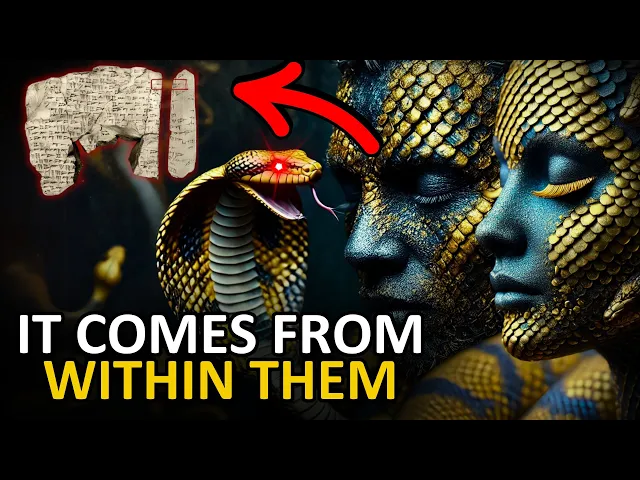
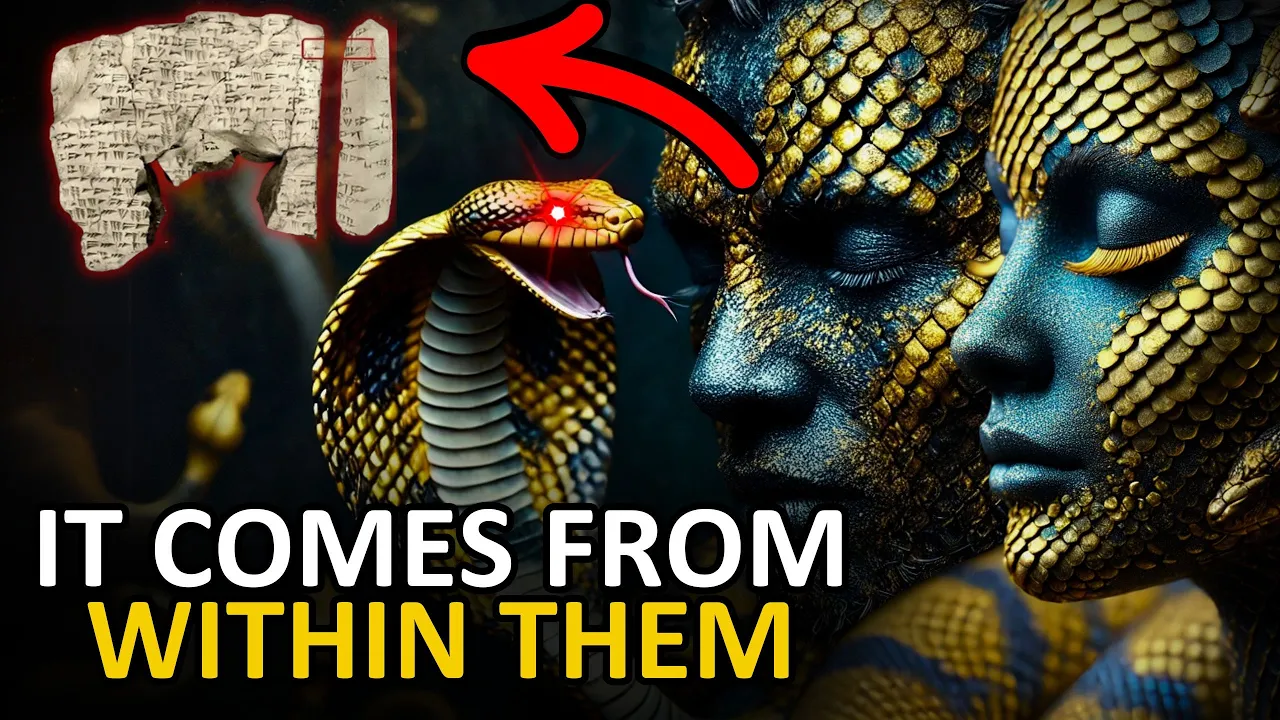
The origin of Adam and Eve stretches beyond Genesis, hidden in ancient Mesopotamian, Ugaritic, and Canaanite texts that predate the biblical account by thousands of years. Clay tablets unearthed from the ruins of lost civilizations hold echoes of a forgotten past. These texts tell of a divine garden, a magical tree, a cunning serpent, and the first human.
Long before the Hebrew scribes wrote the Book of Genesis, the Sumerians, Babylonians, and Ugaritic peoples all had stories that mirror the Eden narrative, yet with strikingly different details. The first human, known in one text as Adamu, was not just a mortal man but a being connected to the divine. The garden, often placed on a mountain at the edge of the world, was not only a paradise but also a place of hidden knowledge and power.
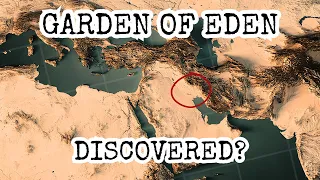
In the ancient land of Sumer, the myth of Dilmun spoke of a pristine, untouched paradise where the gods first placed humanity. In this land, sickness, aging, and death did not exist; a sacred tree stood at its center, offering gifts of wisdom and eternal life. The Akkadians and Babylonians spoke of Enki and Ninhursag, a tale of gods creating humans from clay mixed with divine essence.
These early narratives, with their themes of creation, sacred gardens, and divine beings, laid the foundation for what would later become the story of Adam and Eve. The serpent in the Garden of Eden, long portrayed as the embodiment of evil, has its roots in even older legends. The Epic of Gilgamesh, one of the oldest known literary works, describes a hero's journey to find the secret of eternal life.
At the story's climax, he obtains a magical plant that grants immortality, only for a serpent to snatch it away. In the Ugaritic texts, a great serpent named Lotan, later transformed into the biblical Leviathan, represents the forces of chaos and knowledge beyond human reach. This serpent was not simply an enemy but a symbol of ancient wisdom, a being that existed before the order of gods and men.
Even the creation of humanity follows an ancient pattern found across multiple civilizations. The Sumerians and Akkadians told of gods forming the first humans from clay, shaping them with divine breath or blood. The Babylonian Atrahasis myth describes how lesser gods, burdened by labor, rebelled against their rulers.
To solve this, the high gods fashioned humans from a mixture of clay and the blood of a slain deity, making them both mortal and divine. In the Greek world, Prometheus molded humanity from clay while the goddess Athena breathed life into them. Across these cultures, the idea of humans being crafted from the earth by divine hands remained a consistent theme.
The forbidden fruit, often depicted as an apple, finds its origins in a much older fear of divine knowledge. In Mesopotamian mythology, the hero Adapa was offered food by the gods that would grant him immortality, but he refused, tricked into believing it was poisoned. This moment sealed his fate as a mortal, much like how Adam and Eve's choice in Eden led to their exile.
The tree of knowledge in Genesis, which grants understanding rather than eternal life, reflects an ancient struggle between wisdom and obedience. Remember to join our community by subscribing to this channel. The sacred mountain of the gods, found in Ugaritic and Canaanite traditions, may have inspired Eden itself.
This holy place, often depicted with rivers flowing from its peak, served as the dwelling of deities and the source of life. In Ezekiel 28, an older version of Eden appears, described as the mountain of God, where a divine being was cast down for seeking forbidden power. This aligns with ancient myths where rebellious gods or divine beings are punished for their ambitions.
The concept of a sacred garden appears in multiple cultures across the ancient Near East. The Sumerians describe Dilmun, a paradise untouched by sickness or death, where fresh water flowed from hidden springs, much like the well-watered Eden. This land was said to be a place of divine purity, where gods walked freely among mortals.
Similarly, the Ugaritic texts mention a vineyard belonging to the gods, an idyllic place filled with life and abundance. One of the most striking similarities lies in the creation of the first human. The Book of Genesis describes how Adam was shaped from the soil, given life by the breath of God.
This mirrors older accounts, such as the Atrahasis epic from Babylon, where humans were crafted from clay mixed with divine blood. In Mesopotamian belief, this combination made humans part divine but also destined to serve the gods, much like Adam, who was placed in Eden to tend and keep it. The Greeks also held similar ideas, with Prometheus forming the first humans from clay, bringing them to life with stolen fire.
Across these cultures, the act of molding humanity from the earth tied people to the natural world and the gods who governed it. The tree at the center of paradise is another recurring theme. In Genesis, two trees dominate the story: The Tree of Life, offering immortality, and the tree of knowledge, granting wisdom.
The duality of these trees represents the tension between eternal existence and the pursuit of understanding. In Mesopotamian mythology, sacred trees appear frequently in art and literature, often guarded by supernatural beings. The most famous example comes from the Epic of Gilgamesh, in which the hero embarks on a quest for eternal life.
He learns of a plant that grants immortality, only to. . .
Have it stolen by a serpent while he rests. The loss of this gift mirrors Adam and Eve's banishment from Eden after gaining knowledge, forever separating humanity from divine favor. Serpents, often depicted as tricksters or symbols of wisdom, play an important role in these ancient traditions.
In Ugaritic texts, the chaos serpent Lotan is a monstrous force subdued by the god Baal, similar to how later biblical traditions depict Yahweh conquering Leviathan. The Babylonian god Marduk slays the dragon Tiamat, bringing order to the cosmos. These early stories present serpents as both powerful and disruptive figures that challenge divine authority.
The serpent in Eden carries these same attributes, offering knowledge and change rather than destruction. In some traditions, serpents were associated with hidden wisdom and even healing, as seen in Egyptian and Greek mythology. Their role was not always one of deception, but often of transformation, bringing new understanding to those who encountered them.
The forbidden fruit also has ancient roots; many myths explore the idea that consuming divine food or drink can either bless or curse mortals. In the Babylonian tale of Adapa, the gods invited a wise man to dine with them and offered him the food of immortality. Deceived by his own patron deity, he refused it, losing his chance to live forever.
In Greek mythology, Pandora's jar contained all the world's misfortunes, which she unknowingly unleashed upon humanity—an act reminiscent of Eve's choice in Eden. These stories reflect an ancient concern about the limits of human knowledge, portraying divine gifts as both desirable and dangerous. The idea of exile as punishment is another shared theme.
In Genesis, Adam and Eve are cast out of Eden, forever separated from the perfection of paradise. Similar fates befall other figures in ancient mythology. Gilgamesh, after failing to obtain immortality, must return to his city and face his mortality.
The Ugaritic hero Danel loses his son after divine forces interfere, changing his life forever. These tales emphasize the irreversible consequences of crossing divine boundaries, reinforcing the belief that there is a price to be paid for challenging the natural order. Even the depiction of God in Genesis reflects earlier ideas.
While later biblical tradition portrays Yahweh as all-knowing and all-powerful, the Eden story presents a more human-like deity. He walks in the garden, speaks directly to Adam and Eve, and reacts with surprise when they disobey. This aligns with Mesopotamian myths where gods interact with humans in personal, often flawed ways.
In many cases, deities struggle to control the world they create, dealing with rebellious mortals, chaotic forces, and unintended consequences. However, the story of Eden presents a deity that appears far more human-like, one who experiences surprise, regret, and even frustration—unlike the distant, untouchable God of later biblical texts. The Yahweh of Genesis interacts directly with his creation, walks through the garden, and reacts emotionally when his plans unravel.
This portrayal aligns with older Near Eastern traditions, where deities were powerful yet fallible, struggling to maintain control over their creations. In Genesis, God forms Adam from the ground and breathes life into him, placing him in a carefully cultivated paradise. Yet almost immediately, issues arise.
Despite the perfection of Eden, Adam is lonely, and God, unexpectedly realizing this mistake, attempts to fix the problem by creating animals. When these creatures fail to provide companionship, God forms Eve. This trial-and-error approach reveals a deity adjusting and responding, rather than foreseeing all outcomes.
This theme of divine miscalculation continues as the story unfolds. The serpent, an independent creature within the garden, introduces a challenge that Yahweh does not prevent. Unlike later Christian interpretations that associate the serpent with Satan, the original text never describes it as an adversary to God.
Instead, the serpent simply exists within the divine creation, possessing intelligence and curiosity. When it persuades Eve to eat from the forbidden tree, there is no intervention, no immediate correction—only a reaction after the deed is done. The moment Adam and Eve eat the fruit, their awareness shifts; they become conscious of their nakedness and attempt to cover themselves.
Instead of witnessing this transformation, instantly Yahweh appears only later, walking through the garden as if unaware of what has transpired. He calls out, asking Adam where he is—a question that suggests he does not immediately know what has happened. This scene is remarkably different from the later biblical depictions of an omnipresent, all-seeing deity.
When Yahweh finally discovers the act of disobedience, his reaction is not calculated or measured, but emotional and punitive. He curses the serpent, increases Eve's pain in childbirth, and condemns Adam to toil in hardship. The punishments resemble impulsive judgments rather than carefully designed consequences.
In contrast, Mesopotamian deities often punished humans for breaking divine laws, yet they sometimes offered second chances or alternative paths. Are you enjoying the story? Support our channel by clicking the subscribe button.
This depiction of a flawed or struggling Creator is not unique to Genesis. In Sumerian and Akkadian myths, gods frequently face unexpected challenges in their efforts to shape the world. Even in Greek mythology, divine beings are not infallible.
The Titan Prometheus defies Zeus by giving fire to humanity—an act the ruler of the gods did not foresee. Zeus retaliates in anger, punishing both Prometheus and mankind. The gods of Olympus, despite their immense power, frequently miscalculate, react emotionally, and attempt to correct their own mistakes—just as Yahweh does in Eden.
The imperfection of the divine in Genesis is further emphasized in the immediate aftermath of humanity's exile. Yahweh, realizing that Adam and Eve might now reach for the tree of life and become immortal, acts out of fear. He does not wish for mortals to possess both knowledge and eternal life, so he takes drastic measures: banishing them from the garden and stationing a flaming sword to block the way.
This response is not one of supreme confidence, but of concern over maintaining control. The idea that humans could obtain divine traits without permission was a deep-seated fear in many ancient myths, often leading to catastrophic consequences. Adam and Eve is one of the most famous biblical stories, but Jewish mysticism makes it much more complex and mysterious.
In Midrash, ancient Jewish commentaries, and Kabbalah, Jewish mysticism, Adam and Eve's creation, their roles, and their transformations are filled with deep symbolic meanings. These interpretations reveal hidden aspects of the story, including the existence of Lilith, Adam's first wife, and the belief that Adam was once a being of pure light before his fall. In traditional biblical texts, Eve is presented as the first woman, created from Adam's rib; however, in some Jewish traditions, particularly in midrashic and mystical texts, there is another woman before Eve: Lilith.
According to the Alphabet of Ben-Sira, an ancient Jewish text written between the 8th and 10th centuries CE, Lilith was created at the same time as Adam, from the same earth or clay. Unlike Eve, who was made from Adam's rib to be his companion, Lilith was his equal in creation. Because of this, she refused to be subordinate to Adam.
Lilith demanded equality in their relationship. When Adam insisted that he should have dominance over her, she rejected him and fled to the Red Sea, a place believed to be inhabited by spirits and demons. God sent three angels—Senoi, Anoi, and Semangelof—to bring her back, but Lilith refused.
Consequently, she underwent a transformation into a nocturnal demon, symbolizing rebellion, independence, and untamed feminine power. Over time, Jewish folklore depicted Lilith as a dangerous being associated with miscarriages, crib deaths, and attacks on newborns. To protect children from her, amulets with the names of the three angels were often placed in homes.
In later Kabbalistic traditions, she was seen as a seductive demon, sometimes appearing in dreams or myths as the mother of evil spirits. Because she refused to submit, God decided that Adam needed a different kind of partner—one who would be more connected to him and less likely to challenge his authority. This led to the creation of Eve, formed from Adam's own body.
Since Eve came from Adam rather than being created separately, she was considered more naturally connected to him and more likely to remain by his side. In Kabbalah, a mystical branch of Judaism, Adam's story takes on a much deeper meaning than just the first man made of flesh. Some interpretations, especially from the Zohar, the foundational text of Kabbalah, describe Adam as a spiritual being before his fall.
Before the original sin, Adam is said to have possessed a light body, a divine luminous form that was not yet bound to the physical world. In this state, he was more like an angel than a human, radiating divine energy and spiritual power. He did not experience hunger, pain, or mortality.
The moment Adam and Eve ate from the Tree of Knowledge, their entire existence changed. The sin introduced limitations into their being, and as a result, Adam lost his luminous form and was transformed into a being of flesh and blood. This shift from spirit to matter mirrors the Kabbalistic idea that sin separates humanity from divine light, trapping the soul in the physical world.
Some mystical teachings also say that before his fall, Adam's soul contained all human souls, meaning that all of humanity existed within him in a unified spiritual form. When he sinned, his soul shattered into countless pieces, and those fragments became the individual souls of all future generations. This concept is deeply tied to Tikkun Olam, the mystical idea that humanity's role is to repair the world and restore divine harmony.
Every good deed and act of kindness helps rebuild the lost light of Adam, bringing people closer to their original divine nature. The story of Adam and Eve has shaped human history, influencing religious traditions, philosophical thought, and cultural beliefs for thousands of years. But beneath the surface of this well-known tale lies a far deeper and more complex reality, one that connects to ancient myths, mystical traditions, and the eternal struggle between divine authority and human free will.
Through Midrash, Kabbalah, and comparative mythology, we uncover layers of meaning that go beyond a simple story of creation and disobedience. The idea of Adam and Eve as the first humans takes on new dimensions when we consider Lilith, the rebellious first wife who represents independence and defiance. In contrast, Eve's creation from Adam's own body symbolizes a more submissive and spiritually linked partner, ensuring harmony within divine order.
These two figures, though opposites, both reflect aspects of human nature: the desire for autonomy and the longing for connection. The mystical teachings of Kabbalah reveal that Adam was originally a being of divine light, a spiritual entity far removed from the material world. Only after the fateful decision to eat from the Tree of Knowledge did he lose his luminous form, becoming bound to the physical world with all its limitations—pain, mortality, and struggle.
This transformation was not just a punishment, but a dramatic shift in existence, reflecting a universal theme in mythologies across civilizations: the transition from perfection to imperfection, from a state of divine closeness to one of separation and longing. One of the most profound aspects of the Eden story is its connection to the ancient battle between structure and disorder, obedience and rebellion, knowledge and ignorance. Many cultures told myths of gods trying to establish order in a world full of unpredictable forces.
The Babylonian Enuma Elish describes how the god Marduk defeats the chaos dragon Tiamat, splitting her body to create the heavens and the earth. The Ugaritic texts tell of Baal battling Lotan, a monstrous serpent that represents disorder. In the Eden story, Yahweh creates a world of perfect balance, but the serpent introduces an element that disrupts it.
This figure, often misunderstood as merely evil, actually represents a force that challenges divine control. Pushing humanity toward self-awareness and transformation, I—and many ancient traditions—believe that serpents were not always symbols of deception; they were guardians of wisdom, protectors of sacred knowledge. The serpent in Eden, rather than being a villain, could be seen as an agent of change, setting the course of human history into motion.
The moment Adam and Eve ate the fruit, they became aware of their mortality, their choices, and their own power. They stepped outside of the divine framework that was designed for them, gaining free will and responsibility. Yet, this very act of defiance results in exile, mirroring the belief that knowledge comes at a cost.
If you're enjoying this journey, click the "Super Thanks" button; your support helps me continue uncovering ancient mysteries, hidden histories, and forgotten legends. The themes within the Adam and Eve story—loss of innocence, the burden of knowledge, the search for redemption—are not exclusive to the Bible. They appear in countless myths and legends across time and cultures.
The Greek story of Pandora, who unleashes suffering into the world by opening a forbidden jar, follows a similar pattern. The Epic of Gilgamesh, one of the oldest recorded narratives, tells of a man who seeks eternal life, only to have his chance stolen by a serpent. The repetition of these ideas across different civilizations suggests something profound: these stories were not simply invented; they evolved, adapted, and were reshaped to fit different societies.
The biblical version of Eden is part of this vast tapestry of human storytelling—a version that was carefully crafted to reflect the unique beliefs of ancient Israel. But the deeper meanings remain universal. The desire to return to paradise, to regain lost perfection, and to understand the nature of good and evil is something that has driven humanity for millennia.
Cabalistic teachings suggest that the fall of Adam was not just about disobedience; it was part of a larger journey toward spiritual growth. Some traditions even propose that the ultimate goal of human existence is to restore the divine light that was lost, slowly working toward redemption—a concept known as Tikun Olam, or repairing the world. The story of Adam and Eve is not just a tale of punishment, but one of awakening.
It is a story about the cost of knowledge, the consequences of choice, and the endless struggle between obedience and self-discovery. Every civilization has wrestled with these ideas in different ways, and each interpretation offers a new lens through which to view one of humanity's oldest and most enduring stories. Thanks for watching!
Join our community by subscribing to this channel. Until the next video, goodbye.