Many people struggle to journal because they sit down to write and they simply don't know what to say. They stare at the blank page waiting for something deep and meaningful to come to them. They want to write something that sounds like it belongs in a journal, something introspective and profound.
And when that doesn't come easily, they stop. Part of the problem is cultural. We've turned journaling into a kind of performance.
Writers and influencers online frame it as a tool for self-discovery or emotional healing. Journaling has become less about noticing your life and more about fixing it. But it didn't start that way.
For centuries, people kept journals to record what happened to them. [music] The weather outside, what they ate, who they saw, what they were working on. All of the ordinary details that make up a life.
And this approach to journaling, where you focus on the external details of your day, has a strange way of capturing more meaning than the inverse where you focus so hard on your [music] internal world. Hi, I'm Sam Mass. I'm a writer and filmmaker.
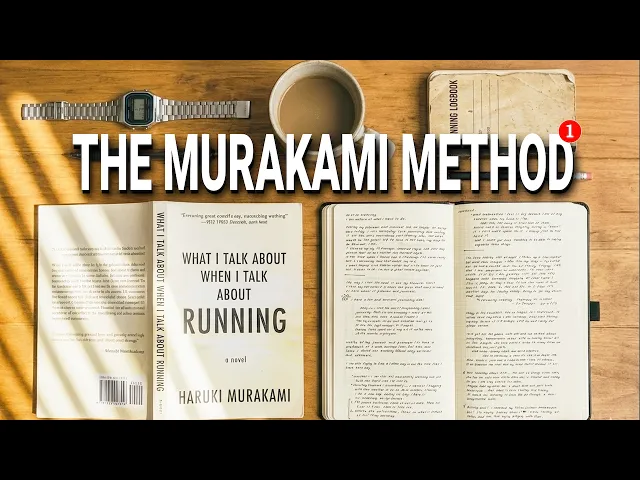
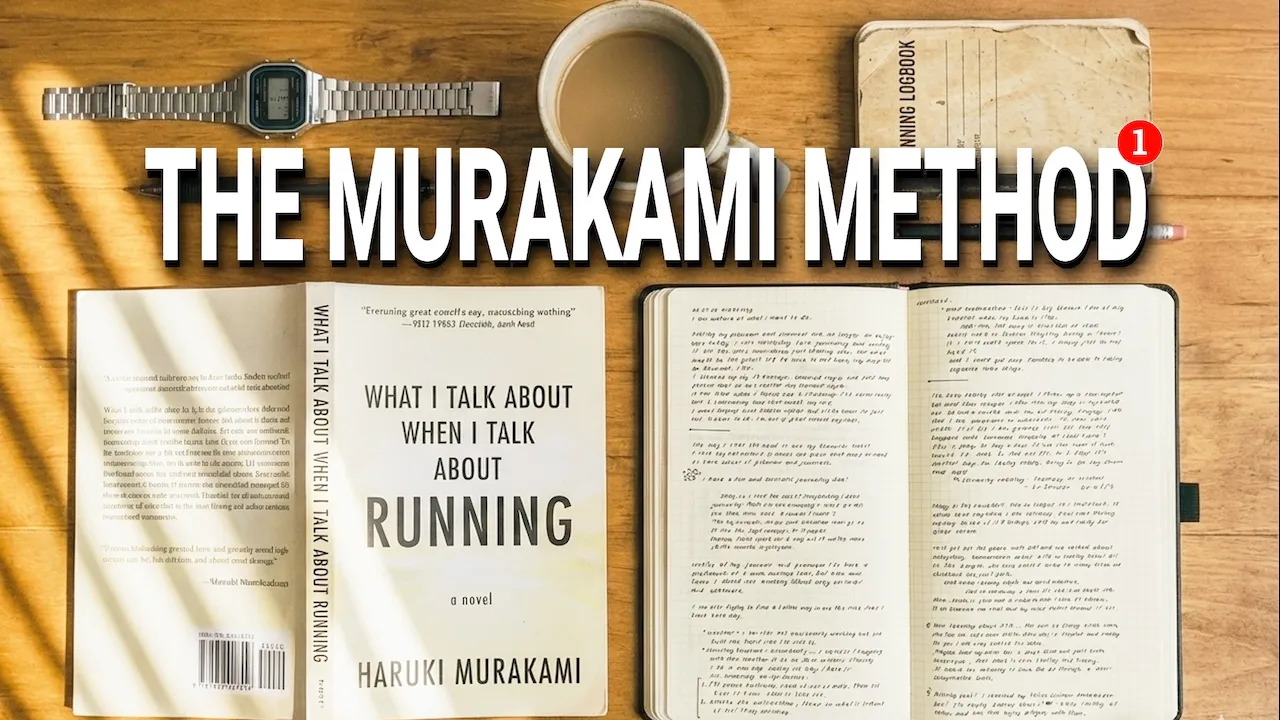
And in this video, we're going to be talking about that more grounded approach to journaling, one that is rooted in observation [music] rather than performance. And to do that, we're going to be using what I talk about when I talk about running by Herukqi Morami as our example. If you've never read it, what I talk about when I talk about running is [music] part memoir, part diary.
Morami wrote it while training for marathons and writing novels. He used his practice of running as a lens to think about work, aging, endurance, and the creative [music] process. A lot of the details in it are pretty ordinary.
He begins many of the entries by talking about the [music] distance that he ran that day, what the weather was like, how he felt, or the music that he listened to. But beneath those surface details, something deeper begins to emerge. His philosophy for living starts to come out.
But he doesn't start by trying to do that. He isn't trying to sit down and talk about something directly. He's simply going over what happened to him that day.
And as he goes over these details, other thoughts naturally come to mind. In one section, while he's going over his training log [music] and looking at the miles that he ran over the past month, he notices that he's slowed down over the years. [music] He's not as fast as he used to be.
He doesn't run as far as he used to. And this naturally leads him to think about what it means to get older and lose some of your abilities. The benefit of approaching topics in this way is that it makes writing much easier to start.
Instead of sitting down and forcing yourself to reflect on a big topic like what it means to get older, you're naturally drawn into that conversation by noticing something that is happening in your external world. You have a reference point because you're using something outside of yourself as an anchor. Robert Persig tells a story in Zen in the art of motorcycle maintenance about a student who was struggling to write an assignment.
She kept staring at the blank page, paralyzed by the subject of the United States. [music] So Persik narrowed it down for her. He told her, "How about you just write about Boseman?
" And she still struggled. So he told her, "How about you write about the main street and Boseman? " Still nothing came to her.
[music] Finally, in frustration, he told her, "I want you to just write about one brick in one building on Main Street. " And the next day, she came back with 5,000 words written for a 500word assignment. [music] She said she just couldn't stop writing once she got started.
You see, once the scope was small enough for her, she stopped trying to sound smart or profound and just started noticing [music] that simple shift, narrowing the focus allowed her to go deeper into her topic. And that's what grounding your journaling practice in simple details can do. It gives you an easy way in to explore bigger thoughts.
So in your journaling practice, instead of trying to tackle huge abstract questions like why do I feel the way I feel right now or how can I make lasting and meaningful change in my [music] life? Questions that can paralyze you before you even get started. You shift your focus to something small and real.
And if those bigger questions [music] are underneath or bubbling up in the background of your life, then [music] in what you're observing, they'll naturally come out. Sometimes I think it helps to think about this as having a conversation with yourself. If you were talking to someone [music] and you started with a big introspective question right off the bat, like, "Are you happy right now?
" They'd probably [music] freeze. They wouldn't know what to say. They wouldn't be able to give you a good or honest answer because it would feel weird and forced.
[music] But if in the course of a no more conversation, you start talking about the weather or your day. And you might say something like, "Yeah, I really love fall, but I always get this melancholy feeling as [music] the days start to get shorter. " And suddenly you're talking about something real.
You're talking about how you feel without ever really meaning to [music] get there. The conversation has found its own depth and it didn't feel forced. And the same thing can be applied to journaling.
[music] If you start too big too fast, you'll cause yourself to flinch. But if you start small with something that you know you can talk about, your mind is given the space to warm up. You get comfortable, relaxed, and then before [music] you know it, you're writing things you didn't plan to say.
And often these things that you didn't plan on saying come across as more honest. Going back to the conversation metaphor, think about how hard it can be to [music] sometimes have a difficult conversation headon. When you're talking about something really difficult to admit, like some flaw in your character or some mistake that you made in the past, [music] eye contact can cause you to be really self-conscious.
Having somebody observe you directly can cause you to start editing yourself and saying things that [music] aren't necessarily true or honest. So, in those situations, it sometimes helps to have something else to look at. When you're sitting in a car and you're both looking out over the landscape, it's easier to talk about [music] those things that make you uncomfortable because you don't feel like you're being watched.
And this happens to me [music] with with writing. When I try to confront something that's difficult directly, [music] it can be really scary. And I find myself putting it off or avoiding it.
I find myself thinking, "What if somebody else reads this? " Or, "What [music] does it say about me if I admit this even in a private journal? " But when I start writing around it in a peripheral sort of way when I'm talking about running or writing, a lot of these deeper thoughts [music] will start to come out naturally.
And I find that I'm saying things that are more honest without even meaning to. It's not that I'm avoiding talking about these big topics. I'm just giving them the space to emerge [music] on their own.
Writing about the world around you is often the safest path [music] to seeing what's going on inside of you. And that's the power of grounding your writing in the external world. [music] Going back to the book, Morami does this through his practice of running.
And so for my journaling practice, [music] I've started to do the same, focusing on one thing that I do consistently and talking about that as a way to get to these deeper [music] topics. And if you want to apply this, I recommend starting with something that you already do. [music] So I find that it's really tempting to implement a lot of changes in our life at one time.
[music] We want to start journaling. We also want to start running. So, we tie the two together.
But the problem is if you're not doing either of those things right [music] now and say you start running and you start writing about it, but then you quit running, then you'll probably quit your journaling practice as well. So, it's better to tie it something that you already do, something that comes a bit more naturally to you. The goal of this is to make journaling an extension of your life, not another demand placed upon it.
The other thing when you're thinking about a practice to choose [music] is to pick something that's full of sensory details. So running works really well because it takes you outside. You're going on different routes.
You can talk about the weather. You're feeling the sights and the sounds and the smells of the external world. Cooking could be another good practice to focus on.
[music] Makes you think about that book Julie and Julia about the woman who was cooking her way through Julia Child's recipes and all the insights that emerged to her in that process. So pick something that you already do. Pick something that's full of sensory details [music] and ideally pick something that's tied to who you are.
Because Morami identifies [music] as a runner, writing about running naturally leads him to think about himself. It's part of his identity. But if you feel like you don't have any practices like that, any good hobbies outside of yourself, you can always start much smaller and simpler.
Even something as simple as setting up a desk near a window and starting each journal entry by talking about what you see outside of your window can be a great [music] place to get started. Also, as I was writing this, I thought about Hemingway, and he always talks about the weather in his [music] books. A lot of his chapters begin by just simply describing the weather.
And it made me think, and I don't know if he said this somewhere or if I've completely made this up, but I remember thinking, he's probably [music] just describing the actual weather that's going on outside and just putting that [music] into his book because what what a great entry point to get started in writing. You don't have to think about the story or the plot. You don't have to [music] place these big creative demands on your brain immediately.
You simply look out the window and talk about what you see. and then slowly you go back into the story. The details are important even if they don't feel relevant to how you feel or what you're thinking.
The details around you are not just filler. They're part of your story. They're part of your world.
They can help you get started in writing. They can make you look outside of yourself. They can make you feel [music] less self-conscious and they can ground you in something real.
And when I [music] started journaling in this way, writing about the things that I saw instead of about how I felt, I noticed [music] I started to understand how I felt more clearly. The less I tried to sound deep, the deeper I went. [music] You don't have to perform depth to find it.
If you pay attention long enough, it'll find you. If you want a more personal look and [music] additional thoughts on how to journal like Morakami, you can check out my article version of this video. It is published on my new Substack, [music] Surrounded, a publication about how our thinking is shaped by our inputs, the [music] tools we use, the environments we inhabit, and the people around us.
While this channel is mostly focused on the tools, the Substack is going to be much broader and more personal. If you're looking to reclaim some cognitive clarity in all the digital noise, go subscribe. The link is in the description.
Anyway, [clears throat] thank you so much for watching. Please leave a like and a comment if you enjoyed this video. It helps me out a ton.
[music] Subscribe for more videos like this, and I'll see you in the next one.