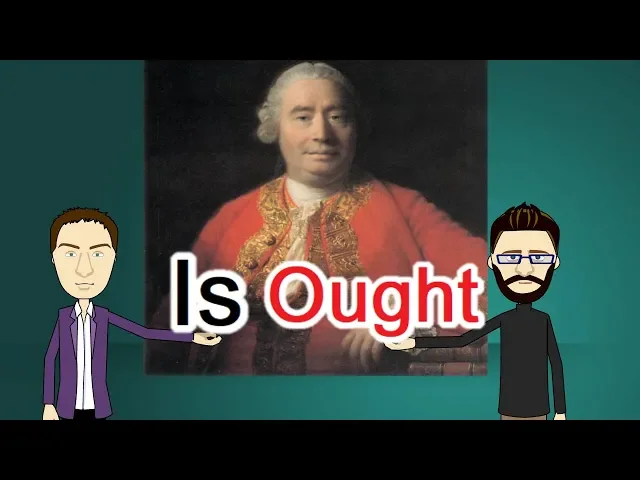
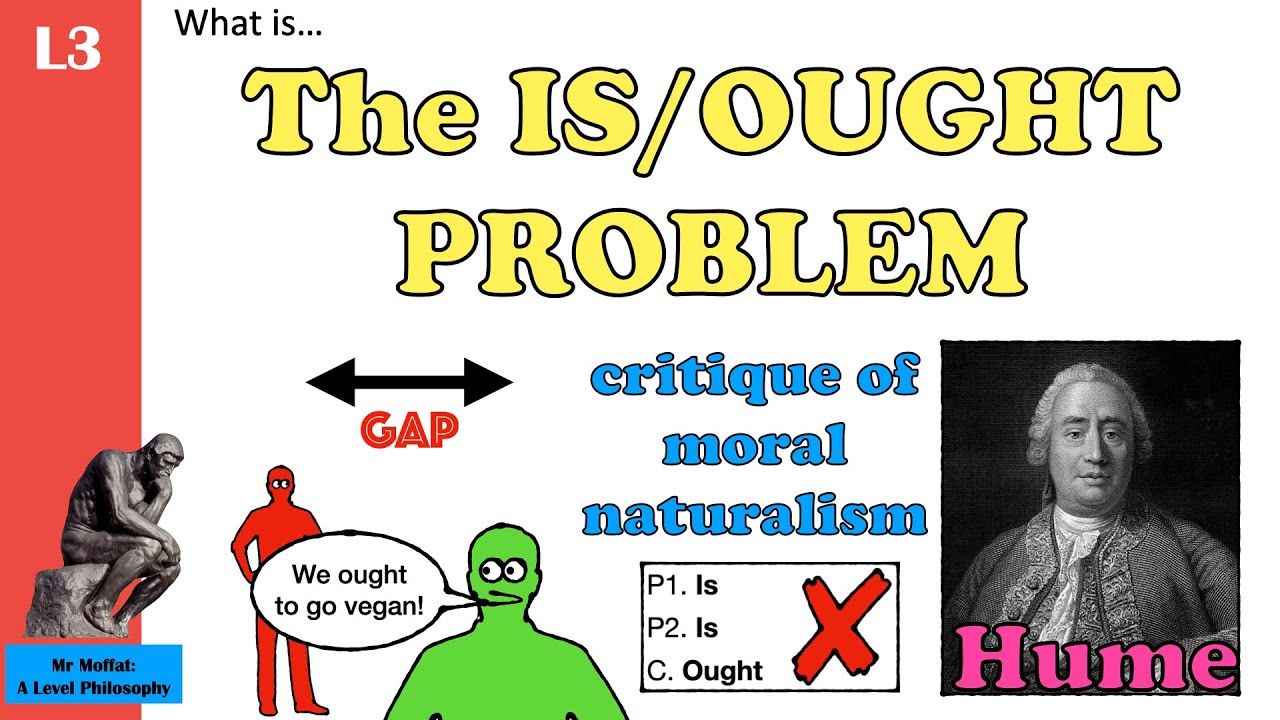
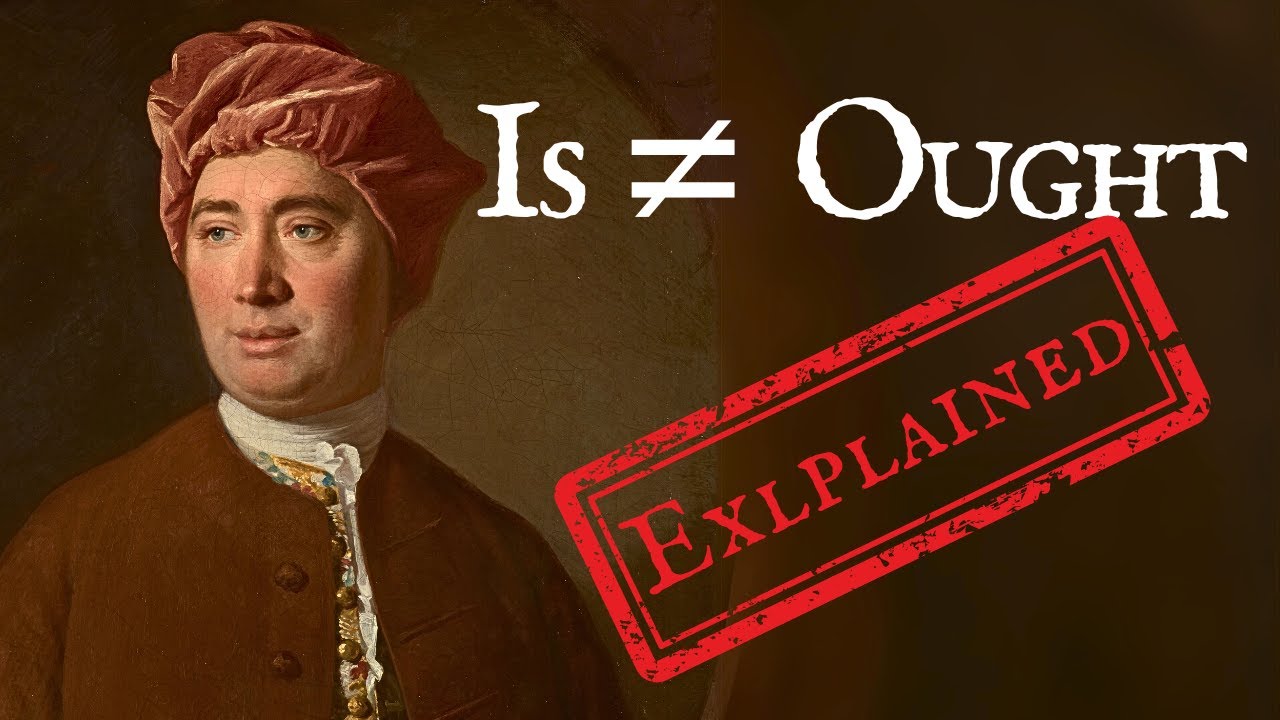
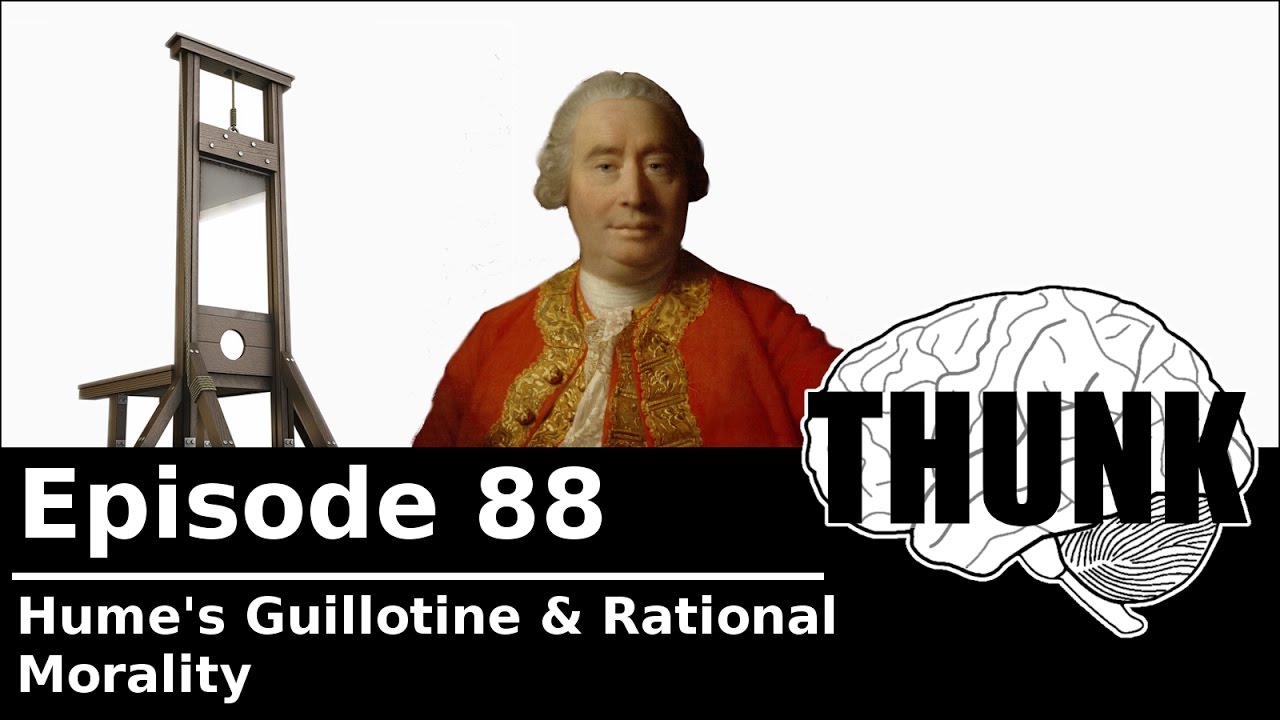
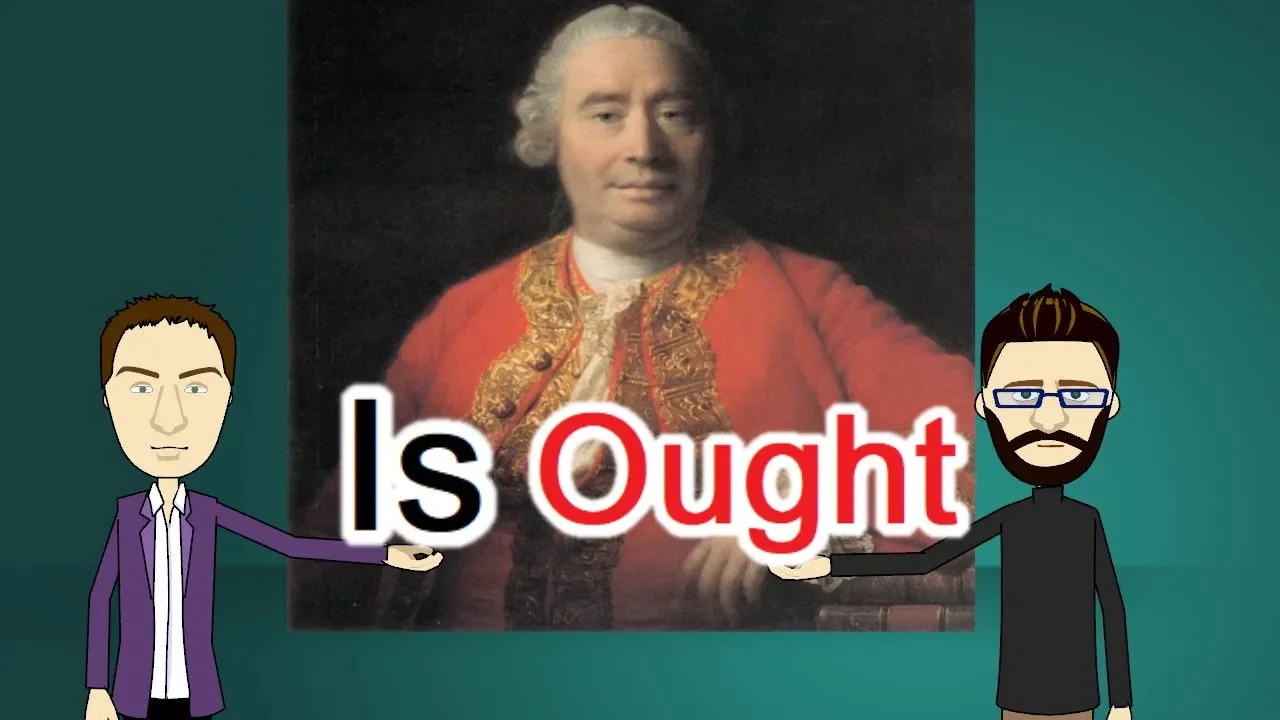
[Music] hello and welcome to philosophy vibe the channel where we discuss and debate different philosophical ideas so they were going to be looking into a very interesting problem in meta ethics raised by David Hume and this is the is alt problem okay the problem is found within our understanding of morality how can we know what ought to be based on the knowledge of what is what do you mean okay let's say we have a bottle of poison this poison is dangerous so if you want to stay healthy you ought not to drink it this is
valid yes yes because these are non moral facts when we bring in moral facts it becomes problematic if we was to say because the poison is dangerous if you want to be moral you ought to not to put it in anyone's drink in other words it is morally wrong to put this in someone's drink but why and how have we reached that point how can a natural fact about the world what is tell us what ought to be how can our moral values derive from non moral natural facts how can we derive how we ought
to act based on what is I see so when we make arts or moral claims based on facts about the world there is a gap in our reasoning we somehow think we're obtaining moral knowledge based on natural facts but the two are not linked in any way well not exactly why can't we look at pleasure and pain we know as human beings we naturally strive for pleasure and try to avoid pain so we can say morality is linked to pleasure and pain we know putting the poison in someone's drink is morally wrong because it causes
pain and we can say feeding the hungry is morally good because it causes pleasure hmm so then if we can say morality is linked to pleasure and pain and drinking the poison is painful then we ought not to pour it in anyone's drink this then bridges the is ought cap but the problem with this argument is that it completely relies on morality being linked to pleasure and pain this is very much the utilitarian principle and there are lots of problems with this theory what can be considered morally good does not always maximize pleasure I see
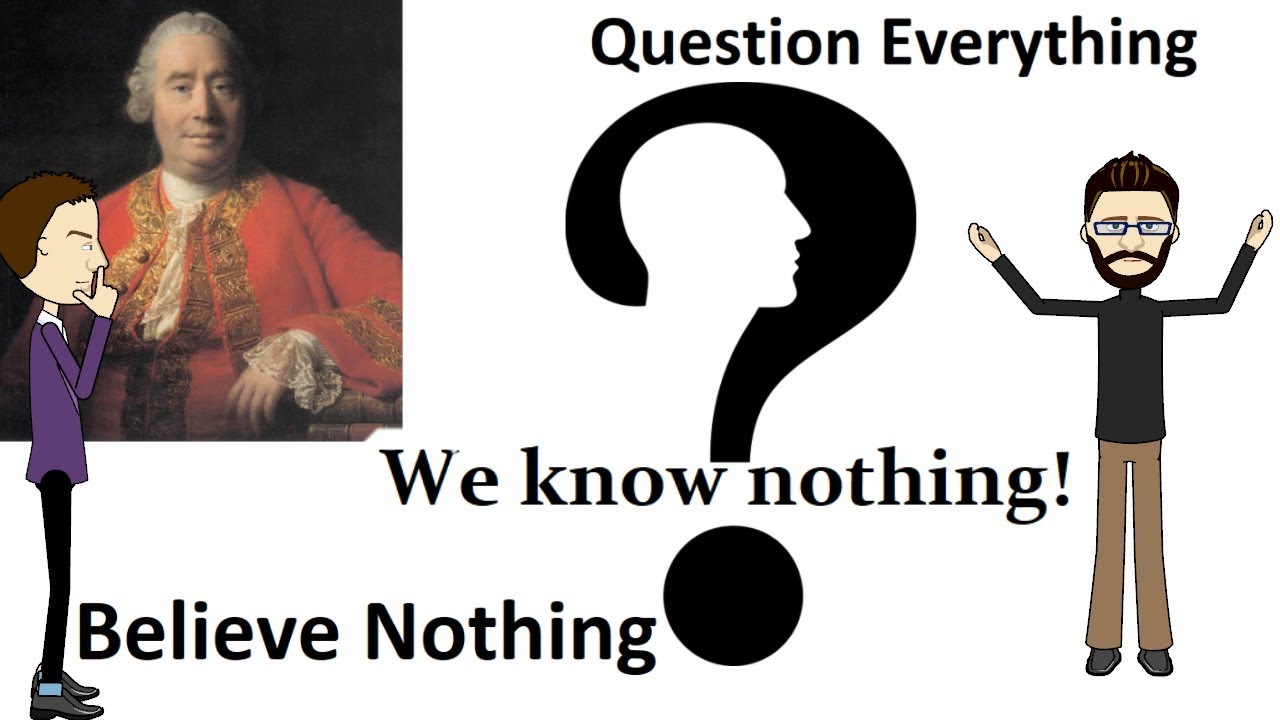
so the is alt problem still remains and people have to go further and explaining morality than just what they know about the natural world so we can learn from this we should not move too fast in using what we have observed to determine our values what is should not define what ought to be well let's remember David Hume is approaching this as an empiricist Hume is only concerned about empirical facts and reasoning based from what we empirically know so the usual problem arises because there is a gap between what we empirically know and what we
perceive as morality however if we take an intuitionist approach we can escape this problem we can agree that we cannot bridge the gap between natural facts and moral facts however non naturalism would claim that moral knowledge does not come from natural facts it instead comes from non natural facts something that is not exactly part of the empirical world like a moral intuition something innate within us that allows us to recognize morality and know when something is morally right or wrong and where exactly this is moral intuition come from well there are different approaches to take
some may reach out to an omnipotent God or you could perhaps raise plato's theory of forms and say that moral values derive from their perfect form which live in the world of forms so be honest both seem impossible to prove especially through an empirical lens which leaves intuition ISM hanging on faith alone if you are interested in learning more about intuition ISM and non naturalism then check out our meta ethics video and our video on GE mores non naturalism we cover the theory quite well in there but that's all the time we have for now
thank you for watching we hope you enjoyed the vibe please like share and subscribe it really helps us when you do look forward to seeing you all soon bye bye