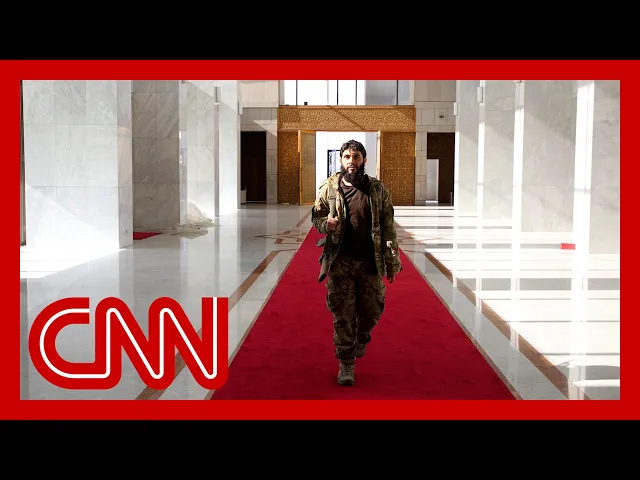
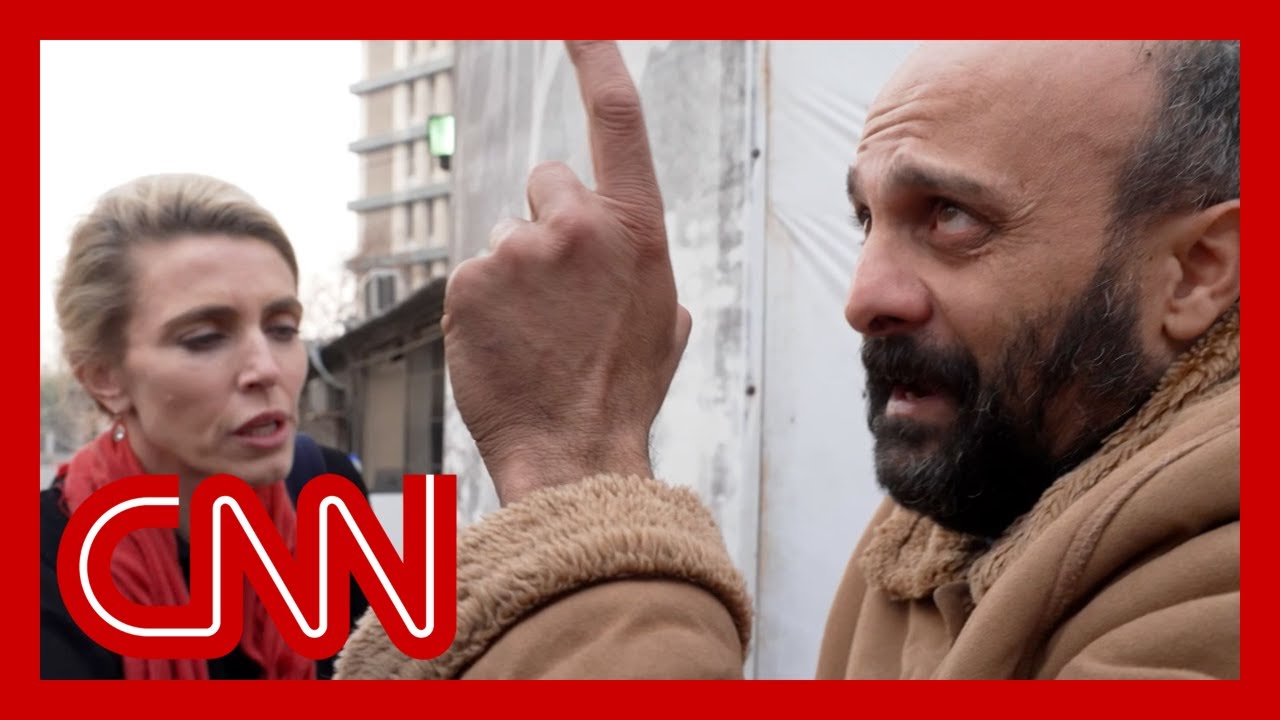
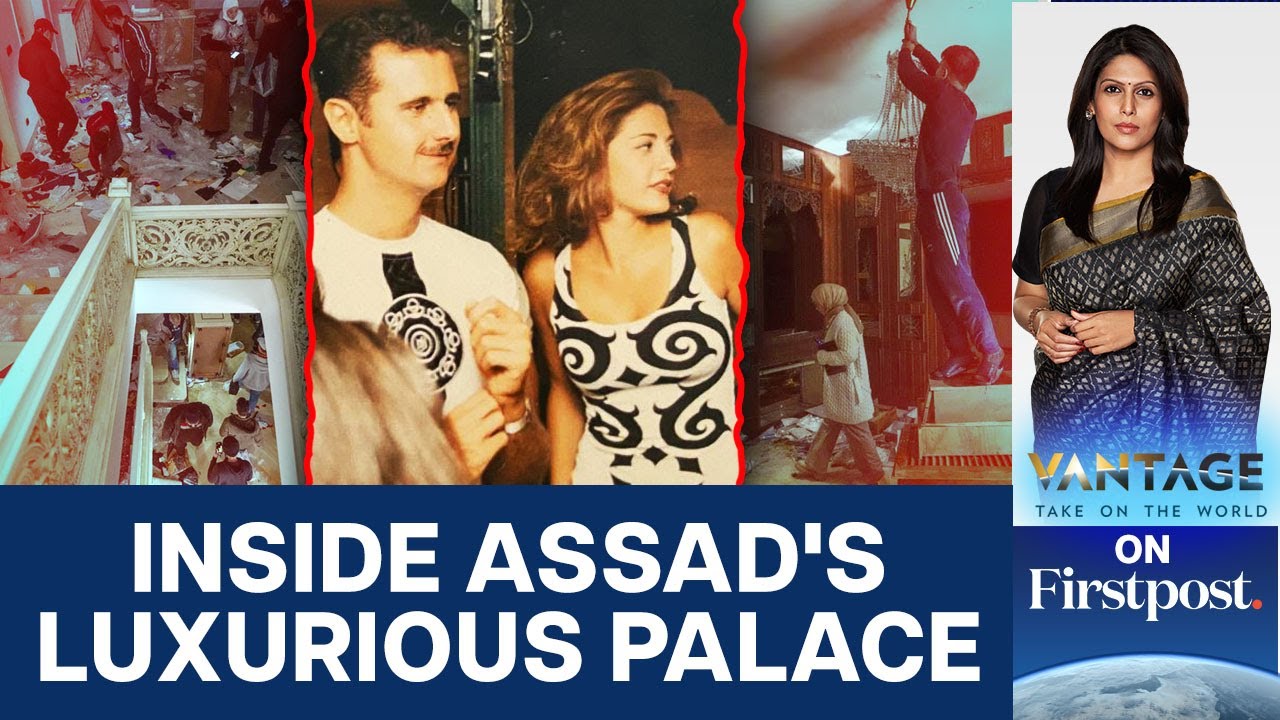
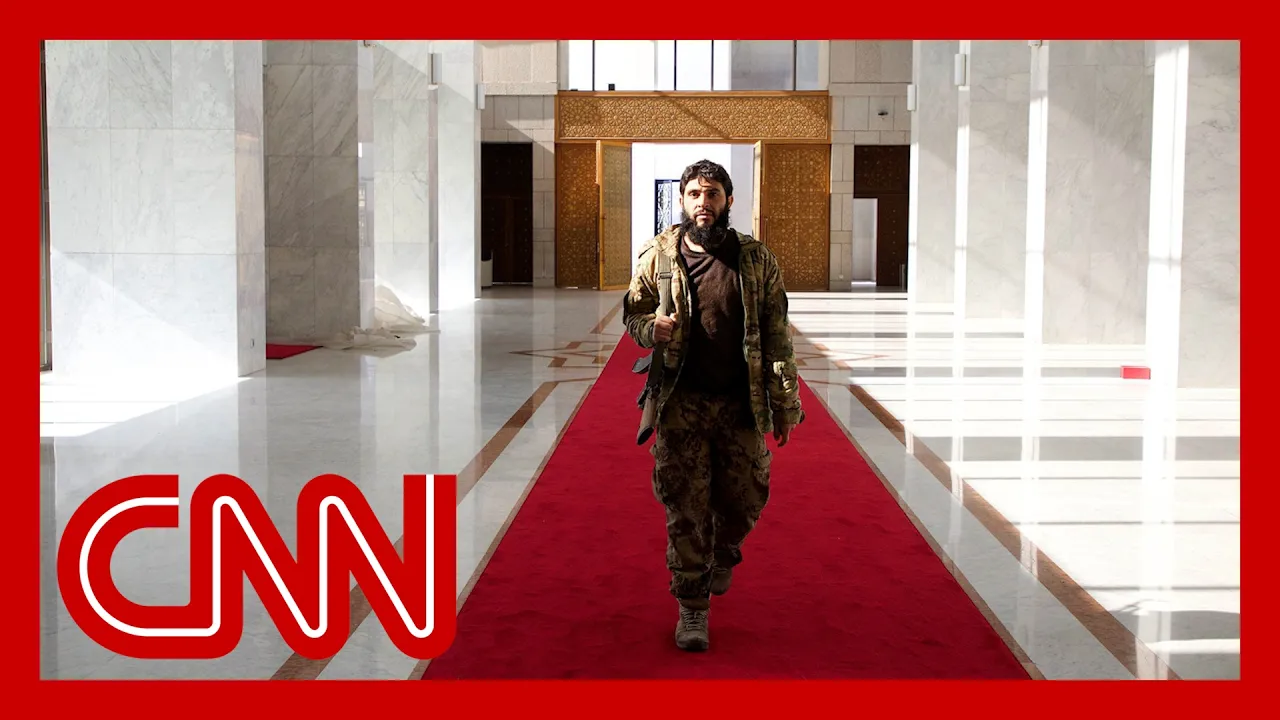
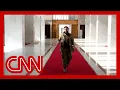
Days after the now ousted Syrian leader Bashar al Assad fled to Russia, rebel forces have moved into his palace. Now, CNN's Clarissa Ward takes us inside Assad's palace, offering a glimpse into the former dictator's luxurious lifestyle outside the palace of Bashar al Assad. Syrians gather to pose for photographs and celebrate the removal of its despised former owner.
The public is not allowed inside the sprawling compound yet, where the courtyards stretched longer than a city block. This is the driveway into Bashar al Assad's palace, and you can see how enormous it is. There are still casings all over the ground from rebels, celebratory gunfire as they swept in here and took control.
At the entrance, an Iranian flag unceremoniously laid out for people to step on. Iran, one of the regime's staunchest allies where once foreign dignitaries roamed the halls. Now rebel fighters have the run of the place.
You can see blankets on the sofas in here. It looks like this is where the rebels are sleeping. And in fact, over here you can see they've got some kind of a makeshift dining area going.
Some of their weapons here, a couple of rifles on this sofa. So this gentleman here who is with the rebels has just asked that I put on my scarf. It's the first time since we've been here that anyone has asked me to cover my hair.
It could be something like, if you mention your name and I mean Idlib, I will mutter bits for his says that he's from Idlib and that this is the first time he's seeing the palace. We'll keep Taslima the two of her. Diana, to be in the fall in love with them young women, young men.
And here we feel that the injustice will break down one day and justice must win. This is the idea of justice in our religion, he says. In Islam, it is a must and a promise of Allah that Islam is victorious.
After nearly 14 years of a vicious civil war. To stand in this palace is a proud moment, capping off a seismic victory. So the rebels here want to stress, they tell us that it was not their group that ransacked this office when they first swept in.
You can see, actually, some of the graffiti here that those first rebels rode on the window. It says a law curse Hafez's soul. Hafez al-Assad being the father of Bashar.
When you look at these ceilings and these chandeliers, the marble, the detail, this is the kind of opulence this lavish lifestyle that engendered so much resentment from so many Syrians who have been struggling to survive for decades. While the Assad family live like this in a warehouse, rows and rows of luxury cars, Ferraris, Lamborghinis and classic Cadillacs, this was a dynasty that will be remembered not only for its brutality, but its deep corruption. Below the palace in the heart of Damascus.
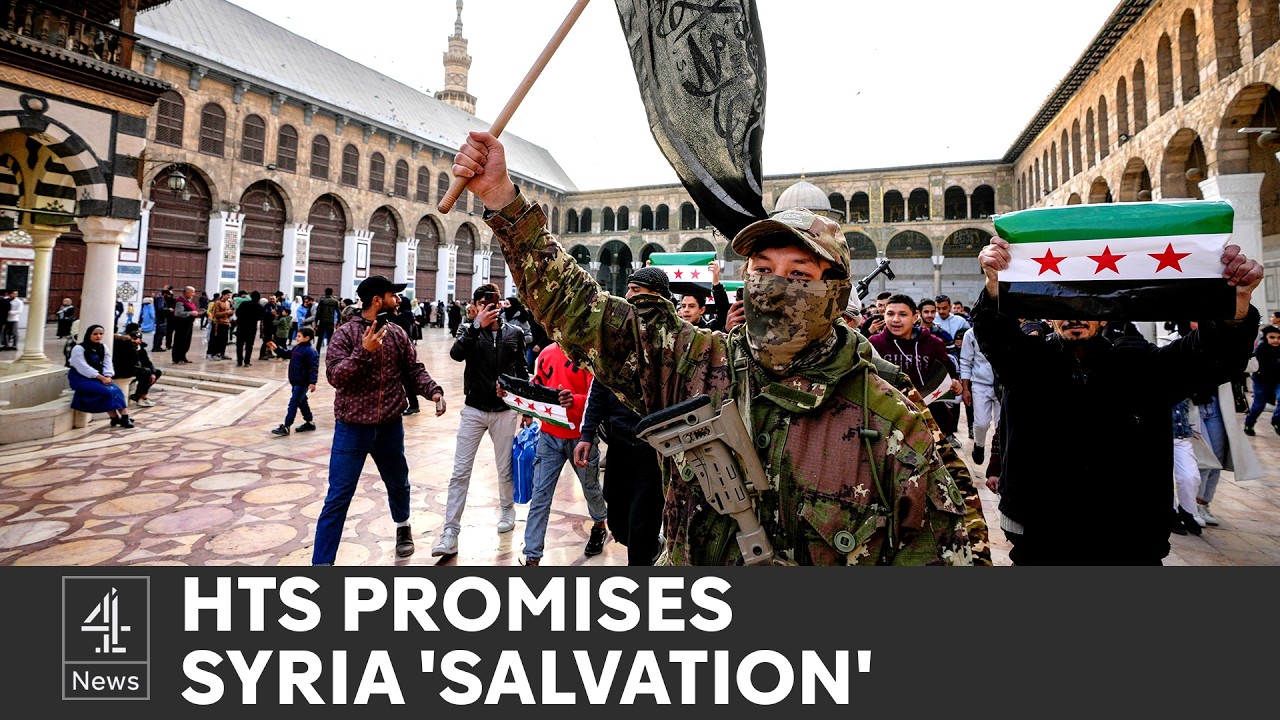
Crowds gathered in Hamid Square. Under Assad's rule, the Syrian people were forced to worship him. The they.
Now they finally have the freedom to celebrate his demise. Fascinating reporting from our Clarissa Ward. And joining us now to discuss further is CNN political national security analyst and New York Times, white House national security correspondent David Sanger.
David, always wonderful to have you. I'd actually just like to start with your reaction to Clarissa's piece just there. what you know, you saw as, as we watched that, and what what it all means, for Syrians as they honestly wrestle with form.
It's very unclear how the government is ultimately going to form here. Yeah. These are the joyous first days that we've seen before when dictators are toppled.
And so I was watching Clarissa's report. I was thinking about the first images we got of Marcos's, palace in the Philippines, or what happened when Saddam, was ousted and you, saw people take up residence inside his palaces, as well. And, you know, these are the moments of greatest hope, right?
And unfortunately, we have frequently seen these go awry later on as rebel groups that are, terrific and toppling brutal governments. Then go try to struggle with the question of how do you govern? And that's the big issue that we're facing now, because, the core rebel group here is, a former Al-Qaeda affiliate.
They broke a number of years ago with Al-Qaeda. they say all the right things about building institutions, being inclusive, making sure that minority rights are respected. But we're about to discover whether or not they mean any of that, and whether or not you can install such a, organized governmental system.
Not even a perfect democracy, but just a working government in a place that has been stifled by repression for 50 years. David, one of the things that I noticed in that piece, of course, and Clarissa pointed it out, was the Iranian flag, to be stepped on as people were to walk in there. And you write this in your most recent piece, that the two urgent and related questions circulating through Washington just six weeks before the inauguration is first, will the rebels evict the Iranians and the Russians from Syrian territory as some of their leaders have threatened, or out of pragmatism?
Will they seek some kind of accommodation with the two powers that helped kill them in the Civil War? And will the Iranians weakened by the loss of Hamas, Hezbollah and now Mr Al Assad, conclude their best path is to open a new negotiated one with Mr Trump only months after sending hitmen to kill him? Or, alternatively, will they race for a nuclear bomb, the weapon that some Iranians view as their last line of defense in a new era of vulnerability?
how how does all of this tied together? Well, we're about to go find out. So the let's break these down into the pieces.
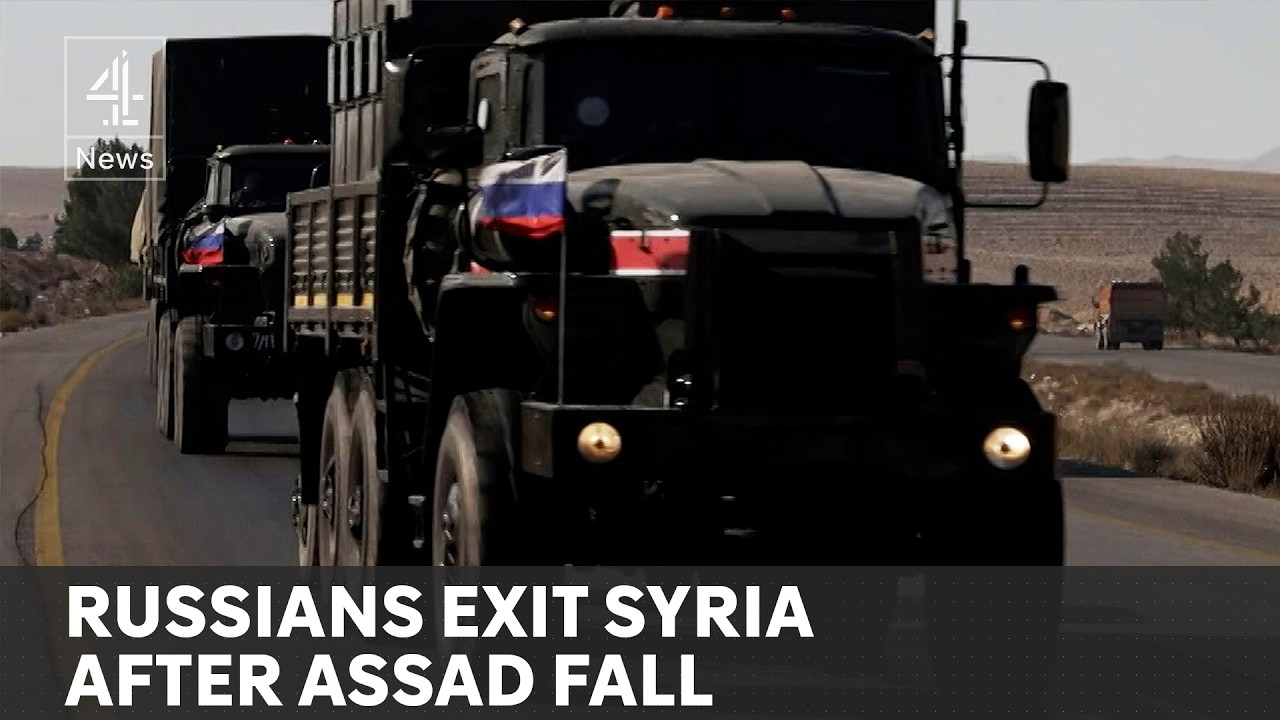
the first is the Russians. they have, two big military bases in Syria. One of them is their only real military port outside of of Russia, and gives them access to the Mediterranean.
And the other is an air base that they use to go, mount attacks in defense of Assad when he was alive. So you know, now, the question, Casey, is, do the Russians get to stay? They've already made it clear they're going to try to build a relationship with these new rebels.
They desperately need this. And the United States has a very strong interest in seeing them evicted. So when president elect Trump turned out his tweet the other day saying, we have no dogs in this fight, you know, stay out.
Well, we do have one that has to do with with the Russians. And then there's Iran, which of course has been the biggest sponsor and used Syria as a funnel through here. Obviously, they are going to get evicted by this group.
but the question is then how do they react? there's been some indication they may be interested in talking to the new administration, but that may be just to try to slow them down. There's also a lot of talk in Iran that everything else has failed for them Hezbollah, Hamas, now Syria, time to get a weapon.
All right. David Sanger for us this morning, sir. Always so grateful to have your reporting on the show.
Thank you so much for being here.