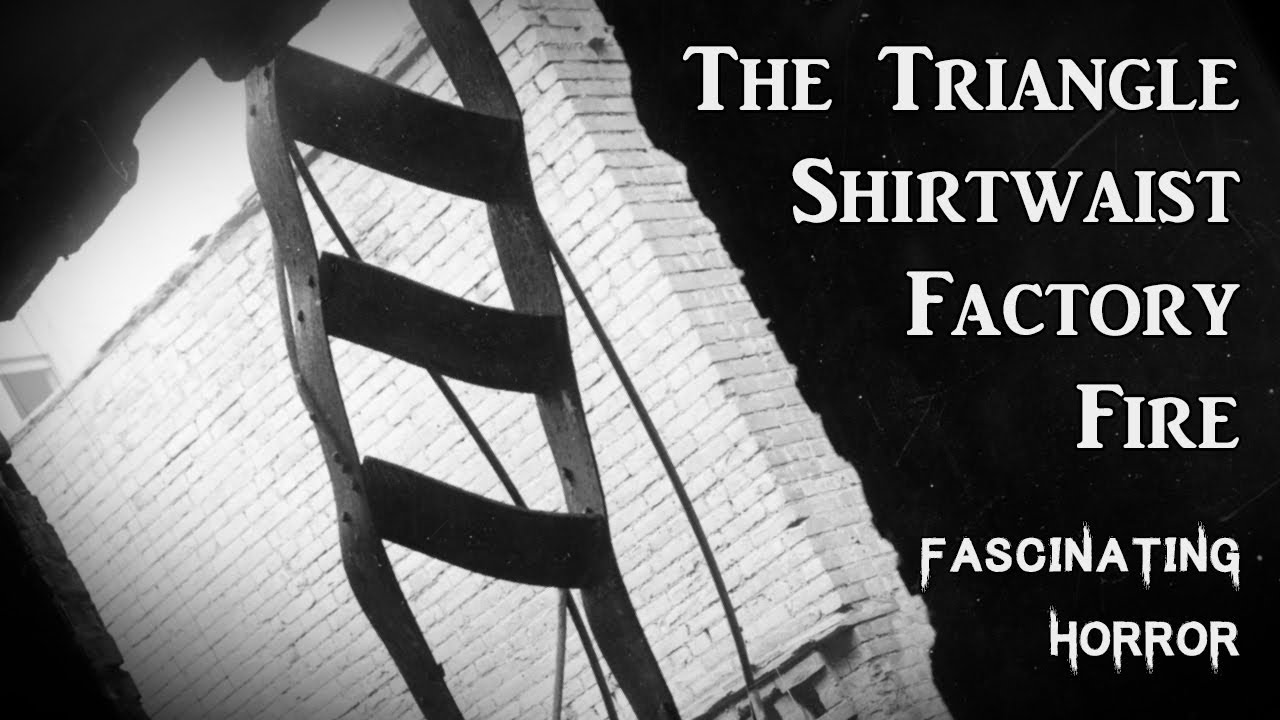
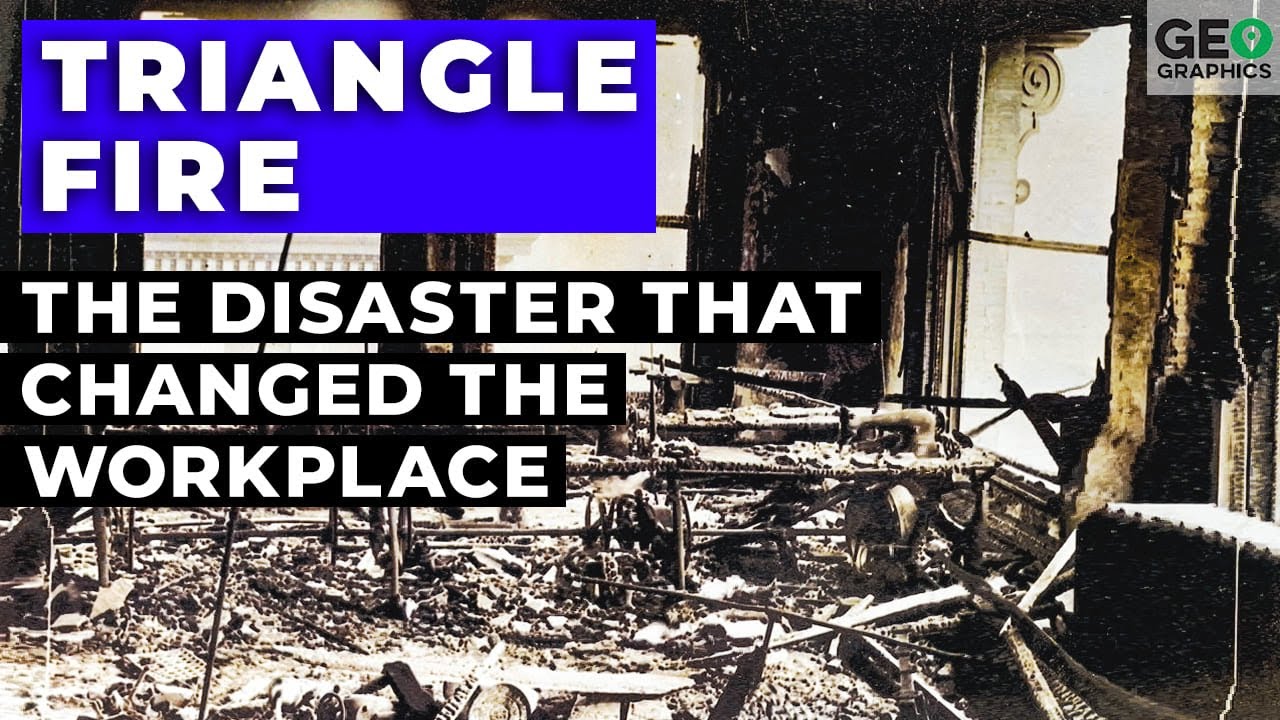
[Music] it was late in the afternoon on a beautiful spring Saturday March 25th 1911 4:40 p.m. to be exact nearly quitting time at the Triangle shirt waste Factory in New York's greinwich village where 500 workers mostly young Italian and Jewish women and girls got ready to collect their pay and go home someone dropped a match or a cigarette and within minutes the factory which occupied the top three floors of a 10-story building became an inferno fire ladders which reached only six floors were useless the fire escape collapsed under the weight of desperate workers trying to
escape one of the doors it would be reported was locked onlookers out for a weekend rooll in nearby Washington Square Park watched in horror as women leapt to their deaths from upper story Windows some crashing through the firemen's Nets others hitting the sidewalk with a sickening thud it's almost a mirror of what happened in 911 in some ways it was the horror of the fire jumping the way they did and it was more intimate though you could look into their faces in their last moments hear them hit the pavement that way you know in the
days that followed family members crowded into a makeshift morg trying sometimes in vain to identify those they lost among the charred remains on that day says researcher Michael Hirsch all of New York was United in grief this fire really shook people up you know the city was so guilt stricken that maybe we were somehow responsible and it it led to all of these reforms that came out afterward out of the ashes of the triangle fire came new safety and fire regulations child labor laws and workmen's compensation the outpouring of support for working people galvanized the
fledgling American labor movement Francis Perkins who witnessed the tragedy that awful day and who would go on to become FDR's Secretary of Labor called it the day the New Deal began [Music] every year since then there have been tributes and remembrances and this year is no exception this is the uh the union Monument to the triangle victims but Michael Hirsch co-producer of an HBO documentary on the triangle fire worries that memories of that day and its repercussions are fading like the names on the graves at Mount Zion Cemetery in in Queens you used to be
able to read this but it's just melting away and and it's almost like a metaphor for the way we're forgetting these people and what they did for us for the last 5 years hirch has made it his mission to find the names of all 146 people who died in the fire that day and their stories I I just felt we owed it to them somehow they you know we so they lost everything and to for them to lose their names as well that just seemed wrong I always remember my dad telling us that he had
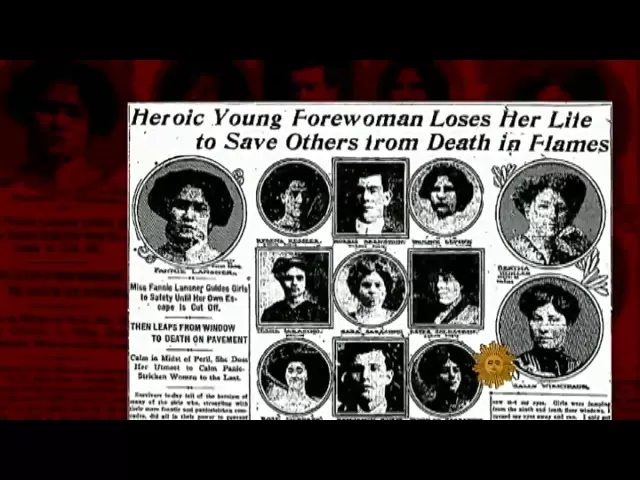
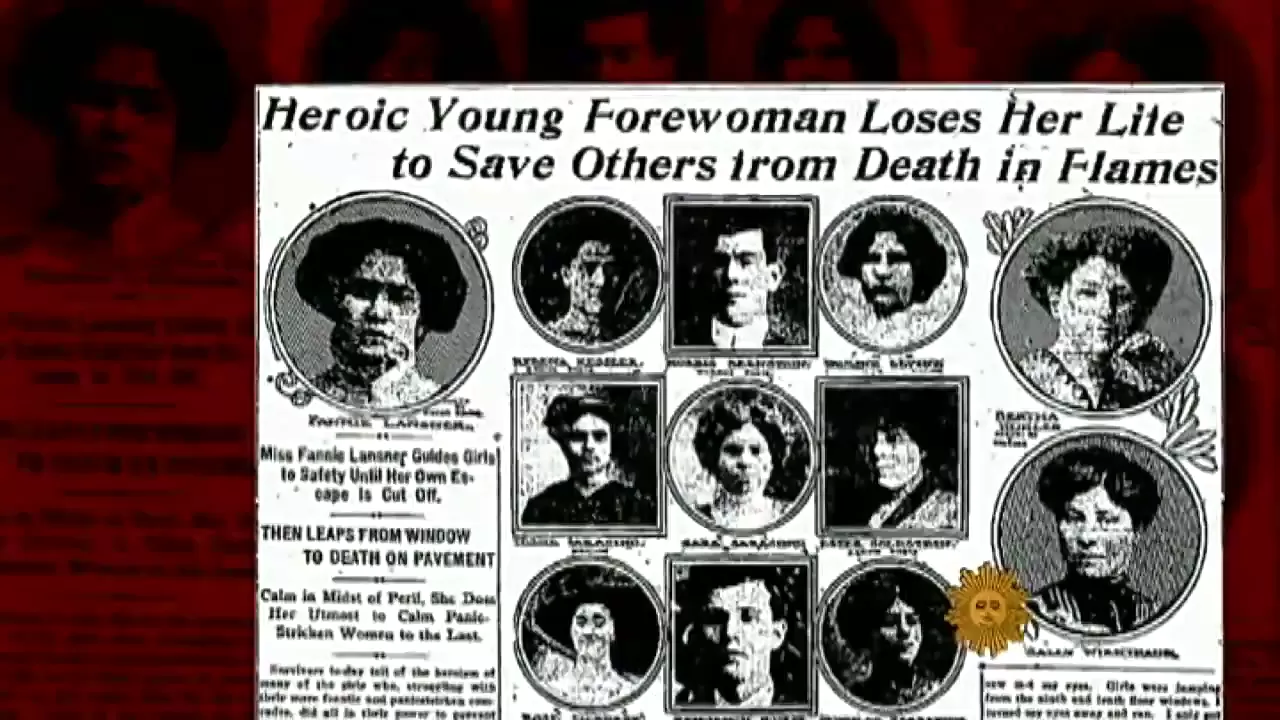
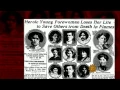
an aunt who died in the fire but that is all I remember I had Erica lansner didn't even know her great aunt's name until she got a call from Michael Hirsch and he said would you could you possibly be related to Fanny lansner who died in the Triangle fire so this is a picture of Fanny from the newspaper article Erica lansner discovered that her 21-year-old Aunt Fanny was a hero that day saving the lives of many of her co-workers before jumping to her own death and just to think of a 21-year-old knowing she had minutes
to live and chose to put others ahead of herself is just extraordinary I I feel um actually quite proud you know to be her uh her descendant Essie Bernstein also died in the fire she was a relative of factory owner Max blank who along with his partner Isaac Harris was a accused of locking the factory door some say to keep out Union organizers after a bitter strike their acquittal by a jury caused outrage then and still wrinkles some today in truth though says Michael Hirsch the blank family suffered too the blank family they lost more
people in the Triangle fire than any other family no one really knows this it's just been kept out of the histories of this why I think it's just you start to um mention things like that you start to humanize these people and start to tell the story differently Susan Harris is the granddaughter of Max blank growing up she says she knew nothing of the triangle fire her family moved to California and changed the spelling of their name when she was a teenager she came across a book and a name that looked familiar I remember turning
to my mom when I said you know was this Max blank was this my grandfather and she said yes and but that happened a long time ago you don't need to worry about that she has spent the last 5 years remembering the fire and its victims by stitching the names of the Dead onto pieces of old shirt waist Fabric and handkerchiefs the reason I use the shirt waist pieces is obvious because of the waste Factory and the reason I used the handkerchiefs was because of the loss and the grief she calls them prayer Flags so
many people they blame your family mhm for what happened mhm yeah I know I think that if I had lost my children in the fire I would have wanted to blame someone as well so many lives cut short that day so many families broken so many memories lost and found and so much pain but also stories of courage and Triumph and that says Michael hirs is worth remembering they didn't set out to be heroes they weren't like soldiers on the battlefield then they wanted what we all want they wanted families they wanted to have a
successful life or they wanted to be Americans and their sacrifice is the thing that really motivated people to start think about doing things differently in this country so in a way they are kind of Heroes uh I I look at them that way