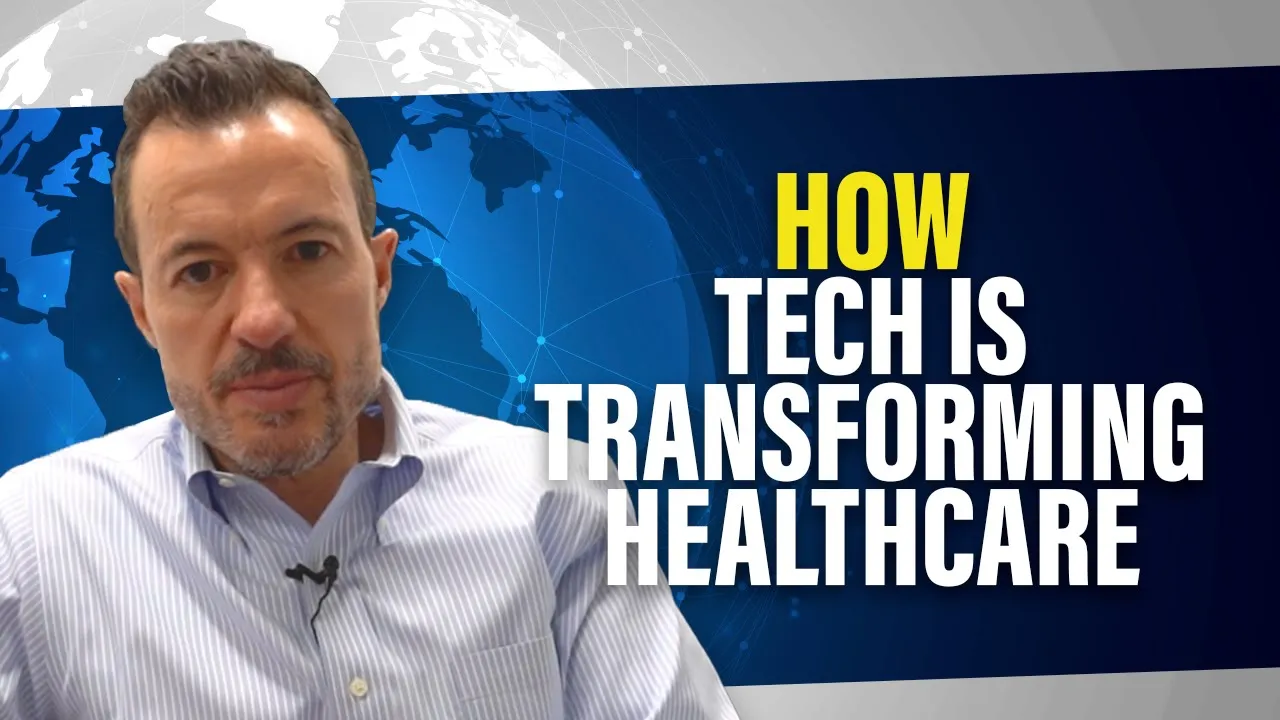
the healthcare industry is going through a massive amount of change as we speak and much of that is being fueled by and enabled by transformation and technology and that's what i want to talk about here today [Music] my name is eric kimberling i'm the ceo of third stage consulting we're an independent consulting firm that helps clients throughout the world with their digital transformation journeys and when working with clients in the healthcare industry especially since 2020 and the pandemic that ensued we're finding that healthcare is going through a lot of change for a lot of reasons
one is obviously the pandemic has fueled a lot of change in the healthcare industry another is a long-term trend towards a focus on health and wellness but a third thing that's contributing to the changes in the healthcare industry and in many cases is fueling and enabling the first two trends i talked about is the fact that technology is being used to drive change and to drive improvements and better care and better decision making for healthcare organizations so what i want to talk about today are some of the top ways that technology in general is driving
and enabling improvements in the healthcare space one of the more recent developments in the healthcare space is this whole concept of telehealth ever since the covid and the pandemic began in the early 2020s we saw a big massive shift towards more telehealth and telehealth is essentially being able to get care from your doctor or an appointment with your doctor without physically going to see your doctor so providing the video capabilities the health care record capabilities which i'm going to come back to that point here in a second and being able to interact and engage with
your healthcare provider via telehealth and this is something that's been fueled by the pandemic but it wouldn't have been possible if it wasn't for the technology that enables that so telehealth is probably one of the biggest advancements we've seen in the last five or ten years within the healthcare space and it's something we expect to continue even once the pandemic is over here in the 2020s [Music] another trend that's been in the making for longer than the telehealth trend that i just mentioned is the whole concept of electronic health records and these are systems like
epic and cerner that provide ehr electronic health record capabilities that allow hospitals and other healthcare organizations to capture information about patients what kind of care they're receiving what kind of prescriptions they're receiving who their doctors are all that stuff billing insurance all that stuff related to patients and all the records and the health care records that go behind that and so companies like epic concerner and other ehr providers are providing technologies to enable this automation and this movement towards more of an ehr focused environment so this is an area where we're seeing hospitals and healthcare
providers advance and we're seeing the technologies advance to the point where more and more organizations are moving that direction and further automating some of their business processes related to patient care and some of the patient-facing business process that every healthcare organization has to deal with another really cool technology that is completely transforming healthcare and i think we're just starting to see the early signs of this one is the whole use of artificial intelligence and machine learning to advance healthcare and so i mentioned ehr and telehealth already and what both of those movements are doing they're
providing more centralized and standard data for how health care providers capture information about their patients and about the care they're receiving on the back end though you have all this data that's being collected and as you throw in artificial intelligence and or machine learning you start to look for trends in the data and you start to look for ways that we can make better decisions around the types of health care the type of prescriptive solutions that we might provide to our patients all that's being enabled by this really cool technology called artificial intelligence and essentially
what artificial intelligence is and what it does within healthcare is it'll capture information about however many tens or hundreds of thousands or even millions of patients that might be being addressed within any given healthcare system and it looks for trends and patterns so it looks for commonalities and cause and effect types of relationships in the data that's there so this allows doctors and other healthcare providers to have better visibility and better understanding of ways they can better provide better health care and better decisions for their patients in ways that no one human might be able
to do so it's really a way to leverage this mass amounts of big data that are being captured about patients in some of these systems like i mentioned epic cerner and other systems that are being used along those lines as well as information that's being captured in telehealth as i mentioned before all that data can now be used to make some of these better decisions and recommendations to humans which would be the doctors or the healthcare providers that can then provide those prescriptive solutions to their patients as healthcare costs increase there's more pressure on healthcare
organizations to control their costs so for example as drug prices increase or other materials that are required for hospitals and doctors and other health care providers as those costs increase there's a constant pressure to find a way to control those costs and maybe even reduce those costs and this is where technology such as supply chain management solutions can help health care providers accomplish that this helps them identify who the best providers are of different materials and consumables and other types of procurement that's necessary to support the healthcare operations and so supply chain management can help
you identify the best providers they can help you optimize cost they can help you manage your procurement process manage quality of the vendors you're working with help you identify backup vendors and suppliers and providers when one vendor goes out of business or isn't able to supply what your needs are and so supply chain management is something that's becoming more and more common in healthcare and there's certainly a large amount of technologies out there that can help provide this and i've actually recently published a video on my youtube channel that provides a ranking of the top
10 supply chain management systems in the marketplace so if you'd like to learn more about that i encourage you to check out that video on my youtube channel and i'll include a link to that in the description below [Music] now i've talked about some very specific solutions so far as it relates to telehealth and ehr supply chain management etc but in addition to those technologies i've already mentioned there's also the more enterprise-wide technologies that are further enabling transformation within healthcare organizations so systems such as erp systems which are enterprise resource planning systems which by the
way can do part of what we've talked about already oftentimes they can do supply chain management for example or maybe even bits and pieces of ehr but they also do things like tie together your financials help manage billing help provide a better customer experience help with scheduling and workforce management human capital management which is something that's very important within hospitals and other healthcare providers so erp and other enterprise-wide systems and technologies can help enable and automate some of the other business processes that we hadn't talked about so far in this discussion one area that's of
particular importance which can be done with or without erp systems might be financials and billing so you look at how you track your financials how you handle patient billing insurance billing your p l reporting all that stuff can be managed via accounting and financial systems that can automate some of these healthcare organizations another example is project management and also asset management if you're a big hospital provider a big chain of hospitals for example and you're building new hospitals or building a new wing or a new expansion of your hospital project management systems can help manage
that construction you also have asset management solutions that can track the assets whether it be a building and there's also things like medical devices throughout the organization and other machines that are used to provide the health care that you might want to manage from an asset management perspective as well and there's other things like medical devices and other machines that you might need to manage from an asset management perspective as well so to learn more about some digital transformation best practices within healthcare or whatever industry you might be in i've included a link below that
will help you through your transformation and that is our annual digital transformation report which provides best practices independent software rankings including supply chain management erp systems and other sorts of technologies that might help enable your transformation i encourage you to download that using the link below as well as some of the other resources i've provided links to below so i hope you found this information useful and hope you have a great day you
![What Is Project Management? [Project Manager Roles and Responsibilities]](https://img.youtube.com/vi/gcXKz0PvvI4/maxresdefault.jpg)
![Top 10 Technologies for Healthcare [Digital Transformation in Healthcare, Hospitals, Clinics, etc.]](https://img.youtube.com/vi/ECmpxmmT46s/maxresdefault.jpg)


![If I Were Your Digital Transformation Leader, What Would I Do? [How I Would Lead Your Project Team]](https://img.youtube.com/vi/Z8QxZURcEBo/maxresdefault.jpg)

![How Business Process Management Works [As-Is, To-Be, and Business Process Improvement]](https://img.youtube.com/vi/JW26Axtl5Kw/maxresdefault.jpg)