Our windows are the visible face of the great commercial spectacle offered continuously to consumers around the planet. But are they as transparent as they seem? This film explores the mechanisms of an industry which, behind the scenes, pulls the strings of our globalized world and hides behind every label.
Excuse me, do you work here? Yes. Do you know how far was traveled to make this jacket?
All I can tell you is that it is made in Bangladesh. Made in Bangladesh? Yes, that's it.
Ok. Is that all we know about this jacket? Yes, sir.
All right. Thank you so much. Looking forward to it.
Where do the products that make our daily lives come from? My shoes come from China, my shirt comes from Indonesia. All these items come from the other side of the planet.
And what's really amazing is that even though all these products have traveled around the world, my outfit is still really cheap. Thousands of kilometers traveled, and all that for a handful of dollars. That came by boat.
That arrived by boat. My shoes arrived by boat. The microphone, all your technology, the camera itself arrived by boat.
We fill containers with scrap metal, hay, recycled paper. From the energy we use, to the food we eat, to all those gadgets we love to play with. 90% of absolutely everything.
90% of everything we consume. Everything comes by container from the other side of the world. Shipping has taken over our company.
Fundamental link in a well-regulated supply chain. It sails away from view and silently satisfies our addiction to consumption. We all depend on this industry and yet it remains off our radar screen.
You are on the Puelche bridge. It's a container ship. I am Captain Rasvan Adrianita.
I'm from Romania and I'm the captain of this pretty lady. This pretty lady is over 300 meters long. It belongs to a German shipowner, but it flies the flag of Liberia.
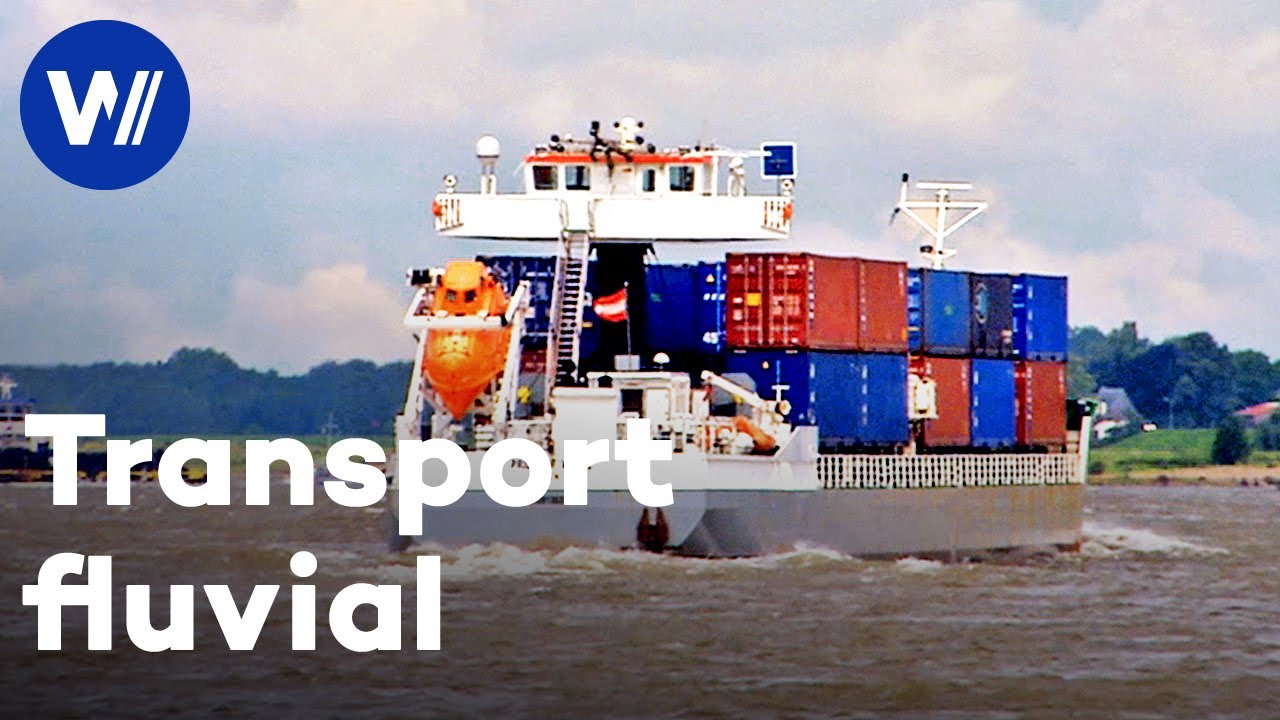
Its crew is only made up of around twenty men capable of running this floating city alone. In its containers, 80,000 tonnes of products of all kinds, transported from one end of the planet to the other on behalf of thousands of exporters. What is the underside of this industry?
What is its impact on the environment? How does it influence our society? And at what price?
Many people blame globalization on wage differentials and believe that companies go to Southeast Asia because labor is cheaper there. This is not entirely true. Southeast Asian workers have earned less than European and American workers for hundreds of years, without us achieving this degree of globalization.
It was actually the very low cost of transportation that made it possible to use this cheap labor to produce products for sale in foreign markets. The fascinating thing about the low cost of shipping is that a company can treat the entire world as one factory. Before sea freight was widespread, it was common to have very large factories.
Raw materials entered one end of the factory and finished products exited the other end. Nobody does that anymore today. No one needs to do that anymore.
Transportation has changed everything. Today, distances no longer exist and a product as simple as a jacket is the result of collaboration on a planetary scale. When you see a “Made in Bangladesh” label on a piece of clothing, you’re really only getting part of the story.
It doesn't say where the cotton was grown, where it was woven, where it was dyed. And if there are elements like buttons or a zipper, where were these made? This may have been done in a completely different country.
All the label tells you is where the factory is where the final assembly was done. Made in is actually limited to the last stage of a long journey. Its cotton comes from the United States, but it was sent to India to be woven and dyed.
The buttons were made in Vietnam, but from plastic collected in Europe, then transformed in China. In total, 48,000 kilometers, more than the circumference of the Earth, were covered. And all this for the low price of a metro ticket.
We have reached a point where locally made goods are more expensive than those shipped to us from the other side of the world. To me, there is something wrong with this equation. And obviously, there are induced effects and hidden costs that the consumer does not know about.
The equation has its secrets and this may raise some questions. How can this industry offer transportation at such low prices? Hello Sir.
You can probably direct me. We are filming a documentary on maritime transport and I would like to know if it would be possible to enter the port. No.
Is this vehicle behind you with you? No. I think he's been watching us for a while.
Yes hello. Are you filming there? In fact, I would like- I'm going to ask you to leave the premises and wait for me over there, behind the red truck.
Hello Sir. May I know what you are doing there? We're filming a documentary.
A documentary about what? On maritime transport. You know, 90% of everything we consume- Do you have a permit, anything?
No, not for inside the port. This is where I would like to film the containers. Drving license, registration document.
Insurance, please. Under close guard, maritime transport or shipping operate out of sight. And this reality has a name.
Shippers call it Sea Blindness. This industry cannot be seen and yet it is immense. If you look at any ship locator site you will see thousands of points and each point is a ship and each ship carries thousands of tons of cargo.
But if you really want to see these boats, it's very complicated. 60,000 vessels tirelessly crisscross the maritime arteries of the globe. They are the blood flow that nourishes the global machine and supplies 7 billion humans.
Raw materials, ores, coal, oil, gas, all fruits, vegetables, grains, liquids, chemicals, components, finished products, 90% of everything manufactured or extracted on the planet passes through the sea So how can we explain such invisibility of the maritime sector? As ships get bigger and bigger, ports need to be deeper, so they've moved further away. There is no longer a dock in central London.
There are no more docks in New York, because there is not enough water and not enough space. Today, ports are huge and are often located several kilometers from cities. This is why it is difficult to see the ships.
It's paradoxical. But if ports and the entire industry have become invisible, it is because boats continue to grow. Ships are getting bigger and bigger.
Really, it seems like there are no limits now. Height records only last a few months. There is always an even bigger boat showing up.
The dimensions are titanic. The triple E is one of the newest additions to the fleet. With its 400 meters long, the equivalent of four football fields, it could accommodate 10 Airbus A320s in single file or an Eiffel Tower or why not the entire Titanic.
But its specialty is containers, 18,000 of them on each trip. If we lined them up, it would result in a 120 kilometer steel serpent. The more we put on a single boat, the lower the cost of transport.
That's the economy of scale. We did some pretty fun math and it turns out that a ship like that can carry 800 million bananas, enough to give a banana to every person in North America and Europe. And in the silent conquest of shipping, there is one invention that has largely contributed to reducing transport costs: that of the container.
Previously, it took weeks and even months to load or unload a ship. Up to 200,000 boxes or packages were loaded individually. But now, if you have for example 6,000 containers, all of them can be loaded and unloaded in just 24 hours.
Today, with containers so efficient, so easy to manage. It has become profitable, for example, for Scottish fishermen to ship their cod to China to be cut up, then return them to Scotland to freeze them and then sell them around the world as Scottish fish. And there are all kinds of examples like that.
The container sped everything up. And today, 500 million of these boxes pass through maritime highways each year. What are you transporting in these containers?
What's on your boat? Apart from some special cargoes and refrigerated containers, in practice we don't really know what is in these containers. It could be anything.
Each container is filled and sealed by the shipper himself. Then, it is transported to the port before being loaded onto a departing ship. Once at destination, the box, still sealed, is unloaded, then delivered by train or truck to its recipient.
And, with some exceptions, only the sender and the recipient know what the box contains. Usually the crew and captain have no idea what they are carrying. To them, all containers look the same.
The company that owns the ship also does not know what it is carrying. She receives what's called a manifest filled out by the shipper that says, for example, "This container is filled with so many wool sweaters. " It's possible that this container contains sweaters, but it's also possible that it has other things inside.
What I love about shipping is that phrase “said to contain. ” It is a legal term under which the entire industry operates. A way of saying “We have no idea what’s in the containers.
” It's a mystery. But the United Nations Office on Drgs and Crime, through its inspection program, has an idea of what they may contain. Over the past 10 years, we have seized more than 100 tons of cocaine, 60 tons of cannabis, tons of heroin, tons of chemicals used in drug manufacturing, not to mention counterfeit goods, weapons, etc.
There is no limit to what our inspection program has found. More than half of the narcotics flooding Europe and the United States enter via commercial ports in seemingly innocuous boxes. But their metal walls can hide more than just illegal drugs.
For arms traffickers, the container is an ideal Trojan horse for dodging embargoes and fueling armed conflicts or terrorist organizations around the world. Every port is a breach in the security system of nations. Aware of the terrorist threat since September 2001, the United States, in agreement with other industrialized countries, established an inspection policy aimed at scanning 100% of containers.
But the reality is slightly different. Only 2% of containers moving around the world are inspected? Yes.
In my opinion, there is no point in increasing the number of inspections. Because luckily, most people follow the rules. They are not criminals.
Okay, but there still remains 98 % of containers at risk - Yes, but. . .
- of which we know nothing. But I tell you that most companies, most exporters want to respect the law. They are not criminals.
Naivety or indifference, the authorities and transporters turn a blind eye. This is another symptom of sea blindness. One of the largest shipping companies, in fact the largest, is Maersk, which most people have never heard of.
But it's absolutely huge. It has the same revenue as Microsoft. It is very difficult to imagine the equivalent of the IT industry without knowing anything about Steve Jobs or Bill Gates.
That’s a bit like maritime transport today. It represents a very, very important part of world trade. But unlike IT or most other businesses, we know virtually nothing about companies in this industry.
They do not attract any publicity. Even for the number 2, 3, 4 shipping companies in the world, most people do n't know what their initials mean. They've seen the names on containers, but they don't know much about them.
They don't know who the owners are. They probably don't know which countries they are based in. It's one of the most opaque industries I know.
Opacity or gigantic magic trick, capable of hiding an industry that is nevertheless omnipresent. Companies in the sector and their managers work in the shadows. They pull the strings of global trade from a distance.
From their European and Asian office, two continents where more than 90% of its companies are established. Their annual income exceeds 450 billion euros. This is more than the national budget of France.
This is greater than the combined revenues of the airline industry. And this makes shipping a heavyweight in the global economy. Several hundred companies make up the sector.
The most powerful are at the head of real empires. Maersk is an example. This Danish conglomerate employs 90,000 people in 130 countries.
And every year, it generates nearly $50 billion in turnover. In addition to its fleet of 600 oversized vessels, the group is also in the oil and gas business and manages around sixty ports around the world. These companies are very big and are in the hands of a handful of individuals.
Most of them are private. Most are family businesses. We depend on a very private industry in every sense of the word.
The top 10 most powerful manias in the world. These people control this huge market and 7 billion consumers depend on their companies. However, their names and faces are unknown to the general public.
Among them, John Fredricksen and his daughters. This Norwegian is worth more than 15 billion dollars and his lifestyle, although little publicized, has nothing to envy of that of a rock star. He never sets foot on his ships and it is by private jet that he travels between the tax havens where he has domiciled his companies.
I think we can divide shipowners into two main categories. The first is those of upright and honest industrialists who do not use their ships to speculate and who have opted to carry out a sustainable activity over a long period. The other part of the industry is the maniacs, the guys who have huge fortunes, who don't pay taxes and who do n't talk about their business in public.
And I think John Fredricksen is the prime example of that. When you go to a gas station to fill up your car, there is a very high probability that your fuel was transported by John Fredricksen. Fredricksen has the largest fleet of tankers in the world.
One of his companies, based in Bermuda, moves half of the crude oil extracted on the planet. But until proven otherwise, this is not a crime. There is a saying that there is a crime behind every fortune.
And in my opinion, John Fredrickson certainly fits into this scenario. In the 1980s, he hit his first jackpot during the Iran-Iraq conflict. Under contract with the ayatollah regime, the young industrialist would have made his first tanker available to Iran and thus allowed embargoed countries to continue to sell its oil and finance its weapons.
Later, he made the headlines in Norwegian newspapers suspected of stealing his clients' oil , the equivalent of $10 million to fuel his ships' engines. Each time, the Norwegian shipowner has slipped through the cracks of justice. Some manufacturers know very well how to cover their tracks.
This ship was delivered in 2007 to a German shipowner, Peter Doley, but it sails under the Liberian flag, so the owner is actually based in Liberia. The owner is European, but on paper the ship is Liberian. Contradiction or sleight of hand?
It is very easy for unscrupulous owners to escape the framework of the law and justice. And if they can afford it, it's thanks to the pavilion. This flag is also called a flag of convenience.
And it is thanks to him that a shipowner can cast a veil of anonymity over his business. This is completely legal and complies with maritime laws. So you have the coast and then you have 12,000 territorial water sailors and 200,000 exclusive economic zones where the coastal state is authorized to exploit the natural resources there.
And then you have the high seas and that doesn't belong to anyone. So there is a rule. Each ship must carry a flag.
And once on the high seas, it becomes the responsibility of the State whose flag it carries. And it is the laws of this country that are applied. Once on the high seas, the ship therefore obeys the laws of the country whose flag it carries.
But most Greek, Japanese, Chinese and German ships are registered in Panama, Liberia, the Marshall Islands or Mongolia. They thus legally escape from their country of origin. And in practice, this can have certain advantages.
Let's say I'm a ship owner. I'm looking for a flag for my boat and I don't want to use the one of my own country, because if, for example, I'm English, I know that there are certain taxes or obligations regarding work, minimum wage, etc. .
And I don't want any obstacles in the way. So I go to the web and there I see that I can register my ship in the Marshall Islands or in Mongolia, which doesn't even have a coastline, or in Bolivia, which doesn't even have a coastline. Let's say I choose the Bolivian flag.
I can buy their pavilions in 24 hours and I will no longer have a minimum wage obligation. I will pay little or no tax, very little social security contributions on my staff. A simple rectangle of fabric can be very profitable.
You have swindle channels. Overall savings, if you go through a flag of convenience, fiscal, social, technical savings, you can in the extreme case have up to 65% savings on your freight. In their frantic races to get shots at the bottom, the shipowners found in these flags a major asset.
Every year, they meet at convenience fairs where countries, offering their pact of permissive regulation, come to boast the strengths of their flags and do fruitful business between two cocktails. We register boats in the Marshall Islands, it's our specialty. We are the third most highly rated flag in the world.
Dominica is the island of nature and it is probably one of the most profitable lodges. I would say the Bahamas are the best. We are in the top 10 pavilions in the world.
In the miracle recipe for low- cost transport, it is the flag, the basic ingredient. But far from the cozy atmosphere of decision-making circles, the game of complacency has side effects. On the Cargo Bridge, where a million and a half workers, isolated from the rest of the world, are the victims of the rigged game of the flags.
Flags of convenience, that's the perfect term, because that's what they are, complacent, because thanks to them, we can use whoever we want. For example, an American ship under American law must employ American sailors, but it costs three or four times more than with Ukrainian, Bangladeshi or Philippine sailors. People take advantage of those who are vulnerable.
This is the flag of convenience system, a system where people are vulnerable parts of the process. If we stuck to a national system with employees paid according to prevailing wages, then we could not afford to look for cheap labor in developing countries. Each era has its preferred workforce.
And as is the case in other globalized industries, we often see changes taking place towards the most profitable and least restrictive. Filipinos are quite cheap and they speak English well, so they are very popular. Filipinos represent 40% of the sector's workforce.
At sea, they can earn a salary five or six times higher than in their country. I can find work in the Philippines, but the salary is barely $100 a month. How do you expect me to survive with this?
Every hour, 950 young Filipinos leave their country to work abroad. But their quest for a decent salary is not the only reason for this hemorrhage of labor. They are also pawns on the grand chessboard of their country's economic strategy.
They are forced to pay 80% of their base salaries back into the system. It's an industry. The government exports its population to boost the economy.
It is the most important industry for the Philippines. Manila is a gigantic breeding ground where the government, supported by recruitment agencies, recruits thousands of young people dreaming of a better life from the streets every day. Those who board are forced to receive their salaries in local banks where a third of their income is seized by the government.
Every year, they inject 10 billion dollars into the country's coffers. I spend my whole life on this boat. Christmas, New Years, birthdays, my wife's birthday.
I'm still here. They pay me for my work, but it's like living in prison. It's like a prison.
Cicero said “There are three categories of people, the living, the dead and those who are at sea. They are neither here nor there. We know they are alive, but we don't know where they are.
We don’t know anything about them. ” Cross the horizon. The floating prison, as sailors call it, enters a containment zone.
We live in a globalized, ultra-connected world. But most boats, even at the center of this system, do not have an Internet or cellular connection available to the crew. The sailors embark for nine months, ten months.
They should have access to the Internet. They want to talk to their family, they want to Skype them, which is something the average seven- year-old takes for granted. They don't have this level of communication.
Around twenty men isolated for ten months on a 300 meter long building. Twice a day, a meal eaten in silence and in just a few minutes. And an average of 72 hours of work per week doesn't really raise morale.
They are confined in this industrial world and the result is fatigue. As a direct result of the working hours, isolation and lack of sleep of officers and crew, 60% of shipping accidents are due to human error. Try making an analogy between a car and a boat.
You can stop the car, lock the door and leave. If you are on board a boat and there is a technical problem, for example with the engine, first scenario, on a calm day, you are stuck there, very isolated, very alone, among people of different cultures. It's panic in different languages.
And then you weather a storm. If you survive, you're lucky. Sailor is the second most dangerous job in the world.
The first is a fisherman. It is a very dangerous activity. You deal with bad weather, currents and a huge object that you are trying to maneuver in a very dangerous environment.
It's no wonder that around 2,000 sailors lose their lives every year. Unless they are cruise ships, shipwreck victims rarely make the headlines. No more than the accidents themselves.
Sinking is almost a daily reality, unfortunately. You have 110, 120, 122 sinkings of large vessels of more than 300 tons per year. Which means, compared to the number of days of the year, you have a shipwreck approximately every three days on the seas of the Globe.
If we take the most serious cases, we notice that the boats have not been maintained for a certain time, that the shipowner has not invested. Perhaps the shipowner is not really a shipowner, that he is just a speculator who says to himself “The market is good, why not invest in some steel that floats at sea? ” Here again, flags of convenience are at issue.
As they make it possible to evade ship maintenance standards, shipowners spend the bare minimum and push vessels to the limit of their wear and tear. In three quarters of shipwrecks, the ships are more than 25 years old and are not properly maintained. And since almost half of the fleet is made up of oil tankers, when a hull breaks or a boat sinks, it's the environment that pays the bill.
Far from the shocking images of stuck beaches, oil spills mainly occur on the high seas and out of camera range. Every year, 150,000 tonnes of crude oil contaminate the world's oceans. And that's not all.
This is only 2. 5% of sea pollution. People always talk to us about oil spills because of course, we can't hide them from you, but we don't talk about what I call white tides, which we would be better off calling the transparent tides, those that we cannot see.
It's what ? This is what we call degassing, that is to say cleaning the engine, its holds, etc. , the deck.
It's a whole bunch of toxic, harmful products which of course make up the sea, some of which is seawater mixed with fuel oil, which is, on a global level, each year, 1. 8 million tonnes. Every day, 5,000 tonnes of toxic products are dumped at sea.
And the impact of these transparent tides generates another type of pollution. When not fully loaded, ships pump large quantities of water to ensure their stability. Water that they unload once their cargo weighs enough to ensure their balance while sailing.
Often, several thousand kilometers separate the port where the water was pumped from the one where it was discharged. Living species can be moved from one place to another. And if they are parachuted into a port with environmental conditions similar enough to survive, then they can reproduce in this new environment.
These are what we call invasive species. Completely harmless initially, these species become invasive when, in a new habitat, they do not find their natural predators. Whether animal, plant or even on the scale of a bacteria, they proliferate and destroy everything in their path.
They can affect the life of plants, fish and the entire marine ecosystem and put them in danger forever. To reduce this risk, Europe spends more than €12 billion each year. And beyond the economic impact, all marine life is affected.
Invasive species are the direct cause of the extinction of 42% of the world's aquatic species. But the industry, too, is invasive. It exerts constant pressure on the oceans and their inhabitants, who suffer in silence or almost.
Many underwater species communicate by sound. And if you have a huge ship on the surface of the water with a huge propeller and an engine the size of a house, it's a ruckus. This engine makes a lot of noise.
It is attached to the hull of a steel boat which has the effect of a drum. And this generates very low frequencies. The noise of these ships on the shipping lanes is.
. . How can I put this?
It's. . .
If we reported the decibel levels in the world we live in and compared them with the noise level in which marine mammals live in the United States, I would have to wear hearing protection. Marine mammals do not wear protection. Constantly bombarded with low frequencies, comparable to 100 times the sound volume of an airplane engine, they are deprived of communication and lose their bearings.
Disoriented by the noise and fleeing the ordeal, cetaceans regularly wash up on the planet's beaches, often at the cost of their lives. The humpback whale's acoustic habitat has been reduced by 90%. We are destroying the ocean with noise, with boats.
A third of Cetaceae suffer from irreversible hearing damage, directly linked to noise pollution from ships. But nothing can stop the great machine of maritime commerce, nor the engines that turn it. Noisy and particularly voracious machines.
The heart of a boat is its engine. This engine is the kind of technology that can burn any fuel imaginable. From gasoline to coal sludge.
I would compare him to an omnivore. It can eat any type of fuel, as long as it contains ignited energy. And these hungry engines prefer quantity over quality.
We sometimes consume 200 tonnes per day, so we can't imagine using expensive fuel. We burn residual fuel oil. This product is what is left after the crude oil has been refined.
If these bulimic engines couldn't digest it, this residue would go straight to the landfills. It's a residue and some call it waste. The smell of this fuel is terrible.
This fuel has a high sulfur content. It contains metal residues, ash, water particles and this fuel is very, very thick. The ocean freight industry has always consumed this residual product.
And for many years, it went unnoticed. But about 10 years ago, some scientists began studying the effects of consuming this fuel, particularly in coastal regions. And they found that this residual fuel oil had a very high sulfur content, in particular, and that burning it generated about 3,000 to 3,500 ppm of sulfur.
This is how we calculate, in parts per million, ppm. For comparison, a car in the European Union, by law, must emit less than 15 ppm of sulfur. So they started making comparisons between cars and these boats.
And these calculations reveal that one boat emits the same amount of sulfur as around 50 million cars. If a single cargo ship emits as much sulfur oxide as 50 million cars, the 20 largest ships alone pollute more than all the cars on the planet. And it's not 20, but 60,000 ships that crisscross the world's oceans all year long and disperse their sulfur dust into the atmosphere.
These fine particles are produced at such a size and in such a high quantity that they easily enter our lungs. Not only can we inhale them easily, but they can also penetrate deep into our lungs and settle there. While the automobile sector is constantly singled out for pollution, maritime transport escapes criticism and burns the dirtiest fuel in the world.
Newark is New York's backyard. It is the largest port on the east coast of the United States, supplying the metropolis and half of the country. For those who live near this port hub, pollution from ships is no news.
It is a reality that is palpable on a daily basis. We really feel that the air is heavy, the air coming from the port. We feel it in the chest, we feel it in the eyes.
And since we have been here, I catch cold more often, I have more colds. I didn't need an asthma pump before. I use it almost every day now.
Seeking refuge inside houses is an unspoken rule that all residents apply to protect themselves from ambient toxicity. The most polluted area is that around ports. We find ourselves with areas devastated by pollution.
And the effect is made worse by the fact that trucks come to the ports to take these containers and transport them to the four corners of the United States. And it's like that in all countries. Trucks are ships' best allies.
In the relay race of global trade, they work in order to get shipments to their recipients. And with cargo ships, they form an explosive cocktail. There are volatile toxins that can cause cancer.
There are fine particles, mainly soot, which enter the lungs and create asthma. Especially in children and the elderly. In the region, one in four people have asthma.
Port areas are at the forefront of contamination that knows no borders. Communities living close to ports are the most heavily affected. However, coastal winds penetrate far inland, several hundred kilometers.
So, inland, we also find damage that is directly attributable to atmospheric pollution from boats. Here too, this industry has an impact on health. It's not just limited to those who can see the ships.
60,000 people each year around the world die prematurely from the health effects of shipping. Inexorably, populations inhale the poison in daily doses, victims of an epidemic which, each year, claims thousands of lives in the name of world trade. How to fix it?
It is the International Maritime Organization , the IMO, a branch of the United Nations, which is responsible for regulating the sector and preventing pollution from ships. How does it plan to clean up the fleet? The impact of the new regulations takes some time to take effect, as ships have an economic lifespan of around 25 to 30 years.
Improvements and advancements only apply to new ships and not to the entire fleet at once, because that's simply impossible. 30 years is the average lifespan of ships that die stranded on cemetery beaches in India or Bangladesh, where their remains continue to pollute, far from Western countries. 30 years is the time needed to modernize the entire world fleet and make it less harmful.
But can the planet wait 30 years? The merchant navy releases as much greenhouse gas into the atmosphere as a country like Canada. It alone is responsible for 4% of global warming.
Four percent is huge when you're talking about a problem as big as climate change. Every percentage difference in emissions has a huge impact on climate stability. Climate change threatens the entire planet, but its consequences are most evident near the poles.
Each year, the Arctic sea ice loses on average 37,000 km² of its surface, which is more than Belgium and Luxembourg combined. And this has the effect of opening two new passages for ships, to the east and west of the North Pole. The Northwest Passage or the Northeast Passage is a direct result of global warming.
Today we can roughly sail 25 to 30 days a year and we think that within twenty years, we will be able to sail 120 to 130 days a year. So that changes things. The melting of the ice in northern Siberia and Canada presents a considerable geopolitical issue.
From the East as well as the West, these new highways are shortcuts that make it possible to reduce by a third the distances and the cost of transport between major Asian and European ports. By 2050, all ice will have disappeared and these new sea routes will be passable all year round, which is not to displease shipowners. What is tragic and ironic is that we are, once again, creating a snake that bites its own tail.
The more we pollute, the more greenhouse gases we emit , the more we accelerate the melting of the ice. And then we say, “Look, here’s a new opportunity to pollute even more. ” Ships passing through them will worsen the global warming that formed these routes in the first place.
I suppose it's good news for shipowners, but I doubt it's good news for us. Nature is very resilient and has shown that it is capable, in certain cases, of regenerating itself. But we have reached a point where we are inflicting more damage than nature can handle.
And it is really, really urgent that we take charge of the issue of pollution in this industry. Sometimes that's what leadership is. It requires pushing the boundaries, realizing that we're not going to be able to please everyone and we really need the IMO to act as a leader.
But sometimes it's hard to be a leader when you're afraid of making someone angry. The IMO is authorized to implement measures on an international scale. The States which sit there have the power to adopt new texts and have them applied on their territory.
Who are they? And what are their interests within the international organization? The IMO is funded by its member states.
This is rather unusual for a United Nations organization, but here each country's participation in the organization depends on the size of its fleet. So, in fact, the largest contributor to the IMO budget is Panama, followed by Iberia and the Marshall Islands, as they have the largest fleets on the world shipping map. The IMO is therefore in the hands of the same countries which sell their nationality to the least conscientious shipowners.
They run the organization through money and thus ensure that no regulations will disturb their business. This same flag of convenience business which is at the source of all the abuses of this industry, which allows unscrupulous industrialists to remain anonymous, which encourages tax evasion, which allows sailors to be exploited, which allows pollute with impunity. Liberia is one of those countries that funds the IMO with money from the sale of its flag of convenience.
This has already brought in more than 700 million dollars to the government. Despite this, this West African country remains among the five poorest on the planet. Its capital is still without electricity or running water and its population lives on average on $1.
25 a day. If you ask those who run the administration of the Liberian flag today, they will tell you that it is a very respectable flag and they are not wrong, but it has a very dark history. A dark past in which 250,000 men, women and children were massacred and a million and a half people were displaced.
A past of child soldiers, torture and massacres. The guerrilla war pitted rebel troops against the militias of dictator Charles Taylor. And for 13 years, it was this same money obtained from the sale of the pavilion which financed the tyrant's weapons.
Liberian flag money was also used for diamond trafficking, which was also a violation of UN sanctions at the time. It wasn't just about weapons. This money was also used to launder diamonds, blood diamonds, as they were called.
Liberia is a good example of the problem, but it is just one country among many. Like him, weak states with fragile institutions are more inclined to commit abuses. In the great game of discounted maritime transport , it is the most vulnerable States, the populations and the environment who pay the bill.
Collateral damage from a ferocious game which has no rules other than maximum profit. Capitalist enterprise is extremely destructive. For her, the social repercussions do n't matter, but we can't accuse her of taking part in the game.
And the goal of this game is to make as much money as possible. So, registering your ship in Liberia or Panama is just another way of playing this game and ensuring that the population will pay the bill and that we will continue to make a profit. The mechanics of international transport have gone into overdrive.
Since 1979, the sector has grown by 470% and within 20 years, its size will triple again. The immensity of the fleet certainly makes it a very polluting sector, but it remains the best option. If we entrusted the task of transporting the same cargoes to planes, the financial and environmental cost would be much higher.
Ocean freight is still by far the most efficient way to transport goods. We must not forget this. This is a huge asset that we all need to meet our ever-increasing demand.
There are lots of things that we can do and that the industry in particular can do. It could very well reduce its carbon emissions and still make money. If the quest for profit is a priority in the strategy of shipowners, money can become a key argument to convince them to improve the energy efficiency of their ships.
By investing relatively little, they could improve the efficiency of their engines, the quality of their hulls or even use other innovations, such as wind. Result ? 30 to 40% less fuel, more profit for the shipowner and less pollution.
A win-win recipe among others. Today, it has made industrialists aware that this sector, to remain profitable, must also become sustainable. But this industry exists above all to serve us.
And it is also up to consumers to open their eyes. The energy consumption and pollution hidden in everything we wear and everything we use must be taken into account. But the first thing to do to be able to act is to inform people.
Learn more to consume better and imagine a world of transparency in which all the information on the hidden side of what we buy would be accessible. I would really like to be able to walk into a store and have a label available with all the information that tells me where this item of clothing actually comes from , where it has traveled, how many miles it has traveled. I believe we have the resources to make this a reality.
It is also the responsibility of the companies that sell their products to us to provide us with this information. And I hope that in the near future, this is something that will be available to consumers. Absolutely.
Could a simple label help to change certain consumer habits? A path which, perhaps one day, could inspire certain manufacturers and encourage an entire system to redress the course towards a more responsible model of society. The largest ships, when underway, take a long time to turn, to change course.
So, if they change direction, even just a little, we can take it as the beginning of a very big change for the future, in a long journey through the century to come. A long journey ahead which will perhaps see this industry come out of the shadows and show itself in the open. But it is above all up to politicians and institutions to take part in the journey and position themselves firmly to reform this sector and lead it towards more responsible practices so that maritime transport is a real engine of growth that leaves no one behind.
aisle.