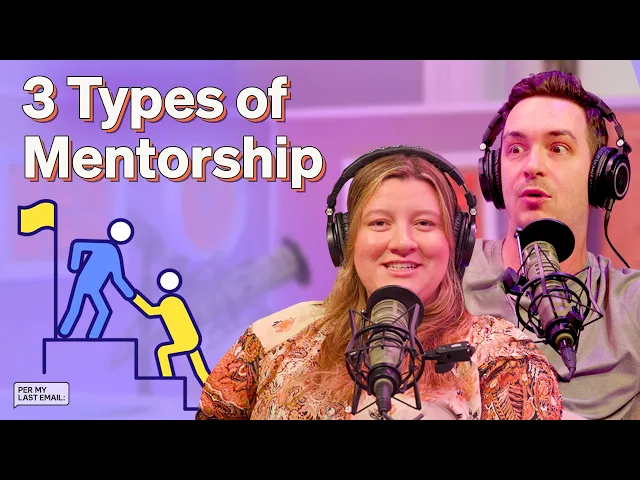
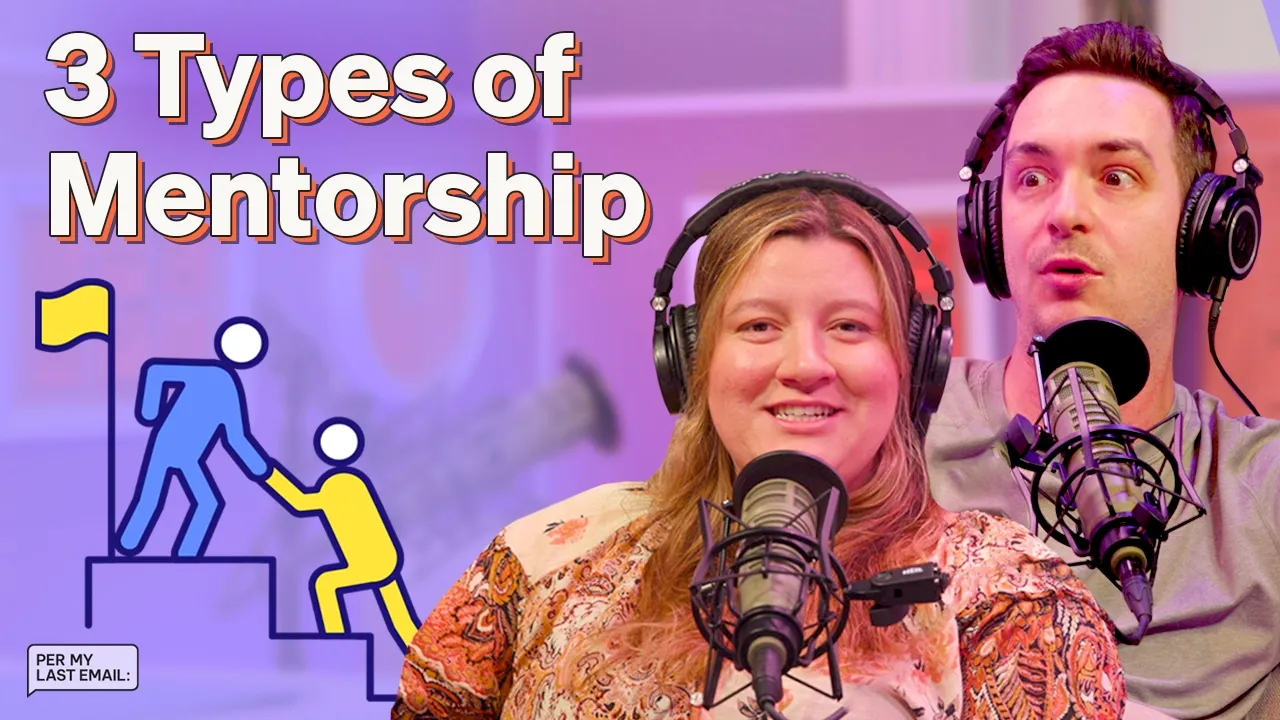
[Music] welcome to per my last emo we're so glad to have you here I'm Kyle I'm Kayla and we're going to give you the hot takes and tactics to navigate work life cuz that's all we do that's what we were put on God's green earth to do and today we're talking about mentorship should you have a mentor in your career what are some dos and don'ts for you to navigate mentorship and why I personally think it is one of if not the most important things you need in your career we're going to explore how to
get an effective Mentor are you excited for the show Kayla well I'm always excited for the show uh but I will say that normally I do have all the answers normally you do normally they're answer they're wrong answers but you have them I at least have some answers and today I am Mentor I actually feel like I don't have a lot of great advice and instead I'm in the position of feeling a little like I'm a mene in in the sea of potential mentors you're lost in the sea of capitalism alone on the raft alone
on a raft just looking for a boat in the Horizon well this is perfect one I'm a little offended because I always thought I was your Mentor so that's a tough realization to hear live but two I I think this is a perfect way to talk about like what to look for in a mentor how you'd go about finding one because I know you've had them in the past um so this a it's a perfect thing to get into yeah and I'm really excited I think you know I feel right now that I'm in a
really good spot but I could just use that little you know if you've been in a situation where maybe you feel stuck or you feel like there's got to be people who have done this before who have some great advice on how I can navigate X Y and Z issue yeah you're not alone yeah and we're going to talk about that today well let's let's start from the top because you said you don't have a mentor now but I know you've had some in the past who who has been the biggest Mentor in your life
and what did you get from that relationship biggest is tough because I think one of my issues is that I've had a variety of mentors that are very shortterm and help me in a specific moment of my life so for example like there was this one woman Sue who I literally met in a cab we Uber pooled on the way to the same conference yeah um and then they took Uber pool away looks like d doesn't care about mentors it's so true uh and you know she ended up having a position open that I really
was interested in I was talking about how I wasn't happy at my job I actually interviewed with her did not get that job um and then she was like well I still really like you I want to like talk to you a little bit more about um you know other opportunities and she introduced me to the job that I was considering with morning Bruce so there was two interview processes that I was doing at the same time and then I chose morning Brew sorry Sue and we kind of fell off um but that's like one
of the most like I think most impactful thus far you you met this person and then they opened up their Network to you and it did lead to a job offer yeah you didn't take it cuz you met me and you you had to come join the had it met you at that point but correct but it it it demonstrates this power of like knowing someone that's maybe a little older has a different network than you forming a relationship with them and then you got a tangible outcome which was like a really great job offer
yeah is a great example of the power of mentorship yeah so I guess how have mentors impacted you it's I I feel like most of my mentors have been a boss and see pause yeah yeah because this is an issue I don't consider a mentor a boss so I I would say that you can have a b a boss can be a mentor it's like a rectangle square situation okay and I don't know how so I'm not going to finish that thought but it's like that I think a boss can be a mentor but I
think it has to go beyond the normal duties that you'd expect your boss to have okay so if you're talking about your boss about like work stuff that you're working on together and they're helping you tactically be better at your job I think that's a normal manager boss relationship I wouldn't say that's a mentorship but I do think a boss can be a mentor if you're asking them broadly about how they got to their position in their career it's a little separate from like what they're actually doing and if they're like connecting you into their
Network I think it's a great opportunity to form that relationship that's a little outside of just work because often times your boss may leave the company you might leave the company and those are often people you come back to for New Opportunities down down the road so I think like honestly like day one or starting block for mentorship could be to expand the relationship you have with your boss cuz that's probably the easiest way to build one I do think you're doing yourself a disservice though if your boss is only your only Mentor right okay
so only let's talk about that because should you have more than one Mentor I mean I think you can uh so let's define mentorship and and I have this like I put them into three buckets the first is a formal mentor and that is something where you're actually participating in a formal mentorship program so morning Brew had a formal mentorship program maybe six months ago uh I've done some from other companies that pair you with you know a mentor a mentee and it's structured there you're going to meet for six months you're going to meet
once a month here's what you talk about here's who's responsible for what and it's clear that you're getting mentored because it's on every email you are a mentor or you are a Mente so there's formal mentorship programs then there's informal ones where you're not part of like an actual formal structure but maybe you've reached out to someone you've developed a bit of a relationship you're meeting on a specific Cadence and there's you know mentorship happening it's just a little more informal and then I would say there's like mentorship from afar which is a lot of
people think oh I need to know personally my mentor and yeah that feels right that definitely helps but what I found is like a lot of people that are a little more public facing maybe they've written a book that you really like they've done a 100 interviews they have a TED talk if your goal from a mentorship is to like better understand how to navigate challenges in your career and they have a ton of public facing content about that I've gone down the rabbit hole with people and like listen to every single one of their
interviews and they probably don't even know I exist and that's helped me in my career as well so I think there's a lot of different ways you can find a mentor and with that Viewpoint I would say you could have a couple yeah interesting okay so let's go through those three because I have questions about each first and you may feel similarly I personally kind of shy away from those formal mentorship programs why is that it feels like forced and it's kind of in the same way that like I I don't know like you fill
out a survey and then it like shoots out your most compatible person like for a relationship I'm like who you're telling me I'm going to answer a few questions you don't know me very well and you're going to pair me up with somebody that is going to Mentor me or that I'm going to Mentor like I feel like the that feels very okay now we're going to sit down for coffee and I'm going to ask you a bunch of questions and you're going to feel like a good person for answering them like because you signed
up to be I think that's a very cynical take I certainly I see where you're coming from but also it's just like you're getting opt in then you know the person on the other side yeah if you're getting mentored by someone is serious about it like they signed up they want to do it they're going to give you the attention and the focus that relationship needs so yeah you can convince yourself like oh this feels weird but I actually think structured networking programs are very effective and we we have a stat here 84% of Fortune
500 companies actually have a formal mentorship program in place my quick math is like that's like 400 plus of the Fortune 500 that's right that's not even a math major here so there are companies that have these in place that it is structured and and again I think the the point is if you don't have like the confidence or you're a little unsure like how would I reach out and create an informal mentor on my own the structured stuff can be a great segue into a type of mentorship that you don't have to do all
the work of structuring it someone else already did that for you yeah I just don't know how much like I think again this is very cynical but I do think that somebody gosh I feel like a horrible person somebody who would sign up as like I am a mentor like may not be the type of person that you want advice from anyways cuz they're coming in like I've got all this stuff to say and like I've got all this advice to give and I just I don't know I just don't know I understand that if
you want to like get your feet wet and become more comfortable with the concept of asking people for advice and having a mentor but that's a good approach it does I'm just a little turned off I don't know I just don't like it I I I think not every Mentor going to have that mindset though like I think that's more of a personality thing I think the best mentors I was listening to a podcast this weekend with daa the CEO of uber and he said like one of his favorite things to do is like Mentor
people at Uber by doing like a bunch of skip level meetings and it wasn't like I want to Mentor them because like I show up and I'm the CEO and I'm like I have all the answers what's up like you report to me it was more like this is the best way for me to stay sharp I want to learn what people younger than me are thinking about and I want to know like if there's things that I'm missing I also think it's really powerful that as a me uh a mentor it kind of crystallizes
your career narrative as well and forces you to get really good at like oh yeah how have I navigated my career so I actually think a lot of mentors do it for the right reasons they're actually very curious about you as well they want to stay sharp yes if you get a mentor that's like hey sit down shut up and let me tell you everything I've done in my career that's just a bad Mentor but I don't think that is a re uh outcome of the structured mentorship programs I see I think that makes sense
yeah I also want to then talk about the mentorship from afar before going to the informal which I think is the best yeah yeah okay um so the mentorship from afar thing seems a little I'm stretching the definition here a bit yeah it just feels like that's just like I don't know reading about people like I just don't again that's something that I do all the time so maybe I am being mentored but it's like for me the the idea of a mentor relationship is like I'm coming with my specific problems and you with all
of your history are understanding the context you're understanding the variables that are play for me specifically and you're helping me work through them yeah I don't think you can do that from afar but I do think that that's a good place to start yeah it's a great place to start but but I hear you I think that's stretching the definition and a mentor a great mentor menty relationship is just that a relationship that is bir directional versus like parasocial not parasocial with like you know Adam Grant or someone so I I hear you on that
so let's move to that middle bucket because I think that's the bucket you most want to play with play in and get to in your career is an informal mentorship where you've really thought about what I want out of a mentorship or a a mentor relationship who would be the best person to help me get there and then you've actually reached out you've shown initiative and you've brought someone in that wouldn't have normally entered your career that's where you're going to see I think the most powerful return so I think that's the goal and these
other two buckets can help maybe build the confidence to get there yeah I really like that and I have a bunch of questions about the informal process but how would you go about let's say we don't want our boss to be our informal Mentor oral Mentor how would you go about finding somebody that could Mentor you I just don't understand how to even approach that process um well one I I I agree I think as I said your boss can be your Mentor but I don't think it should be your only one yeah and so
I think the benefit of having a mentor that's outside of your organization is you can kind of talk to them about stuff that you probably shouldn't be talking to with your boss it's like the tea of of the company you need a you know it's like having a friend that doesn't work with you you need a friend that you can go and like talk about some of these difficult ISS and have you're honest I'm trying to leave or I don't like my boss or you know I'm having this issue get honest responses so I I
think the first step for you is figuring out why you want a mentor and I think a lot of people really struggle with the idea of mentorship because they actually haven't done the work to be like this is why I want a mentor and they haven't outlined like who is the perfect Mentor for me I think a common mistake people think is like they're 22 and they're like who should be my mentor Tim Cook yeah he's he's really smart like he's the CEO of Apple that' be a great PM him see what he says and
honest to God even if he did reply to you think he Val because mentored to you to the level you're not going to become the CEO of you know a fortune 3 company overnight at 22 he's probably too far along so I would say my advice is like find someone that's like five seven years ahead of where you want to be who's probably gone through similar obstacles that you're facing now that's kind of the the scope of who your Mentor should be so deciding what you want to get out of andp of that kind of
can help you get to that next level super super important that's where I would start and we'll be right back after this okay back to the show so yeah starting there like do I go on LinkedIn like do I just like look for people's like LinkedIn I can't no no no any advice that puts you on LinkedIn you're like won't do it won't do it and I have since we've recorded the the LinkedIn episode I have been on L you made like three posts I'm very proud of you I'm being great um but no I
just like okay 5 to 7even years ahead of me I'm relatively new speaking like very specifically about my situation yeah I've just started in this field that I am first of all the only person at this company working in this field um and I feel very new there's so much I don't know I don't even know like what 5 to seven years ahead of me would be right and so I guess like where I'm struggling is I've been going to the conferences I've been trying to have like the coffee chats and stuff but I still
feel like I'm just not understanding who who I should be reaching out to yeah so all right my my first piece of advice is maybe a structured program to start for you is better because they do the matching algorithm for you you're going to have to be brave I'm going to be so brave you're going to have to be brave you got this but then I would say for the unstructured part I I think you're like almost there like if you want to get better at like consumer revenue or like e-commerce going on LinkedIn maybe
filtering by media companies like going say bar stool cuz they have like a pretty significant e-commerce platform like some company like that that's media that's doing a lot of merch and then finding who runs their e-commerce program and reaching out to them what I think the issue with the Reach Out is is like so many people will just be like hey you look cool can we get coffee and what you need to do if you're asking for a mentor is like reduce all possible friction and make yes so easy yeah and what I mean by
that is setting so clear expectations when I asked for a mentor which I I didn't get a reply from so you got to keep shooting your shot we'll talk about that okay let's yeah I I sent an email that was like Hey I I really love what you've done in your career I think I have a lot to learn from you and hopefully you can learn a few things for me and I've done a few successful structured mentorship programs and so I really would love for you to be my mentor here's how this would work
in my mind we would meet every month for six months I would come prepared with questions ahead of time I would send them to you a week in advance all the meetings would be 1 hour after six sessions we're done thank you for your service if we want to continue an informal relationship after that that's totally cool but that's what you're signing up for that makes a yes or a no very easy for someone they don't have to ask any more follow-up questions you get a coffee chat with someone they're like okay what does this
person want and then they're probably just not going to respond or say no because they're very busy so reducing the friction and making a yes or no very easy it's going to save you time yeah cuz then you can shoot that message out to 10 people you're going to find one Mentor at that point yeah that uh has literally stried fear into my heart why is that that because what you've done is you've taken the beauty of the informal mentorship and you've tried to make it super formal and that being said like I think that
what's the beauty of the informal I think it's like I like the idea of building a relationship very naturally maybe that person doesn't even realize that I view them as my mentor yeah I would say uh I'm not disagreeing per se but there's a like a a famous saying in sales which is like relationships don't lead to sales sales leads to relationships and so I'd almost like maybe flip your mindset where it it doesn't go from informal to formal it can go from formal here's structure you're busy you meet with someone for 6 hours if
you all like each other and there is like a great Vibe between you it's going to lead to something informal that then maybe has the beauty of it's not structured but at least we have a relationship I have your number I call you when I need you and you know who I am so I think starting with a little more structure particularly when it's with senior Executives that are super busy and probably need structure will lead to this informal beauty that you're you're wanting yeah except that I would feel very uncomfortable asking for six hours
of a senior executive's time even if it's over six months like what do I have to offer them you know like I just feel like why am I assuming that this person is going to be selfless and want to give me all of their viice Kayla you got to have some more confidence I know but you're bringing a lot to the table but what like genuinely and and I I say this very seriously I know that I bring a lot to the table but genuinely if I reached out to somebody 5 to seven years ahead
of me probably like a VP or an SVP of some you know affiliate or or Commerce business I'm a baby in this industry I'm asking like what does This Acronym mean to you like how does how does that add value to them yeah I mean I think this is a common thing that people have where they're hesitant to get a mentor because they feel like it's a like they're asking a lot from someone and they're giving nothing in return ask any Mentor that ever has done this though they always are saying I get more value
out of it than the mentee they feel like they are getting a lot from it and also like don't don't put a no in their head until they tell you it so I think you're probably just missing a lot of opportunities cuz you're assuming this person doesn't want to Mentor me I'm not even going to ask yeah you're kind of assuming they don't want to do that and to me that's like very bold of you to be like I know better from what an executive wants than they do so make them say no and I
think you'll be pleasantly surprised that they say yes a lot of the times and I I literally had some like tactics but I I'll bring them up now because I think it's what are the benefits of a mentor I think this is very important for a mentor to realize but also a mentee because you are helping them as well the first is the best executives are always looking for future employees there's been so many Mentor relationships where they're like they're to you Kayla and they're like wow she is actually like really smart she wants to
grow on Commerce we have a spot opening up like can I poach her and so it is a a great talent pipeline the second thing I've already mentioned it helps crystallize their story I think senior execs that really want to bring their uh career to the next level they have these like talk tracks that are all about like the lessons they've learned in their careers the takeaways from their careers and that just comes with repetition some of the best ways are to get questions from a Mente about like how did you navigate this oh makes
them think yeah how did I navigate that then they're learning things from you there are things that you don't see when you're at that high of a level there's also things you don't see when you're 50 because you're just like out of touch and not cool anymore and it's like I need to talk to some young like what is brat summer like I need someone to explain this to me like I need a Mente if only you had a m to tell you if you had a Mente you nobody else could figure it out you
would know what Brad summer is and then also like there is probably a bit of like they might just want to help they had a mentor in their career in fact there their stats it's like 75% of Executives credit having a mentor as a huge part of getting to where they got and a lot of people want to give back like that is kind of the human tendency is like someone helped me I've had a great career I have more privilege and more opportunity I want to give that to the Next Generation the same way
someone gave it to me and so don't put a no in their head before they tell you no I really like that I I actually agree with you got her I'm annoyed but you're probably right let's let's save that clip yeah CLI that uh no but I I also think that something that we haven't really talked about yet that is really really important and something that I'm thinking about more and more as I advance in my career okay is I want a mentor that has gone through the same issues that I have or that I
may go through and especially like how I show up as a woman in the workplace like I'm probably looking for primarily women mentors and the reality is is that there's not like there are obviously increasing women like ranks of women in CEOs and whatever but like there which we're happy about which we're we're pro women okay uh but like you know the stat that there's like more John's yeah I actually think women overtook John's maybe very recently so huge we're making progress but yeah it's the the stats aren't good right so when I'm looking for
somebody that I can relate to or that can relate to me and that can really show like I don't know I I could probably get some really amazing advice from a CEO named John but the reality is is him being like have you considered like speaking more in meetings like may not have the same effect have you looked into trying harder yeah like great have you have you considered having a dad that's also the CEO if you consider having the last name Vanderbilt so it's like sometimes I might I'm searching for people that know what
I might going through and like is that wrong of me no I don't I don't think that's wrong well there we were talking about this before there's interesting stats so 76% of CEOs are I think white yeah or maybe even white males yeah and and 71% of Executives say they often choose someone of the same race or the same gender to mentor and so you can see how this pipeline gets built and perpetuates inequities because you have a mentor that looks like you and then they get more opportunities they rise the ranks and these inequities
uh perpetuate and so I think it's a like a really interesting point I would say sometimes though like a mentor who looks like you or has gone through similar experiences like there's a non-evil version of this where it's just like they think they can give the best advice to someone who they relate to more right and as a mentee you might want someone who to your point like if you're a a woman in business you might want a woman in business who's 5 years ahead of you to be like here's like the that I had
to deal here's the obstacles that I and here's how iame and the advice be more practic so you know think there's benefits of of being mentored by someone who is similar to you there's obviously benefits of Getting mentored By someone very different than you as well to hear different perspectives and and and broaden your approach but there is this like you've probably heard of it this uh theme around mentorship versus sponsorship that is like everywhere right now and I think if I had to give like a quick synopsis maybe mentorship is better if they are
someone similar to you for the reasons we we talked about I think sponsorship is very important and it gets to the heart of like that pipeline issue where if you are an executive maybe you don't Mentor someone but maybe you're a sponsor of someone that doesn't look like you isn't you know in ranks of leadership at the percentage they should be and sponsorship is just about like advocating for them being aware that like hey we have an we have an issue here and there's real talent that we might be overlooking let's make sure that the
people that are worthy of getting uh opportunities are getting so I think it's very important to be aware of this Dynamic and this inequity I I really like that and I also think it takes some of the pressure off of the like minority groups that have made it to the top of the ranks because I feel like that like if you think about how many people would like to be mentored by somebody that has gone through the same experiences as them those people are like I got to be mentoring like on all the time like
and I feel like having the difference and understanding the difference between a mentor and a spons spor is very important that being said like I agree like sponsoring somebody that doesn't look like you or have the same experiences as you as very important from the sponsor like angle from the sponsy angle I don't know if that's a word um like how do you approach finding a sponsor versus finding a mentor yeah that's a really good question and and like you know I'm a white dude clear clear breaking news on the podcast here and so like
it hasn't been something that I've had to like seek out because the system is designed pretty pretty well for me and so I think it's actually really good for me to think about as I grow in my career what can I do to like make make this the business World more Equitable um so I I'm not sure that's probably a conversation to have with your manager like hey I want to make sure that I'm not overlooked for opportunities and I I look at our or chart and it's uh tends to skew in One Direction so
like what can we do about that and making sure I have opportunities but I do think it goes back again into this formal mentorship program where maybe you have a mentorship program at your company that is pairing people across the or in a lot of different ways and then a sponsorship comes out of that because now I've got to have a conversation with someone I wouldn't normally speak to wow I realize how talented they are this is great I'm going to make sure I'm advocating for them in in other opportunities yeah I like that and
I think this goes back to something we talk a lot about which is like increasing your luck surface area which I know that I've been kind of a formal m ship hater this I think I've last 25 minutes but um I do think that engaging as much as possible with as many people as possible increases the chances that one of those people is going to be a long-term Mentor or a sponsor um and so engaging as much as you can with people that are higher ranks in different divisions or even in different industries that can
be very beneficial yeah I I love this concept you just said about expanding your lock surface area and you could also say like it's increasing your weak ties we we've talked a lot about like maybe how you can find a mentor the importance of mentorship but I I want to like really reiterate that right now for for you which is I think mentors are so valuable in your career one of the most important things you can find and yes your boss can be great your manager can be great but I think finding a mentor that's
outside of your organization that's 5 to seven years ahead of where you want to be that can connect you with new opportunities that can help you go through these obstacles that you're going to face that they've already overcame I can't think of a bigger career hack than that and so if you're listening and you don't feel like you have a formal or informal Mentor that's something that you can fix and you can change and I've seen it in my own career I've had bosses that have been great mentors I've had mentors that don't work for
my organization all of them in some way have impacted my career extremely positively and I want everyone to have that so if you are listening and you don't have Mentor Now's the Time to get one and it it's super super valuable for your career yeah I I do agree and I think that luckily after these last few minutes chatting I feel a little bit more prepared um I still have some like hesitancies but I also think that perhaps the hesitancies that you may have about finding a mentor are similar to The hesitancies that you have
about networking and about putting yourself out there so it's like worth addressing those to continue to further your career you got to get deep you got to over come that hesitancy the I know yeah we got to get let's get a therapist in here let's go deep next time we'll be talking with my therapist no just using so let's let's summarize it for uh for you the tactics you would have or you would Implement to go find a mentor I have some and then I I'll pass it over to you so the first tactic for
you is understanding what you want again if you don't know what you want in your career you don't know what you want in the next you know 5 years you don't know who you want to Mentor you you're never going to be able to find them and I think people don't have a clear picture of what they want they don't have a clear picture of who should Mentor them so then they're like oh it's so hard to find a mentor you need to do the work first to understand where you're going so you can find
the appropriate guide to help you get there um then I would say make sure you're structuring this so it is an easy yes or an easy no they might say no they're busy that's fine but I promise you if you find five mentors that you think are are great for you and you have a structured email to them you break it down and you make the yes or no very easy you're going to get at least one yes I think that's a great way to start you had a great point if you start with structured
and you form a really good relationship then they can be an informal Mentor for you along the way my my other tactic is don't cry because it's over smile because it happens no I hit him with the I hit him with the Suburban mom uh quote there or Lebron James Instagram LeBron loves to tweet like the most wild stuff ever but that's that's a separate story what I mean by this is once a mentorship ends like I I've had structured mentorship programs and I don't really speak to the mentors all the time anymore it doesn't
mean it was bad I got a lot from it but people move on things change it's okay if it's not like your best friend forever uh so like take the value you can from it and then uh be okay if it's if it moves on and then the last tactic uh for me is you can have multiple mentors you have a structured one you can have an unstructured one you can have a a pair of social ones uded to earlier but I think you can find mentorship find inspiration in a lot of different ways so
start with whichever one you're most comfortable with yeah I love that and I think for me because I didn't really come with tactics I came with questions the biggest unlock in this conversation for me and hopefully it's helpful for you as well has been uh stop thinking that a mentor to become a mentor requires this inherent selflessness and think about what you bring to the table as well I think it's very hard to get over that like mental hurdle of I'm asking this crazy impressive person to do something for me why would they ever say
yes and instead being like this is a relationship that I would like to build I've identified this person because of the skills and the knowledge that they possess but I also possess skills and knowledge and I can bring something to the table and I should show that in any ask that I have I think that's been the biggest unlock now that's a moner right there yeah I love it and and in some ways like if you're older and you could be a mentor for someone it's actually probably harder for you to ask someone to be
your mentee yeah weird you know if Tim Cook just like DMS me like hey Kyle I've been looking at your Linked In Like would love to Mentor you I'd be like that's it's prob fishing I would say yes two yeah it's a fishing that's a scam they're trying to steal your passwords it is hard so I think that's another way to reframe it like you're doing them a service cuz it's probably a little weird or uncomfortable for them to ask you and so you're helping them find the menty they probably want right um okay well
Kayla I was was kind of waiting for you to ask me again to be your Mentor so I personally would never I formally accept you're welcome I can't wait to to show you everything I know uh but I I think we covered a lot of ground that was a really really fun episode thank you all for listening should we roll the credit let's do it our producer is Michaela heck our technical director is you Greg Jacob is a morning Brew video editor and our chief content officer is Dev Emory this show is the production of
morning Brew thanks for listening we'll see you next week see you all oh I I ran you're a rambler I'm a Ramer I'm a rambler being a rambler is my spiky tra I mean there's there there's times I've seen Kayla's halfway through her thought and she has she's like oh she's like I don't know I'm not I'm not sure how to land This Plane then she does then she does I gotta give it to her