100 years ago the airplane was a novelty a source of Thrills in the hands of Barnstormers and Daredevils air shows started around the world and they were attended by 100,000 people 200,000 people and there are press reports of jaw drop crowds watching specks appear in the distance and then grow into airplanes they were diving and then taking off people simply couldn't believe this was true what you really did hear people saying was my gosh if we can do that what can't we [Music] do [Music] 0:00:59.920,1193:02:47.295 [Music] Bill Boeing was 28 years old when he first
saw an airplane fly Bill Boeing went to the LA air show in January of 1910 Boeing like many other people in the field the second they were exposed to Aviation it became a passion he had other interests and he was making money from other things but he effectively became an aviation businessman from that very first moment Bill Boeing came to maturity at that time when all that was going on and even though there were all these problems about these lumbering relatively unsafe noisy airplanes he was caught by the magic I think he was really touched
by the magic he was drawn to the spectacle of flight but from the start he believed that the airplane was more than entertainment he has a vision for what it can become for the future of this product that's uh kind of frail and fragile in his era he envisioned that this assemblage of wood wire and cloth invented by two bicycle mechanics Orville and Wilbur Wright would one day be as Central to daily life as the railroad and the automobile Boeing was already wealthy from managing and expanding his Timber trading business in the Pacific Northwest but
Boeing's Legacy is the company he founded in 1916 he literally made his first trip out to the West Coast the year of the Wright Brother's first flight he went out as a natural resource commodity Trader yet envisioned this Broad New industry that has driven every corner of our society for the next 100 Years everybody now takes Aviation for granted all that stuff had to be invented every single bit of it the Wright Brother's first flying machine inspired imitators and innovators alike Boeing was bent on innovation after his very first flight he was looking for ways
to advance the technology of Aviation when he got off the plane he was very impressed but he was also convinced that they could make it even better Boeing had the intellect and the means to do just that it was a time much as today a young man can come up with an app and make some money in those days a man with a good idea could maneuver himself into a place where he was in the top of the the industry in relatively short order there were literally dozens of shops in the United States and Europe
like Boeing's company they were taking the Wright brothers flying machine as a starting point and running with it the Wright brothers were just dealing with the very rudiments of the technology and then there's the second wave of innovation where you're trying to find applications for it as in computers where you get people like a Steve Jobs who actually begin to think in terms of building something that people will use so when the boeings of the world came into Aviation he is thinking what can we use this for the company settled on the grounds of a
shipyard in a building that would one day be called the Red Barn they started with a small crew of Woodworkers and seamstresses their first planes were built on this muddy Little River at the back of some Industrial area in Seattle and they were at first feeling their way and it was canvas and glue and wood William Boeing had a real eye for both engineering talent and managerial Talent Engineers on whose back the future of the company would literally rest in 1916 the company hired its first aeronautical engineer Wong Tsoo was Chinese MIT graduate Bill Boeing
hired him and he by the way went back to China after a period of time and helped them found their Aerospace industry from the start Boeing was intent on building a viable business the key was answering the question what is an airplane for the early answer to that question was war adversaries grasped at any technology that provided an advantage even before the first World War began in 1914 European and eventually American armed forces saw the potential of these flying machines when the airplane was introduced suddenly you had a third dimension World War I was bogged
down in trench warfare people digging into the ground stuck in the ground fighting over tens of feet and along comes the airplane and I'm no longer stuck in the ground I can go over all of it the obvious value was the ability to scout to get into the air fly toward the enemy and get a view of what was happening out there the airplane would go out and do what the Cavalry Scouts used to do Boeing's first customer was the United States military Wong Tsoo was the aeronautical engineer on the model C the Navy ordered
50 as trainers employees numbered over 300 as the production ramped up to build the Navy plane but the sudden end of the war in 1918 exposed the boom and bust nature of the aviation business military orders dried up 2/3 of the employees were let go and the Boeing airplane company for a time was making Furniture Bill Boeing needed another answer to the question what was an airplane [Music] for the lifeblood of the American economy after World War I was money and mail moving both was what made it work mail contracts created what we know now
as the domestic Airline business it's almost as though the United States physically was designed for air mail because of the vastness of the United States there was a market there for transporting mail there was no interstate highway Network that time in fact planes came before roads even by rail a letter could take a week to reach the opposite Coast the relatively primitive aircraft of the day promised to accelerate mail and commerce but at Great risk planes were very unreliable where weather conditions posed extremely severe challenges on aircraft operations when the airplanes themselves lack the kind
of instrumentation that just a decade later would be routine as a result you had very high casualty rates as dangerous as it was flying the mail was going to be a business Boeing himself tested the concept in 1919 when he flew between Seattle and Vancouver Canada establishing the first International Air Mail Route in the 1920s the sole driver almost of Aviation after the first world war were male contracts aircraft manufacturers lived and died on mail contracts that's what kept Boeing and others in business the model 40a was a plane Boeing built to deliver the mail
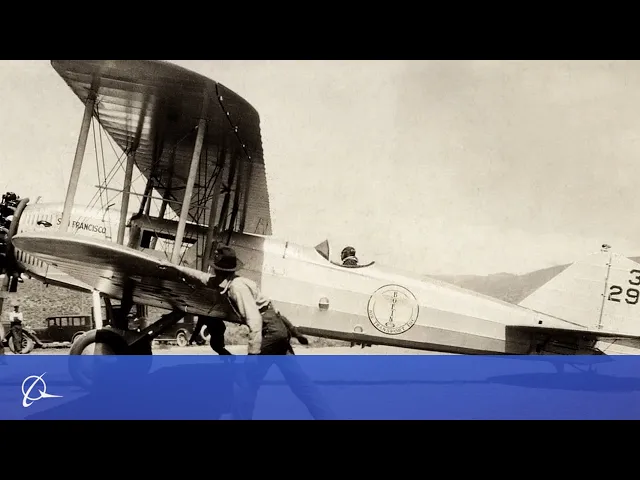
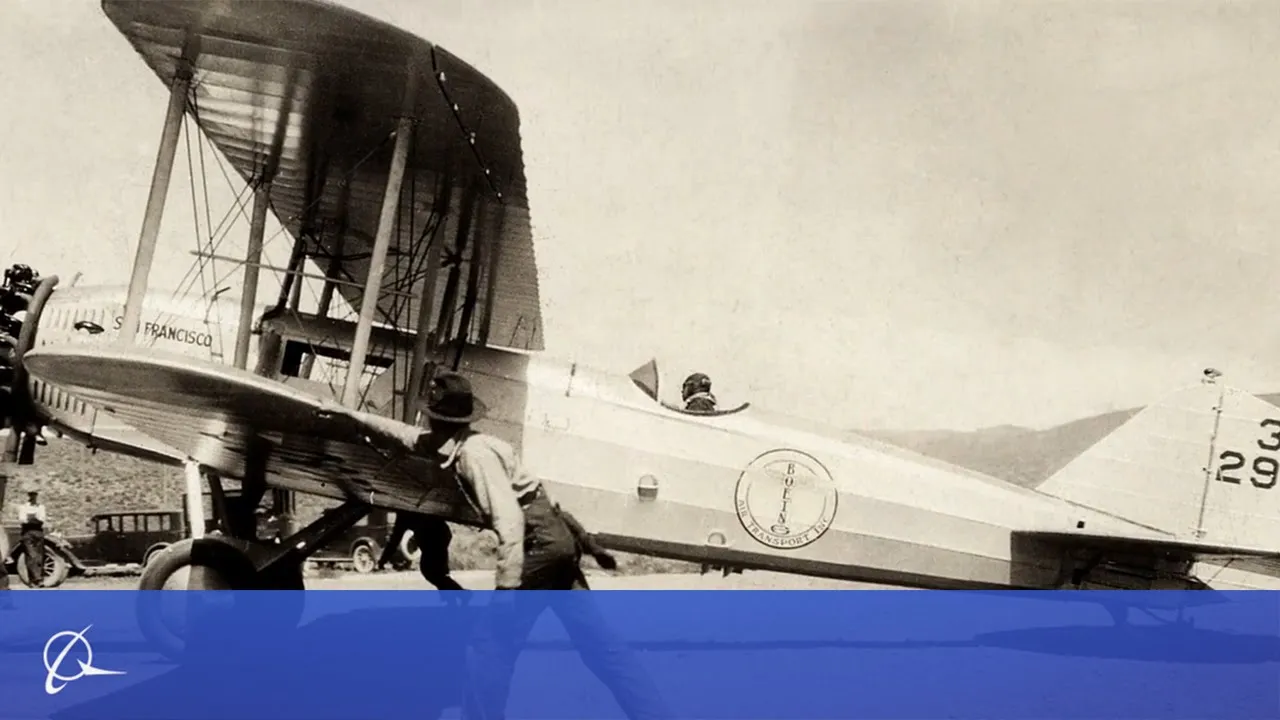
in many ways it was the first non-military aircraft that would embody Bill Boeing's vision of competing in the aviation business by offering planes with the most advanced design and Engineering possible it used welded steel tubing in the frame and had an aircooled engine that made it 200 lb lighter than the competition with the 40a Boeing bid on and won a government contract to carry the mail between San Francisco and Chicago putting the Boeing Company in the Air transport business soon other routes were acquired Boeing was on a path to dominate the air mail business getting
those mail contracts was key because it was creating a network which would later become the domestic Airline Network so the value of those mail contracts was enormous and air mail would soon give way to an even more profitable cargo paying [Music] passengers in 1927 American Aviation found its heroic voice Charles Lindbergh Barnstormer and early air mail pilot made the first solo flight across the Atlantic in his Spirit of St Louis he did enormous amount for Aviation to push it Forward uh in people's minds as a way of travel Charles Lindbergh was in many ways the
first modern celebrity the impact of his flight on people around the world is difficult in a sense for us to understand today it was absolutely a revolution millions and millions of Americans saw him or listened to him he visited 83 cities across the United States he was a rockstar an idol for millions of Americans and people around the world it seems to me that it's up to us to create and develop passenger lines to compare with our mail routes what we need now to develop our Aviation is a series of airports at every town and
city in the country passenger travel by air had been more of a concept than a reality up to then tucked in the forward cabin of the model 40a was room for two if the plane did not need the space for mail the first passenger flights were tucking somebody to sit on mailbags you know flying from Pittsburgh to Chicago as an example in an open cockpit and uh it had to be pretty rugged to withstand one of those Journeys but in the post Lindbergh era some affluent people began to consider air travel seriously Boeing introduced the
model 80 it was the first Boeing aircraft designed with passengers in mind it could accommodate 12 Travelers in leather upholstered seats in the comfort of a heated cabin with hot and cold running water the model 80 introduced the concept of flight attendants registered nurses who were now there to serve and reassure the apprehensive traveler people who could afford the expense of flying now wanted to travel by air and America was increasingly dependent on the rapid delivery of mail the aviation business was about to Boom but the country at large was falling into years of depression
the stock market crashed Millions were out of work but airplanes were in demand and Airlines were expanding Bill Boeing and the men in women who built the company with him saw a grand opportunity if you not only build airplanes you can acquire a company that say builds airplane engines and another company that say operates the airplanes operates air mail routes then you've really got the makings of something Boeing's idea was to combine these separate companies into a much larger company in a way what he was imagining very early on was the modern Corporation Bill Boeing
thought that wasn't any good making planes if you didn't have an airline to fly them and why not own the airline as well as the plane Boeing first merged with engine maker Pratt and Whitney the new company called United aircraft and transport Corporation then began buying a string of smaller aircraft companies in only a few short years United aircraft and transport became a hugely successful Aviation holding company thriving even as the economy as a whole suffered it bought other carriers and knit their routes together into a national service that soon was handling 50% of all
air mail and passenger traffic in the United States it became United Airlines in the 1920s it seemed quite natural to aircraft developers at the time to partner with other suppliers and manufacturers to create a unified whole a a One-Stop shopping so to speak Center for Aeronautics in the year of the Wall Street crash 1929 Bill Boeing's holding company United aircraft and transport showed a profit of more than 8 million the equivalent of over $100 million today Boeing really made it work he really made the whole functional structure of the airframe manufacturer the engine manufacturer and
the airline work together very very well Boeing was succeeding at the two things he valued most advancing aviation technology and operating a successful business but an emerging rival would soon challenge Boeing's dominance let no innovation in aviation pass Us by that was Bill Boeing's charge to his company the company was rolling out some of the most advanced aircraft ever built in 1930 under the banner of United aircraft they debuted an all metal single-wing plane they called the Monomail it had retractable landing gear a streamlined aerodynamic fuselage and was twice as fast as the biplanes of
the previous era almost immediately Boeing began work on another single- wing plane that would be even more revolutionary in its design the Boeing 247 was in many ways the first truly modern commercial airliner it was the centerpiece of the 1933 World's Fair in Chicago called the century of progress the Boeing 247 had it variable pitch propellers heated cabins retractable undercarriage deicing on the wings and the tail and auto pilot every new technology that was evolved through the late 1920s into the 1930s a giant leap forward and they had an order for 60 from United Airlines
which incidentally they owned so Boeing's United aircraft the builder of the plane was selling the 247 to another division of its holding company United Airlines it's kind of weird now to think that an airplane manufacturer should also own the airline but it's it wasn't weird then it was a pioneering business and why not own the market for the product that you were building other airlines had to stand in line and wait until United Airlines got its 60 planes that was how Bill Boeing wanted his holding company to work so in one sense this was a
great thing however the other airlines Transworld Airways the major rival turned to other manufacturers and said can you build an airplane to beat this TWA was just emerging as a transcontinental Airline they wanted to get in on this new generation of airliners having been turned away by Boeing they went to Douglas and said can you give us a plane TWA American Airlines and KLM all turned to the one company that rivaled Boeing the Douglas Aircraft company and its founder Donald Douglas Donald Douglas was probably one of the great Geniuses of the 20th century not only
that he was charming uh very goodlooking a pinup boy if you like and a brilliant engineer who drew people to him he was able to assemble around him some of the greatest engineers in aviation who went to Southern California for the sunshine and the chance at working for one of the great Aviation companies of the world the Boeing Douglas rivalry is probably the greatest of all American aeronautical rivalries Boeing lagged behind Douglas in Commercial Aeronautics because although it was Innovative it wasn't quite Innovative enough Douglas was the so-called fast second the risk of being first
is that the competition can treat your model as a prototype learn from it and then turn around and make a plane that's even better Douglas did just that with his DC-1 Douglas was able to seize upon what made the 247 a very good design but go well beyond it it used different materials that were stronger more rugged materials it used more refined aircraft design there was a a greater amount of wind tunnel testing and analytical work that went into that design in many ways the Douglas DC-1 I would argue was the first truly scientifically designed
American airplane it was really phenomenal and then Douglas absolutely blitzed Boeing with the DC-2 and the DC-3 I mean they just simply wiped them out just totally dominated Aviation Airlines bought hundreds of DC-3s the military would buy thousands the 247 was history no one knows those numbers 247 it's it's a plane that virtually disappeared but Bill Boeing was a businessman he could accept the failure of the 247 he had constructed United aircraft and transport to survive the inevitable downturns of the aviation business Boeing's commercial aircraft were not selling but there was the airline United it
was transporting more passengers every year the engine maker Pratt and Whitney was making money and there were the contracts to deliver the mail delivering the mail remained a gold mine for the aviation business but in 1934 it was those very contracts with the post office that would upend the business Bill Boeing had so carefully constructed in the depression success was suspect to see some companies surviving and actually prospering when others are suffering makes these companies or these industries an obvious Target and companies that profited from contracts with the US government were the easiest targets United
aircraft and transport Corporation in particular because it was so well-run and because it could controlled 50% of the market people assumed that that money was gotten through corruption taking aim was an ambitious Senator named Hugo Black who accused Boeing and others of having colluded with the post office to win the air mail contracts Senator black insinuated that these companies were getting rich off the taxpayer he wanted the contracts voided and companies like Boeing's United aircraft and transport broken up we cannot build up an aviation industry upon a rotten Foundation it is my judgment that this
chain will result in a thorough cleaning out of the aviation industry it will be taken out of the hands of stock jobbers and promoters black and other members of the US Congress call the executives of the major aircraft and airline companies to Washington for hearings those hearings are intense they are hostile Bill Boeing was among those called to testify he was grilled for nearly 6 hours and accused of having profited unfairly from the air mail contracts the contract Awards have been driven by safety and efficiency by the need to give the awards to companies that
could actually furnish the kind of reliable service that the air mail needed and also companies that could carry the air mail safely without accidents that was missed completely practically a lone voice against the rush to judgment was America's Aviation hero Charles Lindberg the most fundamental question in this situation and that is whether or not these Airlines have a right to trial before they are convicted it was a bit of a kangaroo court Bill Boeing never got over that there was an atmosphere of let's go for the robber barons and I think that was unfair they
were pioneering a new technology and flying the mail was a very dangerous and Risky Business and they had basically created that system I think Bill Boeing was right in feeling that they were unfairly singled out but the punishment handed out by Congress was Swift and dramatic they decided that the merger that had taken place of these aircraft companies with their airlines that were moving passengers and Freight all across the country that this concentrated too much power in the hands of a few companies and so they commanded that those companies be broken up it was a
almost as if uh the federal government had stepped in and demanded that America's top computer companies be broken up and that those who designed computers can no longer sell them so the rule becomes you can't be a manufacturer who runs an airline at the same time it caused the breakup of Bill Boeing's carefully constructed holding company and others like it essentially the American aircraft manufacturers and particularly the American Airline haulers were being punished for Success they were being punished for having done their job very very well it was a tremendous in Injustice President Franklin Roosevelt
went even further he ordered the Postmaster General to cancel all the air mail contracts President Roosevelt voids the existing contracts and says I'm withdrawing all of the air mail contracts to the US Airlines I'm going to have the US Army carry the mail while 83 companies fight the sudden loss of air mail contracts the Army gets ready to take over the job again the plan was a disaster from the start well it's just another job for the Army but this job's starting off under real war conditions the United States Army AirCorps had neither the aircraft
nor the training nor the experience and very quickly you had 12 fatalities and you had over 60 accidents as the Army tried to carry the mail it nearly shattered as well the established Air transport system that had been set up across the United States it was no consolation that within a few months Roosevelt saw the Folly of his decision and reversed it by then Bill Boeing's company was being broken up building modern airplanes was easier than building a modern Corporation Bill Boeing said to himself to hell with it I'm getting out I'm leaving the business
don't ever call me again it was a stunning climax to an extraordinary career he sold all his stock and left the aviation business forever the industry that had started in the Wright brothers bicycle shop was just over 30 years old but everything about airplanes and aircraft manufacturing had been transformed Boeing's contribution was the industrialization of the invention the Wright Brothers never saw the industrialization of their invention in the way that Henry Ford did with the car or Bill Boeing did with the plane that was Bill Boeing's great vision when asked by an interviewer to comment
on his company's success Bill Boeing said I've tried to make the men around me feel as I do that we are embarked as Pioneers upon a new science and industry in which our problems are so new and unusual that it behooves no one to dismiss any novel idea with the [ __ ] cocksure statement it can't be done it was a message these men and women would have to embrace if the company was to survive without Bill Boeing [Music] in the 1930s the Press was proclaiming that America was entering the Golden Age of flight and
it was largely because of Donald Douglas and the Douglas Aircraft Company its Douglas Commercial Series were the first planes to make money simply by carrying passengers not mail travel on its planes achieved a level of safety comfort and sophistication that was changing how people viewed travel by air for the passenger it meant that instead of being an endurance it became pleasurable this was a new era of travel and set in the depression this was uh the space age if you like of the 1930s there was a time everybody flocked to the airports on Sunday afternoons
to watch the planes take off and I'm not talking about passengers or family of passengers I'm just talking about Ordinary People most of those people would never set foot on an airplane Air Travel was the province of the affluent a fantasy On a par with Hollywood movies the glamorized Stars even as the depression deepened there would be photographers stationed there when a flight would be coming in say from the West Coast because they knew that there would probably be a recognizable celebrity people dressed up to fly women would wear pearls and their best suits and
men would Wear Ties Airlines were quick to realize that to capture those passengers they had to outdo each other luxurious fittings were the order of the day the plane that came to symbolize this era of luxurious travel as much as any other was the Clipper a name that evoked images of sailing as much as soaring since the Clipper was both a plane and a boat others made them but none were as large and opulent as the ones that Boeing built for PanAm in [Music] Seattle the PanAm Clippers symbolize the first golden age of air travel
they were somewhat ungainly to look at but they were beautiful silver hulled Majestic they all had names like China Clipper names that conjured exotic places the Clipper was built to meet the ever expanding Ambitions of the only truly global airline of the era Pan-American World Airways almost anywhere a ship could dock a Clipper could land the big Clippers perhaps the most romantic commercial airplanes ever built and flown getting on these big flying boats and traveling across the Pacific to Hawaii to Manila and ultimately onto Hong Kong PanAm blazed new aeronautical routes but the reality was
that as iconic as the Clippers were Boeing only Built 12 of them the Boeing Company in the 1930s was a company in trouble it had a history of making Innovative aircraft but its rival Douglas aircraft dominated the market for passenger planes in the Golden Age in 1934 Boeing was forced to slash its Workforce from 1700 to [Music] 700 but in August of that year Boeing received a formal circular from the US Army that would save the company it was a request that Boeing enter a competition against Douglas and Martin to build a new bomber for
the American Military it called for a multi-engine bomber capable of carrying a ton of explosives and travel up to 2200 miles at a speed of more than 200 mph the winner would receive an order for more than 200 planes they had to put all of their own capital and all their own money into the Prototype it was really almost a last throw of the dice for Boeing in 1934 Boeing tied its future to building a bomber beyond all other bombers it was a concept that had captivated Boeing's new president Claire Egtvedt since 1923 when he
had witnessed an early demonstration of air power staged by one of military aviation's early Advocates Brigadier General Billy Mitchell Egtvedt had been present when Billy Mitchell bombed two American battleships is one of his demonstrations of air power the Primitive bombers attacked and sank both the decommissioned ships we're talking about an era in which planes are still basically sort of big kites made with struts and wires and stretched canvas and Mitchell is able to sink these Mammoth ships from aerial bombing alone Egtvedt was absolutely mesmerized by this demonstration of what airplanes could do but the Navy
was not impressed the ships were aging unarmed sitting targets Admirals who witnessed the demonstration dismissed it as a stunt Egtvedt heard an admiral say well you know it's very impressive but these planes aren't dreadnoughts that word sank into his brain a dreadnought was a state-of-the-art warship bristling with guns and a steel hull so strong it was almost Unsinkable in the Admiral's mind it would take nothing less than a dreadnought of the air to sink a battleship and from that point on the idea for Egtvedt of creating a dreadnought of the air obsessed him and a
decade had passed and for Egtvedt the Army's request to design and build a truly modern bomber made perfect sense when the Army approached him with the idea of a long range bomber that could in fact travel for thousands of miles and deliver bombs in a massive way on targets Claire Egtvedt decided it was time to push ahead with something he'd been dreaming about since the 1920s the Army Air Corps stipulated a multi-engine bomber Egtvedt envisioned a plane with four engines and he knew the engineer to design it Ed Wells is a very young man when
he was brought in to design what was really a revolutionary plane so young that even he sort of wondered what in the world he was doing there Ed Wells is among the greatest engineering minds in the history of Aviation Bill Boeing had hired him after he graduated from Stanford University in 1931 at Boeing he was nicknamed the college boy which gives you an idea what the background was for a lot of those guys they didn't have college degrees they were experienced men they knew how to make airplanes Wells was 24 years old he was married
on a Saturday and began work the following Tuesday his salary was $125 a month Ed Wells was very quiet methodical and systematic he was a very reserved engineering figure a guy who you locked in a room and came up with genius ideas it was Ed Wells Claire Egtvedt and the tide of history that would bring the Boeing Company back from near Extinction in the 1930s most Americans were unconcerned with the events taking place overseas the fact that fascists were on the rise in Europe and Asia was not a reason to take up arms protected by
two oceans Americans were comfortable with their isolation the American Military was unprepared for war the Army was small and the Navy's ships were aging those who saw the future of air power like Billy Mitchell were seen as radicals there were members of Congress who even feared that building a big bomber in peace time would provoke the fascist to make war the only reason the Army was able to convince Congress to authorize money to build a bomber was as a coastal defense plane the idea was that its long range would give it the possibility of protecting
America's coastline in conjunction with the Navy and this is the way in which it was basically sold the B-17 prototype was designed and built in only 11 months 11 month from drawings to a viable airplane and it was a plane packed with Innovations the pilot sat in a heated Flight Deck there were five gun positions one mounted Midway under the fuselage two on either side were called waist gun positions and were enclosed in a then new material plexiglass the entire structure was reinforced in ways never tried before the B-17 was Ed Wells's Creation in fundamental
ways Ed Wells was doing what Bill Boeing the founder of Boeing had intended the company should do which was to build the most advanced machine they could do with the materials available when Wells B-17 emerged from the factory it was a plane of a different order of magnitude a Seattle reporter called it a flying fortress and the name stuck in October 1935 Wells traveled to Dayton Ohio where the Army would test the competing airplanes against each other Wells wrote his father the very idea almost scares me stiff but I'll do my best to justify the
faith the company is putting in me the fate of the company was resting on the outcome of the trials but Egtvedt and Wells were confident that only their plane had met and exceeded every specification that the Army had requested the Douglas and Martin prototypes were two engine planes they were modeled after almost every other widely produced commercial aircraft of the day but the B-17 with four engines was bigger and faster it could fly higher farther and carry five times as many bombs the Army Air Corps really liked its performance they liked what it could do
the next to the last day before the competition was uh come to an end uh the Army Air Corps wanted to fly the airplane one more time it was a formality the B-17 was clearly going to be the winner of the competition the plane lifted off easily climbed but suddenly everything went wrong the B-17 appeared to stall in midair then fell out of the sky it crashed and burned and Ed Wells he said it was like watching a child die two pilots died in the fire they bet the farm on the B-17 and they built
a magnificent airplane all the money Boeing had invested half a million dollars in 1935 it's a huge amount of money literally went up in flames Douglas won the competition they were given an order for more than 100 two engine bombers but the investigation into the crash of the B-17 revealed there were no mechanical problems with the plane the cause was a tragic mistake the Prototype had a simple device to lock the elevator section of the tail while the plane was parked like a handbrake on an automobile the Army test pilot took off without releasing the
lock Boeing had lost but Ed Wells had designed a plane so superior to the competition that even those who wrote the rules wanted to break them the Army Air Corps was so adamant that they wanted this airplane that they approached their superiors in the Army and begged pleaded and cajoled to buy a squadron's worth of the B-17s that one purchase kept Boeing going the Army Air Corps ordered 13 B-17s but Boeing was only barely surviving the Stark reality was that for nearly a decade none of its planes made money even as its designs pushed the
limits of Technology by 1939 the company had to borrow money every week to meet its payroll but that's how close it came to the demise of a company that was not not only the builder of the B-17 but would go on in World War II to build the greatest super bomber of them all the [Music] B-29 it was World War II that changed [Music] everything for the next 5 years the world would be at War America alone would build over 100,000 aircraft Ed Wells' and Claire Egtvedt's B-17 would literally change the course of [Music] history