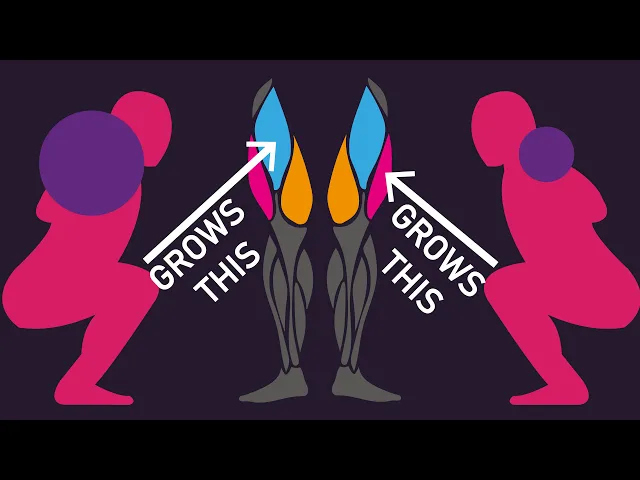
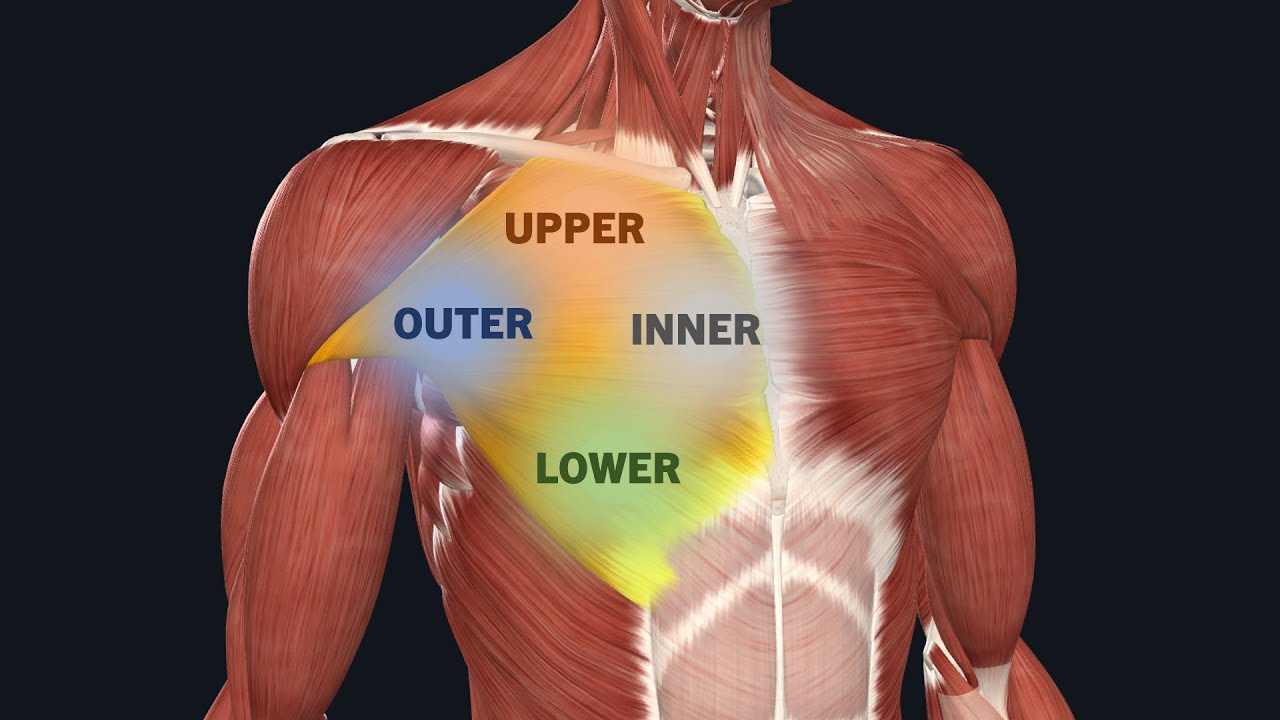
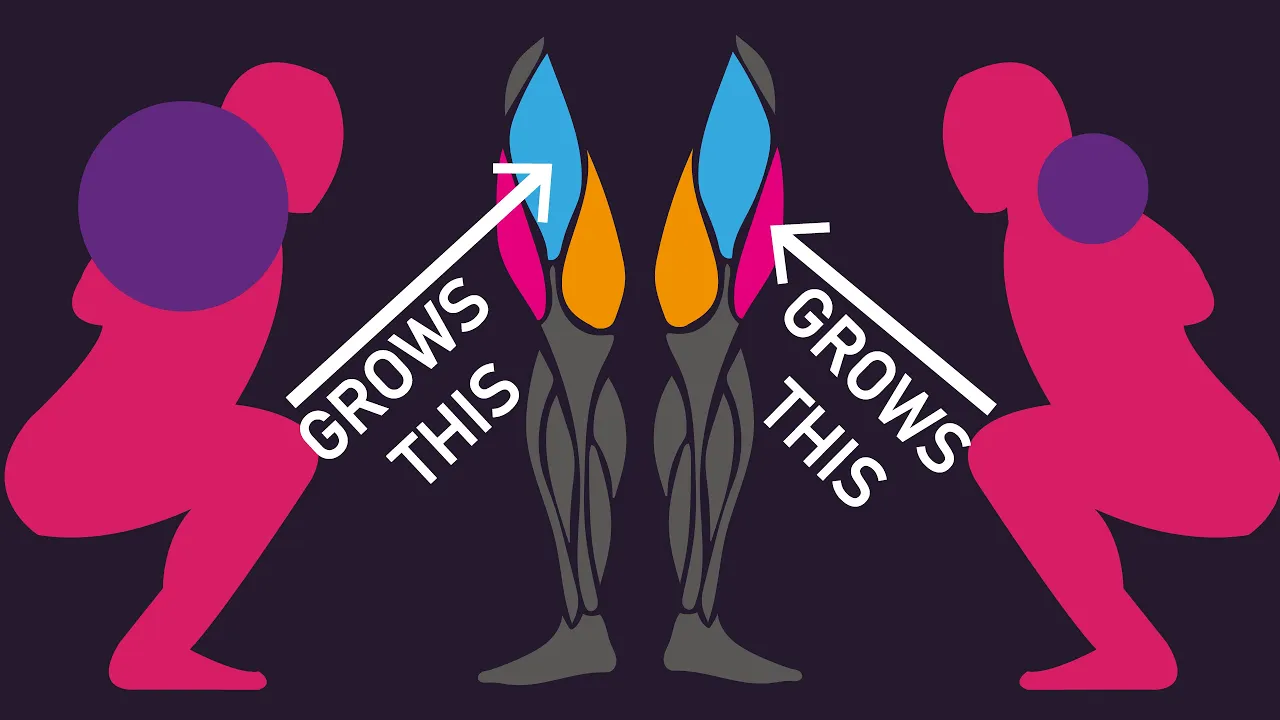
I recently came across some research exploring if heavy and light loads produce different regional muscle growth. Put differently, could heavy and light loads result in different growth on parts of a muscle? If true, this may suggest that using both heavy and light loads in your training could be effective for ensuring you experience more balanced muscle growth across a muscle or a muscle group.
As mentioned in other videos, we have two meta-analyses indicating loads between 30% and 85% of a person's one rep max on an exercise can produce similar muscle growth, provided you perform repetitions to or very close to failure. The point at which no more repetitions can be performed. Meta-analyses, for those unaware, are studies that combine the results of numerous individual studies.
But in nearly all of the studies in the mentioned meta-analyses, they measured muscle growth at only one region of a muscle, preventing us from identifying if any regional differences in muscle growth between heavy and light loads exists. Likewise, we've previously explored the research assessing if alternating rep ranges in your program ,so using a variety of loads, could produce greater muscle growth than using only one rep range. In the short term at least, 12 weeks or less, there appeared to be no difference between the two.
But all the research explored in that video assessed muscle growth at only one region of a muscle, again preventing us from knowing if any regional differences in muscle growth exist between using a variety of loads or training with only one load. So, could heavy and light loads produce different regional muscle growth? The study I came across was a 1996 paper by his Hisaeda and colleagues.
11 untrained women were assigned to a hypertrophy or strength group. Both groups trained the leg extension, 3 times per week for 8 weeks. The hypertrophy group performed their leg extensions with a 2 second concentric phase and a 2 second eccentric phase.
Each session. they performed 5 to 6 sets of 15 to 20 reps to failure with 90 seconds of rest between sets. The strength group performed the concentric and eccentric phases of the leg extension as fast as possible.
Each session, they performed 8 to 9 sets of 4 to 5 reps to failure. They rested however long they needed between sets. Cross-sectional area of the rectus femoris, vastus lateralis vastus medialis, and vastus intermedius was each measured at 30%, 50%, and 705 of the thigh length.
For each of those muscle heads, the sum of those three regions was used in the analysis. Also, the values obtained for each head were added up to give us total quadriceps cross-sectional area. Total quadriceps cross-sectional area increases were similar between both groups.
However, looking at which heads actually grew for each group, the hypertrophy group experienced greater growth of the vastus lateralis, while the strength group experienced greater growth of the vastus intermedius and rectus femoris. As mentioned, the authors of the study added up the cross-sectional area increases for each quadriceps head at 30, 50, and 70% of the thigh length and used that value for analysis. They did not report the data for cross-sectional area increases at each of those percentage regions.
That said, they did state the hypertrophy group experienced significant cross-sectional area increases at 305 of the thigh length, so the upper regions, while the strength group experienced significant increases at 70% of the thigh length . so the lower regions. However i don't know whether this applies to only one of the quadriceps heads or all of them.
They unfortunately did not go into further details. Nevertheless, this study indicates with leg extensions, performing 15 to 20 reps, which of course requires a light load, targets the vastus lateralis more than the other quadriceps heads , while performing 4-5 reps, which of course requires a heavy load, targets the rectus femoris and vastus intermedius more. Furthermore, lighter loads may target the upper regions of some quadriceps heads more, while heavier loads may target the lower regions more.
Now, this study is not without noteworthy limitations. In addition to performing a different number of reps on the leg extension both groups also used a different number of sets, rest interval lengths, and repetition tempos. These could have influenced the results.
The use of different repetition tempos is likely a noteworthy consideration. In a previous video, we demonstrated some evidence indicates different repetition tempos can produce different regional muscle growth. Therefore, the results could have nothing to do with rep ranges or loading rather all to do with repetition tempo.
However, is there any rational reason behind why heavy and light loads may cause different regional muscle growth? One such reason relates to muscle fiber types. Muscles generally consist of slow twitch and fast twitch fibers.
Slow twitch fibers produce low amounts of power but are highly fatigue resistant, whereas fast twitch fibers produce high amounts of power but are less fatigue resistant. These characteristics bring up an interesting hypothesis. When using heavy loads, could the body selectively recruit muscle heads or regions that are more fast twitch?
Conversely, when using light loads, could the body selectively recruit muscle heads or regions that are more slow twitch? Based on a few studies, the vastus intermedius, but more so the rectus femoris, appear to be slightly more fast twitch than slow twitch. Could this explain why the strength group ,who used heavy loads, experienced greater growth of these heads?
The vastus lateralis, on the other hand, is slightly less fast twitch than these muscles. Based on numerous studies, it appears to be a near 50/50 split of fast and slow twitch muscle fibers. Could this explain why the hypertrophy group, who use lighter loads, experienced greater growth of this head?
Also, remember, the researchers broadly stated the hypertrophy group experienced greater upper region growth while the strength group experienced greater lower region growth. In most studies that aim to identify the fiber type composition of a muscle. They take a tissue sample from only one region of that muscle and then calculate the number of slow and fast switch fibers from that single region.
But there is research indicating that when taking numerous samples from many regions of a muscle, the fiber type composition varies between them. This might help explain why the hypertrophy and strength group experienced different growth in the upper and lower regions of the quadriceps. As an extra note, if this hypothesis was true, it could also apply to repetition tempo.
Slower repetition tempos may selectively recruit muscle heads or regions that are more slow twitch, while faster repetition tempos may selectively recruit muscle regions or heads that are more fast twitch. But all of this is only a hypothesis and it does have problems with it. The strength group experienced slightly greater growth of the vastus intermedius than the rectus femoris.
However, the current research indicates the rectus femoris is slightly more fast twitch than the vastus intermedius. If this fiber type hypothesis was true, we would expect the rectus femoris to have grown more than the vastus intermedius. But this wasn't the case.
Furthermore, the hypertrophy group experienced the greatest growth of the vastus lateralis. However, the current evidence indicates the vastus medialis is more slow twitch than the vastus lateralis. If this fiber-type hypothesis was true, we would expect the vastus medialis to have grown more than the vastus lateralis, but this wasn't the case.
Moving on, as far as i'm aware, the study by Hisaeda and colleagues is the only paper to have explored differences in regional muscle growth between heavy and light load traditional training. Now, I say traditional training for a reason. In this case, traditional training refers to performing exercises that involve both a concentric and eccentric phase.
Many common exercises, such as squat, bench presses, and leg extensions fit into this criteria. However, there is a study exploring how heavy and light isometric trading impacts regional muscle growth. 12 untrained men were assigned to a 100% or a 60 % group.
Both groups performed an isometric contraction for their triceps at 90 degrees of elbow flexion with a dynamometer 3 times per week for 10 weeks. The 100% group contracted their triceps to 100% of their force producing abilities for 12 sets of 6 seconds each session. The 60 group contracted their triceps at 60% of their force producing abilities for 4 sets of 30 seconds each session.
Triceps cross-sectional area was measured at 20 regions across the length of the muscle. Increases at all regions were similar between both groups. The graph combines the data for both groups and displays the average increase at all 20 regions across the triceps.
So this study indicates heavy and light loads do not produce different regional muscle growth. But there are some important considerations with this study. Firstly, isometric contractions were used.
If both groups performed dynamic exercises that involved concentric and eccentric phases, we don't know how this would impact the results. Also, although the researchers looked at numerous regions across the length of the triceps, they did not distinguish between the triceps heads. We don't know if long, medial, and lateral head growth differed between the two groups.
To summarize, the Hisaeda and colleague study provides us with some evidence that heavy and light loads may produce different regional muscle growth. However, the study with isometric contractions does provide us with some degree of opposing evidence. There is an interesting hypothesis, relating to fiber type composition, behind why heavy and light loads may produce different regional muscle growth.
But as established, there are limitations to this hypothesis. At the end of the day, a lot more research is needed in this area. Although, as established in our alternating rep range video, in the short term, 12 weeks or less, using a variety of rep ranges, meaning you combine heavy, moderate, and light loads in your trading program, appears to produce similar muscle growth to using only one rep range.
In the long term though, there is a possibility using a variety of loads is superior. And as demonstrated in this video, there is a possibility that heavy and light loads produce different regional growth. Meaning using a variety of loads would be effective for ensuring you experience more balanced muscle growth across a muscle or muscle group.
Therefore. using a variety of loads in your training program could be a sensible idea. If for some reason you do not like the idea of using a variety of loads, there still are other ways to ensure more balanced muscle growth across a muscle or muscle group.
As covered in another video, using different repetition tempos could be one way. Another more obvious way is to perform a variety of exercises for a muscle group. We'll be exploring this concept in more detail with future videos.