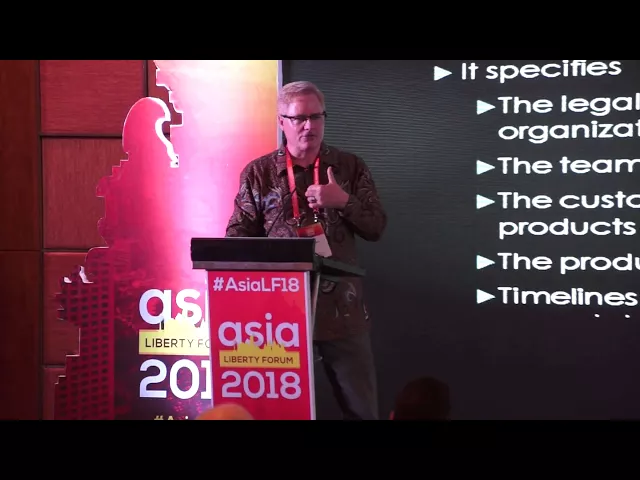
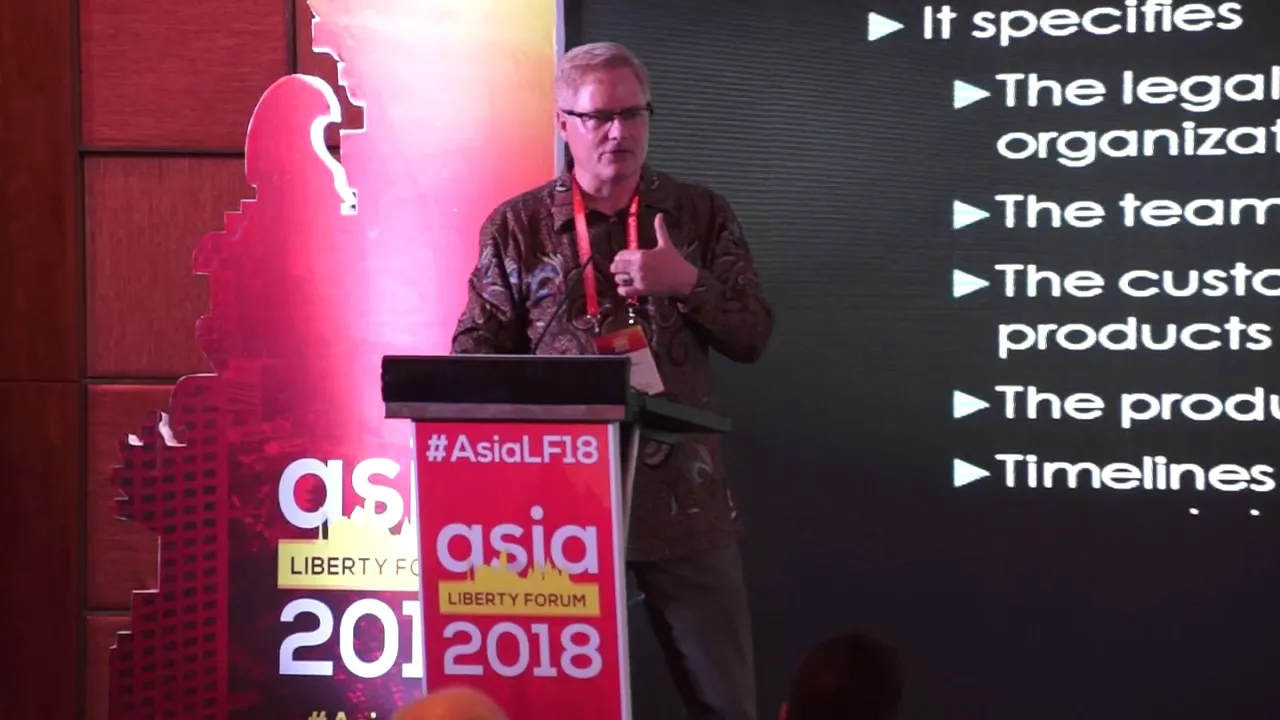
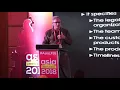
if I can ask you to take your places we have a very insightful session about what it takes to to be an intellectual entrepreneur and start your own think tank with dr. Tom Palmer Tom has consulted and travelled to countless think tanks all around the world he has seen many think tanks blossom into truly inspiring organizations and he has also seen some fail sharing his insights and experience on what it takes to start a policy think-tank please welcome back again to the stage dr. Tom Palmer [Applause] but thank you so much I should begin by
a something I normally say you shouldn't ever do which is a little bit of an apology I've not shaken anyone's hands here now there's a reason for that and that's that I'm a very selfish person I've got a nasty cold and I don't want to share it with any of you it's my cold and I'm going to keep it but that's the reason I've maybe been less friendly that I normally appear I've been involved in the Liberty movement for a few years Casey reminded me that we had met in 1998 I said that's not possible
that would be 20 years ago but I've been involved for much much longer than that and one of the first organizations I was involved in setting up they were in the communist countries so some of these are still in existence in liberally Institute in Prague Catholics II and Moscow and others and I learned a few things over the years about what to do and what not to do so let me start then with the opening what do you start with you start with an idea but it needs to be a very particular kind of idea
not just we're going to make things better ask yourself the question what is the problem to which the organization we want to set up is the solution what is the lack that we are going to address and supply and formulate that what's the problem you have a solution but first what's the problem to which you're offering a solution and then you need a team quite often people start you're saying well I'm one person with an idea it's very hard for only one person to make this happen you do need a team of people and that
means people who are committed to it one way or another look for some complementarity of skills or resources it might be one person has tremendous ability in communication or research or resources maybe you have a member who can financially support you or has a business that can be helpful to you your core team is a group of P you're really going to rely on and one of them needs to be a driver and my definition of a driver is the person who's goes to bed at night thinking about the problems and wakes up in the
morning thinking about what is going to be done that day with and for the organization now you might have a multitude of what you need at least one for whom this is a passionate commitment not a hobby or not some little side activity you go to bed sleep thinking about it and you wake up in the morning thinking about it you need to get educated on what other people have done and we have a wonderful program at an Atlas Network that you can do online the think tank navigator it helps people to get straight and
what it is that they can accomplish what do they want to do what is your passion what are you able to accomplish so it's a very useful preliminary to establishing a new organization and I'm saying this also for people who are involved in existing organizations it's worth going through this just to clarify your role you're thinking what it is that you hope to be able to accomplish there are a few documents you want to sit down with your core team and make sure all of you sign off on this we agree with this this is
what we have in common so it's not just think someone writes and then puts up says this is it you should have some conversation over tea or beer or whatever is appropriate for you sit down and really discuss it rework it the key is to come to an agreement as to what it is you want to do and the first one is a vision statement it should be an inspiring general statement of what you hope to accomplish so I'll just give you the examples with Atlas Network our vision is of a free prosperous and peaceful
world where limited governments defend the rule of law private property and free markets now our board of directors spent actually substantial amount of time debating and discussing and going back and forth until it was one they all agreed to that all of our board read to this while the staff members have signed off on this also this is our vision of what we hope to accomplish a mission statement why does your organization exist why are you here well let me give you an example of Atlas networks our mission is to strengthen the worldwide freedom movement
by cultivating a highly effective and expansive network I should point out every word was discussed it's effective we try to increase the capabilities of our partners by providing them with training and opportunities and it's expensive we want to grow we want the benefits of liberty and dignity and justice and peace to reach every corner of the world that a network that inspires and incentivizes all committed individuals and organizations to achieve lasting impact so that's our mission at the Atlas Network yours will be focused on whatever it is you think that you should be accomplishing oh
and in terms of missions some of the things that you might be able to accomplish public education popularization have ideas we have some partners who focused mainly on putting them in popular terms and videos and other things that people can grasp it might be legal advocacy public policy research and so on or some combination but the key to a mission statement is it tells you not only what you do you can refer to it when someone proposes something and say well we don't do that it's not in our mission because one thing you want to
avoid is having little bits and bobs attached to your organization so that at the end of a couple of years you don't realize why are we here anymore because you kept adding things that seem like good programs someone should do it but the question is should we do it is it part of our mission the fact someone should do it is not enough the question is is it part of our mission and your mission statement should help you to decide that need to have a business model and a business plan there are many different models
of a think tank and they will be determined by the laws in your country the tax laws the registration procedures there's no one model globally every country is different so look at your legal situation and decide how you're going to be organised so a number of options independent non-governmental Research Institute so think of IEA in London is a really the flagship of that or CCS in India a university based independent research centre it's another opportunity their option I recommend when doing that to try to become independent and not subservient to the rector of the university
but to be an authentically independent center a charitable institution this is another option in different countries and finally in some countries an independent for-profit company turns out to be the best way to do it because the legal system does not really permit a charitable organisation or an independent research group so look to the legal code and one thing I recommend ask lawyers go to real lawyers who really practice law not your friend who has an opinion and say what is the legal situation here what can we do what is required what is the best option
for us in your own country you need to have a business plan just like rolling out any new business you need to have a plan and that needs to have the normal elements of a business plan one of the things that we stress at Atlas Network is you think of yourself as being in the education business of the social advocacy business or the research business you're running a business and if you run out of money in September because you didn't budget yourself correctly it doesn't matter how wonderful and nice you are you're out of money
you need to follow proper business procedures so it may be it's a non-profit ok but you still need to run in a businesslike manner you need to have clear timelines and deadlines we hope to publish this book this study have this conference this cut parliamentarian a consultation whatever and work backwards with your timeline what has to be done by what date to be able to meet your rollout schedule the same thing as if you are producing a new product a new automobile a new kind of watch anything else you need to be businesslike and a
budget or as I like to put it budgets plural the first budget and this is a non nonsensical budget really go out and cost things out not just numbers out of the air 1 million rupiah 10 million rupiah two hundred million rupiah what is it really cost to do what you intend to do start with what you hope to do you want to hold a conference you want to have this go and find out how much it costs and I know from the perspective as someone who reviews grant proposals and is a personal donor to
many projects I don't know when people say it will cost five thousand dollars I don't believe it it means they didn't go and find out what it will really cost and I want to know they checked it and they said five thousand two hundred dollars four thousand six hundred and ninety dollars whatever it is shows to me they did the research they didn't just pull a number out of the air so create a budget that you think is realizable and modest we could do it it's our Minimum Viable Product as they call them business this
is the Minimum Viable Product we could produce this and it would be something real it wouldn't be half of something it would be all of one important project then add a little bit more let's say 25% what if you're more successful than you had expected what would you do what more would you roll out and then finally just for your own purposes of fantasy budget what if you're really successful or you meet some entrepreneur says oh my gosh I've been waiting for this all my life what would you do the reason is sometimes you will
meet that entrepreneur and when the entrepreneur says what would you do with two hundred million rupiah it would be good to have an answer or not I don't know but that's your fantasy budget what would you do if you had a lot of resources but I recommend three budgets and really cost them out systematically so they're not just pulled out of the air we'd spend two thousand on this and ten thousand on that and five thousand on this what would it really in fact cost not wild guesses a marketing plan now you might ask who
are your customers you are a business and a business has customers you need to make sure the customers are happy so then you learn in business very quickly unhappy customers equals bankruptcy you want happy customers well who are your customers either the ones who give you money that's the obvious one your donors they're giving you money what are they getting in exchange presumably not privileges or benefits you don't have anything hand out you're not a corrupt government official so what is it they get well they get an identity they get the the knowledge I'm this
kind of person who stands up for these values people who buy your books or your papers they're customers you want them to be happy to realize they got value from it I have a definition of a customer people who expend scarce resources to consume your products if you think about it all of the various people you interact with can be seen as customers people who visit your webpage spend ten minutes of their valuable time they didn't give money but they spent ten minutes a student who comes to your conference spends three hours that could be
done doing something else it's more fun but that person spent time if a newspaper editor is going to print your article you submit an op-ed on food prices in Indonesia and why Indonesia's will benefit from free trade the editor of the newspaper decides to spend this much of a page that's very valuable that's the resource the editor has the editor is going to spend it on you or someone else what value do you bring to that editor causing the editor to spend that scarce resource on you what do you think about customers we normally think
of people like this but in fact your customer base is made up of all sorts of different groups policymakers and entrepreneurs and students newspaper editors those are all customers and you should ask what value are we delivering to these customers such that they will want to consume our products now the other element and this is one we had a conference on before this is fundraising that's very important raising capital for your activities it is not begging this is the hardest thing for people to overcome we are raised by our parents not to be beggars that's
normal we internalize it I don't want to go back and be pathetic and sad to people when you raise money for your activity you are not a beggar you are raising capital investments for a valuable project you're creating value in the world and your donor is someone who has capital and resources you have time and energy and intellect together you'll make a business and this business will add value to the world so when people are going up to raise capital for their enterprise they're not begging they're raising capital and that is what you're doing as
well overcome that burden that obstacle and practice asking for funds for your activities it's a hard thing to overcome once you get over it you've realized you're helping other people this is one thing I learned a long time ago one of the donors I felt all embarrassed asking and he said you know you seem a little ashamed of this he said don't be he said I can't run all these projects I run a successful business but I want these things to happen we can make a partnership it changed my whole view on the world when
that I learned that when you do that join the atlas Network and you are part of a global network of friends and one thing I think it's become very clear in the course of this conference we have friends all over the world who work for our principles and our values in so many different circumstances some of them at great personal risk to themselves and there are some of our friends who are not here because they have been punished by governments for standing up for truth and justice and have paid terrible prices for it but always
know you are not alone you are not alone there are other people who share you about your values people who care about you people who will be helpful to you and support you even in a very difficult and dark times and with that as they say in Italian Liberty amo means let's Liberty let's create a world that is free and just and prosperous and peaceful and your participation Atlas network is a very important part of that project thank you very much for your time and your participation [Applause]