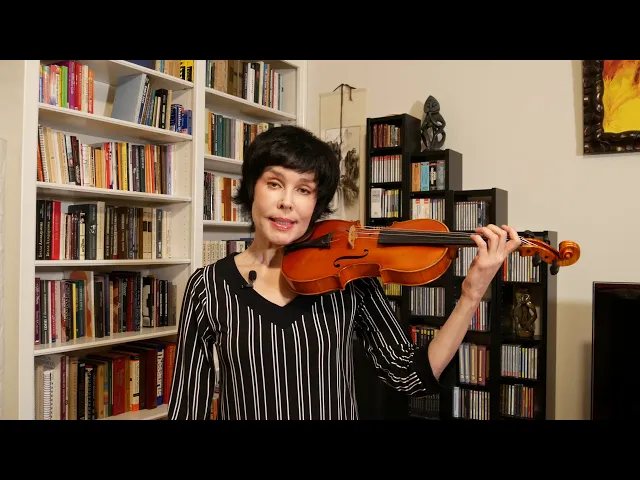
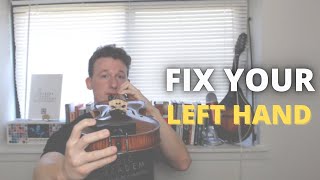
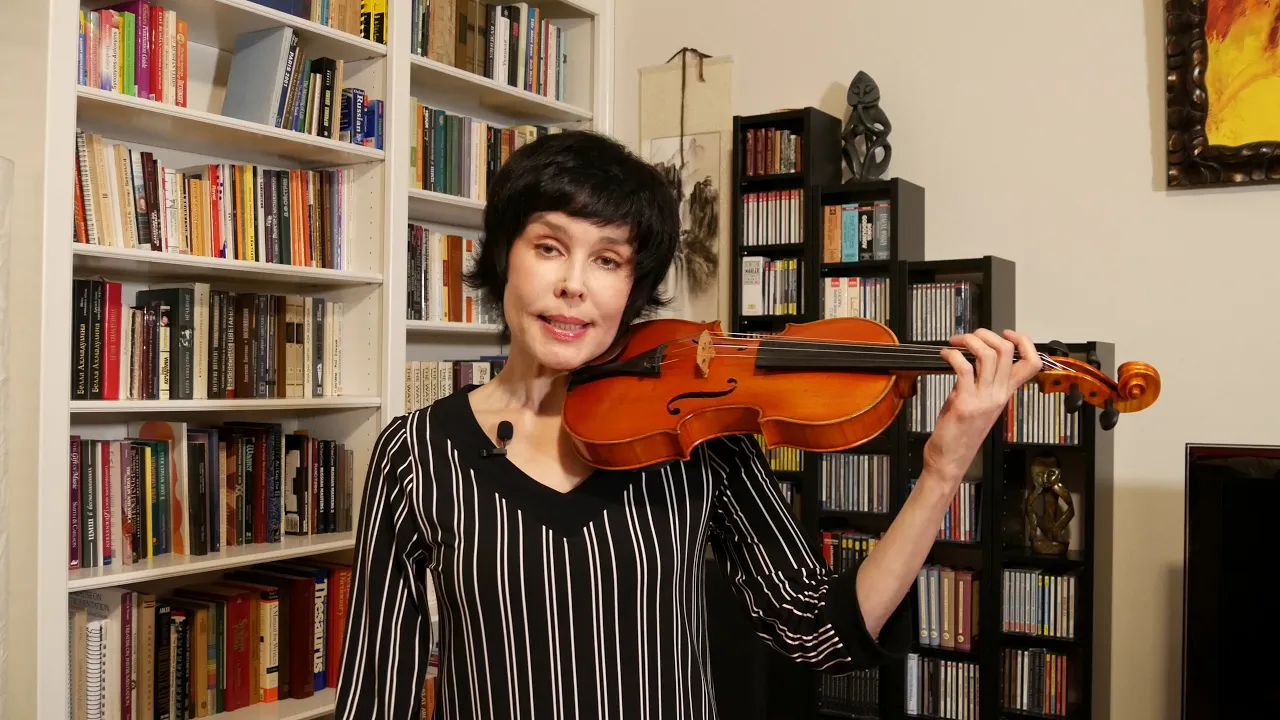
hello this is Julie buccola and today I'm continuing with a basic series the left hand continuing from where we left off last time so to recap last time you were able to put your violin on your shoulder with the help of nice chin rest and the shoulder rest or shoulder pad today I want to show you another one that one I put there nice concertmaster by acoustic grip and then relax your violin on your shoulder with a minimal of pressure or other weight I would say of your head here and then inserting the hand into
the violin over a lien in your hand whichever one you want to think about to say and having the distance here pull pulling your first finger back and we started with the second finger and third so mmm here I would like to tell you that I believe there is a very good method of teaching the first set up which is different from the traditional method so traditional method like they want that I learned and most of us learned was to start with the first finger and second finger then third finger and then eventually fourth finger
this new method which I learned only recently about but which I really think is very viable teaches to start with a second finger as we started last time which is the longest finger and it easily goes on the string and then third and then fourth but leaving the first so later and why I believe that this method may be most productive is because we usually have the biggest problem with the fourth finger when they would come to it so here's the difference and then first finger will have to find its way later on the fingerboard
this new method was described by violinist yo-yo v''e your Denova she's a Bulgarian violinist who has lived and taught in Russia for many years by now and I learned about this relatively recently but I always thought along these lines for a long time anyway and I was very happy to find her book it's called a primer for young violinists and I put I will put the link to the book in the description so if you decide to follow this method we will start with the second finger and let's position it on the second string on
a string and here I would recommend for you to use the bit ceccato now in the method in the book Monsieur de Noah first gives extensive training of the bow hand which is my opinion is absolutely correct this is the same that Leopold our did in a very traditional way and basically all traditional really good traditional methods start with just the bow hand on open strings for a while and then left hand I still recommend to be really conservative and started in pizzicato fashion so for that we first learned how to play pizzicato we put
the tip of the thumb of the right hand right here onto this corner and then you can take your first finger your second finger but that's after the first which is the pointing finger and we will do this so when you pits we call pizzicato also pits when you pluck you need to plug your go to put the finger between the strings like this and pull it up upward [Music] so don't try to pull it too to yourself no it's really interesting I had the either so see this is a very ugly sound so but
if you go up so the sound is more rounded and that's the sound that you want also see that you don't get excessively tight even in here in the right hand so back to the first notes you will have then your a and then the second finger most likely will be in the position of C sharp and that's your goal for that to be in the position of the C sharp of course here if you are completely without the teacher and you don't know how sharp is supposed to sound I will recommend to go to
some instrument on which you can take the C sharp or at least give it to yourself in a tuner and go for that C sharp now if you are adjusting anything your left hand adjust the whole hand let's put it this way I would put right now hoping I will get a C sharp and it's a very flat C sharp is basically a C almost natural so what I would do you see it turns out and kind of closer here than I needed to be I would move the whole thing slightly up [Music] so where
do you put the finger you put the finger on the tip but not to the nail so it's right here on the tip right here on that tip right here on this and eventually on the fourth on the first finger when you will be putting the finger on the string the string will be on the left side of your nail on the left side of the center I should say the middle finger would be pretty much in the middle the third will be a little bit in the middle towards the right side of the finger
and the fourth will be more to the right side it's just how our fingers grow so you need to be cautious that that's exactly where you put your fingers and don't allow them just to land wherever you will be very grateful to yourself later on okay so back to the C and if you sharp pluck a put the second finger and then lift right from here so this is the action of lifting and you can just do it with your right hand by yourself just like what I'm doing right now you press on this joint
and the finger lifts okay so that's the action that you will be using to the same thing with third finger it went on the string I'm lifting it from here see how the finger stays in the same exactly shape is it was first on the string so in other words you do not want to go do this you don't want to open fingers never open fingers in the middle joints okay so only off of function and then that would be your a and D and then after this I would direct you to the book of
your your Denova because there's a nice progression nice little tunes consisting of open string and second and third fingers on all strings and again she gives them already there with the bow hoping by that time you are good enough with the bow and you can combine them however I would still recommend to do them first it's a kata any new tune that you do do it first pizzicato in the rhythm that it's given and the tempo and then only after that apply the bow to it okay I hope that this has been helpful and you
will practice well and I will see you all later for those of you who would like to try the more traditional method I will make the next video