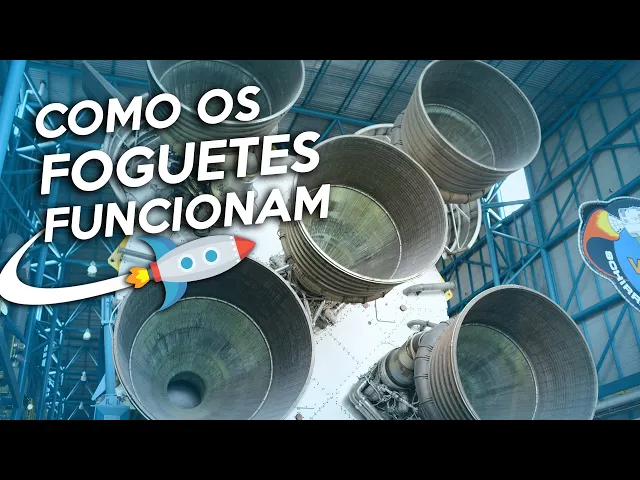
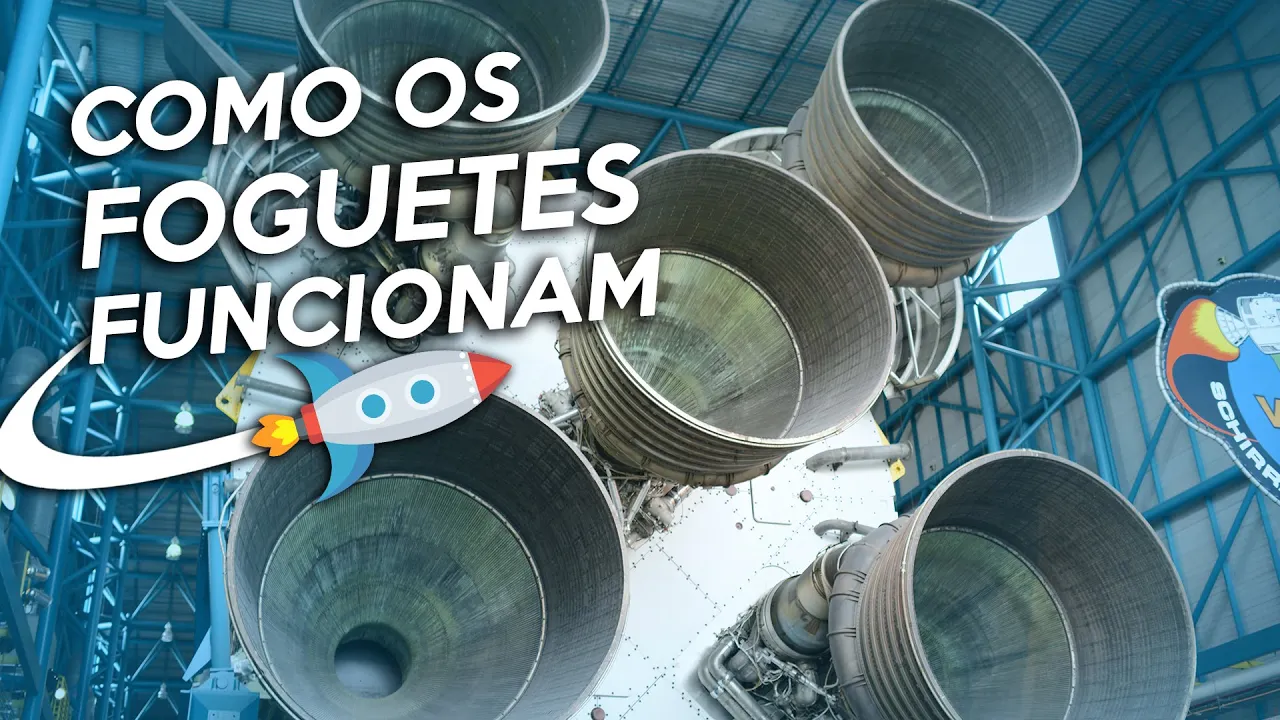
How do rockets work? What's up Engineering Lovers, my name is Igor Felipe and today we are going to talk about rockets. Humans have used controlled explosions to propel objects for many centuries.
An example, rockets, are commonly used today as fireworks, beacons, weapons of war and of course for space exploration. But how do they really work? Rockets are basically a special type of engine that burns fuel to create propulsion.
In most cases, rockets convert their fuel payload into hot gases that are expelled from the rear to propel them in a certain direction. In that sense, you might be tempted to think of rockets acting simply by pushing themselves through the air. But since rockets can also operate perfectly in the vacuum of space, this is not what is happening.
In fact, they operate using Newton's "Third Law of Motion" principle, which, simply put, states that "for every action, there is an equal and opposite reaction. " In this sense, it can be said that rockets are taking advantage of the momentum or force that a moving object has. All things being equal, with no external forces, the momentum of an object, or the combined momentum of a set of objects, must remain constant over time.
This is the foundation of Newton's famous law. To visualize this, imagine yourself on a skateboard while holding a basketball in your hands. If you were standing still, and you threw the basketball in one direction, you and the skateboard would both roll in the opposite direction with the same amount of force.
The more force you put into throwing the ball, the more force the skateboard will propel and you in the opposite direction. Rockets work the same way. When expelled by the hot exhaust from one end of the rocket, the rocket is propelled in the opposite direction, just like in the skateboard example.
But there's a little more to it than that. Other forms of combustion engines, such as car or airplane engines, including jet engines, need air to function, specifically, they need oxygen. For this reason, they cannot operate in the vacuum of space, which is why we don't see a spacecraft being propeller driven.
Rockets, on the other hand, work perfectly well in space, but how? Unlike combustion or jet engines, rockets carry their own supply of oxygen from another oxidant with them. Like fuel, they can be in solid, liquid or hybrid form.
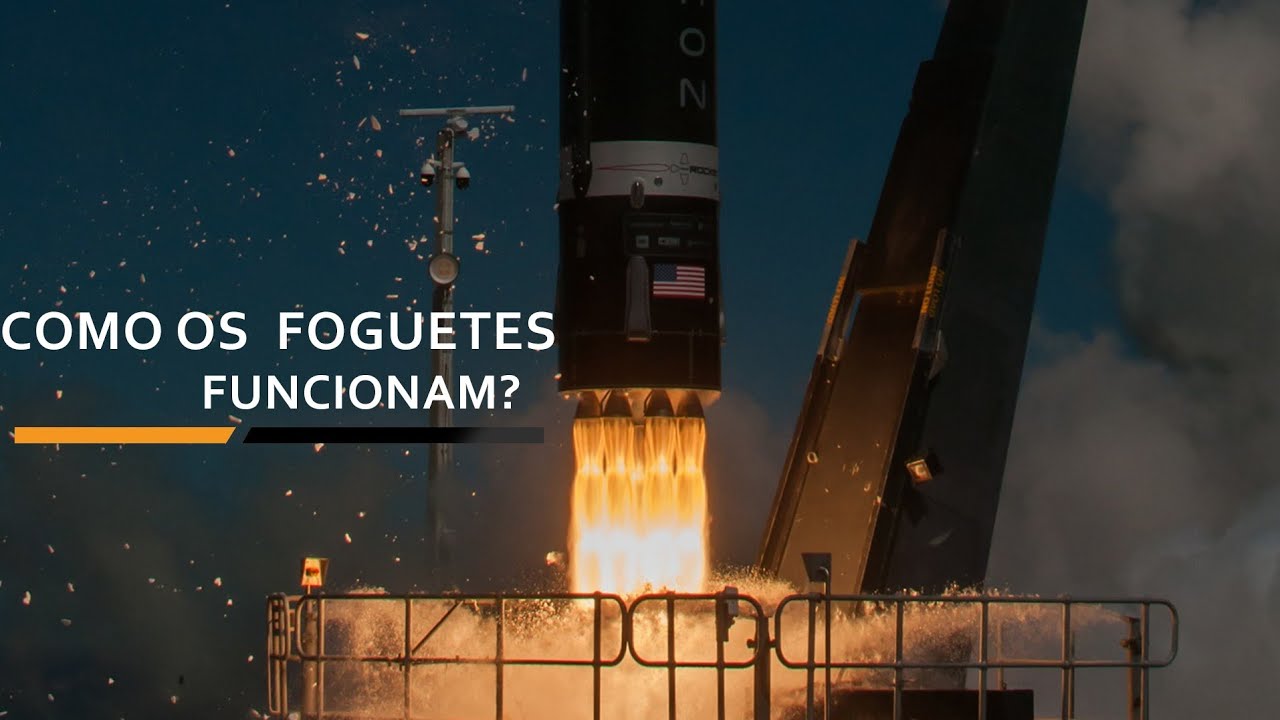
The oxidizer and fuel are mixed in the rocket's combustion chamber and the exhaust gases are expelled at high speed from the rear of the rocket. The process works both in the presence of an atmosphere and in the vacuum of space. The actual functioning of the rocket usually takes place in the absence of air, in fact, unlike cars and planes, rockets do not have air intakes.
The molecules in the rocket's exhaust are individually very small, but they come out of the rocket's nose very fast and in large numbers, giving them a big boost. Enough, in fact, to provide a multi-ton object with the momentum needed to escape Earth's gravity. But to understand better, you may need to understand the difference between thrust and lift.
Thrust and lift are two of the fundamental forces of flight and, although related, they are distinct forces, and the other two fundamental forces are drag and weight. The first, thrust, is any force that moves an aircraft or rocket in the direction of motion. It can be created using a propeller, a jet engine or, of course, a rocket engine.
In the first two examples, air is sucked in by one device and then pushed out in the opposite direction, like a home fan. Lift, on the other hand, is the careful interplay of aerodynamic forces that keep airplanes, or similar vehicles, in the air. For aircraft, providing lift is the main job of wings and other surfaces and we can understand this better in the video where we talk about aerodynamics and you can see it here on the card above.
For rockets, lift is a less important consideration, as their trajectory and "flight" are more of a factor in their propulsion and flight path, as considerations for overcoming drag tend to take precedence. So in a rocket, the lift is more for stabilizing the aircraft still here on earth and once in space, the propulsion takes place. But what are the main parts of a rocket?
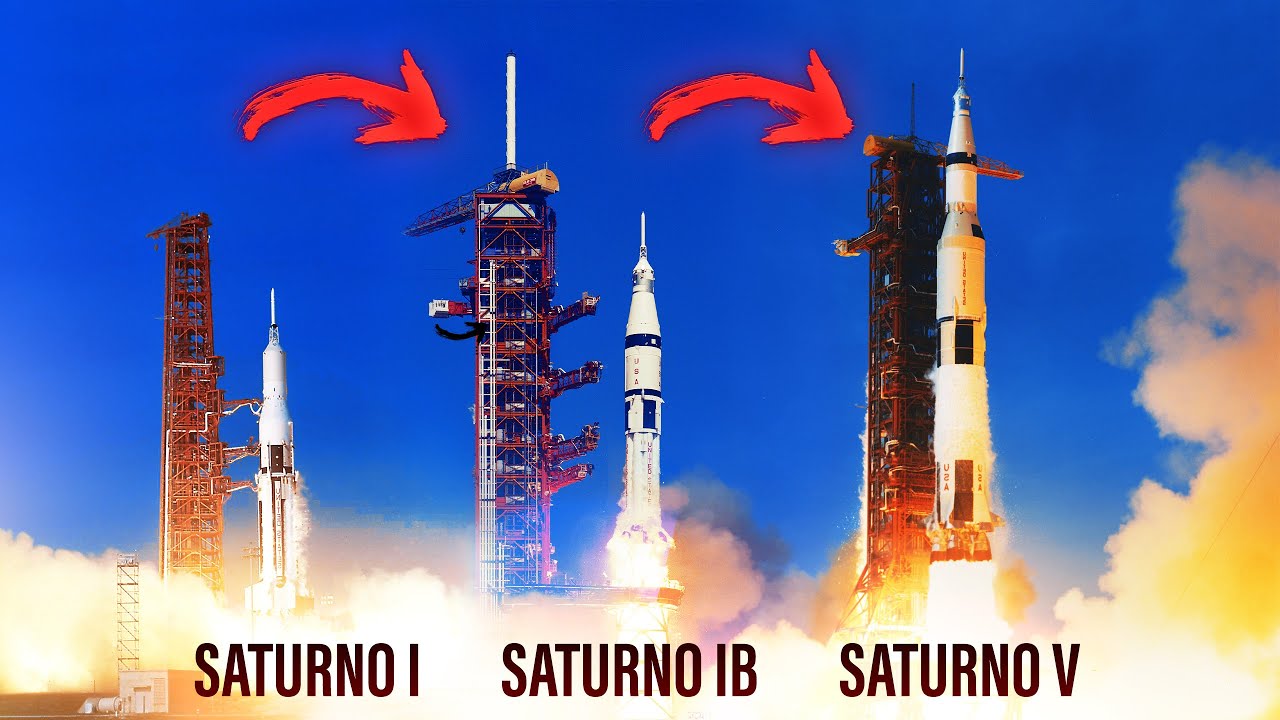
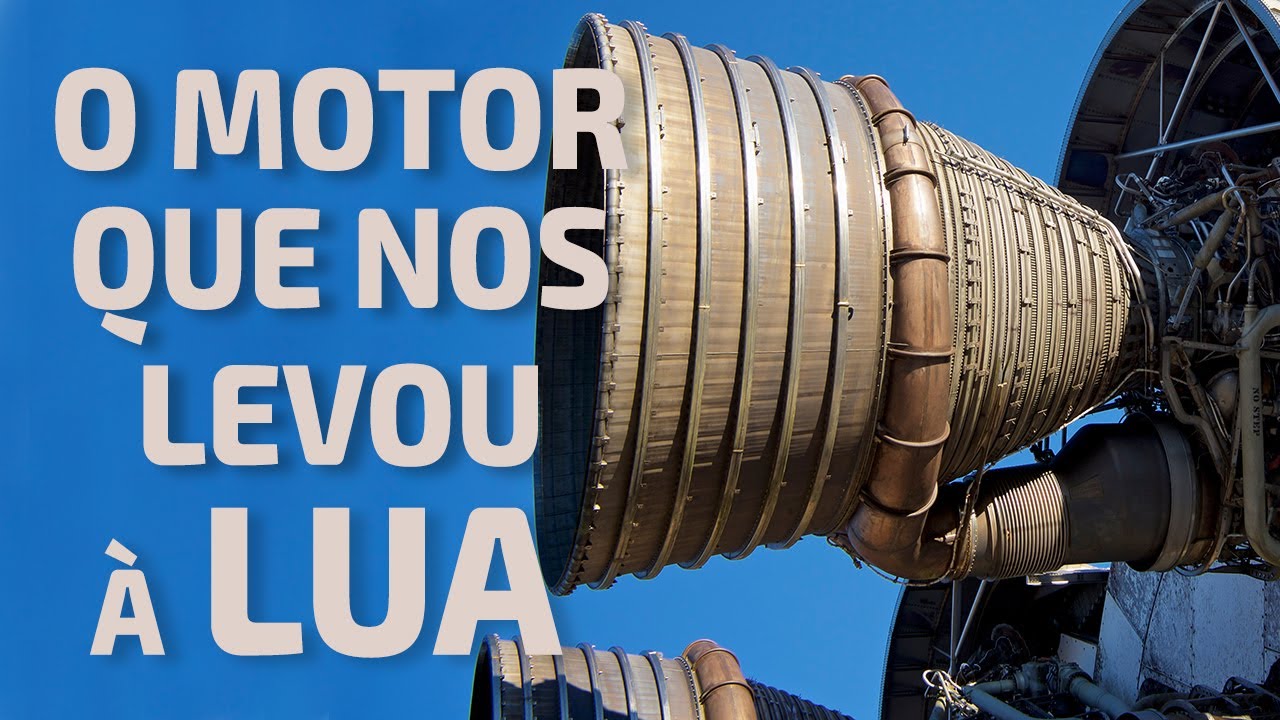
Most modern rockets consist of at least two stages having sections that divide the stages. These are sections of the rocket that are stacked on top of each other in a cylindrical shell. An example of this form of rocket preparation is NASA's Saturn five series.
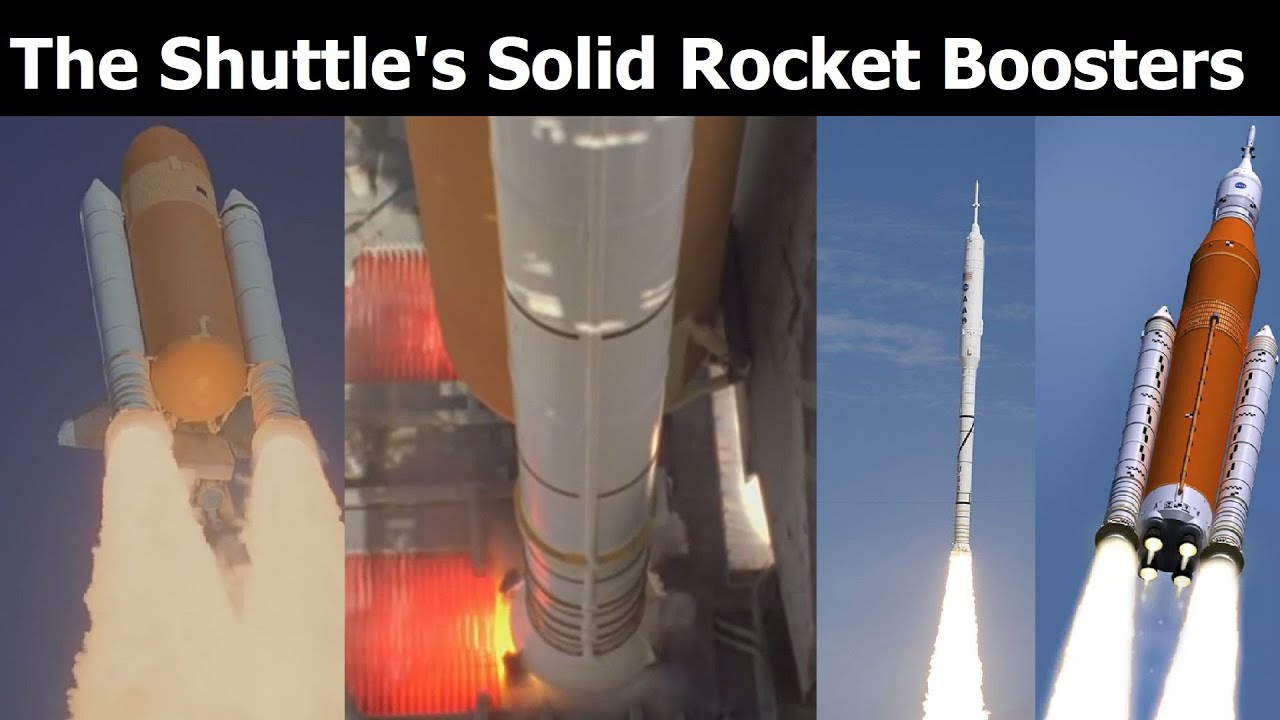
Other types of rockets use parallel stages. In this case, the smaller first stages are strapped to the body of a central "sustainer" rocket. At launch, all engines are fired.
When the thrusters in strap rockets are extinguished, they are discarded while the lift engine continues to burn. The Space Shuttle uses the parallel stage, while rockets like NASA's Titan III and Delta II use both the serial and parallel stage. Each stage has its own set of engines, which vary in number depending on the project.
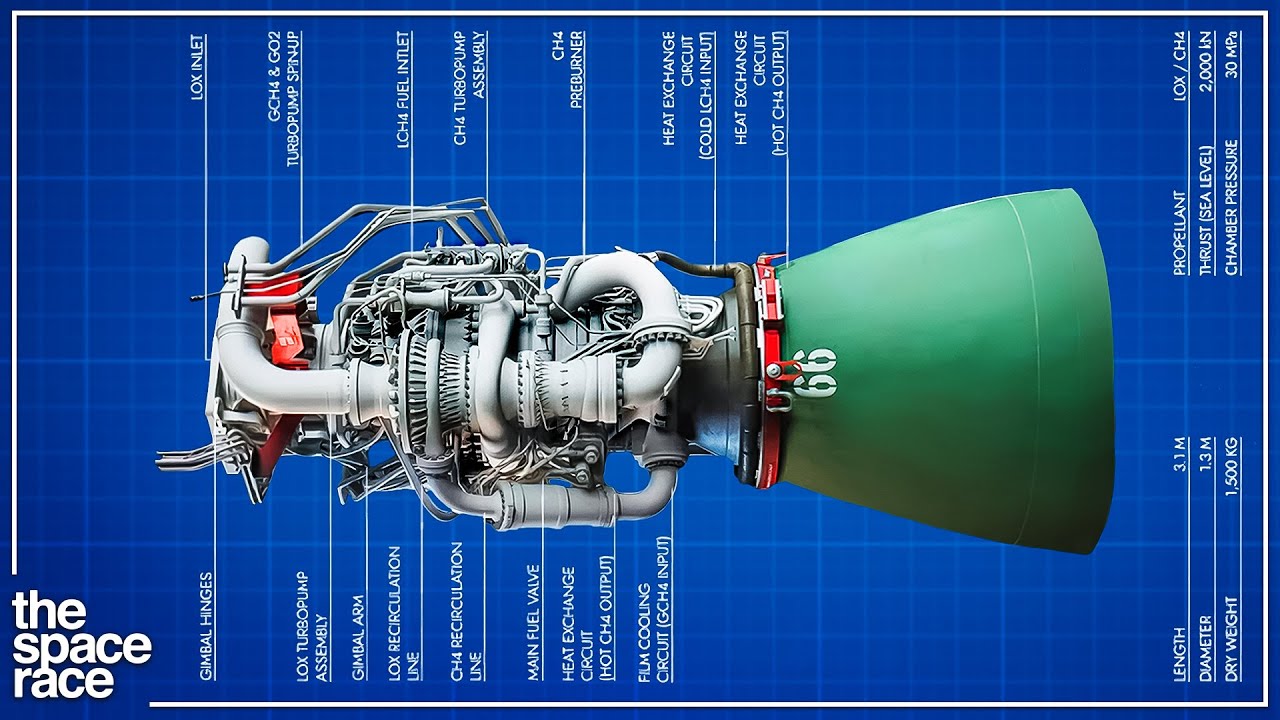
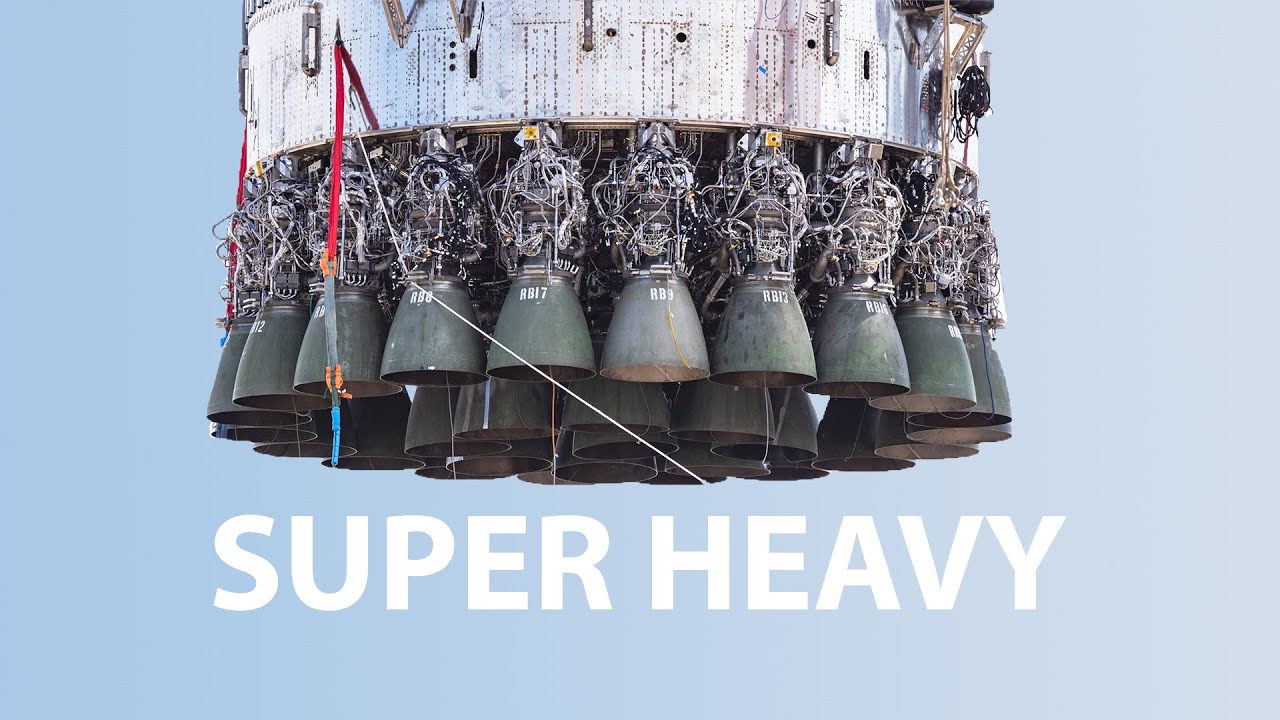
For example, SpaceX's Falcon 9 first stage has nine engines, while Northrop Grumman's Antares rocket has two. The job of the first stage is to get the rocket out of the lower atmosphere. As this early stage must support the weight of the entire rocket with payload and all the fuel, it is usually the largest and most powerful section.
As the rocket accelerates, it initially encounters increased air resistance. But as it rises, the atmosphere becomes thinner and air resistance decreases. This means that the stress experienced by the rocket during a typical launch initially rises to a peak and then drops back down.
That is, the launch is the most critical point of a rocket. Once the first stage has done its duty, rockets will usually drop that section and ignite your second stage. The second stage has less work to do because it has less mass to move, and it has the advantage of having a thinner atmosphere to contend with.
For this reason, the second stage usually only consists of a single engine. Most rockets will also discard their fairings at this stage. In the past, the discarded lower sections of the rocket would simply burn up in the atmosphere.
But starting in the early 1980s, engineers started designing these sections to be recoverable and reusable. Private companies like SpaceX and Blue Origin took this principle further and designed them to be able to return to Earth and still land. This is beneficial as the more parts that can be reused, the cheaper rocket launches will be.
And what is the fuel used in a rocket? Modern rockets tend to use liquid, solid or hybrid fuels. Liquid forms of fuel tend to be classified as petroleum like kerosene, cryogenic like liquid hydrogen, or hypergolic like hydrazine.
In some cases, alcohol, hydrogen peroxide or nitrous oxides can also be used. Solid propellants tend to come in two forms: homogeneous and composite. Both are very dense, stable at room temperature, and are easily stored.
The homogeneous form can be a single base such as nitrocellulose or a double base such as a mixture of nitrocellulose and nitroglycerin. Composite solid propellants, on the other hand, use a crystallized or finely ground mineral salt as the oxidizer, and in most cases, the actual fuel tends to be aluminum-based. And how do rocket launch pads work?
Launchpads or launch pads, as the name suggests, are platforms where rockets are launched. They tend to be part of a larger complex, facility, or spaceport. A typical launch pad will consist of a launch pad or support, which will usually be a metal structure that supports the rocket in an upright position before liftoff.
These structures will have umbilical cables that power the rocket and provide pre-launch coolant, among other functions. They also tend to have lightning rods to protect the rocket during lightning storms during its assembly. Launch complexes vary in design and operator needs.
For example, NASA's Kennedy Space Center designed the Space Shuttle to be vertically connected to a rocket and was moved to the launch pad in a massive tank-like vehicle called the "Crawler". In Russia, rockets were assembled and transported horizontally to the launch pad before being lifted into place. Now tell me here, do you like these rocket subjects or even think about becoming a rocket scientist in the future?
Leave it here in the comments. I'll leave two videos on the side that you might like too, so click on one of them to check it out. Don't forget to like the video, subscribe to the channel and take the opportunity to share the video on your social networks.
That's it my friends, a big hug, and see you in the next video.