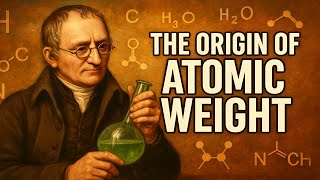
in 1869 Dimitri Mev established the first official version of the periodic table of elements Mela found that when he sorted The Elements by atomic weight he found recurring patterns of chemical properties of certain groups of elements melev's table in 1869 included a mere 63 elements though for many of the elements we know today remained either undiscovered or nonisolated and therefore were unable to study MV left many gaps in his table because of this predicting that future discoveries of elements and their atomic weights would fill the missing spaces this table worked well for a number of
years and many of mela's predictions came true however this periodic table was not perfect for example melev's table stated that nickel should precede Cobalt because Cobalt is a slightly heavier element but their physical properties suggested that they should be swapped to fit in with their corresponding family of similar elements anomalies like these in the table puzzled scientists for a good number of years until a proposal made in 1913 by a young English physicist named Henry Mosley suggested that melev's table was sorted incorrectly what mostly proposed instead would lead to a redefining of the periodic table
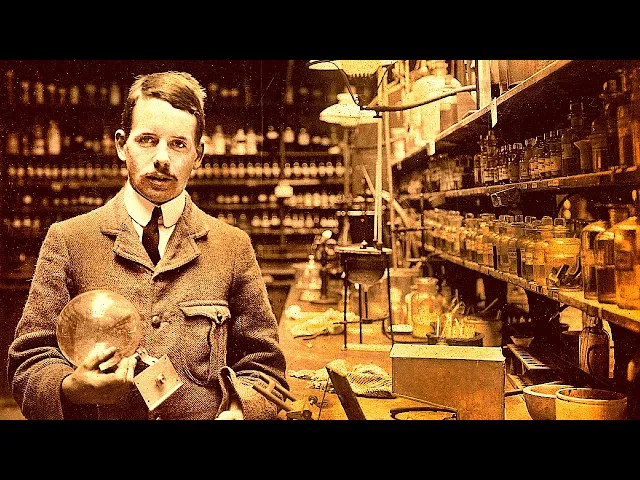
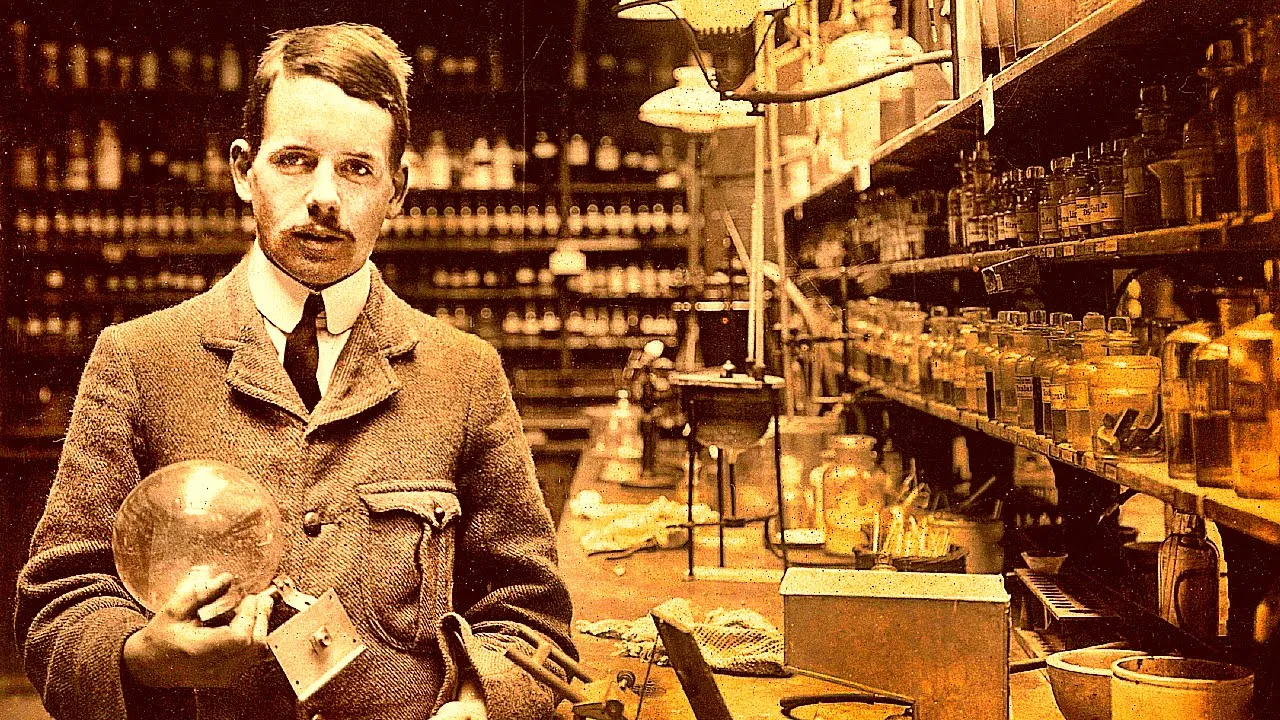
and the establishment of a new characteristic of atoms that is commonly used today day to help understand the nature of the elements Henry Mosley was perhaps destined for scientific greatness from the very moment he was born in 1887 he grew up in a rich aristocratic family his father Henry was a professor of anatomy at the University of Oxford and his mother amabel was the daughter of Welsh biologists John gwy Jeff Mosley had plenty of opportunity early and made the most of it getting his bachelor's degree from the University of Oxford in 1910 and then moving
to the University of Manchester to study under the one and only Ernest Rutherford Rutherford had many students who went on to accomplish great things in science and Mosley was no exception while working under Rutherford Mosley developed an interest in the study of x-rays which was a relatively new field of physics at the time as the Rays were discovered less than two decades earlier in 1895 in 1909 British physicist Charles barkla found that each element has a characteristic x-ray that electrons emit when transitioning from higher energy levels to lower energy levels in the atom's orbit around
the nucleus Mosley after a few years at Manchester came to believe that these characteristic x-rays could be used as a tool to analyze elements and their characteristics and wanted to come up with a way to relate each characteristic x-ray to a physical property of each element as it just so happens a key Discovery in 1912 gave mostly the tools he needed to put his theory to the test that Discovery being Bragg's law by Lawrence Bragg the discovery of Bragg's law in 1912 allowed an easy calculation of X-ray wavelengths based on how they deflect through crystals
Mosley was one of the first physicists to use x-ray defraction to calculate x-ray wavelengths doing so in 1913 Mosley set up an apparatus that allowed samples of metals to be bombarded with electron beams allowing for the release of K Alpha and L Alpha x-rays which would defract through a crystal at certain incident angles K Alpha Rays represent a transition of an electron from the Nal 2 to the nal1 level and L Alpha Rays represent a transition of an electron from the Nal 3 to the n equals 2 level he tested his apparatus on many elements
of which many characteristics were already known such as aluminum and gold and what he found was a linear relationship between the element's atomic number and the square of the frequency of the emitted Alpha Rays before Mosley's experiments the atomic number was essentially just an arbitrary number given to the elements increasing by one on the periodic table per element but there was no physical property that this number was attached to with his discovered relationship Mosley was able to link atomic number to a physical value and derive a relationship between an element's atomic number and the frequency
of alpha Rays it emitted this relationship is known today as Mosley's law Mosley published his findings in 1913 in a series of three papers suggesting that the periodic table perhaps shouldn't be measured by atomic weight but rather by atomic numbers which now had a measurable physical property the data collected by Mosley heavily supported Rutherford's then new proposed model of the atom which stated that the atom was composed of a positively charged nucleus the atomic number quickly became defined as the amount of positive charge in the nucleus and upon the discovery of the proton in 199
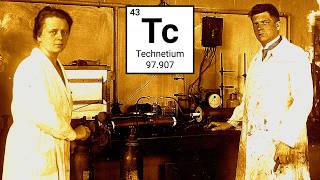
further became defined as the number of protons in the nucleus mostly atomic number fundamentally explained the unusual behaviors of mv's periodic table such as the characteristics of cobalt and nickel despite their atomic weights and also led to predictions of new elements that corresponded to gaps in Mosley's linear relationship these gaps occurred at atomic numbers 43 61 72 and 75 and elements with these atomic numbers were discovered a few years later Mosley's discovery of the atomic number put him on a fast track to win the Nobel Prize in physics but unfortunately that would never come to
fruition upon the outbreak of the first world war Mosley became inspired with a sense of British nationalism and felt it was his duty to enlist in the Royal Engineers of the British army he served as a technical officer of communications during the Battle of galipoli and was shot and killed by a sniper on August 10th 1915 had Mosley not been killed in action he most likely would have won the Nobel Prize in physics the very next year in 1916 the news of Mosley's death triggered an outlash amongst notable scientists and they pushed to exempt scientific
researchers from active duty in Wars this movement was headed by Mosley's Mentor Ernest ruford who wrote in a letter it is a national tragedy that our military organization at the start was so inelastic as to be unable with a few exceptions to utilize the offers of Services of our scientific men except as combatants on the firing line the loss of this young man on the battlefield is a striking example of the misuse of scientific Talent the movement did make some impact as the British government assigned scientists to behind the lines work during World War II
Henry Mosley was a brilliant mind and a prime example of lost potential regardless in his young short life he accomplished so much and as a prominent figure in scientific history the relationship he established fundamentally changed our understanding of the elements teaching us that the atomic number not the atomic weight was the key aspect of an atom that determined its physical Behavior if you enjoyed this video please consider liking and subscribing click here if you want to see more scientific progress made during this time period thank you for watching and I will see you in the
next video