[Music] Let me tell you something strange about silence in the digital age. We live in a world where almost everything is shared. Birthdays, coffee cups, sunsets, tears, laughter, even pain dressed up with filters.
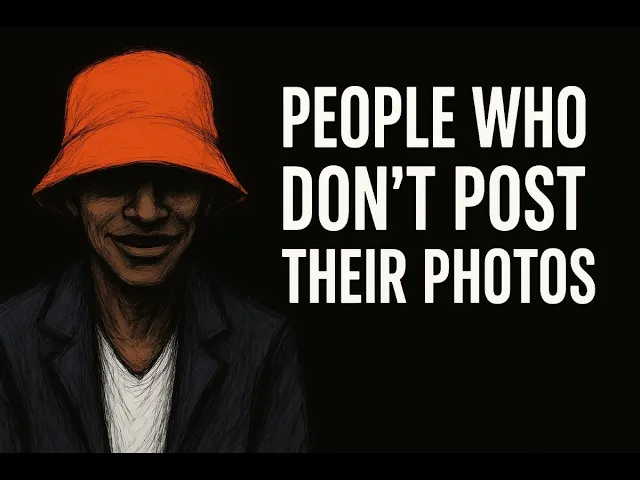
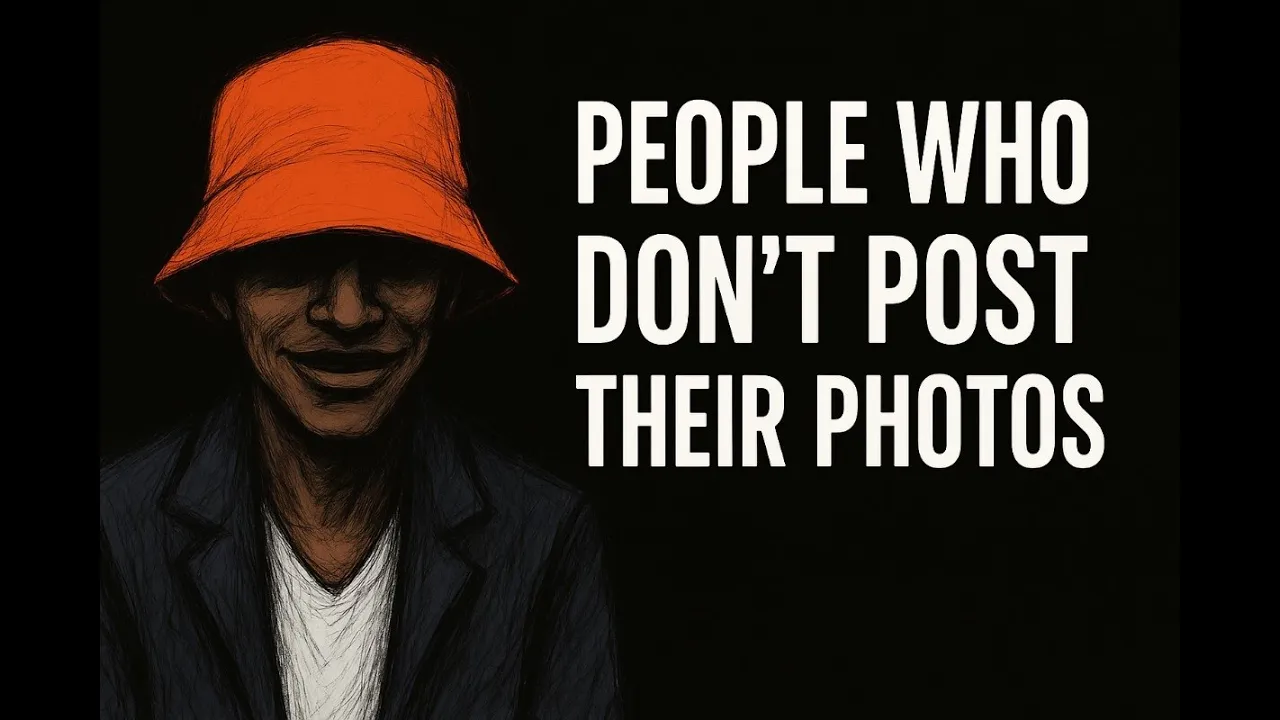
Yet some people stay completely invisible. They scroll quietly, observe deeply, but rarely if ever post. You might even know someone like that.
Maybe you are someone like that. And here's the question that always lingers in people's minds. Why?
Why would someone choose to stay unseen when the whole world seems to be shouting for attention? It's easy to assume that people who don't post are simply shy or introverted. But that's not the full picture.
Beneath the surface, there's an entire psychology at play. One that speaks volumes about human nature, self-perception, and the quiet rebellion against a culture obsessed with visibility. [Music] See, for some people, silence is not emptiness.
It's control. It's the power to choose what the world doesn't get to know. Because whether we admit it or not, social media has subtly reshaped how we define ourselves.
It rewards display. It praises noise. And yet, those who stay in the shadows are often the ones who see everything most clearly.
They watch without needing to interrupt. They think before reacting. They analyze before judging.
Psychologists have found something fascinating. People who refrain from posting frequently often score higher on traits like self-restraint, introspection, and emotional independence. They tend to be less influenced by social comparison, and external validation.
In other words, they aren't trying to prove who they are. They're trying to understand it. And in a world drowning in performances, that's rare.
Because let's be honest, most of what we post is not just communication, it's identity crafting. It's an unconscious audition for belonging. Every caption, every photo, every status update says, "This is who I am.
Do you approve? " But when you stop posting, something shifts. You begin to detach your worth from digital applause.
You stop thinking in captions. You start experiencing moments for yourself again instead of for a lens. And that's the secret psychology behind many people who don't post.
They crave authenticity in a space where everything feels staged. They don't hate social media. They just can't find themselves in it anymore.
It's not about being anti-technology or antisocial. It's about refusing to reduce your life into highlights. Because when you've seen how easy it is to manipulate perception, you start valuing what can't be posted.
Silence, depth, imperfection, truth. For some, the decision not to post comes after a kind of emotional burnout. Maybe they once did share everything until one day it stopped feeling real.
They realized that every time they shared something beautiful, they felt an invisible pressure to keep out doing it. They weren't living anymore. They were performing.
So, they quit quietly. No announcement. Just a slow disappearance from the feed.
But here's what's often misunderstood. Not posting doesn't mean not feeling. It doesn't mean they don't care.
It often means they care too much about presence, about meaning, about protecting what's sacred. There's a concept in psychology called psychological ownership. It's the feeling that something belongs deeply to you, a thought, a memory, an experience.
And when you post it, that sense of ownership fades just a little. The moment becomes shared property, open to judgment, misinterpretation, even mockery. So people who don't post are often guarding their sense of ownership over life itself.
They keep their moments untouchable, private, pure. And maybe that's not sadness or withdrawal. Maybe it's a quiet kind of freedom.
Because think about it, when was the last time you did something meaningful and didn't feel the urge to share it? When was the last time you laughed, cried, or achieved something and didn't immediately think of posting it online? That reflex, that need to display is not natural.
It's conditioned. It's the product of a decade of likes, shares, and dopamine loops training our brains to equate validation with value. And when someone steps outside that system, it can feel like rebellion.
But it's also healing. They start rediscovering the simplicity of doing things for themselves again. Cooking without photographing it, traveling without tagging it, feeling without explaining it.
In that space, something awakens. A kind of self-awareness that doesn't need an audience. But not everyone who doesn't post is doing it from a place of peace.
Some are driven by fear. The fear of judgment, rejection, or being misunderstood. Social media has amplified a subtle form of anxiety psychologists call self-presentational pressure.
It's the constant awareness that you're being watched even when you're not. And for many, that's exhausting. They worry that what they say might be misread or worse, ignored.
So, they retreat, not because they don't want to connect, but because the cost of visibility feels too high. They want to be seen, but only truly, not superficially. And ironically, sometimes the quietest people online have the loudest thoughts in their minds.
They're not absent. They're overflowing. They just choose stillness instead of spectacle.
There's a deep philosophical undertone to that silence. In a world that constantly says, "Look at me. " Choosing invisibility becomes a form of self-defin.
It's saying, "I exist beyond your perception. " They might scroll through others lives nodding, smiling, sometimes aching, but they rarely project because they understand something most don't. Not everything you experience is meant to be witnessed.
Sometimes the most profound things in life, growth, grief, transformation, happen quietly, unseen, unposted. And when you've lived through enough of those private transformations, you start realizing that being unseen is not the same as being insignificant. It's actually where identity is formed, not performed.
This is where the paradox lies. Social media was designed to connect us. Yet, it often leaves people feeling more isolated than ever.
When you don't post, you stop chasing digital closeness and start rebuilding real ones. You begin noticing who checks in on you without the need for updates. You learn who remembers you without reminders.
That kind of connection, raw, unbroadcasted, feels heavier, warmer, and infinitely more real. And the people who don't post, they live in that space. They build relationships that don't need proof.
They find comfort in the unshared moment, and they let life unfold without turning it into content. Part of this is also about identity security. Knowing who you are even when nobody's watching.
When you're comfortable in your own company, you don't need an audience to validate your worth. That's not arrogance. It's peace.
And ironically, the same people who don't post often have the most interesting stories to tell. But they save them for when you're sitting across the table, not across the screen. Because real connection to them isn't measured in comments or likes.
It's in shared silence, in eyes meeting, in laughter that doesn't need witnesses. These are the people who carry worlds within them, who process deeply, observe constantly, and understand quietly. They don't need the world to applaud their existence.
They just need to live it. And maybe, just maybe, in a world so desperate to be seen, their silence isn't a flaw. It's a mirror, a reminder that not everything meaningful has to be shared.
that sometimes the most human thing you can do is to keep something entirely for yourself. You know what's fascinating? The longer someone stays off social media, the more they begin to see the world differently.
Colors look richer. Time feels slower. Conversations feel fuller.
It's as if stepping away from the noise makes everything real again. Because when you stop performing, you start experiencing. There's a quiet beauty in walking through life without needing proof of every step.
You're not thinking about angles or lighting or captions. You're just there, fully alive, inside the moment instead of outside it. And that's something social media rarely lets us do anymore.
But the psychology behind this goes deeper than preference or taste. It's rooted in how our brains process validation. Every time we post something online and it gets attention, likes, comments, hearts, our brain releases dopamine, the same chemical involved in reward and addiction.
Over time, we begin to crave that validation. We start thinking in terms of sharable experiences instead of real ones. Now, imagine someone who resists that loop.
Someone who deliberately chooses to disconnect from the dopamine cycle. That's not disinterest. That's discipline.
It takes self-awareness to resist something designed to keep you hooked. People who don't post often have a strong internal locus of control. a psychological term meaning their sense of worth and happiness comes from within, not from external approval.
They don't need the digital echo of you're enough to believe it. And here's what's even more interesting. Studies show that people who take long breaks from posting or consuming social media content often experience a measurable increase in emotional stability and life satisfaction.
Because when your sense of identity is no longer being constantly mirrored back to you, it becomes solid. it becomes real. You're no longer editing your life into something digestible.
You're living it in all its messy, beautiful, unfiltered complexity. And maybe that's the real rebellion, to stay whole in a world that rewards fragments. But silence online doesn't always mean serenity.
Sometimes it hides exhaustion. For many, social media became a place where they once sought connection, but ended up feeling drained. There's a subtle emotional fatigue that comes from witnessing everyone's highlight reels while you're still trying to piece together your own behind the scenes.
You start comparing even when you don't mean to. You start questioning your worth even when you know better. And eventually some people decide to step away not out of bitterness but out of self-preservation.
They realize they don't owe the world a performance. They don't owe an explanation for their silence. and they don't need to keep proving they're happy just to be believed.
That's one of the quiet truths of this generation. We've confused visibility with value. We assume that to matter, we must be noticed.
But real meaning doesn't need witnesses. Some of the most meaningful moments of your life, the ones that shape who you are, will happen without a single person watching. No cameras, no captions, no audience, just you.
And maybe that's what those who don't post understand best. They know that privacy is not loneliness. It's intimacy with yourself.
Because when you stop broadcasting every thought, you start hearing your own again. You start reconnecting with the parts of you that got lost in the noise. Your quiet desires, your unspoken fears, your inner compass.
And that's something profoundly spiritual in today's world. It's not a withdrawal. It's a homecoming.
Of course, it's not always peaceful. There are moments of doubt, of wondering if silence makes you invisible, if you're falling behind while everyone else is performing progress. But with time, you start noticing something beautiful.
Your worth doesn't disappear when nobody's looking. It's still there, steady, like the hum of a quiet room after a storm. And maybe that's what real confidence looks like.
Not the loud declaration of self online, but the calm assurance of self offline. Some people say, "If you didn't post it, did it even happen? " But the truth is, things that shape you most rarely make it to the feed.
Your growth, your heartbreaks, your private victories, your quiet acts of kindness, they live in memory, not media. And maybe that's enough. When psychologists talk about authentic self-expression, they emphasize congruence, the alignment between who you are inside and who you show to the world.
But in the age of filters, that alignment is constantly distorted. You begin to live as a version of yourself curated for approval. So when someone chooses not to post, it might be their way of staying congruent, of preserving that fragile truth between their inner and outer world.
They don't need everyone to see what they're feeling to validate that it's real. They don't need to capture every sunset to remember how it felt. They live their life fully and quietly.
And here's the paradox. Those who live quietly often feel life most intensely. They're not distracted by the performance of it.
They absorb details others miss. The way light changes on a wall, the pause before someone speaks, the sound of distant laughter. They are present, and presence is the rarest currency in a world built on attention.
But sometimes that very presence makes them misunderstood. People might label them as detached, mysterious, even cold. Yet, if you look closer, their silence isn't emptiness.
It's depth. It's the calm that comes from no longer needing to explain yourself to be understood. There's a quiet confidence that comes from not needing to be known by everyone, just understood by a few.
And that's what the people who don't post understand best. They know that not every truth is meant for the crowd. That some parts of you deserve to remain untouched by algorithms and opinions.
Because once something becomes public, it stops being purely yours. It belongs to interpretation, to judgment, to trend. And maybe some moments are too sacred for that.
So the next time you notice someone who never posts, don't assume they're hiding. Maybe they're just living. Maybe they found peace in the quiet corners of existence.
The ones not lit by the blue glow of a screen. Maybe they're the ones who've remembered what the rest of us forgot. That being unseen doesn't mean being alone.
that being quiet doesn't mean being empty. That sometimes the truest expression of who you are is silence. Because in the end, we're not meant to be performances.
We're meant to be people.