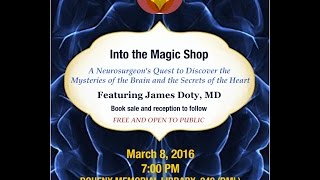
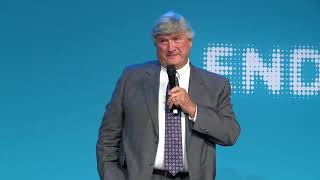
FEMALE SPEAKER: Welcome, everyone. My name is Ruchika, and I work in the well-being learning team here at Google, a team that brings you well-being learning programs like Search Inside Yourself. Thank you to Meng, who is here with us today, for creating that program and G-Pause, G-Calm, et cetera. We are very fortunate to have Dr. James Doty join us today. He is a professor in the Department of Neurosurgery and the founder and director of Center for Compassion and Altruism Research and Education, which is also known as CCARE more simply at Stanford School of Medicine. He collaborates
with scientists from a number of disciplines examining the neural basis for compassion and altruism. He's an inventor and entrepreneur and a philanthropist. His work has been published in a variety of research journals. You wouldn't know it from meeting him today, but Dr. Doty had a rather challenging childhood, a poignant memoir of which he has shared so authentically in his book-- that you can get a copy of outside. When he was 12 years old, he wandered into a magic shop-- literally-- and met a woman who saw the potential in him and taught him how to manifest
his greatest desires through a series of techniques and meditative experiences. With her he learned a unique relationship between the brain and the heart that led to incredible success and happiness in life. I was personally blown away by the book. I couldn't put it down. I did the Audible copy first and then I actually read through the whole book again. With that I present to you the author of "Into the Magic Shop-- a Neurosurgeon's Quest to Discover the Mysteries of the Brain and the Secrets of the Heart," Dr. James Doty. DR. JAMES R. DOTY: Well, thank
you for having me. I'm actually not going to show any slides. I hope you're not too disappointed. So what I thought I would sort of tell you a little bit about this book and sort of the journey I had in that regard, but really at the end of this, I basically want you to remember four words and 10 letters of the alphabet. So the four words are suffering, authenticity-- oh-- connection, and service. And then the letters of the alphabet are C through L, and it'll become more clear as we come along here. One of the
things that many of us don't appreciate is that all of us are suffering. And often times we get involved with our own suffering, and it prevents us from actually connecting with other people. And the prevention of connecting with other people then doesn't allow us to truly connect. And as a species, that is how we have evolved, and in fact, it's this connection that allows us to function at our best-- both mentally and physiologically. In regard to the book, as Ruchika was kindly enough to describe, I had a challenging childhood. Actually I grew up in poverty.
My father was an alcoholic. My mother was an invalid-- she'd had a stroke. She was paralyzed. She was chronically depressed-- had attempted suicide on multiple occasions. Neither of my parents had gone to college. And we were on public assistance essentially my entire life. So this is typically not the route to success in life. But a transformative event occurred which really changed the trajectory of my life at the age of 12. And what happened was I walked into a magic shop in a strip mall. And I lived in the high desert, and really I had no
guidance or direction and oftentimes would just take off on my bike. And I went into this shop. And as I walked in, there was a woman who I describe as an earth mother. Now, depending on the audience, if they're under the age of 50, few of them know what an earth mother is. If you're over the age of 50, you know. An earth mother-- if you recall the '60s and the Beatles-- there was this summer of love. And there were all these people who were very much into-- sort of at that time the Beatles had
brought eastern religion. And they sort of embraced this idea of loving everyone and peace, children, et cetera. Well, anyway, I would describe this lady as that. She had this wavy gray hair and had these glasses sitting on her nose. And by this time, I was already becoming a delinquent. Because if you have no hope or future, you have nothing to lose. And if you don't have mentors, access, financial resources, frankly in America it's actually very hard to overcome those circumstances, especially if you are a minority. So this woman looked up from her glasses-- she was
reading a paperback book-- and we began a conversation. And she had one of these-- and I'm sure each of you have met at times-- people have like a radiant smile that just as soon as you see them with their smile, they embrace you. And you just feel very comfortable with them. And she was that type of person. And frankly, I did not advertise my personal situation, because I was ashamed of it and was embarrassed. And over the course of this brief conversation, though, she actually asked me some quite penetrating questions, which-- this is my son
back there. Asked me some penetrating questions. And she said, you know, I know nothing about the magic in this store. That's my son's thing. In fact, it turned out she was just a place setter while her son was doing an errand. And she said, I know nothing about the magic in the store, but there is a magic that I know that I think could change your life. Now, I wish I could tell you as a 12-year-old I had any insight, because I didn't. What she said to me next was, I'm here for another six weeks.
And if you show up, I'll teach you something. And if you really practice it hard, everything will change for you. Well, then she offered me some cookies. And we started chatting again. And the only reason I came back was because I really wanted some more cookies. And as a 12-year-old, she was so nice to me. And I had nothing else to do. It wasn't because I had this incredible self-awareness. So I showed up every day for six weeks. And I tell people that prior to that, I felt like a leaf being blown by an ill
wind. Because I had no certainty about anything. You know, I wasn't sure if we would eat. I wasn't sure if my father would come home. I wasn't sure if I would come home and my mother would have been taken to the hospital, because she had attempted suicide. So it was a very chaotic, unpredictable situation. When you're in that situation, what happens-- there's now something that we describe as adolescent or adverse childhood experiences. I don't know if you've heard of it. It's called ACEs. And it really has had a profound effect on how we look at
childhood experiences, especially children of poverty. Because many of them have these experiences which actually-- from a emotional response point of view-- is very much like post-traumatic stress disorder. And it very negatively impacts health, wellness, and actually your ability to succeed in life. And I was one of those children, although certainly at that time, I didn't recognize it. So over the course of this period, the first thing that she taught me-- and I actually describe it in the book as ruse for tricks. Now remember, this was 1968. I know I don't look that old. But the
terms mindfulness, meditation, or neuroplasticity were really unknown and certainly not in the popular conversation. But the first thing she taught me was number one-- that unless you have attention and focus, you can't succeed. And one of the preventers of attention and focus is that emotionally you're wound up. And this winding up of you or this response to this emotional state-- and in my case, it was anger. It was hostility. It was a sense of hopelessness-- has an effect on your body. So she spent a great amount of time teaching me this idea of relaxing the
body and getting attention and focus. And we now know that this is one of the first paths that is necessary to gain insight, awareness, and control of your mental state. Because without those two things, it's hard to progress on. So over the period of time, she taught me how to relax my body. And what I used ultimately was a mantra. But she also taught me how to look at a candle. And both of these methods are quite effective in sort of getting you into this position. And this is really one of the first steps in
traditional mindfulness practice. And once I had felt that I had understood that and began practicing it, the next thing that she taught me was something that I call taming the mind. Now how this is slightly different from a traditional mindfulness practice is that in that context, the analogy that I use is that we have a dialogue going on in our head. And I call it a radio station, if you will. And for me-- and like many people who are suffering or even just living a regular life but have not been able to manifest how to
fulfill their potential-- the dialogue that they have going on in their head is not one which is a benefit to them. It is a creation that they accept as equivalent to who they are. And often times it is negative. It is critical. It is certainly is not self-affirming. And when that is present, it is hard for you to be present. And it's interesting also, because what many of us don't appreciate is as a human species, we have the unique ability to have an awareness of a past and a perception of a future. But what that
also does is it results in us not being present. And in fact, surveys have been done, and between 45% and 78% percent of people-- like in this room, probably-- you're not with me. You're thinking about what you should have done, could have done, didn't do, or what you're supposed to do after this lecture. Is anybody in that position at all? Nobody. That's wonderful. And the problem is when you're in this position, you cannot absolutely-- authentically-- connect. And this also-- these two things which you were fighting-- also results in you worrying about what is going to
happen to you or your future or who you are or if you're good, et cetera, et cetera. And as a result, what many of us don't appreciate is this dialogue-- this negative dialogue-- has an effect on your autonomic nervous system. And it's divided into the sympathetic nervous system and to the parasympathetic nervous system. When you engage in negative dialogue, often times it has an effect by increasing your sympathetic nervous system output. And when that happens, you have this release of hormones that if you were on the savanna in African and you see a lion would
allow you to run away and climb up a tree. Your sphincters would tighten up-- at least mine would. I don't know about you guys. But your blood flow would be diverted to your skeletal muscle. Your pupils would dilate. And if you survive, great. If you didn't, it probably didn't matter. Right? But in modern society, these are engaged on a low level with this type of dialogue. And so your emotional state has a huge impact on this. When you have the chronic release of these types of hormones-- cortisol, epinephrine, norepinephrine-- it suppresses your immune system. It
increases your blood pressure, increases your heart rate, and is very, very deleterious to your health in the long term. So one of the bases of mindfulness is that you have this non-judgmental response to these events that are occurring. But what you can do over time-- and what she taught me-- was you can actually change that dialogue to one of sort of this negative stuff that is flowing along, which oftentimes you identify as you, and recognize that it is not you at all. And it is in your capacity to change the conversation-- or if you will,
change the channel-- to one of self-compassion and one of self-affirmation. And when you do that, it has this huge effect on your physiology. And actually it allows for these parts of the brain-- as an example, the executive control area-- to function better. And when your executive control area functions better, instead of when you're stressed or anxious, you make reactive decisions-- and I'm sure nobody here is stressed or anxious. You know, it's interesting in the Silicon Valley, one of the biggest causes of health care expenditure is stress, anxiety, depression, and then all the effects on the
body from those, which are gastrointestinal upset, back pain, neck pain, muscle spasm, and headache. I'm sure none of you guys have had any of those, right? So what happens is, though, when you have that type of emotional response, it's very deleterious. But if you're able to change the channel and shift from engaging your sympathetic nervous system to your parasympathetic nervous system, it has a huge, huge positive effect on your health. And so we talked about suffering. The other part of this was also a recognition that it wasn't just about me. You know, I would go
around through my day and say, oh, my life sucks-- if only this would happen. Gosh, why can't this happen? Why couldn't I have been born into this family, et cetera, et cetera? And she gave me the insight, though, to understand-- as an example, I used to have an immense amount of anger and hostility towards my parents. Because my view was that they were failures-- that they had failed me, that I deserved better. And while on some level, maybe that was true, if I actually looked at them in a different way and said, what is causing
their own suffering? Like as an example, my father's background-- it turned out-- was one which was very difficult. And he had a very demanding father who made his life miserable and always told him he would not be successful. So his actions as an adult were playing out from his own suffering. So once I recognized and had the ability to perceive that other people were suffering, not just me-- my parents-- and also to be able to attend to my own suffering by being compassionate to myself, giving myself self-affirmation, it allowed me to no longer have an
emotional response and to be able to more thoughtfully or discerningly think through interactions. And in fact, many of you read Viktor Frankl's book? This is a psychiatrist who was a victim of the Holocaust and was in a concentration camp. And basically the summation of his experience was that he could tell essentially in just a short conversation with somebody if they were going to survive in the concentration camp. The most important determinant of that was that they had meaning and a purpose. OK? But the other thing he talked about was this idea of stimulus and response.
And this is the aspect of the second lesson that Ruth taught me, which was-- and let me give you an example. Have any of you had anybody cut you off on the freeway? Now you usually do two things. One is a hand movement, right? Meng's is to wave. But he's enlightened. But the other one is usually some sort of an expletive that comes out of your mouth. And so this event occurs. You have this immediate emotional response. And then you do something. And oftentimes it's not helpful, is it? Now, let's say, though, if I taught
you to look at the world a different way. As an example, the person who cut you off-- instead of thinking that they're a jerk, what if you reframed it and said, well, what if the person driving that car-- his wife is sitting next to him. She's nine months pregnant. She broke her water. She's bleeding. He's trying to get her to the hospital. Would you feel the same way about your hand movement or the way you were thinking about them? And so in this short little exercise here, you've already seen the world a completely different way.
And you see, it's seeing this world-- we give people the benefit of the doubt. You look at it in a completely different way. It's one of the most powerful gifts that you can give to somebody. Because most of the time, the negative interactions that you have with people oftentimes have nothing to do with you. Somebody comes up to you aggressively. And what do you do again? How do most of us react when somebody comes up to us aggressively? We react aggressively, don't we? True? But if you then looked at the person and said, jeez, this
is not their normal behavior. Why would they be acting this way? And you said to them, jeez, Mike or Jim or whoever, you know, it's so unusual to act this way. What's wrong with you? Again, you reframe it. Again, because you're taking the time. And when you take the time with that pause, we know that that allows-- instead of having a reactive interaction associated with engagement of your sympathetic nervous system, it allows for engagement of your parasympathetic nervous system, which is affiliative-- wants to connect and is when your executive control area works best. And you
are more thoughtful. You are more discerning. And of course, when you do that the outcome is much better. So this was this idea of taming the mind that Ruth taught me as the next part. And, of course, you know that it's hard if you're wrapped up in your own suffering-- in your own issues-- to care for other people. Because it's hard to be present and you're focused on yourself, which doesn't allow you to give attention to other people. So the third thing that she taught me was this idea of opening the heart. Now, opening the
heart can be very challenging for some people, and some people don't know what that means exactly. It gets back to what I was just talking to, which is this idea of looking at people in a different way. Now certainly it's easy for all of us in this room-- well, maybe not always with your spouse-- but for most of us for our children, as an example, it's easy to give them unconditional love. And hopefully you also do this with your partner or your spouse. But even that can be hard. It can be challenging, can't it? I
mean, have any of you gotten upset with your partner or spouse? Oh, come on here. They must have something in the water at Google that makes everybody just love each other. But all of us have gotten upset with our spouses. And so imagine if it's easy to do that, then what about giving compassion or unconditional love to someone who you don't know? And then the next step is giving it to someone who you may have a negative feeling about that? And these are big, big challenges. But what we do know from science is that when
you mentally function that way-- where that is your default mode-- again, this is when you connect most, which is our default mode. This is when your physiology works the best. Now one of the things I mentioned earlier was these four words. Does anybody remember them? As a neurosurgeon, we test people on short term memory. You all failed. So suffering, authenticity, connection, service. OK. So when we talk about authenticity, this is also a challenge for people. Because-- especially at a place like Google-- because most of the people who I know who work at Google-- with maybe
one or two exceptions, I'm just kidding-- are exceptions. Those are two of them right-- no. With few exceptions are actually incredibly accomplished people. But you know one-- I guess no one else in the room thinks so, and I'm sorry. But-- are you guys OK over there? Yes. But the thing, though, is that I can't tell you the number of times when I've been at Google-- and with Meng and others-- and oftentimes there's a compulsion by some to sit there and say, you know, I'm from Harvard. And I graduated with a 4.8, and I was the
top of my class. Well, that's not even related to the conversation here. And the problem is-- or the challenge of this oftentimes-- is why do people say things like that? Because they want to project what they think is their best self to you. And there's a great cartoon. And it's two people, and they're just meeting each other up in whatever-- where the writing is. It says, jeez, their projection of themselves was so impressive now I have to create my own projection to compete with their projection. Right? And the problem is that everyone in this room
is suffering. They have had failures. They have done things that they're not proud of themselves about. They have hurt other people. Because that is the nature of our humanity. And the problem is, though, that if all you project to another person is your best self, then you cannot connect authentically. And it's this authentic connection that empowers you to be your best self. As an example, I know that-- and it's interesting. Because I have colleagues, and they'll make these presentations about the most horrible disasters in the world. And they just have this monotone where there's absolutely
no emotional content to what they're saying. But if I give a talk and a part of it-- which you've already probably noticed here. There are certain times where my voice has cracked a little bit or I may get emotional. As soon as I do that, you sort of resonate with that. That's who we really are. And it's allowing yourself to not be your best self-- allowing yourself to be exposed as the frail fragile human being that you are-- that allows you to connect best with people. So this whole idea of authenticity-- and this is something
that Brene Brown has promoted and done research on-- is extraordinarily powerful and is important to have true relationships. And one of the reasons that prevents us from that-- do any of you know about the blue zones? The green zones? The red zones? So there are parts of the world where people live routinely to over a century, and these are called the blue zones. And there's been a lot of work on why this is the case. And what's extraordinary is that in some of these places, you know these people-- they smoke. They drink. Yet they're still
living to over a century. And what is it that they found that's the most important thing and that relates to what I was just saying? It's that in those situations, those people live in small villages or places where there are multigenerational families where they have lived with the same people their entire lives. And so what happens in that situation? And why do those people then live so long? Because that is how we were meant to be as a species. Because in those situations-- unlike this idea where you're presenting your best self-- if you've grown up
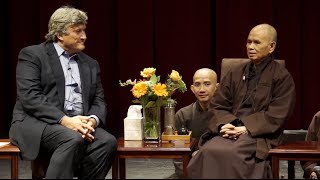
there running around naked as a child and everyone has seen you, if you've sort of done all your juvenile delinquent things as a child and everyone still loves you, what do you know? You know you're loved unconditionally. You know, I've spent a lot of time with various religious and spiritual leaders-- the Dalai Lama, Thich Nhat Hanh, Amma-- and one of the things that I will tell you about every one of them is that as soon as you're in their presence, there is a lightness to your spirit and the sense of unconditional love. Because what do
you know as soon as you walk into their presence? You know there's no agenda. You know that they love you unconditionally. And you no longer have to carry this projection around that you promote to other people. And the psychological weight of that burden is incredibly huge. So we were then talking about sort of opening your heart. And one of the challenges I had growing up was I heard the first two lessons that Ruth had taught me and the last one. And the last one was this idea of clarity of intention. And the techniques that I've
talked about-- which are outlined in the book and you can find in other places as well-- this idea of visualization or clarity of intention is incredibly important. And when you have this ability to attend, to relax, to change the dialogue, and then utilize this technique of clarity of intention, this on a subconscious level imbues you with a ability to be much, much more powerful than you can even imagine. And as a result, [MUSIC PLAYING] music starts playing spontaneously in any environment. It allows you to achieve your goals. Now certainly, of course, that's in the context
of they're not harmful to others, et cetera, et cetera. I'll throw that karmic requirement in there even though I'm an atheist. And this is actually the technique that really allowed me to have great success. So after this period of time with Ruth over the six-week period, my personal circumstances in no way changed whatsoever. What changed was how I reacted to those circumstances. And this is the case with all of us. It's really not the events in our lives that are the problem. It is our reaction to those events. It is us who gives power to
those events, either to help us or to hinder us. And that's really the idea behind really pretty much all of the teaching that gave me in addition to this aspect of actually opening your heart. And I'll talk about that a little more and how I ignored it. The thing, though, about clarity of intention, though, is many of us would like the simple way-- which is jeez, I used this technique. I really practiced it. I have this point here. I want to go to point B. It's going to be this smooth, straight line. It will all
happen as fast as I want it to happen. The reality is it doesn't work that way. Even in the face of those best techniques, typically it is not a straight line. It is an up and down valley with detours and setbacks. And I give many examples in the book. At least for me, it did allow me to ultimately get from point A to point B. Let's see. We covered-- what are the four things? AUDIENCE: Suffering. Authenticity. Connection. DR. JAMES R. DOTY: Connection. So we covered connection-- the power of connection. Why do we want to connect,
or why physiologically does that happen for us? Why is it important? Well, there are three parts of us-- our species-- that we evolved and which were necessary. And as a result, it was critically important that we connect. And that was something called theory of mind, abstract thinking, and complex language. The requirement for that was an enlarged cortex, but the other aspect of it was that our species, unlike other species-- what has to happen? We do not just run off into the forest or swim away. We have to be attended to for, what, 15, 20 years--
in my case, over 30 years-- to our offspring. Right? If our offspring are not cared for for a decade and a half or two decades, they will not survive in a harsh environment. So what are the critical parts? Many of you have heard of the mirror neuron system, which allows our species to mirror the behaviors of others. But it is critical, and it takes immense amounts of time. But what would be the reward for the parent to put so much energy and resources to our offspring unless there was something that they got from it? And
what they get from it is we are rewarded with oxytocin. OK? When we get these drips of oxytocin, it causes our pleasure centers and our reward centers to increase their metabolism. And we are getting benefit from caring. The other aspect is that as a species, to care for our offspring we have to be able to understand their emotional state in a microsecond and attend to their suffering or pain. And this is why-- and Paul Ekman has done this work on micro facial expressions. There's a body of work on body posture. And let me give you
an example. Any of you who has lived with someone for a long period of time, if they walk into a room and don't say a word, generally speaking you can tell if there's something going on. You can tell if they're happy. You can tell if they're sad. You can tell if they're hurt. And this is this thing that oftentimes we don't appreciate that we have and we get distracted from because we are not attending. OK? And this is how we evolved. When we attend, science has shown that our physiology works at its best and that
is what we are designed to do. Amazingly the same traits were critically important as we went from the nuclear family to the hunter gatherer tribes. Remember, that was our primary survival strategy until 6,000 to 8,000 years ago in groups of 10 to 50. If a person did not live up to their responsibilities in that group and put the group at risk, then potentially bad things would happen. So an individual being able to see the suffering of one of their members of their tribe and alleviate that suffering-- again, critical to our survival. And then, of course,
we evolved to culture, religion, and what we know as today's modern society, of which we were never meant to live in, right? Evolution is a very slow process. It takes millions of years, while technological development simply takes less than a decade or two. So you see this exponential growth here and us here. So we have to basically live with our baggage from evolution and be our best person. And that baggage includes what we're talking about, which is this flight or fight response which is characterized by activation of our sympathetic nervous system, which can be deleterious
to our health. It is this tendency to have a desire to connect with people who look like you, act like you, think like you. And this is called tribalism. And we see this playing out in the political process, don't we? And where people-- if you activate their fear mechanism, then they go off into tribalism. And then they want to exclude other people. And this is a negative part of our baggage. The positive part of our baggage is this caring, nurturing part, which is really our default mode. These other two parts actually are very negative towards
us. But these types of practices I described to you can overcome those. And as long as you have a self-awareness and also understand your own cognitive biases towards being these other ways, it can allow you to reach your full potential. So coming from the environment which I described to you, I was able to go to college, to medical school, become a neurosurgeon, become a professor at Stanford, run a technology company-- a medical device company-- that went public for $1.3 billion. But the thing I did not connect with all of this at the time and that
I was reacting to-- because I really believed that what would make me happy was what? Money. Because my life as a child was out of control. So I believed that money would give me control, and therefore, control would give me happiness. And along this path I took, I ended up not actually opening my heart, really, the way that I had been taught by Ruth. And it had a very negative effect ultimately. So here I was, theoretically at the pinnacle of my success, where I had Ferraris and Porsches and big houses and traveling all over the
place in private jets, and I had never been so miserable in my entire life. Because what I thought that would give me sustenance was a chimera. It only led to more emptiness. And finally, when I was in a position and self-reflected on what was really important-- which actually took me back to this magic shop with this woman and dissecting everything that she had taught me-- I realized the most important thing was this opening the heart and having connection. And it led me ultimately in the face of actually financially losing everything to giving away the last
asset that I had, which was stock in a company that had not gone public to charity. Because I had made some commitments to charity, even though I was essentially $3 million in the hole from being bankrupt. Because I lost everything during the dot com thing. But that then allowed me to create the center that I run at Stanford, to connect with the Dalai Lama and a variety of other spiritual and religious leaders, and really changed my view. So I talked about connection, but this is where service comes in. It has been shown, and I'll give
you an example. There is a Wisconsin longitudinal study. And this is a study that was done in people over the age of 65. And one group committed to a certain minimum amount of service to others. The other group was a control group and did not. And it shows you the power of connecting to others and being of service to others and caring. The people who did a minimum number of hours over a period of time compared to the control group had a 1.9 X increase in longevity compared to the other group. 1.9. Huge, huge. Now,
there were a couple exceptions. The exceptions related to when the people who did the service-- they did not receive the benefit-- a subset-- and those were people who were doing it for self benefit. They wanted to get a reward, or they wanted to impress other people. You can't fake these things. You have to care. So that is the power of service. That is the power of connection. That is the power of authenticity and the recognition that everyone in this room is suffering in some way or another. And even the person who appears the most prominent,
the most successful-- many times those people are alone in a room crying. Now I told you about 10 letters of the alphabet. And I'll finish up with that. Do I have enough time to do that? Great. I was asked to give a talk-- and it was quite an honor for me-- to my medical school. Because, believe it or not, my medical school actually let me into medical school without a degree and with a GPA of 2.53 out of four. And that's a long story. It's in the book, so read the book. But I ultimately-- at
the end of the day-- I was the last person who probably would be accepted to medical school. And in fact, I was just with the president of the university and the dean, and they told me I still have the record for the lowest GPA and not getting a degree. So it's necessarily I'm something proud of, but I had a few distractors in there. But I want to talk about this-- what I call the alphabet of the heart. And I'll tell you the story about the medical school really quick. So they did accept me, and it
is a very unusual situation. But what happened is-- and this is also to show you-- you can never predict the trajectory of someone's life. I became a very successful entrepreneur as I indicated to you. After Hurricane Katrina, the medical school was flooded. They moved the medical school to Baylor in Houston. The present dean-- he got so depressed about this, he resigned. They had no dean. The library was damaged. So they were trying to recruit a dean, and they wanted a fellow from Harvard. But he wanted an endowed chair. Well, I was in the position to
endow his chair and repair the library. And I set up a multimillion dollar scholarship for students who were going into service. Yet, I was the last person who you would probably think would be accepted to medical school. And so I'm on the Board of Governors, the President's Council of the university, the board of administrators, et cetera. My point is that you can do amazing things, and you can never predict the power you have over another person to change their life like this Ruth person did for me. And each of us-- no matter our position-- if
you recognize another person and give them the gift of your time or attention, you can change everything. But back to these 10 letters of the alphabet. So I was asked to give this talk to the new medical students to try to inspire them for a future in medicine. And I spent a lot of time thinking about this, including my time with Ruth and all the lessons that I had learned and all the science behind it. And I came up with 10 letters of the alphabet that I actually now use as my own personal practice. And
it starts with C and ends with L. And I go through this with intention multiple times a day, and it centers me and, again, clarifies my intention as to who I wish to be. And that's compassion for self and others. Recognizing the dignity of every person. Practicing equanimity. Practicing forgiveness. Because what happens with so many is you hold these emotions, because you think someone has wronged you. And it stops you from connecting. And you always carry this. So forgiveness. Having gratitude. Science has now shown that showing gratitude-- having gratitude-- is one of the biggest effectors
of your own health and mental well-being. You know, so many people in this area-- they're always looking up about what others have. Yet if you look down and you see what the rest of the world has, you're one of the most blessed people in the world. H is humility. I will tell you, as a neurosurgeon, practicing humility is probably the hardest. Nobody says anything. You're supposed to laugh. Neurosurgeons are not usually humble. It's difficult, but, you know, when you recognize-- it's hard to be compassionate to another person, to care for another person, if you're looking
down on them. These practices have to be done eye to eye. Because no one is better than you, and you're better than no one. The other one is integrity or having personal values that you live by. Then one that is important to me is justice. We have a responsibility for our privileged position to care for those who are most vulnerable. The last is the active component of compassion, which is kindness. And all of this is contained by love. Those are the 10 letters now. I'll end this with telling you an interesting story about those 10
letters. About two months after I got-- or I gave-- that talk, I got an email from a woman. She said, I'm the spiritual director of the largest homeless shelter in the United States. And she said, all my friends had sent me notes because I was burned out. I couldn't go to work anymore. I had resigned my position. And on my last day at work after everything had failed, I saw your talk that goes through these 10 letters of the alphabet. And it was so inspiring to me, it gave me the strength to return to work.
And I was, of course, incredibly moved by that. And so I thanked her for the note. And a few months later, she said, you know, we started using this on our clients. And it's very powerful. We use it every morning to start our day. And again, I'm extraordinarily moved. She sent me another note. And she says, you know, my best friend's daughter makes beads. And she says, as you know, in all religions beads are utilized for centering. She said, my friend's daughter made a set of beads with 10 wooden beads, but she also added another
bead, which was to represent the golden rule. And she said, I've started using this and carrying this around. And would you mind if we sell this as a fundraiser? So then they did that. Then a few months passed. She sends me another email. And she says, we made a video about these beads, because they're so powerful. And it's on YouTube. And it's called compassion beads, and it's associated also with her work at the San Antonio Peace Center. And it's this beautiful video that talks about how utilizing these in practices. And this is clarity of intention.
It creates, if you will, these compassion super-neural highways. And so this has gone on, and now these are sold all over the world. But it's really a powerful statement. And I actually carry them around with me, and it's become actually my own practice. Because at any time, I can just touch one of those and it puts me into this mode of self-reflection, connection, and sort of trying or aspiring to be the best person that I can be. And I know that's what all of us want. So thank you. Do we have time for questions? Any?
Oh, sure. FEMALE SPEAKER: Any questions? I'll pass the mic around, because this video is recorded. And if there are any questions on the live stream, feel free to ping it to me. Ruchika@ and then I'll be happy to ask on your behalf. Any questions in the audience first? DR. JAMES R. DOTY: I must be the most cogent lecturer. AUDIENCE: So your talk was very inspiring. DR. JAMES R. DOTY: Thank you. AUDIENCE: I want to know about the woman that in the [INAUDIBLE] shop-- are you still in touch with her? Has she done anything else for
you after the-- DR. JAMES R. DOTY: Well, she would have to be-- she would have to be like in your longevity program, because she'd be about 104 right now. So when I met her, she was probably in her late 40s or early 50s. Actually a strange part of that story is that after about nine months, because this was so powerful for me, I wanted to go back and see her and thank her and connect with her. And I went back to the strip mall. And there was a fence around it, and all the stores were
closed. And it was very strange. This was in the high desert. And if you've ever lived in the high desert, in the wee evenings the skies can sort of get this dark blue with different shades and wispy clouds. And I used to drive this orange Stingray bike. And I pulled up there, and I was reflecting on the fact that it was gone. She had completely disappeared. And as I'm sitting there on my bike and thinking about this, this big tumbleweed blows into my bicycle. It was like almost this TV moment. But no, I never saw
her again. Now, to research this book, though, because many of us don't appreciate that our memories can-- even though we have a clear memory of something-- can often not be real. And in fact, a wonderful example-- there's a woman who used to tell a story that her father died when she was 10. And she would go around telling everybody, you know, I keep my father in my heart. Because every night he would read the same story to me. And then at some point, she was telling somebody that, and she goes, that's not possible. She goes,
what are you talking about? She says, well, the author who did that story didn't write it until five years after your father died. But she created a narrative in her head. So actually at one point, as I was going back and reflecting on all of my interactions with this woman, I'm going, did I just make this up? And so I actually got it investigated. And we researched it. We tracked down the grandson. And in fact, he said she was exactly like I described. And she had had sort of this background. And what's interesting about this,
though it's sad in some ways, is that the guy who owned the store-- he had divorced his wife and the son lived with the wife. And that summer that child who was my age was supposed to be with them during the summer. And the parents got into a big argument, and the mother refused to send him. So I think I probably got the benefit of that interaction. Any other questions? Yes, sir? AUDIENCE: Sort of an anecdote, slash, question. I read your book last month. It was a great time for me to read it, because five
years ago I had done a visualization exercise. And so it's been five years. And everything had come to pass. And I was sort of doing this reflection of, like, OK. I need to do my next five years. And now I'm scared shitless. This came to pass and what do I do now? Like, the pressure and the-- seeing the power of these techniques sort of puts me in this place where I'm at an impasse of how do I actually visualize the next set? And I was just wondering-- I don't know that I have a direct question.
But I was just-- DR. JAMES R. DOTY: No, I understand what you're saying. Because sometimes it can be scary, because you see these events unfold before you, which actually sometimes seem extraordinarily amazing. And I can say that with my own experience as you read about. But the challenge for I think all of us is we create these types of narratives in our head, but we become attached to them. And then we start grasping. And this is the biggest challenge-- is because while we may with good intention-- with clarity of intention-- desire something, when we attach
to it very strongly, actually that interferes many times with it actually manifesting. And when it doesn't manifest, because you're so emotionally attached to it, it has very negative effect. As an example, I've been working on a project for some time. And it has done very well. And I had manifested that it was going to go on in a different way. And it appears as though that's not the case. And you know, my initial response-- because it was so important to me-- is to bemoan the-- oh god. What did I do? What's wrong with me? And
the thing, though, is that by not having an attachment to that and still being joyous and thankful of what you already have, then you're liberated. Because what you're describing is a fear of success. But why would you have a fear of success? So you have to remember that you can be joyous in every situation. And it's getting back to it's not the situation-- it's how you respond to the situation. And that's always, always the case. And that's one of the greatest gifts you can have-- is to see this reality. Because events have no power. It's
you only give them power. Any other questions? Yes, ma'am? AUDIENCE: You mentioned on several occasions how we've used science to inform compassion practices-- so the longevity studies and whatnot. Are we turning around to use compassion to inform scientific research or interaction with patients? How does it flip back over? DR. JAMES R. DOTY: Correct. We are doing that. Yes. In every domain of life. And this is why fundamentally in every religious practice, compassion is at the base. Because it's so, so important. If you look-- not only for the individual, which, in some ways, is what we're
talking about today-- but if you look at the educational environment, a variety of studies that with intent put compassion in the forefront, in the educational environment with mindfulness types of practices, this is having a significant effect on attendance and academic performance and decreasing violence. Now we're still at the early stages of this, so I don't want to make a blanket statement that jeez, mindfulness is great for everything. Because it's not. And mindfulness alone without compassion definitely is not. But in general in regard to the educational environment, if we look at the health care environment-- I
just did a paper and a blog in the "Huffington Post" called "Why Kindness Heals." And I even tell my residents that even though I'm in a very technologically sophisticated specialty such as neurosurgery, my successes, my outcomes, are just as much affected by my connecting with the patient. And all of you have been to doctors. The worst doctor you can have is somebody who doesn't look you in the eye, who is brusque, sort of looking around here. You know he wants to be somebody else or someplace else. But if you see a doctor who leans forward,
who touches you, who says, take your time. I want to understand what's going on. It changes everything. Because you're shifting from the stressful mode you're in, because seeing a doctor is stressful, to one of calmness and being with somebody who you feel you can be authentic with, who you can trust. And that calms everything. In fact, we're just beginning a study on how these types of practices affect wound healing in surgical patients. And we actually have a grant with Dignity Health where we're actually looking at how all of these different types of engagements not only
affect patient outcomes, readmission rates, wound healing, et cetera, but also how you can decrease health care worker burnout. And we're also doing these practices with some of the medical students as well as the residents. So at Stanford we have the center, which is the acronym CCARE. And we actually have developed a compassion cultivation training program, which has been validated in a variety of studies. And we also have created something called the compassion skills training program online, which can be used in a variety of settings. In the business environment, we know that the integration of these
types of practices have an effect, not only-- and again, multiple studies have shown this-- if you look at a publicly traded company and the integration of these types of practices, in terms of shareholder value and productivity-- that goes up. In terms of expenditures on health care, in regard to these areas we were talking about earlier, in terms of HR costs, because people are not leaving the company, they're not not showing up. You know, there's this thing called absenteeism, but there's also a thing called presenteeism. Right? You're here, but you're not here. And so then if
you look in the social justice arena, we have a disaster in the juvenile justice system. We have a militarized police force. Right? Those are not compassionate environments. But we know-- and we were just talking about-- what was her name? Bedi? Kiran Bedi, who from India-- she integrated these types of practices into the prison system in the police department. Had a profound, profound impact-- to the point that they require it. That's what we need to do here. And in fact, I'm the vice chairman of an entity called the Charter for Compassion. And there's a compassionate cities
movement. And the mayor of Louisville-- believe it or not-- Louisville, a bastion of blue and red, he's integrating all of these types of things into the business environment, educational environment, health care system, all of these. And the police system and the juvenile justice-- and very, very positive impact. In fact, he was re-elected without an opponent based simply on being compassionate. That is the power of this. So again, to emphasize, each of us has within our ability to profoundly affect not only ourselves but everyone around us. So thank you again.