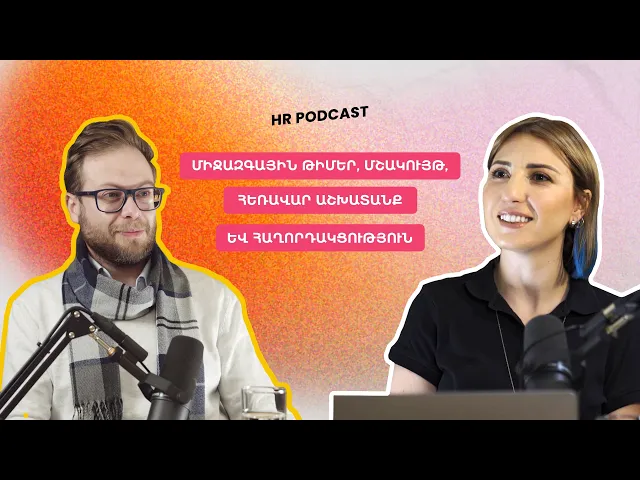
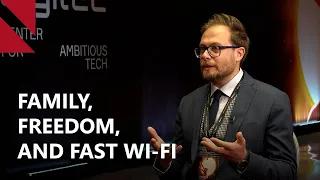
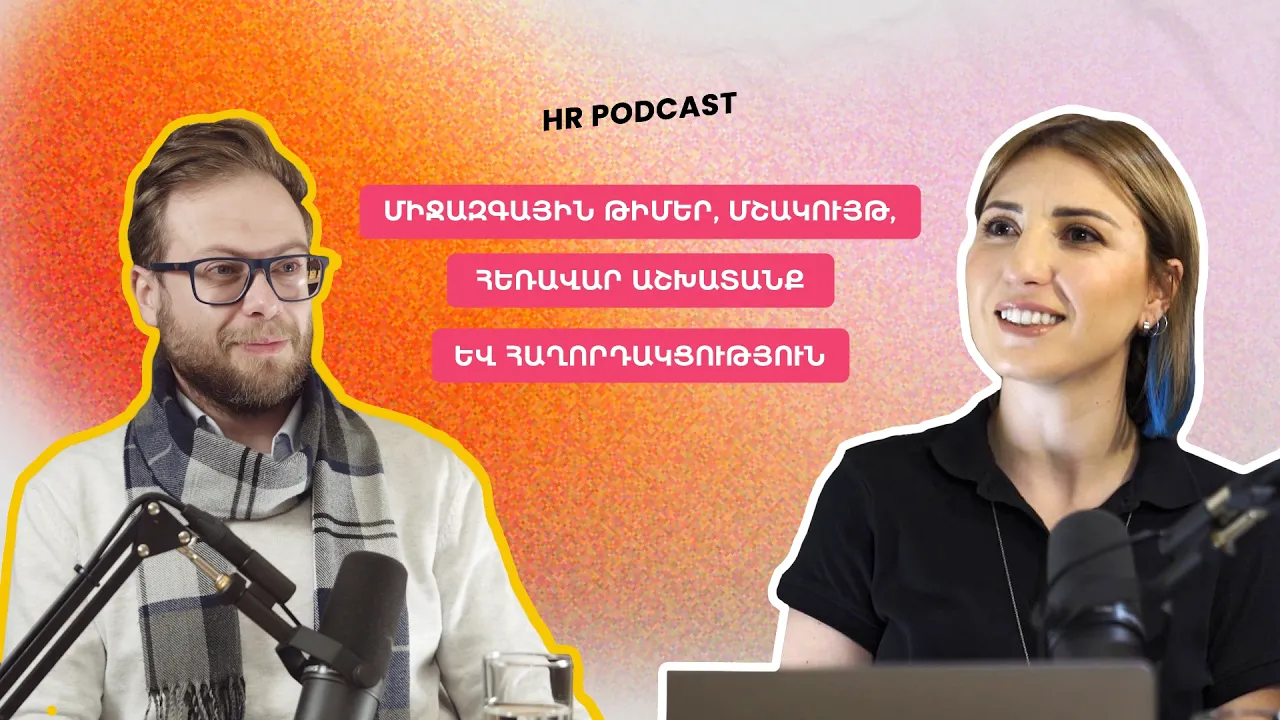
and boom everything changed so you consider Armenians to be hardworking they always find ways to do it easier and smarter a lot of companies would hire professionals they can do the job perfectly but they are not like remote enabled some people from some cultures believe that their cultures is superior making sure that people can communicate in a remote setting is the hardest challenge still 100% remote is a challenge just assigning them tasks and paying them more than they can get for example from the local market doesn't work because if the payment is the only motivation you are keeping your employees they will surely live yeah the international market is great but the competition is also International I would love to bring more remote workers from different countries to be working from [Music] Armenia warm regards everyone I'm happy that we are coming back with another episode of our HR podcast today my guest is Matthew Zayn mat Matthew has been living in Armenia since 2018 he is the chief editor and founder at life in Armenia magazine and he is also a senior content writer Matthew hi first of all thank you very much for for accepting my invitation and being here how are you hi thank you I'm doing good thanks for the invitation and for this nice setting sure our pleasure my first question though it's not very connected to HR but I'm very very interested what are you doing here in our menia so in 2018 before 2018 my wife and I were digital Nomads so we have like traveled the world working remotely from the Middle East to the Far East different countries and before Armenia we were in China and we wanted to start a family so we were thinking about you know a smaller country someplace where we can settle down we thought about going to the Emirates but we tried the Emirates the outdoor setting like we we are outdoor people we can't work indoors with AC all the time mhm and we wanted to go somewhere else so the plan was Canada and we just wanted to spend a week in Armenia for a vacation there was like a lot of Tourism packages back then mhm we arrived in April 2018 for a week 2018 yes okay that was only like the plan was one week in here we knew nothing about the country absolutely nothing wow and we arrived here on day one my wife says I'm in love with the place can we stay so I checked the taxes I checked everything it was like amazing back then I mean it's still very reasonable now but not as it used to be uhhuh and I said yeah let's let's do it we stayed for one year back then we thought it's only going to be one year uhhuh so one year 2 3 4 eight a kid and next year our kid goes to kindergarten for the first time so that's another 10 years in Armenia probably wow so until now you are living in Armenia do you live in Yan by the way Liv in when I first arrived by the way I met a gentleman he's Armenian American Amer I met him at an Plaza and he said you know I have never left like these 10 streets for the past 10 years and I'm looking at him he's like 80 years old and I'm thinking why wouldn't you leave like 10 streets why would you live only in those like in this small circle now eight years living in aravan I have never left those eight streets I'm only going like probably sometimes you know some tourism like another place or another country just for a week or so but I'm living in that small circle that he described but you need to give chance to our cities as well I've been to a lot of Armenian places but I mean you know like your daily life your daily routine it's that like poker Krone as it's called in here yeah the scale is small here so that's why when you are going like outside big cities they are kind of weird for for us for for it brings me back to Armenia like this year we tried going back and forth like on some you know contracts but it didn't work out we decided to stay very interesting and very motivating as an Armenian very motivating to listen to your story and another question which was quite interesting on your pro profile because I've done some research on you is that you switched from engineering from Tech to content creation can we tell to marketing because it's yeah I wouldn't say marketing because I didn't study marketing but content creation yes exactly content creation so I graduated as a software engineer in information technology engineering that's my degree but I've never worked as an engineer since graduation I wanted to do something that's more interactive to talk to people to you know I can not just work behind the laptop all the time as a coder or something a People to People profession exactly so I started writing about the tech industry I understand the industry and that was 15 years ago so I understand the industry I back then there was no social media we were just like writing for forums or stuff like that or some website copies and it became a profession on its own so for example I was doing it for free in the beginning just for friends or for passion and you know people started yeah like offering like would you like to do it for money like yes of course course can you do our website can you do this for us and I started developing a career in this path and later I took let's say more centered approach on journalistic writing which is interviewing people to get content to write about topic so that's what I do now so I got my degree in English Linguistics and now I'm studying journalism internet journalism specif and and you have your own um how is that called company or or newsletter life in Armenia yes so life in Armenia is a magazine a regular that looks like you know the old style magazines in a PDF file I started it in 2022 December it's already 22 issues and we have 177,000 readers mostly coming from the US interested in relocating to Armenia or doing business with Armenia have these studs sorry majority of them are Armenians or International the readers yeah it's all coming from the US mostly from the US and in the US Armenians in the US or I would say 70% yes 30% like foreigners but within the past two years a lot of couples relocated to Armenia influenced by the magazine so we meet them here first they read the stories of life in Armenia then they come here they become the story we write about them and they Inspire others also to come to Armenia wow that's we're talking about Americans we're talking about Filipinos French people British people different countries non- Armenians they're now living here like sometimes I come across someone on the street they're like hey Matthew you doing like yeah the magazine brought you here yeah that's so motivating I will make sure to leave it in the comments so that our audience has a chance to read it as well our podcast main partner is Magnus HR which is an HR and recruitment agency helping businesses worldwide in building and developing their teams if you are a founder or manager at any Department Magnus HR can help you with conducting HR audit or reviewing your current HR processes or even setting them up from scratch we are also here to help you find recruit and hire the best talent for your heart to field or specific open vacancies if you are an HR professional or plan to build career in this field Magnus is here to help with your development by providing personalized consultancy and also an educational platform HR Uub you can follow us and ask your questions on Facebook Instagram and Linkedin all of the links can be found in the description section Matthew this is an HR podcast but I'm going to invite various professionals from different fields as you bright Minds to share their experiences to share their expertise and knowledge and I think today we can speak about remote work environment and also very important topic Communication in remote teams and also a little bit about cultural integration here in Armenia and some specifications yesterday during our chatchat you told that you're very positive about working in Armenia so please can you start sharing this experience in 2020 I started working with Armenian clients from the tech industry mhm and boom everything changed first of all I thought like you know maybe there's no Market in here maybe there is no demand maybe I will not get the same rate that I would ask for it was all the opposite the demand is great payment is good working with Armenian clients has been great experience we're talking about companies on the same International level as any other country and everything changed for me because that's when I started having a community mhm I started meeting people and you know how it happens in Armenia like you work with people next morning they invite you to barbecues so we we had friends like we were going out with friends we were visiting people at their apartments and and then you get referrals friends of friends and now I would say 60% of my clients are Armenians 40% life still Diversified but when I have the option I would choose working with an Armenian company why so it's the same level of professionalism but you get to meet people in person and talk to them and this kind of you know friendship you can build with them is amazing nonformal commun non formal working environment as well okay any other specifications you have noticed working with Armenian people how we are different from from others so I would say you have your own mindset sometimes that some other people might not understand from the beginning so for example in some countries people would like to start working at 8:00 a. m. or 7:00 a.
m. in Armenia people like to start at 10:30 sometimes even from 10:30 until 11: there's like the cigarette and coffee mhm but when they start at 11:00 they might not end until 11:00 p. m.
they don't leave at 5:00 commed exactly so it's it's a cultural thing they might start a little bit later but they are committed so they will even put their own hours their their personal hours to make sure that the work is done on time and they will finish even like 1:00 a. m. if it takes them to do it yeah so that's a cultural thing that I noticed in here and it's good it's nice to see that people are committed this way I remember myself being in Vienna my brother lives there so I'm traveling quite often over there and also now during the previous year we have managed to have some clients from Vienna as well and imagine my surprise I was coming from the airport to my to my brother's house it was 6:00 a.
m. I guess and it was the first time I was there and imagine my surprise when I see lots of people over there drinking coffee working very active no one is sleepy in Armenia if you go out at 6:00 a. m.
I think no restaurant is open maybe some some some people running over there in some areas in some Gardens but overall it was quite different for me the commitment is nice in here you can see that commitment it's not laziness by the way it's just a mindset a culture a way of doing things differently yeah so you consider Armenians to be hardworking yes yeah and problem solvers by the way problem solvers yeah I've worked with an American company so the founder of that company hires Armenians for operations and hires from two other countries only it's the Philippines in South Africa and after 3 years we got in a conversation like why do you hire Armenians he had almost like 30 team members in here MH and he says these he say I mean by the way he's American non-armenian has nothing to do with Armenia if you ask him where is Armenia on the map he doesn't know but he's hiring Armenians 30 Armenians already wow and it's in the real estate business by the way for Washington and when I asked why he says we always do these cognitive tests for people and they always score high and whenever you give them something they don't like follow the rules they always find ways to do it easier and smarter and that's why he kept them for the operations Department he says I ask them to do something if there's another way they will just find it and they will let me know about it and we will improve our own let's say like processes the our internal processes based on their feedback MH so that's one thing problem solving is something good A lot of people would just follow the rules in here no they try to find ways to make it easier to make it not getting stuck with problems yeah mhm okay we have spoken quite enough about the positive trades of working here now let's speak about not I would not say negative traes because everything is solvable in the working environment but what kind of challenges you have faced maybe you can tell not only about Armenia but generally what kind of challenges you see when working in International Teams remotely you know this is in Armenia and outside Armenia not just in here yeah a lot of companies would hire professionals they can do the job perfectly but they are not like remote enabled so they haven't worked remotely before they know how to do things if you put them in an office but once you ask them to collaborate remotely with the team they miss that like knowledge they don't know how to do it so companies assume that you know we would just hire you you can start working next day it doesn't happen that way and eventually they become frustrated like you know we hired someone he's really good his resume is amazing or her resume is amazing but they didn't work out why because they're not remote work enabled they don't know how to work remotely how to collaborate how to manage their time how to manage their communication and that's a big problem at least before hiring someone you must make sure that either you do it you teach them how to be remote enabled or you hire them with a remote enabled like experience so that that's one thing that's always a problem with like working with different teams remotely a lot of people join our teams like with different companies but they haven't worked remotely before I think that was like new for everyone uh I usually tell that HR Human Resources management and generally management it has kind of the history has two parts uh very generically telling but until covid and after covid because what Co did we kind of lived uh five years of life but very snoozed in 5 six months and after that there is huge responsibility on the sh shoulders of HR toate create this remote work environments to create guidelines guidelines mentorship programs support programs for for employees so whenever you are telling me people are not remote enabled right quite a good term by the way I think that's majority of the responsibility here here is on HR as well how they teach how they help employees to get into this remote remote Life Training or some simple PDF file just explaining how you can for example become part of our team remotely not just become part of our team usually they do the on boarding without the remote part and the remote part is the most like important in this case yeah it's changing too fast but still we need to do that yeah totally sharing your point okay any other challenges that comes to your mind uh in these environments cultural things I mean again if you're working remotely with International Teams it's the cultural aspect m in a lot of cases some people from some cultures believe that their cultures is superior so others have to adapt to that culture especially when when the majority of the team is from that culture then exactly and that's a problem because when you hire someone from a different country for example let us say a team in the US is working with someone I don't know in Armenia or Georgia or any other country MH they would assume that their culture has to be the dominant one meanwhile this isn't always the case now we're not talking about the work processes work is work processes are the same but sometimes you have to learn from other people there's always room for improvement and other people sitting near by is the best source of learning how to do things and that's also hr's job by the way the way I see it that when there are multiple people from different countries the HR should be responsible for introducing them to each other in a way that you know we have people from this country we have people from this country just some cultural nonsenses between the two of them just to make sure that they understand each other without any those you know like cultural let's call it miscommunication or misunderstanding between people mhm cultural errors I would say right before this podcast we I was having another discussion with Mrchalabian he's my professor from American University and we were discussing that that HR is not only the job of HR it HR toolkit should be used by management as well so whenever we have discussed today here I think it should be shared between management and Human Resources management professionals to be able to enable people work together and yes culture is like a huge huge huge part of of this work to be done we are speaking about culture and there is huge huge stereotype and much of the recruitment errors are here as well that people think of culture as similarity as hiring the same people what are your thoughts about that what is culture I wouldn't say hiring the same people because there's no way you can have the same people all in one place even if you try hard right it will be different people with different cultures and different way of thinking and like the hardest part is making them collaborate MH and it becomes harder when they have to collaborate on a platform for example like Asana or like monday.