[Music] in 1981 our critics charge that letting you keep more of your earnings would trigger an inflationary explosion send interest rates soaring and destroy our economy well we cut your tax rates anyway by nearly 25 and what that helped trigger was falling inflation falling interest rates and the strongest economic expansion in 30 years capitalist realism it seems like such a neutral concept it seems like it's just a constellation of words that describes how you can buy a snack before going to school it just describes how free trade is actually part of your everyday life and
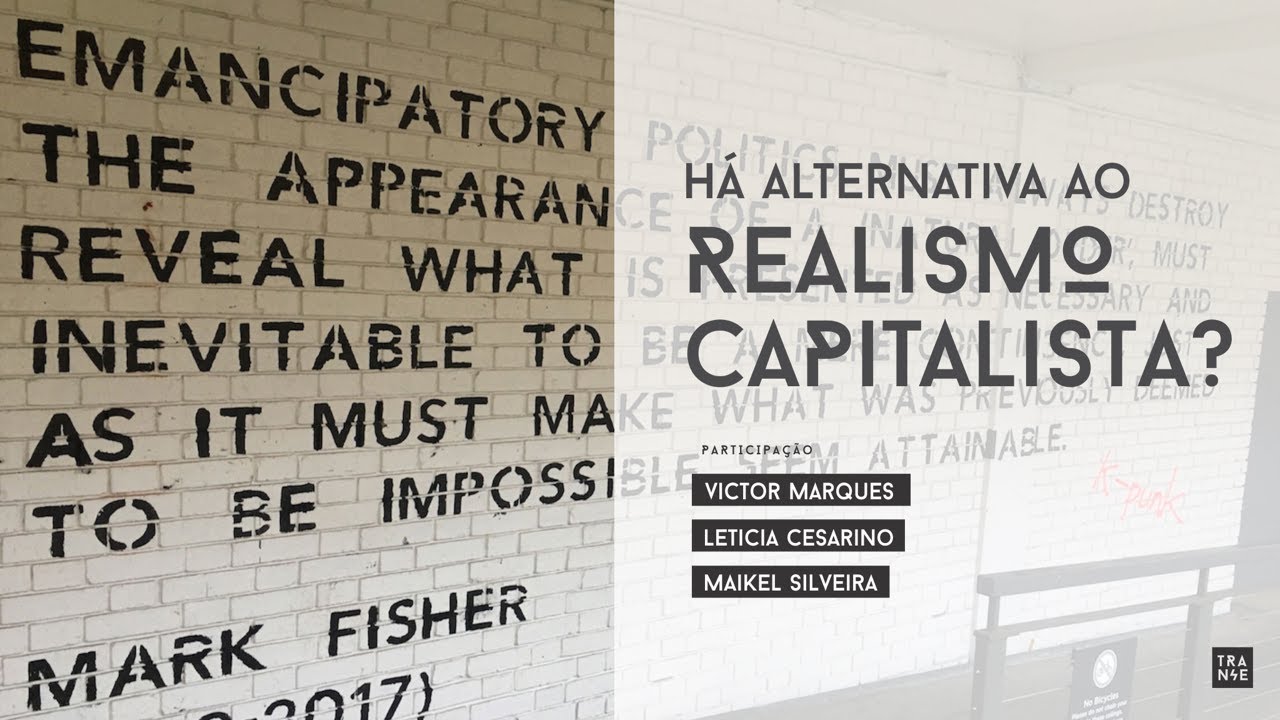
yet it's a malign concept it's one that pervades everything you think and do so let's talk about it capitalist realism is a concept brought to life again by theorist and philosopher mark fisher it describes the widespread sense that the only viable political economic way to organize a society is through capitalism this notion however quickly transforms into a more radical proposition people are literally unable to imagine any other coherent way of organizing society fisher sees in capitalism something resembling more fluid than a monolithic structure its plasticity is astonishing he takes this view from philosophers gilders and
felix guatari fisher writes when it actually arrives capitalism brings with it a massive desacralization of culture it is a system which is no longer governed by any transcendent law on the contrary it dismantles all such codes only to reinstall them on an ad hoc basis the limits of capitalism are not fixed by fiat but defined and redefined pragmatically and improvisationally fisher goes on to say that capitalism is a monstrous infinitely plastic entity capable of metabolizing and absorbing anything with which it comes into contact beyond dollars in guatari fisher is intellectually indebted to frederick jameson who
describes the workings of postmodern capitalism in his book post-modernism or the cultural logic of late capitalism what fischer draws on is jameson's notion of the schizophrenic subject according to jameson we've lost our ego in the postmodern age due to the schizophrenic nature of capitalism we're no longer unified but rather we're fragmented in psychoanalysis schizophrenia is a breaking down of a unified meta-narrative the i it's a breakdown of the signifying chain the schizophrenic is multiplicitous and makes connections this leads to the postmodern trait mark fisher focuses on the most the weakening of history and due to
the opening up of the ego we experience time differently jameson argues that this breakdown and signifiers reduces us to the present moment the signifying chain is syntactic it's a sequential series of signifiers on a horizontal axis and when this chain breaks down signifiers scramble the codes a rubble of distinct and unrelated signifiers appears and since as james writes in the prison house of language personal markers and distinctions like consciousness personality the subject etc are deemed secondary phenomena determined by the vast structure of language itself what is called the symbolic order this means we can draw
parallels to the unconscious personal identity is an effect of a unification of the past and future with one's presence and if we can't unify the past present and future of a sentence we can't unify the past present and future of our own biographical experience of life that means as jameson puts it we are reduced to an experience of pure material signifiers or a series of pure and unrelated presence in time well i thank you for your question uh but i have to say we're capitalists and that's just despite owing a lot to jameson and maintaining
the substitution of the neurotic for the schizophrenic fischer argues that capitalist realism and post-modernism are different on especially three accounts one when jameson advanced his arguments of post-modernity in the 1980s there were still viable alternatives to capitalism or at least it seemed so fisher arise that the last battles in britain between workers and capitalists took place in this decade and the losses of the working class made capitalism cross the threshold from post modernity to realism two postmodernism was entangled in modernism postmodernism responded to and incorporated modernism in various ways there remained a connection between them
fischer describes how modernism seemingly top-down approach to culture was de-territorialized by post-modernity and then re-territorialized into democratization difference multiplicity and diversity whereas something of modernism remained in post-modernism capitalist realism takes the vanquishing of modernism for granted modernism is reduced to an aesthetic style it's frozen in time and three a whole generation has passed since the collapse of the berlin wall back then capitalism had to work out how it had to capture externality how it had to incorporate absorb and manage energy from outside itself now however capitalism faces the opposite task having absorbed everything from the
outside how can he continue to function without an outside to colonize and appropriate this is perhaps the most radical and important change to capitalism and fisher writes something ominous that for most people under the age of 20 back in 2009 capitalism occupies the horizons of what is thinkable it has seeped into our unconscious and this is a major point capitalist realism doesn't work in the boom and bust cycle of detournemon and recuperation like the postmodern capitalism did like modernism did before it it operates through something fisher names pre-corporation he writes what we are dealing with
now is not the incorporation of materials that previously seemed to possess subversive potentials but instead their pre-cooperation the pre-emptive formating and shaping of desires aspirations and hopes by cabot this culture every single desire every single thought every single emotion every act everything is enmeshed in capitalism and not only that your desires thoughts emotions actions all of them are capitalistic before you even have them or perform them fisher mentions how predicates such as alternative or independent don't point to something opposed to the mainstream but are rather the most mainstream styles as of now he writes about
cobain's deadlock her kerkobane was locked in chains of air no matter what he did he was capitalized on his actions were anticipated even if he scathingly critiqued the system there were always records and merchandise to sell cobain's greatest spectacles against the system were absorbed from before they were even made what are these people good at they're just good at making money and that should be enough reward right if you want to make that's where you want to develop your life to just [ __ ] do it but don't expect us to also admire you and
just you know and and you be the model for everybody else all the time mark fisher presents capacity's realism through especially two poignant examples mental health and bureaucracy as we will witness these two may present a way out of the system too i just want to spend time with one of them this is mental health because that's the one closest to me mental health is largely something that's exacerbated by capitalism fischer turns a lot of our most commonly held assumptions about mental health on their heads firstly he argues that capitalism triggers certain mental illnesses fissure
rights that mental illnesses if that's even something you can talk of outside of capitalist realism are instantiated neurologically through genetics but that leaves their causation unexplained fisher writes if it is true for instance that depression is constituted by low serotonin levels what still needs to be explained is why particular individuals have low levels of serotonin this requires a social and political explanation and the task of repoliticizing mental illness is an urgent one if the left wants to challenge capitalist realism furthermore fischer argues that the way we treat mental illness currently is of huge benefit to
capitalist realism we confine it to only being about biology about chemicals in the brain and have in turn de-politicize the matter completely this has two benefits for capital according to fischer the first one being what he calls the reinforcement of capitalism's drive towards atomistic individualization it removes any mention of micro politics of desire and class struggle and accuses the mentally ill person of being sick solely because of their own brain chemistry it singles people out for easier treatment and corrodes a larger sense of societal solidarity the second benefit is how this treatment of mental health
opens up a huge market for pharmaceuticals if the problem is the individual's brain chemistry then we can treat it via medicine mainly pills and then sell them at a big profit why did you come here because i tried to commit suicide yes i knew that of course it but what i don't know is why you tried to do this could you tell us how you did it [Music] and why did you want to commit suicide because i didn't want to face anything so amidst all of this bleakness how do we combat capitalist realism how do
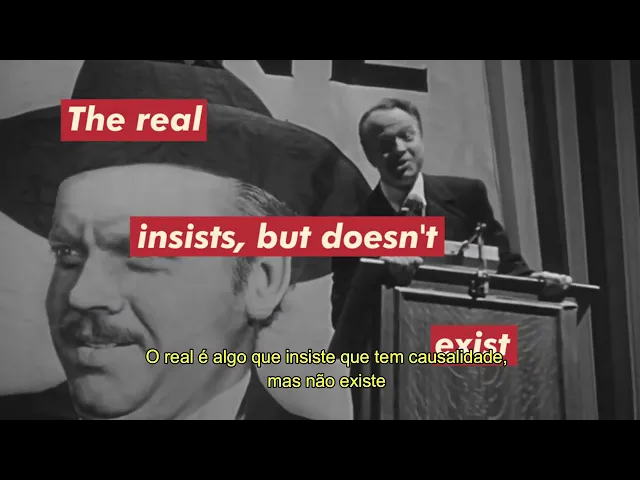
we combat the blockage of the new how do we combat the capture of innovation mark fisher himself suggests tormenting capitalism with its real the real is one of the registers psychoanalyst jacques lacong introduces in his writings the real is something which insists which has causality but doesn't exist there's two ways for us to evade the real one is through symbolization we try to put it into words which are to capture a version of it using language the other is setting up a fantasy a screen so that the real gets to us in a changed and
processed form through an image so again what are these reels of capitalist realism fisher talks of three of them the environment mental health and bureaucracy the environment is a quirky one because everyone knows climate change is happening and that goes for the rich people as well they just don't acknowledge it and everyone knows that resources are being depleted and if carried out there's a threat on organized human life these things are not repressed as fisher writes they're being incorporated actively into advertising and marketing you can buy cars that run on electricity and even electricity from
environmentally friendly sources fischer even points out how capitalism knows of all of this in the film wall e where this concern over the environment is the plot's major focal point however argues fischer environmental catastrophe only bubbles up in capitalism as a sort of simulacra where its real ramifications are too traumatic to be truly assimilated into the system fischer argues how so-called green critiques are starting to question capitalism in ways we can't do elsewhere capitalism needs to grow it's opposed to any notion of sustainability and green critiques seem to have influenced more people especially young people
to spark action green critiques strain the system the second reel that fisher mentions is mental health which we've already discussed a bit it's not as politicized as the environment but there lies a lot of potential in the issue as mentioned before treating mental health as we do now as a natural fact taking form in an individual psyche is beneficial to capitalism fischer's response to it is a call to politicization of common disorders and to highlight their very commonness fisher writes instead of treating it as incumbent on individuals to resolve their own psychological distress instead that
is of accepting the vast privatization of stress that has taken place over the last 30 years we need to ask how has it become acceptable that so many people and especially so many young people are ill the mental health plague in capitalist societies would suggest that instead of being the only social system that works capitalism is inherently dysfunctional and at the cost of it appearing to work is very high the last wheel that fisher mentions is the reel of bureaucracy he goes on to saying that a reinvigorated left should offer a solution of how to
rid society of bureaucracy in ways neoliberalism never could bureaucracy has changed from the stalinist days today it's all about measuring outcomes assessing productivity it's about aims and objectives and writing mission statements that need to be followed through on capacity's realism's bureaucracy barks everyone down it sends them into endless loops it makes them do redundant things it makes them simulate productivity it's easy to look at capitalist realism and to be disheartened it's easy to see a cycle of spectacle after spectacle and to hate it furiously if we're already tinged by capitalism before we even think how
do we work against that how do we effectively fight something that possesses us in such a way well allow me to bring to you fish's closing paragraph the long dark night of the end of history has to be grasped as an enormous opportunity the very oppressive pervasiveness of capitalist realism means that even glimmers of alternative political and economic possibilities can have a disproportionately great effect the tiniest event can tear a hole in the gray curtain of reaction which has marked the horizons of possibility under capitalist realism from a situation in which nothing can happen suddenly
anything is possible again and innovations are already created which in time will hollow out capitalist realism there seems to be more attunement to the workers plight in the us more people are open to higher taxes on the rich and even to notions of universal health care which is a running feature through many of the democratic candidate platforms likewise in various fields of humanity there's huge turns toward new and experimental movements propelled by a call to an interdisciplinary approach and even in culture we have new videos films and series emerging which push against the cage of
air that is cavities realism and who can forget musical acts such as death grips and clipping who make music that doesn't sound like a king from the 90s but from the future thank you all for watching i greatly appreciate your support a huge thank you to simran samara and indirect existence for supporting the channel don't forget to like and subscribe and i'll see you all next time bye felicia