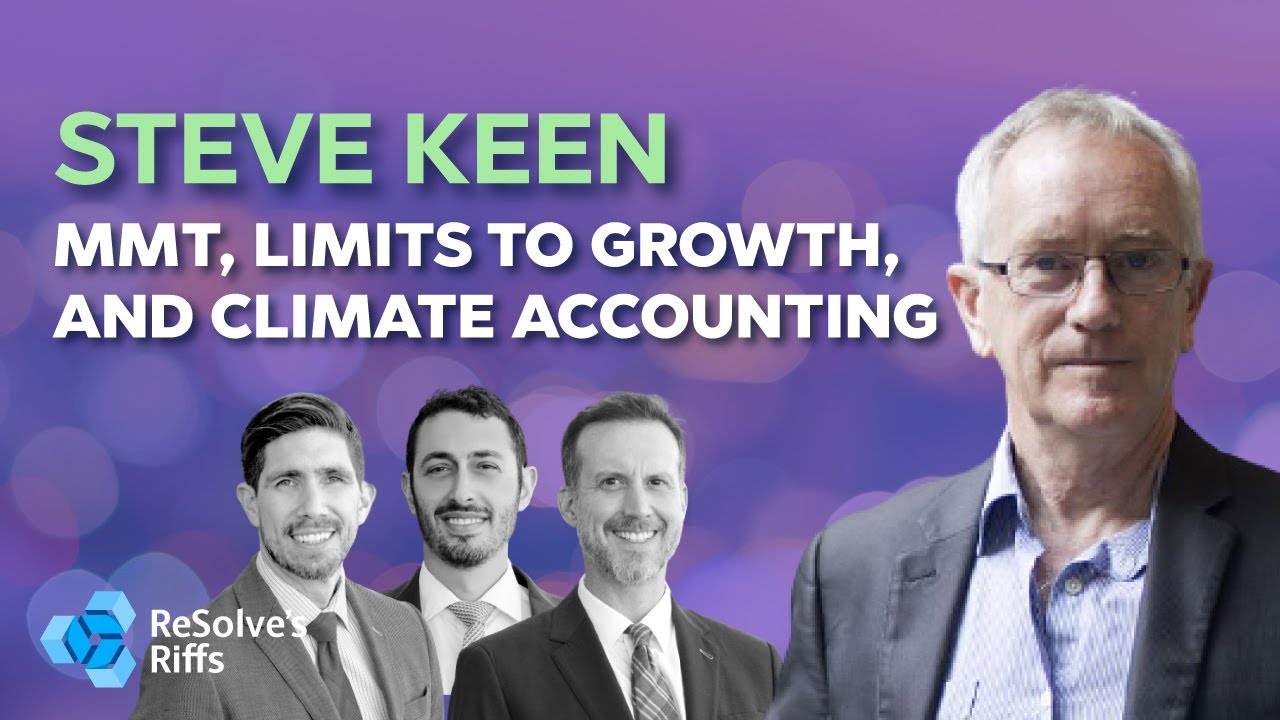
hey everybody welcome back to the blockworks micro YouTube channel this is offspeaking and I'm honored to have as guest of the day Professor Steve Keane Professor swiftkin is a distinguished research fellow at the UCL in London and also to be honest it's best to work today is on patreon and on sub stack and I urge you if you're not doing that yet to go check Professor Steve King's work especially on money which is what are we going to talk about today both on substock and on patreon Professor how are you doing very well thank you good to meet you looking forward to meeting in person next time we both happen to be in the Netherlands for some reason these days so we're going to meet uh in person very soon today let's do this this way and um there is you are an authority when it comes to money and actually trying to make people understand our monetary system really works and money creation really works we often talked about central banks and Commercial Banks and who prints money and what money they print but what about the government professor in the first place because deficit spending is one of the most um you know Hot Topics debated our topics in in money creation world so can you give us your quick take and then maybe walk walk us through the process of money creation by the government okay um the essential of course there are two two entities in our society which can create money Banks create money by lending out more than they take back and repayments governments create money wherever spending Walton they take back in taxation and that's the thing which people uh don't understand I think government has to borrow before they can spend and that is categorically wrong okay with government issues Bond but it's nothing like us borrowing money from a bank so we need to get they need to explain all those that logic immediately but the other essential difference between how governments create money and how Banks create money Banks create money by expanding their assets and liabilities at the same time so their loans go up which creates more debt the deposits go up by the same amount which creates more money there's no change in the equity position for the bank out of the act of Simply creating a loan whereas for the government it creates money by going into negative equity but the negative equity it goes into is precisely what are the positive Equity that creates with the private sector and that's the the major source I think of misunderstanding um some of it I think people revolt against the idea of being a negative equity but the other thing is um if you're going to have Financial claims somebody's going to be a negative equity to somebody else and so the government is rather more able to support that than any other institution in society yes that's the major distinction and we actually want to explain this step by step by using your excellent software programs which by the way I think you are working on a new version of your famous minski software program um but why don't you actually share the screen with us and walk us through what the heck happens when the government does deficit spending in the first place and let's talk about the government the private sector the banks central banks the whole thing yeah okay well I'll just share my screen now and uh this is the uh this is my soccer package called Minsky I'm building another one on top of it called rabble which is commercial and designed for data analysis this is designed to model how uh basically the dynamic modeling program which happens to be excellent for modeling money because we've added the capacity to model money using double entry bookkeeping so I've got a model involving Banks the public Central Bank and Treasury and when I look at the tables and I'm sorry I can't make this one this part we can't get Zoom but what you can see is that you have the treasury which has an asset which is its asset is its bank account of the Central Bank I'm saying it starts there with a hundred billion dollars in it government spending reduces that amount of uh money in that a bank account there's no offsetting liability for the government at this point so the small and the asset is equivalent to a fall in its Equity taxation pardon me replenishes that account and Delta has a positive effect on its Equity so the equity position for the government out of running a deficit where spending is greater than taxation is equity Falls because negative equity out of the process I'm going to stop you from time to time because you're going to see some important things here so first of all very cool to have a double entry accounting I mean it's easy to understand it's the accounts assets liabilities and then you made a different role for Equity just to show people what actually happens to the equity side of the liability okay so we start from the treasury and then you say okay we have Assets Now we have liabilities here and assets is you know Treasury government spending engine what does government spending do to this to this asset side it actually interacts with taxation the more the government taxes the more this as this side of the balance it goes up the span it goes down but on the liability side nothing happens in the first place so you're basically saying when the government does deficit spending it blows a hole in their balance sheet that's what you're saying yeah but it's a whole which the government if when you look at the national accounts around the world in the financial assets are your claim on somebody else so if you and I have a financial asset if I really need money for example I'm in debt to you okay I've got a liability you've got an asset when you add the two together you get zero okay so the sum of all Financial assets which is claims that other people is zero uh non-financial assets things like houses uh shares of the the initial value of a share or the The increased value per share over time uh they are non-financial assets there's an asset with no matching liability now the government in that sense has the asset of the entire country so there are the non-financialides of the bank with the financial Equity the government gets into but backed by the fact that government you know owns the country so to speak so the government can cope with massive negative equity and in fact its negative equity is the Public's positive equity that's a super important point so if you actually would put together um let's say government spending you would see an exact offsetting amount into the increasing net wealth net worth for the private sector so government net spending actually increases its mirrored by an increase in net worth in the private sector into our balance sheet basically Professor is that correct that's correct you can see that in the second table here so the first table shows the treasury's position spending its Equity is tax minor spend or the change in its Equity is tax minus spent so you're spending seeds taxations Equity is falling because the Public's equity on the other hand to spend minus tax so there's government spending it says government taxation the equity of the public Rises and The the rather than taking money from the public a deficit creates money for the public and creates Equity as well and that's where it differs from what happens with a uh a bank loan and I can show that very easily of course we'll be Mark you in a moment so Professor let let's make the example let's walk back to the government spending the United States did in 2020 for instance right so yeah government decided to send checks at home for people literally so you got to check in your post box what is literally the process that happened from the treasury balance sheet to the private sector balance sheet when the government of the United States decided to print those checks for people tell us exactly what happened on those two balance sheets which are the the top two basically you you show up there well to talk to uh like this at the beginning and this is the end of the process it's got to pass through the central bank and the banking system for actually happen and that's why that's why I've got a pattern of four table so you'll notice that spending and Taxation which are the only two operations I'm showing in this very very Bare Bones model occur eight times so it's not Double Entry it's up to otoko entry bookkeeping when you actually show because it has to pass through the central banks and the banks as well so the spending by the treasury first of all increases the reserve accounts of the banks of the the private bank the central bank so that spending goes down here the treasure the the liability That central bank has towards the treasury with its deposit account that declines the liability of those towards the the banks with their Reserve accounts Rises there's no change in the central bank's overall liabilities that money is funds rather not money if funds are transferred from the treasury to the from the treasuries accounts the reserve accounts and this is actually this is that could be if this is done in the Netherlands would be a alf's name it'd be one of the people receiving it for one of the banks inside here so we're aggregating what's happening with everybody's bank accounts uh into into one big basket up here and that means we're aggregating down here as well so treasury account goes down uh when the government spends the reserve account the banks go up vice versa with taxes and then through the banks themselves uh what happens is their assets and their liabilities both rise and this is the um the way in which this is similar to what banks do when they lend when the government puts the money in reserves the reserves go up and the banks then put that money into people's deposit accounts but that's the overall mechanics of of government money creation this is this is just incredible we need to go step by step again so the government blows a hole in the balance sheet let's say the United States government decides to send checks at home to people they blow a hole in their balance heat and American people find themselves with literally a check out of nothing and that's the public balance sheet in your in your point there they literally see their their deposits going up Professor they their bank account goes up basically and there is no liability attached to that there is no mortgage there is no loan there is nothing there it's literally Equity going up for the private sector which as we said it's the mirror of the negative equity the government that's created in their own balance sheet okay cool now the public has more deposits which means the government spending has created money for us okay interesting then of course these deposits are reflected into the banking system I mean we have more deposits therefore with the Positive money somewhere in some banks so this is the second step of your tables where Bank deposits go up Bank Reserves also go up as the entire balance sheet of the banking system Rises which is also in the mirror of the fact that the government spending moves down the treasury general account and that's reflected on The Reserve side as well uh on the central bank balance so um you basically are telling us that government spending does not crowd out the private sector it actually adds money the other side the opposite it creates money for the public it's for the property the public sector it's it's public and private we use the words in a weird way but you're the public you and me when the government runs a deficit we have more money and that bill means we have less needs to borrow from the banks because the government's created money for us without a liability attached that's quite a thing now let's walk again to what happens in the central bank and Bank side of the balance sheet just to make sure people understand that so the threshold spends money which means the liability side walk us through the treasury general account basically needs to go down right that goes down and as it goes down the reserve accounts of the banks the the central to be a bank one one thing element of being a bank is you have an account at the central bank and therefore money can be transferred from the treasury's account there to your account which doesn't affect the overall Equity position of the Central Bank you'll notice there's nothing showing up in the equity of the central bank here uh it's simply saying it's liabilities have gone from owing uh having a money that it's got to give to the treasury has gone down money that's got to honor for the for the banks has gone up so there's just it's a liability swap at this level and it becomes an asset and then that then increases the assets of the of the banking sector down here because uh is just just as the gov is the Public's Equity Rises because when spending exceeds taxation the reserves that the the asset to the private banking sector Rises well by exactly the same amount spending minus tax and That's essential to get that uh to transfer that money through to the public it has to go to their bank accounts and that then shows up here in an increase in the equity of the public sector so Professor now if somebody has managed to understand the vital concept that treasury spending creates net worth for the private sector which is quite a thing to say in finance these days despite its 2022 and this is clearly our Double Entry accounting works as you're showing but it's not mainstream knowledge uh the second thing is that people will be asking us uh when the government spends in our monetary system in our accounting system they need to borrow they need to offset this and with an accounting item called Bond issuance basically yeah that's how we do this so how does that work in the first place well let's take a look at it and what I've got to do to show that is to add an extra asset for The Banks of bonds so let's call this bonds and bonds owned by Banks I've got a subscript of B there and then what we have is the treasury sales Bond so we just have here treasuries Treasury Bond sales and that that then means you're going to get an increase in bonds here so I'm going to how's I'll call this Bond uh sold by the treasury to the banks yeah okay and of course that means that the way they pay for it they use their reserves so bonds South by the treasury to Banks and that balances the table and now if we take a look at what's happening uh on that on that full view of the all the tables in the system we now have an entry which uh I've got the the banking you can see here the operations turned up in the banks table so there's been an asset swap for the bank they've got less reserves and more bonds they go they get more interest on bonds so of course they're going to take the offer and the money that the the funds not money the funds are using the buyer are created by the deficit in the first place but now what I've got to show is what happened on the central bank they go to the central banks table and we now have an unbalanced operation here as you can see and so what what happens when the bond sales they actually increase the amount of money in the treasury's account so they now show uh the matching entry there uh what that does is make sure the if the bond sales are equal to the deficit then the treasury account will remain constant and that's the real impact of selling bonds it doesn't they're not necessary for the actual operation of money creation that's still money creation is strictly uh the deficit itself but what it means is the treasury doesn't go into a uh an overdraft at the central bank they go back and take a look at the tables now and that's our situation I haven't yet shown what's happening with the with the treasuries I've got to add that detail as well to go to the treasury and now plus has got a liability which is bonds uh that does to the banks and so as you can see and I'll just bring this across to the main main view as well again here um there is no um when when this happens um for the treasury let's move down here again looking up here uh that it doesn't affect their Equity so they've got the assets have risen because the money from the bond uh sales are turning up in their treasury account but they've now got a matching liability as well so that's now it's expanding it's assets and a liability they're affecting us Equity so the actual action auction of bond sales has got nothing to do with money creation and it's not borrowing it's uh it's it's simply a rule that's imposed on governments by their politicians to say you can't have an overdraft account at the central bank so if the issues of bonds is equal to deficit spending you won't go into overdraft there's interest payments as well of course but I can easily add that and show that's about the same sort of effect Professor let's let's before you you talk about interest on bonds let's go back to the main thing because I want to spend a few minutes more on this it's really important so adding bonds to the equation as in change the fact that the column equity in there is negative government and it's positive for the public that hasn't changed a tiny bit the only thing that has changed is that on the Central Bank liability side the government is not allowed by the current rules that we self-impose to run a negative equity basically a negative TGA if you wish a negative account at the same problem it can't go in overdraft that's the only thing that the bond issuance accounting wise is matching and now obviously somebody needs to buy these bonds and who buys these Bonds in your example is commercial Banks we didn't even talk about the central bank doing QE and buying the bonds we are staying away for that for the time being yeah I mean the commercial Banks and remember the commercial banks by the very government spending in the first place have more reserves deposits account for the private sector go up reserves go up as well for the for the Commercial Banking sector commercial Banks can just use these reserves and buy bonds bonds are extremely well regulatory treated they are hqla assets their high quality the liquid assets so Banks don't have an air cut on these liquidity Holdings they have no risk weights attached to these Bond Holdings zero percent zero Capital needed to buy those and they yield more than reserves in the first place in their very often so they are going to take the offer as you say and they are going to fund which is the right verb but they are going to swap their reserves for Bonds in the first place now I have a question for you Professor what happens if banks say nah I'm not gonna buy I'd rather have reserves so then us MrHowe and MrProfessor Steve Keen we need to buy the bonds from the government what happens then so there's a new asset which I'm going to call bonds that's my mistake pardon me bonds owned by the public okay so that's where the where the transfer goes to so we now have that's going to rise so Bond and uh started by the Banks to the public yeah is there and then we now go to the treasury and the treasury now has a new liability and then that balances that so again uh it doesn't affect the equity the bank it just changes to own the bonds and and just as the deficit spending by the government created the reserves which are a fund I say fund because you understand this because the government you can't money is what you can spend on anything funds is what you can spend on specific things and in the bank's case they were only allowed perfectly only have to buy bonds uh pretty much from Reserves so that's that's the reserves being created by spend minus tax there and the banks then sell bonds to the public the money this is now money uh which people would otherwise spend buying you know uh Christmas trees uh it now goes across to having bonds which then at a rate of interest for them rather than putting a Christmas tree soccer in their Lounge room so Professor the reason why I ask you that is yeah we explained that the treasury literally blows a hole in their balance sheet that it increases the net worth for us the private sector the accounting rules were self-important on basically ourselves Force the the government to issue bonds to fund this operation which in reality is not funding but it's just merely making sure that the government doesn't run a negative account at the Central Bank of course these bonds need to be bought by somebody so when we say the Central Bank buys the bonds they simply swap the existing reserves for bonds or they actually they actually increase their prices they they create new reserves they use these reserves to buy bonds very clear that we are not doing anything from our side when Banks buy bonds also they're not doing anything because they're taking the newly created reserves by the fiscal spending in the first place and they're using those to buy Bonds in that case us the public sector we get an injection of net worth and we have to do nothing we don't have to buy bonds we don't have a liability attach that nothing yeah when the when the Central Bank isn't doing QE and banks are not immediately supporting the government by buying bonds then it's up to us the private sector to actually buy these bonds and you're showing that in the public area there which will be us the people the public actually in that case the newly created deposits that have been created by the government when they spend money have to be invested from our end into buying those bonds Professor which means we can't spend this money on buying Christmas trees and I think correct me if I'm wrong when the private sector us need to need to buy the bonds of the organization that's probably the only case When government deficit spending doesn't create immediately spendable money in the private sector the golden section is part of the public and what happens normally is that when the when the when the banks in the initial purchasing round which is shown here when the treasury sold the bonds to the banks the banks then trade that with non-bank financial institutions so that is reducing the amount of money in non-financial institutions but increasing the money earning assets that they have they've got more bonds which earn the interest rate returned from the uh from the treasury so that's why they do it um but yeah it's uh in both cases the money which is used to create the bonds is created by the deficit spending of the government extremely important point I would say so government spending creates money for the private sector without a liability attached to that that's an important instruction with bank lending Professor which is also a form of creating money for us but it involves a debt for the private sector as well we have a mortgage to pay back a loan to pay back so can you show us how that money is created but it's different than money creation from the government in the first place so a government deficit spending increases the net worth of the public borrowing from the banking sector does not increase the net worth of the public that's very clear I guess if I get a mortgage to buy a house Professor they the bank credits my account out of nowhere uh but they also want the money back so my balance sheet that has a liability attached to that which is exactly by the same amount and that's the mortgage that's very clear and for the for the banking sector obviously that inflates their balance sheet in aggregate because new money is created when money is Lent out so new deposits are created uh so new assets and new liabilities are created for the bank which means there is new money being created literally but there is no new net worth being created because there is a liability attached to the private sector when the government spends money they lower my taxes they send me checks at home and I don't need I don't have a liability attached to that one can argue later on the government will tax me more uh yeah sure if we continue to think along these these lines the government will want to tax you more but in principle there is no liability attached to new money and when you when you when you look at the data it clearly supports the argument you and I making versus you must pay the debt back nonsense that neocots talk about uh there's 120 plus I think about 130 years now but then actually it's just 119 1901 so 120 years of data um at the the White House showing the average deficit government deficit and the average deficit even in living out the wars in the first in the last 120 years is about two and a half percent of GDP so the government has never paid its debt down it did once do that back in the 1830s and that led to What's called the Panic of Aging 37. uh when the suddenly reduction of the money supply could only get money from private money creation and there was a a bigger Financial Calamity in fact in the Great Depression of course it's so long ago we've forgotten about it but the government uh you know the government deficit creates money for us and the more that it does that the less pressure there is to borrow money um by the pub so you actually get there's not a direct causal link but there's less necessity to borrow um from the public uh when there's more government spending Professor I surely hope the government doesn't want to pay back its debt because that means it's going to destroy money very quickly and I don't want that then nobody should want that to be very honest because that's how it works when the government decides to pay back their debt they're taxing the private sector more which means it literally they're draining money away from the private sector so I'm not sure whether that you want that it shouldn't be the case now one last thing I want to say professor before I let you go first of all congratulations I mean you've been basically giving away a lesson on government spending creating money using your Minsky platform live and I swear guys we didn't prepare this the professor just went down and made it incredible really I'm impressed but can you tell us if people are interested in these topics and understanding how Rudy money works yeah how can they follow you what do they find more about this uh first of all if you want to get Minsky uh then you go to sourceforge which is a a repository of Open Source software so sourceforge. net project slash Minsky the very well you can see up there and you can download a copy there uh for free it's it's a no-cost software and but in terms of following my work there's two locations there's patreon which is here that's patreon.
com Steve Kane and then the other side is as you have as well sub Stacks that's profit Steve Kane Dot subset. com and either of those sites um equally okay uh the advantage of patreon is that there are lower membership levels so there's one dollar a month uh and there's lots of doubles the heart is a thousand a month I've got one one person giving me 300.