Hello and welcome to inside exercise I'm Emeritus Professor Glenn McConnell from Victoria University in Australia and I'm also currently a Danish diabetes and endocrine Academy visiting professor at the University of Copenhagen the idea behind inside exercise is to bring to you the absolute who's who of exercise physiology exercise metabolism and exercise and health and what I'm actually really wanting is for you to Get your information from the research experts in exercise rather than from influences so indeed today I bring to you associate professor Jeremy linicky from the University of Mississippi he's an expert on the
effect of Blood Flow Restriction on muscle hypertrophy and muscle strength he's been conducting very interesting studies showing that if you do low load resistance training so maybe 20 to 30 percent of your maximum voluntary contraction and you add on Blood Flow Restriction you can get similar responses in terms of hypertrophy and almost the same responses in terms of strength than if you did higher load resistance training we talked a lot about this you know what sort of people might be interested in doing Blood Flow Restriction how it can work What mechanisms are involved how it
might be used after you know recovering from injury it's also been getting some very interesting findings where he can Show dissociations between the increases in strength and increases in hypertrophy when you do weight trainings this is without Blood Flow Restriction just when you do weight training he doesn't always find that the strength in the hypertrophy go hand in hand that was very interesting I was actually blown away by quite a few of his findings and I kind of kept sort of questioning him about it and it blew out to about two hours so uh I
found it Really interesting I think he will too so stick around hi Jeremy how are you going you're welcome to inside exercise hey I'm doing well thanks for having me Glenn so you're in University of Mississippi and it's the morning for you it is uh it's afternoon in Copenhagen so um why don't you tell me I'm often interested why I'm always interested in my guests of course but um how people got into exercise so if you exercise yourself a lot and then you've got Interested in science and thought wow I can actually do this as
a job or um or were you already a researcher how did you get into all this yeah no I I did Sports All Through My Life um I was my big sport was wrestling so I wrestled you know up through when I was you know as young as five up till 18. I wasn't good enough to go beyond that but it was a sport uh that I enjoyed I went to a school that was really well known for putting out really good wrestlers Um then I got kind of interested in through wrestling I got interested
in lifting weights and bodybuilding and power lifting um so then I just kind of shifted towards trying to better understand like every time I would go to my undergrad class it's like how can I take what's being said and use it to get bigger and stronger that's kind of how I was uh operating and I took a lot of classes for people like you who were all About endurance so I was always trying to have to pieces together uh but that's that's how I got into it um and then I started reading research papers towards
the end of my undergraduate um kind of time and then that's how I kind of got into the research world I thought that might be kind of where I wanted to go because at first I wanted to train athletes but when I did that through some in my undergrad days I Realized that that's that wasn't for me I want to do something you know exercise related but more towards the research side so you where did you do your studies your PhD Etc yeah I did my PhD at the University of Oklahoma uh with Mike bimbin
I also met uh Takashi Abe there he's a he was a visiting scholar from Japan and we've stayed very close ever since um he's really where I learned a lot About how to measure muscle size with the ultrasound how to apply Blood Flow Restriction how to think about a lot of things um I did my undergrad at Southeast Missouri State University um I did my undergrad Masters there I did an internship at the University of Illinois where I was that's where I got my first taste of research it was animal research with Dr Huey uh
but that wasn't the animal resource wasn't for me Um I I just it it's just a different way of thinking um so I came back and did my masters with uh in humans that's where I started doing some blood flow restriction and then have been doing humans ever since yeah great all right so um we're going to be talking about Blood Flow Restriction of course and and exercise and as you said uh I'm gonna try and you know we'll stick mainly with Strength training but I can't help asking a little bit about endurance exercise um
but why don't we we start off thinking uh and you mentioned a Japanese person there sorry you can mention him again later which and we'll talk about the history of it and how you know Blood Flow Restriction Maybe started off there um but yeah why don't we just talk a little bit about strength training um you know how you go about it uh if You want to get like increases in strength there's a hypertrophy do they go hand in hand Etc as a bit of a background before we talk about the effects of Blood Rose
uh blood flow restrictions yeah so strength as measured by basically the most that you can lift right so that's the the standard that we set it to is like the 1rm so the most you can lift one time um and then you know muscle size typically being like the cross-sectional Area of the muscle or how thick the muscle is um I think with strength one of the things I think is pretty well accepted is that there's a huge specificity component so whatever it is that you're looking to improve um that's what you should be doing
and you should be training it as heavy as possible if you're wanting to see increases in strength and maximal strength uh the good news with muscle Growth and I think there's I feel comfortable saying there's a lot of evidence for this um it really seems like you can get muscle growth doing a variety of things you know training with low loads training with moderate loads training with high loads I think that's all about how much muscle are you activating and for how long so I think you know for muscle growth you can train Anywhere between
20 and 30 percent of your max up to you know probably 80 85 maybe even higher than that depending on how much work you can do um so there's a there's a lot of wiggle room there and there's a lot of things that you know you can do just based on your personal preference maybe you don't want to lift heavy all the time uh for strength you can lift light weights and see increases in strength there's no doubt Um but it's not going to be increased to the same extent as high load exercise um and
I think that's I think that's one of the the areas where people get confused because they will they will they will reject the notion that low loads can be good for growth because they know for a fact that it doesn't increase strength to the same extent but I I just view them as two kind of separate ideas um so you can increase strength with Light weights but the two increases the to high extents you need to train with higher loads fair enough that it's the recruitment so if you're recruiting all your fibers sort of as
many as you you know I don't know where we're at with that nowadays but for a while that I used to say you can't recruit all your fibers I think nowadays they say you can but is it partly to do with that if you're recruiting all your Firebase and all the Sort of neurological sort of factors yeah I think that's fair um with the low load exercise and growth I think uh Stu Phillips has done a lot of work with that and and a lot of other people as well uh but you know they really
spearheaded that you know maybe a 10 year 10 plus years ago showing that as long as you're recruiting you know all those those motor units why wouldn't they grow assuming you're activating them and you're stressing them for a Sufficient duration of time I I keep saying for a sufficient duration of time because theoretically if you are doing something like an mgc for for a very brief time you're activating a large portion of the muscle but you're not really seeing growth so I think there is a duration component to it um but yeah I think you're
right I think a lot of it has to do with are you recruiting those higher threshold motor Units and if you are you're probably going to see pretty big growth okay well I'm glad I had it right because I was sort of thinking the other way around I was thinking for the strength do you need to be creating all the so you know how with strength you tend to do the lower uh repetition you know lower reps higher weight uh and you're saying you probably need to do that for strength is that right but then
for uh for the Hypertrophy it's more sort of the volume well yeah I think with the for the recruitment you're with low loads right you're you're going to recruit type 2 fibers assuming you're exercising two or near failure right and I think that's one of the explanations for why the growth is very similar to highlight exercise but I don't think just the fact that you're recruiting them is going to explain why you're going to see big changes in strength Because um you might recruit the higher threshold motor units with low load exercise but I don't
think that's the same thing as lifting High loads with respect to strength I think the recruitment strategy is different so for strength you need the high loads and less reps yeah just to make sure we're clear on that yeah yeah and then and then for the hypertrophy you're saying you can get there through various Means but generally it's it's the total load so the whether it's whether it's lower weights but lots of reps or higher weights and less reps as long as you do like quite a lot is that right yeah I mean I don't
think it needs to be an excessive amount but yeah there is that volume component with growth for sure all right now one thing I I someone called uh uh anastasios I think uh put a question up on Twitter which I thought was interesting and I think some of the Work you've done may fit with this so he said um some talk about the scientific controversy and the association between muscle size and strength there were two contrast contrasting articles a few years ago about this you've done some work on that so the idea that you can
you know we used to always just think the cross-sectional area of the muscle was what dictated the strength that you could you know the amount of force you Could produce did you want to just talk to that a little bit yeah um and I want to be very clear um I definitely agree that there's a relationship between muscle size and strength right so we were to measure at Baseline people who are bigger tend to be stronger than people who are smaller I I think most people agree with that uh but there are lots of reasons
why people have differing levels of Baseline muscle Size and a lot of them most of them have nothing to do with exercise whatsoever right so the the I think the controversy that you know we were discussing was when a person when an adult starts lifting weights and they get stronger why is that um so I think traditionally and you know it's starting to change a little bit but traditionally you look at any textbook be that's published beyond the 1980s they almost always say this the same Thing which is the first um couple weeks is due
to neural adaptations followed by large contributions from muscle hypertrophy and you know that was something that I I wrote in papers for years and I taught it for years um until you start looking at some of the data that is used to support that and you start to realize that most of it's based on Baseline data where people weren't exercising at all Um so you know for for me I just don't do not think there's evidence to suggest that a change in muscle size contributes to a change in muscle strength when an adult lifts weights
um and we've done several studies where we've manipulated how much muscle mass each group gains to see what effect that has on strength and we're never able to see that the group that changes muscle size the most changes the most strength Or that this group gets penalized for not gaining enough muscle size now I think one of the the common retorts is well um you're studying this out for six to eight weeks right what about it one year what about two years and and that's a fair point I don't we don't have a clue right
but my point always is is those studies more tying degrees with with 16 training sessions right so that's the study that's used as Avenues for that right but we have lots of studies that have much greater sample sizes where we great where we measured uh a a greater number of individuals they measure five people we've measured this on probably 300 people um and we never see a contribution of muscle growth to strength at least out to six to eight weeks never say any you don't see any correlation between muscle growth and strength no just to
make sure everyone's on the same Page here so yeah the classic I can even picture the the figures in the books is you know the first like you see a couple weeks four weeks whatever it's mainly neural so you know your motor recruitment you're teaching yourself how to do things just like like anything you know um any sort of activity so you're teaching yourself to do the activities potentially recruiting more muscle you know units Etc motor units and then After that it's more hypertrophy you're saying that you don't see any relationship and you don't and
what what's the point you're saying there with the adults so so if you're an adult but you've never gone to the gym you know I didn't quite get what your point was there so why wouldn't they get that neural sort of yeah no no no they definitely will well the point that I'm making is is um a lot of times people will say look At these Baseline relationships between muscle size and strength and those who are trained right so these people have been lifting weights for four years they have a tight relationship between muscle size
and strength yes but for me I'm like well we see the exact same relationships and people who have never lifted weights in their life right so they're not as strong but the relationship at Baseline is basically the same Um if not stronger in people who are untrained uh but the point that I'm making is um I always put when adults start lifting weights so maybe there's something different when they're developing right maybe if you increase muscle size when someone's six you know nine years old maybe that does contribute I have I don't have a clue
I'm only talking about people that we've studied Um and I think you study them so you study them and they haven't done whites before you train them but as you said 16 weeks which is actually quite long for a training study usually they're like eight weeks or something like that no no sick no no we're doing six to eight weeks not eight sorry six to eight minutes okay oh so you actually get decent sizes and muscle um changes in muscle in six to eight weeks yeah 18 sessions yeah we can get a Pretty good change
in muscle size actually it's funny so when you're talking about that I remember I saw I came across the paper what was this first name gold he was doing a lot of stuff on on this and apparently they had shown within a couple of sessions that the actual muscle fiber itself hadn't changed its size but it had more you know functional units the cycle you know the the cross Bridges the the Myosin necton and things that actually started to fill out does that ring a bell something I'd seen years ago yeah it sort of fits
with what you're saying that you've got more units to produce Force but you haven't changed the muscle size yeah and I think you know we were we wrote a hypothetical paper um we were able to we met with somebody who who we don't do this type of research but I think we needed to try And provide some reason why a change in muscle size may not be contributing right so a lot of people were saying well if muscle growth is there then what is it doing right so from our perspective we we approached it from
if muscle growth really is changing um and we're able to detect it and that change in muscle size really is actin in myosin then why might that addition not Contribute to a change in strength now Cameron Hill has published some work uh where they look at basically uh the mechanics of the myosin heads themselves right the differing different populations of miles and motors so this is a This research is a little bit beyond me uh well not a little bit it's it's Way Beyond me but we were fortunate to meet with him and have him
explain it to us on like a kindergarten level um but what could happen is You could have my eyes and Motors that are there but aren't able to actually contribute to force production right those those populations of miles and motors do exist in people uh so that could be one reason why muscle's changing but is not additive to strength um it could be that you just need more time right it could be that it's six year or six months one year muscle growth might start to contribute my only point is is that there's no evidence
That that that's the case um but we have a lot of people just operating under the assumption that it just has to and I I I reject that that it has to do something okay cool exactly and you're saying the original idea was based on I think you said the phrase with you know just a small number of people and um and uh not that many sessions Etc so you're saying you've done a lot more in this you know yeah we've done similar uh Durations of training studies right um but and we actually measured muscle
size um and find no relationship whatsoever no mediating role we want that in many different ways um and of course that's in the six to eight weeks but um similar to the original studies I wasn't going to talk about this so long but I was finding it so interesting um so do you think it's back to the Specificity word you said earlier that if you're if you're training really high loads Etc then that'll correlate more to increases in strength than just if you're doing all this volume so if you're doing low intensity for example and
you do a lot you'll get an increase in muscle size but it won't help you to produce High forces yeah I think the specificity is huge um and I I it's not to say that you know if you Get muscle growth that's somehow a negative I'm just saying that I don't think it contributes to that change in strength right at least I've seen no evidence of that but you're exactly right I think if you are and I think that most people most people understand this concept because if they were going to do a power lifting
meet where you're judged on how strong how much you can possibly lift on rent no none of those people are going to be lifting with with Low loads predominantly they may live they may use it some as a tool which makes sense um but if that's the that's the tool you're using the for maximal strength you're going to lose 100 so well that's the thing yeah that's the thing people don't necessarily know that you know as you said strength is my definition is one repetition so calling that that Competition of power power lifting is ridiculous
because power is you know how fast you can move something it's really just a 1rm competition but um you know and you're saying you you wouldn't you need to train similar to that to expect to be strong so it's back to specificity right yeah yeah cool all right so that's that's interesting and it's sort of doing my head in a bit dumb it's good to to learn uh I wasn't aware of that so it's very Interesting now um I guess talk about high loads and low loads it starts to get us towards um the reason
we're actually here to talk about Blood Flow Restriction because the idea that well you can explain it but the idea you can do low loads with Blood Flow Restriction and get get out of patients with hypertrophy Etc so why don't you tell us what is Blood Flow Restriction And why do people do it yeah and it actually ties into the our previous the conversation that we just have because that's how I kind of ended up in that world anyway because I started to see these large changes in muscle size but strength was almost always a
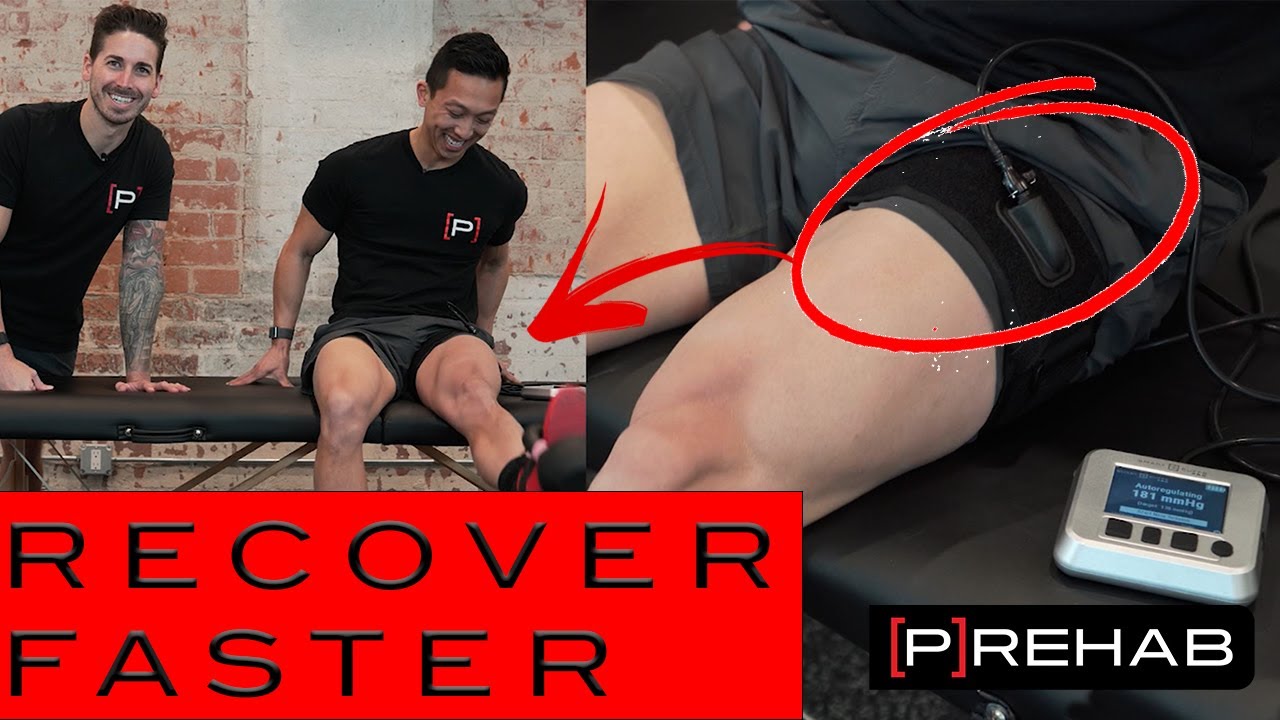
little bit less I'm like what's going what's going on here but but Blood Flow Restriction is essentially we're placing a cuff or a wrap but the proximal portion of a limb so we placed It at the top of the leg or the top of the arm um and you basically inflate the cuff to a induced partial restriction so blood flow is going into the limb but there's not a lot of blood flow going out of the limb um and when this is combined with low load exercise we're able to see pretty large changes in muscle
size and strength muscle growth is going to be comparable To higher load exercise strength maybe a little bit it will increase but a little bit less than that of highlight exercise um and you know there's been some other work on Blood Flow Restriction just by itself so just applying the cuff inflation deflation that that could have some effect but the the literature is a little bit weak and there's some evidence that combining it with with low intensity aerobic exercise so very slow Walking like 50 meters per minute so 1.8 miles per hour I think can
induce adaptations in some populations um so but basically it's just partial restriction of blood flow okay can I just clarify I said the walking with the it restricted blood flow is that going to have endurance type adaptations are you talking about the Strength ones you just said then yeah they were looking at their big adaptation was muscle size and strength and and that's in that particular protocol yeah there's been some people looked at changes in aerobic capacity I I'm not as confident um about some of some of that okay because when I was just looking
over this as I said before we came on out I don't know a whole lot about this but I know a bit more now I was assuming that if you're doing the uh the resistance exercise with the Blood Flow Restriction you'd be getting the resistance adaptations then if you're doing the you know the walking with the Restriction you'll be getting in the more the endurance type responses but you're saying saying irrespective almost of what what exercise you're doing as long as you're doing some exercise and reducing the blood flow you get sort of resistance training
type Adaptations I I think um there's evidence that suggests that there there certainly are papers that show that I am pretty skeptical um to be honest about it's going to produce changes similar to that what you're going to get with resistance exercise I think with certain populations if they could not lift weights but they could do some physical Activity that might be a time to use it um with some aerobic exercise and with the idea that maybe it could do some of these things uh but I I mean you know I I know that there's
papers that exist I'm not saying there's not I'm just from it's hard for me to think that a young person is going to walk very slowly on a treadmill and see muscle growth and strength I think it could happen in certain populations I just don't know how repeatable that Finding it actually is it does sound surprising doesn't it um okay so so all right so so can you explain we mentioned the Japanese maybe sorry I've forgotten his name if you can just explain that the person that you know you interacted with and how it sounds
like from my limited reading that the the Japanese were actually interested in this back in the 70s and and why and how they got interested in that yeah so uh Dr Ibis who uh I've learned a lot from um I continue to learn a lot from um he's become a very him and his wife become very close friends of of mine um but yeah I would say the it became popular from Japan um one of the guys I think who popularized it um was Sato um he's the one that came out with like the the
katsu um uh Blood Flow Restriction the katsu Kind of company and the katsu cuffs and I I I do think it's fair to give him credit for increasing the popularity of it um now of course you know you have people who would go well uh people have been applying blood blood pressure cuffs for a long time before then that's that that's true uh but what I'm referring to is with the applying the Cuffs as we do it with the goal of increasing muscle size and Strength I think he can be given credit for making it
at least popular I'm not saying he invented it um but he certainly made it very popular and yeah that came from Japan the first I think the first published paper uh on Blood Flow Restriction as we use it um as far as I know is 1998 was shinahara um so he published a paper showing that applying Blood Flow Restriction on one leg comparing it to the same exercise on the opposite leg you can see a greater Change in strength under the blood flow restricted limb so that was one of the first papers to to be
published on that but yeah following that I think it started to increase in popularity at least in the research in the 2000s like the late 2000s that's when I kind of got into it there were some people doing it before that as well but I think a lot of um other researchers outside of Japan were pretty skeptical of the claims Um and then I think they went into it and going okay there's there might be some to some of this um and I think there certainly seems like there is with resistance exercise so what were
they even thinking back there just just to me it just seems like the last thing I'd think of you know to try and reduce because it's a little bit it can be a little bit uncomfortable or whatever why were they even why were they even doing it you know so why do They even think of it you can read about his his story um I'm gonna call it a Legend um you can take that however you want you know but he Legend suggests that you know he was at like a Buddhist ceremony um and he
was kneeling it felt kind of that a little bit of numbness in his lower body that he said made him feel like sometimes what he felt like after a really heavy leg workout so he thought If he could reproduce some of that restriction using you know differing things maybe he could see some adaptation similar to when he was actually lifting heavier weights that's kind of the The Legend um that I think has been put forth um I mean most likely I'm just laughing because my I'm thinking it was a number of times I've been laying
funny in my Legos asleep is it going to get huge you know yeah Yeah but um that's interesting I'm not making fun of that story or anything I'm just I'm just thinking it's an interesting concept yeah yeah so then he started thinking can I reproduce that in some way and see what it is yeah and I think he was like uh the story is is that he was experimenting with different things uh one of the things he was doing didn't work very well I think he actually hurt himself um And then I think he may
have like a skiing accident and used Blood Flow Restriction to help him rehabilit to uh rehabilitate so but regardless of whatever the story is there's no doubt that he developed some cuffs that have been utilized in a lot of research and a lot of people have have done that concept so um but but since then there's been lots of other groups that have shown that okay so can we just clarify Um because you said you you're putting on uh pressure that it sounded like this I when I was reading about it people were talking about
how you're reducing the the flow into the area which sounds like you know arterial flow and they're also reducing the flow coming out but just so just before you I just kind of clarified a little bit so you know when people get their blood pressure taken you know you pump up the cuff to above the what's called systolic blood Pressure which is the hardest producing and then that stops all the flow into the army because you've gone above the arterial pressure which is like the heart's pressure and then you let it go and it starts
to come through and then you know right at the end you get to the diastolic pressure which is the lowest so anyway when you pump it up a lot you stop your blood getting in which is the arterial flow and then when it gets less you're still Going to have the you have the artery blood so you get the blood going and to the to the to the arm or the leg but you won't have it getting out uh and then once you've let the cuff right off it's getting in and out now it sounded
like you were saying you're keeping your arterial flow but you're reducing your venous flow which is taking it back to the heart is that right yeah we're reducing we're going to affect both Um but yeah what you're describing is basically how we've set the pressure right so we basically do something very similar we basically take blood pressure of the limb with the cuff that we're going to use so you can think of that almost as being the systolic pressure of the limb and the minimum pressure that it takes to completely include blood flow distal to
that cuff we turn that the arterial occlusion pressure so let's say it's a hundred then we would take a Percentage of that so we often use 40 we've we've gone as high as 80 or 90 so obviously eighty percent has a different arterial flow than 40 percent um and those might have differential effects on some of the adaptations not necessarily with muscle but maybe some of the vascular changes um but yeah that's how we set the pressure we make it relative to the lowest pressure uh needed to completely include blood flow so that way we
always Ensure that we have blood flow going into the limb okay so so if you're doing so people may be familiar with you know normal blood pressure is like 120 or 90. so so you know you pump it up to like 180 or whatever if you drop it and then 120 is is where it starts to get through so 120 would be your where you're including your arterial flow into the arm and then what do you say to that so if we were to assuming you were going To use that cuff right for exercise that's
very important because different Cups have different pressures that are needed to cease blood flow so whatever that cuff was if that was 120 we would take a percentage of that so for example 40 or 80 and that's what we would apply during exercise right so in the end well 40 and 80 are very different of course yeah so in the end you're wanting to have what Some arterial restriction on all or none just you're just trying to stop the blood getting slowing down some of the blood getting in or you're just trying to stop the
blood getting out sorry I'm just a bit slow on this no I think I think that's a good question I think I think we're trying to do both um I think some people think that all you need to do is just trap the Venus because then you get you're trapping all The things that are produced and that might have where some of the benefits are and that seems to be true um the reason why I'm still uncertain about the first part of the question is because there are some changes like limb blood flow right where
40 and 80 might produce different effects following repeated bouts of exercise so that would lead me to believe that there could be some differences on the Arterial side as well that way it's not just you know collapsing the vein it could be how you know impeding how much blood flow is getting in there um into the Cup itself right so you are trying to stop some arterials you're trying to stop some of the blood getting in but you then you're stopping all the blood getting out is that right yeah for the most part yes yeah
right and then it feels uncomfortable Yeah yeah I saw some some like um scales of different bands and everything and it's talking about how uncomfortable no this is comfortable this is a little bit uncomfortable is it is it mainly I can imagine it's mainly the pain of having the blood um either not getting in or not getting out that's causing the problems or both it's honestly more of the discomfort usually comes when it's combined with exercise Uh when we apply 40 and you're just you just apply it to the arm and you're just sitting there
it's not too bad honestly um but if you're doing that if you're doing some several contractions and then you're in the rest period where you have those metabolites that have been kind of pulled um yeah it can be discomforting for sure that's and and it seems to be there seems to be a pressure effect there so The discomfort seems to be greater with a higher pressure okay and when you're doing this exercise so just say you're doing some bicep curls or whatever and you're doing a relatively low load I want to talk about that some
more as well like you know what percent you do and things like that of the of their maximum um are you doing it like say include it and then you do like one set and then You let it off again is that what you do so then and then you put it back on again when you do the next set is that how you do it we usually maintain it throughout um you know there's been some work on the intermittent not a lot but I think I think there's some idea that maybe the maintaining it
that entire session might be important at least for that exercise so you would inflate it before you start Exercise right you do your sets you keep it on during the rest period and then once you finish that last set of exercises then you can deflate it wow but I thought I thought if you've stopped Venus return then the blood wouldn't have been able to get back the whole time um I but during the rest periods if you were to deflate it it would be getting out Right yeah so if you do deflate it yep okay
all right but you don't correct right all right so they're doing a set and the whole time the blood's just staying in there and it's not that's not horribly painful well I mean some of it's going to be pumped out like you know I I would imagine contractions going to be forcing some of it out but yeah a lot of it's Accumulated there and it is discomforting there's no question okay now what um what what percent uh so you're saying you know the whole point I guess is you're saying you can do low loads and
get a similar you said similar for hypertrophy and maybe a little bit less for strength yeah what sort of percentage are you doing of the 1rm so just so people know one RM yeah one maximum Max one repetition Max so how much you can do one red Bob yeah right So let's say you're the most you can lift is 100 pounds we would apply around 20 or 30 of that so 20 to 30 pounds you'd be lifting okay and oftentimes you know people will try they may give you goal repetitions maybe try to shoot for
30 in the first set followed by like three sets of 15. most people aren't going to be able to do that uh but you know something you can shoot forward you can do repetitions as many as you can do Uh one of the things that we're starting to do is take a percentage of what people can do to try to make it as sub maximal as possible um but yeah I think you're using about 20 to 30 of your max we typically do three to four sets of exercise rest around 30 seconds to a minute
in between each set okay now what I'm interested in is um obviously that's a lower so if you're doing that same absolute You know load um with normal blood flow then that's a lot easier than with the reduced blood flow but does it end up kind of similar like you know some people I've seen online and everything saying or why don't just train harder you know like why bother doing all that um do you get the same so obviously if you did the same 20 to 30 percent with Blood Flow Restriction versus none you'd Get
less adaptations without the Blood Flow Restriction but when you do the same sort of relative you know like so if you did writing a perceived exertion for example it's a lot it's matched so you know you do a higher load without the Restriction a lower load but it feels the same I know it's I know it's hard to compare because it's um it's gonna be a weird feeling yeah do you end up with the same adaptations do you think or I'll try and piece this Together so I think so if you were to do blood
flow shifted exercise right um you're gonna see changes in muscle size strength sometimes you'll see some vascular adaptations I think that's going to be dependent upon the pressure that's used right okay if you were to do the same repetitions right the same everything the same without Blood Flow Restriction you're probably not going to see you're Probably going to see less muscle size less muscle strength and maybe no change in the vascular adaptation so that would highlight that there's a treatment effect right yes now what if you did low loads as many repetitions as you could
right so you would do more because you're not under restriction what would that adaptation look like that's a good question um I think that Uh muscle size and strength would probably be pretty similar um as Blood Flow Restriction um I mean you're doing a lot more work but I think you could get the same adaptation the vascular changes I'm not sure um we have some data but you know the issue was is that we were training with extremely low intensity so 15 1rm where doing lots of repetitions with 15 1rm it Did not have the
same vascular adaptation as the highest bfr pressure so that would suggest that there could be something to The Blood Flow Restriction with for certain adaptations but I think for muscle size and strength yeah I think it's fair to say that if you were to do enough work it would be pretty comparable [Music] on some adaptations yeah and I guess some of the other some Of the rationale for doing it is um time efficiency right so you probably wouldn't be you'd say that's a tick for the Blood Flow Restriction because you'd have to do so many
reps you know without the blood flow to get the same response so I guess again I'm still trying to think uh the people that are going to be doing this I know some Elite athletes and things do it and I'm interested in how many but you know for rehabilitation for Example um if you've got an injured limb and and you don't want to be doing High weights is is that one of the rationales like what are the sorts of people that are doing these and why are they doing it yeah I think you know like
at Ole Miss for example in a lot of major universities at least in the United States you know the football programs in the United States American football is huge right so at so many of these Schools they're using Blood Flow Restriction for their Rehabilitation um so I think I think that is maybe the the biggest utility is okay to use it in those athletes for rehabilitation because you know they need to get back to the field and they need to get back to lifting heavy or whatever their normal training is as quickly as possible now
what about for the normal person do they um Do they have to use Blood Flow Restriction in order to see optimal adaptation no of course not um there are so many different ways to to see adaptation I view this as um a tool that someone can use in their toolbox a lot of times I think people use it because I know that you have Luis Burke on it may have been one of your first episodes and you know she talked about running shoes right do I and I think she talked about Does she really need
the running shoes for her performance no uh but it's something that she uses to keep her you know motivated to train um and it's something that's a little bit unique um and maybe it's something that they can push a little bit harder for um a while without having to do you know all those extra reps so I think there's lots of reasons why people choose to do it but I I think to your point If people don't want to they don't there's they're still going to see great adaptation that they're training really really hard with
exercise you don't have to do Blood Flow Restriction um but it's a it's a tool that you could use and if you're a real if you're rehabbing it might be a very valuable tool maybe if you're really healthy maybe it's less valuable but something you can still use that's how I would it's interesting About it yeah it's interesting because I some people may have seen I had a I broke my collarbone a few probably two months ago now and I had a line doing some interviews and things and you know when I did start going
back to the gym I had these I already had small biceps but one side was much smaller um you know I was like oh I've got to be careful but yeah that would be an example because you know I didn't want To be doing shrugs and things when I you know just broke my collarbone but um well you've probably still wouldn't do shrugs but you could do restricting the flow to the bicep and and do you know so yeah it makes sense in that regard what about um what about if you're training a lot and
doing a lot a lot of muscle damage and things and just working out really hard is that something people do as well or they think I want to pack in more Sort of uh intensity of my training but I don't want to do more sort of muscle damage so you know could they throw in a session a week where they they have the Flow Restriction so they're doing like low loads do people do that as well I think they do I I I'm under the The View that I think people and you know I have
a lot of opinions that are in the minority I'm aware but I I I really think that a lot of people are training way too much when Their goal is just muscle growth or strength um so I think you could use Blood Flow Restriction um in one of those sessions where it's like instead of doing my normal leg extension late girl um or hack squat with my normal heavy exercise I'm going to replace it with the lower load exercise with Blood Flow Restriction I think that's one way that it could be utilized well I I'm
I I don't know about I'm gonna do my normal workout and then I'm going to add even more um I think at some point I mean the muscle can only respond so much in a given training session so I think yeah you could be doing more of it are you getting more adaptation maybe but I think you're probably just delaying your recovery uh that's my perspective um but I do think it's that's one way That it could be used another way that people have used it is um if they have like a heavy day where
they're going into the gym like I'm prescribed to lift you know heavy and all these lifts but you know maybe I had a paper rejected or maybe work didn't go well or maybe I'm stressed about something and I don't have the mental capacity to lift heavy weights today hey maybe I'll lift light weights with Blood Flow Restriction get a lot of adaptation but not have to necessarily have that same mental focus that's required to lift like to do a 1rms or to lift 85 90 on your on a barbell squat requires a little bit more
mental effort okay so that might be a time to use it as well I wonder if people I was actually surprised when you said um you think people a lot of people trying too hard I I I can't help thinking when I go to the gym how many people how many Times I'm like wanting to get on a machine and they're just people sitting there on their phone I feel like most people don't do a whole lot but I guess you're talking about the professional athletes and things like that they that it's it's icing on
the cake yeah I agree I think yeah there are two different groups of people I think we're talking about I I think on one hand I think I agree with exactly what you're saying Um but typically the people who are listening to stuff like this are the people who are already training a substantial amount um so I think for those people I think replacing something they normally do might be the better option than just adding it at the end Perfect all right now how common is it so I know you mentioned some of the football
teams and things but um is it relatively common and is it common Amongst bodybuilders and power lifters and things like that you know yeah I think yeah I'd say so um I know that you know I've been to and uh discussions with like Barcelona Football Club Manchester United I know that they've have been applying it to certain athletes within their system um to see how they how they do it in Rehabilitation um it's definitely been used in the NBA the major leagues the NFL Um in the United States um powerlifters I think some of them
have used it I I think of it being used more probably in the bodybuilding Community um because you know they're interested in basically the muscle growth perspective um they don't have to worry about you know the maybe the lack of strength gain that they may get from that um but I think it's used by powerlifters And bodybuilders alike and I was thinking also when you said you don't have to do this to um to get the size you want or whatever obviously I'm assuming people like Arnold's I'm showing my age but Arnold Schwarzenegger and all
the sorts of people that came after that they wouldn't have been doing that but back then were they or doubt it um no I wouldn't think so um probably just doing extremely high volumes and eating lots of food Yeah I wonder as well is um as some people because you know this sometimes people are looking for a shortcut um you know with exercise and diet and you know what can I get away with some people do you think using it as a way of not having to train as hard to get the same adaptations so
they don't have to actually try as hard I don't know I mean if that was the case um and our goal is to get people to exercise and I think that would be great Um if that was one of their rationales for doing it I I would I would caution on the not training hard though that kind of statement because you know when you're training under Blood Flow Restriction or training with low loads um it's a different type of difficulty it's not the same mental effort of making sure everything's in place and you're really really
tired on the way down but I think when you're doing when you have a bunch of metabolites pulled and you're under discomfort and you're doing you know two more steps of exercise I think that's pretty that's training pretty hard uh but yeah maybe maybe they don't want to lift heavy weights and this is another way for them to do it or maybe they're getting older and they're feeling it in their joints a little bit more um and they want to do a little bit more Lower load exercise yeah that's that's the thing I I I
I guess I haven't done it so I don't know what it feels like so so it does hurt it's it's a what kind of pain is it is it a is it a pressure what sounds it kind of smells like I'm sort of blowing up you know like if you're not getting as much of in his return is it actually getting bigger there's a bit of a it'll swallow a little bit yeah yeah it'll be pumped Up I think I think it feels like you know when you're doing you feel kind of that burn when
you've been doing just one set all out that's kind of what it feels like um but it's kind of maintained um now it's one of the things that when you do it repeatedly you're you're perceived discomfort of that exercise does go down so when you when you get used to it it's it's not as discomforting as it was when You first started but it's still discomforting uh but it it's not so discomforting that you know we've had older adults do it older men and women um people in Rehabilitation you know have done it so it's
it's not out of the realm of things that people can handle but it it's more discomforting than doing the same exercise without the cuff on for sure it was actually it was actually making me think of when I'm describing muscle Biopsies I've had like 33 muscle biopsies and people say oh I really like and it's okay it's uncomfortable but it's not horrible and I just I was just thinking I'm getting the same Vibe almost that you know I'm making it sound terrible and you're saying no no you get used to it and it's not too
bad now just thinking about the mechanisms going on there so you're saying that when you you largely you're reducing some of the flow into the limb but you're largely Reproducing the preventing or reducing the flow out so as you said so why don't we talk about a little bit there what's going on um so you're trapping these metabolites and things do you want to just say what some of these metabolites are and why they're important and and maybe are they playing a role in the adaptations things like that yeah I would say that you know
a lot of it we don't know it's a lot of it's things That we think might be explaining um that increased recruitment but I think ultimately what we're trying to explain is how are we how are we activating these higher threshold motor units how are we recruiting these fast switch fibers right so the orderly recruitment you know the type ones are recruited first and then as it becomes more difficult you recruit more and more of those Fibers and as we said earlier it's thought that recruiting a lot of those is important for the overall growth
of the muscle so one of the ideas that was put forth is when you when a muscle contracts you're producing lots of metabolites right but the one that usually gets talked about is like hydrogen ions right and you're trapping those around the muscle now there are some suggestions and I thought This for a while that the point of those metabolites right in and of themselves like the hydrogen ions the lactate that that that by itself was anabolic that they might be able to turn on some signaling Cascades and you can find some papers that might
suggest that that's the case uh but I think what they could be doing is they could be fatiguing those cross Bridges so the cross Bridge we talked earlier about the actinomycin and that they have to Interact in order to produce Force so if they're not able to interact right for whatever reason and you have to recruit more of them to to keep lifting that weight then that might be the reason why we're getting those extra fibers activated but the the real uh answer is we're not really sure um what exactly that's doing one of the
other ideas for some of the growth is maybe the point of those metabolites or Maybe the the application of the restriction might actually make the cell the muscle cell itself swell and maybe that swelling of the cell itself might turn on some of those anabolic Pathways now that's true that's uh an idea that we propose like a 2011. uh I would love to believe that that's true um but I don't know that we know that's that's true Um that's just another idea of saying this is what looks like might be happening here um but I
I think those are all things that make sense but I to know first you know this is exactly what's happening this is exactly the reason I don't think we know that and I don't think we know that with regular exercise either to be honest yeah I remember think I remember that because I've done some creatine Supplementation studies and I know at one stage they were saying that creatine gets taken up in the muscle and you get more water and then that it's it's been shown in isolated cells that if you try and change the it's
called the osmolarity but anyway if you CH if you make the cell swell a little bit it stimulates protein synthesis so I know that is a bit of an idea there yeah but the other thing I just want to make sure people are clear on is um you know You're saying lactate and hydrogenine so so when you produce lactic acid it dissociates to a hydrogen ion which is the acidity and the lactate iron yeah and the idea is they're actually meant to be transported out disease lactate they're basically called um MCT forward Transporters that transport
the hydrogen ion and the lactate out and then it's removed um you know into the blood and and back to your heart hopefully but as you're Saying if you're reducing the the Venus um you know the the blood removing leaving the muscle then these things are going to build up and you're saying that maybe the hydrogen ions sounds like the hydrogenide itself could be affecting efficiency of the Cross Bridges and things and causing stimulation of proteins yeah and you you know you get a build over the inorganic phosphate as well Um and there's you know
you have some of those cell studies that is that when you dump interact phosphate that can reduce the the twitch Force as well so yeah it could be lots of things um I don't know that we know for certain but I think that's some of the ideas okay and do they actually know so you're saying so at these low loads without the Blood Flow Restriction you don't recruit as many fibers but you're saying with the same low load With the Blood Flow Restriction it's actually been shown you're recruiting more fibers isn't it is it yeah
and I think you know one of the ways that you know if you put one of the tools that was used for a long time that added a bunch of confusion is surface EMG and I'm projecting here because it was confusing for me as well because if you put service EMG on [Music] Um yeah yeah it's basically picking up the muscle action potentials right so you can think about it it's kind of the same concept as you more people or maybe more pop uh maybe more familiar with like EKG it's basically that that you put
it over the muscle and the more action potentials that get produced the higher the amplitude um is going to be um so I think people used to associate That directly with muscle Activation so the higher the amplitude the greater the muscle activation but when you train with low loads the Apple II can be lower but you can still be recruiting all those fibers so that's what is the reason why people are typically confused on this topic my myself included now what is the evidence that type 2 fibers are actually recruited with low loads in bfr
um One of the ways you can look at it is is glycogen depleted out of those fibers um so that's been demonstrated but the the better way is to see do the does type 1 and type 2 fibers when you take a biopsy are they do they change uh are they higher than they were before you started exercise and that data exists as well so we are seeing changes at the fiber level in both type 1 and type 2 which would indicate that those type 2 fibers were recruited uh because They they did grow oh
I see sorry you lost me for a minute a little bit there so yeah you do a biopsy and you can show that glycogen has been used in both slow and the fast so you know that the fast has been recruited more than if they weren't on Flow restricted but then also you you look at the cross-section barrier Etc of the fast and slow and you can see the fast has high purchase feed which indicates suggests that have been Activated correct yeah perfect all right um now have people done biopsies of of muscle and shown
that the you know the lack the the um hydrogen ions are hot so the P so the hydrogen ions are higher so therefore the pH is lower in the muscle when you do have this um Blood Flow Restriction during exercise yeah and the muscle itself I'm sure that exists a lot of that um has come from like the the venous Sampling when you're when you're pulling the blood in there [Music] um I'm thinking of the yasuda paper and Metabolism um some of the other work that's been looking on the in in the inside um is
kind of I forget what the technique is called but they they basically you know um I cannot think of it um it's almost like a MRI but they're looking at changes like in organic phosphate and things like that the shift in the Spectrum what is it now between the the uh the the phosphate the three phosphates or something I know what you mean you can see a shift that tells you the pH yeah so some of those Studies have have looked at us well so um yeah there have been biopsy studies Um usually those are
looking at changes in gene expression or changes in muscle protein synthesis I'm trying to see how that compares to you know repetition matched exercise I tell you when I was having a quick look at some of your papers you had this thing I'd never heard of before which makes sense I guess hypoalgesia is it so this idea that um healthy pain-free populations a single belt of aerobic or resistance training Typically leads to an exercise induced hypoalgesia you can feel free to correct how I'm saying that the generalized reduction in pain and pain sensitivity that occurs
during exercise and for some time afterwards I I never knew that yeah and we have some recent data that suggests that um we're able to identify a treatment effect with Blood Flow Restriction doing sub-maximal resistance exercise that shows that Um yeah bfr really is having this effect so it can happen with you know regular training as well but with Super Sub maximal exercise we are seeing a treatment effect with Blood Flow Restriction um how long does that effect last does it does it last for 10 hours I don't know you know there's some data from
Hughes and Patterson that suggests that it could last for up 24 hours uh I'm not I'm not sure Um now what is the utility of that and is that a good thing I think I think um you know it you got to be careful looking at it from a healthy person and then trying to apply it to people who are in have an injury because those two things could be quite a bit different but one of the ways that blood flow restriction has been used um is doing Blood Flow Restriction prior to some sort of
therapy session because with the idea that maybe you get the Hypologesic effect so you're less sensitive to pain and that maybe you can have a more quality therapy session that's one idea okay now I'm not a clinician uh I could see that being useful but I could also see maybe someone going hey pain might be there for a reason and so I think you'd have to as a clinician I think you'd have to you know take that and then you know use it with your clinical expertise of what you think but I think that's one
of one Of the ways that um you know people have discussed it we we thought about using it as can we change the pain threshold and then will people perform better maybe they'll do be able to do higher volume of exercise uh because they they're less sensitive to pain but we haven't found that um we find the hypologism effect but we don't find that that improved performance Um and it could be because there's lots of different ways to induce pain we're using pressure you could do ischemia you can do cold so and each one of
those might respond a little bit differently so so I know you said the Blood Flow Restriction increases this hypoallergesia effect but you're saying just during normal exercise so you go for a run or whatever after a while you're actually less susceptible to pain during that actual Exercise and then for up to several hours or you said 24 hours afterwards you actually have less pain if you do a pain stimulus test or something you're actually less susceptible pain from that previous exercise and even more so if it's blood flow restricted well it's on yeah I um
I'm sure that's the case with endurance exercise as well I know it's true with certain forms of resistance training at least acutely how long that Effect lasts I'm not sure uh but yeah I you know the basically the way that it's assessed is you're applying pressure with an algometer right so you're basically taking something and then pushing into someone's skin and it has a gauge on it that tells you how much force is being applied so we see that at Baseline and then following exercise now when you're doing stuff studies like that it's you know
especially with something like that you really need to Have a control which we've had because you you know you're inducing pain so you want to make sure that you know that that measurement itself um that it's exceeding any effect that that has so we've we've demonstrated that so I I I I was very skeptical of this I'll just be up front my one of my students proposed this idea in in seminar you know several years ago and when I first heard it I was like this is absolute nonsense Um I was like it's it's got
to be because you're just getting used to feeling that the the pressure of the algometer um but then when we did it we actually did see an effect and then we saw it again and again so I was like well okay maybe maybe there really is something here and and other groups have seen that and it is this thing it's like a well-known okay yeah yeah we don't we definitely Didn't come up with that for we've studied now with Blood Flow Restriction but other groups have done that for I think the maybe the first study
may have come out in the 80s what's interesting because then some like some competitive like swimming and things and even 100 meter final and things like that sometimes I had the semi-final in the morning and then the the final in the afternoon so maybe it's actually they've got a you know a bit of They can handle the pain a bit better because you know they back up and they they broke the break the record in the morning and they break it again in the afternoon it's like how the hell yeah that I'm not sure about
but maybe yeah yeah I'm thinking a bit about um sort of uh potential downsides any safety issues issues and things and I guess I wonder what happens when you're reducing flow I guess you try and increase your blood pressure so you try and like pump the Heart harder to try and get the blood through so I'm wondering do you get an increase in your blood pressure I guess acutely chronically in any any other safety issues I guess yeah um that's a great question I I always like to think about it like this and I always
like to discuss it by reminding everyone what are what are we doing when we apply this stimulus we're applying partial restriction for minutes not for hours right so it's a very acute Response so I think that that's important to keep in mind the other point is is that there's always going to be risk with exercise uh one of the questions that I'm interested in is how much does Blood Flow Restriction apply to that how much does that increase your risk for some of these things to occur now to follow up with that I think two
of the areas where people and I'll discuss The blood pressure thing as well but two of them the the big areas that people initially were concerned with was muscle damage and blood clots so does exercising with blood flow solution does that increase your risk for muscle damage because you know blood blood blood flow is good or you know if we're cutting it off is that going to damage the muscle um and then are we going to throw a Blood clot when we're exercising with Blood Flow Restriction yep so both of those have been investigated and
I think what I would say is is that both of them appear to be able to be if applied appropriately it does not appear to increase your peripheral muscle damage or blood clots right now most of that work has been completed in healthy individuals there has been some work in clinical populations that shows that it Can also be applied safely but the predominance of the work is in healthy people but keeping in mind with what we just discussed it does not appear to increase your risk for either one of those things which is a good
now one of the other variables that there's been a lot of discussion about this um he's written several papers on this Marty Springer from Michigan State um and his concern with Blood Flow Restriction is that when you apply this you're pulling these metabolites that you know you're getting an exaggerated blood pressure response to that same load of exercise right so when I do the when I exercise with Blood Flow Restriction and I do the same exercise without Blood Flow Restriction the blood pressure response is definitely higher um and what he was saying is that's Totally
fine he's like his point I think is there are certain populations who may be more sensitive to those pulling in metabolites maybe they have some sort of condition where instead of increasing 10 units they're very sensitive to polium metabolites and they may increase 20. so I think his point is is that there might be certain populations right that are hypersensitive to these metabolites and their blood pressure May respond Accordingly so I think that's fair uh I would say though that it's important to not only know that blood blood pressure is augmented acutely nobody disagrees with
that but I think the next question would be how high is it is it is it higher than high load exercise no and that's never the case so I think it is fair to say that um Blood pressure does acutely increase um higher than the same exercise without blood flow attrition but I think it's similar to or lower than that of high load exercise depending on how it's measured exactly right so so you know we were saying earlier to people that you know normal blood pressure is maybe 120 on 180 but when you're doing like
maximum squats and things like that you get up to something like 400 on 300 or something don't you for for the systolic 400 diastolic 300. you're never gonna I don't know if that's right just back me up on that or refute that but you're never going to get up to that with your with your blood flow restricted low load exercise surely yeah and that data is coming um from the indwelling catheters um so where you have like basically uh a pressure sensor in the artery um so to my knowledge you know there's been very few
follow-up studies that Have have looked at that we I don't know of much data I'm looking at that in blood flow filtration I actually think of maybe one I just can't remember what they found but yeah I don't think it's getting um to the same extent I'd be surprised and I I would be comfortable saying that it certainly isn't going above what we currently recommend people to do um now chronically Um there's just not a lot of data on Blood Flow Restriction and does it change resting blood pressure uh I was actually surprised by that
we did a meta-analysis where we had very few studies we've recently finished a pretty large study um where we didn't see a benefit of blood flow solution but we didn't see a negative effect so when we add that data to that meta-analysis the effect is basically zero so it doesn't appear to Be having a negative effect on blood pressure for most people um but that maybe there are certain people who you know you may want to be cautious of if you have a higher risk for blood clots it's not to say that that would happen
if you did blood flow solution but maybe you used more more caution or maybe you don't do it at all um if you um are worried about having an exaggerated response in blood pressure And that's something that's of concern yeah like we said earlier there's no reason why you have to do this uh maybe that's something where you use it very cautiously or you don't use it at all uh but I do think it's safe to say that it can be a when it's applied appropriately that it can be used safely yep yep hey one
thing I meant to say ages ago and I've forgotten I just don't want to forget again was you know you were saying how you don't have to have Large muscle to have uh strength I often think about when they have those like fly weight sort of uh weight lifters in the Olympics and things these people are like tiny you know like 60 kilograms or something and they don't look particularly muscular and they're lifting like 300 kilo I don't know what the numbers are but um that sort of fits with what you're saying right that there's
a lot of examples of people that don't have Huge muscles that can lift a lot of weight yeah and I I always try to bring the conversation back to uh I'm always what we're discussing is the changes in those variables right so you know someone might have a large muscle and that might be why they're very strong but maybe they've never lifted weights before so it can't be an effective exercise right we see this all the time in our research studies people who are big strong you never lifted weights ever Um so if you were
to correlate them their big muscle would be correlated with strength but what we're stating is when that person it lifts weights and they see a change in muscle size and they see a change in muscle strength are those two related um is it related to how much muscle mass that they gain from exercise that's kind of uh the point that I'm trying to convey I wonder that what would be interesting Is if you've got people that have that have got a whole lot of muscle mass but they've never lifted weights and they're strong what do
you think would happen with I don't know if people have done that but if you got them doing weight training well they get stronger and not really change their muscle mass do you think because they're already sort of big I don't know I'm just guessing yeah I think it would depend upon what training Program you use I think if they haven't done anything they um I think they would respond with probably both variables unless you were doing mostly just more strength focused um but yeah I don't I don't know for sure now the other thing
I saw was I have to say I saw some dodgy things online talking about um this article said Blood Flow Restriction is a little hype no it's not hype and Then they said all these things like how it improves your hair growth your skin growth all sorts of weird things and they were talking about flood of hormones so I guess there is some hype out there but the flood of hormones I guess so what does happen with um testosterone levels growth hormone Etc so I'm assuming you get greater increases after exercise when you do the
same Load With The Blood Flow Restriction or is it you know you're talking about what stimulates the hypertrophy endings yeah I think yeah the hormonal response tends to be greater especially growth hormone uh that was one of the ones that I think people thought for a long time was going to be an important mediator of exercise induced growth um you know I mean given the name I think it makes it's intuitive or it makes sense that it should be intuitive Growth hormone um and Blood Flow Restriction does augment that I I think it I I
don't think a lot of people now think that that's the reason why muscle grows okay um I think the exercise induced change in hormones uh may not be playing that big of a role with growth if any at all um so yeah I think you know several People have have kind of suggested that I think I think when we think about exercise induced growth one of the big things against uh some of the hormonal responses is that it's just such a local response uh that if I train my right arm my right arm gets bigger
and my left arm doesn't um so the the growth is is very specific to whatever's been trained um and whereas hormones would be you know very systemic Um so that's one of the lines of evidence against it you know if you inject growth hormone it doesn't induce uh myofibrillar protein synthesis and things like that so um it does occur but I don't know that that's the reason why muscle's getting bigger yeah so so you know there's all the signaling in the muscle M talk and all that sort of thing yeah which is activated so if
people looked at that I Guess that there's there's more protein synthesis um stimulation in the muscle if you do bio yeah I'm talking things like that okay yeah so they have looked at that um and yeah it appears to you know I think some people have have raised the question of is it working through something completely different than eyelid Exercise and I don't think it is um I think the the path to those fiber activation is very different so I think the recruitment strategies are certainly different but once the fibers are activated like if you
look at the gene expression response it's very similar to highlight exercise and then all the mtor signaling it's all what you would expect with normal exercise so I think from the fiber level and Beyond I think the signaling is very similar Um I think the the question of what I was saying earlier is what is the mechanism what's the local mechanism the the uh that explains kind of how muscle contraction activates all those things I think that remains to be seen uh what's that mechanal sensor look like uh but I think it's I think it's
very similar to what we're seeing with Blood Flow Restriction but I think the and just to clarify that the activation strategies What I mean by that is if I'm lifting low loads with Blood Flow Restriction I don't have to send a lot of brain signal initially to lift 20 pounds or 30 pounds if my Max is 100 right whereas in order to lift 80 if I'm not sending a large signal I'm not moving the 80 pounds so the activation strategies are different but once the fibers are activated I think it's very similar Okay so then
you get the same sort of injury muscular signal on there with the protein synthesis yeah M talk and things is that what you're saying yes okay and and when I had Stu Phillips on and a few other people we've talked about how you know measuring the the signals in the muscle don't always correlate with the actual endpoint so the protein synthesis and things like that have people looked at protein synthesis you know with incorporation of traces and things like That to um yeah yeah the house yeah it's improved over the repetition matched exercise the the
protein synthesis yeah sorry repetition so I'm always trying to work it out so again if you did the same exact exercise same absolute with um the Flow Restriction you'd get greater protein synthesis is that right yes yes yep okay cool uh oh what am I thinking about okay so Nick Nikki said can you reflect oh yeah Okay so I I've done pretty well not talking about endurance very much if we could just uh question from from Twitter by Nikki can you reflect on the applicability of Blood Flow Restriction exercise for endurance athletes in terms of
enhancing adaptations during low intensity exercise is it more beneficial than just doing more moderate or high intensity so the same sort of questions we've had but for endurance yeah Um I'll talk about this um because it sounds like they're they're talking about it from the human performance perspective right someone who's trying to perform as well as possible in some sort of competition um I think one of the ways and Richard Ferguson has talked about this uh he's got a really nice review paper on this topic um and he's done some really good work On this
too but uh I'm not as familiar with the endurance stuff as I told you but one of the ways that they have been trying to uh utilize Blood Flow Restriction is maybe during the rest period so if you're cycling right maybe you cycle you do your normal cycling exercises in the rest interval maybe then you apply restriction and then you deflate it and then you do the next set now I think the idea is is that they want to make sure That when you're cycling that that you are able to do high your high intensity
cycling that it doesn't impact your work performance or it doesn't impact how you approach your your Cadence or anything like that uh I think that's the idea because if you were to exercise with Blood Flow Restriction you're going to have to exercise at a lower ethnicity and I think people have concerns about doing a lot of that if they're trying to ultimately cycle as Fast as possible so I think the idea about during the rest period would be can we turn on some of like the angiogenic signaling um can we get some local adaptations that
could potentially facilitate adaptations in endurance performance so I think that's one of the ways that it's been utilized with varying success I think they are able to see some of these angiogenic markers I think they are able To see um some of these indices change that that would be beneficial but not necessarily A change in time trial performance and that could be a variety of reasons why um but yeah that's one of the ways that people who are interested in endurance performance but not interested in training with low speeds and have been trying to use
Blood Flow Restriction okay so just to clarify the angiogenesis That's production of new blood vessels so capillaries and things like that which you touched on earlier um I guess there it's almost like training at altitude isn't it because you're reducing it's like you can't train as hard right you know it's like you're reducing oxygen delivery or well it's different obviously at altitude you're breathing In lower lower oxygen well this is where people always say low percentage same percentage of oxygen but there's less oxygen per liter um so you're getting less oxygen delivery here your potentially
if you're reducing arterial flow you're getting less oxygen delivery but you mainly you're saying is the main stimulus is that buildup of metabolites in the muscle and you're thinking that turns on The capillarization Maybe um yeah it could it could I mean during exercise it could be just the the sheer stress of even the contractions or if maybe some of the disturbance and flow from the cuff itself um I think that might also be playing a role I I think that would be different than the endurance of uh in the rest period because you wouldn't
be necessarily having that contraction so that might just be from the reperfusion Of blood flow repeatedly so that could be another maybe signal [Music] um yeah that's a good question actually when you're talking about the it occurred to me there's a what's it called ischemia preconditioning or something where where you would reduce the flow say in the arm before like having heart surgery that you do this sort of ischemia Preconditioning thing I don't know if you've thought about that much and I can't quote think through it myself did you want to just talk about that
if you know a little bit about that and and how it might even almost fit into all this yeah so uh typically um you know people will apply what they call like remote ischemic preconditioning where they'll apply it on a limb or a leg or I guess arm or leg rather and Basically what they're doing is they're inflating the cuff to super super high pressures um for for a period of time and then they deflate it for a period of time then they reinflate and deflate so they'll do that for maybe up to 40 minutes
um and I think that there has been some literature that suggests that that could be beneficial for uh short-term exercise performance and things like that we've We've never been able to show that um we've we've dabbled in that a little bit it's it's it's a it's different than what we do because we're applying sub-inclusive pressures they're applying super exclusive pressure so and we're combining our exercise theirs is typically rest but I am interested in that idea uh but I do think that a lot of those authors will suggest that there could be something to that
Um inflation deflation that reperfusion um of blood might turn on some of these things and whether that's shear stress or whatever um but yeah I think a lot of them do think that that's beneficial yeah it's interesting because I remember I reviewed this grant years and years ago I have to look it up but they were talking about when you have uh like a heart attack you have heart surgery you Get this ischemia in the heart and then you get the reperfusion when the blood comes in and that can do damage and things so they
were doing the ischemia reperfusion in like an arm yeah and that was potentially protecting the heart when the heart got the ischemic reperfusions that was just kind of amazing concept yeah it's almost like uh it's almost like a hermetic effect right so you get used to a lower dose when you see a higher dose you're Better able to respond I think maybe part of the idea as well Yeah well yeah I actually look back at that now what about cost I I was actually amazed at I don't know if if it's you know there's an
article I was looking at they're talking about like seven thousand dollars for one band um and then like one to four thousand for four bands and then other ones were like 150 each and things like that what are what are people Really need to do this and how much do they need to spend and you know yeah I think it depends on you know one who are you applying it to and what is your basically your goals right the best case scenario would be you have a cuff that you can apply that you know what
the arterial occlusion pressure is so you know what pressure is going into the cuff and you can set the pressure relative right that's one of The the big things that we think might be important if nothing else from a safety perspective um so if that would be the best case scenario my guess would be is that I don't know the prices but I think you could probably find some of those that um are probably reasonably priced especially now with the lots and lots of them are coming out I don't know most of them if I'm
just being honest we use um the Hokinson device a long time ago We use the katsu but um I think the the big thing is is can you can you know what pressure is being applied right and then can you make it relative that's the best case scenario you know one of the other ways that you know the how I got into this initially in research my Master's is I had no I had no ability to to use any equipment right we had no no funding whatsoever so we were just using knee wraps and just
applying it to the arm Applying it to the leg so there is some research showing that that can be used with the obvious limitation that you have no idea what the pressure is right so one of the ways that we've kind of worked on is applying it as a percentage of your arm circumference so if you have a cuff where you can do that you apply it to this point every time maybe that's one way you can do it um but if if that's if if not if if knowing the precise pressure is not that
Big of a deal for you then that might be something for you to try uh but yeah I wouldn't think that you would need to spend seven thousand dollars um not to think yeah so is there some you know for people at home thinking okay well I've got this you know band that I've used for I don't know for for weight training or something I could wrap that around my arm or around my leg is there a bit of a an idea that they Could think how to do it I know you said ideally you'd
you know do um measure the pressure and then the percentage of it and that sort of stuff but is it sort of like oh if you do it and you know it's it's it's sort of like a seven out of ten after a minute if you're just sitting here or something you know is there some sort of rough cage yeah for example or something like that yeah we tried to we tried to use a a tightness scale right Um and that got recommended a lot um part of it mostly by us um but then we
started to really wonder if that was the best way to do it because um one of the things that we started to realize is that when we apply when we when we can use a device where we actually know what the pressure is and we have people tell us stop when it's a 7 out of 10 tightness One of the things that we realize is that the the wide range of pressures that's applied is astronomical right not only that within the given person so let's say you come in you're seven out of 10 is 40
arterial occlusion pressure today tomorrow what we found is your seven out of ten maybe ninety percent so it's like that's not even repeatable it's not even so yeah okay yeah so one of the things that you could do is if you put the cuff on the arm right and You know what the circumference of your limb is apply it 10 of that and then just pull and then tighten it off we have shown that that's kind of comparable to knowing the pressure um so that's one of the ways that you could do it would be
um sorry you did say that you did say that so yeah so if they were doing that so the measure circumference and then 10 less yeah so if it's whatever it is 25 To I don't know two and a half place so 22.5 yeah pull it pull up that or that many centimeters or do 15 yeah that'd be well that's a good that's a good um takeaway message okay now just thinking you mentioned flow uh share stress before so one of the things they say that exercise is actually good for reducing blood pressure is um
that it causes shear stress so each time the blood is pumping through uh the vessel um you're getting uh this what's called Shear stress and that can make the endothelium which is the cells on the inside of the blood vessels more responsive and more able to relax and then that reduces your blood pressure so share stress is a good thing in that regard but what I'm wondering is is can this can applying this pressure and everything can that actually cause endothelial dysfunction which is something that could happen in people with high blood pressure can you
Actually damage the vessel I'll tell you why I think about it I've had all sorts of weird I've had dingy fever and I've had but I also had a deep vein thrombosis once and they said it was like volca and I hadn't done a long whole flight or anything but it was literally um it was this thing called volkov's Triad or something they call it where I've done endothelial damage to my um to my uh vein here and then I was Writing to work with a backpack with my laptop in it and it was like
an hour each way and that pressure on there was actually doing damage and I ended up getting a defense thrombosis but anyway it worked out we think it was because a week before I'd done like a jacket jackhammering with this like massively heavy Jackhammer and I'm like a pen Pusher so apparently I'd done some endothelial damage then I'd put the pressure on There and I ended up being a DVD so what I'm getting at is um if you've got a little bit of endothetical damage or something maybe from the pressure and then you're doing all
this exercise or whatever can you end up I don't know if having problems and that sounds like the more I talk about it the more I think you're going to say we don't know because that's a very strange sort of example yeah I we have looked at this Um we've not seen I mean other people have looked at this as well they don't they don't see any long-term negative effects on in the any of the endothelial dysfunction some people have seen this acutely like you have an acute change but they were also using a very
high pressure with a very high load which is not what we actually prescribe uh we use low loads uh with with relatively low pressures um so yeah I don't think that Um we've ever seen anything negative with respect to endothelial function um whether you look at the macrovascular or the micro uh vascular one of the other things that I was kind of concerned about um is the venous compliance so are we doing something to the veins um and we looked at that a little bit as well and we did not see any negative effects of
that because I one of the Things I was thinking about was if we are applying Blood Flow Restriction and we're backing blood up into this into the into the muscle and we're and you're doing this repeatedly you know three times a week right for eight weeks does that do anything negative um yeah we looked at that and we didn't find that it did anything uh which was good Um a couple other people looked at this in some older populations and not found anything negative so um I think the available literature would suggest that it doesn't
appear to be damaging that or the endothelium nothing all right now we'll start to think about wrapping up is there any uh sex differences has anyone looked at differences in sex between the responses Um yeah we look at sex differences we never see any very rarely have we ever seen any difference um any difference in changes due to sex so you will sometimes see Baseline differences right meaning that men are going to require a higher pressure than women because they're typically bigger individuals right Um but in response to exercise do they change differently uh we've
never been able to to find that um and we include men and women and virtually every single study that we've done um and anytime we've done it we we never see it change differently so if they do I haven't seen it um well this that's pretty handy because then you can recruit you've got all this evidence previously so you can recruit Men and women and combine them and things like that potentially if you're using yeah and I think people I mean people can can criticize that and go you know I I'm gonna get myself in
trouble here but I I you know you have the criticism of of just pulling men and women together or even even the stuff where we separate them is like well did you control for the initial cycle and It's like we didn't um so unless there's just something about one phase where they're just not going to change at all I I just question how big of a deal that actually is um I do get it if your main goal is to look at sex differences um then it probably would make sense to make sure that you're
controlling for that um but I I feel like we have found ourselves in this really interesting place in exercise science literature where if you include men and women but you don't include measures of the menstrual cycle well then that's viewed as a negative right if you exclude women because you you don't have the um whatever the reason you're not going to control the initial cycle right well then that's also viewed as a negative right and then if you do try to account For the menstrual cycle then people have a question or criticism of that as
well so it's like it's impossible place to be um when reporting these sex differences um and I know you know um there's been some good papers that have come out recently uh Kirsty sells is a person who's I know done a lot of really good work on this but you know and and I get all of those things um but man we get actually absolutely Hammered in the review process when we either don't account for sex differences or when we do account for sex differences but we didn't do any of these things because it was
never our goal to begin with um but anyway um it is yeah we don't find any sex differences is that because we don't control the initial cycle maybe I don't know Okay well that's that's a can of worm so I've had actually Kirsty Elliott sale and Abby Smith Ryan on previously so people can have a look at that for those sort of issues that that the complications that come from that yeah exactly yeah right I went to me and Abby went to the same uh we've got our PhD at the same place oh cool okay
now effective age I often ask about but I think we've talked about that quite a lot seems like you're Getting you're not not seeing much of an increase in risk with them and they're getting similar responses is that better so I can't help just mentioning uh just some of the hype I saw online so there was this thing saying Improvement in skin hair and nails this is with Blood Flow Restriction improved brain function and cognitive abilities improve sleep heals injuries faster um and then they said it was aging Medicine anti-aging aging medicine so um hey
you can add that to your list it's uh some reasons to do it all right so I think we're actually what I wanted to do is is I saw other bits and pieces that you were doing that were interesting so what I quite often are like asking is you know what what other things are you working on that you were excited about because I can see you've got other other bits and pieces that You're doing that are interesting so um you had your strength changes and contralateral arms that's interesting because as you said earlier that
generally you exercise at one arm you don't expect any changes in the other arm what did you find there yeah I think uh the cross-education effect is something that we're interested in um I think what we ultimately found is that you Know the the the the higher the intensity you're trading so the closer you were to the test the greater the cross-education effect was at least in the dankle study um we've seen that now with some other studies as well um depending on the type of exercise but yeah the cross-education is just basically saying if
I train my right arm but not my left arm does my left arm get Stronger so we have found that um now that led us to another study that has some methodological kind of uh potential implications so in the resistance training in literature it's very common to use within subject models where maybe I use one intervention on my right arm and I'll do another intervention on the opposite arm one of the things we started to to Wonder is is it possible that if I were to do high load on this arm and low load on
this arm is it possible that the strength change I see in the low load arm is due to the high load arm from the opposite limb does that make sense yep so if that's more than a low load alone yeah yes if that was true then that's potentially very problematic if your big if your main goal is strength so we designed a study where we designed It to specifically investigate that to see if I train this one with a high load and this one with a low load is this arm influenced by the condition done
on the opposite side so we have we all we had to compare it to a group that was just doing low load exercise right and what we found was is that the strength change is 100 effective um which is not good because a lot of Studies in the resistorian literature have you used within subject models so I tell me again what do you mean 100 effective so what did you actually find with that we found that all the strength change in the low load arm was explained by the high load arm on the opposite side
of the body so we needed low load alone yeah you got certain strength yeah and then when you did low load with high load in the other arm you got what greater strength Greatest strength and how do you know all of it was that's the bit I missed I guess so we have a group that's training with a high load and low load right um and we have a group that's doing High load only and we have a group doing logo yes right so what we found is is that a group just doing low loads
didn't see a change in strength no right unless they were doing highlight on the other arm exactly Holy crap so um just worry yeah so now the the um the the implication is for strength now muscle growth um that appeared to to respond exactly what you would think it would so it only explained it only responded to the limb that was training so I don't think that Muscle growth is a problem comparing it across limbs um but if muscle strength is the main outcome I think that's something that is going to have to be considered
is that some of that strength change in the low line could be explained by the opposite limb so now we have some follow-ups going on to that to see well what would happen if we just do High load in both arms right um compared to just doing High load exercise uh what does that look like are we able to you know get some benefit from shrink training as well as the cross-education so I don't know I think uh but that that's some of the the cross-education work that we've been interested in we also recently finished
one on Blood Flow Restriction uh were we actually the only group that Saw across education was Blood Flow Restriction which was surprising to us um so we're trying to figure that out right now as well but um but yeah so I think the training one lib and seeing what's what's going on in the untrained limb is certainly something that we've been spending some time on and we'll be focusing on that in the future as well wow so I'm just thinking I've got these little biceps so if I'm going and doing 10 kilograms with one arm
and then I do like five with the other arm yeah so just say I've got my my dodgy um so I'm doing 10 with my good arm five at the other arm are you saying I could end up doing like seven with my other arm or something because I'm doing more with the yeah I think what we're I think what we're getting at is is it going to be Additive to another arm that's training with the high load so just to go back to the other example I think one of the missing pieces that was
confusing is we had a group that was just training with a high load right so their untrained arm was actually greater than that of a group training with a low load exactly I got that yep yeah okay that's that's amazing yeah because you said you didn't really get anything with the low load right we did See it but we did see it but we did see a cross-education um would you suggest that the group that was training with a Lolo with high loads was probably the cross-education effect yeah they needed the high load to get
anything out of the low load so the other thing is it fits with your thing about hypertrophy and strength not going hand in hand because you said the low load alone without the high load and the other arm got some hypertrophy but they Didn't get any increase in strength right so that fits with that wow that's really interesting okay another one you had was sex segregation and strength sports do equal sized muscles express the same levels of strength between Sexes so I guess that's the topic of one nowadays but um yeah yeah so yeah that
one came we read a paper that was suggesting that you know this is obviously a big Topic with how do we in in in competitions how do we separate out do we just do we do men and women right obviously this is a lot of this is coming from the the uh transgender discussion and Sport um some people have suggested that well maybe it's better to make it relative to something that might associate with performance for example maybe instead of saying men and women why don't we just say let's group a bunch of people who
Have the same muscle size or the same overall lean mass and they compete against each other um obviously there's going to be major issues with that because there's not a lot of overlap between men and women but in the overlap that we did see um we find that men were still outperforming women so if that if that was to be used that did not equalize out you would expect it to be 50 50 if that was going to account for Um who how many times did men versus women win um in a head-to-head competition so
that was kind of what we were looking at we also looked at some ipf data so some actual powerlifting data where we couldn't also ipf sorry International Palestine uh confederation so they're not they're drug tested we only looked at the World Championships but basically what we were interested in is if we were to take the lightest weight Class and then look at all the weight classes up to like heavyweight and women how many times would those heavier women how many times are they placed in the top five right and it didn't happen very often there
was a couple of anomalies right you have in the bench press you have Jennifer Thompson um who's one of the best bench pressers in the world you know she would have placed Um in some of the men's but she was also very she was also heavier um than the lightest weight class so we use that as kind of a real world example um now one of the criticisms of the paper um was getting at the lack of overlap between men and women right so what they were saying is is like um I think they were
eventually agreeing with our point that this is not a method That can be used but they were coming at it from a statistical perspective a methodology perspective so they were saying that if if men are on average larger than women right and we're getting the the lowest men with the highest women right what we're probably doing is we're getting those who are underestimated for men and overestimated for women because measurements aren't perfect right so when we pair them together Um that's probably not their quote unquote True Value which is which is true that's a that
was a a really valid point um but it it it's still justifies the point of the paper which is this is a method that was proposed if it's used does it make sense to use it and I think the answer is no so does that mean that uh men and women is the best way to classify it I don't know Um it doesn't seem like the way that we did it was better um certainly seemed like it probably was worse um but yeah I think people are trying to look and explore ideas about is there
something better than just doing men and women yes um and I don't know that there is but I could just be not very I I it could just be my lack of ability to think so so you're saying for the same sized Muscle yeah the males were producing more Force than the cows yeah that's interesting because because I mean there used to be I don't know I think I read this years and years ago but um per you know unit of muscle it's it's they they've generally said that the force is the same in males
and females yeah I think that that's largely driven by ratio data which I think can be can you can create some problems because they're basically what they're What what they're doing is they're just dividing these things out uh and saying oh that eliminates it on a group level but we want to know like at the individual level when we match them up uh who wins men or women right um so yeah I think I think this addresses the point that was raised by someone else but yeah I think ultimately matching them by muscle size doesn't
make sense uh from a performance To try and equalize outperformance okay yeah just the last uh other thing I saw you've done a lot of studies on is hand grip in children what's your what are you getting at there yeah so this goes back to this is a lot of work that um a lot of collaborative work with Dr Abe um he's doing him and um his wife actually are doing a tremendous amount of data collection longitudinally in Japan right now so We've looked at data in kids as young as five and then we measure
them like a year later right um so the the reason why we got interested in hand grip is if you look at some of the the inhanes data so like the population level data the United States and I know that lots of countries have this type of data what they find is is that hand grip exercise Associates with a lot of beneficial Health outcomes right now for me I'm Trying to always figure out what does that mean right does that just mean that there's something different about these people that um because when we do traditional
training hand grip doesn't really change um doesn't change very much so does that just mean is this like a biomarker that tells us that these people are just overall better um for long-term health so we wanted to look at see how these things track and During development so that's really where a lot of this is coming from so maybe during kids who are very plastic right there's lots of things we can do that maybe we can actually affect change in children that we can't do in adults because adults once we get to you know okay
25 30 our ability to change is there but it's limited maybe to what it is when we're kids so it's kind of interesting one of the things that we found is that even at the age of five There are already differences in hand grip between children um people who are there are differences in activity level and that those who are more active tend to be stronger than those who are less active already at the age of five um so you know that that's something that we're going to continue to do and try to learn more
about but we're interested in how does it change just in normal Development and then in Japan you know one of the sports that's really interesting and really utilized over there is kendo right where you have to hold a stick right when you do Kindle repeatedly do you have greater grip strength over time so that's one of the things we're looking at as well all right now one thing I like to ask people is um personal career challenges so you know I Think sometimes students watching and they think oh this everything this guy's done has worked
you know and he's got all these papers and you've got an age index of 72 on Google Scholar and uh how is it I think it was 70 yeah which is impressive um so everything you do works is that right have you had uh so do all your studies work and have you had some career challenges that you've had to deal with on the way yeah I think Um I think certainly I think challenges for sure right I think um no not every study works in the in the sense that not every study produces some
sort of benefit right we might think that it's going to have a change here but we don't see a change so in that sense it didn't work but I still think it's a valuable part of the literature so I think a lot of that's just kind of you know reframing kind of Your mindset um I think the challenge is you know there's there's always a lot of them I think at a university um I think when you're coming out of school like a lot of the universities in the United States is you get a lot
of experience doing research doing your PhD you also get oftentimes you get a lot of experience teaching which is what you're ultimately going to do at your next position so a lot of times I think you Can be deluded into thinking that well as soon as I get a job it's going to be basically the same thing I've been doing as a PhD student but it's not at all right the challenge is um are much different right because you have to think about your the students that you have right or are you developing them appropriately
are you guys making progress in the lab um how are you going to pay for those students right Um all the bureaucratic administrative stuff that you never had to deal with as a student is all things that I think is a challenge to people when they first move into Academia as a young professional and then just trying to navigate that and figure out you know how do I navigate this right and I think you know listening to people who have been there for a long time institutional Knowledge I think is not something I think a
lot of young professionals appreciate but I would encourage them to maybe look towards that because once it's gone you start to realize oh man we just lost a huge piece of this department um and we don't know how any of these things work so that's always a challenge but I think one of the big challenges for me uh I was very lucky at my PhD to have a Well-funded lab it just I don't know even where we got this money from but we had the ability to do whatever we wanted with resistance training um so
I wasn't really well prepared on how to go after and how to be competitive for external funding and at the University of Mississippi and a lot of other schools that is the something that you'd need to make sure that you can improve on so that was a big challenge for me and it's something I've Really worked towards to try and get better at and I work with my students on and we all work together to try to get this external funding because uh the name of the game in a lot of universities has changed it
used to be about the ideas that you had and the research that you were doing um it's really not about that at all now a lot of it's how much money are you bringing in uh how much funding are you applying for So that's a that's a challenge to try and go after that while also still doing things that you're you're enjoying um but I think that it's I mean it's doable and I think that lots of people do it but I think it's oh I think it's worth just realizing that you're not alone in
this whole process lots of people are kind of going through this this kind of same thing dealing with the same challenges but that's the biggest one for me Um but I I working with students and it's in and of itself is not a challenge for me that's the thing that I I enjoy that's the best part of the whole thing for me is working with graduate students in my lab that's the best part of every day every week for me so um and I've been lucky to get a whole lot of really good ones um
so hopefully that keeps that Continues right all right that's a good good advice there okay so just to wrap things up I'd like to finish up with some takeaway messages so you know we've talked about other bits and pieces but with the The Blood Flow Restriction in particular what what sort of takeaway messages would you like people to get from this yeah I think Blood Flow Restriction uh when it's applied appropriately so partial restriction for Short periods of time it could be very beneficial for increasing muscle size strength vascular adaptations um some other tissues as
well we didn't talk about but it can be it seems to be beneficial and comparable to high load exercise on certain things right not to the same extent with strength but it does improve strength um I think it's relatively safe um I think it doesn't appear to increase your risk over the same exercise without Blood Flow Restriction but I think it's one of those things where you don't have to do it right you can train normally I'm not no one in this conversation is telling you that is trying to sell Blood Flow Restriction to you
I I personally don't care who does it I think it's a it's a useful tool that could be used but you don't have to if you're really nervous um you know don't do it if you if you if you don't feel comfortable doing it but I think there's plenty of evidence that suggests that it can be uh applied safely and effectively to wide range uh populations so that'd be my key takeaways with uh Blood Flow Restriction I think with the other one I think that um I just want to highlight again that I'm talking about
the change in muscle size with the change in muscle strength I don't think there's any evidence to suggest that the change in muscle size Contributes to the change in muscle strength I don't think it exists it might exist in the future but it does not exist now we've been unable to find any explanation of muscle growth being a mechanism now maybe that's because of the time frames we've been looking at but that's going to be the same time frames as every other study so if you're looking at saying it matters in one year it matters
at two years you're not pulling from evidence right you might be You might be correct uh I'm just talking about what do we know based on the science right um and I think that's uh what I would say now if you're a coach right and you think muscle growth is important for your athlete then by all means do that right but what I'm saying is if you if you take anything from me you might be able to go maybe it's not quite as important as I thought so maybe I can devote less time to muscle
growth And either more time to strength training for maximal strength or recovery that's how they might be able to utilize that information um and then the last point so they need strength and power on their event rather than thinking we need to increase the size to get that strength and power you would say work on the strength of power per se exactly right yeah and the last point I'll make Um is and there are people who disagree with me on this but you know low load exercise with or without Blood Flow Restriction uh to failure
right it will produce changes in muscle size comparable to eyelid exercise there's no question in my mind right and I think a lot of people agree with that but when we talk about maximal strength right that is best Changed by lifting a heavy weight there's too many people going low Low exercises the same as lithium-highload exercise it's not not it's not even close when it comes to strength right with growth I'm on the same page with strength it's not it just isn't um and I think that there's plenty of evidence to suggests that that's the
case we've been just going back to specificity right like we said earlier exactly Exactly all right well good on you thanks a lot I've enjoyed this chat and I'll see you around sometime hopefully thanks again thanks for having me Glenn I really appreciate it I hope you enjoyed this podcast and please like subscribe pass it on to your friends and colleagues check out the other podcasts thanks again