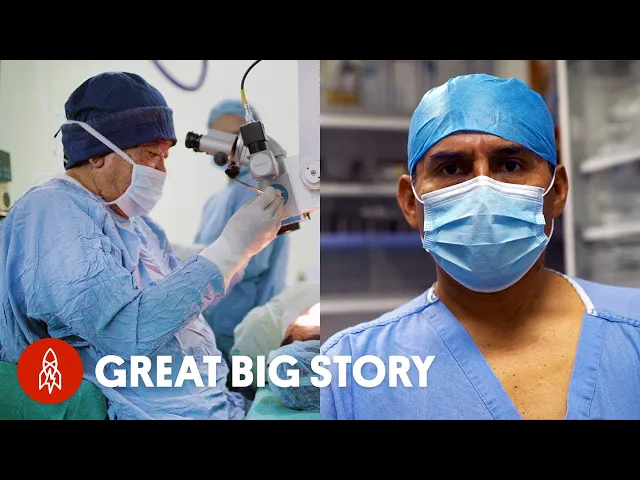
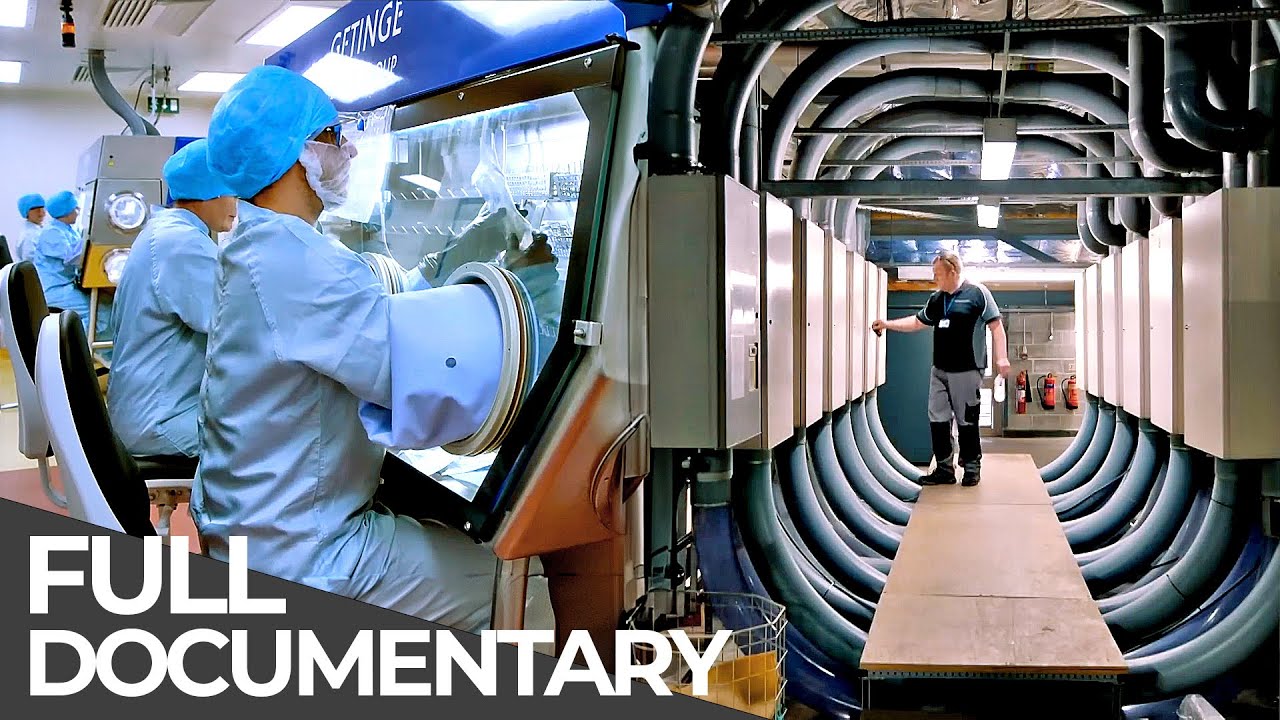
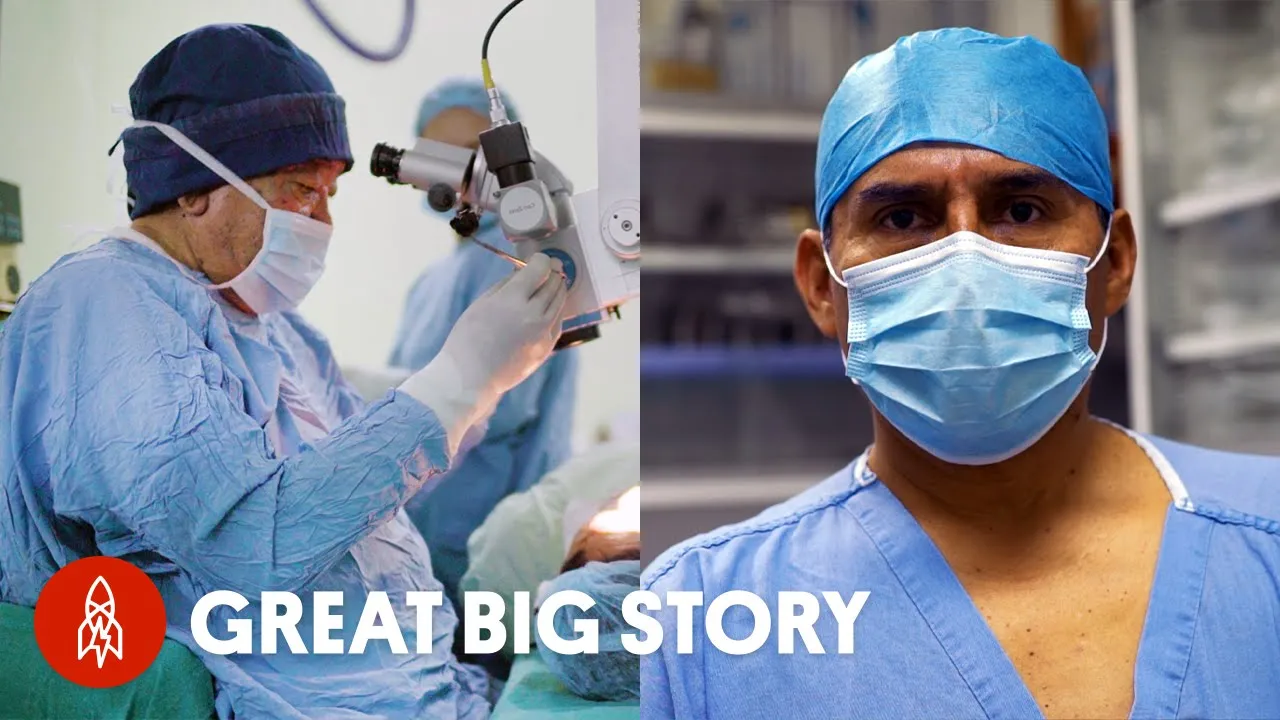
[Music] [Music] estamos algo say horas de la serda Mexico en Arjun de la montaña alta es una zona margin Arizona's own indigenous una zona que caresses de mucho recursos para para ser la cirugía en este tipo da spittle Desa de Traer medicina de bajo costo de facil accesso asana Relays con el apoyo de really add virtual [Music] dr. jose luis moso Vasquez is a surgeon at the pan american university in mexico city dr. Musa uses virtual reality as a painkiller in the operating room allowing him to use local anesthetic instead of putting his patients under
in polemic on all Sonesta sequestration Alice a teen en algunas ventajas andreas el alto cost he lost efectos collateral is what varus's he operates on patients with afflictions like cysts and tumors using VR to distract them Saeko loca knows Lente's bill to Alice say Houston de acuerdo Altima no su cabeza y sensient a el sistema de la bento al que se hace commune teléfono celular actual meant a yo Meerut planter to be IC o menos yeah just out there be no no speaka Tito's little pero no nowhere see tremendous emos el pollo a Mazda cincuenta
por ciento en estos fazenda a los pacientes less de una gran esperanza de sobre be de él está una mejor calidad de vida na me hace sentir una persona satisfaction sophistical Evita satisfy choco la Vida professional Mia permitido de Savoie d'Armes de volver la sociedad leukemia general [Music] [Music] we saw a few patients that were blind yesterday and now they are seen today I have personally done surgeries on more than hundred thirty thousand patients I grew up in a very small village northeast of Nepal I lost my brother and sisters to such simple diseases that
could have been cured by modern medicine and that's why it has become my mission in life to be a doctor for the poor there are so many people that I can help I am dr. sondik Drouet I am the North a neurologist and executive director of the tale instead of ophthalmology here in Nepal which caters to about 500,000 to 1 million people many Nepalese and rural villages are losing their eyesight 90% of the blind actually lives in this part of the world cataract as a disease can cloud your vision for life surgery is the only
treatment for cataract so I travel to remote villages all over my country since I know from my own experience people who are marginalized both because of economy and geography they are the ones who suffer a lot the longest that I have travels is working for other same days with the equipment's I have these big eye opening stables it's kind of a moment where I've seen hundreds of patients you are probably working for thirteen hours a day everybody thought I am crazy and mad we wanted to find surgical technique and a surgical system which was cost-effective
intraocular lenses which are a must part of modern cataract surgery used to cost 250 to 300 dollars we worked very very hard to bring down the cost of these lenses to less than three dollars by being able to manufacture in Nepal [Music] I've seen thousands for each patient story touches my heart and it is the expression of these patients who have been blind yesterday and suddenly they come out and see everything in front of them see people they loved and they changed the perspective to life in a fraction of second we have been seeing some
good effects of our work in the last ten years we have trained nearly 650 doctors and I believe that we can do this all over the world and I want to spend the rest of my life raising money for many of these hospitals this is why this medical intervention is so beautiful and so powerful my patients are my life and soul [Music] this is Myron hi Myron is an athlete I played a little football in college and I was a Rhodes Scholar and I played for the NFL and I have a master's degree in medical
anthropology and and I'm a neurosurgeon sheesh [Music] my first dream was to play professional football that's no question you I was very active as a young man and I knew that I was pretty good at it I guess it a fifth grade that's when I knew I wanted to pursue my second dream I read a book called gifted hands by Ben Carson who looked like me he was black who came from a similar socioeconomic background as me you know we'd have much money when we left the Bahamas that came to America and if more I
read about it the more I knew that once I was done playing football neurosurgery was gonna be the pathway in the second chapter of my life I was the number one ready to high school player in the country for football recruited by everyone eighty-three scholarship offers I always felt that football fed academics academics fed football Myron spent his college years playing football and shadowing doctors he graduated in two and a half years and was expected to be a first or second-round draft pick in the NFL with a multi-million dollar contract but he also had a
chance to study at Oxford as a Rhodes Scholar I ended up deciding to go to Oxford and saying no to the NFL and spent a year and a half over there I came back to the United States went into the draft and got drafted in the sixth round instead of the second or first made $70,000 instead of six million played for three years got out healthy felt good about my time there and frankly made enough money to pay for medical school I didn't have any lasting concussions and my hands were okay where I was able
to do surgeries in the operating room and so I left on my own volition started medical school and Here I am now since head injuries are common on the football field Myron works to impress the importance of avoiding concussions on young players but from Myron his days of tackling are behind him football was great for that season of my life but now this is it this is the pinnacle this is this is where I belong and I've told my parents several times over and over again they asked me my heart how do you feel what
you're doing now how do you feel I said mommy and daddy I feel like this is where I belong yes [Music] c-sections are the most common major surgery performed on human beings over basically one generation of moms the c-section rate has gone up at 500% problem is that your number one risk for having a c-section might be which hospital you go to that's what wakes me up in the morning Emile Shaw and obstetrician over at Beth Israel Deaconess Medical Center I'm an assistant professor at Harvard Medical School and I'm part of the core faculty here
at Ariadne labs a lot of people don't realize the full magnitude of the problem with c-sections basically in the late 1960s early 1970s he section rates are about 5% and then all of a sudden the c-section rate starts to skyrocket not just increase but skyrocket so before the end of the century the c-section rate goes up to one and three and we don't really have a great idea why this is happening as a surgeon myself it's hard to believe that one in three human beings needs a major surgery to be born but that's sort of
where we are right now and the consequences are significant so things like severe infection hemorrhage organ injury in addition to five billion dollars of spending annually we're talking something like 20,000 major avoidable surgical complications we're seeing from c-sections we didn't need to do in the first place I was really puzzled when I first started this job thinking like what can we possibly do about this epidemiologist economists policymakers lots of people have been thinking about this for a long time the clue for me was the fact that across the country c-section rates vary from 7 percent
to 70 percent the hospital if Hospital performance is so uneven and it's not explained by patient risk or patient preference that means the hospital itself could be a risk factor all of our projects right now are actually trying to figure out what makes hospital a different from hospital B what we've seen is that oftentimes the labor floors and kind of like a almost forgotten about corner and it just doesn't get a lot of investment or an attention from the hospital when we visit a bunch of different hospitals who realize that they're laid out very differently
and that might matter for example there are no rules for how many labor floor rooms you should have based on the amount of patients that you see the place that does twice as many deliveries also does way more c-sections the only way that's possible is if they're moving people through much faster almost all labor floors seem really tight on resources so the idea is when you have a huge surge in patient volume how do you flexibly recruit more rooms how do you bring in more staff you've reported c-section rates back to your doctors like I
have no idea what my c-section rate is until somebody tells me you know we're testing this hypothesis that management matters in childbirth just solely it matters in every other industry we're starting to parse differences among c-section so rather than looking at all c-sections altogether we're trying to just take the lowest risk women and focus on their c-section rate as soon as you start to do that two things happen insurance companies start to pay attention and then just women start to pay attention and I actually think this is an area where women's views on this are
probably going to be the driving force behind the change there's really no other moment in people's life where they're so discerning as when they become pregnant [Music]