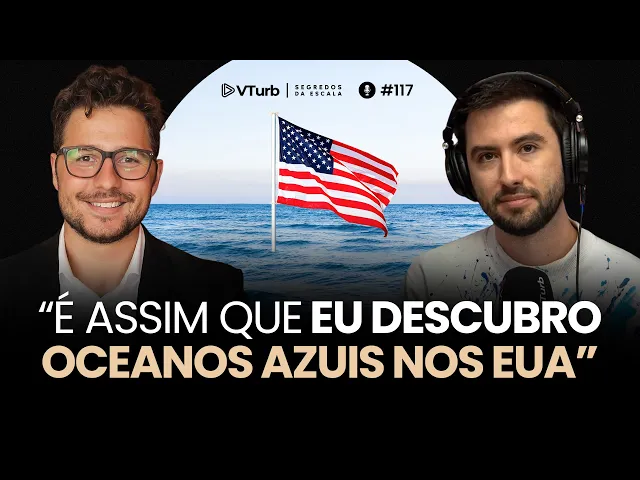
Do you still find like blue oceans in the US? >> I've done it twice this year, so yes, for sure. And we'll probably do it a couple more times next year. The only way to get better at writing copy is to write copy. Like fundamentally, you can read all the books, you can read all the greats, you can handw write copy, but the only way to actually get better is to create your Idea, put it out to the market, and is someone going to buy or not? I haven't read like really any books in probably
5 years now. I think that's worth a lot more than books >> in these beginnings when you're actually starting a brand and you're going to create the first VSSL. How do you approach that? I think being different is almost more important than being, let's say, better. 95% of the industry is very lazy. And it's like one of the Reasons that we can win is because our teams are not. So, it's not that hard to be different. Most DR guys feel like that too because they think it's really cool to scale to like [ __ ]
7 million a month, which it is cool to scale 7 million a month, except like you end up not accounting for the [ __ ] refunds or the way that your manufacturing is going. And so then your refunds shoot up to 30% or 40% and you just lost all your money anyways. So what's the point of Making 7 million if you make zero [ __ ] dollars? >> What do you think is the biggest challenge to actually build this this back end? >> I own a production company that I created to be an in-house team
and then it became something that does the VSSLs for basically every top opera on ClickBank, dig store by like across the board. Um, so I've seen a lot of this data. Everyone I know that's doing over Nine figures is doing [Music] for the longest border. So, first of all, for the few people that don't know you, I I know that you have like maybe 10 or eight podcasts on YouTube. I was watching some of them, but for for the few people that don't know you in the direct marketing community, could you please just tell us
a little bit of what have you done and What are you doing right now so people can, you know, know your qualifications, know what you're good at? >> Yeah. Um, do you want me to include any numbers or anything or you kind of just want a general background of >> Yeah, if you can include numbers, I think it's better, but I mean it's up it's up to you because at the end of the day it's your business so you decide. >> Yeah. Yeah. Yeah. Um, let's see. I started Probably like 2014 2015 when I was
still in university. I was studying biology at the time and I do have a biology degree so no marketing background or anything and I wanted to work online. Um I went to this event by a guy named Alex Morocco or people know him as Jason Capital and he taught me a bunch of skills in copywriting. Um how to build offers on the internet and so I went back and tried to build my first offer while still in school. Launched it And uh I made about eight bucks in the first year. So it was pretty pretty
bad launch. >> Yeah. And then I went back to the drawing board um started to understand more about copy and how important that is versus the actual product because I had focused on the product in the beginning um not the actual marketing piece. >> Yeah. >> And then I went back remarketed it um Did a couple grand in sales and then in my final year of uni um I launched a third product called anabolic stretching about a week before my finals and that thing just took off and started doing hundreds of sales a day um
pretty much overnight. Um >> awesome. you know, I was making more money than professors very fast. And that launched like my entire kind of internet marketing career. Um, I built that business up to seven figures, Multiple seven figures when I was 21. And then I sold it, uh, to a buddy of mine >> and I took some time off. Um, did some SEO stuff. Um, and then I did some freelance copy for a company named Traffic and Funnels, uh, where I helped scale their one of their offers inbound closer to about 2 million a month
for about 18 months straight, which was a really fun time. I learned a lot. I was writing I was the key guy behind all the Split tests, working alongside my buddy Rob. Um, and that's where I pretty much got a master class in cold traffic, um, and business building and acquisition and everything else across Facebook, YouTube, native, whatever. >> Got Um, but I eventually, yeah, I eventually got sick of working for people. Um, and, uh, decided to go my own way and launched a dog brand, um, a couple neutra offers, and now we have a
whole publishing company that does a Variety of health supplements, uh, crypto, manifestation, um, and then obviously the dog stuff. So, um, yeah. >> Yeah, it's pretty cool. You actually managed to to sell your company like the anabolic stretching Yeah. Yeah. A long long time ago. Wasn't for that much money, but it was cool and I was so done. I mean, I was 21 and the business was built around like 45 plus Year old men and I was like, I did not want to deal with these guys issues. So, I got it. Yeah. >> But that's
crazy because, you know, when you create an offer, most guys they just like do it for the cash flow. You could you actually managed to to exit the business. >> How how did you do that? Do you think that like you you built it to to sell from scratch like or >> how did you make >> I didn't know what I was doing, man. I just built it to make money. Um like I was a 20-year-old kid learning internet marketing without like any mentorship. It was just like this business is running. It's making money. All
right. So, I need like a Aweber account. All right. I got to write my own emails now. I got to code my own sales page. Like I took Photoshop class and coding class so I could learn how to code sales pages because this is before ClickFunnels. >> Yeah. and stuff. And so I was just learning on the fly. And then a guy I knew at the time, he had a similar brand in the over 40 men's space. And I was interested in leaving mine. He was interested in like acquiring my customers, my email list, my
products. And so it kind of lined up really nicely. Um like it was the easiest sale ever. It was just like he just wanted what I had and I didn't want anymore. So >> Got it. Got it. Most people that they They do business like this, they only do it for the cash flow. They never manage to actually sell anything. I had this company here in Brazil. It's like a skincare company because I I had like a Brazilian golden hippo. So I had like this copy team traffic team and lots of brands. >> Yeah. >>
But at the end of the day I didn't manage to sell any of them. Actually I I gave up. I decided to, you know, create Reurb. But that's really great that you you managed to do it. I mean you had a little bit of luck, right? Some guy found you >> for sure. >> Yeah. >> Yeah. And you say that when you you you went to this traffic and funnels company, you actually got like your black belt in cold traffic and that kind of stuff. >> For sure. >> And what do you think that they
taught you that made you like this black belt? And do you think there's a path that other people should >> follow to to actually be able to this black belt? >> Yeah, I don't think that it was then that taught me anything. I think it was just access to all the data that I was getting, right? Like we had an offer that was scaling, you know, multiple Million dollars a month and every split test was done by me. Every ad idea, like every single like piece of that funnel, upsells, down cells, cross sales. And so
I just got all that data 247. And so everything I wrote got tested and told me like, all right, this is the kind of writing that works and this is the kind of writing that doesn't work. This is the kind of video eding that works. This is the kind of sounds that work on the ads. Um, and it was just constant data For 18 months straight. And it was during the pandemic, right? All it was doing was working basically. Um, >> got it. Got it. >> And uh, yeah, that's where it was just data. And
for anyone like >> you know a similar path would just be to find a bigger company and get access to that data. >> Um, that's like the copyriter's best friend and media buyers too. But how do you think that people can prepare to Actually be in a position to like be hired or or you know have some kind of participation in this kind of company because >> if you're going to write some ads they actually need to work you know and otherwise you just lose the company money. >> Do you think that people should start
learning more traffic or learn learning copyrightiting or maybe both? I don't know. Um, I think copy and u, creativity is probably the strongest suits. And then you should just take a lowpaying job at one of these companies and kind of to work your way up. Um, or kind of I hate using the word weasel, but like find a way to put yourself in that position. Like it's the only way to do it. Um, even if that means like working for free or working for a low salary because that data is worth a thousand times more
than the 10 or 20k a month that they'd pay You out of the gate. like it it really is not it's worth so much more than that. Um yeah you just there's you learn so much >> but how do you think that they should approach let's say copy in the beginning because there is a path like for example you can study all the copyrightiting classics like >> I don't know Eugenie Schwarz these kind of guys >> or you can just like maybe buy an info Product today and study it >> there are some some really
cool info products I actually I think that you have one right I think it's called spells storytelling something like that yeah >> yeah yeah I I saw your sales page. So, what what do you think is the path like to achieve this mastery in in copyrightiting? >> Maybe the easiest one, >> man. It's it's tough now, right? Like I Don't I I still think it's going to work for a company even if it's a newbie. Like get a beginner copywriting job. Like the only way to get better at writing copy is to write copy. Like
fundamentally, >> you can read all the books, you can read all the greats, you can handw write copy, >> but the only way to actually get better is to create your idea, put it out to the market, and is someone going to buy Or not? That's the only way to get better. >> It's like if I went to go pick up girls, I can read about picking up girls or I can actually just go talk to them. >> Yeah, of course. >> Right. And figure out what they like and what they don't like. I mean,
>> the same. So, >> that's true. Yeah. Well, to be honest, there's one thing that I would recommend is if someone is Starting out in copy, which is to at least maybe just just see what's working now. Because if you see, hey, like the the copy that is working now is like a video sales letter that has like 7,000 words and has this kind of mechanism with this kind of lead. Maybe it's better to actually just do something that's maybe like that, you know, not copy it, but >> if they have like a 7,000 word
sales letter is working a lot, maybe your your Sales letter should have 7,000 words, too, you know, because it will save you a little bit of time. >> Yeah. Yeah. Yeah. Like you want to copy copy genius, right? You don't want to be inventing out of the gate. Um >> Yeah. You want to swipe as hard as you can without copying someone. Um if that makes sense. >> Yeah. Of course. You had that mastermind that's called supplement millionaire, right? So >> yes. >> Yeah. But most of people that were in this mastermind, they they were
probably really good at copy because at the end of the day, I think it was most there were a lot of direct response business there. Like this business, they they are like born from copy. If you don't have like a good copy to sell people to to to sell traffic audience, sorry. >> Yeah. No, actually the majority of the People in that mastermind weren't copyriters. Um they hired copyriters. most of them were owners in the businesses. Um, which I probably think is a fundamental problem because I agree with you that like >> the business is
built from copy, right? If you don't know how to write copy, it's hard to run >> I think you need one of the core skill sets if you're going to run like a big business. It's either copy or media Buying. >> Um, the third one is obviously operations, but operations doesn't kick in until you're you're past, you know, seven figures really. >> Yeah. Um, and so I think having I think as the owner of a company, I mean, I personally wouldn't run a company without having that skill set. And so my skill set is copy.
I do have a little bit of medbank skills, but very Little. Um, anyone that's running a company, I think I think if it's going to fail, it's because they don't have one of the two skill sets and they just hire it out thinking it's going to be that easy, which it's not. >> Yeah, it's definitely not. >> Yeah. Yeah. the best uh the best writers that I know like all work for themselves. Like why would you work for someone else? >> Yeah, of course. Yeah. After you see how Much money you can you can make
writing for yourself, then you actually go there. >> Yeah. >> Yeah. >> Yeah. I was a copyriter myself and I have I have a story almost just like yours. We're about the same age. So I also went to a start started working in a company. >> It was an info product that taught Brazilians how to learn English. >> And I learned a little bit from there. Yeah. But then after I decided to create my own stuff and it was by far the best decision that I ever made. >> Yeah. I mean there's um there's nothing
as like risky and rewarding as that. >> Yeah. Of course. Yeah. >> Yeah. >> And also like you built all these companies like these brands, right? Right. These neutral offers, these dog supplement brands. What do you think is the difference, man, that you that you like put it in your business to actually make it a brand and not just a cash flow business that like most people in the direct response they they do? >> There's a difference. >> Um, I think I probably balance an approach of focusing on direct response cash like cash day zero.
It's still the key driver of any business. like you need cash for the business because Profits give you op profits give you options at the end of the day. >> Um but then I go and build things that are on the back end or on the or a side piece of that business that don't necessarily equate to cash day zero and are often negative cash plays for at least a year, >> but they end up having like a halo effect or a holistic effect in the businesses. Um, so that a year later or two years
later, you have this very Stabilized business that is no longer rellyant on just one BSL working on cold traffic where you're praying to Facebook. They're not going to ban you that day, you know? >> Yeah. >> Um, >> but can you give me >> can you give me an example like >> Sure. Sure. Uh, with Pop Labs, I guess is a good example where we had VSLs that like they were doing okay. Um, and so we Took some of that cash. We about 70 grand of that and we built up all the organic social channels.
So, Instagram, Tik Tok, etc., you know, and we've probably made directly from those platforms like 500 bucks in a whole year and a half. >> Yeah. >> So, very like negative ROI you could say. But what you don't account for is the fact that like we've tested maybe 300 different videos and of all the Viral videos that went, we turned them into hooks and leads which smashed for us on the VL side which we never would have gotten without all that data. Um, and then furthermore, we have all these comments of people telling us what
they like, what they don't like, and we create products around what people are organically saying. Um, and so that's where the kind of the brand comes. And then when someone looks up our brand now, we have, you know, half a million Followers, right? Right? And so if they're on the fence about buying one of our products that are VSSL, they look us up on Instagram like, "Oh, these guys are like kind of legit. Maybe I will invest in them." And then they go to Amazon, we have like 300 reviews, 500 reviews, like, "Oh, these guys
are really legit." So, um, that's probably like the the good example that comes to mind right now. >> And do you think that I I mean, do you know if there's some process that people can just study online to actually create the these brands? Because I mean in copyrightiting we have like the RNBC course, we have your course, the spellbound course, we have all all these processes that you can just buy, learn and then implement in your company. >> I don't know if there's one like for brand building or something that you could easily put
in your direct response Business and actually create like a more long-term business. >> There will be when I make one, but not right now. It won't be like a year and a half or two years. Yeah. Yeah. It'll be like called direct response exits after we exit some of these brands. Um, but no, I think brand building is a little bit of a you kind of just figure it out. I I don't know. I'm not always the best teacher, man. I kind of just do things Like a magician and I don't know how I do
them. Like to be honest, I can figure them out later in hindsight. >> Yeah. >> But I often sometimes I'm not the best teacher because >> like I I built the brand because I built the brand. I don't really know how to explain. I just did it. I just figured it out. It's just like, you know, something I did, which is a horrible way to tell people on a podcast what to do. Like, and I totally recognize that. I apologize. >> How can I do it, man? Just do it. >> Yeah. You just just [
__ ] figure it out. Like, >> yeah. At the end of the day, that's entrepreneurship, right? Entrepreneurship is just solving problems and then figuring out how to do stuff. >> Yeah. Like, >> for example. >> Yeah. Go ahead. Yeah. >> There's a book called Overdeliver by Brian Curts. I the the sub sub headlines is >> how to play the long game in the direct response industry or something like that, right? >> So that's a great start for people that want to to actually build a brand. I'm not the best guy to be honest. I think
that I like I built one brand. It was like a you know, City Beauty by Golden Hippo. >> Yeah, >> it was just like that but here in Brazil like almost the same colors, everything. And then the second brand that I built is this one, the VTO brand. This I think it's a nice brand. People here in Brazil, they like it a lot. >> Yeah. Yeah. >> But I actually I have no idea, man, what I did. I think that the the mindset was just right. >> Yeah. It's like like treat people how they they
want how you wanted to be treated. Maybe. I don't know. >> Yeah. >> You want to like build a brand that you would buy from. I guess it's like you know in the dog space like I saw a variety of brands. I'm like all right like what would I do here? for example, like Pup Labs does zero SMS marketing, right? And I know it's a great cash play, but I [ __ ] hate when someone Texts me like offers and so I won't do it in my brand. >> Yeah. >> And like that's how I'm
building my brand. Doesn't necessarily mean it's right or wrong. And like you could argue that it's probably wrong from a profit standpoint. Like [ __ ] it. It's my brand. I can do whatever I want. You know, >> you just build it. >> Yeah. >> People say that at the end of the day, The business is like the it has the same personality as the founder. So if you don't like it, your business will probably not do it. And that's okay. That that's one business. >> Other people like it, so they will do it. But
you will do things your way. So that's like your unique mechanism too, like your way of operating. >> So that's cool. And also like when you start out, right, you you're Basically yourself just writing copy and then you can create like the first maybe BSL or the first >> direct marketing campaign, the first acquisition uh framework to to get people to buy your stuff. And after you start to scaling, you start to hire more people. But like in this in this beginnings when you're actually starting a brand and you're going to create the first VSSL,
how do you approach that, man? What's like the first step that you Do when when you think, oh, let I'm going to create like a new let's say a collagen brand or a skin a skincare brand. >> Sure. >> How do you approach this like creativity process to to actually create the sales message? Yeah, I would probably say I kind of just start with the question was just like how can I be different at every single level of a sales process? So >> from the product level, from the marketing level, from the backend level, from
the front-end phrasing brand, from my spokesperson, like how can I be just a little bit different than everyone else in the market? Um, if not just like positioned a little bit better. Um, whether that's like increased pricing, whether my doctor is famous, whether my collagen has five types of collagen instead of four or three, whether it has a new type of collagen, or maybe it has Like a unique ingredient that no one else has has seen before because I renamed it something in my marketing book. >> Um, I think being different is almost more important
than being, let's say, better >> in the market. Like, because people, for example, my mom loves cooking, right? and she'll buy tons of cookbooks so there's no competition. Like my mom's going to buy cookbook from person A, B, CD, DD, E. She has like 30 cookbooks from 30 different people. You know, those people might see each other's competitors, but my mom is the customer and she's bought from everyone. But then the supplements are the same, man. Like someone who's buying weight loss pill for me is going to buy from 10 of other of my friends
who own weight loss brands, you know? Um, so there's no competition. It's just how am I different? How can I rent that customer For, you know, the six months or 12 months or whatever and then he'll move on to the next brand? Obviously the goal is like with the branding plays is to keep them in your ecosystem and it becomes a bit different than direct response right I don't want them going to other competitors and that's where it becomes like product innovation where you have a hero funnel and you have other supporting funnels where it's
like you look at your competitors what They're selling and you just basically knock them off and make better mousetraps and so when someone tries to go buy a competitor you just offer them a better mousetrap. >> Yeah. Yeah. Got it. Yeah. The first thing that you do is actually to try to be different and you think that being different is better than being better. That's really interesting. >> Yeah. So, yeah. But, but actually like let's say that you think okay so I can Be different in this kind of ways. >> What's the second step that
you do? you actually start writing like for example the mechanism or you actually do something else? >> No, I'll probably look at all the competitors in the market and see how they're marketing um seeing what's working for them. Ad spy tools, VSSLs. >> Um >> do you recommend any tool specifically that you use often? >> No, just like Adspire or go to the Facebook libraries and just look at the ads, click through the funnels. um >> being connected to like kind of people who are running media is probably more important than any of the spy
tools. Um and getting them to give you some like data they probably shouldn't give. That's probably like the the kind of hack there. >> Can you give me of that? Like what kind of data can someone give you that is Actually like gamechanging or something? >> CPM, CPCs, refund rates, CTRs, which you would never get from ads buy tools. You just get kind of the adfunnel data. >> Yeah. AOVs, ROAZ. um you know, stuff that is a little more intimate to the business. Um but I know most affiliates will share a lot of that data
if you ask them nicely or you get them drunk enough. So like >> um but yeah, man, I looking at competitors, seeing what they're doing, You know, once you're different, you look at competitors. All right, so this is how they're marketing. How can I market in a slightly different angle? Like how can I pivot from this? If this one's scaling really hard, why is it scaling really hard? What is the product modality like? Is it a pill? Is it a powder? Is it a dropper? Right? Does that make a difference? Are they using a doctor?
Are they not using a doctor? Um how long is the script? Is it 30 Minutes, 40 minutes, an hour? Are they running in feed? How many upsells? Like just like like just a ridiculously, let's call it autistic analysis of competitor funnels. >> Of course. Yeah. >> Yeah. Yeah. >> That makes total sense. Yeah. You need to know what's working, right? Otherwise, you may you may be like reinventing the wheel if you don't do this process. So, yeah, that's pretty Logical. >> Here's where it kind of interesting though is that like some of the offers I've
launched are in brand new spaces, right? And so, there's there's a risk and reward there where like I can't go analyze a competitor's funnel, but that means like it's it could be a blue sea, right? It could just be an open sea where there's so many there's so many customers waiting for me to create a VSSL. The risk obviously is that I'm wrong and there's actually no customers in that market and I create a VSSL. I do all this effort. So, but I personally like taking that risk because it's paid off a lot. Um, but
sometimes it takes a long time. I mean, Pup Labs took three years to turn around uh before we became profitable. Like three full years of really working at it. Um, >> that's great. >> And even then, if I and if I launched it Now, it wouldn't do as well because the dog market is way more saturated than it was in 2021, >> right? So, there's some timing elements there. Um, but other niches that I've launched in in the health space, human space, I've just looked at either competitors that there's like one VSSL in the space
or big markets on Amazon that seem to don't have a VSSL and I'll just go create one for them. And I would I would say it Works like 70% of the time, but when it works, it [ __ ] works. It does like eight figures pretty much and everyone's happy. >> Awesome. >> So, yeah, >> being different, you know. Yeah, that that's really interesting. >> I usually I I usually recommend that people just go to like markets that are really big, >> for example, health and beauty, like Make money, relationships, that kind of stuff >>
because then we know that the market actually exists. So if if your campaign doesn't work, then we actually know that the problem is the VSSL. >> Yeah. >> Then it's like easier to to correct because you just do another one. But then you you said that maybe you like going to these other niches that maybe you can >> find a blue ocean. >> Do you think that that exists like in the US, man? Because I mean you're like the leader of the west and >> Yeah. >> you you you have like the >> the market
that is very very sophisticated. So >> do you still find like blue oceans in the US? >> I've done it twice this year. So yes, for sure. for sure it is. I'm not going To say what niche is, but um I've done it twice this year that have done really well and we'll probably do it a couple more times next year. Um it takes a little bit of a skill set to kind of identify the right niches to know where to look. Um and then obviously it takes cash to take the risk, right? You're risking
VSSL production, copy time, tech team time, and then probably like 15 or 20 grand in ad spend because it's a new pixel and everything. >> Yeah. >> And then it still might not work, right? So, but I'm pretty good at picking winners, I would say. >> Got it. >> Yeah. Yeah. >> So, do you that that's crazy that this thing that you just said because here in Brazil we can test offers like so much with way less money than you do, you know. >> Yeah. >> Yeah. We usually just create a VSSL for example using
AI >> something like really cheap. Then if it works only after it works then we actually hire all these guys to like increase the production value that kind of stuff. >> Do you think it's best to just like straight out the gate just like hire the the doctor and that kind of stuff and then just just create like the best Version that you can make straight out of the gate or do you think it's better to to test like cheaply and then see if it works than after you invest? >> I'm of mixed opinions like
I agree with both strategies. The issue with test cheaply is that you don't know that the VSSL lost because of shitty production or shittier copyrighting or whatever. >> Yeah. >> Like that's the main issue is like what if you did put your best foot forward, Would it have won, right? With this with a very like 90% similar script. On the other hand, like you taking a cash risk obviously like pumping out a VSSL that costs, you know, 20 grand to produce and everything. So, but if I'm a betting man, which I am, like I'll I'll
bet on losing money every day because like eventually I'm going I'm going to win. Eventually I'm going to win. And the winners out this, you know, they smash the lose out of the 80. Even if I lose, >> let's say I lose like 20 VSSLs in a row. And so that's 400k at 20 a pop. The 21st VSSL if it wins like and it does eight figures, like it all that gets erased overnight. >> Yeah, it makes sense. Yeah, that's true. >> Yeah. So, when you're starting out, I would say test cheaply and then as
soon as you can test like full production aggressively, I would just try to go that route. Um, when you're willing to lose cash, >> how much is the conversion increase from like a cheap version and a full production version? >> It could be double like it can be more than that sometimes, especially on like the backend AOV. And then obviously brand building effects of it, right? if you're looking to build brands like starting off with a really shitty VSSL and if it scales the thing too is like if it starts to scale out of the
gate a lot of people get lazy and they're just Like [ __ ] it I'm just going to leave it as is but then you miss out on so much opportunity right like because I get it I mean like you can leave a poweroint yourself if it's smashing why would you touch it >> it's printing you money >> but then you miss out on like that backend brand build which then can be worth like you know up to like six to 10x multiple in the long run if you do it right So I, you know,
it depends. I It's everyone's different, you know, their philosophy, but if you have some cash, I always recommend like testing as high production as best as you can out of the gate. Um, it's a better swing. It's a better swing at bat, you know, like you can take a thousand swingers for batting average like 1% you'll hit one ball or 10 balls out of the park or 100 balls actually out of park. But if your batting average is like 30 or 40% because your Production like you you have to do less VSLs. Yeah. >> Um
you just have to be willing to lose that money. Like that's really what it comes down to. Like as long as you're okay with basically burning 25 grand to 40 grand a pop of ESL at least the way that we do it then you know all the power to you. >> Yeah. Do you think that people in the US they are like doing more of these high Productions or they are still doing more cheap VSSLs? From what I see here in Brazil, I mean I study a lot the US market and I don't see a
lot of high production VSSLs in the US. I don't know if I'm looking at it wrong, but what's your opinion on that? >> Yeah. Well, we have a I own a production company that I created to be an in-house team and then it became something that does the VSSLs for basically every top offer on ClickBank, dig store, buy like Across the board. Um, so I've seen a lot of his data. >> Everyone I know that's doing over nine figures is doing high production from the get-go. Every single person and multiple eight figures. >> Um, like
anyone doing like heavy numbers is always doing high production, full mobile conversion, u maximum editing, really cool leads. Um, So I I swing to the you know the area that like you should you should take the Best swing you can with whatever resources you have. >> Yeah. In Brazil too the guys that are really scaling even in Brazil and also in the US the Brazilians they are all doing high production >> but that's actually this like became a trend this year because last year people were not doing that. I don't know if if like Brazilian
I mean Brazil of course is behind the US when it comes to direct marketing >> but that's like a trend happening right now. So there are a lot of gurus here in Brazil talking about it. Most people that come here to the podcast they also talk about it. >> But when I when I look into the US I only see the biggest players doing this. I don't see like the normal ClickBank guy doing this. >> Yeah. But the normal ClickBank guy isn't making that much money. Yeah, >> fundamentally like so what do you want To
be like? >> Of course. Yeah. One advantage that we have here in Brazil is that these guys that we need to hire to actually make the production good >> they're very cheap. So >> yeah. >> Yeah. So so like a lot of people here they they are doing this because they they can just buy some you know some expert some doctor or something >> pay like around $300 and then they do It. That's that's cool. Yeah, >> that's nice, man. And when you're creating like this first offer, we already know that like you like to
go high production because you think that it increases your chances of like making it and having like a good offer. >> What's like the the package that you sent out for like the your your media buyer to test? Like you do just one VSSL and four ads or maybe >> one VSSL with two leads and 10 ads. >> Yeah. We'll do a variety of leads, ads, and closes. Those probably like the big three >> closes, too. >> Yeah. And closes can have a massive difference on like a VSSL. And most businesses won't test closes um
almost ever. >> Yeah. >> So, uh yeah, >> that's something that people are are Also doing this year here in Brazil. In 2023, they were only testing leads, but today 2024, >> most people are testing closes. What's the difference that you saw between like closes in in a VSSL in conversion terms? >> I've gotten VSSLs to go up like 60 60 AOV like 60 bucks in AOV. >> Yeah, like monster monster lifts. Um so >> 60 60% AOV or conversions. >> Not 60 not 60% 60 bucks AOV. >> Ah 60. >> So yeah, which is
even more monstrous than 60%. Um >> yeah, >> so with limited effects on the conversion rate because it's about tweaking so that more pe more six bottle buyers are in the funnel versus one or three bottle buyers in the case of supplements. >> Um so but you know we have five or six Closes that we'll test across mo most offers and then four or five leads. Uh I know some of the bigger companies uh than us they do about nine figures like they'll do like 25 leads to test which is pretty wild. >> Oh my
god. Um, yeah. And so we're not at that level yet. Um, and I'm not even sure that's necessary, but maybe it is. I don't know >> what people are doing here in Brazil. There is a concept actually when I Interviewed Stefan George here in the podcast. >> He talked about something called the micro lid, which is like the lead before the lid. So people they heard this podcast and they then they started to test this micro lid a lot >> because if you actually study the lid you'll see that like there's some some sort of
hook then there's like a a little explanation of the the mechanism >> and then like the bottom part of the lid At least here in Brazil it's almost all the same you know for for your for one VSSL >> so they just test like the top half of the lid. Mhm. >> Do you think that's like a good strategy to use to, you know, just just change the S part and put it out there, see if it works? >> Yeah, we've tested like a variety of like 10-second leads to see if it makes a difference
and and it can make a Difference for sure. >> Yeah. >> Yeah. >> Yeah. >> What do you think like is the the other levers that you should test when you're just starting out in this VSSL? You we already have the lead, the close. >> Yeah. Probably uh price points is really big. Yeah. >> And offer structure. So the classic in supplements is obviously 136. Um you Could test 246, you could test 236, you could test 369, 3612. Uh buy one get one, buy two get two, buy four get two free. Um so a variety
of different offer structures um is probably really important to test to because some people depending on the niche respond to different things. Like if you're selling 136 and then I sell one buy two get one buy four get two it's the same [ __ ] thing. I'm still selling six bottles just positioned Differently. >> Yeah. >> Right. >> Yeah. >> So yeah >> there's a website called Benga Bullets. It's by a guy named Benga. Maybe you know it right. >> And there he says which offer converts more 50% half or buy one get one. and
he always says that buy one get one free converts better than he he always Recommend this kind of offer >> but I never tested it though I yeah here in Brazil I always went with 136 >> and that's it >> on the upsell though that then I tested a lot I saw that like you can offer more expensive stuff for people that buy six six bottles than the one that buy Yep. >> Do we have any good framework for the upsell? >> Uh framework Pretty classic framework and it just comes down to testing price points,
free gifts, bonuses, and then risk reversal, right? Like people just don't want to get [ __ ] over. So, as long as you have a good kind of guarantee um and you get creative with it, like you'll be fine. >> Yeah. But like for example that there's one there there's one guy here in the US his name is Justin Goff he was a partner of Stefan actually >> and then he has this framework called the Olaf method. I don't know if you have heard of it. >> Yep. Yeah. I've seen it like >> Yeah. >>
Yeah. Yeah. Um I mean sure it can work. I just hate using frameworks because then you're like everybody else, right? Like why do I want to be like every other marketer on the planet? then I'm just like another [ __ ] clone of the Marketing machine which I don't want to be and it's why we can do what we do is by being different. So >> got it. So every new every campaign you just approach like from scratch brand new. >> Yeah. >> You don't use any frameworks. Oh man, that that's that's pretty hard because
then you you actually need to you know figure out everything. >> Oh you need to you need to think and Work hard in your business. What a concept. You have to work >> Yeah, that's true, man. That's crazy. Yeah, >> that's nice. >> The ind the industry of direct response marketing is fundamentally lazy and it's like one of the reasons that we can win is because our teams are not really like we're not lazy and most I would say 95% of the mining industry is very lazy. Um so it's not that hard to be different.
>> Yeah. If you if you if you do everything from scratch, then I mean >> you probably when you when you get something right, it will probably scale a lot because it will be very original. >> But you actually you lose speed because then you have to actually think everything all the times. If you have like frameworks and SOPs and that kind of stuff, then you can just like repeat it. It's easier to scale to. Here in Brazil, what people usually do is that They have like the R&B process in a in a Trello or
notion or ClickUp and then they just hire like 10 copyriters and then say, "Hey, >> yeah, >> here put put a lot of mechanisms here." Then just keep writing VSSL for all these mechanisms >> and then see what works and yeah, they actually they make some money doing that. Some people are doing like two three million USD per month. >> Yeah, it's it's a good approach. It's just a different approach. Um, yeah, it's a it's a shotgun approach where you just launch as much as you can as fast as you can, hoping that nothing breaks
and you don't get caught by the FDA or FBI or [ __ ] whatever >> FTC. Um, versus a more like it's a sniper versus a shotgun. Like we take a sniper approach. Like we take our time, we put out like killer offers with great Products with great marketing, high production, good doctors, very different in the market. And so our odds of winning are usually a lot higher. And then our odds of getting ripped off are harder because no one is willing to do all that. Like our moat around our product is way stronger. You
know what I mean by moat? >> Of course. Yeah. That's a concept by Warren Buffett. >> Yeah. >> That's why I built because I have a bigger moat here. >> Exactly. So, and when you have a moat, then all of a sudden you have this brand, right? Because if someone can't copy you easily, then you have something that has value and that someone else is probably willing to buy at some point. Um, and that's kind of where this whole like I guess automatic brand building comes to my mind is just like the more different You
are, as long as you can hit the numbers, like someone will be willing to buy you out. >> Yeah, exactly. >> Y, >> that was actually what what I was going to say because if you like take this approach to create a lot of stuff, >> it's hard to actually build a brand because then you just don't have the time >> or maybe you create something that is Not congruent with your brand. But if you actually use the sniper approach, then I think it's better if you're going to to actually build a brand and you
know develop like this fan base of clients. >> Yeah, for sure. >> Yeah. So after we let's say that we use this approach, this sniper approach, then we have the high production, then we test some leads, we test closes because we see that these are the levers That actually like can increase conversions. >> Then we put it out there like it works. We start making some money. What's the other system that you're going to implement in this business? Like you start to >> I don't know you create the back end of the business or you
like build like a sales team to actually call people and offer more or how do you do it? What do you do actually? Yeah, like once we have winning VS set, we'll just build all the backend or sideend pieces, you know, Amazon, Shopify, Tik Tok, Instagram, uh, phone sales teams, email teams, um, like all the pieces that support the business, right? And so then it doesn't become like this one trip pony where you have like a business on top of one leg. It's like four or five legs holding the business up. So if you lose
a leg, let's say like Facebook goes down, the Business is still going strong, >> right? And then it becomes stable. becomes something that makes money 24/7 365 is less affected by seasonal changes like holidays, elections. Um, you have a real you have a real thing going, right? And that's very valuable in today's world because most people are like in and out within 12 months uh if not like eight months, right? There's nothing wrong with that. >> Yeah. >> Why don't you go to another traffic source? For example, if you're running Facebook, why don't you go
to >> Yeah, we do. Yep. Yeah, we do that too. It's just part of like I guess the side version of you know we'll start in Facebook or YouTube and then we'll go you know Tik Tok, Tik Tok shop, applovin, Instagram, Snapchat, um native obviously and then a variety of other traffic like there's a lot of different pieces. I've Got like a whole whiteboard of [ __ ] over there which I'm not going to show but um yeah >> that's cool. >> Yeah, here in Brazil what people do is it depends on the business, right?
if they're building something like long-term, they actually build the back end after >> because they want to like get all these clients from the VSSL and actually treat them right. >> So, they buy more. >> But if they don't care about that, if they just want to make money, then they start to just go to other traffic sources because they don't want people to to copy them. >> So, they want to scale as fast as possible because then otherwise if they don't do that, people just copy them, rip them off. Well, that's where it becomes
like different, right? So, if you have a Different product, it's harder to copy, right? >> I mean, it's hard, but if you're making like millions, people will figure it out. You know, they will call the industry, see, hey, this guy is doing this kind of products. Can Can you do it? >> At least here in Brazil, shit's crazy. You know, people will copy you. Either you like it or not. >> Yeah. Yeah. The human Yeah. Yeah. Supplements can be tough sometimes, but you know, that's what lawyers are for. I'd send out my fair share of
Cynthesis letters. >> But does does it actually work in the US? Like if someone copies you, can you actually take it down or they will just make money and that's it? >> There's other ways to like take people down than just cease and desist letters, right? There's having good connections at Facebook or Instagram and getting Account shut down. Like there is DMCA removals. There is IP infringement cases. Like there's so many ways to go after people if they're kind of [ __ ] with you. >> Um >> because the thing is it's not that hard
to be like you don't need to rip someone off. You just need to like be a little bit different and then all of a sudden all those cases go away, >> right? But people are so lazy that they Just [ __ ] rip someone >> and then it's just easy for, you know, the team of lawyers or the connects just to slap them, right? But that's because people are lazy. Like fundamentally, like no one should really copy each other. like you can copy them 95% but that 5% difference is kind of what makes a VSSL
scale or not anyways. So >> Got it. Got it. >> Yeah. >> And hey to you it must be even easier to Take it down since you are like descending from Alexander the Great. So >> true. >> Got some warrior blood. >> Yeah. People never mess with you. >> Sorry. >> Yeah. >> That's nice man. Super happy. So like what do you think is the biggest challenge to actually build this this back end to you know make people buy More to actually build a brand because like grow a social media I think it's easy you
just like Yeah, you just like put money there like post stuff then that I mean maybe it's not that efficient but it will grow right. You just post stuff people will follow it >> but the back end I see it has like it has like a performance side just like the VSSL >> it actually needs needs to work properly. Each email that you send needs To work. >> Do you have some tips on that on how to build like a a a quality backend that actually works actually make money? I think it comes down to
like proper team building is really what it is. It's finding the right partners and people to put in the right places. Um, and then executing each piece at the right time. Um, there's a lot of businesses that go broke between these stages of like doing really well and then trying to expand Because they [ __ ] up their cash flow or they make too many bad decisions or they can't manage all the pieces in the business um because they're just in like some version of survival mode. uh they never kind of grew out of that
because a lot of businesses once they become cash positive are no longer surviving, right? They're no longer in the startup phase. They're in like the thriving mode. But trying to hammer a variety of different traffic channels um and then building Out like phone sales, teams, etc. all at once will [ __ ] up your business even more because you're not operating at the way the business needs, which is you need it to thrive, which means one thing at a time, piece by piece. like you're building a real thing, not um let's just [ __ ]
rush and try to just explode the business and try to go to 10 20 million a month overnight. I've seen so many businesses like hundreds of businesses fail like that. And most DR guys fail Like that too because they think it's really cool to scale to like [ __ ] 7 million a month, which it is cool to scale 7 million a month except like you end up not accounting for the [ __ ] refunds or the way that your manufacturing is going. And so then your refunds shoot up to 30% or 40% and you
just lost all your money anyways. So what's the point of making seven million if you make zero [ __ ] dollars? >> Yeah. >> You know, so >> for sure. >> Yeah. It's like a chess game, right? Like you want to move pieces ahead of time so you can set up like the checkmate. Like you don't want to just try to rush the king right away. It's too obvious. >> Yeah. Got it. >> Well, the like we we can talk about all this marketing stuff, the the the the copy media buying >> and this is
very important in the direct response business. I mean it's the foundation of it but from from what you're saying right now it looks like you actually know like a lot more you actually know like business like this skill of actually creating a company strategy >> where have you learned that man do do you do you think that there's some book that people can can read to actually be business savvy you know >> or or >> there's no there's there's no there's no book bro it's just like like anything else you have to go try to
build businesses and [ __ ] up enough times until you figure it out. Um, it's like trial by fire. It's just >> it's the only way to learn. You write you learn copy by writing copy and getting data. Like you learn to pick up girls by going to pickup girl or trying to pick up girls. You learn [ __ ] Dancing not by watching dance videos or reading how to dance. Like you have to [ __ ] dance like hours and hours and hours on end. You have to [ __ ] up and like miss
a step, miss a turn, fall down, get back up and try again. And like business is no different. Like you just have to launch business after business. Bro, the amount of businesses I have [ __ ] up on in the past 11 years is absurd. It is truly like I could give you pages of businesses that I tried to Launch and failed or launched and failed or lost $50, $100,000. >> Nice. >> Um, but it those weren't losses. They were just lessons at the end of the day and then they all applied to every new
business. And then eventually you you only need to be right [ __ ] one time, man, to make a [ __ ] ton of money in business. Like one time. >> Yeah, that's it. >> If you get it right one time, it pays For all the others, right? Of course. >> Times 10. Yeah. So, I just You gotta try. >> So, so at the end of the day, you don't consume a lot of content. Like you don't read a lot of books. You just do it and that's it. >> Yeah. I haven't read like really
any books in probably five years now. Um, in terms of business books, um, you know, I've had good mentors which have been great obviously. Um, guys I pay for Consulting. I think that's worth a lot more than books. Um, and then I've had really good like psychiatrists and therapists around like the mental game of money and strategy and handling all these moving pieces at once. Like that's helped a lot too. I think the mental game is more important than anything else. Um, because as companies expand it's, uh, it gets really challenging both emotionally and logically.
Um, and you want to keep like your brain clean. >> Can you give me an example, man? like you you were like in in in a high stress like and then you some therapist like fixed you up or or how did >> Sure. Yeah. Like great example is one of the companies we had again is all about this surviving and thriving where we got to a point in the business where we're making great money and I was just trying to hammer a variety of different things where building new teams, bringing on new partners, expanding to
different Traffic platforms all at once because I was like in this mode of survival because fundamentally entrepreneurs are built out of survival and so I was just operating that 247 365 even though the business was [ __ ] fine but then it started the business started to go like this because it couldn't handle everything at once and I couldn't handle it. It also didn't need it. And so I worked with like my coach on it. Um and it was just a reframe around surviving Versus thriving and went back and pulled some pieces and and we
moved a lot slower for a couple months, but then we we took off again. >> Um instead of trying to go as fast as we can, we ended up going faster and farther as a result, >> but that's by not operating at that level of survival anymore, which is not necessary. >> Got it. child. >> But this coach that's like a life coach Or it's like a psychologist or or who's this? >> He's a psychologist. He's he's one of his name is Brent Charlton. He's one of like the biggest um like coaches in the world
around some of this stuff. He's coached some of the biggest direct response guys. Wall Street, Shopify, Starbucks, like celebrities. Um yeah, the best the best investment I ever made for sure. >> That's awesome. Who? Sorry, what's the Name again? You said Ben Shelton. Brent. Brent Charlton. >> Ah, Brent. Okay, got it. >> Yeah, >> I think I heard of him. >> Yeah, he was go he was Justin Goff's coach for a while. Um, he worked with a bunch of other guys, too. >> Yeah. >> So, you think that's a very like good investment for people
to do to hire someone like this so they can be more Clear. >> As soon as they can afford it, I would definitely look into like fixing up what's going on like in your head, in your heart. >> Yeah. because it'll [ __ ] up your business and your life as well. >> Yeah, of course. >> What do you mean by afforded? Like how how expensive is like a professional like this? >> Um, it could be as low as like 10 to 20 Grand a year or as high as like multiple six figures a year.
Really depends on the level of talent and like where you're at and what's going on and upside and Yeah. Do you think one that charges you 20k a year is still worth it? Or maybe I don't know. So some people may like have a fear of giving your information to someone that is not qualified and then they maybe will give you some bad advice and that kind of stuff. >> There are a lot of out there, right? >> Yeah. like there's a lot of um people who are not qualified to do what you do and
that's kind of where the kind of referral system comes in and where like your own picking of the right person needs to come in, right? Like I just wouldn't give my money to anyone. Um like I gave my money to a guy who was already proven in both a variety of niches who had like a track record and Who worked with people that I actually knew personally, >> you know. Got it. >> Um so >> yeah, >> that's awesome, man. >> Yeah. I'll actually I'll look into him. Maybe I'll hire him if he will have
me. I don't know. >> Yeah, there's a I think he's got a year or two long waiting list, but um >> Oh my god, he's great. >> Yeah. >> Yeah. So, probably not hire him soon. >> That's cool. Well, I really like this approach of you to just do it and then see what works, see what sticks, and then keep doing it. >> You you know something crazy. You have 30, right? 30 years old. >> Yeah. just turned 30. >> Yeah, that's nice. Yeah, me too, man. So, >> yeah, this new phase of life. >>
Well, one thing that is really really cool is that I'm actually quite the opposite of you. I had like almost the same story. I started my business in college, too. I did mechanical engineering. >> But man, I just love books. I read so many books, man. from >> I used to I used to like I I'll give you that like I was I read for years probably until I was about 26 or 27. >> Yeah. >> And then I just like one day I was like I'm just gonna and I still read from time to
time but yeah I just like let me just do it and learn from there and hire mentors and consultants who will teach me more in an hour than I will read from spending 10 hours reading a book likely. Books have their value, especially like some timeless pieces, but especially in the beginning, right? But as soon as you can afford to pay for consulting and mentorship, like you'll get way more out Of that than to do a lot of books. You move way faster. >> Yeah. Yeah, I agree, man. I think I should do more of
that to hire more consultants. I think it's really really good. >> Sometimes we don't know what what to do to actually grow the business, like what level should we pull. So that's >> that's why I like books because then like I have this new input that they can just give me >> and then I can just take this input and see hey this makes sense or not and then maybe maybe apply it. But when I actually I have like an specific problem that I need to solve then sometimes I go to this consulting like uh
way >> because then I can actually solve the problem faster. So I think it's better. So, Peter, I have one more thing to ask you. You have this blog, right? Beat Your Control. And it's a really cool blog. I actually guys, if you're Listening to this here in Brazil, you should check out his blog. Beatyoucontrol.com. Is that Is that right? The name website. >> Yeah. Yeah. >> It will appear here on the screen and it will also be in the description. So, you can go there. >> Why did you created this blog? >> So, I
created it years ago because we running so much split test at traffic funnels. I wanted like a diary of what The [ __ ] we were doing. That's really why I created it ultimately. Like that's the real reason. And then some people started loving the blog. And then I put out this post one year that was ranking copyriters and it ranked like 30 of the best copyriters and the whole blog blew up and I became this person that like had authority all of a sudden. And then it became this kind of split test resource. And
that's what it's been mostly. It's just for me to go back Because I learn a lot from my own blog. So, I go back to my 2021 resources and retest all those things that I [ __ ] forgot about, but they're just sitting there and so it's just a it's like my own split test bible, I guess, and I just it's public and people can, you know, I don't share everything on there, but I share a good amount. >> No, it's awesome. It's a really good resource. >> And one crazy thing is that before we
Met in Budapest, I actually saw your blog before. I saw that you're like price price point combinations, how to like maximize your AOV And then I applied all of that. I actually made money from that. But I didn't know it was you, man. If if I knew it was you, I would actually give you, "Hey, man. Thank you. You made me so much money." >> Just buy me some steak in Florinopoulos when I come down and we're good. >> And you have no idea how well treated you're going to be when you come to FIPO.
>> Yeah, I'm excited. just let me know then you you'll >> yeah but if if you're listening in the audience and I really recommend you check out bityoucontrol.com >> then you can just like copy the split test there apply to your funnel see if it works it probably will I I don't see it not working but I always test it >> yeah always test >> yeah and man do are you active in any social media like YouTube or Instagram or something that people can follow you, interact with you. >> Not really. You can follow me
on Instagram. Um or Twitter, I guess, but I don't I kind of just play in my own little world now. And I I talk to people. I got my teams, but yeah, I'm on Instagram on Twitter. So, um but you know, the blog is the best way to reach Out to me. There's my emails on there. You guys can always email me. So, >> okay. What's your Instagram? >> Yeah. >> Uh just my name. So, Peter Zus. Yeah, Peter Zus. >> All right. Peter, >> it will appear on the screen, guys. So, if you like
the podcast, please comment below. Say what what you like, what you don't like. >> If if you think there's something that I Can improve besides my English, I already know that. So, just say in the in the comments. And Pier, thank you so much for being here. >> Thanks, man. Thanks for having me. I'm excited. I'm excited to do this in person. So, >> yeah, we will. Foreign