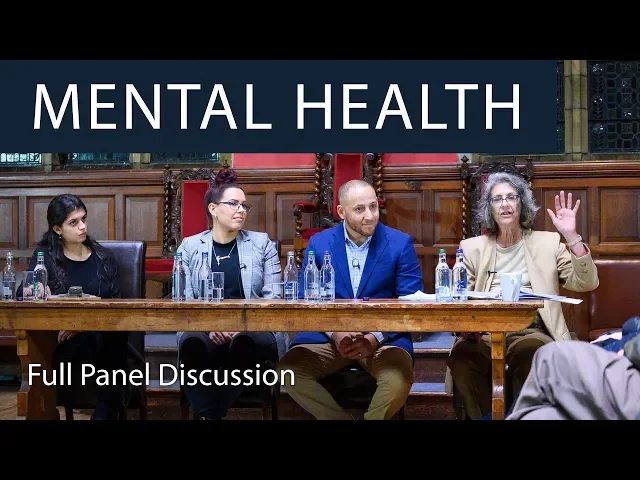
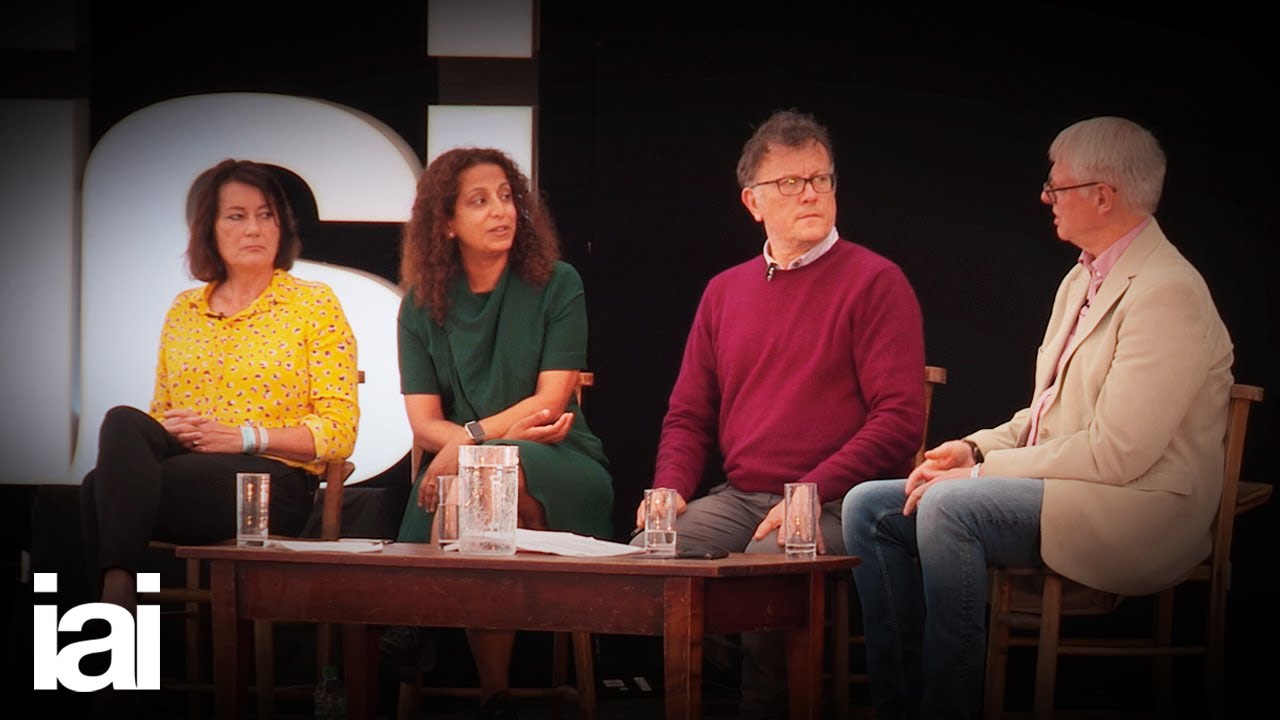
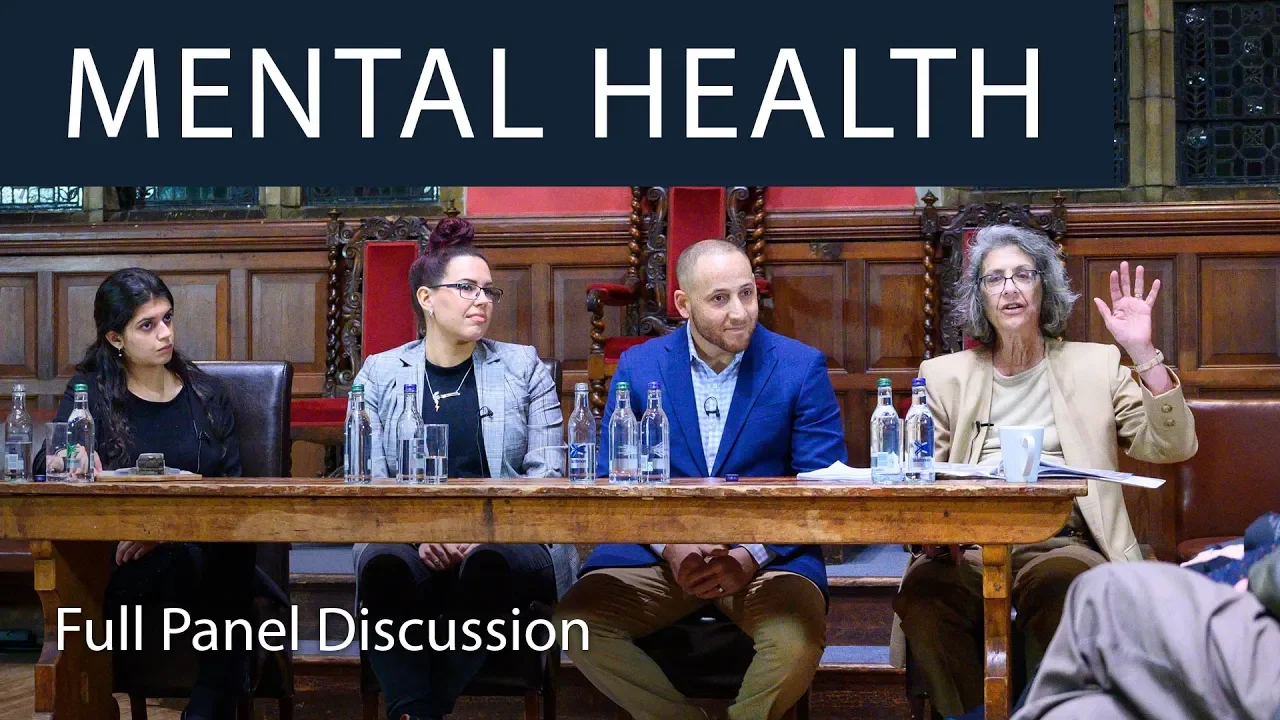
I thought we could start with a few brief introductions so if we could just go long and could you please introduce yourself and talk a bit about what you do and then we can get started on today's discussion so thank you and hi everyone my name is natasha devon and my job involves going into about three schools a week throughout the UK and increasingly beyond throughout the world and when I'm in there I deliver talks But I also conduct research with teenagers and I ask them when they look back on their education what's missing from
their personal health and social education lessons and the answers that I get are giving me a glimpse in their day-to-day mental health challenges so it's things like exam stress bullying being LGBTQ in the modern world social media body image I find experts in neuroscience psychology psychiatry who give me a clinical evidence base and I Translate that evidence base into something that's hopefully relatable for an audience of teenagers and I've been doing that now for 12 years and when I first started doing the job the question I was most often asked by students was I've got
this friend and I'm really worried about them and I don't know what to say or what to do I'm quite often I suspected that the friend was them but now the communist question that I get asked is I'm worried about an adult in My family my mom my dad my auntie they just won't acknowledge that they're struggling with their mental health and what that told me was is that there's this massive chasm in Understanding between the generations and this is actually backed up by research I did some work recently with a graduate recruitment agency called
milk round and what they found was that people are leaving University with really high levels of emotional literacy and Relatively low stigma when it comes to mental health issues but when they enter the workplace about 75% of young people are saying they would be afraid to talk to their boss if they had mental health issue and they would never ever take a mental health sick day despite being entitled to that so my latest campaign is called where's your head at and it's all about looking at revolutionising the workplace and the way that we think about
and Treat mental health in the workplace because I think if we're going to have a revolution in mental health that's one of the key areas that we need to focus on hello my name is Kevin Hines and in the year 2000 I attempted to dive on my hands by way of jumping off the Golden Gate Bridge it was the single worst action of my entire life it was it happened because I was diagnosed with bipolar disorder type 1 with psychotic features and I could not cope with the Diagnosis any longer I was in such a
state of depression and pain that I believed I had to die I believed I had no other option no other course to take in the midst of my attempt a sea lion circled beneath me to keep me afloat in the water when I got to the Coast Guard boat when they retrieved me from the water the sea lion had exited right right before they arrived they pulled me under the flat board and they asked me a question why and I had no logical answer For their question I said I don't know I thought I had
to die today and I vividly remember the senior officer on the boat saying son do you understand how many people we pull out of these waters that are already gone and I said no sir and I don't want to know he said I'm gonna tell you anyway he said young man this unit alone has pulled out 57 dead bodies in these waters and one live one me 99 the the the jump from the Golden Gate Bridge is 99 percent fatal in the last 83 years of that bridge being erected 99 percent of those who have
left off that bridge are gone they never get to tell their stories I'm grace with the gift of a second chance at life and after that second chance at life I made it my mission to try to help other people or the world stay here worked tirelessly like everyone else in this room on this panel to do everything I can to be a part of the suicide prevention effort the of my home country United States and Around the world we try to find people who are in pain and show them that they can survive their
pain no matter how great that they can survive that pain in spite of it despite of it to thrive someday and we do that through the Kevin Margaret Heinz Foundation which I run with my wife and I get letters from around the world saying how this story has affected and challenged and helped someone stay alive and change their life we our goal is to help people be here Tomorrow and every single day after that we wish for people who are silencing their pain to come forward and to be honest about it because we believe a
pain shared is a pain haves when you keep it in when you bottle your pain it only bubbles and Fester's and grows and it bursts and things like rage aggression violence substance use disorder suicidal thoughts ideas or actions eating disorders and depression when you share your pain to someone Willing to empathize with it you can fight it you can beat it you can defeat it one day at a time today I live with three kinds of chronic pain I live with the chronic pain of my injury from my jump when I fell into the waters
the going Gate Bridge I shattered my t12 l2 and l1 lower vertebrae into shards and on that day I miss severing my spinal cord by two millimeters that chronic pain lives with me every day I don't need any pity it's just part of the deal I'm okay with it because I get to be here the secondary kind of pain I live with is from a skin disease I had you can't even tell I have that I developed two and a half years ago a medical burn from one of the medications I've been taking for 20
years what caused me to be on the tipping point of stevens-johnson syndrome two and a half years ago secondary burns covered my entire body from head to tell I was in the most Excruciating physical pain I've ever in my life and it felt like knives and needles were coming from my bones through my skin across my entire body for thirty weeks of that entire period now to make it clear I never wanted to die when I went to the Golden Gate Bridge I just believed I had to those are two categorically different things but when
I felt this this pain from the skin disease I wanted to die every day I wanted to buckle I wanted to fold and I wanted to give in but I didn't I realized something very important that I want to share with you today that pain is inevitable it's coming for all of us if it hasn't already but suffering unlike any clinician will tell you is optional it's a choice I was born on sixth Street in the Tenderloin in San Francisco and what they call a crack motel in terrible city in a terrible situation in my
infancy my biological parents were both on drugs I was born in paint but I've never suffered a day in my life and so I've come here today to Oxford to share with you my story and I'm grateful to be invited and I appreciate it I'm hi everybody my name's Ellen sacks and I'm honored and delighted to speak before you today pleased also that family and friends were able to come hear this presentation so I'm someone with what we call lived experience in America of schizophrenia which first emerged when I Was a graduate student saying ancient
philosophy at Oxford at corpus need I have vivid memories of wandering alone in the tunnels under the warnford except for the demons accompanying me on my walk my first year I was in Oxford I was hospitalized for a month my second year for four months so in a sense here you could say that I'm returning to the scene of the crime I would like to talk today about my mental illness and loneliness because these are connected In important ways we live in a society that's both very connected and very disconnected millions of people sit in
communal spaces and focus intently on their emails and ignore the people sitting right beside them and conversely many people connect over the internet and have robust conversations but never meet and spend time with each other let alone quality of time both of these can lead to great loneliness this is a scourge for many People even though those who are blessed with reasonable mental health without relationships there's no one to share one's good fortune with and no one to rely on to help you bear your pain for someone who suffers with Frank mental illness as I
do lack of connectedness is even more of a challenge I myself was diagnosed over forty years ago here and Oxford as having chronic schizophrenia with an acute exacerbation and a quote very poor And a quote grave prognosis I was expected to be unable to live independently let alone to work I think I evaded my grave crisis for three reasons excellent treatment both intensive psychotherapy an excellent psychopharmacology once I recognized the need for meds which took a while rich and helpful relationships and an accommodating and gratifying workplace about the latter as I've come to say my
Mind is both my best friend and my worst enemy I'd like to focus now though on the relationship piece of this first I'd like to point out that schizophrenia has both so-called positive symptoms like delusions and hallucinations and negative symptoms like inability to work or have relationships and my own case I had prominent positive symptoms so I believed that I had killed hundreds of thousands of people with my thoughts and that a nuclear explosion was about to go Off in my brain I had I was blessed not to have many negative symptoms except my first
year or two of being ill and a lot of the personal and societal burden of schizophrenia actually resides in the negative symptoms so we have pretty good treatments for positive symptoms but not for negative symptoms so as I say except for the first two years of my illness I've been blessed with few to know negative symptoms I believe this is in large part because of the intensive Five-day-a-week therapy I'm engaged in being able to connect with my analyst led me to be able to connect with others in my environment sometimes students with schizophrenia comment on
how I seem to have friends and they can't manage that they want to know how I explain that I usually say that I have found that the way to make good friends is to be a good friend to others in a sense this is kind of vacuous vacuous advice but in your strong sense it's It was it's still true but why our relationship so important to people like me with schizophrenia relationships give one's life a meaning and a depth they also serve as another set of eyes if one stops starts slipping and is unaware of
that there are some funny stories in my life concerning relationships my closest friend from law school Steve called my analyst who I'll call dr. Kaplan to tell him that I had told Steve that I was going to China in advance of him dr. Kaplan to clear it out of all the bad people to which my analyst responded have very considerate of Ellen I have had some training and psychotherapy and I know the theories it's supposed to end termination as part of the process but I'm a lifer the last time I tried to end therapy I
ended up in a hospital for five months and I'm not willing to take that risk again the therapy helps me I can afford it and It doesn't harm other people so it seems like a good call to keep doing what I know worse before II thought that analysis was not appropriate for people with psychosis because he thought people with psychosis couldn't form transferences with their animals this is simply not consistent with my own experience as well as that of friends of mine the transference may of course be different for instance when I was seeing mrs.
Jones and Oxford and not on any Meds I had to thought that she was a monster and or the devil and my life was at risk well now with my analyst in LA I think he simply doesn't like me so I'd like to speak a bit also about romantic relationships as a high school student and college student I dated normally but when I became ill at Oxford that part of my life went by the wayside I actually went 18 years without a date I was too burdened by internal demons to be able to have space
in my life for romantic Relationships many years later I fell in love with a man named will will is here in the audience with us wave your hand well he had been a librarian at USC and I used to try to flirt with him but it didn't seem to work but then we connected and spent our first real date at the beautiful poppy reserve in Lancaster I felt bereft because I kept complaining how cold I was and was hoping he would put his arm around me Which he never did but at the end of the
day he kissed me a long lingering kiss goodnight and the thought I had and this is literally the thought that went through my was huh this is even better than getting an article accepted in conclusion we ought as a society to focus on helping people have good and important and deep relationships this will make their relationship is better on all of our relationships better a more connected And less lonely population will lead to a better working society where people are happy and functioning to their maximal ability thanks for inviting me to this important event thank
you all so much for that picking up on something that Ellen just mentioned we are more connected than ever with the rise of social media and its prevalence in our lives why then do we also simultaneously feel more lonely than ever and how can we solve that that Epidemic that we're currently facing and maybe we can start with cabin what that sure I think that with the rise of the technological age we have lost something truly valuable and we've touched on it here and that is true connection touch talk hearing smelling all of our all
of our six senses we've we've lost that ability to go outside and even go for groceries anymore because we can just order it on online everything everything has been pushed forward to the Oubre Fication of life and we have trivialized what used to be the norm if you look into societies like those in in Bhutan where they they measure gross national happiness and they still use a barter system they're a lot more well-adjusted and happier in their familial settings and there are a lot more communal than the societies we have here today around this country
around the globe outside of their reach I believe that if we are to truly solve the loneliness crisis we Have in this country around the world we have to go back words in the sense we have to have days of our lives where we're not focused on our technologies we have to have days in our lives where we put the technology down and we slowly focus on reaching out being there for one another being present in every moment and being real with people who are in pain because if we're going to reach the people in
pain we need to let them know how much we care and how much We love them I recently saw a witnessed a situation in my own family where a family member solved a child in our families crying by handing them an iPad that's not the answer we have to get to the root of the problem while the child is crying not just hand them an iPad to be distracted from their pain and I believe once we do that we could see a significant change in society because when you see the levels of the depression suicide
and and the rise in In difference different diagnosis you can correlate that as well too you can correlate those right the rise in depression and suicide to a lack of community if we push those communities forward like we're doing right here tonight this is real we're all here together we're in this together you can take what we say tonight and go utilize the lessons learned and put them out into your worlds and you can affect the change in someone's life today you could Be the determining factor in to someone like me who was on that
bridge not attempt to dive on my hands you could save a life I remember once I went across the street from campus to the USC hotel and there was a kind of coffee table and four or five students sitting around a table and they were each on their phone there was sitting right next to each other but they were all focused on their phone so I totally agree with what Kevin says yeah I think sometimes It's it's easy to blame technology as a causal effect and some of you might know I was very briefly the
government's mental health champion I lasted nine months which is how long it takes to grow a baby and become completely disillusioned with the political system in this country it turns out but I got to see a lot of the kind of thinking that was going on at Whitehall and you can literally see this really steep incline in anxiety and self-harm in Particular in young people that starts in 2010 and government ministers were saying of course we're attributing this to smartphones and I thought yeah I bet you are because that doesn't take into consideration that 2010
is when austerity measures kicked in and Michael Gove came along and stomped all over the education system and there were all of these other pressures being placed on young people and and I think sometimes What we need to do is see technology and social media in particular as a mirror being held up to the situation that we have rather than this this causal impact and one of the things we know for sure is that we're seeing higher levels of perfectionism in generations ed and the higher you score on a perfectionism test the more vulnerable you
are to mental illness and one of our leading experts on perfectionism in this country is a guy called dr. Thomas Curran who's Currently at the London School of Economics and what his research shows is that young people are born now into this world of hyper capitalism where we invite this idea that we should never be content with what we have we need to consume and achieve to prove our value and this has led to this kind of cult of individualism which is having a catastrophic impact on our mental health so when we see what people
are posting online and people's activity online and The extent to which people have this obsession with their phones my question is always is that causing disconnection or is that a symptom of the disconnection that is happening more broadly in our culture I actually have to say I think you are completely accurate it's it's a societal struggle that when society as a whole is okaying these technologies to be in front of us in the way that they are it's it's it's it goes back to we made a film called Suicide the ripple effect about the devastating
ripple effects of suicide both for the positive and the negative the positive effects of suicide prevention and the negative ripple effects the loss of suicide and the families left behind and one of the doctors in the film dr. Bart Andrews of one of the lifelines in America stated that that the rates of depression and suicidal ideation and suicidal crisis And suicides more more than not represent society as a whole being losing the right word but okay it's a cultural issue more so than it is an issue of the individuals so just picking up on that
and looking at society like you said and in a world that's as fast paced and perfectionist as ours in the midst of all of that what solutions can we look to to combat anxiety and picking up on something that Kevin said how can one say for life I've actually been a Part of my friends my family and people I don't know often reach out to me who are in suicidal crisis and we haven't lost a person who has done that yet and the way we go about that is multifaceted I will get on the horn
and call the Lifeline they will get on with the police and ping the phone of the individual who's in pain we will get to them physically and physically keep them from dying we've done that many times with my wife was in the room and when It's not such a dire situation but it but it's a potentially a dangerous situation where the person is not necessarily imminently suicidal but it's talking about suicide talking about self-harm we've been able to reach them in their time of need just by being there sometimes over the phone sometimes over FaceTime
so we're using technology to it for good in that sense and and Mele it really sums up I think to be to knowing how to ask the Question to someone in that much pain hey you know I'm worried about yeah I care about you I love you are you suicidal have you made a plan to take your life that doesn't put the thought in their mind gives them permission to speak on their pain so you know asking them those questions being bold but looking at them with calm cool quiet eyes but while also making sure
to be thorough about what they're there potentially about to do Ask the questions you need to ask be bold and make sure they know how much you care those three things can really help them recognize their true value and that people can be in that much pain and recognize that somebody loves them or cares for them or has compassion even better compassion with them or empathy they can see the light at the end of the tunnel and they can see the forest of the trees so I'm sure so you know at USC we try to
put programs in place that Will encourage students who are having challenges to seek help and we have a counselor who's on in the law school one day a week all day anyone can go speak to her we talk about mental health challenges at orientation I speak as a faculty a staff member speaks a student speaks and alum speaks sort of help D Sigma ties the mental illness and encourage people people to get help during exam period the students had a really great idea they put out a pen of Puppies so that kids to go and
pet the puppies or an exampie and then kind of D chill and we started something at my Institute called pro - pro professional to professional it's sort of a listserv for people for working people who have mental health disorders to connect with each other online they can do it in a way that they're in a non anonymous so there's not much risk and that seems to be something that's really proving helpful to people yeah I think we often Talk about people who are in crisis and we don't acknowledge that all mental health issues exist on
a spectrum and just as you know if I cut my finger and I don't do something if I don't put some cream on it and a plasterer worst-case scenario is I could get blood poisoning and die in just the same way if I'm under really chronic stress and I have no outlet for that I'm not able to seek the help I need the worst case scenario is that I could die because it will Become worse and worse over time and for me I think it's looking at it on a micro level because at the moment
I feel like we're being carried along on a wave I always think of life as being a bit like Netflix you know you know when you watch Netflix and it suggests the next episode of what you're watching and then before you've really had time to think about whether there's something else you should be doing it's kind of the credits and you think Yeah maybe almost something and we're having all of these decisions made for us and a lot of the time they're not serving our well-being and our habits are so important at dr. Rangan Chatterjee
is one of the experts I work with and and he has evidence to show that as little as five minutes a day doing something for our emotional health or our mental health even something as simple as stretching singing you know whatever it is can actually begin that Pathway to change so I think it's it's really starting small I think it is is the solution so you just made a comparison that with mental and physical health and school educational programs take physical health so seriously we all have to go through physical health education but there's nowhere
near as much of an emphasis placed on mental health why why don't people take mental health as seriously in the world at large as physical health and what can we Do to change that you know I think is I think we're very binary in our thinking around mental health we think of people as being either well or ill and we don't think about our mental health until after it goes wrong and that's why I started asking teenagers what was missing from their PSHE because I think we're getting it wrong when people begin a conversation about
mental health they always begin with that statistic that everyone knows they say one in four People will experience a mental health issue and whilst that is each year sorry and once that is true if I walk into your average room and say that three-quarters the people in that room will switch off because they won't think it's relevant to them so I think what we should be saying instead is four in four people have got a head you know with it with a brain in it and just as children from the age of two begin to
understand that they have a body and that they can Understand it and monitor and nurture their physical health on a daily basis and that becomes something that we do as a matter of course unconsciously we need to be taking the same attitude to mental health and it's never too young to start I think I mean I totally agree in our high school classes we teach driver's ed and sex ed and regular health ed why not mental health at to give people basic literacy about what this looks like and what you can do about it so
they notice It in themselves and then their family and friends I I don't understand why we don't were starting to do it more when close the actress or sisters bipolar hers nephew schizoaffective has started something in high schools doing trainings about mental health but it's just getting started and something we need to do a lot more we the youngest person in America to die by suicide was four years of age with a cran note a cran note cran four years of age could Barely write but wrote something to the effect of this is it that's
unacceptable I think that like we're talking about in order to change a society we have to we have to help that society grow from childhood to adulthood learning resilience and the ability to survive pain and learning that if they have a mental health crisis or challenge or struggle on a spectrum that that they that they are treated and cared for but that they're educated from a fourth Grade level up about mental brain mind behavioral social and emotional wellness if we don't educate from fourth grade on up how are they going to know at 16 and
17 when diagnosed with a disorder what the heck they're gonna do or who they're gonna turn to I think that was one of the greatest mistakes a great many of our countries have made was not educating our our fourth-grade children on brain health we all have a brain we all need to take care of it and yet Nobody knew it nobody knows what to do when they're struggling mentally when they first get diagnosed and then what if my final questions before moving to the audience is what new challenges if any do you think that will
face over the next decade in in responding to mental health issues and how can we deal with them I mean to me there are two the two huge issues are access to care getting getting treatment um I've done a study with some folks about quote High-functioning schizophrenia so we have MDS and JD's and PhD candidates and full-time teachers and so on I asked by collaborator who's an expert and schizophrenia what percentage of people with schizophrenia or high functioning in our sentence professional managerial etc he says I don't know Ellen the real question is how many
could be if we devoted proper resources and I think it's exactly right so one one issue is we really need to step up and provide The resources and the second issue I think we need to study how to get people to want care so we don't have to use force and I think it's possible I have some ideas how to study that but I think it would be an important you know advance if we could if we could get to that place um I think that the challenge is going to be implementing structural change because
it's a cliche but the more you think about mental health everybody always ends up in the same Place which is that we need some kind of revolution because the the way that our society is structured is fundamentally at odds with our well-being and that's why I'm focusing on workplaces because there are so many toxic ideas that exist and old-fashioned ideas as well that we know aren't true anymore that don't reflect the realities of the way the human brain works that are prevalent in workplaces and it's making people sick but ultimately it takes a lot of
time And energy to persuade people that to change their business won't affect their profit margin and that's something that I'm trying at the moment and it's it's soul destroying and you know to be met with it I've been really spoiled I've realized working in schools everyone's really enthusiastic about mental health you go into workplaces and you're met with a sea of reluctant faces and and that to me is the challenge how do you get those people on board sorry did you Want to say something as well and then my last question before we move to
the audience is going back to the distinction between mental and physical health it seems that going back to what you said about the workplace if if someone is too ill physically to go into work there wouldn't be any question of going in but it's often seen as weak if someone doesn't go to work or to school or to classes at university because of Mental issues that they may be facing and and I just wanted to ask and I I know it sounds like a very difficult question but how can we really get to the root
of addressing that problem well I think first of all we need to understand that the brain and the body don't exist in silos and we've got a few stages to go through before we get here but in my utopia we don't talk about physical health and mental health we just talk about health you know 8 out of 10 primary age children for example who go to their school nurse with stomachache the reason their tummy hurts is they're experiencing anxiety a lot of adult back pain doesn't have a physical cause that you could see in an
x-ray is where people store their stress so when people are exhibiting physical symptoms quite often that has a s psychological Genesis it's understanding you know do want one impacts the other but one of the things that I'm working on educating People around is the impact that stress anxiety and depression has on our ability to work and this massive problem we have of presenteeism people who will drag themselves to work or to a lecture or to school and they're there physically but they're not there mentally and so they might as well not be there and the
sort of long-term benefit of allowing that person to take some time for their well-being and for self-care it couldn't be more true I Think that you know III had to take some mental health days last year and as a public speaker with a mental diet with a diagnosed mental illness the Booker's for those speeches had no empathy for my situation absolutely none they had an event to put on they needed their speaker and even though it was out of my control entirely and I was doing my best to take care of my brain and mental
health they had no sympathy for me whatsoever and we're rude aggressive And and very upset with me and at my camp it was very very disillusioned I felt you know this is the this is the topic you had me you're having me come and talk about and yet you you have no empathy for your own kind it broke my heart and made me aware of how much we have to change systematically from the ground up I would also like to bring up the notion of stigma which I don't know if you talk much about in
this country about stigma But it's a sort of a big issue in America the worst thing a bad stick might think this is deters people from getting care and people shouldn't have to suffer but they will if their stigma and there's also self stigma so Glenn Close the actress gave me a t-shirt that said schizophrenia no she's a public service announcement of people walking around Grand Central Station when shorts that says schizophrenia bipolar or sister of someone with depression or Whatever and I looked at the shirt I said you know I don't wear t-shirts to
work during the week but I do wear them on weekends and then I thought but do I really want to wear a t-shirt that advertises that I have schizophrenia and I thought and I've also had cancer and people wear armbands and pins and shirts with pride and solidarity and without shame and it should be that way with schizophrenia but we are just not there yet we'll open up to questions from the Audience now so if you have a question please raise your hand wait for the microphone to come to you and stand up asking your
question and please also address your question to all the panelists and can we start from here hi I wanted to say thank you so much it's been really informative and really touching and I wanted to ask about sort of the balance of addressing stigma obviously and also being careful not to romanticize mental illness as as an Eating disorder survivor I'm very aware of how these sort of recovery communities online can claim to support people and in reality help things spiral especially for teenagers and younger adults so I wanted to ask how you would how're you
would say people should deal with that and thank you for asking that question it's a really important question I think that eating disorders and self-harm are quite unique insofar as there is or there can be at least a Competitive element to them I actually founded a called the mental health media charter and it's guidelines for anybody who wants to speak or write about mental health in a way that's safe and responsible and when it comes to eating disorders that the guidance is basically always focus on why not how so rather than talking about weight calories
exercise yes a mental illness talked about what was going on in the mind and I also I should say I have Personal experience myself I have a something called panic disorder I also had an eating disorder when I was at university and one of the things that I think is missing from the narrative certainly in the UK is managing an ongoing mental health condition all the stuff we see in the media is very much here was my lowest point and now I'm well and happily ever after and yeah I say panic disorder is is no
longer an impediment to me being successful or Happy but that's because every single day I manage it and I've had to learn how to manage it and I think that that's what people need to need to hear that it's it's neither I'm neither a tortured genius nor a person at my lowest ebb I'm just a human trying to survive life my experience we we created a ten step guide to better brain health and well-being that includes science-based evidence informed tools to a better better brain Health that are common common-sense tools that anyone can use to
get at least a little bit better and when doing that and sharing it with people in a non sensationalistic educational educational but entertaining way they're able to write in how that affected their mental health and the the the letters we got in from Peru China Africa Japan and America were that in six to nine months of using the program they saw a significant betterment in their brain health and Well-being and that was all due to approaching it in a way that was appropriate and not not not now Amanda sizing the day of my attempt or
things like that I agreed that romanticizing it was something that we should kind of stay away from it's not I think romantic about being really high panel thanks so much for coming here so just a question about like the prevention of these sort of you know this huge mental health burden Associated with depression anxiety disorders and all these sort of conditions studying clinical neuroscience here at one foot at a toss furred you know we have all these lectures about how antidepressants you know are really such a blunt instrument and you know we really need like
it from from what we study like more preventative sort of you know institution based sort of programs to prevent things early before they kind of Develop later in life and you know worsen and become exacerbated what sorts of things do you think that society as a whole in terms of paradigm shifts in terms of the way that we conceptualize ourselves maybe potentially adopting Eastern philosophy Stern philosophical views about the self and about our relationship to the world what kinds of kind of paradigm shift do you think that you know individuals and institutions schools workplaces as
you Before can kind of introduce within Western society to just have a have a large impact upon people's mental health and kind of prevent against these really rampant psychiatric conditions yeah I think that one of the greatest things were not talking about on a large scale is our gut to brain health and it's one of the things that food can be our medicine and our medicine can be our food and I think that we are forgetting that our gut membranes are directly Connected to our brain and one and whatever we consume affects our mood our
actions our irritability levels our struggles and our mental health conditions potentially and I think that if we were to share the message of not just healthy eating but the right kinds of foods to feed your brain and your brain health and well-being with children as they're growing up and implement those strategies and tools and and everything we know about get to Brain health today and that's science into our education systems as opposed to feeding our students food that should not be consumed because it's been so overly processed I think we could change a lot of
lives in America you know forget to move away from the childhood aspect of it in America in every military base I speak at they have five essentials Starbucks Taco Bell subway McDonald's and Burger King in every single military base I've ever Been to speak in the country that's what they're consuming on a daily basis and we're wondering why they're so overly depressed it has a lot to do with the consumption of those terrible and horrible food they're not they're not it's not real food it doesn't come from the ground it's manufactured in a plant it's
it's it's it's it's completely inflammatory and if we you'd help people understand the levels of inflammatory foods and non Inflammatory foods we give up we get up change a lot of lives in in a in a large-scale way I would I would like to speak for a minute about early intervention that actually is going to be the topic of the year for the coming year at my Institute we're gonna collaborate with Harvard Medical School on that so that's really an important issue the thing is you know there's what we call prodromal symptoms sort of right
before someone really develops Full-blown psychosis or whatever and the thing is if you take a group of kids who are prodromal only a certain percentage of them are gonna actually go on and develop psychosis or real illness I think it's a third I'm not positive maybe it's a half so you can't just give everybody medication because then you're medicating people who have no need for it so we try to put other kind of psychosocial treatments in place but it's an interesting challenge because You just don't really know what to do in that circumstance and for
me if we're going to talk about a paradigm shift I think it's understanding the impact that stress has there's some really interesting research on this that increased testing on very young children combined with taking away coping mechanisms so less physical education less music less art less drama has actually meant that the impact of stress cumulative cue motive Leon young People's growing brains has crossed over into what can be measured as trauma so it's actually having a traumatic impact and you know that that can affect brain development and and you know it stress as you know
I don't want to you know tell you you know there's a lot more than I do but it can be helpful to a point but then after that point shrinks assign axes interferes with your ability to retain information think creatively problem-solve and yet so many people Wear their stress as a badge of honor and I think we need to stop fetishizing almost over work and that involves a really deep knowledge I guess of I mean it's a really existential question what's the of life why are we here leave you without going back to what we
were saying about kind of mental health issues being very cultural and societal I think if we take a much sort of long-term approach to mental health and We look kind of maybe a couple centuries ago we don't see instances of kind of like schizophrenia really appearing in populous but before the Year 1800 and we also I was reading today about African communities and how their societies are far more kind of communal based whereas Western values heavily to do with Christianity and capitalism have emphasized the individual and part of that has kind of been the individual
kind of bearing their own guilt and Bearing their own sin whereas perhaps in African tribal societies it's a very kind of communal outpouring for example in lots of these societies which I was reading about they would experience quite physical trauma because they don't have the same sort of health care that we have and they experience death perhaps on a far more regular basis than we do but yet they have massive like celebrations and and dance festivals and music celebrations and when you compare The output and the levels of depression among societies you see depression is
far more common amongst Western individualistic societies than it is amongst communal societies and I just sort of wonder with kind of like the trend of urbanization where you know are we becoming even more depersonalized in larger spaces and and the kind of the way in which capitalism is so often subsumed Western society at the moment is this kind of trend irreversible is it Inevitable that West that meant our mental health it cannot repair whilst we live in the sort of structural society that we live in we're talking about kind of like paradigm shifts at the
moment but it's the paradigm shift that we really need just like a wholesale reform of our society impossible can we only have a managed mental health rather than preventive god I hope we can prevent it I hope that we can shift the paradigm around the World because if we don't we're gonna be in a larger world of trouble than we are today I don't I don't certainly have the answer it's just if we can or can't but I hope wish and pray that we will I'm I I agree with what you're saying that it's it's
gonna take he's gonna take a fundamental revolution however I also think it's there is a bit of a myth that mental health issues have just sort of popped up recently whilst they are Getting worse and you can measure that absolutely empirically it's that mental health issues were understood and discuss differently historically so if you look like even in Julius Caesar Shakespeare's Julius Caesar the character Portia says I've inflicted upon myself a voluntary wound she's talking about self harm and yet when people talk about self harm in the media they they're like oh it's teenage girls
today and you know suddenly it's this New trend and that's simply not the case what I do think is happening is a really good book that I read called crazy like hers which is by a guy called Ethan waters who writes for The New Yorker and what he said is that America essentially exported its definitions of mental illness to the world so that it could export its cures and what he argues is that we're therefore losing in different cultures they had different ways of dealing with emotional distress and Symptoms of what we would call symptoms
of mental illness which were much more holistic but we're losing them because they're cut becoming homogenized and and medicalised and that maybe we need to go back and because we can learn from different cultures and I would definitely like to see us doing more of that it's also the cases I understand that immigrants have a higher incidence of mental illness so there's a kind of cultural thing going on as well and I Was actually part of a group a couple of years ago I think was in Florence with a group called open mind Society or
whatever so around the table were 20 people and this one guy was from sri lanka and he says when my patients come into the hospital the whole family comes in with them they're gonna be in the hospital together because that's just the way our culture works so it's been a part of it as i think we have time for one final question could we go To the hand and the second row hi thank you very much my question is about family units you emphasized a lot on the importance of healthy relationships on mental health and
I think one of the earliest and most important relationships that we human beings can learn from is actually our relationship with our parents and the attachment styles can really shape our future relationship styles with other people so I'm just wondering what your Thoughts are about family role the role of family in helping people with mental health you know when you're lucky enough like I am to have a family that supports you through your struggles for the most part it's a much easier path to walk my father when I attempted off the going a bridge my
father was the first at the hospital he he asked for a cot to sleep there right next to me during my entire stay on the on the moment that visiting hours were up the two steroidal Orderlies came in and they they could barely fit in the door at the same time and they said mr. Hynes you're going to have to leave visiting hours are over and he said I'm not going anywhere get me a cot said mr. Hynes I'm so sorry we don't do that here you're gonna have to leave or we're gonna have to
force you he stood up and said I'm a third-degree black belt in judo you can do you can do one of three things two things right now you can get me a cot or you can get me a Cotton you know they got him a cot and he lay there with me every day he didn't change in shower he didn't shave he took off his jacket he took off his tie and he held my hand as mighty IVs were dripping in you know morphine inside me and he prayed and every single day that that I
was okay to be given visitors after my surgery people came in droves to support me to get better and initially that was what led me to make a decision with my chronic and regular Thoughts of suicide and that decision was that no matter how painful it was gonna get I was never gonna die that way because I got to see the reaction of those who would have been left behind had I passed and I and I and I and I have a responsibility to survive that pain that's how I look at it you know I
can't speak for everyone but I can say that that when you're lucky enough to have a family or a family network the family Can be those you choose not necessarily those you're born to but when when you build that family Network and I support you it's like nothing else in the world and my wife is now my main support and my caregiver and the love of my life and my best friend and if it weren't for her I'd be gone ten times over and so finding those people for you ISM is I believe imperative so
I I think there's evidence that if your family's involved you have a better prognosis I'm Very close to my family I speaking my parents pretty much every day but we really don't talk about my mental health challenges and when they read my memoir they were surprised they thought I had broken down at Gale but been found for the intervening ten or fifteen years and in fact I had had multiple episodes and they were heard that I didn't tell them and and the reason I didn't tell them was when I first became ill I had already
been living independently as an Adult for several years and I did not want to go back to being the kid in my family of origin my parents also worried a lot and they don't do supportive that well so even though I loved them dearly it was not it would not have been useful to me for them to be involved so it's not one size fits all you got to figure out what's gonna work for you and then try to execute that um just following on from what Kevin said I mean they [ __ ] you
up your parents they May not mean to you but they do and towards ever thus but I think just to kind of come come full circle and and maybe leave this discussion on a note of optimism when you look at there it's like Ellen said when you look at the groups in society that are particularly vulnerable to poor mental health they are the ones who are least likely to feel like they belong it's first-generation immigrants it's people with learning differences is people with Physical disabilities it's LGBTQ people and what social media and the internet does
for all its faults is it plugs into a community of like-minded people and I think you can find that sense of belonging and community now because you have access to to the globe and I think it's important to remember that for for all its faults social media does have that that plus side and that's what it's in was invented for and and that's what we should be using it for so we do Actually have time for one last question if we could go to their hand at the member of the black well first thank you
all for being here it's really like amazing and I'm bipolar I'm 26 and I've been I think six years ago it's been easier for me to say I'm bipolar but it's easier when people are like citied calm and really like able to hear what I'm saying but on Friday I came to G Oxford Unionville I faced many issues and I cried a lot And when I try to say I'm bipolar and I'm on the slippery slope right now it's really complicated so for a child doing a test in class having a panic attack sorry or
someone on the street having social anxiety on evening at the ball and facing issues what's your advice for people having a health problem and having to say I have this problem in a situation that is too difficult for them okay please don't apologize I pass I mean I think something that I say a lot To young people is you wouldn't wait until you were falling before you started to build your safety net and and it's being aware that these things can happen one of the best practices I've seen actually in primary schools is when they
have emojis sometimes down one wall of the classroom and they give each child a post-it and as they walk in they have to place their post it next to the emoji that best sums up how they feel that day and what that's teaching them Is that we're all in a state of flux and transition and that it's not a case of well or ill you know yesterday I was here today I'm here tomorrow might be there and it's kind of preparing yourself for any eventuality that might occur so with your panic attacks are again you
know when I first started doing this job I would say you know put your hand up if you've ever had a panic attack or maybe two people in a class would raise their hand that's about half You know that they're definitely getting worse so it's understanding how your panic manifests catching it early having some techniques in your arsenal to calm you down having teachers who understand you know teachers trained in mental health first aid who can spot those symptoms from the outside it you know it's a combination of different things that I think kind of
build that that resilience but for me definitely it's about the forward planning when I would Have my my symptoms in high school which is where they started and in college after that I would I would fear telling people about them as well in my in any school setting it was when I told my counselors the struggles I was going through all about my my battles that I was given the most amount of help and I think just be bold be true to yourself tell your truth and understand that no matter whoever's reaction if it's a
poor reaction or a negative Reaction that's their problem try not to internalize it you're valued you're loved and you matter and you're important and we're grateful that you sit up today and told you thank you round of applause [Applause] okay thank you so much for coming and thank you so much everyone for coming here today please join me in thanking all our panelists [Applause] You