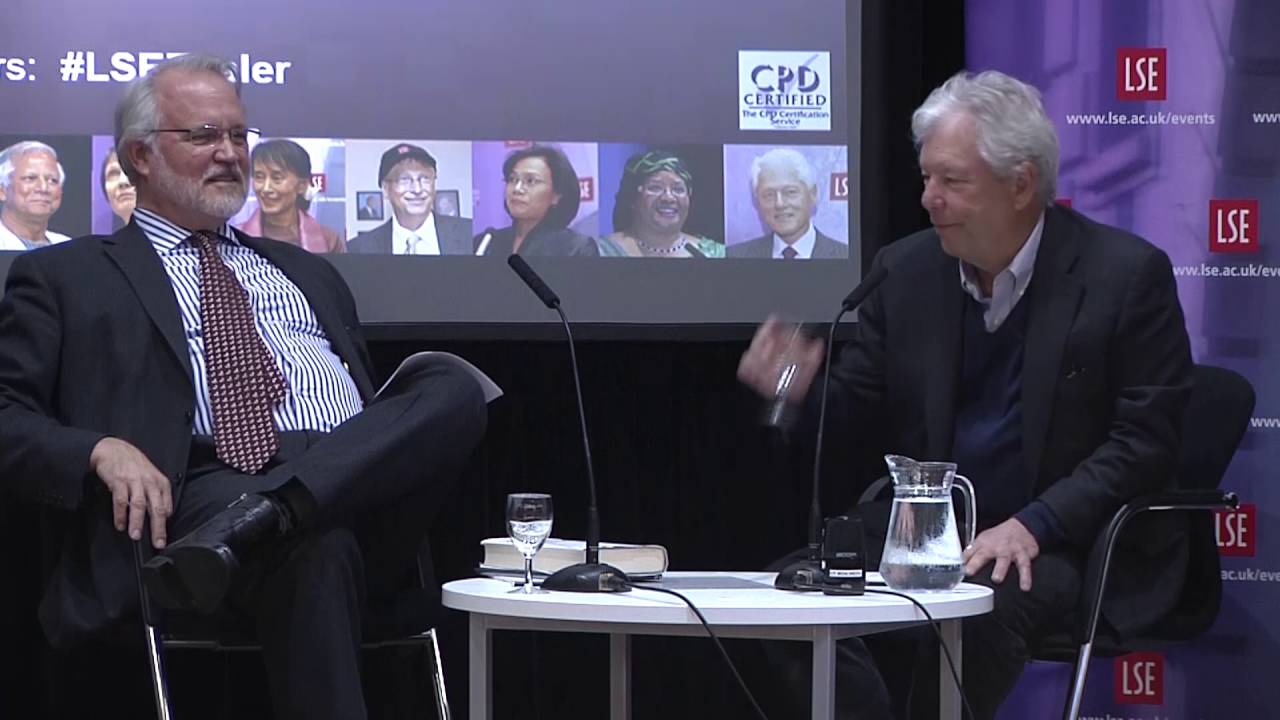
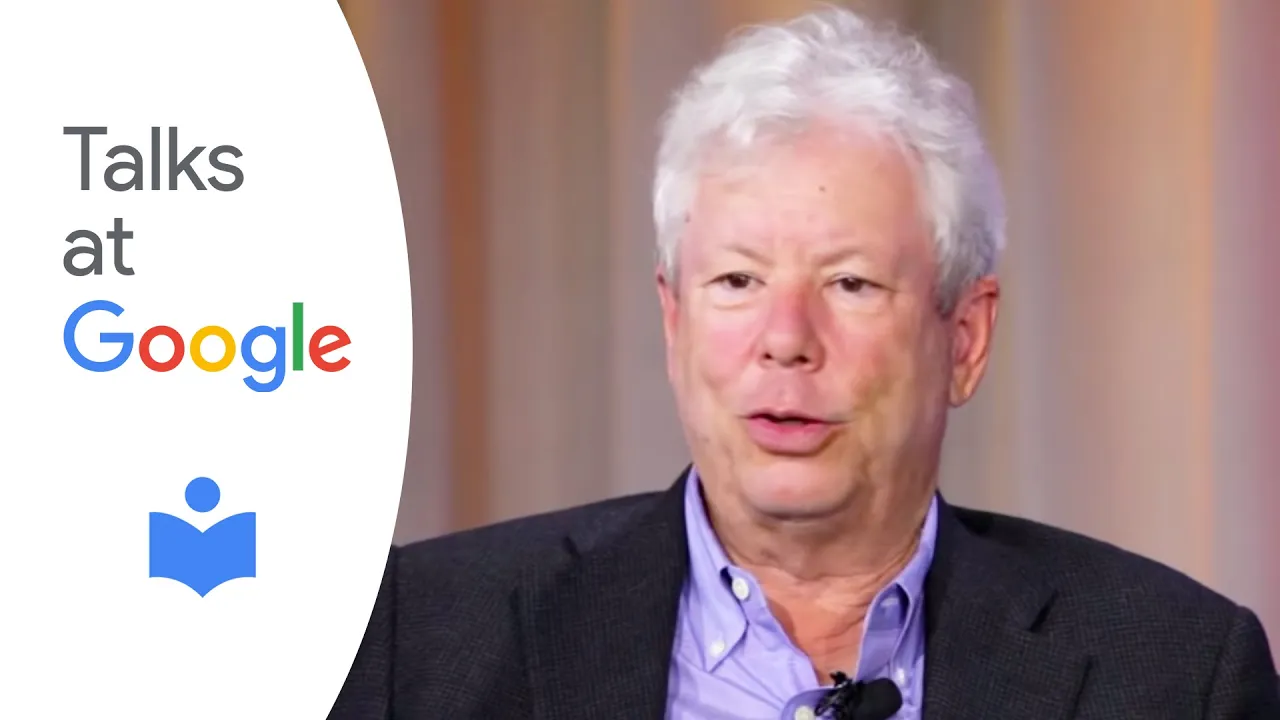
[Music] welcome you all to this uh session where Richard Taylor is going to tell us about his new book and I should tell you both Richard and I were on a panel in San Francisco last night so this is kind of a lot of instant replay Deja Vu for us and but I'm I'm going to change the answers so it's it's kind of like the distinction between microeconomics and macroeconomics because a micro it's different questions the same answers in macro it's the same question but different answers so this this is kind of Behavioral economics has
this in common with some other parts of Economics uh but one of the uh good leadin questions that we had last night I'm going to run again today is what does this mean misbehaving what kind of title is that where' it come from so the the title kind of has reflects three aspects of the book uh the the first is that economists have a particular view of uh of humanity if we want to call it Humanity or inhumanity and um so if you read a a graduate level textbook like Hal's um uh that'll be a
dollar please for the plug um uh you you'll the the the people he's describing in the models are not ones you'd recognize in ordinary life um they're as good at math as how uh they're as good at self-control as Gandhi uh and uh they're complete jerks um if if you left your wallet lying around uh they would take it if they were sure they wouldn't get caught uh so for the last 40 years or so I've been studying humans I call those mythical creatures econs and uh I've been studying humans and by economists standards humans
misbehave and so that's the first meaning of misbehaving in this book um it's the people I talk about the second meaning is uh the fact that I've devoted my career to studying that was itself an act of misbehaving because economists are supposed to study econs and what are you doing studying these other people and um maybe a third is and it's kind of consistent with the second the book is not written as a proper book or at least everyone in the publishing industry told me one is not supposed to write a book like this so
it's structured kind of as a memoir uh but it's a primer in behavioral economics so there's a lot of substance in there and it's at least meant to be funny and um I was told that the set of books that are substantive funny memoirs that have sold as many as 100 copies is the null set and so you probably shouldn't write a book like that um but that's the book I wrote it was the only book I could write you might say also that the econs are misbehaving from the Viewpoint of the humans like for
example humans are expected to leave tips at restaurants and that kind of thing uh that's right I mean econs don't leave tips at restaurants they don't plan to go back to uh because why would you of course that's a bit of an exaggeration well only a bit I mean I now I mean it is true that uh many economists um have taken seriously some of the departures uh my late colleague Gary Becker um in in some ways his career was devoted to the opposite of mine um although we both studied odd kinds of behavior his
approach was modeling everything through the lens of ir rational economic Asia so he has a rational model of addiction and uh you know uh he he could rationalize anything too sorry that is misbehavior I know you know I'm so sorry that's a new chapter uh take the books back I have to add the chapter on cell phone misbehaving so uh so yeah I mean you you could write down a model where you care about the opinion of the waiter and so therefore you leave a tip but that's kind of a tautological model that isn't very
helpful and I should say we warned people last night the American economics association meeting uh annual meeting is going to be in San Francisco in January and we expect all waiters and waitresses to leave town so yeah it's probably going to be a really bad time unless unless they don't e either they don't realize that the AA is in town in January or they don't know that economists are bad tippers um but yeah otherwise it would be a good time to go on vacation if you're a waiter I I once did a informal study of
this of of tipping just by talking to people unusual methodology I know but yeah but uh you could you know you could lose your credentials as as a real Economist by doing that so it turns out that I think the best explanatory variable for whether or not you leave a generous tip is whether you ever worked as a waiter or waitress yeah no that I I think that's true you know I saw an interesting oped about tipping um that I've kind of taken to heart which is that if if you're concerned about in equality of
the sort that picky talks about here's one small thing you can do become a better Tipper and so I've just just decided to leave bigger tips it's not going to change the world but um all the people who get tips from me are much poorer than me and I can spread a little wealth that way that's a very useful tip nice one H I couldn't resist uh so tell us about some of these uh anomalies in fact tell me tell me how you got started in the business oh yeah well there's fishing for a compliment
so I uh no uh no uh deservedly so so how once um introduced me to someone and said uh this is Richard Taylor actually I invented it and uh so here's what Hal meant uh we've known each other uh for longer than we would care to admit um and let's see this was about 1986 we were at a conference together um I don't remember where but we were eating a meal together and how was telling me about a new journal the aea was starting called the Journal of economic perspectives and the aim of the journal
was to have uh articles written in what economists would pass for plain English um so so not really articles for Layman but articles for non-sp specialists so an article that any Economist uh or E economics grad student could read and um uh so I said oh that's interesting and then he and I dreamed up the idea for a column in that journal that I ended up starting to write called anomalies and for four years once a quarter I wrote uh about an anomaly and uh I think that I so I owe Hal debt and um
the field of Behavioral economics owes Hal debt for that he convinced Joe stiglet who was the uh editor at the time uh who I think didn't need much convincing no he was easy to convince Joe's a bit of a troublemaker so he liked the fact that I was going to stir the pot and you know the uh C the great uh philosopher of science talks about Paradigm shifts and how do you create a paradigm shift and the only way to do it is to create a long list of anomalies because any one or two can
be explained away okay so people leave tips even at restaurants they don't go back to but you know maybe you know and the if if the set of excuses for each anomaly has to be different then people start to wonder oh yeah maybe there's a a more basic problem here so the fact that I could write 14 anomalies columns about different things uh I think changed some people's mind and the fact that the 1987 stock market crash occurred during the very period when I was writing these columns may have also helped you didn't do that
I don't think no no wasn't my fault the uh in the book you said it was partly a tutorial about behavioral economics and you go through this long list there's a long list of of aspects of human behavior that are not accounted for by conventional Theory and the first one both temporally and in the book is in fact the endowment effect so why don't you tell us about the endowment effect so let let me tell you I first discovered what I later came to call the endowment effect I I my PhD thesis was on a
the a topic that sounds funny or not funny but odd uh the value of a life and this wasn't a philosophical uh this was an economics problem and um it it's a a problem that all governments have to deal with we we can make things safer uh we can make highways safer we could lower the speed limit we can do all kinds of things to reduce the chance you're going to die how much should we be willing to spend on that and we don't want to spend all our money on that so we need a
number and so that was that was what my thesis was about and it was a very straight economics econometrics exercise estimating how much you had to pay people to get them to take risky jobs like in logging or coal mining or weed no washing on skyscrapers but while I was working on that sort of as a break from writing fortrend code I uh decided I'd ask a question um so I asked the following question suppose by attending this lecture today you've been exposed to a rare fatal disease and there's a one in a thousand chance
you're going to drop dead next week uh quick and painless death not to worry um we have one cure it's in this glass right here uh and we'll sell it to the highest bidder how much will you pay okay that's question one question two is uh Stanford is running some studies on that same disease and they need volunteers for an experiment all you have to do is walk into a room and expose yourself to one in a th risk of death there will be no cure available what would you have to be paid to participate
in that experiment now according to economic theory the answers to those questions should be approximately the same and the responses I got were wildly different so someone would say oh I'd pay 5,000 for that cure but I wouldn't do that experiment for half a million so orders of magnitude difference and then I started lowering the stakes and you know suppose you have uh somebody offers you two tickets to uh one of the Warriors playoffs games and let's say the market price for those tickets is $11,000 each um would you be willing to pay $1,000 to
get those tickets probably not would you sell them for $11,000 probably not okay well that's that's the endowment of and what it what it implies is uh a kind of status quo bias that if somebody gives us the tickets we'll go but if they don't give us the tickets we won't go and you know here econ 101 quiz question if you got those tickets and the market price is $1,000 how much does it cost you to go to the game answer $11,000 but that's not the way people think about it and that eventually I started
having a list in on my Blackboard as an assistant professor of weird people do um and uh that was the first thing on my list and maybe the second one goes back to uh a dinner party I hosted as a graduate student and while some roast or something was cooking in the oven uh creating delightful Aromas I brought out a bowl of cashew nuts and uh we all started munching away um and the bowl of cashew nuts and our appetites uh were in danger and so after a few minutes I took the bowl and eating
a few more nuts on the way went and hid it in the kitchen and came back and this was a group of econ grad students and so we immediately started analyzing what had just happened there's a a rule of thumb I mentioned in nudge my previous book which is that the conversation at a dinner party will be ruined if more than half the guests come from the economics department and this story is an illustration of that since the removal of a all of cash. led to a decision tree and um and what economists all know
is that one can't be made better off if One's Choice set is made smaller and that's what I just did we previously had the choice eat nuts or don't eat nuts now we had that didn't have that choice and we were happy how could that be okay goes on my list and so for a long time all I had was a list and um dwindling professional aspirations because a list of weird people do um doesn't get you tenure I think last night at our meeting I cited a well-known 20th century philosopher who said the Lord
above made liquor for temptation to see if man could stay away from sin the Lord above made liquor for temptation but with a little bit of luck when tempation comes you'll give right in and in fact at that point we broke for drinks so yeah I don't think you're serving drinks after this talk right just for you yeah so um so that was one of them and by the way the tickets is a nice example because tickets come up in another place in the book and that's on scalping this is also a case where Economist
uh may not like tipping so much but they really like scalping they like scalping and um e economists have no trouble with Uber's surge pricing no matter how high The Surge goes and uh economists are unique in that the I did a study uh with my good friend and colleague uh Danny conoman um in 1985 I was 12 and um and we it was a study of basically what pisses people off and um so we had a whole series of questions that where we would ask whether something is fair so here's an example from that
that study um a hardware has been selling snow shovels for $15 the morning after a blizzard the store raises the price to $20 rate that on a one to four scale of fairness from completely fair to totally unfair people hate that they hate it now I give that same question to my MBA students they all say yeah right because they took a price Theory class and in that class this was the the right answer right demand has shifted uh price goes up so uh in New York City there was a blizzard and Uber thought it
was a really good time to raise the price of cab rides by a factor of 10 uh 10 yes um Mo many people including the State Attorney General uh decided that wasn't really a good idea and in fact many states have a law against what's called gouging now the literal meaning of gouging is to poke a hole in something and that's what most humans feel like you're doing if you charge them 10 times the usual Fair uh because it happens to be snowing um Uber ended up making an agreement with the State Attorney General to
cap the amount by which they would surge in an emergency it's I write in the book that um it's my opinion that they should have done that unilaterally and a similar thing happened in Sydney there was I don't remember the the details of what happened but there was some terrorist attack or maybe it was uh thought to be a terrorist some something like that and uh there was a surge and as I describe in the book imagine had Uber been around on 911 and all the cabs were snagged by investment bankers who needed a ride
to Greenwich I think that would have been the last day Uber was in business so the the Norms of fairness say in emergencies we help each other out and I've actually talked to several Uber drivers about that and said what would you want to do in that situation and uh most of them say I'd want to help and um Uber doesn't make very much money on those surges and uh I I think they could do better and um I may try to convince them that they should do better so one thing in your book that
I think is uh you know could use a little more Exposition is this distinction between a psychological predilection towards something and a conventional so let's take the example like tipping well in some countries tipping is not practiced so of course you don't tip that's a service charge or something buil into to the record and the same thing with h with fairness Norms so I mentioned scalping originally and scalping some people thought that was this terrible thing that you buy tickets at a low price and resell them a high price but now they're organized markets like
StubHub everybody expects well if I don't use the tickets I can go into the secondary market and I don't think scalping is really considered IM moral anymore right I I don't know what's the audience think is scalping immoral no yeah no nobody nobody thinks but one point that was a that no no so look I think these things here's so to to the specific question you raising which I think is a really good one uh what the distinction I would make is what is the cultural norm and then do people adhere to it and what
the cultural norms are will depend on the cultures so one of the reasons why Greece is in so much trouble is the cultural norm in Greece is that if you pay your taxes you're a sucker that's a problem right none of us love paying taxes most of us Grumble about how high our taxes are but but we think that we have to do it um and I mean people may uh be imaginative in thinking of deductions but uh basically in this country people pay most of the tax they owe and um that's not the case
in Greece and so they have an economic problem but they have kind of a social Norms problem and there's all kinds of discussion about whether they should have more or less austerity the only way Greece is going to solve their economic problems in the long run is to change their cultural norms and I it's not that I have an an answer about how to do that I kind of know some of the things you'd want to do um we Hal knows that I've been doing some work for the British government for the last five years
after I wrote with my friend Cass sunstein the book Nudge uh David Cameron created a tiny little government unit called the behavioral insights team that everyone now just calls the nudge unit and uh it started out with five people it's now over 50 and one of our big success stories early on I say we because because I've been working with that team from its conception um was exactly on collecting money from people owed on their taxes and we were able to run an experiment so we met some guy one of the very first meetings I
had over there was with a guy whose job it was to collect from people who owed money on their taxes and we say all right what do you do and he says well we send them a letter Dear Mr V you owe $155,000 on on your 15,000 will make that uh on your taxes uh here's how to pay and if you don't pay we're going to be mean to you and um so we got permission to run experiments of the sort Google does every minute um changing the wording of that letter and the winning letter
uses a trick from uh the Robert Chini Bible uh he Robert shieldin is a social psychologist who wrote the famous book influence and so what we told people truthfully is that the residents and that we localized this because it turns out that helps so the residents of Manchester 90% of the residents of Manchester pay their taxes on time you are in the minority of those who don't that increased the percent who pay within the first window which happens to be 23 Days by five percentage points now that means millions of pounds right and it costs
nothing to add that sentence to that letter you're already mailing the letter out and right so there are several lessons from that one is PE people respond positively to social norms if you you know what do you do when you go to another country going back to tipping those of us who like to behave we ask what's the Tipping Norm in this country and then we try to behave the way the natives do so if everybody pays their taxes on time you try to behave on that way as well uh the the second lesson from
that is one that um Google has largely learned although uh not completely which is um when you can you should run experiments and the only way really to learn is to run experiments and most organizations are really really terrible at this and Google is not terrible uh but uh I would argue even Google could run more experiments they're very good in the domain in which it's very easy to run experiments like changing the order of fads and the wording of various things but probably not as good at experimenting on what kinds of people to hire
and what kinds of jobs to give them and so one thing I'm going to say a word in defense of the Greeks because I think your analysis is right but of course this has developed over 100 years they didn't really like paying taxes to the Ottomans and in fact the Americans didn't like paying taxes to the Brits because they weren't getting proceed value and return and so but once you develop that Norm then it's going to be that's right the Ottomans have been gone a long time that's right almost as long as the Brits 100
years you know we've gotten over it yeah so uh one thing I wanted you to to uh talk a little more about the um savings because I think that's an extremely interesting part of the book of how you can help people increase Savings in a kind of unobtrusive way yeah so probably the domain in which behavioral economics has had its greatest impact is in the domain of retirement saving and and uh you know as as I think most of you know um once upon a time there were pensions uh before Mo many of you were
born but uh dinosaurs like us remember pensions Hal had a very nice one at UC Berkeley um where all you did is work and then when you were done working you got a paycheck and you got that paycheck uh until you died uh now you have to figure out you have to join the 401K plan you have to figure out how much to save and how to invest it uh and then you're going to have at some point figure out what to do with that money uh so that's asking a lot of people who don't
know very much about uh financial markets so the first step is just to get people to join Jo the plan and there um we encouraged people to make a very simple change which is to change the default and um so this is called automatic enrollment and under the old regime when you're first eligible for the plan you get a pile of papers to fill out and if you don't fill those out you don't get in the plan uh under automatic enrollment I assume you have automatic enrollment at gole Google yes good um then you're told
unless you fill out this form we're going to enroll you um however uh does anybody what is the saving rate at which you get started if you're automatically enrolled at Google 10% excellent that is really good I'm impressed I'd say 90% of companies that use automatic enrollment enroll people at 3% and the reason for that is sad and funny so back in the mid90s when this idea was new companies would come to me and say you know we'd like to do this but we're worried about whether it's legal because we're going to sign people up
without their permission so I called a friend of mine who worked in the treasury Department and said can can you get some letter written clarifying that this is legal and he said yeah I can do that and so he and somebody from the IRS drafted a letter and the way those letters tend to be written is you give a general statement and then you give an example so for example example suppose there's a company and it signs people up for their pension plan at a 3% saving rate and it's still now the case that most
companies signed people up at 3% which yeah so this is called an unintentional anchor uh and it's had the effect of anchoring people at a very low saving rate which created the need for another bav economics idea that a former student of mine schlomo bartan I uh developed that we call save more tomorrow and save more tomorrow is based on the premise that we all have more self-control in the future so I'm planning a diet but not tonight and probably not this week or at least Until the End of This Book tour um so you
know Lord give me strength but not now you know that so so uh the idea of save more tomorrow is you invite people to increase their saving rates in the future when they get a raise and um so modern uh 401K plans now have Auto automatic enrollment and you don't need it so much at Google if you start people at 10 but automatic escalation to get them up to 10 or some number higher and then that plus a sensible default investment vehicle like a Target date fund ju you know my Mantra when I'm in the
UK with the nudge unit and we're talking to these ministers uh in in virtually every meeting I would find myself repeating the same three words make it easy if you want to get people to do something remove the barriers that are preventing them from doing it and automatic enrollment is a good example and there are now countries all over the world starting these nudge units and the advice I give them is start with loow hanging fruit and saving was loow hanging fruit because a it's hard both cognitively to figure out what to do and then
willpower you have to get yourself to do it and we could solve all of that with one click or zero clicks if it's automatic enrollment um there are other problems There's No One Click diet right um it would be good for some of us if there were uh but there isn't um technology may help um but so you know if we can find other domains where we can make it easy and help with problems then um that's the place to start I'll give you a Google example of this phenomenon if you ask what day of
the year are the most queries for weight loss January 1 of course but at the same time what day of the year are the most queries for hangover January or exactly so it's a kind of demarcation on both the future and the past right no notice econs never have hangovers and never have to go on diets because they weigh the optimal amount right so um I'm going to break for questions in just a minute but I I would like you to say another word or two about the applications of Behavioral economics and finance before I
do that I want to throw in a uh another Google story uh back in when we had the IPO in 2004 I think um we wanted to give advice to all of the people that were here at Google at that time of how to do responsible money management so on but we weren't allowed to company can't give Financial advice advice to its employees which is unfortunate for the reasons you describ but you can also understand why it might make sense to to uh to have such a rule and my boss at the time Jonathan Rosenberg
said look we've got to do something how we you organize a seminar Series so our lecture Series so he brought in some of the real luminaries of Finance Bill Sharp and Bert malill we got some people in real estate and in charitable giving and a number of other topics and gave these Tech talks really to the entire uh group of googlers and I can't tell you how many times since then people have come up to me and said what a great service that was to do and I will say it's Jonathan who really had the
idea it's his uh it's it was his vision and I think it was just a great help and I wish more Silicon Valley companies could do that yeah so uh financial markets the the convention um University of Chicago view of financial markets um is called the official Market hypothesis it's coined by my friend and colleague Gan F and it has two components one is that you can't beat the market you you can't predict the future from the past or from anything else because all information is impounded in today's price and the second uh component is
what I call the Price Is Right component which is that uh asset prices are equal to their intrinsic value what whatever that is maybe the net pressent value of future cash flows or something like that just like our optimal weight is ex value right so uh I think the the first part is not far off um I say that in spite of the fact that I'm a principal in a money management firm located about 10 miles north of here in San Mato um that uses behavioral Finance to try and beat the market and we are
moderately successful uh nevertheless I don't advise any of you to try to do it uh and I do not own any individual Securities um I don't think I can do it I I think our guys can do it but they work full-time on it and they have disciplines that we've given them and they have access to information that you don't um the the second part of the hypothesis prices are equal to intrinsic value for a long time Financial economists live in the comfort of thinking that that part of the theory was untestable and there's no
better feature in a theory than unest ability right I mean that that's really comforting fact uh but of course um everything turns out to be testable in the end and you need some special circumstances to find OB violations of of that let me give you a recent one there's uh a closed end mutual fund uh I will give a 15-second definition of a closed end mutual fund they sell a fixed amount of money and then the shares are traded and you buy and sell them and what what that means is the sh shares can trade
at a price different from the value of the assets they own which is already embarrassing to efficient market zealots but there is a closed in mutual fund it happens to have the ticker symbol Cu now needless to say it has never and cannot invest in Cuba in spite of its name it invests it's called The Caribbean something fund um and it invests in things like cruise lines and companies in Mexico and uh but not in Cuba and uh has been trading at about a 15% discount to its net asset value for several years the day
you can see where this is going the day that president Obama made his announcement about uh relaxed terms with Cuba the Cuba fund jumped to a 70% premium which means people were paying $170 for $100 worth of Securities that they could have got for $85 a week earlier that is not an efficient market lucky for me I missed that opportunity yeah well unlucky for you that you didn't buy before you know uh you know my uh former co-author wife is the ambassador to the UN if we had gotten a tip from her there you go
you know we could afford to pay our bills H I think it's time he's suffering to open the open the uh time up for the audience questions so I'm sure there people that want to uh to ask something so I think you guys know the rig uh go to the mic so your questions are uh preserved for posterity go ahead hey there um so I had a question about uh qualitative approaches to uh Gathering some information about misbehavior um you know user interviews or observational studies any ways and how to incorporate that with um sort
of the more Quant data you get from experiments so uh so good question I think the answer is it's hard and my my take focus groups I think people who watch a focus group think they've learned way more than they have and it it look it's small samples and I use those kinds of things to form hypothesis and then I go test them with large data sets so I I I think it's great to talk to people and I think people who are developing new software absolutely should be watching real people use it and seeing
that what was obvious to them wasn't obvious to somebody hadn't written the software uh but then you got to take it to SK scale hey professor good afternoon um I wanted to first thank you I work in sales here at Google and I use anchoring all the time and it's good idea um my question is this given Google's enormous reach and um how we're involved in so many different ways in in millions and billions of people's lives I was wondering if there were any ways that you wish that we would nudge people towards something at
all um sure um let's talk about organ donations and let me clear up a misconception first of all so many people even those who've read nudge think that I endorse an opt out solution to organ donation meaning that you prese in it's this is sometimes called presumed consent we presume you give your permission unless you opt out I don't like that plan the reason I don't like that plan it is the case that almost no one opts out so it has some appeal the downside is that in most countries They Don't Really implement the plan
strictly and so family members are presented with an extremely difficult problem a loved one has died often suddenly they have no no clue what the donor's wishes were and so I prefer what I call prompted choice and so for example in the state of Illinois when you renew your driver's license they ask you would you like to be an organ donor yes or no and um I like that better uh because now family members know and in fact most States also have a law called firstperson consent which means the donor's wishes count so now the
transplant team goes to the family members and say are condolences about your loved one but you may uh be comforted to know that your son or daughter uh wanted his or her organs to be used and it may prolong the life of 10 other people and uh they actually get no say in the matter if they throw a complete fit they usually win but they usually don't all right so what does this have to do with Google driver's licenses are only one way to prompt there is I I wrote a Hal and I both have
uh spent time writing um columns for the New York Times and I wrote one on on organ donation and it was around the time that Steve Jobs had gotten his liver transplant and I challenged him to make it as easy to sign up to be an organ donor as it was to download an app and a week later there was an app uh um IT jobs had nothing to do with it somebody had written it so okay here's where Google comes in why not prompt people to be organ donors there there is an app and
you guys could create another one it's very somebody here could do it in a few days all you need is a route into each of the state every state has an online registry and you know have a once a year um a day an organ donation drive and um that could matter if you want to really do it uh I mentioned this last night and used the same phrase Google the phrase Immortal fans and you will see an extremely powerful video that could be used for this orgon dation drive and if anyone in the room
takes this idea up seriously I would love to help you send me an email and we'll figure out how to make it happen there's another interesting thing about organ donation and it also depends hugely on cultural norms yes great variation across cultures and not always the way you would would think in sometimes counterintuitive ways but what's true is if you ask people would you like to be an organ donor you get at least 80% in this country saying yes so our goal should be to get all the people who want to be organ donors to
be organ donors then the next step might be we maybe could get 80% up to 95% but getting to 80% will get most of the job done yeah so you mentioned briefly uh inequality and pick earlier and I was curious because one of the weird things about our current inequality situation is depending on how you phrase the problem to Americans you get very different answers right a lot of Americans don't really like the idea of redistribution even if they'd be the beneficiaries of redistribution right but if you talk about equality of opportunity or you know
better access to education or whatever then they're kind of excited about it and so in in a democracy where we're not voting for more redistribution do you think there's partly a behavioral economics explanation for why there's that seeming mismatch and what we could do about it you know politics is all about words and all about framing the the most successful uh political phrase in his in my memory is the word death tax now no one there's never been a death tax right you can die and it doesn't cost anything um but call the estate tax
a death tax was extremely effective and if you ask people are you in favor of a death tax everyone says no and you know right now you only pay an estate tax if you have an estate for a married couple of excess of $10 million so this is not the 1% this is the 0.01 or 0.001 so it's it's quite striking that you know 90% of the people are opposed to something that would have nothing to do with them so uh politicians on whichever side of the line you're on need to be concerned about the
words they use here here's an interesting there was something in the economist I saw this morning um and I may get a chance to talk to some people in the UK about it this summer uh David Cameron has promised a vote on in or out of the EU uh he hasn't said what the phrasing of that would be and undoubtedly the way that question is worded will have a strong influence on the outcome and I don't know which way he wants it to come out but uh I intend to find out thank you by the
way econs are in favor of a death tax because if you tax it there'd be less of it nice dummy cons yeah um what do you think is the next breakthrough for Behavioral economics affecting policy the next low hanging fruit as it were uh I'm not sure what the next loow hanging fruit is but I can tell you I end the book with my hope and so my hope is that uh there's a new wave of Behavioral macroeconomic OMS and uh macroeconomics is the field that needs the most work I mean the state of macroeconomics
is really pitiful um and it we don't agree on the most basics of things so should Greece have increased or decreased austerity right let we you know you'll get very strong opinions on both sides of that that's bad you know we we pretty much all agree if you raise the price people will buy less that's microeconomics macroeconomics We can't agree on first principles and and but of course macroeconomics is nothing more than microeconomics plus summation signs so uh we ought to be summing up BAS B on behaviorally sound microeconomics and I'm hoping there are a
bunch of smart young graduate students out there that are going to do that thank you and I'm going to give you the last word on this topic who is the best known behavioral Economist of the 20th century in macroeconomics John mayard KES yes exactly because if you read the book it's got chapter after chapter full of astute observations about how people actually behave and so that's a good start yeah anyone who is here or watches this talk if you want to go be the next great macro behavioral macro Economist start by reading canes good place
to stop so thank you very much and thanks for coming with you thank you thank you we should do this every day we'll get good at it [Music] it
![Nassim Taleb: How Things Gain from Disorder [Entire Talk]](https://img.youtube.com/vi/B2-QCv-hChY/maxresdefault.jpg)