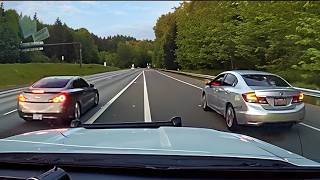
Ever scrolled through your feed and seen those insane videos? Cars weaving through traffic like they're playing a real life video game? We're talking about the cutting up in traffic trend that's absolutely blowing up recently with names like Squeeze Benz and License becoming almost legendary.
These guys have some serious driving skills, no doubt. But let's be real, they're also dicing with danger, risking not just their own lives, but everyone else's on the road for those insane clips. So, the big question everyone's asking is, why aren't these guys behind bars already?
And how on earth do they always get to drive these expensive cars? I mean, this is the USA, right? Land of traffic cameras on every corner and cops seemingly everywhere.
How do these swimmers, as they call themselves, managed to pull off these runs day after day without getting caught? Let's break it down together in today's video. But first, make sure to leave a like and subscribe to this channel for more videos covering the most famous swimmers.
But before we dive into the tricks these swimmers use to evade getting caught, let's take a look at what law enforcement can do to track these guys down and why it's not as easy as it may seem. First, let's talk about the perception of surveillance. Yeah, the US has a lot of cameras, but are they really the allseeing eye that can track a specific car doing 100, weaving through five lanes of rush hour traffic and follow it all the way home?
The reality is a bit more complex. Think about it. Traffic cameras are often focused on intersections for red light violations or monitoring general traffic flow.
The resolution might not always be high enough to clearly identify a license plate, especially at high speeds or in bad weather. Plus, the sheer volume of traffic in major metropolitan areas makes it like finding a needle in a haystack for law enforcement to manually track a single vehicle in real time through this network. But what about general police presence, you might ask?
While you might see patrol cars, the resources needed to dedicate officers to specifically monitor for and pursue these high-speed traffic violators across a sprawling city are immense. Police departments have to prioritize calls based on severity. And while cutting up is dangerous, it might not always be the top priority in a city dealing with more immediate threats.
Furthermore, the very nature of the offense makes it difficult to address. Cutting up is often a short burst of intense activity. These drivers might engage in the dangerous behavior for a few minutes to get their footage and then quickly blend back into normal traffic or disappear altogether.
Slow, so slow, so slow, so slow, slow, so slow. So, we're good. Let's loc off at this exit.
Let's locate get off at this exit. Did we lose the cops? Did we lose the cops?
Let's get off of this exit. Let's get off this exit. Taxi behind.
This hit and run style makes it incredibly challenging for law enforcement to react in time to intercept them. Even if a report comes in, the individual could be miles away or have already switched vehicles by the time officers arrive in the area. So, we touched on the sheer difficulty of tracking these guys, but let's dig a little deeper into what law enforcement is actually up against when they do spot someone pulling these driving maneuvers.
It's not as simple as just flipping on the lights and sirens and giving chase. There are a lot of factors that come into play and police work in these situations is governed by strict protocols designed to protect everyone, not just the officers involved. One of the biggest hurdles are strict departmental guidelines.
Many police departments in the US have very clear rules about engaging in high-speed pursuits, especially for non-violent offenses like reckless driving. The risk of a high-speed chase causing an accident that injures or kills innocent bystanders is a major concern. Departments often prohibit risky maneuvers like intentionally bumping or ramming a suspect vehicle at high speeds unless there's an imminent threat of serious harm to others.
This means officers can't always just force these swimmers off the road, even if they have the opportunity. And perhaps the most critical element is the constant risk assessment that officers have to perform in real time. Even if a police officer witnesses someone swimming through traffic live, they have to immediately weigh the potential outcomes of initiating a pursuit.
Do they chase after the driver, potentially escalating the dangerous behavior and pushing them to drive even more recklessly in an attempt to escape? Or do they decide to hold back, allowing the suspect to get away in that moment, but potentially preventing a high-speed collision that could kill someone? It's a split-second decision with life or death stakes, and officers are trained to prioritize public safety above all else.
Sometimes the safest option is to not pursue. Now, let's get back into the minds of these swimmers and look at some of the specific tactics they use to stay ahead of the game. Because it's not just about driving fast, it's about knowing the urban landscape and utilizing technology to their advantage.
And most importantly, the art of vanishing. One key aspect is their root knowledge. These drivers often operate in specific areas they know intimately.
They've likely scouted out shortcuts through residential access roads, pedestrian zones, which of course adds another layer of danger, or even construction sites. This allows them to quickly disappear from main roads and potentially lose any pursuing officers who aren't familiar with these alternative routes. It's almost like they've rehearsed their escape routes, knowing exactly where to turn and where the dead ends are.
Beyond just knowing the roads, they also leverage technical aids. It's highly probable that many of these drivers use radar and LAR detectors. These devices can warn them in advance when law enforcement is using speed measuring equipment, giving them precious seconds to potentially slow down or alter their behavior before being clocked or alternatively speed off.
Anyway, apps like Ways have become invaluable tools for these individuals. Ways relies on user generated real-time traffic information and that includes reports of police presence. This means swimmers can often get live updates on the locations of marked and unmarked patrol cars in their vicinity, allowing them to adjust their routes and avoid areas with a heavy police presence.
It's a constant cat-and- mouse game where technology plays a significant role on both sides. Another important part of how they operate is the prep work. They scope out the highways beforehand.
You'll often have other drivers involved acting like scouts. They're checking out the best spots for their swims. They look for stretches of road with seriously heavy traffic, so the video looks wild with tons of lanes to weave through.
And of course, they're also checking out where there might be fewer cops around or where it's easy to make a quick getaway. There's also other preparations like always wearing masks, helmets, or suits to make it hard for cameras to identify them. And let's not forget the immediate aftermath, the actual vanishing act.
Because once the swim session is over and the cameras have stopped recording, what happens next? It's highly probable they have pre-planned staging areas or even safe houses where they can quickly switch vehicles. Imagine pulling into a discrete garage or a less trafficked side street and hopping into a completely different car, instantly changing their profile.
They might also have a change of clothes or even alter their appearance quickly to further throw off any potential witnesses or lingering law enforcement. This focus on the immediate escape and blending back into the urban fabric is crucial to their continued evasion. So when you piece it all together, it becomes clear why catching these swimmers is such a monumental task for law enforcement.
The combination of limited real-time surveillance capabilities, strict pursuit guidelines, the sheer volume of traffic, and the deliberate efforts of these drivers to remain anonymous and strategically plan their stunts creates a perfect storm of elusiveness. For the foreseeable future, it's likely this trend will continue simply because the logistical hurdles for police to consistently stop it are so significant. However, it's important to remember that there's always an element of chance involved.
Despite all their precautions, these individuals are still breaking the law in a very public way, and eventually someone might just get unlucky. Take the case of the well-known swimmer Squeeze Benz. While he managed to evade authorities for a significant period, he was eventually apprehended.
Interestingly, his arrest wasn't the result of a dramatic high-speed chase. Instead, law enforcement was able to connect him to his online identity through a combination of factors, including his distinctive online presence and eventually a traffic stop for a less extreme violation. This allowed them to positively identify him and bring him in.
It serves as a reminder that even with careful planning, the risk of getting caught is always there, whether through a stroke of bad luck or persistent investigative work. But what do you think about all this? Is it just a matter of time before more of these drivers face the consequences, or will they continue to outmaneuver the authorities?
Let me know your thoughts in the comments below. Stay safe out there, and remember, the road is not a playground. Right.