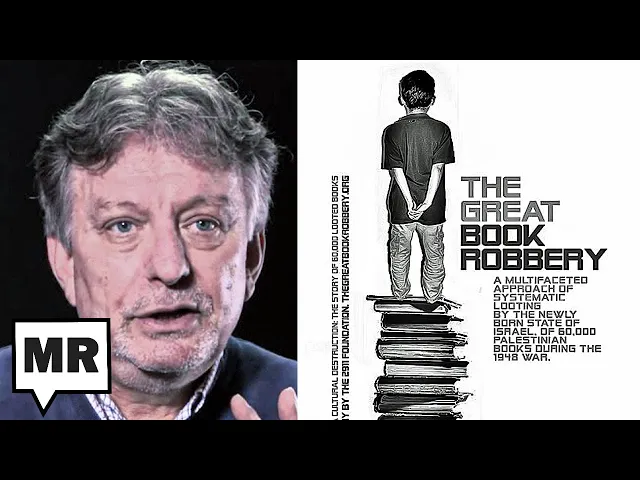
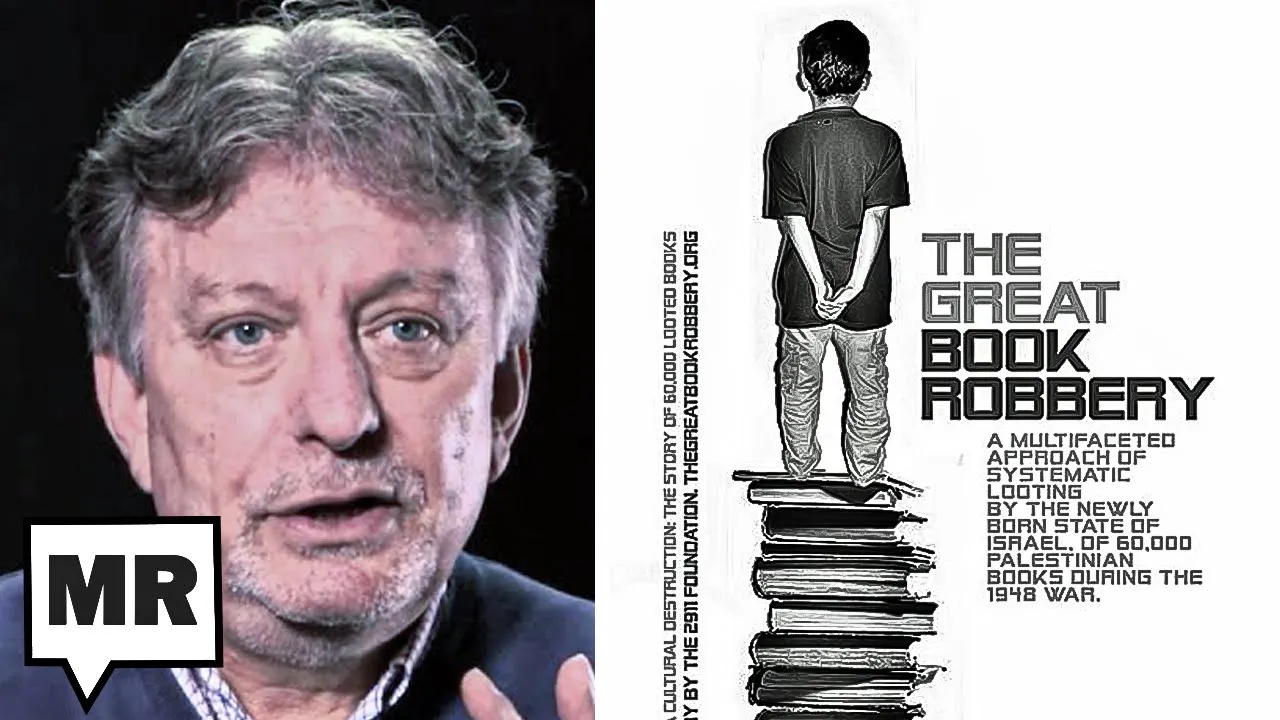
it's a great pleasure for me to welcome the director of The Great Book robbery a 56 57 minute uh documentary which has been shown on Al jazer English it is also uh screening through the us through the month of February uh and you can find more information at the Great Book robbery. org Benny Bruner director of uh the Great Book robbery welcome to the program Benny Hi Sam glad to be here uh now full disclosure uh Benny and I are friends from the uh the film circuit I had the opportunity to go see Benny's film
the other night uh at Columbia University and it's a fantastic film and Benny just briefly um just give us uh a what it is that you set out what story you set out to tell when you uh when you started to u to to make this film The Good BL covery is basically the story of at least 70,000 looted Palestinian books uh the books were looted or systematically looted by the Israeli Librarians of the Israeli National uh Library together with the army during the 1948 war and uh this took place in in primarily the major
cities um uh in uh Israel Palestine at that time um yes Jerusalem uh hia Jaffa um and and so uh just just walk us through a little bit about how this takes place because to say that um the library was looting I mean it's just I think it's hard for people to to sort of just grasp um uh how what were the mechanisms of this okay well one has to remember let let me let me uh lay out the the context of uh of of this historical event um there was a lot of looting taking
place in 1948 especially in the urban centers uh the ones you mentioned Jerusalem Jaffa hia um so what happened was that especially in Jerusalem it started there uh the the the soldiers and the authorities notice that U individuals you know Jew Jews residents of uh Jerusalem would going to abandon Palestinian homes mainly of middle class and upper middle class Palestinians and will you know they would loot the contents of the of of these houses uh carpets uh Furnitures pianos you name it um and uh the the the some of the soldiers mentioned to the Army
first and later on to the Librarians of the National Library that they they saw many many books in some of these homes so uh that triggered the the management of the National Library to uh put in motion an um what they called at the time a salvage operation to rescue these uh important books many of them very important and to uh bring them to the library for safekeeping until they can uh return them to their rightful owners uh so something that started with a good intention very quickly in a matter of weeks or some months
uh has been transformed basically into a organized looting because they uh very quickly The Librarians especially uh decided that the books are better served if they will be kept in the national library and the the fascinating thing about your film is that it in many respects and perhaps you know um I guess it it depends on which context we're talking about when we talk about conventional wisdom but certainly the mainstream Narrative of the um the the founding of the state of Israel is that um when Israel was founded it was essentially a land without people
and one of the things I think that your film does remarkably well in a way that I you know and granted I I have limited exposure to just seeing films these days uh but uh what does remarkably well is it paints a picture of a of a thriving um intellectual and artistic culture that existed prior to uh the uh that existed amongst the Palestinian people living there just give us a sense of of what it was like in these cities for the Palestinian middle class okay first of all let's uh let let me refer to
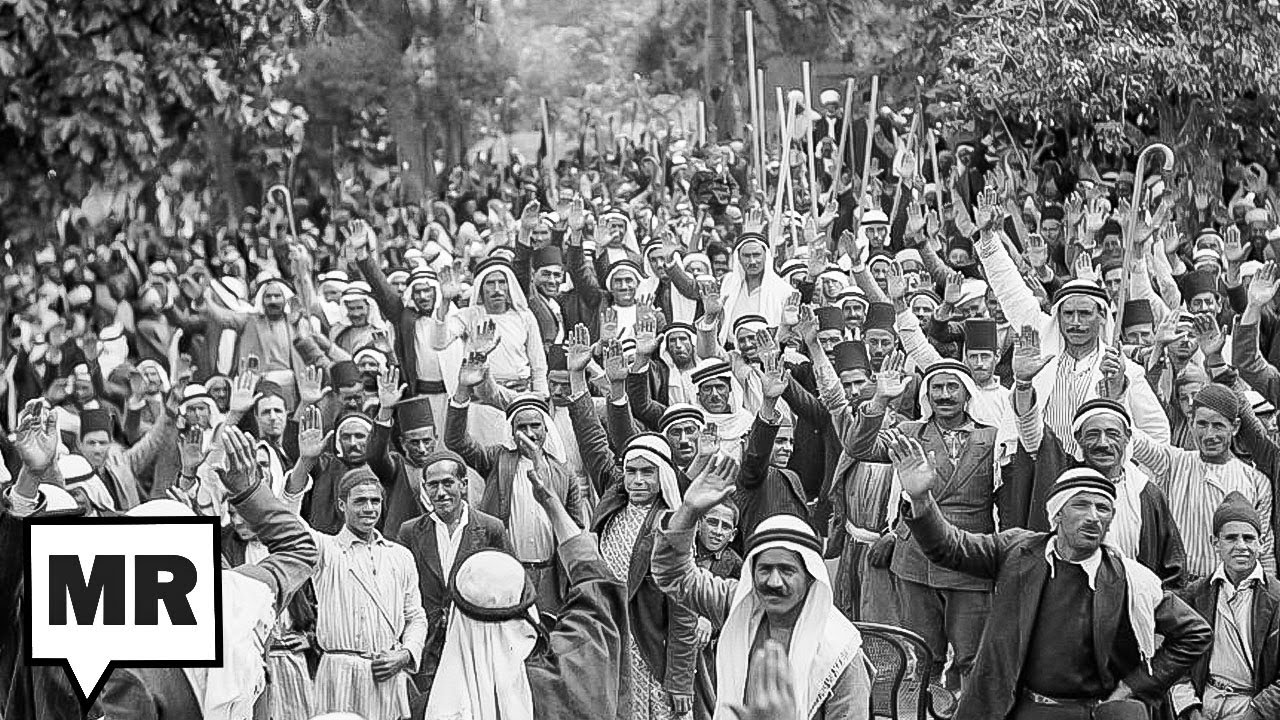
the to the founding myth that you uh mentioned in your question you know the the the Zionist slogan was uh concerning Palestine uh a land without a people for a people without a land the Jews being the people without a land well uh not only that there was a people in Palestine there were about in 48 there were about a million Palestinians uh even a little bit more and uh they managed to establish uh between 1917 when the Brits took over the place from the ottoman Turks they managed to establish a v it thriving cultural
scene uh in in the big centers of of Palestine Jerusalem Jaffa Nazar uh you know newspapers uh Jaffa was a major uh um Center for printing at least uh four or five National newspapers in Arabic and uh the the the center for uh Publishers book publishers uh Jerusalem had uh very Advanced schools uh advancing even in in in in today's terms uh you you you you had the theater groups traveling from Egypt to uh Lebanon and in the way making the stop in hia to perform there was you know you had theater you had Cinema
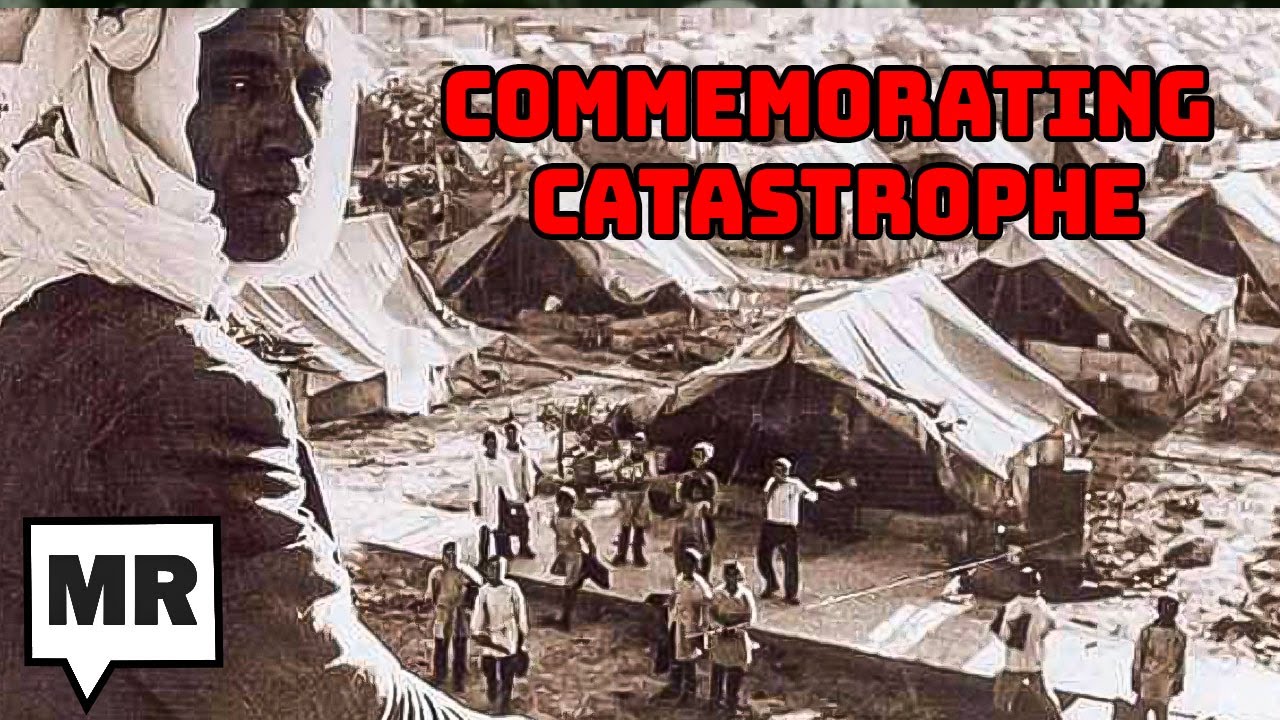
the the the full monty so to speak so it was uh it was a lively thriving uh vibrant uh cultural scene and that has been lost in 1948 and the the the the the whole thing of my film is that it talks about it it deals with this aspect of the Palestinian catastrophe or the nagba as they call it uh from this aspect it's it was never talked really uh hardly mentioned and due to the fact that PhD student Israeli PhD student who about five years ago found the these documents that attest to this event
that uh you know that saved it from going into Oblivion and talk I mean talk about this uh one of the the the fascinating things that um you that is related in your film is this sort of cultural connection between um uh uh Beirut and Cairo and Damascus that would run through um I guess it was was a Jaffa or hia um H H and um via a railway line I mean it and it has you know it has the same feel of uh you know having grown up in the northeast of uh of of
this country uh you had these major Urban centers uh that were just a couple hours away from each other via train and this created just a a thriving sort of mixture of of ideas and and art and and whatnot yes yes absolutely you know you you you have to look at it as uh as one space Al those Palestine had its own uh mandatory British mandatory borders but culturally speaking it was one space uh there was uh almost free movement of people Goods uh culture between Cairo hia Jaffa Jerusalem Beirut Damascus it was a free
floor it was uh you know as you can look at it as uh uh United States today where you know uh theater groups and books and uh films are moving freely between the East and the west coast and so let's talk about goes to sorry go ahead I'm sorry hello Benning so the same goes the same goes for the for the for the scene in in palestin of the time between indeed between 1917 and 1948 under the British rule uh it was an uh it was open borders basically you needed some uh documentations but very
basic so people just moved around uh and uh and did their business whatever it was commer or culture and so I mean uh so you've you've you've described uh in your film you've described the sort of this context that is contrary to the the conventional wisdom give me a sense of why you think the this I mean as uh as an American Jew uh as an American citizen at the very least and uh you are um you're living in Denmark uh you were born in Israel in the Netherlands Netherlands in Netherlands not yet I don't
live in Denmark yet I live in the Netherlands in Amsterdam apologies and um but that could be in near future one never knows but um um but I mean the the conventional wisdom here the narrative is or at the very least there's been an absence of discussion of the presence of any type of vital uh Palestinian Community or one that was uh one which we could relate to from our our narrow perspective uh you know in the European or American society what what do you think accounts for that I mean is it a is it
a function of a narrative that has political expediency and value uh to a Zionist perspective is it um part of the fact that because the the center of or centers of Palestinian culture were sort of were dispersed in such a dramatic and um sudden fashion that there was no way to tell this story I mean what what accounts for this I think basically it's a mixture of uh all the different uh points you mentioned uh I think there is a strong orientalist uh look of the West towards the east in other words we we don't
see the east as it is is we see we relate to an imaginary East that uh we created in our own imagination um there is a colonial aspect to it as well that you know we look down on them the natives uh and we are the possessors of The Higher Culture a better one a more advanced one then there is the this lingering uh Western uh guilt towards the Jews has to do of the H with the Holocaust of course um you know it's it's a mixture of all that and of course the the let's
not forget the the major role of the Jewish Lobby in this country which is powerful and uh can dictate uh quite a lot of the of the way the the political establishment but not only also the the media relate to uh to Israel Palestine to the Arabs to Islam uh I think the sooner we we recognize and acknowledge that uh the Palestinian had a c a culture a thriving one uh the the the Muslims are not all terrorist and so on the better will be for everybody involved it's it's a it's a journey which we
have to uh to work on it to keep knocking on the door and keep mentioning it that you know history has been different uh uh there were people who live there there were a culture the there was there were libraries uh and all this uh you know all the topics that we discussed in this talk and uh I rais in my film H how how how um how pervasive is the awareness of the existence of Palestinian culture uh prior to 1948 how H how how much awareness is that amongst Israelis I would say close to
uh Close To None almost zero NADA uh there was a there was a big article published in one of the Israeli daili SAR uh some sometime in uh mid December 2012 just before I went to Israel Palestine to tour with my film and it was interesting to note some of the talkbacks you know I don't know how you call it here when so when people readers react to an article and write something the comments comments yeah in Israel they call it tobs okay anyway um some of them were really revealing uh uh people just asked
what what culture you're talking about Palestinian culture did did they have writers did they have a language uh what what they could do be beside mixing humus and uh eating it how can you talk about Palestinian culture and I think it's very revealing basically although it probably came from Samurai ters uh in Israel I think it's uh it's really re it's a revealing um notion and of course also the the the the respond that I got from uh from a leading uh 1948 Israeli historian Benny Morris who when uh I told him what I'm busy
with um that goes back a couple of years now uh it told me you know this this historical event I heard of of it he told me about the the the collection of the books the Looting of the book but I want to tell you it's I would I don't consider it even as an uh a footnote in the in the history of 1948 and when I uh told him listen you cannot say on on the destruction of uh Urban centers and uh the the the the the destruction of a culture as a as a
footnote he said well I don't think so it's it's it is not more than a footnote so it when it comes from somebody in his position and with his knowledge it's very telling and and people should know that Benny Morris um is a is a historian who wrote uh the book The Birth of the Palestinian refugee problem uh exactly 1947 is very important used to be very important still is important in the in the history of the of 1948 and the ongoing Israeli Arab or Israeli Palestinian conflict he was the first indeed the book that
you mentioned that was published in the mid 1980s was the first one actually to uh put to rest this myth that we Israelis didn't expel any Palestinians because he he was in the right place at the right time when a lot of military and state document became available and it just showed the how systematically the expulsion was and how uh how it was done how and and you ended up making a film uh entitled Al Al nakba the the Palestinian catastrophe but how do how do you how do you I mean how do you reconcile
his perspective on on it being such a small footnote I mean what I mean what what does that mean I mean for someone who had written a uh a history which had broke the prevailing narrative that um that the Palestinians just got up and walked away how how do you reconcile the idea that in his mind the fact that they were not just expelled but but had a vibrant cultural life there is not relevant to the conversation it's not relevant to what happened in 48 that's what he says well Benny Morris one has to uh
to to to realize he was never in the on the left side uh when he wrote his book uh in in the mid 80s um he did what he did but he was never lefty or what you call here liberal and in time and as events took place and wars and uh suicide bombers and so on that you know the whole the whole uh uh bloody history of of of that place what he did he he moved more and more to the center and then he moved to the right he's uh and he lost the
little empathy and sympathy that he had to the Palestinian tragedy and um so he he became sort of indifferent indifferent so and uh that's that's horrible that's uh the fact that he but let me ask you I mean I'm I'm less interested in in in Benny Morris the person than I am the the impetus to deny the relevance of that when uh to deny the relevance of a VI of a vibrant because you know from a historical perspective um if there's if it's relevant from a historical perspective um you know as to uh the the
expulsion of of Palestinians it surely must be relevant as to what they were doing there yes that that's what I mentioning I mean I'm not discussing Benny moris the person or Benny moris the historian I'm discussing Benmore is the phenomena that uh you know points to to a larger attitude of of so many Israelis the majority of them unfortunately um and that's it's I think most Israelis lost uh or maybe many of them never never possessed the ability to sympathize with the with the other side to realize that our our uh Triumph our ability to
uh establish a state after so many years in in Exile and living as uh you know as a people without a state uh came came on the on the on uh on the foot hills of of another's people tragedy that that's this the the the inability to realize the the the the biblical Injustice if you like that was uh that we we created in 1948 uh that's that's that's the main problem and it's it's it's quite painful when it comes from somebody like Benny Morris who knows so much about you know he knows so much
the information about the the the events of 1948 and what even came before that and after that but seems to understand so little about about what what it means what it stands for what what uh what we did to uh to another people has he seen the film I mean I don't mean to focus on uh on on Benny Morris but Benny Morris I don't know I don't think so I mean but occasionally we meet because uh you know when he travels uh to Europe for his businesses or when I'm in Israel we we sometime
meet so next time I'll uh I'll give him the DVD and I'll I wonder what you will say yes I mean I'm curious because um obviously when you you make a film like this you're you're obviously you're creating a record but you want to have uh an impact on on the the current state of of of I guess of perception of of of on the discussion on the discussion yes absolutely what what do you hope um what do you hope uh when a viewer who has either been unaware of the of of the Palestinian cultural
life that was uh dispossessed or one who feels like it's irrelevant what do you hope that they walk away um and and what impact do you do you hope that the film will have well I hope that first of all people will get uh aware of uh the existence of uh Palestinian culture and people and the fact that this uh Monumental Injustice uh happened to them was done to them and that people will open their hearts I mean the sort of people you you you you mentioned will open the art and uh let in some
um some or develop some sympathy and empathy with the with the Palestinians uh um and uh if if they want to take a stand maybe they can write to their Congressman or congress woman and uh you know say uh vote with your conscience next time that you vote on a middle eastern policy uh something this is your uh this is your fifth film I think is that right that's been released at this point this is this is my 15th oh 15th I'm sorry you know I uh you your about section is a little bit uh
is a little bit thin uh Benny on uh on the great on the the Great Book robbery but um do you overall I mean thematically what is it that uh that you're trying to do with your documentaries I'm trying to tell a different uh narrative and uh a narrative that uh is little known especially in this country a narrative that uh uh I think is closer to what really happened and uh I'm I'm trying to uh you can look at it as a counternarrative uh I think uh decency uh calls to uh to tell what
what we really did and um also calls to uh to to to to say that it's time to uh get the record straight I think it will it it's it's it's essential for us Israelis to uh to acknowledge the the the the the true meaning of 1948 in in order to be able to move forward I think we are stuck by the denial and by the refuse to uh to acknowledge the the real event of 1948 and our real impact on on the other side it's uh it it you know we are stuck and we'll
we'll remain Stu as long as we don't acknowledge it so in this respect I see myself as an Israeli Patriot though I'm sure most of is the Israelis not only these on the rights will will say that I'm a traitor well uh Benny Bruner director of The Great Brook robbery uh book robbery you can check it out at the grap book robbery. org uh dates while Benny is still in the United States and uh information on uh that film and how to purchase a DVD for yourself Benny thank you so much for joining us