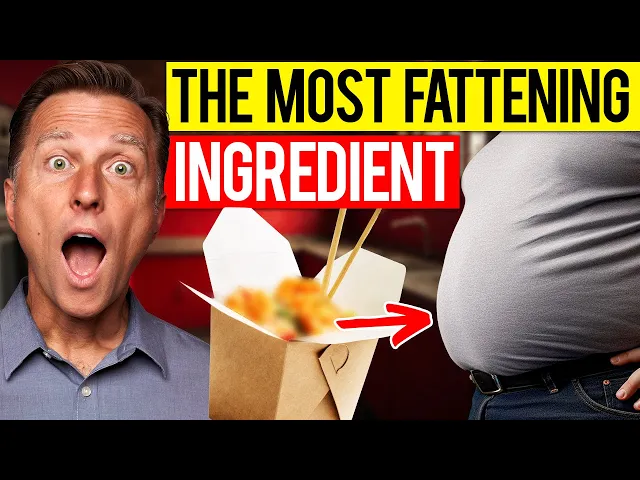
today we're going to talk about the number one ingredient that is making you fat and no it's not sugar and the FDA even granted this ingredient as what's called grass generally recognized as safe and some people might mistakenly think this causes the Chinese restaurant syndrome where you might get headaches dizziness after consuming the food with this certain ingredient in it but rest assured Wikipedia says that it doesn't cause headaches it is non-toxic there's no high quality information that it has any negative effects on our body if consumed in moderate amounts there's no established causation related
to this ingredient most the symptom reports are anecdotal and they're just not scientific good because I really like this ingredient and this ingredient is monosodium glutamate MSG now what actually is MSG MSG is a flavor enhancer it will make the food explode with this incredible pleasure sensation the science is definitely settled on that so we can just forget about it well you know there's just this one little piece of information that kind of just stands out that I want to just bring up why do they use MSG to make mice obese and how is it
safe for our bodies but not necessarily too safe with mice in fact mice don't just get obesity they get diabetes they have metabolic problems they can develop fatty livers they develop a large midsection weight but the interesting thing about this is what MSG does to rats why does it make a rat fat when it's not really a carbohydrate well apparently what it does to the rat is it overstimulates a certain part called the hypothalamus and this is like the master of the master glands and there a very specific part of the hypothalamus that gets destroyed
with MSG what that little Center in the hypothalamus does it regulates the balance of hunger and being satisfied it prevents the utilization of energy to a very large degree to the point where you're storing a lot of fat but it also does other things it affects the fertility I mean just think about the foods that they put this in did you realize the average consumption of MSG per day is between 590 mg to 2,330 mg and sometimes when you go to a restaurant you will get up to 5,000 or more milligrams of this MSG and
also if you add carb hydrates to MSG the effects are accentuated and also a lot of the research done on MSG is either sponsored by industry or funded by industry which is pretty much the same thing you have the international tactical committee which puts out a lot of information that MSG is safe I don't know if you knew that this was a loophole that industry can actually do their own studies there's not any independent third party research that the FDA does on these ingredients but I think this entire argument whether MSG is dangerous or not
revolves around this one piece of information that industry will tell you that it's natural it's in nature it's in a lot of Whole Foods so there is really no problem what you're saying is when we make this substance in a an industrial Factory it's the exact same thing as a glutamate in our food that's really what they're saying the truth is they're completely different you see when they make it in a lab or a factory you're breaking down this amino acid into its basic free state so in other words when you consume this free glutamate
it goes into your bloodstream like a rocket ship like eight to 10 times faster then if you were to get glutamate in a whole food your body would naturally break it down I mean this is the same argument that they use with high fructose corn syrup fructose is the same in high fructose corn syrup as it is in Fruit but it's not and this is how addictions are created so the other loophole that they use with MSG if there's less than a half of a gram they don't have to list it on the label as
MSG so how much MSG are we really consuming well those facts and figures that I mentioned are just the listing of MSG not the hidden MSG we're probably consuming a lot more MSG but it's really hard to determine that because I don't know if anyone's tracking it but when you see ingredients like hydrolized vegetable protein and even natural flavorings can have this hidden glutamate so there's many different ways to camouflage this free glutamate but this is the thing in the food that just makes it intensified the flavor is amazing but it's all geared to trick
you that's what the whole game is about so what types of foods are very high in this monos sodium glutamate instant noodles like Ramen noodles like cup noodles you know the stuff that I used to live on in college all the snack chips the flavored potato chips the flavored popcorn why do you think they taste so amazing the canned soups bullion cubes try to find a bullion Cube that doesn't have MSG processed meat hamburgers deli meat virtually all fast foods have a lot of hidden MSG so it might be a good idea to start asking
do you add MSG to your food all the flavored seasoning mixes have MSG the salad dressings the frozen dinners which are the TV dinners which I used to live on the Savory snacks the gravy and especially the appetizers that you get at restaurants also you have the flavored crackers canned vegetables even have it so remember there's many mechanisms here it's not just overeating that memg has a potential to mess with your hypothalamus to slow down your metabolism because it Alters the feeding centers of the body creating damage within the hypothalamus but of course just in
Rat studies there's no studies to show that this is happening in humans according to Wikipedia and of course I've talked about obesity but a lot of people are sensitive to this glutamate because of what it does to the brain it overe excites the brain they get headaches they get allergy symptoms they get irritable they have sleeping problems they might get dizzy so it would be interesting for you just to avoid any of these processed foods for a couple weeks just to see how many problems would actually go away but I just want to make also
another point about even in certain proteins protein bars they'll use either soy protein isolates or sometimes they'll use milk protein as a sodium quinate well guess what you're going to get a lot of free glutamate in both of them and some of the symptoms that occur from free glutamate is not right away it can happen an hour 24 hours later so it's really hard to pinpoint exactly what it is because there's DeLay So when you hear this concept that hey glutamate is natural it's in our Foods just ask them this one question well what's the
source of glutamate when you see this added MSG does it come from natural seaweed that they used in China for many many many years answer is no industrial MSG is made from corn molasses tapioca beet sugar soy so there's a huge difference between the two okay they might be similar but they're definitely not the same so it's about how much free glutamate in the MSG you're going to get like 78.2% free glutamate compared to in a natural food that has glutamate it's going to be a lot less insignificant amounts of free glutamate now that you
know about glutamate you probably already know that sugar causes obesity if you haven't seen this ingredient that's related to obesity this is another one that you should put on your radar and I will put that video up right here check it out