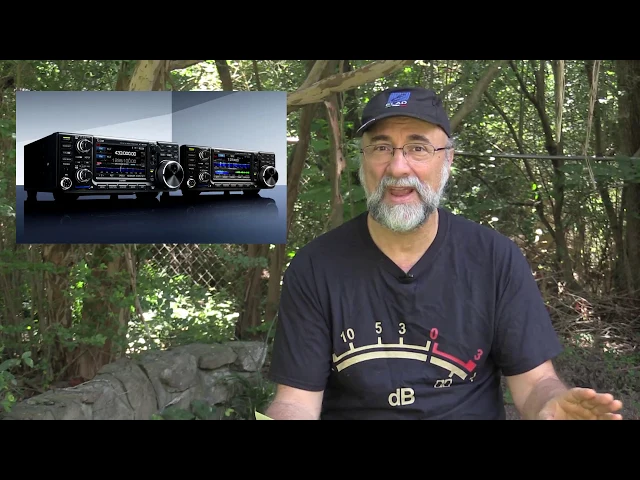
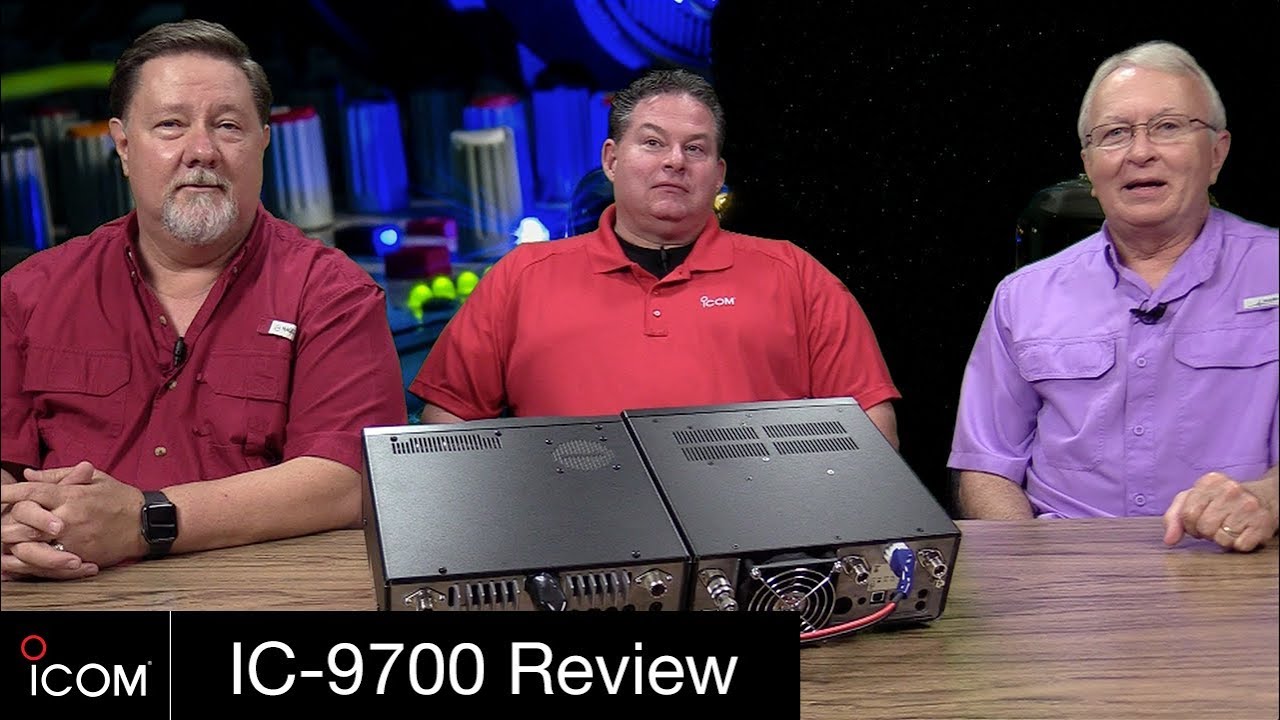
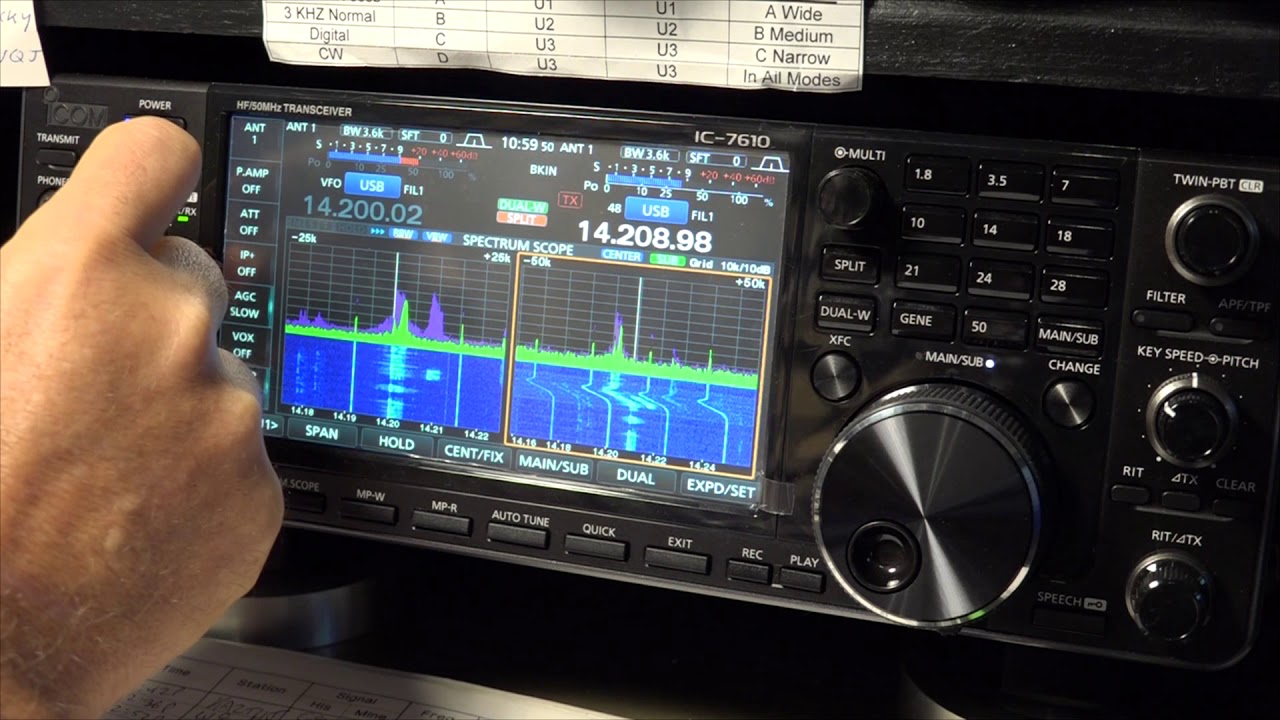
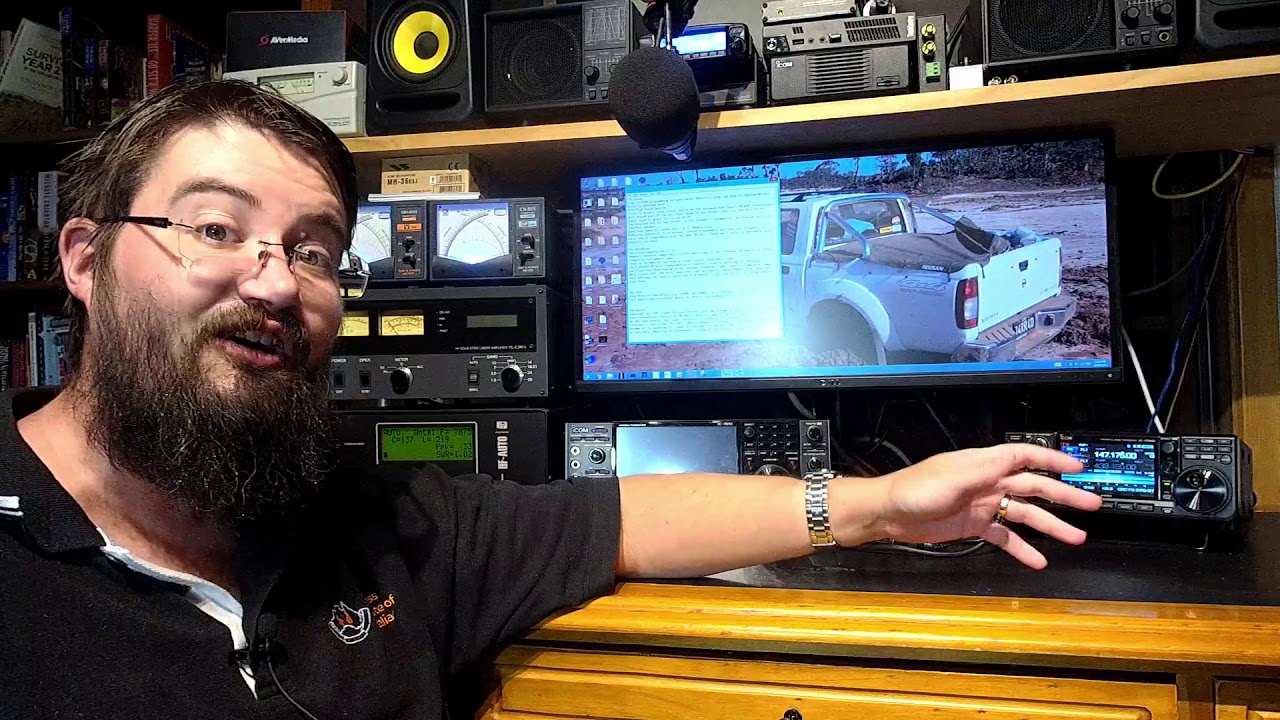
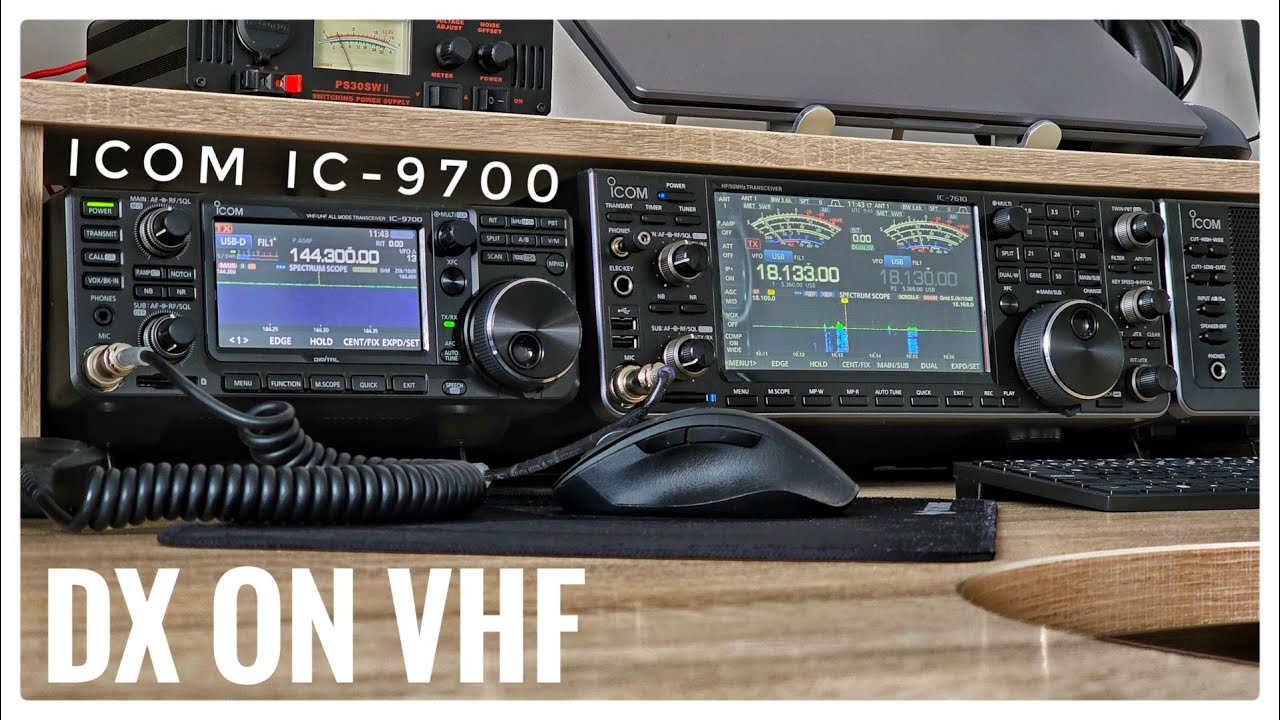
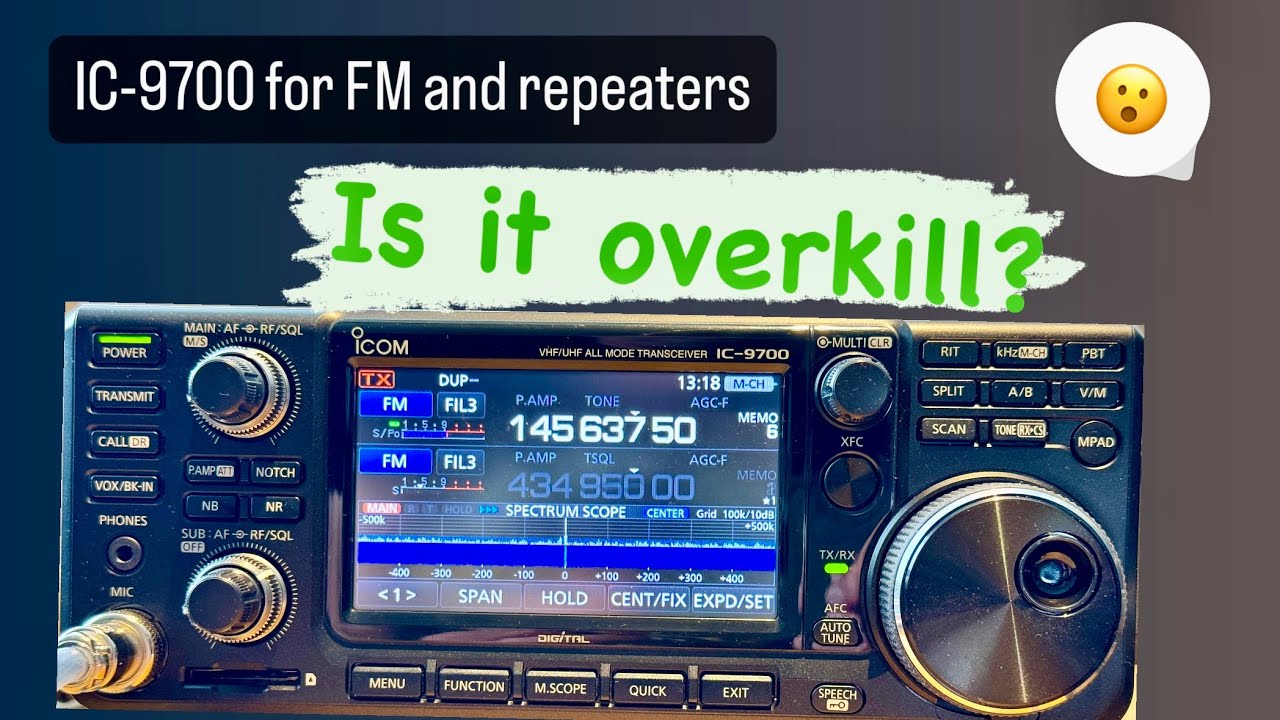
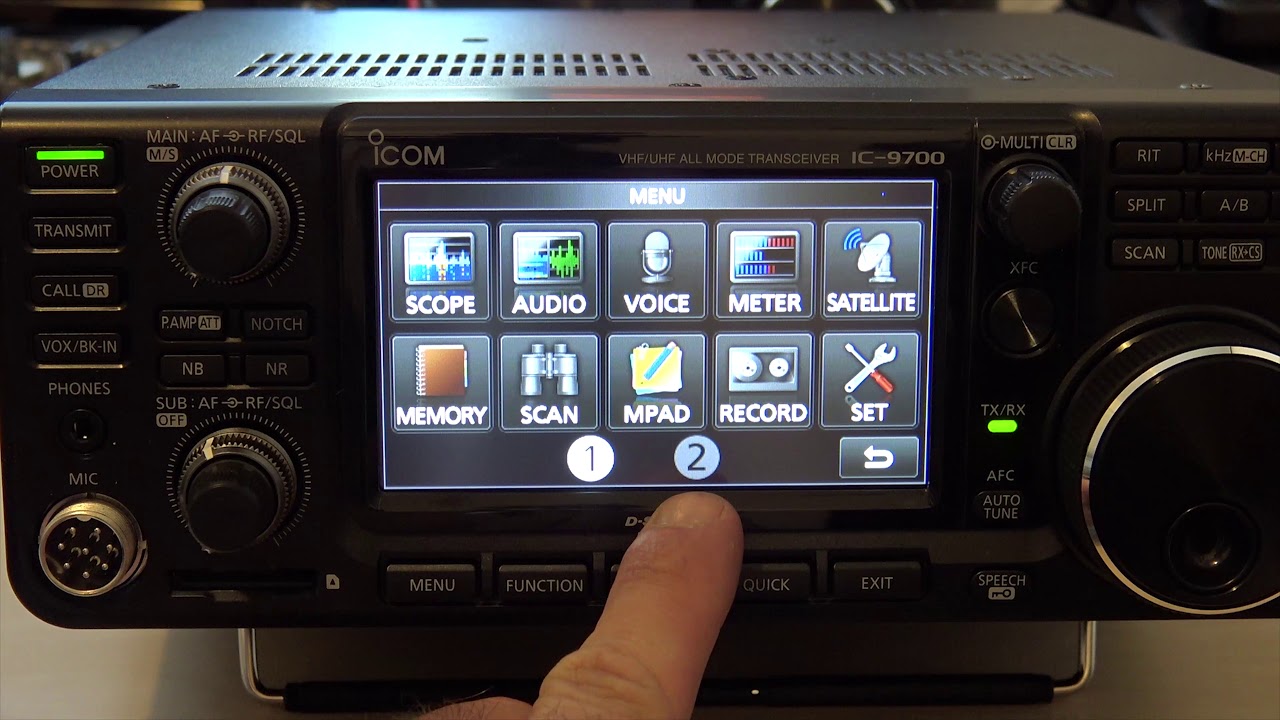
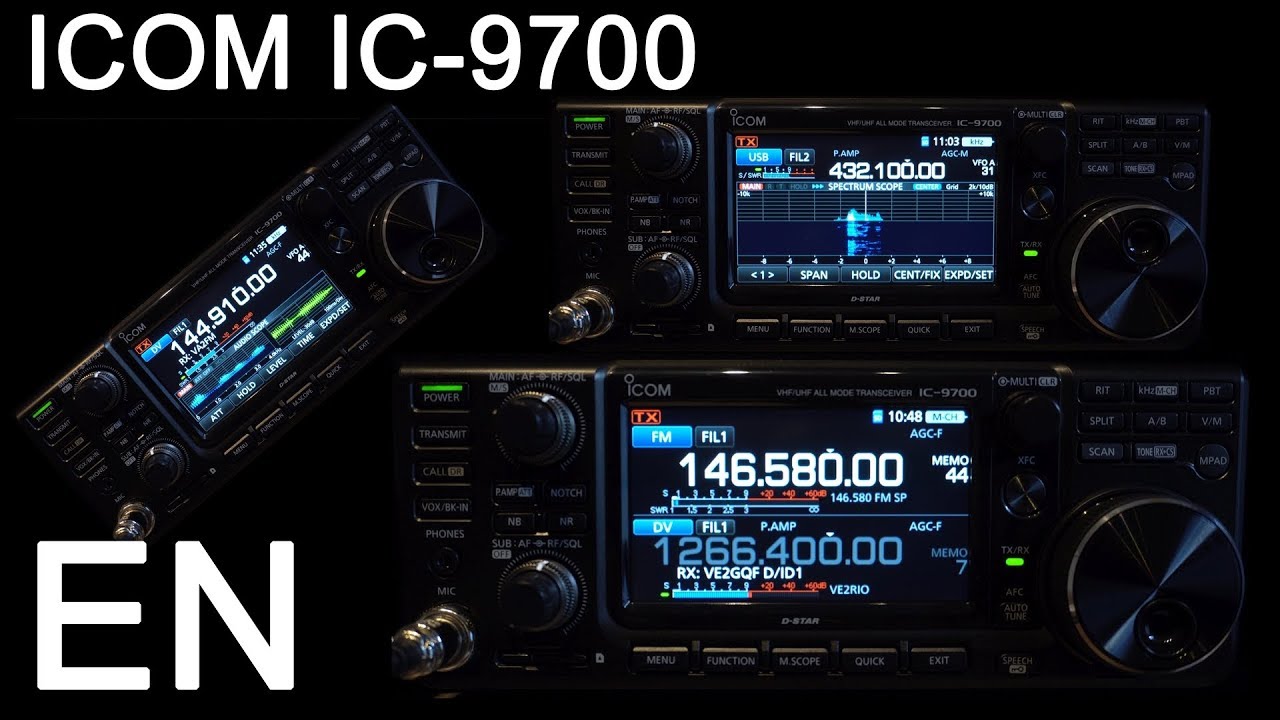
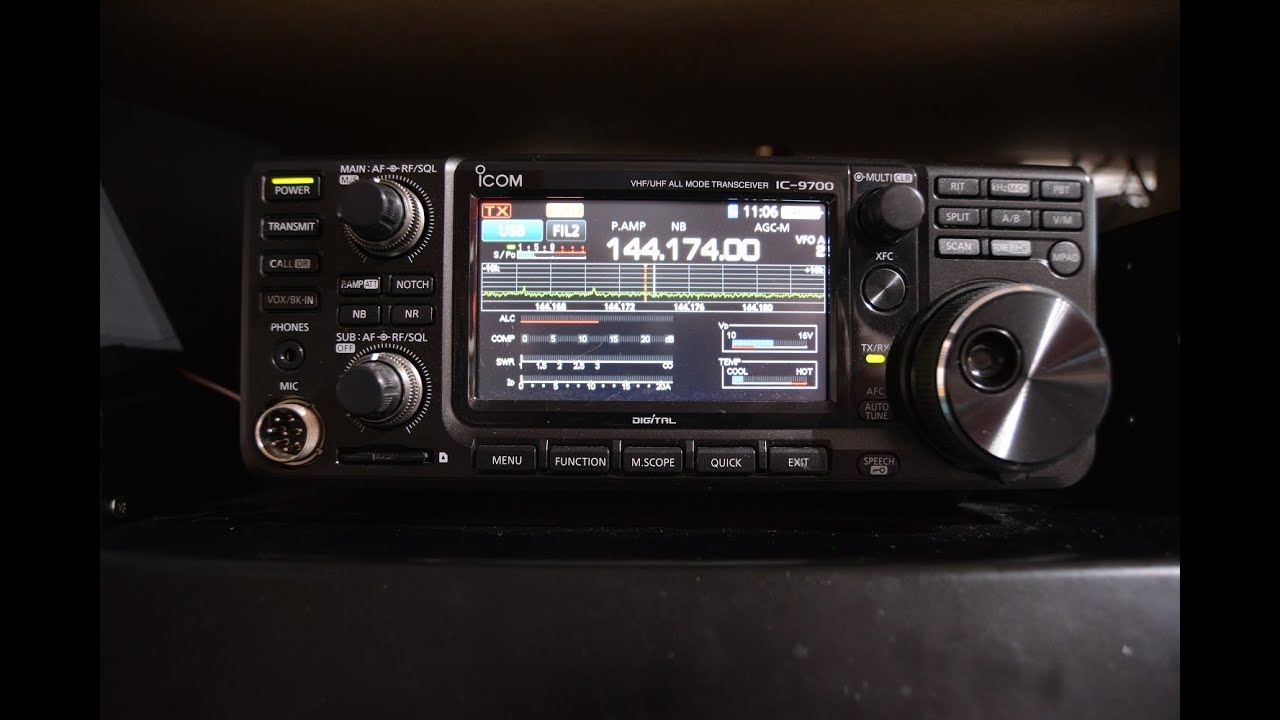
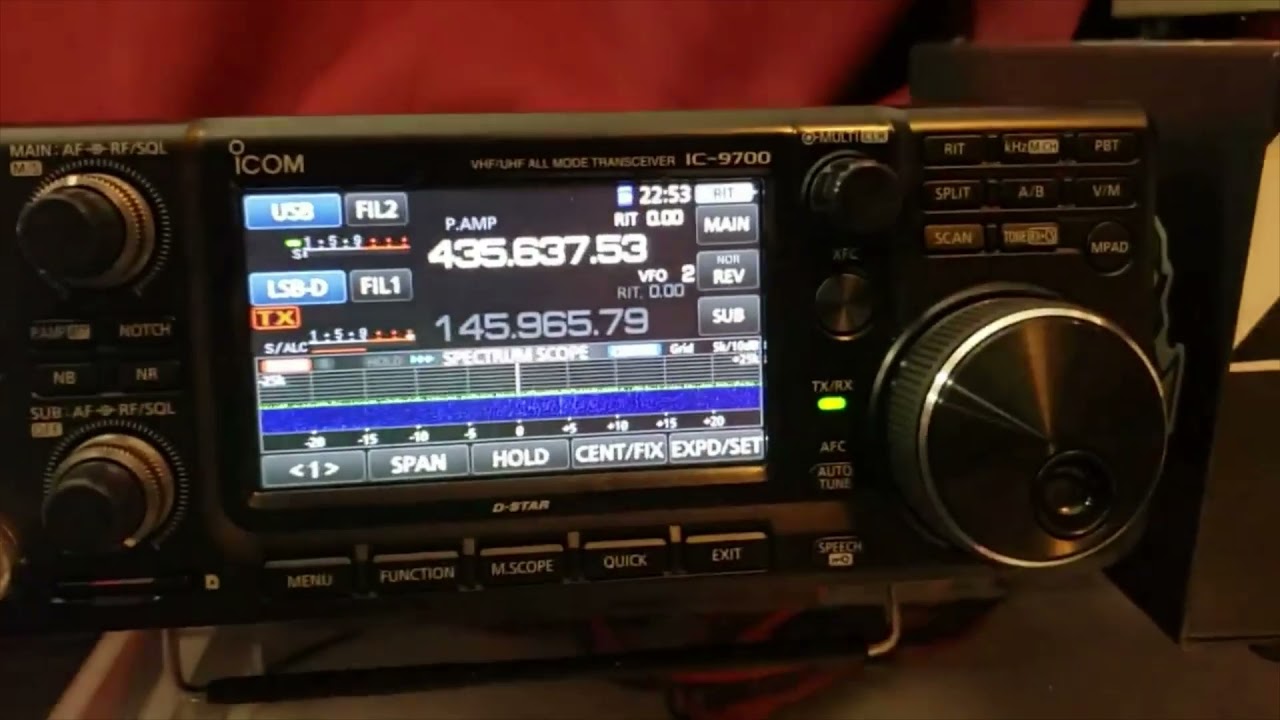
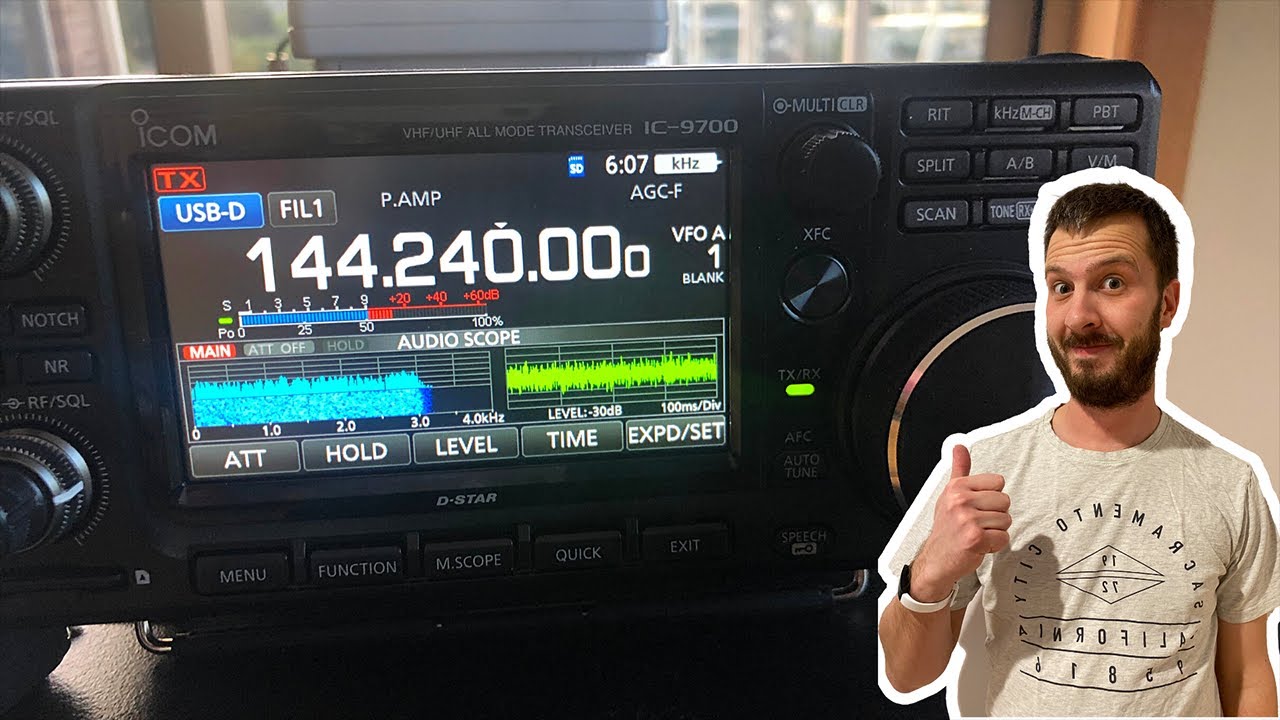
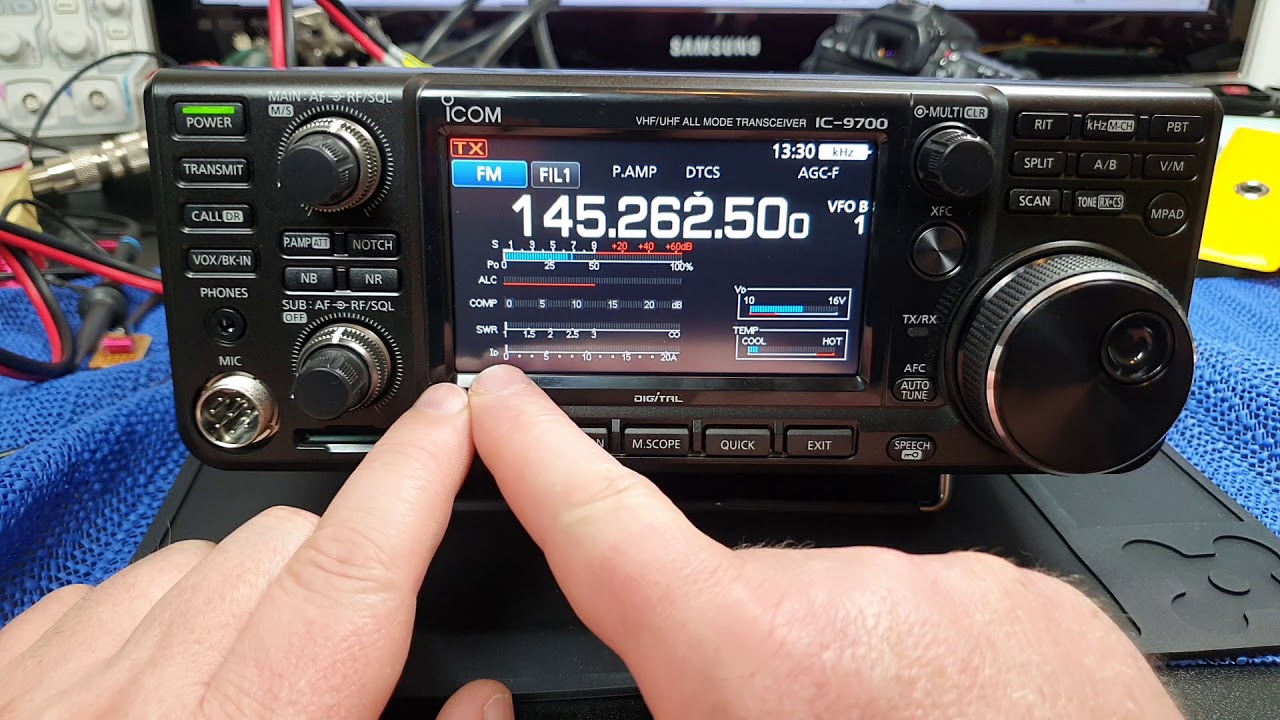
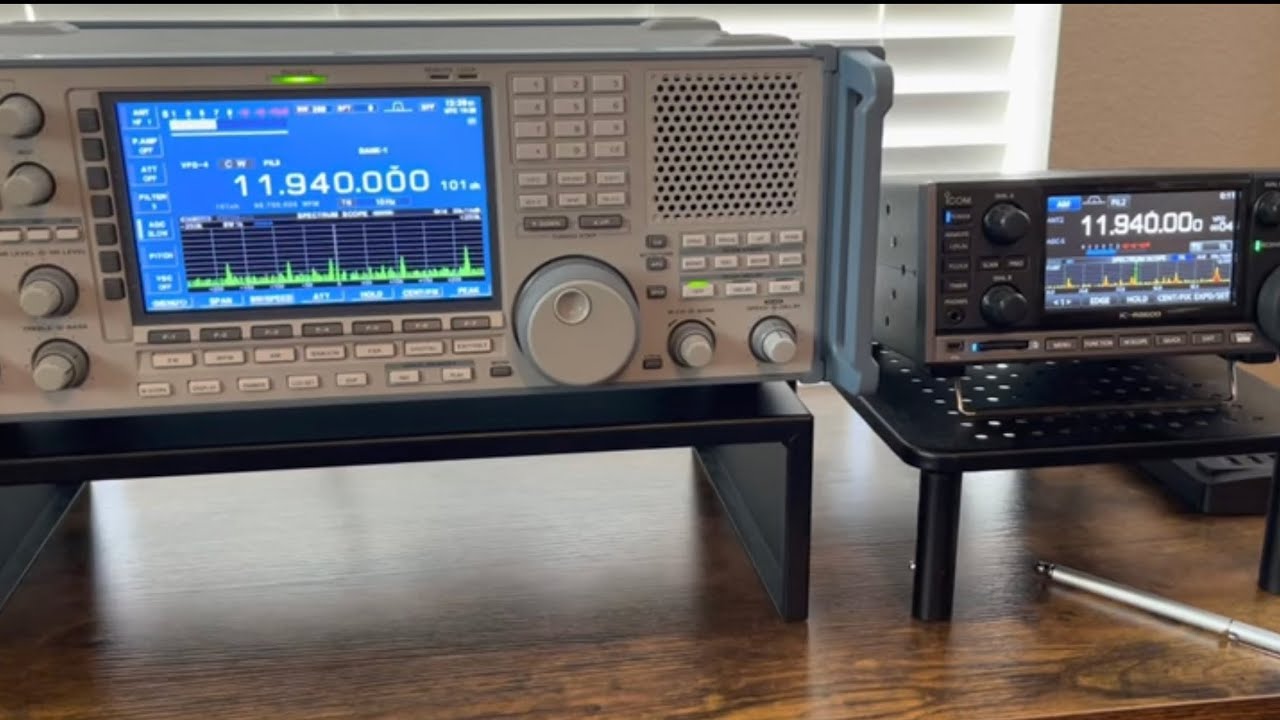
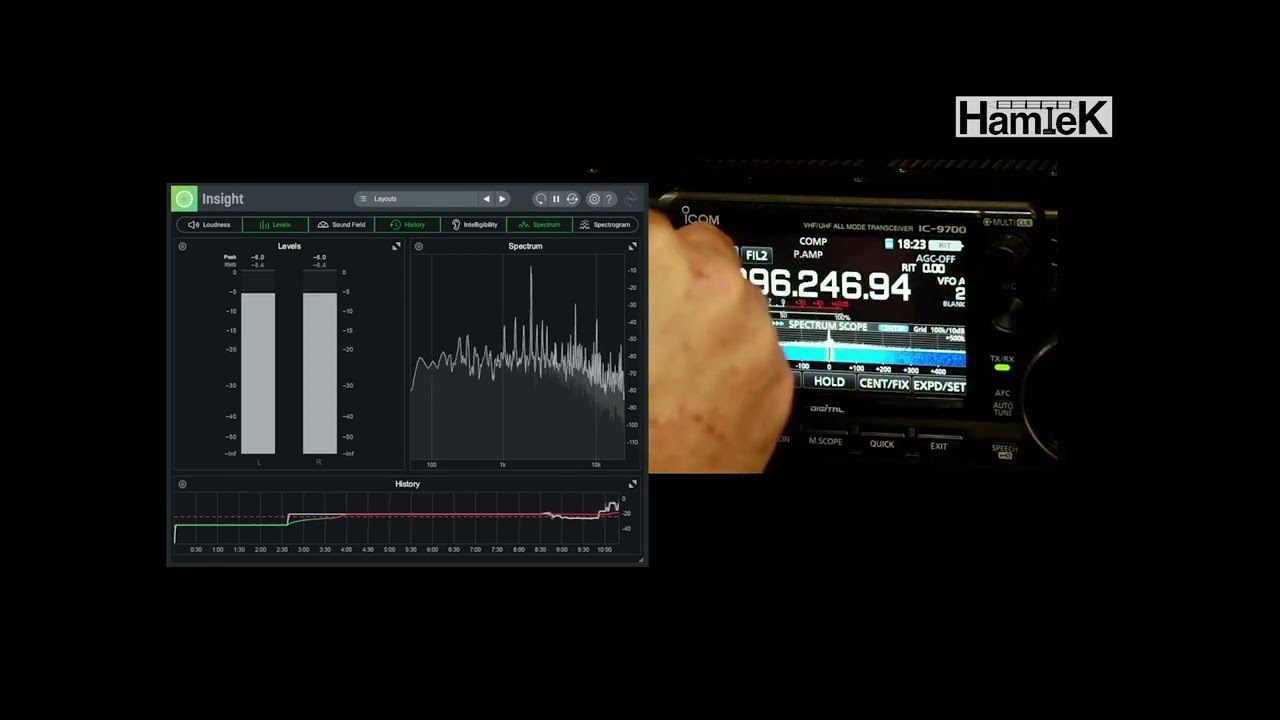
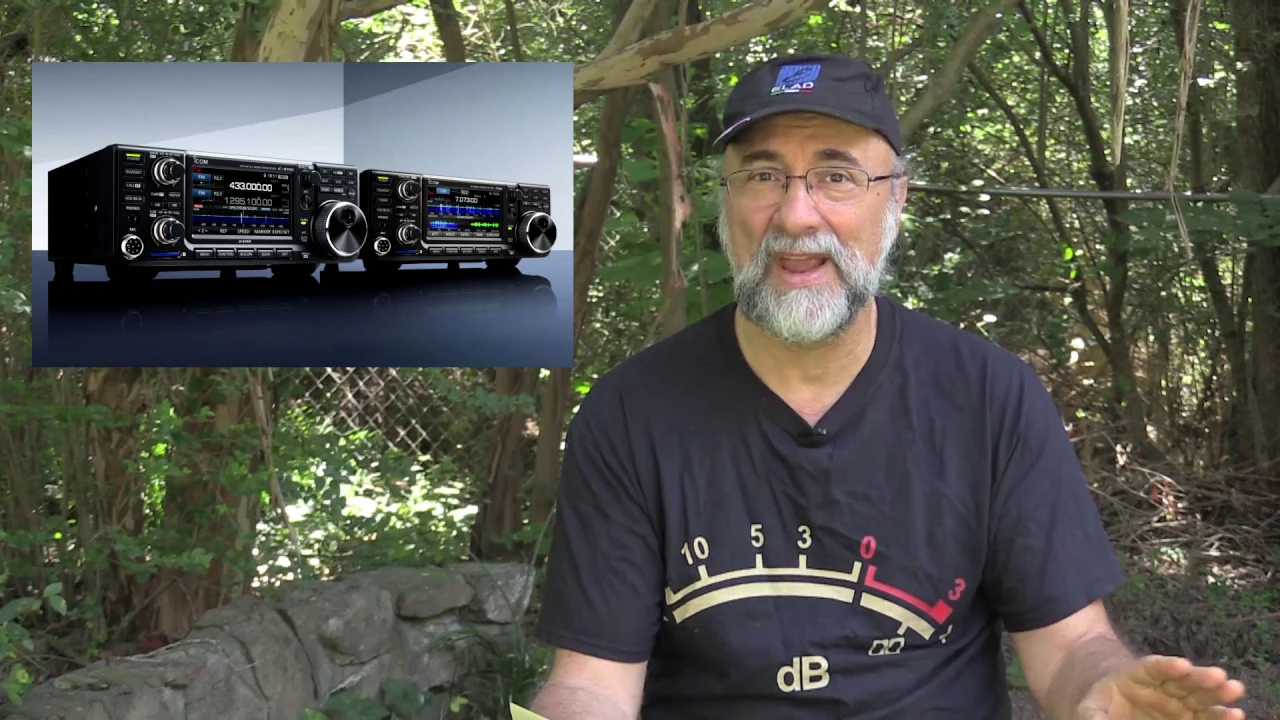
[Music] hi Bob Negi here a b5 and we'll another equipment review today thanks for watching we're going to talk about the IC 9700 today and it is the talk of the town this season and for good reason it's the first SDR two meter 450 1. 2 gigahertz multimode radio it is the first and only that exists right now and its form factor factor matches the very very popular IC 7,300 boy what a pair if you have both of them likely on the inside they're using similar architecture to that means the 14 bit probably using the same 14 bit SDR chipset and the cats are going crazy back there now I'm sure you've seen a lot of videos on the 9700 go through YouTube and there's all kind of you know showing particular aspects of noise reduction or whatever different aspects of the radio people enjoying using the radio and you might think that 1800 bucks or so is a lot to pay for a radio a tri-band radio it would be if it wasn't that this radio has incredible capabilities it has an incredibly wide feature set so I would guess that probably 5% of buyers are kind of use 100% of this radios capabilities now if you only use 75% of this radios capabilities you're probably still getting your value out of the radio so I'm not going to spend two hours here pre digesting the manual I mean the the advanced user manuals over 200 pages itself that's the second manual for the radio so it would be ohtake hours to go through that we would never make it through the video of what I would like to do is tell you everything that this radio can do in short order and then we'll talk about is is it worth behind one I mean that's the bottom line question isn't it I want to buy one so let's go through all that this radio can do first it's a high power radio it's a hundred watts on two meters and here's where you adjust you power level 75 on 450 and 10 watts on microwave 1. 2 the spectrum scope is an FFT type for very fast refresh rate and really some nice colors and display fully customizable through the menus color persistence and things like that it includes all modes if the mode and we can see we have sideband cwr tty am/fm DV which is d star and D star data modes it's a direct sampling SDR in two meters and 450 and a mixer on 1.
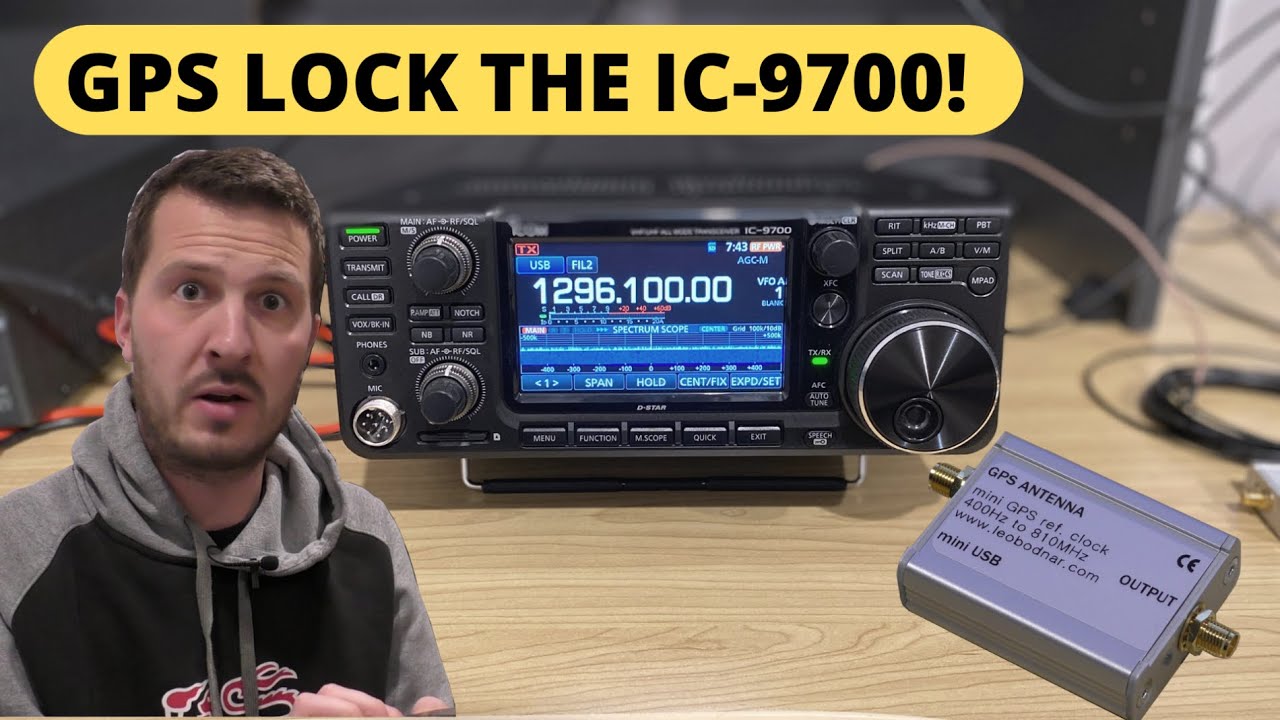
2 gigahertz it's design leans in the direction of being superlatively sensitive because of course you don't need the selectivity as much on the higher bands although it's selectivity numbers are excellent as well it has preamps on each band easy to turn on and off and their individual preamps and also have individual DC control through the back so you can say I've got a preamp on which band you've got it on and have a turn the DC on and off and injected via the coax into the preamplifier at the antenna which is where you want it it's got 32 bit noise reduction and notch controls right here it's got three presets for each filter one two and three you hit the filter button here and if you hold it down then you can individually adjust the bandwidth of that filter it's softer sharp edges you by just simply hitting bandwidth and then adjusting with a main tuning dial it's got full satellite implementation menu satellite and bam we're in to the satellites I've got all the popular satellites already programmed in here very easy to do inputs outputs the FM satellites the sideband linear translators ready to go you've got normal and reverse tracking and all the stuff you need to it and work all the amateur satellites it is a full duplex radio and that's a good thing especially when you're on satellite I can transmit up on 450 here let's open the squelch 90 meters and that transmit button and I'm still receiving on two meters or vice versa it's got 99 memories per band and it also has scan edges per bin and call channels per band at the menu let's take a look at the memory and we can scroll through them it comes with fantastic software free that's very easy to operate in program this radio with with a single USB cable so no need to buy that or you can do it with the buttons on the radio in d-star it has the dr mode sort of a nice automated way to do things immediately you can set up where you want to go and who you're talking to either a nearby repeater or from the ground repeater list itself or reflectors and things like that so it's very easy to set up your communication and d-star using that dr mode the icon 9700 has DPRs DPRs sends your position information in optionally whether an object information into the APRs system via a deist to our gateway that means it embeds the information in the d star signal along with the voice and you turn this on in the gps menu so when you key up going through a gateway system on d star it will send your normal ApS information to the AP RS system online the IC 9700 is not set up to do traditional analog APRs transmission or reception it has the capability of connecting to a part of the d star system via just using an ethernet cable in the back and there's some instructional online on how to do that as well you can use a Raspberry Pi running PI star and have this operate into a PI star for your well hard connect hotspot and get out fully onto the T star system the radio also has the capability of being AD star hotspot itself access point mode and thus you could have yourself a high power access point at home now it's not set up that's why I told us that we're not connecting to the network luckily with the current firmware update it allows you to inject a external 10 megahertz GPS source now here's mine over here it's got a cable going to the back of the radio and it uses a little hockey puck antenna and is able to lock the radio to complete frequency accuracy now using the SD card which we've put in there it has a record function and that's great because you can record a qso at any time by hitting that record start button and you can play files that you've already recorded over here it'll have the the dates and things like that I was recording some satellite downlinking over there sometimes it was coming in good [Music] there we go and of course you can do other things with it which is record seek use and things like that and have them canned and ready to go you can set your recorder up to sort of customize it if you want it to record say 10 seconds before you press that that button to record so you're gonna catch stuff that you think you might have missed that kind of thing all kind of other stuff you want it to record your side of the queue so as well as the other side that kind of thing so very handy and you know perfectly high quality audio this radio has equalizers audio equalizers for all the modes in transmit and receive we go to set we've got a tone control said we wanted or the receiver every different mode can be set up with bass and treble and some other stuff here on receive and transmit including DB mode the D star back it up go to transmit we've got the same thing including your SSB digital mode you can set the transmit bandwidth so you can customize it and the internal speaker on this thing an audio app sound fantastic in the native box itself the SD card over here is used for recording QSOs and outgoing transmitted audio but also the entire configuration of the radio which is sort of handy you can hit that menu set go down to sdcard and anytime you can save the settings and the radio or load up ones from previously save sets the radio has the capability of synchronizing its internal clock with the National time standards atomic clock over here date set and T P time sync and it'll automatically do that for you you can put in the server over here I think it's a little populated already and you can sync that time up so that the radios internal clock will be perfect now what's nice is this radio has one USB cable for complete cat computer-aided transceiver control and audio bi-directional audio a lot of other radios use multiple cables or its excludes you the way it works this thing really is slick and they really worked it out well so it makes it really easy for digital interfacing now this radio has a bevy of standard features you'd find on an HF radio - like passband tuning and you can set that stuff up and use both of the past bands here with your multifunction control it has split operation of course it has automatically frequency control so you can just decide you want it to automatically follow a signal that might be drifting off frequency it has really decode I think they just threw that in there from the HF side and a bunch of other stuff the radio also has an audio scope function you access it here in the menu and it has two different forms that's showing you over here it's showing you a standard oscilloscope type form and you can change the scan rate on that which is sort of nice whatever you prefer and it also has a waterfall type display over here where you can see the actual bandwidth of the signal and whether your filter that you've set on the receiver is conforming to the actual bandwidth at a signal and lastly feature-wise I'd like to mention that it does have DTMF memory which is sort of handy because a lot of times I'm not an FM there I was an FM there we go I can go to DTMF memory and I can send sequences of tones here that I put in which are nice because I have an also our system where our other systems out there and you can just go pop pop up and two kicks it in to transmit and you can set the duration of the tones and the spacing of the tones there of course we've got Vox operation as well and does like I said a lot of the stuff you just find the knots and noise blank or noise reduction on an HF radio boxes over here and he do have a watch or a manual transmit button over there so it has pretty much everything brought over from the HF world and lots of buttons here so you can get to stuff that really you do not find yourself going down into the menu to access stuff the radio is also capable of displaying the two audio scopes and the spectrum scope with one of the Bands active up here so that's sort of pretty keen and one thing I really love on all the icons and this has this progressive tuning so as you tune at a slow rate it moves rather slow and as soon as you pick up it really cruises across a band so being you have that nice visual acuity of band activity and you have the ability to jump around quick the radio is very agile and a quick performer now one thing that's quite unique to this radio and you may think that other radios can do it but they cannot is to be running to D star sessions at once two different bands so I've got my hotspot set up on the bottom of here connected up to one Charlie and I have the little rock D star repeater in the top slot so it truly can do two independent D star channels and connections at one time I wanted to stay something for clarification purposes you can put the NEMA output the digital output of a GPS into the rear of this radio so that it knows where it is and thus it can tell you what repeaters are near by using the dr mode but a GPS do or GPS Discipline oscillator is a different animal and that uses a 10 megahertz output which is locked to the GPS satellites and goes into the SMA connector on the back of the radio to a cure eyes the frequency of the radio so let's take a quick look at the rear of the radio and what connections are on it the radio has three antenna connectors so one for each band the only one that's an ill appeal 2:59 kind of the sq 2:39 female is the 2 meter 450 and 1. 2 use silver Teflon and connectors on the bottom left you can see the gold colored SMA connector for the GPS do disciplined oscillator clock that comes into the back of the radio for a frequency accusation and right above it the rj45 Ethernet connector for complete remote control this radio over the Internet on the right side Center top we can see the four pin power connector if you look at the bottom right of the fan you can see the multi-pin connector and out of this thing comes your audio in your audio out it's got a cos line that means when the squelch opens up the voltage drops to near zero it's got a PTT line of course your ground you can control our tty keying from there and that PTT is an input or output you can key it or when the transmitter goes to transmit it can shift States so this is usually used and also I forgot to mention ALC as well for an AM but this is traditionally used for used abuse or packet boxes and this kind of thing but it interfaces with all kind of stuff in the outside world just to the right of it you can see an athiest jack and this is called the data jack and you can connect a GPS unit here or using other cables from icon it can be used for other functions just to the right of that is your USB connection for all the interfacing for the digital modes the next two connections are the CIP remote control jack and your CW key input and on the right you've got two speaker outputs so you can have separate bands coming from two different speakers well is that enough features for you Wow what a radio an hour to the question should you consider buying one now if you only operate FM repeaters with this radio you are completely missing the point it's a waste to do that if you go on say 2 meters and 450 maybe 1.