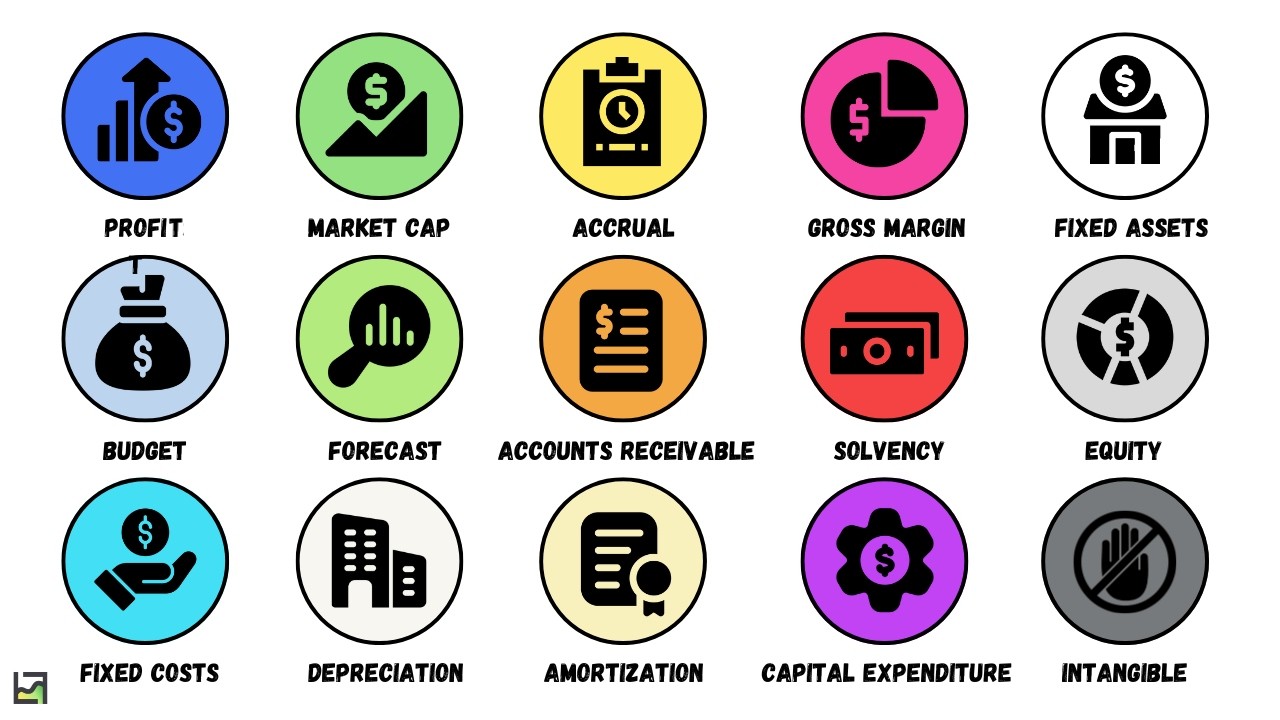
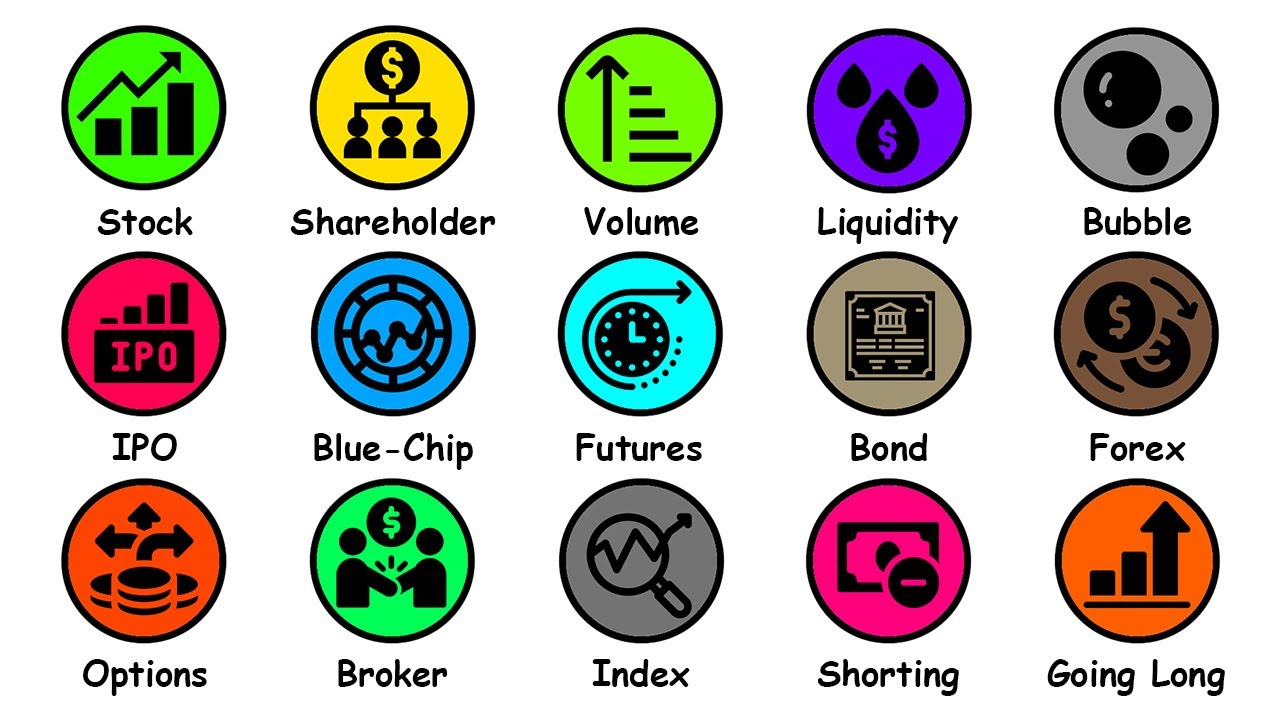
your brain is about to explode with knowledge here are 26 financial terms explained as simply and as quickly as possible balance sheets are just financial statements that total up all debts and all assets balance sheets function with a simple equation assets equals liabilities plus equity liquidity is the principle of how quickly an asset can be converted into cash cash is the most liquid asset usually followed by stocks the least liquid asset are land and real estate because it can take weeks to months to years to sell gaap no not the store but generally accepted accounting
principles are rules and conventions that govern how a company reports the state of their finances it's essentially just a standard and companies can report their earnings as gap or non-gaap capital gains are just the increase in value of an asset above what you paid for it capital gains can be realized and unrealized unrealized gains mean the asset hasn't been sold and realized means it has you pay taxes on realized capital gains and capital losses are the same but when the asset is worth less than you paid net income is just total revenue minus expenses equity
is just the amount of money someone has in a stock or asset after subtracting off debts and money owed it's possible to have negative equity like in a car or house if you owe more than the asset is worth often a cause of negative equity is depreciation which is a simple decrease in an assets value over time most physical assets depreciate over time with real estate being the usual caveat to this rule eps or earnings per share is the usual way in which a company's profitability is represented it's simply net income minus dividends divided by
the number of shares usually share prices for a stock end up being some higher multiple of eps net worth is just the value of everything you own minus what you owe amortization is just the process of accounting for an asset that is intangible or non-physical in a way that spreads it out over time this usually applies to assets like patents copyrights or trademarks capital markets are simply markets where buyers and sellers trade financial assets like stocks or bonds companies institutions mutual funds and hedge funds are the usual participants in these markets profit margin is just
net income divided by revenue this gives companies an indicator of how much wiggle room they have to continue turning a profit ebitda or earnings before interest taxes depreciation and amortization is a term commonly used to describe a company's cash flow fico score is just a credit score from fair isaac corp the company that invented credit scoring the score ranges from 300 to 850 and is based on payment history length of credit and total amount owed though no one knows the exact formula in the public stock options are the option or the right to buy a
company's stock at a given price these are generally given to employees and can be hugely valuable if a company's stock goes up after being granted an option at a lower price bonds are essentially just a loan from the purchaser of the bond to the seller of the bond government bonds are just notes for loans between the buyer and the government over time the government pays it back but before then you can also sell the bond to other investors stocks are just shares or portions of a private or public company that can be traded or sold
stocks have value based on a company's earnings potential earnings and other factors cash and cash equivalents refers to assets that are either cash or can be converted to cash easily here go they're liquid an income statement is just a financial statement summarizing how much income and expenses a company incurred in a given time often called a profit in loss statement roi or return on investment is a calculation that indicates how much money was made from an investment it's calculated as the income minus the cost divided by the cost times 100 in this sense it's expressed
as a ratio cash flow is simply the net balance of cash that is going in and out of a company it can be segmented into operating investing and financing cash flow based on where the money comes from compound interest is essentially just interest on interest over time after earning interest on an investment that interest payment starts earning its own interest compounding over time getting larger and larger valuation is just the worth of an asset or a company generally it's calculated with varying formulas incorporating income ebitda revenue and cash flow and other financial figures liabilities are
anti-assets or just debts owed liabilities can also present themselves as wages to employees or payments due to suppliers working capital is the difference between assets and liabilities or the cash available on hand for daily operations finally term life insurance is an insurance policy that covers a set period of time where if you die in that term your beneficiaries receive money and if you don't die then the policy expires with no value