Your body has a volume control, an actual molecular dial that turns thousands of your genes up or down every minute without you knowing it exists. As you age, that dial starts drifting. Inflammation genes get turned up.
Repair genes get turned down. Cell cleanup genes go quiet. Most people call the result getting older.
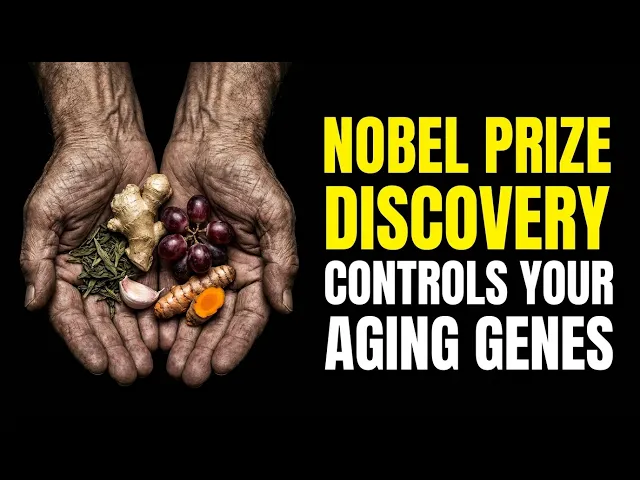
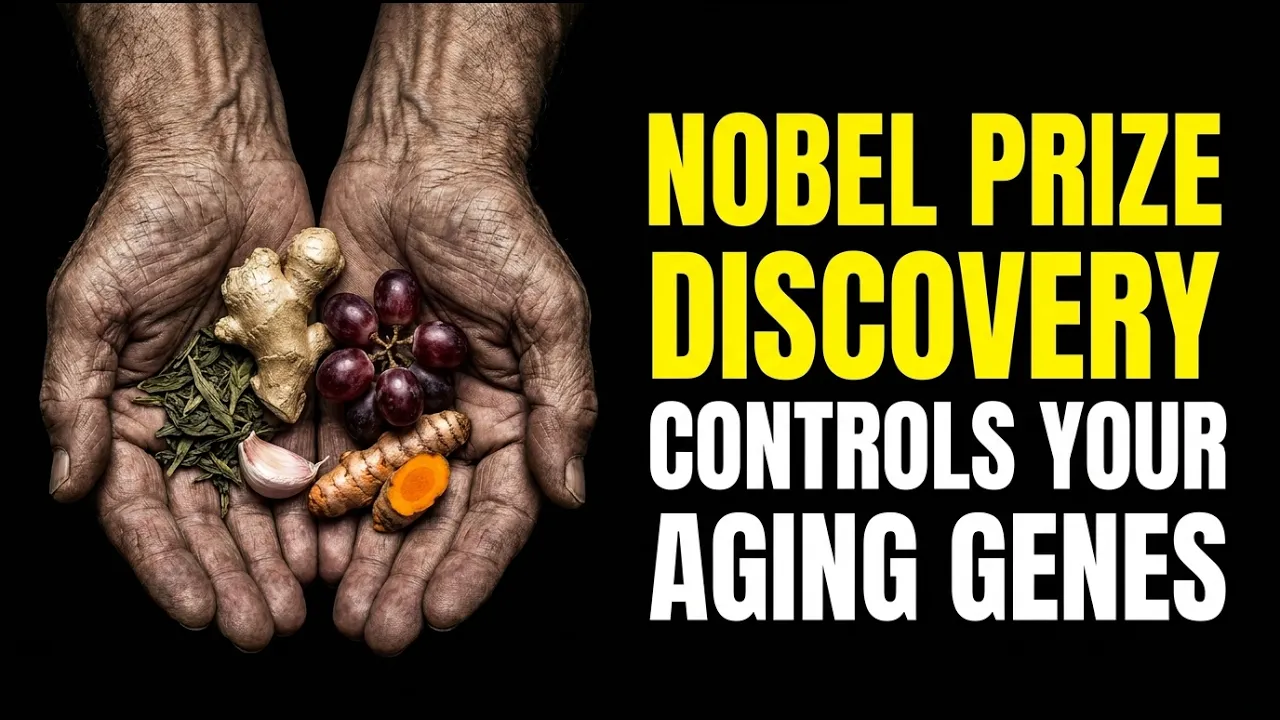
But in October 2024, two scientists won the Nobel Prize for discovering that dial itself. And in the years since, researchers have found that specific foods can reach in and adjust it. Green tea switches on a gene protector first identified in this exact research.
A compound in red grapes can quiet down a gene linked to age-related cell death. And one combination of three everyday ingredients was shown to flip a protective gene back on in a way none of them could do alone. Every claim in this video is backed by published, peer-reviewed research.
And every link is in the description, so you can check it yourself. Real change here comes from patterns repeated for years. And each food on this list is one thread in that pattern.
Understanding even one thread, how it talks to your biology, is worth 15 minutes of your time. Here are 15 foods that speak directly to your body's genetic dimmer switch. Number 15, green tea and the exact gene Rouvkun discovered switched back on.
Green tea's main compound, EGCG, was shown in peer-reviewed research to switch on the entire let-7 family, the very gene dimmer Rouvkun's lab first identified in 2000. In the same study, EGCG also turned down a separate group of micro RNAs linked to tissue breakdown. It's early, cell-level research rather than a human trial, but it's one of the most direct food to Nobel gene connections found in the the so far.
Two or three cups of green tea a day is the simplest way to get EGCG into your system. Number 14, broccoli sprouts. And the combination that outperforms any single food alone.
Sulforaphane, the compound that gives broccoli sprouts their sharp bite, was shown in lab research to switch on let-7 specifically inside cancer cells while leaving normal cells alone. Here's the real finding though. When researchers combined sulforaphane with quercetin and green tea catechins, the effect on let-7 was stronger than any single compound alone.
It's lab research so far, and the synergy itself is the headline. Broccoli sprouts, a squeeze of lemon for quercetin, and a cup of green tea covers all three in one sitting. Number 13, onions and apples quietly talking to dozens of your genes at once.
Quercetin, found in onions, apples, and capers, is part of what researchers call the big four dietary compounds shown to modulate dozens of human microRNAs. On its own and alongside EGCG, it's been linked to changes in genes that govern inflammation and tissue repair. The mechanism evidence is strong.
The long-term human outcome data is still catching up. A red onion in your salad and an apple a day gets quercetin into your diet without you ever thinking about it. Number 12, red grapes, resveratrol's direct hit on an aging accelerator gene.
As we age, a microRNA called miR-34a rises while a longevity gene called Serp1 falls. And in lab studies, that shift directly increases cell death. Resveratrol, found in red grapes, was shown in two separate peer-reviewed studies to reverse this and reducing markers of aging cells.
Both studies were done in animal and stem cells. Number 11, turmeric, recharging your cells' power plants. Curcumin, the active compound in turmeric, activates the same SIRT1 pathway resveratrol does through a different route.
In a 2025 peer-reviewed study, curcumin boosted the genes responsible for building new mitochondria, your cells power plants, and reduced markers of aging cells under stress in kidney cells in the lab. Turmeric with black pepper in a curry or a golden milk is the classic way to the pepper helps your body absorb it. Number 10, palm oil and rice bran vitamin E's lesser-known form and a trio of aging-related genes.
There's a form of vitamin E called tocotrienol found in palm oil, rice bran, and annatto, and it's distinct from the vitamin E in most supplements. In a peer-reviewed study on aged human skin cells, tocotrienol-rich extract lowered miR-34a in old cells and raised two other microRNAs tied to cell division and aging. This was done on human cells in a lab.
The next step is testing it in a living person. Rice bran oil is the easiest way to find tocotrienols on a grocery shelf. Number nine, aged cheese and mushrooms triggering your cells cleanup crew.
Spermidine, found in aged cheese, mushrooms, soybeans, and wheat germ triggers a process called autophagy, your cells built-in cleanup system that clears out damaged parts. In a peer-reviewed study, spermidine switched on autophagy genes and several epigenetic regulators, the machinery that decides which genes stay active, and extended lifespan in the organism studied. Think of this as the other half of Ruth Kune's story, a related system working alongside the microRNA dial.
Aged cheeses, mushrooms, and whole soy foods are the richest natural sources. Number eight, chamomile and parsley calming down cells that refuse to die properly. As cells age, some stop dividing but refuse to die.
They just sit there leaking inflammatory signals. Scientists call this senescence. In a screen of 66 natural compounds, apigenin found counting chamomile, parsley, and celery emerged as one of the top candidates for calming these cells down with effects confirmed across multiple human cell types in the lab.
One honest note, this research is still a preprint, meaning it hasn't completed peer review yet. A cup of chamomile tea or parsley as a regular garnish are simple ways to work it in. Number seven, ginger.
Touching nearly every recognized hallmark of aging, scientists have mapped out the core mechanisms that drive aging. Oxidative stress, chronic inflammation, and several others together known as the hallmarks of aging. A 2024 systematic review found that ginger's active compounds, gingerols, shogaols, and paradols showed mechanistic relevance across nearly all of them.
The evidence here is broad and lab-based rather than from one human trial, but the breadth itself is worth noting. Fresh ginger in tea, stir-fries, or hot water with lemon is the easiest daily addition. Number six, garlic.
An old friend working through a different door. Garlic and aged garlic extract have well-documented antioxidant and neuroprotective including specific research in Alzheimer's models. Aging garlic converts its sharp compound allicin into stable antioxidants your body absorbs efficiently.
Here's the honest part. Unlike most foods on this list, garlic's benefits haven't been directly linked to the microRNA system in the research available. It works through a separate antioxidant pathway.
Still valuable, just a different door into the same building. Aged garlic or raw garlic crushed and left to rest for 10 minutes before cooking maximizes these compounds. Number five, the experiment that proved this was even possible.
Before any of these compounds were studied individually, one experiment changed everything. Researchers fed mice nine different dietary polyphenols, the natural compounds found in colorful fruits, vegetables, and teas at normal food level doses. Despite having completely different chemical structures, all nine altered the same five microRNAs in the liver.
This was the first evidence that ordinary food at ordinary amounts speaks this molecular language. Berries, citrus, and leafy greens are some of the richest everyday sources. Number four, the microRNAs that directly control how long lab animals live.
Several specific microRNAs, including miR-17, miR-455, and miR-34a, have been shown to extend lifespan or improve aging-related decline in the brain, muscle, bone, and heart of lab animals. Of these, miR-17 is so far the only one shown to directly extend lifespan in mice. Look back at the foods we've already covered.
Green tea, resveratrol, tocotrienols, they all interact with this exact group of microRNAs. That overlap is the thread running through this entire video. Number three, the biomarker that quietly tracks your own aging.
A microRNA called miR-21 rises steadily through adulthood. But in people over 80 and in centenarians, it drops sharply. Researchers think lower miR-21 in late life may actually support longevity.
It's also linked to oxidative stress through genes called SOD2 and Nox4, the same antioxidant defense systems that green tea and turmeric are known to support. This is observational research. It tracks alongside aging without proving that food changes it directly.
Still, it's a striking window into how your biology keeps score over a lifetime. Number two. The diet pattern that puts all of this on autopilot.
A 2025 review looked at why Mediterranean and Japanese diets are consistently linked to longer, healthier lives and found plant polyphenols, the same family of compounds running through this entire video as a recurring thread. A diet built around vegetables, fruit, tea, olive oil, and fermented food stacks several of these compounds together every day without you ever tracking a single one. Number one.
The dimmer switch itself. And why this story started with a Nobel Prize. Everything in this video traces back to one discovery that genes aren't simply on or off.
They're dialed up and down by microRNAs, a system Ambros and Ruvkun first uncovered in a tiny roundworm back in 1993. That discovery alone earned the 2024 Nobel Prize. The food research that followed, much of it still in cells and animals, some reaching into human biology, is the next chapter of that story and it's still being written.
Every time you eat, you're sending signals to a system scientists only fully understood a few decades ago. So, where do you actually start? If you take one thing from this video, make it green tea and a handful of berries.
Together, they touch more of these pathways than almost anything else on this list and they're the easiest to add to a normal day starting tomorrow. Every study mentioned here is linked in the description. So, you can read the original research yourself.
Take care of yourself from the inside out.