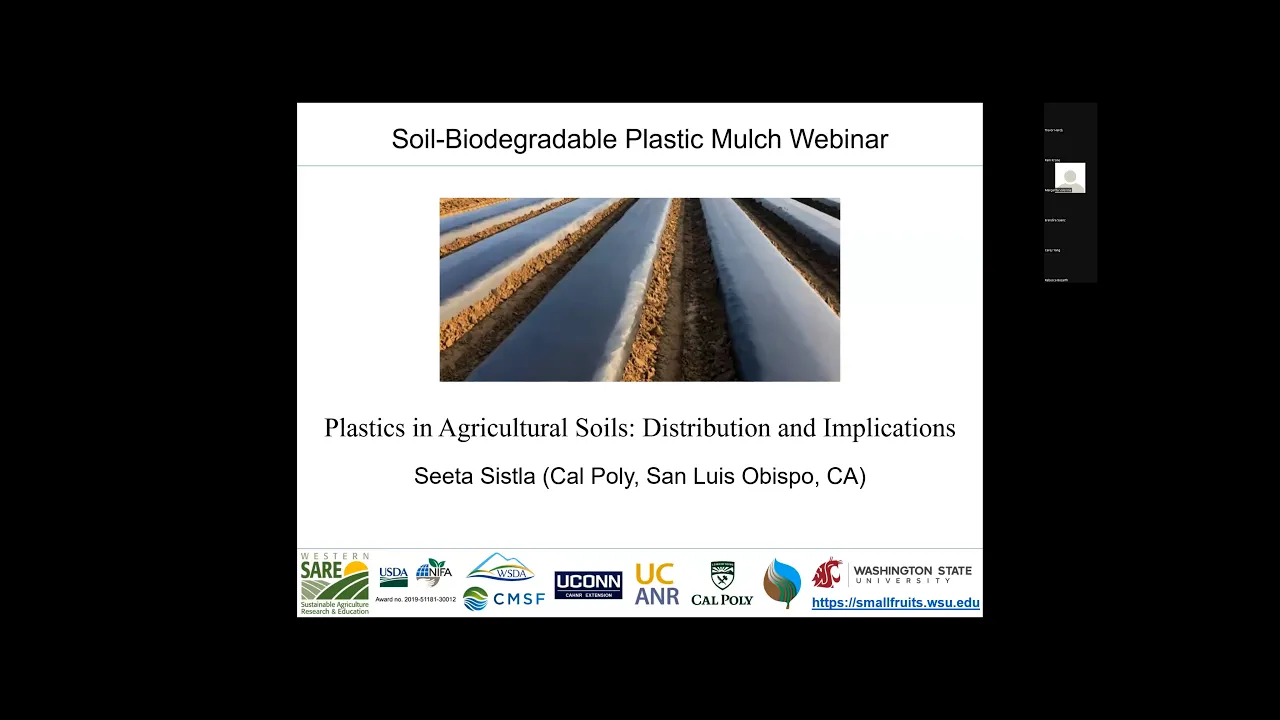
[Music] and now dr sida sisla will be talking about plastics and agricultural soils take it away sita this is ongoing work in my lab at cal poly in san luis obispo so um in order to really think about the application utility of biodegradable mulches i think we need to take a step back and think about why transition away from a polyethylene or conventional plastic technology when it is very efficient in its use in agricultural systems and particularly in strawberry systems and so shown a highlight that plastic mulch use in agricultural systems books strawberry and other
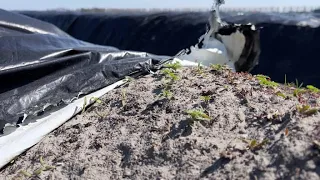
commercial crops is exploding globally so at this point global plastic film mulch use on croplands exceeds 1.5 million tons annually so this is an enormous sort of production and use of plastic which is functionally not reusable and um becomes a waste product after it's used in the field on an annual on an annual time scale and this is some images from our field work just showing plastic being taken off the field um up in monterey county the removal of drip line and then some plastic mulch um set down for the next season of growing just
to highlight sort of the extraordinary level of plastic mulch that is used in in um strawberry and other systems agricultural systems globally and so what this connects to is the sort of growing recognition that um plastics are part of a global pollution burden um we find them ubiquitously across all biomes globally and and we know that plastic culture is really an essential part of modern agriculture plastic contamination however is estimated to be between 4 and 23 times greater than in fresh water systems and i highlight this because um historically the focus on plastic pollution has
been in aquatic and marine systems and it's only recently that the recognition of the sort of extent and potential biological and agricultural consequences of plastic accumulation in soils is being recognized where is this plastic coming from um we know that some of it accumulates because um a film breakdown so as films are removed from soils even if um it's a very clean process of removal little fragments get caught micro and macro plastics um can build up in the soils um no matter how clean the farmer is in terms of their removal of the plastic material
we also see plastic coming in from non-point sources such as sewage sludge or bio waste and fertilizers from runoff from other systems and even from wind dispersal we see a diverse variety of plastics accumulating in terrestrial systems including polyethylene polyvinyl chloride polystyrene and polyester and for this talk i'm going to be really focusing on polyethylene some plastics um are associated with toxic leachates like phthalates and pesticide accumulation and so there's a sort of cumulative burden both of just the general pollution of this material which does not readily break down or decompose in a soil system
nor aquatic systems and the potential for them to also be themselves aggregating pollutants along with the plastic themselves and so we see that plastics are accumulating in agricultural fields and our study sites are focused now on strawberry fields although we have also in my lab looked at other agricultural systems as well and so this is just some images from our field work where we went out and looked at um sort of the post plastic removal trajectory of soils before plastic is reapplied to the fields for the next cropping season and what we see is that
across the board fragments of plastic get left behind and so there is increasing work on both micro nano and macro plastic fragments so plastic vitamins are greater than five millimeters in diameter um on soil systems and my work right now in the labs primarily focused on larger plastic fragment accumulation although we also um are starting to delve into the accumulation of micro and nanoplastics in the landscape as well and so we recently went out and started sampling fields um that are between a cropping of strawberry and an alternate crop so when the plastic is removed
from the field of plastic mulch and what we found is um a pretty extraordinary buildup of polyethylene mulch fragments um so we found between 140 and 4 000 hectares or 4 000 macro fragments per hectare in strawberry fields post um plastic removal and this is something that's part of ongoing work in our lab trying to understand sort of what is just the accumulation of plastic and fields that are using mulch and trying to identify lab fields that do not use mulch that are either in other cropping systems where plastic moles are not used or don't
use mulch for other reasons to see if this is just a general accumulation of plastic that's building up in the environment or this is particularly driven by um plastic mulch usage over time and there have been some other groups that have been um working on this as well and so this is a a study this is not from my work this is from zang it on the paper was published in global change biology about two years ago and what they looked at was across different fields in china they did a meta-analysis so a synthesis trying
to understand what are the implications on soil properties and plant productivity um for plastic mulch buildup in agricultural fields and so what they have here on your x-axis so i know this is a busy slide and we're in a webinar so it might be hard for some of you to read but basically on the x-axis of all of these little um subgraphs are residual film build up in kilograms per hectare so ranging from less than 200 to over a thousand kilograms per hectare of plastic and that's built up over time in in agricultural landscapes in
china and then they looked at that relationship between a number of different variables including yield for different crops so cotton potato um corn plant height root weight um soil water evaporative capacity and vitration rate soil organic matter content and plant available phosphorus and what they found was that um in general there was a strong negative correlation across a variety of these traits between the level of plastic that they were observing sort of accumulating in the fields and the um the effect on these metrics so for instance plant height root weight um soil water evaporative capacity
infiltration rate organic matter content and available phosphorus so they saw these negative implications um and this is one of few studies looking at the sort of ramifications at a large scale of plastic accumulation on productivity and so we're trying to balance and understand right now what is the relative importance of our relative gains of using plastic versus its potential negative externalities of the build up in soil systems and then also working on projects to try to understand the utility and potential for biodegradable mulches to be an alternative alternative method for plastic culture in these strawberry
systems so my lab went out and has been studying the implications on soils in california for this plastic build-up and as i said we're we're sort of a quarter way through the project right now we're starting to sample fields to understand the build up of macro plastics and then micro plastics and in soils that are and are not exposed to plastic mulch and their biological implications and so some work that just came out my lab recently was looking at well what is the effect of being in direct contact with these plastic fragments that are left
behind in the field versus the bulk soil so soil that's maybe contaminated with plastic from use but is not directly touching plastic fragments in the field and so we hypothesized that direct contact with plastic over time is going to have deleterious effects on soil properties that are related to nutrient cycling and productivity so microbial biomass nutrient availability etc relative to the bulk soil and we sampled both polyvinyl chlorides or pvc fragments that were left behind from drip tape as well as um the polyethylene mulch fragments so what we found was not what we expected so
this is from a preliminary survey this has been recently published um in in from the lab we found that macro fragments so the soil that is um directly associated here with the plastic relative to the neighboring bulk soil seemed to be um facilitating a novel habitat that was actually providing space for a larger and more efficient microbial biomass and larger um labile carbon and nitrogen pools so this was not what we hypothesized would happen um we saw the opposite effects where the plastic associated so it was actually more active biologically than than the neighboring bulk
soil we don't know yet and are trying to understand um whether the bulk soil that neighbors these macroplastic fragments might be relatively more enriched in microplastics and maybe that's causing the differences that we're seeing in the soil type we're trying right now to understand through a variety of future studies the relationship between what we see on a very small scale between um soil effects of being intimately in contact with plastic fragments over time and the observed reduction yields across farms when you look at the wide scale implications of building up a plastic macro fragment pollution
in agricultural soils and so um this is the first step in a sort of longer and more broad scale project really trying to understand how plastics are accumulating in our agricultural soils with a focus on those crops like strawberries that use mulches and then what are the implications of that and then lastly whether we can use these biodegradable alternatives to mitigate some of these maybe less well understood but potentially very deleterious externalities that are happening in our soil systems and so um with that um i'd love to reach out to other farmers growers who are
interested in participating in our studies um we're just trying to understand basically what's what's happening in terms of soil plastic buildup and the implications of it and we share our data back with farms once we sample and so please don't hesitate to reach out to me um sysla calpoly.edu if you have any further questions and i appreciate your attention great thank you dr sita um we have a few questions in the chat brenda could you please um relay those to us absolutely so one of our questions here is are there any specific reasons behind decline
in soil organic matter with increasing residual plastic films you're muted i'm still learning you zoom after two the idea the implications was that there may be a there's a relationship between reduction and productivity and reduction in inputs that build up organic matter um in these fields and so you have a you basically have a feedback a negative feedback where if you're having very large sort of pollution burden plastic pollution in the soil and that's correlated with reduced yields you're also going to have reduced inputs of organic matter back into the soil and we don't see
the same patterns here one of the things that's tricky that we're trying to understand is sort of doing a large-scale survey um of agricultural systems in california and elsewhere in the u.s if people are willing to let sample because there's it's since it's not a controlled experiment right fields vary in their management and their history and their turnover of crops etc to try to say like this much plastic drives this much loss of organic matter is a really difficult thing to do but what we can start to say is like do we see these correlations
happening in our fields right do we see over large large numbers of samples um that there is a negative relationship between how much plastic we observe in the field at a given moment in time and its organic matter content and that is yet to be seen as we've just sort of started this project running for six fields of collection right now so wonderful thank you so much we have a few additional questions here for you dr sisla do you think that the macro plastic provide for increased aeration in a warmer soil in addition to other
poor management activities so the plastic fragments um i don't know about the aeration or redux potential i do think that even we did not detect changes in moisture content associated with those macroplastic fragments in our study but um anecdotally it does seem like they might provide micro basically the ability for microfilms of water to persist in soils that are otherwise dry so we're sampling in a mediterranean climate where we are seeing um sort of prolonged drought conditions and so that study where i i showed some of the or i talked about some of the data
from our initial study these were fields where it was during the summer dry period and they weren't being irrigated at the time of sampling so it may be that they're supporting a slightly more moist soil environment that facilitates increased microbial activity at that time of year we don't we weren't able to see that in our water content measurements and it looks like we have a few more minutes for a few more questions if that's okay with you could yeah could large accumulation of macroplastic violence correlate to poor management activities so this is a great question
i my my um perception is that farmers don't want plastics to accumulate in their fields it's not it's not something that's desirable and i think people are working hard to try to clean um clean out um fields and be be good stewards of their of their resources of their agricultural resources one thing we're seeing and again this is anecdotal because we don't have enough fields yet sampled is that soils that are heavier more clay tend to be accumulating more plastics even if they're you know managed by the same group so like a field that's more
sandy versus field that's more clay and again this is just you you you all know this right the clay the clay um soil is stickier right and so it's harder like those fragments they get they get caught there when you're removing the plastic film it gets it gets caught it gets caught in there and so um we we see that there's some relationship probably between soul texture and plastic accumulation most likely also management if management is poor thank you sida that was great [Music]