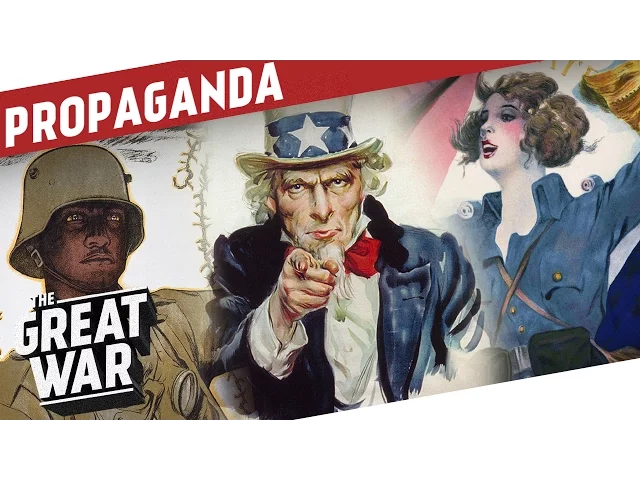
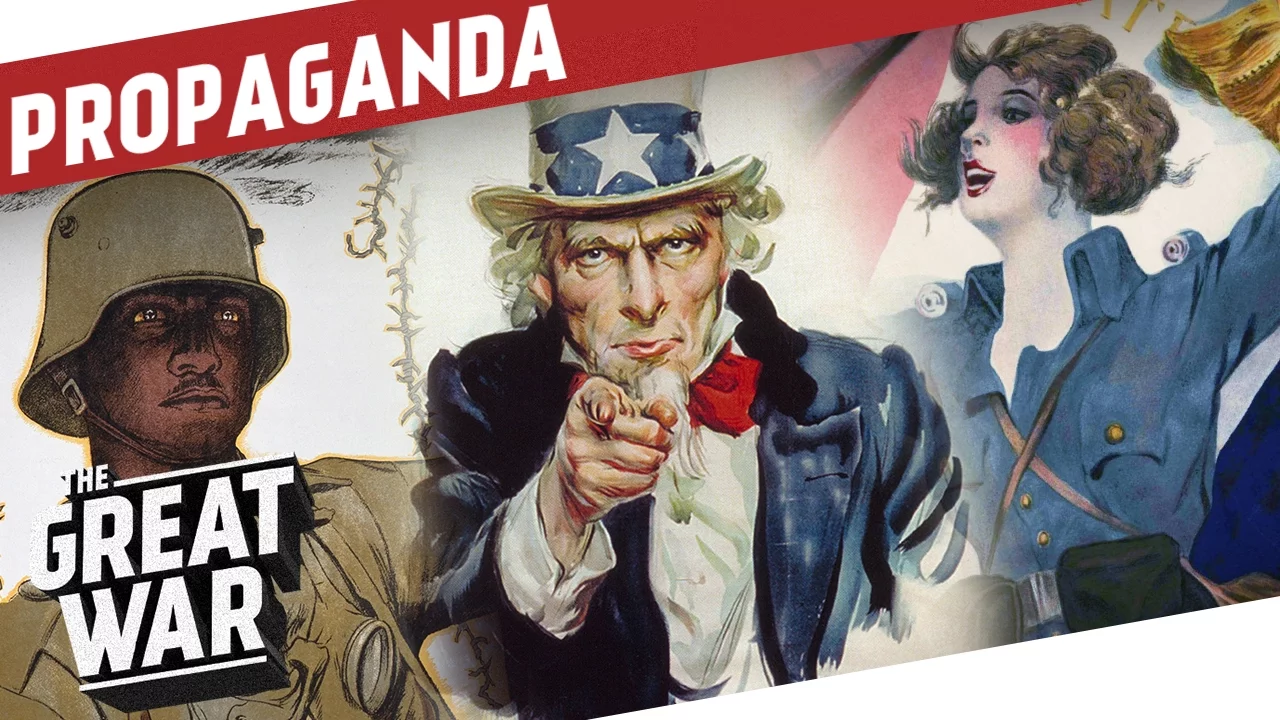
Propaganda. Specifically wartime propaganda. Never mind what’s actually going on at the front or in the enemy’s homeland, you need to keep up your nation’s morale regardless.
You need your people to hate the enemy, and so you put your propaganda machine to work. I’m Indy Neidell; welcome to a Great War special episode about Propaganda and the First World War. Propaganda was, of course, not something unseen before the war.
Julius Caesar’s de Bello Gallico was written specifically to win the plebeians over to his side against his enemies- the aristocrats of Rome- who were planning to prosecute him for supposedly abusing his authority, and with the 19th century explosion in mass media like the newspaper and the new technological feats like the telegraph and telephone, you could really push the story you wanted to push. During the Crimean War, Howard Russell wrote as a war correspondent directly from the front, right? Less than a decade later during the American Civil War, over 500 correspondents were writing from the front lines, and to really get a propaganda machine going, you have to be able to censor things you don’t want people to read.
All in all there are three parts of wartime propaganda; front propaganda to increase morale among your troops and weaken it in the enemy, home front propaganda aimed at the population at home, but also foreign propaganda to counter enemy propaganda abroad. Above all, you need to create hatred for the enemy, and perhaps even dehumanize him, which is one reason you see a lot of comparisons between enemy soldiers and various animals. You needed people at home to buy things like war bonds.
And you need to keep other nations to trade with you and ideally stop trading with the enemy. So how do you do it? It’s easy.
Look at Germany, for example. Germany already had a working propaganda apparatus at the beginning of the war. The German military did not think the population was smart enough to differentiate between real news and false propaganda so freedom of the press was abolished and censorship was established.
It worked so well that soldiers complained to the high command that they couldn’t see themselves in stories about their own regiment or front line action. Germany also had a central bureau for foreign propaganda in the foreign ministry that was mainly focused on drawing attention to the British naval blockade and “disproving” enemy propaganda, which may or may not itself have been accurate. In 1916 and 1917 this was also placed under military command.
As many as 7,400 press releases, flyers, and letters were sent out a day and control of the press was established via the war press bureau that held weekly press briefings and maintained control of publications. Also, General Erich Ludendorff created a picture and film agency within the bureau. Now, German home propaganda was very successful.
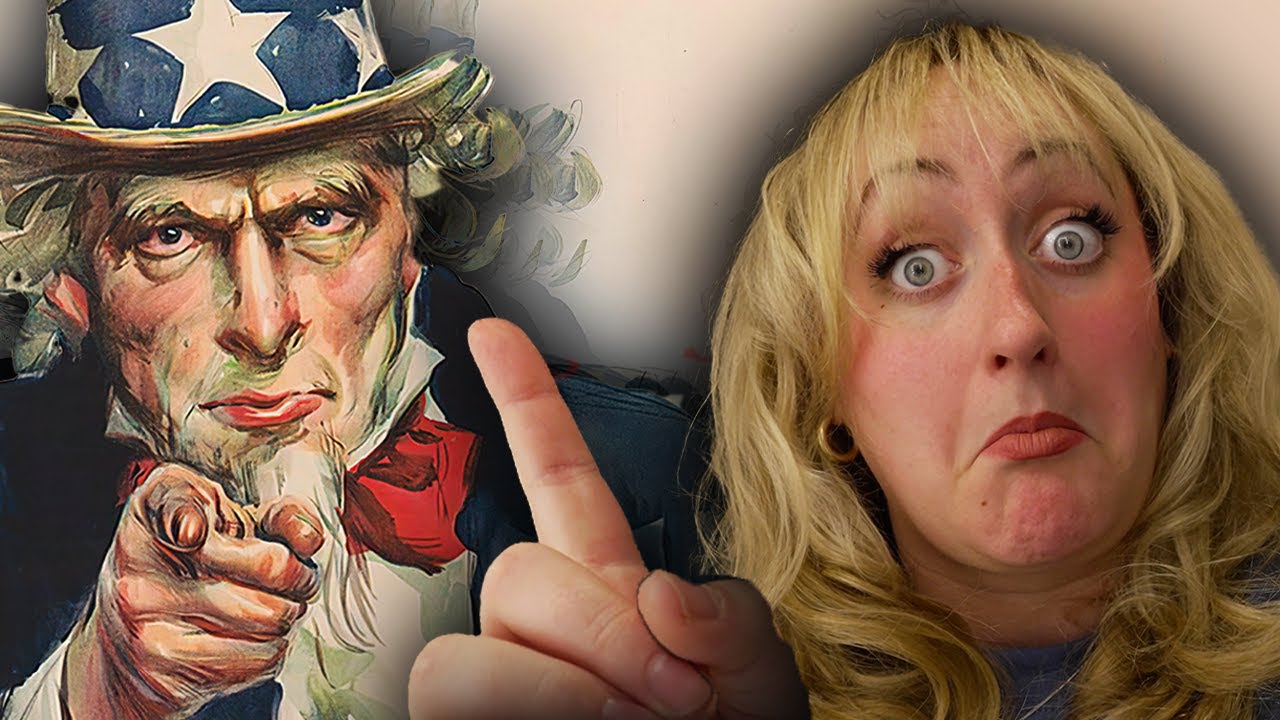
War bonds created a steady flow of income and even at the very end the contrast between reality and propaganda was so stark that when they lost the war, many Germans actually felt betrayed, which paved the way for the “stab-in-the-back” myth that you’re going to go look up in a few minutes. It often depicted national figures like the French Marianne, British John Bull, and American Uncle Sam and it was really focused on German culture since German culture was deemed superior to other cultures. There were German national myths and heroes, knights slaying dragons, Siegfried, the valkyrie, and the dualism between culture and civilization.
British propaganda, by comparison, began much more slowly than German, but it became a real Pandora’s Box, as it was so effective that it greatly influenced Soviet Russian and Nazi German propaganda later on. The Wellington House or War Propaganda Bureau was established in 1914, but its existence was a secret and it was to influence the public more subtly. You had guys like Rudyard Kipling or Arthur Conan Doyle writing essays seemingly of their own volition.
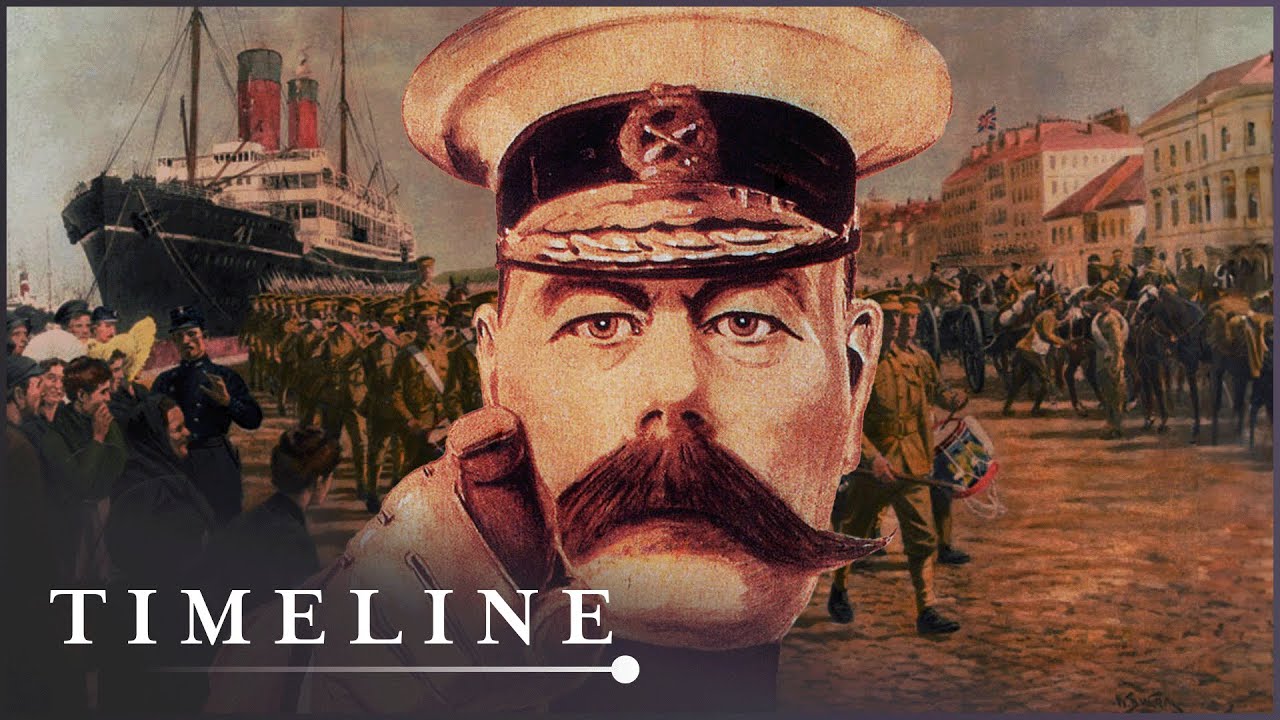
All the mass media was used, newspapers, cartoons, illustrations in magazines- stuff that people bought; that people PAID for. See, when you paid for it, it created the illusion that you were forming your own opinion; that you were actually making a choice. At the same time, the Parliamentary Recruiting Committee spread its propaganda to create a steady stream of recruits.
Now, this was ultimately unsuccessful as Britain eventually introduced conscription once people lost hope in a short war. Soon, the Department of Enemy Propaganda would be created, which is fairly close to our modern understanding of propaganda. Indeed, it’s head, the newspaper publisher Lord Northcliffe, stressed how important propaganda would be during peacetime.
Crewe House, as the Department was known, had a seven-point program for anti-German and anti-Austrian propaganda that was so effective that the Germans specifically targeted Northcliffe with their propaganda. One German cartoon from 1918 shows Northcliffe, dressed in a tacky checked suit, standing with Satan, who has his arm around Northcliffe like a buddy, and Satan is saying, “Welcome, Great Master! From you at last we shall learn the science of lying!
” Initially, British propaganda used images of the Kaiser, but eventually “the hun” began to appear. Unrestricted submarine warfare, the occupation of Belgium, the execution of Edith Cavell, such events gave fodder for the barbaric images of German soldiers. The Bryce Report in May 1915 claimed that Germans mutilated women and children in Belgium and similar stories claimed that German factories were using human body parts, but still, British propaganda was much more subtle than German.
One of the greatest coups for the British was, of course, the fact that they had cut Germany’s trans-Atlantic cables so Britain had an information monopoly in the United States. Speaking of the states, here’s some interesting info about one form of US propaganda. The Committee on Public Information, also known as the Creel committee after George Creel, its chairman, was formed by President Woodrow Wilson by executive order in April 1917.
Its purpose was to influence US public opinion in favor of the war effort. The Committee worked together with illustrators to create what are still today well-known war posters. They also had a unique approach to spreading their word- the four-minute men.
At the time, it was believed that four minutes was the human attention span, right? So these men gave four-minute speeches all over the nation at various social gatherings. There were 75,000 four-minute men, and an estimated 11 million people heard them speak live.
Interestingly enough, the media wasn’t so fond of the Committee after several of its spun facts were proven to be demonstrably false by journalists. All of the other warring nations, of course, practiced their own forms of censorship and propaganda. Here’s what I thought was a rather amusing anecdote: the Czech painter Jan Konupek wrote a great deal of letters to his wife-to-be during the war, up to three per day.
Censors thoroughly read and edited them and would remove all comments about things like potato shortages to the point where one day a censor actually asked Konupek to please write shorter letters and improve his penmanship. Anyhow, I’m going to end this today. I realize many of you will mention that I only really talked about British and German propaganda.
That’s partly because they had the most developed organizations, and partly because I have the most information about that. In future we will do another propaganda special about propaganda and cinema which is something that we haven’t touched today but it’s so vast that it deserves an entire episode. Until that time, I encourage you to look it all up yourself because it is both a fascinating and a scary subject to see how easily and effectively our emotions and beliefs can be manipulated during both war and peace without us really being aware of it.
If you want to find out more about Edith Cavell and how her life and death were used for the British Propaganda machinery, click here for our biography episode about her. For a selection of famous propaganda posters follows us on Instagram or check out our Facebook page. See you next time.