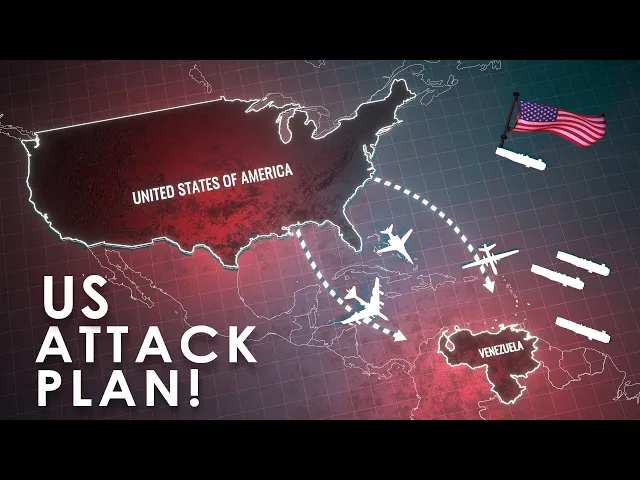
Why is the United States actively preparing for war in the southern Caribbean? To answer that, we have to look at the massive reactivation of cold war infrastructure that has been dormant for decades. What is happening at the Roosevelt Roads Naval Station in Puerto Rico, once the largest US naval base in the world, this facility was closed in 2004, but reports indicate it is being rapidly brought back online.
The US military is turning this civilian zone back into a forward operating base. And what about the Henry E Rolson Airport located in the US Virgin Islands? This isn't just for tourists anymore is being transformed into a logistics hub to support heavy military transport.
But why is the US doing this right now? There are two main triggers. Is it because of Russia and China?
Yes. Intelligence suggests that Moscow and Beijing are not just visiting Venezuela. They are attempting to set up permanent military bases.
The US sees this as an existential threat, a violation of the Monroe Doctrine that they cannot ignore. Is it about the oil? Absolutely.
We are already seeing the precursor to war. US Coast Guard helicopters have been spotted intercepting and seizing oil tankers leaving Venezuelan waters. They are choking off the regime's cash flow before the real shooting starts.
If an attack happens, what ships are already in position near Puerto Rico? The US Navy has assembled a specific killch chain. They using the USS Jason Dun Ham Arley Burkeclass destroyer.
Its role isn't just guided missile destroyer. It is also an electronic warfare machine. The Jason Dunham is there to jam Venezuelan communications and blind their coastal radars.
They are the first line of attack to confuse the enemy. And why is the US Stockdale there? The Stockdale is the shield.
Equipped with advanced Aegis missile defense systems, its job is to shoot down any anti-ship missiles Venezuela fires back at the fleet. But how do we know this is an invasion and not just a blockade? Because of the USS Euima, it is a massive amphibious assault ship.
You don't bring the ship unless you plan to put boots on the ground. It is designed to launch waves of marines onto a hostile beach. But the US isn't just attacking from the north.
They are using the island nation of Trinidad and Tobago to close the back door. But how are they using Trinidad? The US Navy is using these waters to blockade the Gulf of Paria.
Here is USS Gravely is Hunter. The Gravely acts as a sentinel, ensuring no Venezuelan submarines or fastboats can escape into the Atlantic to threaten shipping lanes. And what is the US Lake area doing?
This Tyonder Deroga class cruiser is the boss. It serves as the air defense commander for the entire operation, coordinating the movements of every ship and plane from its high-tech command center. But ships are slow.
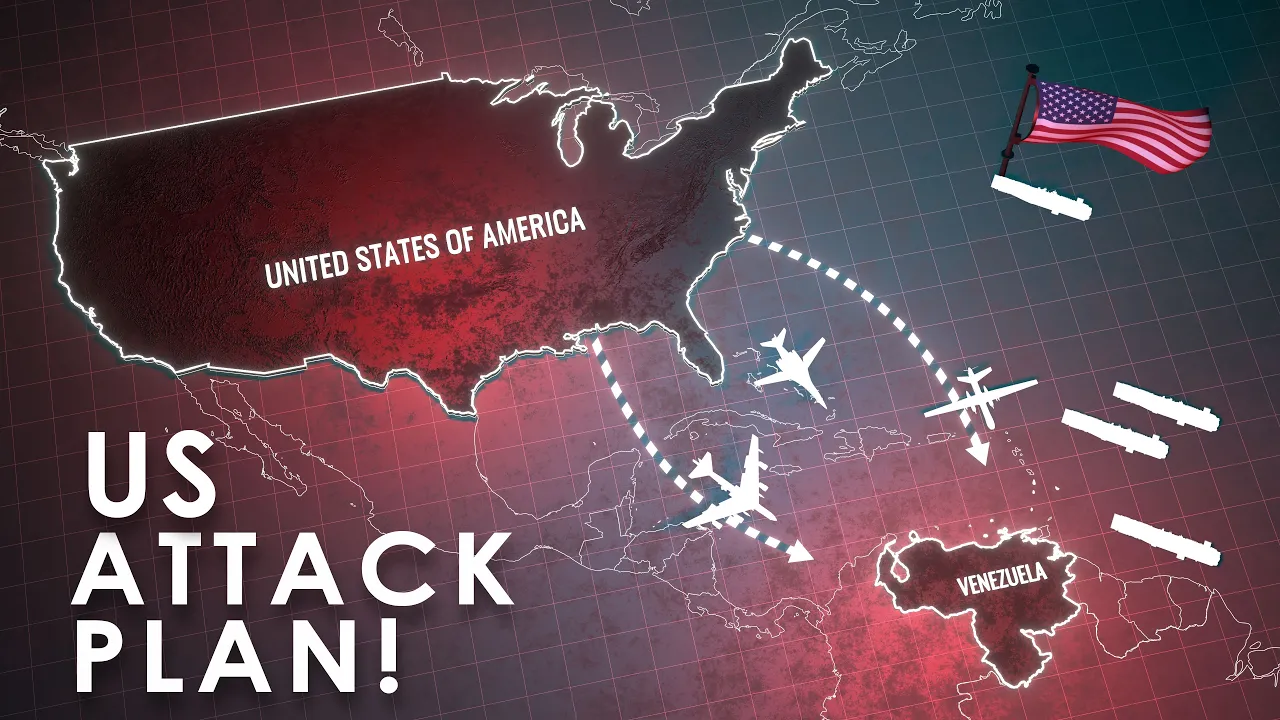
So, how will the US deliver the first strike? This is where the air power comes in. The B-52 strata of fortresses won't even land in the Caribbean.
They will fly straight from the continental United States, deliver their massive payload of cruise missiles and return home without ever touching the ground. What about the B1 Lancer? These supersonic bombers will be used for fast attacks.
They can swoop in at low altitude and high speed to destroy hardened targets before the enemy knows they are there. But where will the bulk of the air force fly from? This is why Roosevelt roads in Siba, Puerto Rico is so critical.
It puts tactical aircraft just minutes away from the target. The MQ9 Reapers will loiter over Venezuela for hours, tracking mobile missile launchers and taking them out with Hellfire missiles the moment they move. While the F-35s will be the door kickers.
Their job is to penetrate Venezuelan airspace undetected and destroy the S300 air defense batteries so the other planes can fly safely. Here are V22 Osprey speed and versatility. These tiltrotor aircraft will launch from the USS Ewima and Puerto Rico to insert special forces teams deep behind enemy lines.
But all that firepower will need fuel. So, the KC130s, these tankers will orbit near the combat zone, allowing the F-35s and other jets to stay in the fight for hours without returning to base. And finally, why the C17 cargo transports for logistics?
You can't find a war without supplies. The C7s will be flying non-stop into Roosevelt roads and Henry E. Rollson Airport, bringing in the tanks, the ammo, and the troops needed to sustain the attack.
So, is the attack inevitable? When you see the bombers on standby, the amphibious ships in position, and the forward bases being reactivated, it looks like the decision has already been made. You will take a look at different scenarios and strategies from both sides.
The US Navy's destroyers, submarines, amphibious ships, marines, and P8 Poseidon aircraft are positioned near Venezuela with a multifaceted strategy designed to confront both the Venezuelan military and the powerful drug cartels operating within the country. From the US perspective, the operation combines overwhelming surveillance, targeted strikes, rapid amphibious assaults, and maritime interdiction to neutralize threats and apply pressure on the Maduro regime. The destroyers provide advanced air, sea, and missile defenses while maintaining the capability to launch precision cruise missile strikes against strategic government and military targets deep within Venezuela.
By maintaining a vigilant missile defense posture, these ships are prepared to intercept any hostile air or missile threats. They also leverage anti-ubmarine warfare assets to secure the task groups maritime perimeter against underwater threats posed by Venezuelan naval forces. In surface combat, the destroyers defend against militia boats or Venezuelan naval vessels trying to disrupt blockades or amphibious operations.
As the name suggests, destroyer is equipped to carry around 90 missiles with this vertical launching system. a Mark 45 deck gun position at the front, followed by close combat failins and a CRAM missile system. But that's not all.
It also houses Harpoon anti-hship missiles and torpedo tubes for threats underneath. And if that's not enough, there's a submarine Hunter Killer Sea Hawk equipped with sonar and torpedoes featured in the upcoming video. These warships are designed for destruction and defense, but they are not suitable for invasion.
But how do you launch a land invasion from the seas? The answer is these amphibious assault ships are specialized warships designed to deploy and support ground forces during military operations, particularly in hostile or contested environments. They resemble small aircraft carriers, but are primarily focused on launching and supporting helicopters, vertical or short takeoff and landing V2 aircraft like the MV22 Osprey and F-35B Lightning and amphibious landing craft.
The amphibious ships carry thousands of Marines trained for quick expeditionary raids and large-scale amphibious assaults. These Marines would execute precision strikes on cartel strongholds, government command centers, or key coastal infrastructure. Their urban combat training equips them to seize airports, communication hubs, and other critical points, potentially working in concert with opposition forces inside Venezuela.
Here comes the nuclearpowered attack submarine operates covertly and silently along Venezuela's maritime approaches. It collects vital intelligence by intercepting communications and monitoring naval activity. It can deliver surprise long range missile strikes to disrupt regime command and control, jam air defenses or destroy military facilities.
Its presence also deters any third-party naval reinforcements from countries like Russia or Iran, complicating any attempt to bolster the Maduro regime. The PA Posidon aircraft extend the task force's eyes and ears over a vast area. They conduct continuous intelligence surveillance and reconnaissance flights deep into Venezuelan airspace and waters, tracking air defense installations, military movements, and cartle smuggling operations.
These aircraft work closely with surface and underwater naval assets to designate targets for missile strikes and monitor submarine activity. They are also capable of electronic warfare operations to disrupt Venezuelan communications and command networks, limiting the regime's operational responsiveness. But why is a single submarine a huge threat to an entire navy?
The answer is these torpedoes. So, let's take a look at how it works. Pressurized air propels the torpedo toward its target.
Step number two, a piston engine with propellers maximizes the torpedo's speed. Step number three, it trails a wire plugged into the weapons systems aboard the sub using data to navigate. Step number four, the torpedo accelerates to 32 knots over 35 m an hour with a range of 8 m or 12 km.
Step number five, as it nears its target, the wire is cut and its sonar takes over navigation. Step number six. If a torpedo misses its target, it can circle back and starts hunting the target with its sonar.
This one torpedo has the explosive power of 1,200 lb of TNT. And I guess you do not want to be at the receiving end of this weapon, but reports suggest that new breed of barracuda torpedo or super cavitating are going to be the latest upgrades. But how would Venezuela's counter the US command of the seas?
While the military and cartles prepare to defend the regime and preserve their control through a mix of conventional and asymmetric tactics, the Venezuelan military, although smaller and technologically less advanced, relies on knowledge of local geography, layered air defense sites, and large-scale militia mobilization, reportedly numbering over 4. 5 million to counter amphibious assaults, and defend key infrastructure. The military employs coastal and naval patrols to challenge US naval operations and uses missile systems to threaten incoming aircraft and ships.
The Venezuelan cartles, deeply intertwined with some military elements, use their familiarity with the terrain, fast boats, and smuggling networks to complicate maritime interdiction. Their tactics include evading surveillance through irregular routes, blending with civilian traffic, and leveraging the dense jungle terrain for cover against raids. Thus, the likely conflict scenario involves layered US efforts to monitor and interdict cardinal trafficking by leveraging aerial surveillance and naval interdiction combined with submarine strikes and missile attacks against regime military infrastructure to degrade their response capability.
While US amphibious forces would act decisively to seize strategic points, suppress resistance, and isolate Maduro's loyalist elements. This is how Venezuela would mount a hybrid defense combining conventional military resistance, local militia networks for asymmetric warfare and cartle tactics to sustain illicit operations and slow US advances. This complex confrontation reflects both sides strategic priorities.
The US pushes to dismantle narcotics networks and exert regime change pressures with overwhelming technological and tactical superiority. While Venezuela relies on numerical militia mobilization, intimate knowledge of the terrain, and asymmetric tactics to counterbalance its technological and firepower disadvantage. And finally, here comes Russia.
Russia is likely to supply Venezuela with long range drones like the Shahed and Jiren drones. The drones could be deployed by Venezuela for covered strikes against US assets, leveraging their loitering capabilities to conduct precision attacks on airfields, command centers, or logistics hubs. This would be part of a broader strategy to counter US military pressure and project asymmetric threat capabilities.
We also made a deep dive into the sea, air, and land components of the nuclear triad.