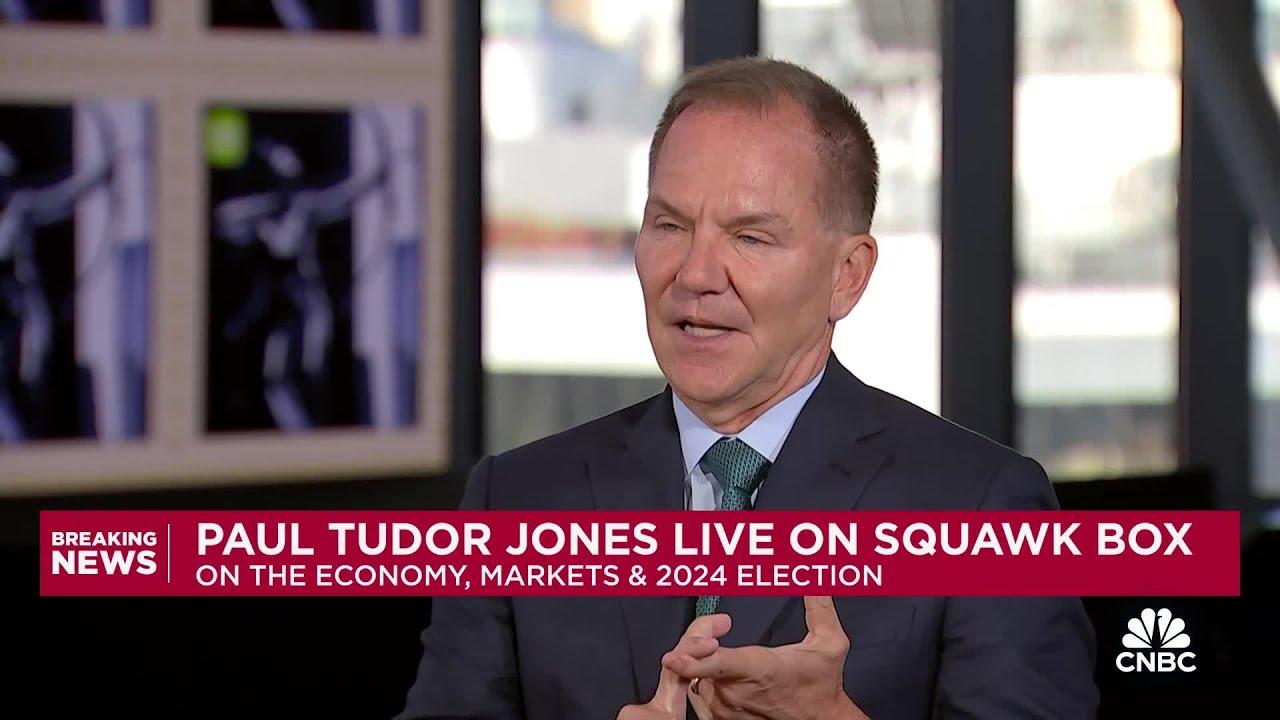
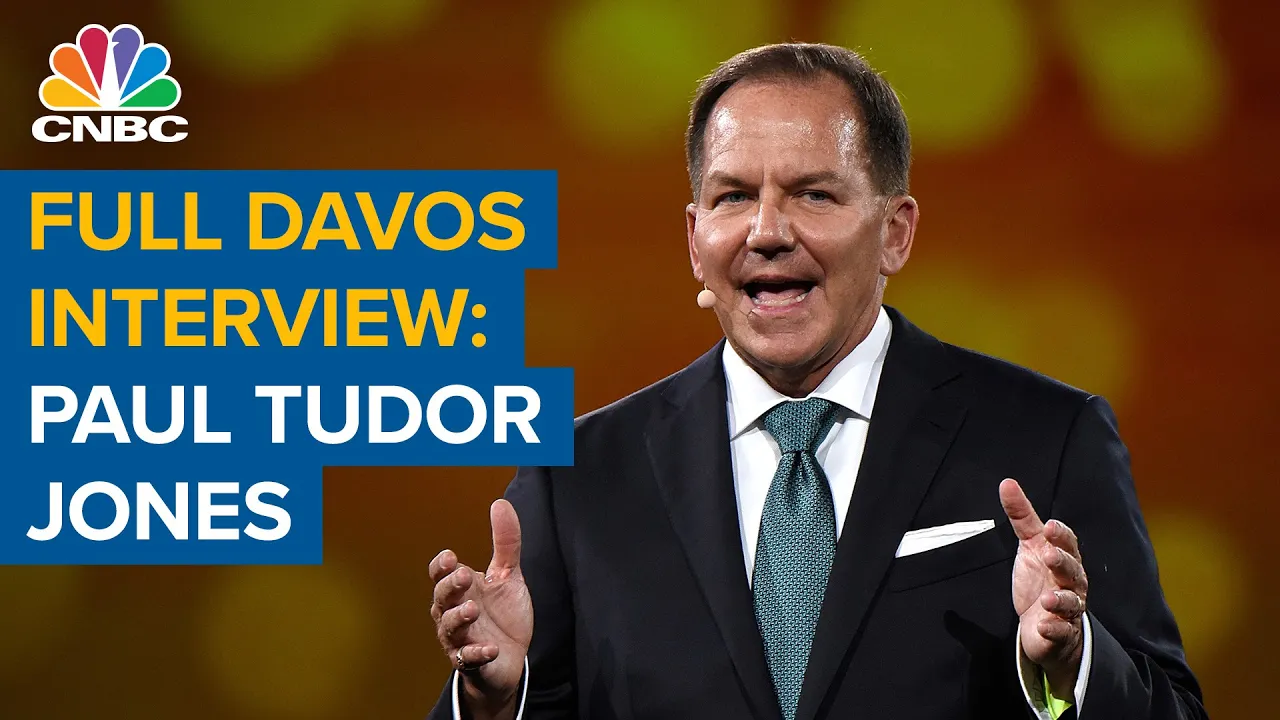
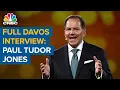
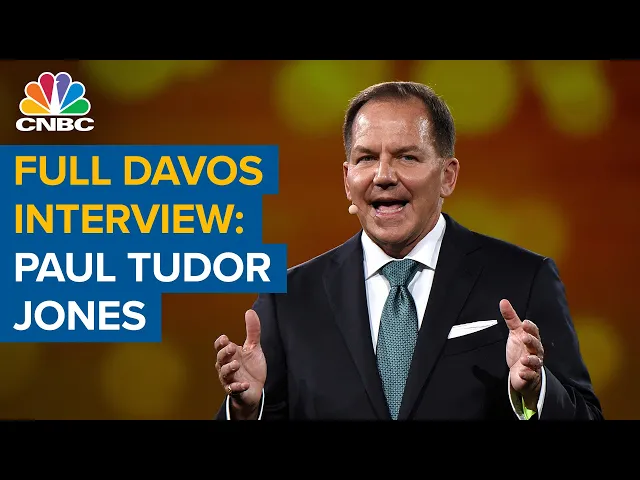
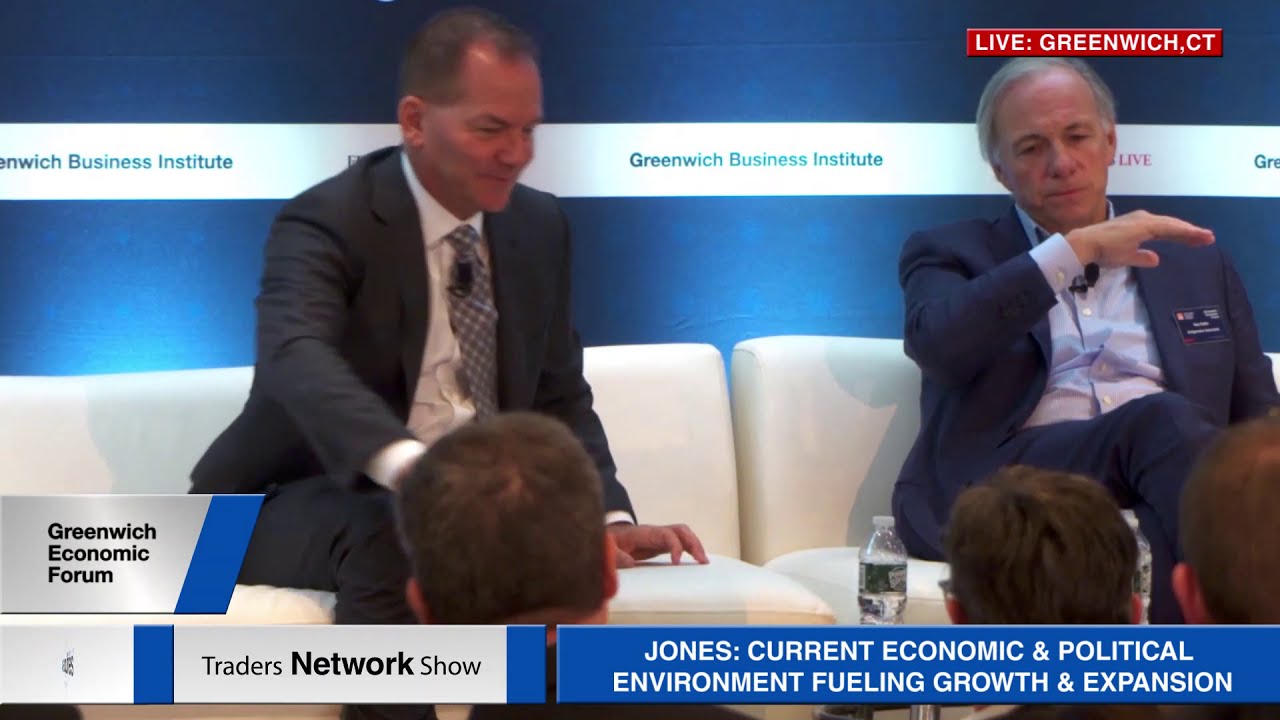
welcome back to squat box this morning we are live from Davos Switzerland and we are joined now by legendary investment investor he doesn't like when we call him that but Paul Tudor Jones is here he's the chairman of just capital of course chief investment officer of Tudor Investment Corporation and we're thrilled to see you this morning but we've had a number of conversations about where we are in the economy I want to show you what Ray Dalio said in just a moment we also saw what the President had to say about the economy but before
we get to to Ray's comment I wanted to get your assessment of where we are well we're just again in the craziest monetary fiscal mix in history it's so explosive it's it defies imagination and I don't think anything's changed it reminds me a lot of early 99 so early 99 we had one point six percent PCE 2.3 percent CPI we have the exact same metrics today the difference is is fed funds for 4.75% today they're 1.6 - back then we had a budget surplus and got a 5% budget deficit you can't make it up we
had an impeachment we just had had three rate cuts because we had this external crisis so it was a wind razy time so you want to be on the train and then you need to get off of it pretty quick if it's 99 well not really the trains got a long long way to go if you think about it what happened in suing 12 to 14 months I would say we've got a curve ball with this coronavirus I think that's a big deal I hope I mean it is if you if you look at what
happened in 2003 it was estimates range point five to two percent of GDP for China half percent for Southeast Asia stock markets sold off double digits so I mean if you just look at the escalation or the reported cases it feels a lot like that medicine do we we know a lot about this virus I think I would think we'd be able to develop something pretty quick there's there's there's no antidote there's no vaccinations to it there's no here we don't even know what the incubation period is and you're obviously getting ready to go to
the biggest travel period in China so when we're gonna find out we kind of know what how lethal it is it seems a little bit less than SARS was but we don't know how virulent it is and now we've got this time bomb of travel taking place in China are you seeing through this or not right I mean on a morning like today when David Taylor great or not invest correct so if I was investor I'd be really nervous if from a training standpoint yeah there's zero way I'd want to be long until we really
need about two weeks to see what type of spread we get I know I just saw something before I walked in here I don't know whether it was the actual Chinese government reporting it or whether it was just someone estimating but it said 118 cases suspected in Hong Kong if that was the case that's a huge deal can I just back up though everything you said before you mentioned this latest coronavirus basically sounded like just what Tepper had told Joe on Friday which is get on the horse and ride it because everything's been set up
to to mean that stocks are going up with the exception of a possible curveball like like SARS yeah any nine nine you had a bunch of 6% Corrections this one might be again more meaningful because I do think this epidemics a big thing because you've got such a much higher rate of travel a much higher chance of infection you're already in three or four countries and yes it's a I think it's a big deal so it's a marmot literally clearly we've got monetary and fiscal conditions they would argue for some type of a blow off
that will ultimately be ended by the Fed hiking a lot sooner than they even begin to contemplate so yes I think David's right I do think what's happened and in just the last four or five days is hugely impact let's show you what Ray Dalio just said to us in the past hour when it's your reaction the issue is you can't jump into cash cash is trash okay cash is that they're going to because they're gonna print money if we could all what do you do you get out okay so cash is not gonna do
what do you do so what you have to do is you have to have a well diversified portfolio and first of all you you have to be global and you have to have balance making the argument effectively that when in fact you do get off the train the train is not a cash train you can't the cash effectively becomes devalued and he's made the case by the way also for gold even though I know he made it clear to us didn't want that to be his headline right again we're in such extraordinary times we've never
seen we've never seen a fiscal monetary mix like this so it our use for some massive blow off at the top and at the top whenever that might be remember between now and the top of 99 the Nasdaq was up 130 percent right so at the top I would argue but that's a long way from now at the top race theoretically be substantially higher they're not going to be 1.67 with this mix they will not be here forever there will be the animal spirits will go the stock market will go until at some point that
that gets in the game from this insane monetary policy of running one a pivot you you're here on behalf of just capital is your first time your Davos by the way I'm so privileged to be here with all the muckety-mucks and Talking Heads I mean wow I'm just over the way I can feel it but one of the issues as you know so very well is this idea of sustainability it's one of the big themes this week and yet we were talking a little bit about what may be the hypocrisy of it all in large
part because it you know Becky was at a dinner last night he didn't come up as a topic until sort of late in the game only because then they mentioned it had not come up to that point and then we went back to the China right you know you have a lot of CEOs here who seem to be very happy with the president president Trump and his economy he he did a bit of a victory lap but just in the past hour or so of course he has a very different view of climate and sustainability
so what gives and all of this so in fact I'm just going to hijack that question a little bit I think you can boil it down very simply in 1970 we had profit margins 6% today there between 11:00 and 12:00 last year we had to Train dollars of corporate profits if we were back in the sharing arrangements of 90 seventy a trillion dollars instead of going to shareholders would have gone to employees customers communities and the planet so this social divisive 'no staff the pollute what we're seeing playing out in the political arena while we
have two socialists that have a great chance of being the Democratic nominee is because the sharing that we have currently is not working for the majority of the country the American public from our polling we polled we say what is just corporate behavior and they tell us there's twenty nine components number one is fair wage number two is ethical leadership number three is living wage kill if the twenty ninth component is at one point two percent its shareholder return so you've got this massive dichotomy between what the people want and what the c-suites delivering and
what we're going to do over time and and I was really hardened because I was in a a CEO dinner last night and what we're gonna do is rearrange the sharing it's not going to be just about shareholders first if you remember back in the 60s when the sharing was completely different and we had a six percent profit margin versus eleven GDP growth was twice what it is today now I want to I want to give you using that though parsley because there was no competition outside of the United States at the time well so
they could share it more with the employees and their because they could have hi effectively higher rents if you will I don't think it's binary I think they're shades of gray and everything that's a very good point but I think the most important point is that we know what's happening right now is causing Millennials not to believe in this system we know that there's a threat to free markets which is the best way to allocate resources in my opinion I'd much rather see us change the sharing agreements organically bottoms up where CEOs put employees first
put the planet and communities and customers on par with shareholders if you if you had a blank sheet of paper and we were starting and trying to maximize societal happiness and output and we had those five stakeholders shareholders employees customers communities the planet would shareholders be the most important thing to manage companies around I don't think we gotta go but then how much of this is about business trying to get ahead of regulation and that would be the cynical take I think well from what I heard last night I think CEOs love the idea of
the new business roundtable definition we're all stakeholders get even because they want to put what is the most important folder return although it really Memphis is the profitability of the company and how its satisfying its customers and its employees and its communities and everything else and then the stock ends oven and then shareholders make money no one wants zero profitability and flat shareholder returns that's not gonna help anyone then you can't write anything okay so at all it's like a chicken egg thing but but but again it's shades of gray okay and we've got too
far and we've got to come back Paul Tudor Jones thank you thank you so much for being here welcome to Davos you


![War plans leaked over text group chat [FULL HEARING]](https://img.youtube.com/vi/XT2q4bUShB8/maxresdefault.jpg)