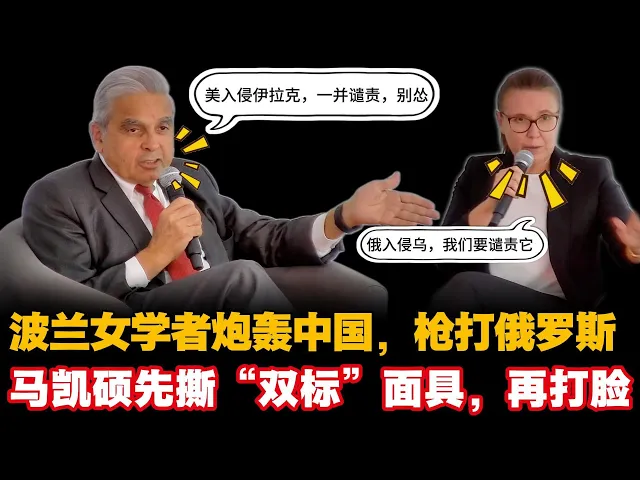
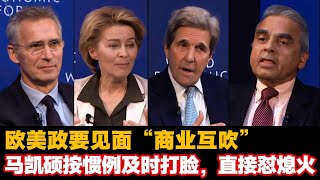
The problem economic problems that China is facing right now. The the good example is this real estate um crisis also the fact that party decided to to not to publish the um data of youth unemployment. So this is the question how the impact on Asia also in this rivalry between United States and China. I think there's to be honest that we should cooperate with the United States and that China is to some extent a Challenge or even a threat. >> The Russian invasion of Ukraine is illegal. That's absolutely clear. A war is legal only if
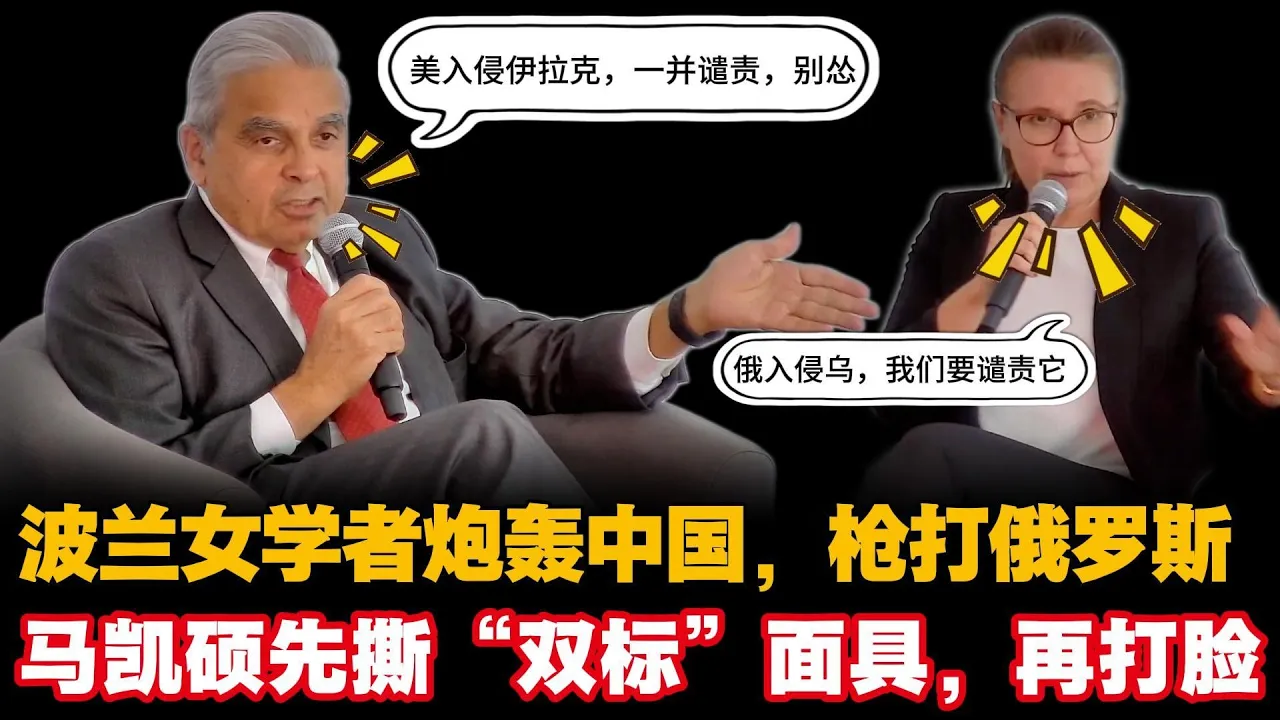
it's endorsed by UN Security Council or if it's an act of self-defense. The Russian invasion of Ukraine is not an not not endorsed by UN Security Council and also not u not an act of self-defense. The United States invasion of Iraq in 2003 was not endorsed by the UN Security Council Was not uh an act of self-defense and so Kofian called it an illegal war. Now let me ask you a simple question, a painful question. That was an illegal war. Did the European Union apply sanctions on United States? >> Have with us today our distinguished
guest, Professor Kish Makubani. I think there is there is no need to introduce professor because I think that everybody knows >> and I'm also happy uh to be with you to Share with you Asian perspectives uh on the world because uh if I have one very simple message to you all it's is very very simple. uh Asia looks at the world very differently from the way Europe looks at the world. So you know you have European perspective and then you have an Asian uh perspective and I should so this is just a factual point the
total population of Europe is let's say you include European Union only members is about 430 440 million people Uh the total population of Asia as you know is over 4 billion people 10 times bigger and I emphasize that because [snorts] the biggest shift that is happening in this century is that the 21st century will be the Asian century and that's why it's very important to understand uh Asian uh perspectives. You mentioned my book um as uh China one actually that's not my latest book. Uh my latest book actually is a free book. You can download
it Google and it's Published by Springer Nature in Germany. And I want to tell you one story so you understand what I'm trying to say. When Springer Nature published a book in January 2022, I asked the publisher how many copies should be downloaded of a free book of essays and they said, "Well, you should try and get hit a target of 20,000 and it'll be a very it be very successful." Well, instead of 20,000, uh, as of last week, uh, there have been 3.27 million copies downloaded In 160 countries. I mentioned this to you for
only one reason. The world is psychologically preparing for the Asian century. [snorts] And to prepare for the Asian century, you got to understand how Asians think. And by the way, my first book was actually called Can Asians Think, which I published in 1998. Uh [snorts] so anyway, the So let me let me explain to you how Asia views the world uh differently. But I'm going to begin with A with a simple true story. uh in 30 years ago uh at the end of the cold war there were three major growth centers in the world. Of
course the United States of America and North America and then you had European uh the European Union and then you had East Asia. These were the three big growth centers. And we figured out that what was missing is that Europe and and North America are very close links. As you know, Transatlantic ties are very very close. They were closed then, they are closed now. And at the same time, links were developing between East Asia and the United States. And uh the what was launched as an effort to bring East Asia and United States together was
APEC Asia-Pacific Economic Cooperation. Now the first APEC summit was held in Blake Island, Seattle in November 1993. I attended the meeting personally. It was leader plus one meeting. And that Meeting was important because I can tell you that meeting had a major psychological effect on European leaders. And this is all now revealed. Uh as you know around the mid in the early 1990s uh the United States was trying to complete the Uruguay round trade negotiations. Europe was refusing to accept the results of the American negotiations. Bill Clinton who was president said okay We will now
switch to Asia. And when he indicated that he's going to switch to Asia by organizing an Asia-Pacific economic cooperation conference, the two German and French leaders, Helmouth Cole and Metanor, then agreed to the American conditions for completing the Uruguay round. Now, why do I tell this story? I tell this story because United States understands very well that it can play a balancing game between Europe and Asia because it has Ties. US has good ties to Europe, good ties with Asia, but what is missing is European Asian ties. We don't have close ties and that's why
Singapore proposed the idea of an Asia Europe meeting and I again I can tell you I was personally involved in marketing that meeting traveled to Europe and we had our first summit meeting in 1996 uh in Bangkok went very well. Unfortunately after that we had the Asian financial crisis in 9798 and when the Asian financial crisis happened Europeans thought oh the Asian story is over Asia is no longer important and that was I I tell that story because that was one of the biggest strategic mistakes that Europe made about Asia 25 years ago not realizing
the potential for Asia and what will come now. So what happened in these 25 years? Now let me tell give you three statistics to Indicate how the world has changed. Right? In the year 2000, 2 years after the Asian financial crisis in nominal market terms, the American economy as you know was eight times the size of China. Eight times. Today the American economy is only 1.5 times bigger from eight times to 1.5 times. See how much has changed in the last 20 years. One statistic. Second statistic China story you all know. You All know that
China's grown. Now let me tell you a story about ASEAN. ASEAN is the Association of Southeast Asian Nations. 10 Southeast Asian countries. Again in the year 2000, Japan was the second largest economy in the world. In the year 2000, Japan's economy was eight times the size of the ASEAN countries. Eight times. By 2020, Japan's economy now is only 1.5 times bigger than Asean. And in 10 years, ASEAN will become bigger than Japan. Right? That also happened the last 20 years. Now I give you a third statistic. The European Union's GMPP is much bigger 17 trillion
compared to ASEAN which is 3 trillion. Now which country which region added more to global economic growth in the last 10 years 2010 to 2020? Was it the European Union or was it ASEAN? The answer is ASEAN. Now I I I'm I'm telling you this growth story so you understand that the main dynamic in Asia is to focus on economic growth and development and and of course that is resulted in all kinds of power shifts right and as a result of the power shifts you've had this major US China contest that is emerging now as
you all I I'm I'm acutely aware that for all of you Russia is a very important actor. The Ukraine war is an very important thing for you. But in the eyes of many in the rest of the world, that's not where the major global struggle is going to happen. The major global struggle over the next 10 years will be the contest between the world's number one power, which today is the United States of America, and the world's number one emerging power, which today is China. And I guarantee you that over the next 10 years the
US China contest will accelerate because there is a very strong consensus In Washington DC that the United States has about 10 years to stop China from becoming number one and so it is going to go all out to do that and that's why United States has launched a trade war against China. That is why United States has stopped supplying advanced chips to China. That is why the United States is curtailing American investment in China. So that will be the major struggle that will happen over the next 10 years. So what are the Asian countries focus
on? Their focus on the US China contest. And what is the position uh of the Asian countries on the US China contest? Now many of them as you know have close ties with the United States. Some of them have close ties with China. But the vast majority of Asian states if you ask them what their position is on the US China contest they'll tell you they want to preserve good ties with United States and they want to preserve good ties with China. And most Asian countries are not taking sides uh in this contest. This is
certainly true of the 10 ASEAN countries. And what is significant about ASEAN, you should also know this is that ASEAN was created as a pro-american body. In fact, when ASEAN was created in 1967, both China and the Soviet Union denounced the creation of ASEAN, they said this is an American imperialist uh Organization. Now what's interesting is that this American imperialist organization ASEAN is not taking sides uh in this contest and has made it very clear uh to both US uh and to China and and the actually the one leader who's made these things very clear
is um the prime minister of Singapore in a speech he gave at the Shangrila dialogue and in an article he wrote in the magazine uh foreign affairs. So um over the next 10 years What will obsess the Asian countries is how they manage this US uh China contest and of course they're trying to persuade both sides to try and reduce the this contestation uh with each other. I think this is also going to create a major strategic dilemma for Europe because you got to decide um where you stand on this uh US China uh contest
and I can see how because of your traditional links with the United States you'll want to move closer uh to Uh United States but then at the same time uh if you look at the economic side where the growth markets are going going to be they're going to be in China but not just in China because the the the the the most one of the other significant changes that has happened in the region is that there has been massive integration of the economies and the trade within the region has exploded right and [snorts] if you
want to know how much it has exploded let me give you Two again two statistics uh in the year 2000 notice that I keep referring to the year 2000 because I think that's about a turning point where many significant things happened vis Asia uh US trade with ASEAN was three times China's trade with ASEAN in the year 2000 US trade was 135 billion China's trade was only 40 billion less than one/ird that of United States by 20 uh 22 last year US trade with AEN had grown significantly from 135 5 billion To 440 billion, three
and a half times increase. But in the case of China's trade with ASEAN, it increased from 40 billion to $975 billion. That's almost a trillion dollars. That's the world's largest trading relationship. It's bigger than the US EU trading relationship. United States and European Union are Much bigger economies but you do less trade than China and ASEAN does with each other which is amazing. Now the reason I mention that is that one reason why countries don't want to take sides in this US China contest is because the economies are becoming integrated. And if you don't you
if you if you try to cut yourself off from China, you're not just cutting yourself off from China, you're cutting yourself off from an ecosystem That is becoming deeply integrated uh with each other. And that's going to be the dilemma uh uh for the European Union where where it stands. And I'm aware that there are divisions within the European Union. I know that President Mron and Chancellor Olaf Scholes are very keen to preserve their uh ties with China, but I also know there's some resistance and some criticism of them uh for doing that. But that's
a decision uh that Europeans uh Will have to make. So at the end of the day to just to sort of briefly uh summarize my remarks what I want to emphasize is that for the Asian countries the last 20 years of growth have been among the best 20 years of growth but the next 30 years will be even better. So the the the growth prospects in Asia will be phenomenal and that's what the region wants to focus on. The major disruption [clears throat] is going to come from the US China contest and most of the
Asian countries are saying we don't want to get involved. That's your fight. You stay out of it and therefore we will therefore end up in a situation where the European Union and the Asians will have a very different view of how to manage the next 10 20 years. Professor, thanks a lot for for your um for your speech and but I to be honest I have several questions but to be honest I'm Not completely agree with you in a sense that >> I I would be very surprised if you >> okay so let me let
me ask you several question referring to what you have said >> first of all you said that um of course the the um the Asian countries are focusing on the economic and social development and it will be economic situation would be better. The Asia would be number one. The award is preparing for Asia century. So my question is um uh about this situation in China because and also reading your book um I think that there is a kind of a change in China that I agree with you um you you wrote this book a few
years ago that there is a kind of a social contract in China that a party or cmping government provides society the economic development and the and there's a kind um of a deal and they could have this political system, people are pretty happy and so on and so forth. But I have a impression that right now is a kind of a change of this contract that this focus is on in China not on economy and economic development and social well-being but mostly on the security issues. You know, I'm talking about this zero COVID policy, especially
in the second hard lockdown. The problem economic problems that China is facing right now. The the good example is this real estate um crisis. Also, the fact that party decided to to not to publish The um data of youth unemployment. So this is the question how the impact of China's economic situation may have on on on on China and on Asia also in this rivalry between United States and China and also uh um uh as you said that there is a kind of a dilemma in Europe um when it comes to looking at this China
uh US rivalry I think there's to be honest there is a kind of a consensus that we should that we should cooperate with the United states and that China is To some extent a challenge or even a threat. Of course, we do not to decouple. There is right now the risking uh slogan that we would like to um what we would like to have is to focus of strategic dependencies when it comes to our security issues. So, so I think in that sense there is no a dilemma. Um and and the last point and also
I would like to ask you because of course for us right now the most important thing here in Europe is the war in Ukraine because Of Russia's invasion. So how to deal with China and also how to communicate with the Asian countries in with China because China from our perspective supports Russia. So if China supports the aggressor and Russia is our the biggest threat, how to cooperate with China and how to cooperate with the with the countries that um do not do not have a very clear view when it comes to this invasion. I know
that it's it's not a major topic in in Asian countries in Asan countries but for my understanding it's because it's aggression. It's a violation. U charter is a black and white situation that you could not be between. you should well you should condemn Russia support you could not be between in between because black and white situation so this is my question to you after your remarks >> thank you thank you and know as I said I'd be very surprised if you agree with Me uh we look at the world very differently from uh the other
but the three big questions you asking me number one is the China growth story over uh number two uh what are Europe's uh strategic interests And number three, how do we factor in the Ukraine war? Uh these are the three big questions. Now the first question, um is the China growth story over? Uh I always whenever I speak to any audience, uh issue a commercial warning that never Trust the Anglo-Saxon media on China because if you use the Anglo-Saxon media to understand China, you will get a very distorted perspective. And if you want, if you're
interested, I can email you 20 years of headlines from major uh western newspapers, including the economist saying, is China about to collapse? Is China about to collapse? China story is over. It's 20 years consistently. So, so this is what is happening now. >> I'm talking that about the collapse. I'm Not, you know, I I don't want to to be so extreme about collapse, but the economic problems that China is facing, let's say. >> Yes. Yes. But you see, you you are only you only hearing one side of the story. Do you know that last year
China overtook Japan to become the world's number one automobile exporter? How come a country that is struggling becomes the world's number one uh economics exporter? Did you hear that in The scientific journals in tier one peer-reviewed scientific journals which country is now producing the number one largest number of uh peer-reviewed pe scientific papers in the world? Used to be United States today is China. So what we Asians notice China has got massive problems but China has always had massive problems. China is the largest country in the world. The largest country in the world has the
largest problems in the World. So yes, there are problems um uh with the way they manage CO. I think they handle CO the exit from CO very badly. They make mistakes. [laughter] I mean no country is perfect. Every country makes mistakes. China has made lots of mistakes too. The question is can China learn from its mistakes and and and overcome it? And I can tell you that the Asian countries have decided that the China growth story is continuing And they're going to be part of it and they're going to integrate uh with uh uh China.
So the uh the that all the problems you mentioned right for example the real estate uh crisis they will solve it. It may take a few years but they'll solve it. And don't forget China still has the world's largest foreign reserves $3 trillion which they can do a lot with you know they have all kinds of resources and the the the Chinese have developed a very Pragmatic way of managing these issues uh that they do. So this year is a bad year for China 2023. Maybe they'll have one or two bad years. They have they
well they'll come out of it and they don't and they remember they only have to [clears throat] grow at four they've been growing at 8 n% right for the last 30 years they only have to go to four four to 5% and then can overtake United States. So it's it's a question of the overall perspective. Uh And anyway, I can assure you if I come back here in 5 years time, you will find that my predictions are right and the Anglo-Saxon media is wrong. I can confidently predict that. See now the second point about Europe
strategic interest. Now one point I always emphasize is that geopolitics is a very cruel business. If you try to inject moral values into geopolitics, you always get into trouble Because it's all at the end of the day about interests that drive countries. Now, you mentioned this. The Russian invasion of Ukraine is illegal. That's absolutely clear. I was ambassador to UN for 10 years and I know what makes a war legal and what makes a war illegal. A war is legal only if it's endorsed by UN Security Council or if it's an act of self-defense. The
Russian invasion of Ukraine is not an not endorsed by UN Security Council And also not uh not an act of self-defense. Now in the same way I was ambassador UN then the United States invasion of Iraq in 2003 was not endorsed by the UN security council was not uh an act of self-defense and so Kofan called it an illegal war now let me ask you a simple question a painful question that was an illegal war did the European Union apply sanctions on United it. So, and and the rest of the world Understood you have your
interests [snorts] perfectly natural. Your interests were very clear, right? So, that's that's how countries make decisions. Now, you if you read my book, I point out that what the European Union needs to be concerned about is its own long-term strategic challenges. And the biggest strategic challenge for Europe over the next 10 20 years is going to come from the demographic explosion in Africa. Now in the year 1950, Africa's population was half that of Europe. Today Africa's population is 2 and a half times the size of Europe. By 2100, Africa's population will be 10 times the
size of Europe. So your your main strategic priority is to focus on the development of Africa because otherwise if you don't the migrants that will come will create far stronger farright parties in in all over European Union and then you will have a Very different situation but that at the end of the day it's your decision. It's your decision, not not not ours. But we in Asia, you notice we don't have migrants, right? Because we create opportunities for jobs for people where they live, right? Indonesia with a population of 260 million is much poorer than
its neighbor Australia. Australia's got 25 million. No migrants from Indonesia to Australia. Why? Indonesia creates hope for its people. The the Indonesia is one of the fastest growing economies in the world. So that these are so we we are focused on creating stability for ourselves for the next 10 to 20 years. And I would encourage um uh Europe to also focus on your own interests where where are your interests and focus on them because that's your decision. And whatever decision you make is your right Decision. Now third question on Ukraine. One quick point. Uh if
ask just a very simple question. What is the difference between the Chinese position on Ukraine and India's position on Ukraine? >> The same. >> Huh? >> The same. >> They're exactly the same. So to be frank, let me offer my personal Perception. Yeah, >> I think that India is becoming like China and I agree with you that Indian [clears throat] position and China's position is the same. But it does not um it does not solve the problem. It's another is the additional problem that India as a democratic country has the same position uh on Russia's
invasion. So this is the huge question for me also how to deal with India not only with China. >> But let me just then let me add I predict over the next 10 years the United States will caught India ferociously. I predict that despite his position in Ukraine. >> Well, and and and >> the reason I say this, >> geopolitics is a very cruel game. Very cruel game. Unfortunately, I wish it wasn't. >> Mhm. >> I wish that my predictions that I made 30 years ago didn't come true. Unfortunately, they keep coming true. Professor, can
I guess refer to your um response to my questions about this um um China's situation, economic situation and you said that we have access only to the Angloax Saxon stories to be frank. It's very diffic difficult to have access to the Chinese information you know as a China expert for years I have an access to these um database of China's articles in Chinese. I remember that I went to China and I have to buy a kind of a card with some kind of uh code and I could download the articles. Right now it's impossible. Few
years ago it was be it was uh very expensive. Right now it's impossible. So you know it is also the problem with us that China is in that sense is not open country that I could not even download without asking my friends in China if they could help me you know. So this is And so this is the problem of the access to the information that is a very difficult to have access to the information from China and also talking to Chinese experts right now they are also using in my understanding official talking points you
know it's difficult to have um the conversation which could be a little bit let's say critical situation in China some critical about the the government so this is also the question that maybe You're right maybe it's better situation in China that we think that we have problems to have an access to the information. So this one issue. Um the second one about this uh situation and and this um um Russia's invasion and you said about the Iraq and the United States. Well, I have an impression that it is that what you what you have said
is what aboutism. Okay, I agree. We may we may criticize but we are in a um 20 years later And uh Asian country using the same and China is using the same argument. What about uh war in Iraq? What about situation in Afghanistan? So let's let's go a step further and say okay there was a mistake it was a mistake we shouldn't do that. So maybe why we should also say but what about it's like a what aboutism don't you think that we should be pretty uh clear that is a okay it's an invasion >>
and um so this is my question and and to Be frank about um the um the our interest in cooperation with with Africa and so in your book you wrote that we should cooperate together with China when it comes to Africa. Well, generally speaking, yes, I I know that we should as a as a Europe cooperate with Africa, and it's no it's it's not a question, but right now the biggest problem for us is the war >> that we have um behind our border. The classical War with a Russia is an aggressor. And to be
honest here in Poland this is the biggest problem the biggest question that we are really afraid of a situation that Russia and Putin says is openly >> that let's say eastern flank Poland Baltic state and other targets after Ukraine. So it's not only war between Russia and Ukraine it's war between Russia and the western countries. >> So this is the biggest problem. And when you say about migrants we have so many Ukrainians here because we accepted them. we open our arms, offer them shelters. So, you know, this is the biggest problem right now. Okay, I
agree that we should cooperate with with Africa. But this is the biggest the biggest threat, the biggest challenge, the most important thing that we have a war. It's not like a hybrid war because to be honest, before the invasion, we thought that it could be kind of a hybrid war. you know the the there is no There was no any expectations that will be let's say um [clears throat] um classic old-fashioned war but we we we face it that there are people who are killing are killing by Russians so this is the most important issue
and we have a problem how to cooperate with other countries how to convince them that it is our biggest threat and how to cooperate with them if they if they think that it's not important And talking about um war in Iraq okay it's from my understanding it is what about is to some extent >> well two again first for your first part your question about getting information in China and the second part about um what about is whatism I guess is what you call it it's a interesting phrase now getting information in China is difficult
I agree with you but unfortunately uh uh China is a reality 1.4 billion people are not going to go Away and uh China will become the world's largest economy. So we have the unfortunate responsibility of trying to understand uh our biggest neighbor right and uh but in one way or another uh we Asians find that by traveling to China uh we go there I go there three four times a year I meet people uh have reasonably candid conversations uh sometimes about what is their problems and so on so forth and at the end of the
day most Asian countries find China a Predictable partner that if you make a deal with China the deal sticks and it's done and also uh the world's largest uh free trade agreement was launched uh in January 2022 it includes Assean countries proposed it 10 assean countries it includes China and includes four allies of the United States Japan South Korea Australia New Zealand So you can see that in in Asia we take a very pragmatic view of these things. If it works we do it and we will work with China, we will work with India, we
will work with any country and we also work very closely with United States by the way. Uh um so and in fact United States has invested more in ASEAN than it has in China, Japan, South Korea, India combined. So we have close ties with both. So we that's that's what that's our approach is to be very pragmatic focus on our interests and then we carry on. Now when you ask about uh uh the position why why Doesn't the rest of the world take a as strong a position on Ukraine uh as the Europe does uh
I think the Indian foreign minister replied to your question. Do you remember what he said? He said this I'm quoting the Indian foreign minister. He said, "The problem with Europe is that Europeans think that Europe's problems are the world's problems, but the world's problems are not Europe's problems." So he said, "For Example, why did you all run away from Afghanistan? You spent so many years there. The West just abandoned Afghanistan and then the region has got to pick up the pieces." says, "Why isn't Afghanistan important?" So, I think it's important for Europeans to show some
degree of sensitivity to the interests and needs of other people, including the interests and Needs of people who are much poorer than Europeans. And I would say exhibit A is the Africans. Right now, as you know, in Asia, three countries have imposed sanctions on Russia, Japan, South Korea, and Singapore. three countries. But the rest of Asians, no sanctions on Russia. Among Africans, no African is imposed sanctions on Russia. Among South Americans, no country in South America has imposed sanctions on Russia. So I think you should ask Yourself why. Why are they not doing so? And
the simple answer is that they have their own needs and concerns and interests. They have their own problems, their own challenges they have to deal with. Right? So I think you should show some sensitivity because Europe at the end of the day makes up less than 5% of of the world's population there 95% out there. The remaining 95% have their own concerns And interests which are very real also. And in the case of India as you know uh India's main priority now is to focus on growth and development to eliminate poverty in India. And one
way they're doing it when the prices of oil went up as you know India went from buying 1% of Russian oil to buying 20% of Russian oil because they have to keep their economy growing and but what's shocking is that India is now exporting some of his Russian oil to Europe and Europe is Buying it and these are examples of the pragmatic decisions that are made. So I think it is very when you talk to the rest of the world don't give them a black and white view of the world because the world is very
complex and very nuance and and if you can engage the world and understand these complexities and these nuances then you will understand this and you know as you know even in the case of Poland also uh I don't know whether I should mention This the latest development came as a big shock to me Right. I mean it was when I read that I said cannot be. Didn't Poland say that they will stop supplying weapons to Ukraine. >> It's not true. >> Yeah. Yeah. But that's that's what came out in in the in the media. But
it is it's also true that you've had a big fight with Ukraine media. [laughter] >> No, no, but that the whole world whole world read it, you know. It's amazing for the elections. >> Yeah. Okay. So, yes. Yes. I I will I will open the the floor to to you, but I have a one uh one additional question uh to professor because you said that um well I so my question is because um you [clears throat] said about the African countries, Asian countries that they have own interests, India is in own Interest that of course
we are focusing on our problems in Europe and we should not think that um the whole world will be focusing on our problems. But so I have a question about something which is called the food security um because there is as as um [clears throat] um Ukraine as a producer of of of grain and now of course there is a debate here in Europe but um don't you think that we should explain to the let's say um other countries that for Example the problems with the food with the with that they are facing with the
with the reply after his invasion is a because of Russia because I have some some understanding that that what the countries um not non-European countries think that they do not see that Russia is an aggressor and what is happening after the aggression which is detrimental for those countries is because of Russia not because of Ukraine or Europe as as Europe. So you know this Is this is a kind of a logical problem for me that many countries they have pretty let's good relations with Russia they have its own interest but at the end of the
day the problems they have for example with some food deliveries is because of Russia you know so this is the problem for me how to how to convince them and how to explain it so because after this discussion and what you said about the perception um in in Asia or Africa. So it means that the International does not matter. We can break the law if you like and we say okay we have our own interest UN charter does not matter. You know, this is the for me there's a problem because for me still, okay, I'm
European. I'm in Poland. I'm I'm in a in a country that shares border with with with Ukraine. That is still black and white situation, especially when it comes to the aggression. It's not like, you know, you Like the country or not or you do not like, but it's, you know, so this and the one additional and I open the floor promise. You said that for um um for Asian countries, China is a predictable partner. So what about some kind of um let's say China's let's say activities in the South China Sea for example the militarization
then land reclamation um the kind of I know it's not aan country but what about this coercion Against uh Australia uh what about the um let's say China's um activities around the Taiwan you know what about this kind of activities it is that China is is doing which are not let's say um which is security related to be honest and not and China is because to be honest in in Europe for example in central Europe very important moment was that that we started to rethink our perception of China to some for example A coalition against
Lithuania China's coalitions against Lithuania is a kind of a new mode of coercion because China's decided to weaponize the supply chains So I'd like to ask you about this question. I will open and then I will open the floor to to to our audience. >> Uh well um the each of the issues you raised may take half an hour to answer. I'll give very brief answers. That's there are problems by the way. I Mean South China Sea you're right there are problems. Uh there are differing claims between China and uh Assean countries. But you know
if you read my book has China won in the chapter on South China Sea I begin by describing what uh one of the most distinguished American ambassadors to China told me. Uh his name is Ambassador Stapleton Roy. He understands China very very well. He grew up in China as a young boy as a father of missionary parents in China. So his understanding of China is among the best in the world. And at a lunch that I had with him and he and he allowed me to quote him in the book, he said that Kishaw when
Xiinping proposed the demilarization of the South China Sea to uh President Obama he said Obama should have seized that offer from President Xi say okay let's agree let's demilitarize the South China Sea and he said instead this is Ambassador Stapleton Roy American Ambassador saying this instead he said we fully lishy rebuffed him and we stepped up our naval presence in the South China Sea. And this is an American ambassador saying that America made a mistake in rebuffing an offer from China. That is something you will never read in Anglo-Saxon media. So uh and you know
I have his permission you can go and double check with him if you want uh uh what what he said. And in The case of reclamation of islands, it's important to at least state as a fact that the first country to reclaim land in the South China Sea was not China. Unfortunately, the Assean countries decided to do so. But the problem is that when the Assean countries claimed 20 acres, the Chinese claim 2,000 acres. They're so big you cannot compete with China right but you if you ask me will there be war between China and
ASEAN countries In the South China Sea again I make this h this prediction there'll be no war come and see me in 5 years and let me know whether I was right or wrong uh and why won't there be war because there are differences there are challenges but we keep on talking to each other and we keep on emphasizing we got to find solutions that work for both of us. And you know, the the reality is this. This is an unfortunate geopolitical Reality that has been around for 2,000 years. When great powers emerge, you can't
stop them. Don't expect the great power to adjust to you. You figure out how do I deal with that great power because it's a it's an asymmetry of power. And just as you know when United States emerged in the late 19th century, it conquered uh territories in Central America, It conquered Philippines from uh Spain in 1895, I think. And guess what? You were just to new power. These are realities. And as a student of geopolitics for 50 years, I I know that if you if you if you don't understand geopolitical realities, geopolitical realities will come
and slap you in the face if you come from a small state like Singapore. So we we our position is that we will adjust depending on how the great powers are doing. And we do our Best. We do our best. But at the same time, so far I can tell you that East Asia is thriving. It's amazing. The growth is absolutely phenomenal and it was going to be even more massive growth. So for us frankly the world looks like a very happy place. I know it's very hard to say this year in Europe but for
us you know from in terms of the last 20 years have been wonderful years. The next 30 years are going to be even better years. So why Why should we complain? The last question I promise. So you said that you do not you do not expect the war in Asia. So what about war between Taiwan and China? >> Uh oh I question I confidently predict there'll be no war between uh I I let me let me qu the Taiwan situation. Let me let me explain it in a simple paradox. On the one hand, Taiwan is
the most dangerous place on planet earth. Now, it is the most dangerous place Because it's the one issue that can bring United States and China to war with each other. But the on the other hand, the chances of war across the Taiwan straits over the next five, 10, 10 years, very low. >> So, um now I open the floor. Oh my goodness. Um um Dr. Bonikovska Patrick [snorts] e Martin >> good morning thank you for having this opportunity. Uh the center for International relations a think tank here. Uh my field is European studies. So I
look at the world very much from the EU perspective. I have um one comment and two questions to you. First comment is what you said about um Iraq. It was a very tough issue for Europeans and it was you know widely discussed um if this war was right or not. However, I would have doubts that you can really compare it to what Russia did with Ukraine because Russia just invaded Ukraine. Uh in the previous case, United States made a lot of efforts to build an international coalition. It was actually an international coalition. uh even if
from the UN perspective there was no the UN resolution uh Russia didn't do anything like that I don't remember any talks with any country that Russia wanted to mobilize to attack Ukraine because of some danger or something what happened there third Ukraine just invaded the neighbor so that's a comment Because the question would be my question would be what would you do in the similar situation in Asia imagine that China because it's a superpower invades I don't know Vietnam or any other country forget Taiwan because it's a very specific case but a neighbor what would
you do being a diplomat what would be a right reaction and it leads me to question number three how do you see the world in 21st century because You described the 19th century world very classical you know but we are 200 years ahead uh did we learn anything from what we've done in the past even from the case of Iraq. Do we want the world to be like this? You've described that a superpower emerges then it can invade whoever he wants or they want and then we just adapt to it. Where is then your career
in the UN? Where is all what you've done as a diplomat to create a multinational world order if we just Back to the square one? >> Uh well excellent uh questions. The first one, what would we do if uh China invades Vietnam? Uh >> no, Singapore. Of course, we will condemn it. I mean, it's very clear. Uh how you you issue a statement saying that the invasion is illegal. That's what you do. Uh but at the same time, I'm glad you mentioned China and Vietnam because China and Vietnam, as you know, Uh fought a major
war as recently as 1979. U and the um I'll tell you a simple uh true story. In 1985, I I went to give a speech in Colombia University. And at that time Singapore and Vietnam were at loggerheads you know because Vietnam had invaded Cambodia as you know in 19 in 1979 and Singapore opposed the Vietnamese invasion of Cambodia. But when I went to Give the lecture at Colombia University there were three Vietnamese diplomats sitting in front of me whom I knew you know. So I said oh my god I'm going to talk about Vietnam. The
Vietnamese diplomats are there. So I said what I said about China and Vietnam. I said, uh, it's not surprising that China invaded Vietnam because China has invaded Vietnam many times over 2,000 years. In fact, Vietnam was occupied by China only 1,000 years. Vietnam was occupied by China 1,000 years. >> So, following >> Yeah. No, so you understand how complicated the relationship is. You see, one thing that hasn't come up here is history, by the way, because you when you when I answer your second question, you you you'll see the return of history [snorts] in many
ways. And so what I said in the lecture, I said it's not surprising that China invaded Vietnam. It's not surprising that the Vietnamese army pushed back the Chinese army. Not surprising. Vietnamese fight very well. But I say Vietnam made one mistake in the past. Whenever a Chinese army invaded Vietnam and the Vietnamese rebuff the invasion, the first thing the Vietnamese emperor would do was to send a delegation to Beijing bearing tribute and say, "I'm so sorry we defeated your army." And then to my surprise, I said, "The Mistake that Vietnam made in 79, they didn't
send a delegation to apologize to China." and and and and and the Vietnamese diplomats went. So, you know, there's a long history and believe me, to become the leader of Vietnam, they say you must be able to stand up to China. And to become the leader of Vietnam, you must be able to get along with China. If You cannot stand up and get along, you cannot become leader of Vietnam. And Vietnam, by the way, is going to become the next most successful state in the world. Right? Vietnam has a very difficult neighbor, China. But I
grant you, Vietnam is going to succeed. And Vietnam is going to succeed by being incredibly pragmatic in the way it manages China and US and others. So the in life you are never given simple easy choices. That's not what our lives are about. In our [snorts] lives we get difficult choices and Vietnam has got many difficult choices but it's managing them very well and doing a very good job of it. Now on the second question about the United Nations, you know I serve as ambassador to the UN for over 10 years. I absolutely believe uh
that the future lies in strengthening the United Nations and [snorts] strengthening multilateral rules, Multilateral norms, multilateral processes. And if you read this book, has China won. I begin in the beginning part of the book I quote from a speech that President Bill Clinton gave. Okay, Bill Clinton in 2003 in Yale. He gave a speech. What did he say? President Bill Clinton said, "If we in the United States, if we going to be number one forever, then we can do what we want to do. We can do it. We're number one." Then Bill Clinton added a
part but if he can conceive of a world where United States is no longer number one then [clears throat] it's in United States national interests to strengthen multilateral rules multilateral norms multilateral processes multilateral institutions. Bill Clinton was giving wise advice to the United States. Unfortunately, United States has not listened to him. Sadly, you know, I've written another Whole book explaining on global governance, explaining why it is in the United States interest, Europe's interest, our interest to strengthen multilateral rules and norms because that's the best way of managing the world that's coming. >> But do we
do it in Russia if we just accept? >> Well, the the in all these things, it takes time. The Vietnamese invaded Cambodia in 1979 And you know what they said? Our invasion is irreversible. 10 years later they were gone. Thank you Patrick Kugil. I'm analyst here at the institute. Uh I have two questions. First uh concerning the role of the European Union in the Indoacific. As you know the EU has adopted its strategy towards the region two years ago. It is kind of similar and and convergent with the view of Assean countries which underlines the
Inclusiveness and cooperation etc. So my question is how do you see the role and and and utility of stronger EU engagement European Union engagement in the Indopacific or Asia Pacific as you like. Uh this is one and second uh second question is about India. Uh you focused uh a lot on the US China relations but I understand also the second most consequential and critical relationship in Asia in in the world are between India and China. And if uh those this relation relations goes ugly and go out goes out of control and there is a major
war between China and India then there will be no Asian century this uh this century. So how do you see the future of India China relations in the context of growing uh engagement of India with the west? Thank you. >> So great two two excellent um questions. Um the second one on China and India and The first one was on um I'm having a memory lapse. >> European Union. Yeah. Yeah. European. Sorry. Sorry. Uh well I I hope you don't mind if I'm very frank with you all. I think I can only be helpful to
you if I'm very frank. Okay. Um, you know, I I've been obviously studying geopolitics for 50 years and the European Union has always been a very highly regarded, highly respected institution. And frankly, as I think Joseph Joseph Borel says, the European Union is a garden in a world full of jungles. He's right. You know, you have a wonderful life in Europe. You have a good life. comfortable mostly peaceful you know in your own countries uh no two European Union states are going to war that's amazing you know uh so you have you have created a
wonderful garden and I would say this garden was Very highly respected in the world I would say especially uh around the time of the end of the cold war or 30 years ago now if you ask me is the European Union today as highly respected as it was 30 years ago in the eyes of the 95% of the population who live outside Europe I would say that Europe standing in the world has gone down hasn't gone up and for many reasons but one of them is a Feeling that Europe has lost its strategic autonomy Europe
used to be perceived as an independent actor now it's no longer perceived as being very indep dependent actor. Now whether or not the perception is fair or unfair, you can push that aside. But the only question is is that the perception, huh? >> I I it's been drifting downwards. It's been drifting downwards. And because the European Union uh and you see I you you remember there was a time when European Union leaders were very highly respected around the world. you know whether is Willie Brandt uh Helmouth Schmidt or uh Frantois Mitero Helmouth Cole Margaret Thatcher
you had very strong leaders in Europe today you don't seem to have the same strong leaders and combination of these factors and that I mean I may be wrong okay I'm saying I may be wrong but I'm Just telling you that when I go around talking to people around the world I travel around the world often I can tell you this perception of the European Union has changed unfortunately mean negatively. Uh why I'm not sure it's complic complex. Uh and then the second question on you're absolutely right. The the future of Asia was not going
to depend on China. Uh it will depend on China, India. And by the way, China, India and ASEAN. Everybody wants to ignore ASEAN but ASEAN is a critical player in many ways also. And uh you're absolutely and and geopolitics as I keep saying is a cruel business. uh United States has got many disagreements with India including on Ukraine but that's not going to stop United States from courting India because India just as you know in as you know in the first cold war when China was run by Maoi Dong The human rights situation in China
under Maoi Dong was much much worse than it is today. Guess what? There was a love affair between United States and China, right? Nixon went to China in 1972. Embrace Maoong. That's what geopolitics is about. It's not about whether you're a nice guy or a bad guy. It's whether or not you can you can serve my interests. So in the same way as there was a love Affair between United States and China in the cold war and by the way United States had intelligence stations CIA intelligence stations in Shinjang. Okay. So you know the United
States is a very pragmatic country. The United States will make all kinds of noises. But if India today is useful as a counterbalance against China and India is useful as a counterbalance, US will caught India. Absolutely. And you know so the these are the these are the unfortunately geopolitical realities are very painful. Now the big question you're right is what's going to happen to the China India relationship is been very bad over the last 2 three years since the Galwan incident in June 2020 but I think it's moving towards stabilizing they will India and China
will never be close to one another they're very different but they they can find a way Of having a a working relationship with each other that'll be enough because both will grow and over time as they both grow there will be a new kind of balance between them. [clears throat] Hello Martin Delikovski. I'm deputy head of research here at PISM. I would have a a comment the question and in the spirit of frankness which you encourage professor I would like to comment on on what you have been mentioning a number Of times. So the geopolitics
and the geopolitical or the geopolitics based analysis of international relations. Well, I think that that uh here in in Poland, we do have also this school of hot and we do have analysts who call on the geopolitical uh theory and of course on the revival of geopolitics. But this is largely a trap in the sense that Poland has been a victim of geopolitical thinking uh in international relations And not even when we speak about 18th century in the partitions. This is this is long gone although we can see still the effects but in the second
in the second half of 20th century. So basically the the geopolitics made Poland made the west push Poland to uh to be a part of Russian zone of influence then formalized under the Warso pact and and we only regained regained as you know of course full sovereignty and independence in 1991 After the end of the collapse of the Soviet Union the dissolution of the war so pact. So what I'm the comment is that basically the geopolitical thinking which you presented particularly with regards to the approach to powers great powers will not fly in Poland will
not be understood in Poland of course with all the respect to your analysis simply because the belief in in let's say definitely by the m the majority of political elites and I would also argue That the belief of the majority of public opinion which is somehow even interested in international politics is that when you border a big power, you have to break its imperialism. And precisely this is what Ukrainians are doing now. They fighting with a huge price, human price, economic price. They are fighting against a power because if they accept geopolitical reasoning, they won't
ever be fully sovereign. They won't even be allowed to um arrange Their future in NATO in EU as they want this and and we believe the same. So geopolitics here is is you may encounter it in this kind of thinking in different meetings which you have had or will have that here simply we believe contrary you don't adjust to the break great powers you need to show great powers that they have red lines and the red lines are not only values but basic principles of international law which say that you don't meddle into internal affairs
which Say that you have the freedom to choose alliances and vectors of your foreign policy. This regardless of what the big power thinks this is this is a comment. A question to you is about the inevitability inevitability of the confrontation. Are we deemed as let's say north and south, west and and east if you if you wish are we deemed uh to confront each other because again if you if you say about about this interests about um you commented a lot about about Chinese approach to to Russia Ukraine um war about Indian about the situation
in the in the Pacific then my response to your comments would be that not only the west will be more sensitive to what you uh uh to what you to what you said about the different ways of looking but the west actually will be more uh let's say united around the current position simply because this is the very interest of both Europe which you mentioned is small on the global scale even if I Would argue that um trade-wise investment my particular the transatlantic link is the biggest link in the world still and we remain like
that for for some time. But simply because Europe is relatively small, at least demographically wise and definitely militarily wise, it will be continue to be allied to the US and the the Europe the transatlantic alliance together with partners and US allies in the Indoacific with like-minded Countries with Japan, South Korea, Australia, New Zealand. This will be the alliance which will stand up for the rule-based international order and will not take the sensitivities which you you call sensivities um as regards I know 2003 Iraq 999 Kosovo we all know heard it actually we will be even
more um united in our position to push on China push on India to actually adopt our position so my question is do you feel that this will Lead us into a kind of a new confrontation in the world because I can't see us us particularly here in Poland but also Europe also the US at least speaking about the current administration you know opening to this kind of reasoning that ah Ukraine is just like Iraq so let's forget about it and if this is the case then the confrontation is the only only result am I do
you think so thank you [snorts] >> thank you thank you um I I must say I'm Really glad that you're all being very frank [laughter] I appreciate that it's better to have a frank uh discourse and uh on this geopolitics thing I should explain saying that when I describe what is going to happen, it doesn't mean I I approve what's going to happen. I'm just saying as my job as an and the lesson I learned. See, Singapore is very blessed uh as a country. You know, we Singapore has been the most successful country in Human
history. When I was born in Singapore, uh we were singing we a poor developing country. I lived in a house without a flush toilet. Uh, I was put in a special feeding program when I was 6 years old because I was technically undernourished. Now I'm overnourished. You can tell. Uh, and our per capita income was the same as Ghana, $500. But our per capita income has gone from $500 to $91,000, one of the top five in the world. So I Have traveled a journey a long journey in my life from really really bad third world
poverty to now enjoying a higher per capita income than most European countries. How did that happen? One reason why it happened is because the leaders of Singapore were brutally realistic. We cannot change the world. The world will change. When the world changes, we adapt. It may be difficult, but we will adapt. We are price takers, not price makers. So what I'm sharing with you therefore is what I learned that this is the way. So I keep looking at the world not to pass judgment but to say what's going to happen. So I confidently predict a
US India alliance. Confidently, no doubt. Absolutely no doubt. for the next 10 years relationship will get closer and closer because for geopolitical reasons counterbalancing just as the United States went to China And so on so forth. Now, I I appreciate the the incredible trust you have in the US European Union alliance, but remember at the end of the day, the job of American leaders is to take care of American people, right? And you already had one Donald Trump that said, "Make America great again." I would say the chances doesn't doesn't have to be Donald Trump.
The chances of a Donald Trump like President coming again is a real possibility and then it's a different America you're dealing with, right? No matter what you say, you cannot transform that that kind of president. So it'll be a different. So we we must we must therefore understand the realities what's going to come right. We we we have benefited enormously from the strong United States presence in East Asia. It's been a huge Gift to us. Huge. We appreciate it and we you know we Singapore creates facilities for the American Navy in Singapore. Right. So these
are the realities. That's all I'm saying. Now your your uh your question to me was about the I was responding to the comment. Your question was something else, right? >> Confrontation. So like is >> Oh yeah yeah yeah. My answer to you is no. The answer is no. Very simple. There Will be no east west confrontation. There will be no north south confrontation. The world is becoming smaller and more interdependent as a place. And I don't think I in fact I actually predict that realities will force us to find ways and means of collaborating even
more. And for example so far none of us has mentioned the common global challenges like climate change right climate change cannot be fixed by United States alone Fixed by China alone. US and China must work together. So there are some areas where they'll be forced to work together. So there are other issues that are also on the table that won't create this sharp divisions between north, south, east, west. No, that won't happen. >> Excuse me. May I ask you a strange question? Sorry for that. Could you tell tell us explain us what's your perception why
Putin decided to invade Ukraine? >> Uh I I I will tell you there are some subjects on which I am not uh an expert. So I would not claim to uh try and explain why uh Putin carried out this uh invasion. >> So yeah, >> by the way, he's one person I've never met. >> Okay. [laughter] >> It's funny. I met many leaders, but I haven't met him. >> Yeah, because you talk you said about this interdependence and you think that there would be not the confrontation. So the question is what what for example Cining
has in mind or what Putin has in mind. So this is this was the reason why I asked you about your prediction why why Putin decided to invade. Nevertheless, please. >> Right. Thomas August correspondent in South and Southeast Asia for the past decade now based Actually in Bangkok. If I may make a very short comment to your answer to the gentleman's question here. Uh well what what you said about Singapore and its strategy of dealing with great superpowers particularly with China of course might be right for Singapore from my perspective which is a city state
of 6 million inhabitants but might not be actually quite right for other countries uh or the European Union for that matter and this is my view as a a person who Deals with Southeast Asia. But uh getting to the question uh I I guess that will be one of the final questions if I'm not mistaken. So I would like to ask you to um convey the message yet again your main message to all of us because what I understood so far is that what you have been trying to convince us that Asia is some kind
of monolith the picture that you have been painting for the last hour or so of Asia is that how we Asians deal with China what is our Approach to global affairs and so on and you have made uh quite a few uh I'd say oversimplific ifications, things that were not factually correct when it comes to how Asan countries or how different countries are dealing with China because well, as we both as we all here know even Southeast Asia not without even the need of mentioning Asia as a whole is a tremendously difficult and tremendously complicated
region and the way they deal with China is very different. As you Mentioned the South China Sea issue world, we have been uh seeing the latest developments uh and the sort of assertiveness growing assertiveness of the Philippines, Vietnam and in the even Indonesia a few years ago and towards uh China uh and then different different things when it comes to the relationships uh between China and India. I do disagree that India's and China's uh relationship with Russia is just the same or their Approach to the issues in Ukraine because obviously India is a thriving democracy
putting aside all the problems that they have uh different relationship with Russia very different potential and less I guess of an imperial thinking about the world and what the world ought to be uh than China. But then the question is do you see any alternative for us for the Europeans in the way we should deal with uh Asia Asian countries perhaps other Asian Powers? Well, you mentioned ASEAN, mostly Indonesia. I guess that's the country of the largest potential. But the way we could deal with Asia differently, not necessarily adjusting as you said to whatever Chinese
interests might be, but looking for different other alternative uh paths. uh unless you are trying to convince us here that we should actually adjust to China and accept that what professor Bonikoska said that 19th century type of An order when there is one power or a couple of global powers and they decide and we small countries adjust. Thank you. >> Well, yeah, lots of points. [laughter] Uh first, you said you're right. Singapore is a very small city state. 6 million 5 million people actually. uh but uh Thailand's population is 70 million, Vietnam is 100 million,
Indonesia is 260 million >> and I would say that Thailand, Vietnam And Indonesia follow a very pragmatic policy towards China. >> No, no. Yeah. But yeah, yeah, I in fact I completely agree with your point and I'm glad you made it because the one point I forgot to emphasize is how complex and diverse Asia is. Asia is the most diverse continent on planet earth by far. China and India alone are so different from each other. Very different. I mean I know I'm Indian, [laughter] Right? I'm not Chinese and they're very different societies. I mean what
works in India doesn't work in China. It's very different. So the the in fact what we to understand Asia I always emphasize you got to respect the complexity and diversity of Asia and in fact even we Asians take some time to figure out how to deal with these different uh countries but [snorts] uh I would say that overall when I say that the Asian countries are being very careful and Pragmatic I think that's a fair description all of them and by the way including even the allies of United States you notice that under the new
government in Australia, they have quietly tried to improve their relations with China and successfully. By the way, Prime Minister Albanzi and uh foreign minister Penny Wong have done a good job in terms of restabilizing the China Australia relationship. How are they doing it? They're doing it pragmatically Like the other Asian uh countries. So, and the Asian countries don't have a black and white view of the world. You know, nothing is black and white. Nothing is that simple. everything is is is very complex and and and that will be uh nuanced. Now the uh you're right
about Asian countries having lots of problems. Of course they do. But at the end of the day if you look at the tremendous economic growth that ASEAN has done I mean how did ASEAN going from Go from having an economy that is 1/8 right of the size of uh Japan to being about 80% of Japan in 20 years. That's a remarkable transformation, right? And it's carrying on. The growth is continuing. So the Asian story of growth is I I would I would say it's an inspiring story because it's quite remarkable how different societies are succeeding
in different ways even though they all have internal problems by the way. Okay? Malaysia has got internal Problems. Thailand's got internal problems, but still they keep growing in one way or another. And that that's that that's the story of Asia. So I I don't want to give the impression that Asia is a monolith that they follow the same ways. And you're right, among the ASEAN countries, some are have closer ties to United States, some have closer ties to China. That's also a fact. But at the same time, we don't align with one or the other.
We may be closer To one, maybe close to the other. And ASEAN is a is a remarkable body because it it's it is if you look at Assean in slow motion, it looks like a crab. It takes one step forward, one step backwards, one step sidewards. Looks very confusing. But decade by decade, ASEAN keeps progressing significantly in in many many different ways. Trade, investment, growth and everything. So that's that's a story. Uh I want to emphasing China. Well, I would say you don't have to appease China, but I would say at the end of the
day, the decision has to be made by Europe, you know, and if you ask me what should uh uh Europe do, I would say that be as pragmatic uh as the Asian countries. But you may decide not to be pragmatic. You may decide to take a strict moral stand. And you have a right to do so. No problem. You can you should do you should do what you want to do but you should also be ready for the Consequences of what you do because you will find that the vast majority there are 193 countries in
the world. Now let me give you another statistic. The United States has campaigned in all 193 countries telling countries you must not join the belt and road initiative. Right? And of course many European countries haven't joined. Perfectly natural. Many Europeans haven't joined. Perfectly natural. But out of 193 countries, 140 countries have joined. Now, is that a signal of something? Is that a signal that maybe the world wants to get along with China and not isolate China? And you know, you take Brazil for example. Brazil is much much closer. Brazil is a big country, right? 200
300 million people. It's much closer to the United States geographically. Now, 20 years ago, it took Brazil one year to export $1 billion to China. Today, it takes Brazil 60 hours to export $1 Billion to China. And the Brazilians tell me, "You want me to give up my biggest market? Why should I do it?" And Brazil, which you know has traditionally been closed to United States for so long, has decided to have an independent policy. You may be wrong, but that's their policy. But you can also make your own policy and I would say you
should feel free to do what you want to do. No one should stop you at all. >> Just look at 17 plus one and what's Happening in the relationship with south with central eastern Europe and China. Well, certainly not every country has the same interest even with that game with China. So not every country has felt these um some sort of uh well uh perks let me say from dealing with China very closely and you know the Italian comments recently have been quite >> China but this is not a question this is >> okay thanks
thanks a lot I guess we have to finish our conversation in well to be Honest three or four minutes but we would like to to to give a floor to um Daniel who is our expert on Ukraine >> [snorts] >> Oh no. Thanks. So I'm Digoski. I'm head of your program at PISM. Um but definitely not a question of Ukraine and Russia to some extent. So professor thanks for being frank with us and continuing in the same vein. So um Asian countries suffered a lot from the Russian invasion of Ukraine in terms of [snorts] shock
prices. know uh food uh fuel etc. Uh Ukraine was important transit country for the Chinese trade. Uh China came up as the biggest trade partner for Ukraine. And then my question is so what I mean Asian countries have not been able to change the Russian policy. I mean you can call it being pragmatic suffering from what the other countries are doing but being huge economic superpowers. You say and I fully agree about Asia at all. uh but it Doesn't necessarily mean that you have political clout and it doesn't necessarily mean that you have political will
to exercise uh I mean to to to fight for your interests so my question is is Asia prepared for an Asian century do you have the political will to fight for your interests the same vein with the standards what made Europe uh being a key player around the world it's not necessarily the money it's not the institutions but it was all about Creating the standards the world standards in terms of production trade etc you are saying that this is that Asia is the most diverse continent in the world. Do you think that 40 plus countries
being so diverse can come up with the unified standards and trying to somehow I mean thinking geopolitically impose them around the world. So is Asia prepared for being I mean for for the Asian century. >> Yeah. Well thank you thank you very much For asking that question. Uh because uh I I haven't given you all much good news. So let me give you some good news for a change. Uh the good news is that the the the west gifted the 1945 multilateral system to the world right at the end of World War II, United States
and Europe came together primarily and wrote the UN charter and and set up all kinds of organizations like GAT that became WTO and so on so forth. Now the good news I Have for you is that I think most Asians love the 1945 order. The rulesbased order as has is what has enabled the Asian century. Why has China become the world's number one trading power? Because of WTO WTO rules. It's after China joined WTO in 2001 that China became such a powerful trading actor. So, China wants the rules to continue. And by the way, all
the Asian countries would like to strengthen the multilateral system that Has been created by the west. Uh the Asians have no desire, no Asian country wants to recreate the world order and replace what we have today. But as you know, unfortunately, many countries are imperfect in their adherence to these rules. If we can get countries to adhere to these rules, that's better. So that I think is is is is hopefully uh uh and so you might have an Asian century that runs on western multilateral western created Multilateral institutions. Thank you professor. We have to finish
our meeting because you have another one in 15 minutes as far as I know. So thanks a lot uh for your for your um for sharing with with us your thoughts. To be honest, I do not agree with most of of your thoughts to be frank. And what I would like to this is this my understanding is that what you presented us is to like a thist approach that you would thist like a tist that we should Adapt to the changes but you know to be as a poor as a country which was um erased
from the map for 123 years and uh knowing what is going on right now in Ukraine. So it's not only that we should adapt but if we should fight for our identity as a as a nation. So it is the what is going on in Ukraine. I I I listened to your podcast is um with um Kaiser CO and you said that well the peace is the most important piece. we have to stop the killing people in Ukraine and and and but I have a impression that it's not about the saving lives but it's also
about the identity to be a Ukrainian nation to not to save life and be under the control of Russia. So this is the so I do hope and I I hope that the last comment that international law UN charter is important still I I try to to believe that China would like to to adhere to the UN charter I'm not sure and the other countries so let's let's finish With this positive comment that we should adhere to the UN charter and this international system that was created by the west countries thank you once again have
a nice stay in Poland and we hope that you can come to us in the next time. Thanks. >> This will not be my last visit. >> We do hope so. We hope so. Thanks a lot. Give an outlast to Fore! Foreign! Foreign! Forchech. foreign Fore speech.