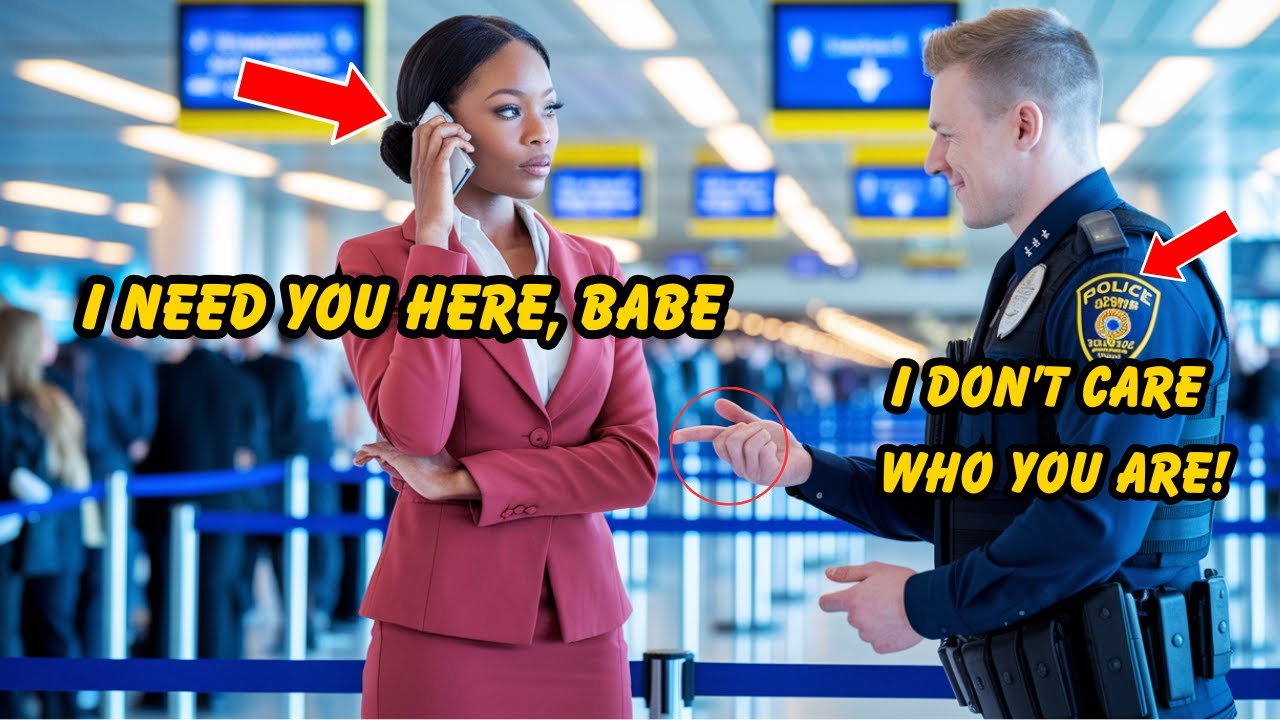
The pilot gripped her phone sternly as she spoke to the cops. "I'm telling you, there's a Black kid causing trouble in the lounge. Come right away!
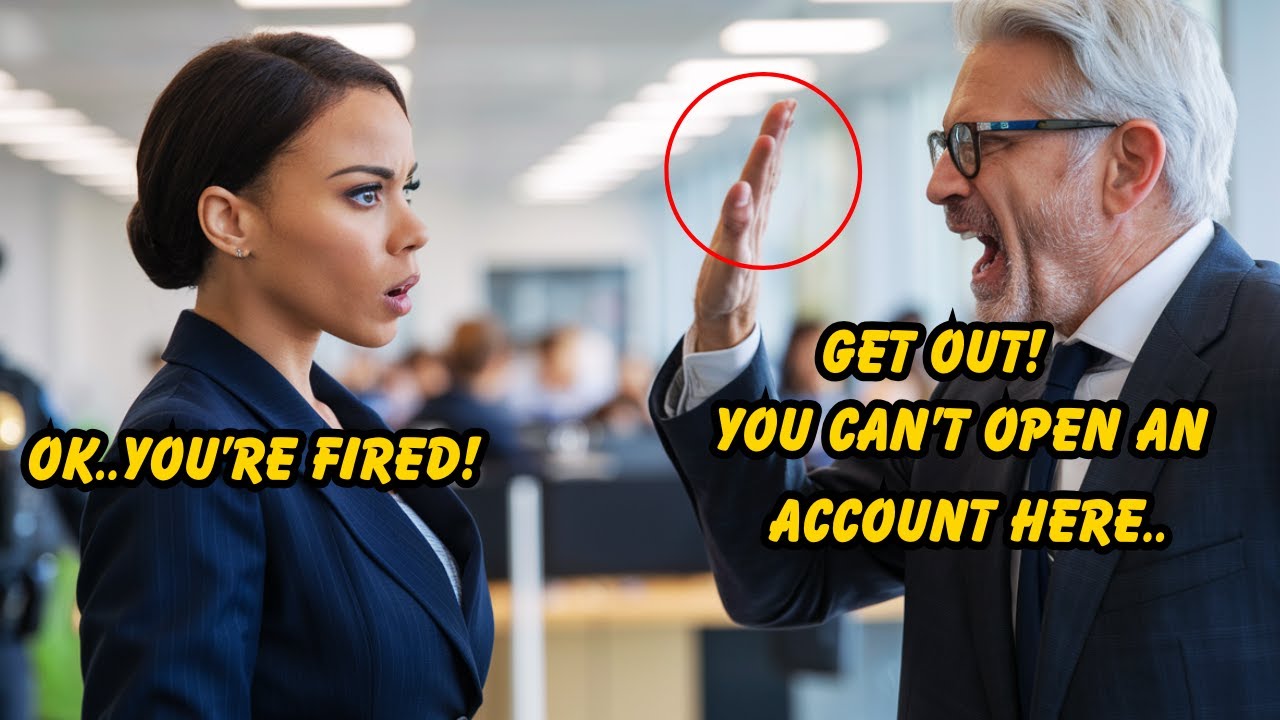
" Then she turned and said to the Black teen, "Get out of here right now! You don't belong in this lounge. " The voice of Captain Rebecca Whitmann echoed through the Pilot's Lounge as she towered over 16-year-old Elijah Jackson.
His visitor badge dangled from his lanyard as he tried to explain himself, his voice trembling. "Ma'am, I'm just waiting for my tour guide. She said I could stay here.
" "I don't care what she said! This area is for authorized personnel only! " Captain Whitman cut him off, already reaching for her radio.
"Security to the Pilot's Lounge! I have an unauthorized individual who needs to be removed immediately. " The fear in Elijah's eyes was unmistakable.
All he had done was watch TV while waiting—was that really a crime? Before we continue the story, if you believe everyone should be treated right, no matter who they are or the color of their skin, then tell us where you're watching from and click the Subscribe button for more videos like this. Elijah Jackson wasn't just any teenager.
At 16, he could already name every commercial aircraft by the sound of its engines alone. His bedroom walls were covered with aviation charts instead of band posters. While other kids his age dreamed of becoming social media influencers, Elijah had a singular focus: to become a commercial airline pilot.
This particular Tuesday was supposed to be the best day of his young life. Horizon Airlines was hosting a special career shadow day, and Elijah had written an essay that beat out hundreds of other applicants. The prize?
A full behind-the-scenes tour of airport operations and the chance to meet real pilots. "This is the operations center," his tour guide, Miss Tanya Reynolds, had explained earlier that morning, her eyes twinkling with amusement as Elijah rattled off facts about flight planning and weather patterns that even some junior pilots might not know. "You've really done your homework, haven't you?
" she asked, impressed by his knowledge. Elijah had beamed with pride. "My mom says if you want something badly enough, you need to know it inside and out.
" The tour had been everything Elijah had dreamed of. He'd visited the control tower, watched baggage handling operations, and even gotten to sit in the cockpit of a Boeing 787 while it was being serviced. Miss Reynolds had been impressed by his questions—not the usual surface-level inquiries, but detailed technical questions about thrust ratios and emergency protocol.
Around noon, Miss Reynolds had received an urgent call. "Elijah, I'm so sorry, but there's an issue I need to handle. It should only take about 20 minutes.
You can wait right here in the Pilot's Lounge; there's a great documentary about the evolution of commercial aviation playing on the TV. I'll be back as soon as I can. " Elijah had nodded eagerly, settling into a comfortable chair in the corner of the lounge.
The documentary was fascinating, detailing the engineering marvels that allowed modern aircraft to safely transport millions of people every day. He was so engrossed in the program that he didn't notice the room gradually emptying as pilots left for their flights. That's when Captain Rebecca Whitman had walked in.
A senior pilot with 20 years of experience, she took one look at Elijah—a young Black teenager sitting alone in the Pilot's Lounge—and immediately assumed the worst. If you've ever been in a situation where you were judged unjustly just because of how you looked or your skin color, hit that subscribe button now because this is a story you won't want to miss. Little did Captain Whitman know she had just made the biggest mistake of her career because Elijah Jackson wasn't just any aviation enthusiast touring the airport, and his mother wasn't just any mom.
Captain Whitman's next move caught Elijah completely off guard. She marched across the room, grabbed the remote control, and switched off the TV mid-sentence, just as the documentary narrator was explaining how jet engines revolutionized commercial flight. The screen went black, reflecting Elijah's startled expression.
"How did you get in here? " Whitman demanded, her voice sharp enough to cut through steel. Her perfectly pressed uniform and authoritative stance were designed to intimidate, and on a 16-year-old, the effect was working.
"Ma'am, I told you! Miss Reynolds brought me here. I'm part of the career shadow program," Elijah explained, his voice smaller now.
His hands trembled slightly as he reached for the visitor badge hanging around his neck. "See? I have proper clearance!
" That badge was Elijah's pride and joy; just that morning, he had taken a selfie with it to send to his best friend. "Official Visitor: Horizon Airlines Career Program," it read in bold letters, with his name and photo clearly displayed. But Captain Whitman wasn't interested in explanations.
Before Elijah could fully hold up his credentials, she snatched the badge from his neck, breaking the lanyard clip. The plastic ID clattered as it fell into her palm. Elijah's mouth fell open.
What had he done wrong? He was just watching TV, waiting for his guide as instructed. Now his heart was racing, and confusion clouded his thoughts.
His dream day was unraveling before his eyes, and he couldn't understand why. Captain Whitman scrutinized the badge with suspicious eyes, turning it over and holding it up to the light as if expecting to find evidence of forgery. Her lips thinned into a hard line.
"This has to be fake," she finally declared, her voice dripping with accusation. "Or stolen! There's no way they'd give this clearance level to someone like you.
Where'd you get this? Who are you really here with? " The emphasis on "someone like you" hung in the air, heavy with implication.
Elijah felt each word like a physical blow. "cracked as he tried again to explain. "I wrote an essay about my dream to become a pilot.
I won the Shadow Program competition; there were hundreds of applicants. You can call Miss Reynolds; she's from HR. Please, I'm just waiting here like she told me to.
" But Captain Whitman wasn't listening—she was already tapping her radio again, this time with more urgency. "Security, I need immediate assistance in the Pilot's Lounge. I have an unauthorized individual with what appears to be fraudulent credentials; possible security breach.
I need officers here now! " Her voice carried through the lounge and into the hallway beyond. Heads turned, conversation stopped.
Other pilots and airport staff began to gather at the entrance, drawn by the commotion. Some looked concerned, others curious, but none stepped forward to help Elijah. A crowd was forming now.
Elijah's eyes darted around frantically, searching for a friendly face, for Miss Reynolds, for anyone who might vouch for him. But all he saw were suspicious stares and whispered conversations. His cheeks burned with humiliation as he realized that to everyone watching, he was the criminal—the intruder—the threat.
His heart pounded so loudly in his chest that he was sure everyone could hear it. Sweat beaded on his forehead as panic set in. Was he really being labeled a criminal for watching TV in a waiting area?
Was this really happening because he had dared to dream of becoming a pilot? Because he looked different from Captain Whitman? A horrible thought struck him: what if they arrested him?
What would that mean for his future, for his college applications, for his dream of flying? "I just want to call my mom," Elijah managed to say, his voice barely above a whisper now. "Please, I didn't do anything wrong.
" But Captain Whitman was already addressing the growing audience, her voice performatively loud. "This is exactly the kind of security threat we're trained to identify," she announced, holding up Elijah's badge like evidence at a trial. "An unauthorized intruder with fraudulent credentials.
This is how breaches happen, people! " Elijah stood frozen, watching as his dream transformed into a nightmare in real-time. The documentary he'd been watching just minutes ago had talked about the miracle of flight, how humans had conquered gravity and distance.
But right now, Elijah felt very small, very earthbound, and very alone. Little did anyone know, the power dynamic in that room was about to shift dramatically because security wasn't the only one coming to the Pilot's Lounge. Someone else was about to arrive—someone who would change everything.
Soon, two airport security officers arrived, their uniforms crisp, faces stern. They pulled Elijah aside to a corner of the lounge while curious onlookers pretended not to stare. Terror washed over Elijah's face—not the nervous anxiety of a teenager in trouble, but the bone-deep fear of a young Black man facing authority figures who already believed he was guilty.
Images flashed through his mind: news stories of innocent Black teens arrested, handcuffed, or worse. Stories his parents had carefully explained to him as part of "the talk" they'd given when he turned 13—stories that were supposed to be cautionary tales, not prophecies about his own life. His hands shook uncontrollably now as he tried to explain himself for the third time.
Would anyone believe him, or would this moment derail not just his day, but potentially his entire future? "Name and purpose for being in this restricted area," the first officer demanded, notepad ready. Before Elijah could answer, Captain Whitman interjected.
"I found him snooping around, possibly gathering sensitive information. He has a counterfeit badge and refuses to explain how he gained access. " Each word was a knife twisting deeper—snooping, gathering information, counterfeit.
Elijah had been sitting in plain sight, watching a documentary that was playing on the lounge TV. How had watching planes on television transformed into industrial espionage? "I was invited here," Elijah managed, his voice smaller than he'd ever heard it.
"The Horizon Airlines Career Shadow Program. You can call Miss Reynolds from HR, please. " But his plea fell on deaf ears as the security officers continued their interrogation, their questions coming rapid-fire now.
"How did you get past the security checkpoint? Who gave you this badge? What were you looking for in here?
Are you working with anyone else? " With each question, Elijah's chest tightened further, his breathing becoming shallow and rapid. The room seemed to shrink around him.
The documentary about aviation pioneers that had captivated him minutes earlier now played silently in his mind, those barrier-breakers who'd faced impossibilities and overcome them. But this—this wasn't supposed to be one of those barriers. "I just want to be a pilot," he whispered, though no one seemed to hear him.
A memory surfaced—his 8th birthday, when his mother had taken him to an air show. The way the planes had carved perfect arcs against the blue sky. The moment he decided that's what he wanted to do with his life.
Years of science fairs with aviation projects, hours spent on flight simulators. His mother's encouraging smile when he'd been accepted into the Shadow Program. And now, here he was, being treated like a criminal for daring to dream.
"I'm just a student," he managed to say, louder, his voice cracking with emotion. "Please, can I call my mom? " The officers exchanged glances.
This wasn't the typical profile of a security threat—just a scared teenager asking for his mother. After a moment's hesitation, the senior officer nodded reluctantly. "Make it quick," he said, eyes still suspicious.
With trembling fingers, Elijah pulled out his phone. He tried desperately to keep his voice steady, to sound braver than he felt. He didn't want to worry her unnecessarily, but he needed her now more than he had since he was a small child.
"Mom, I need you at Terminal C. There's a situation. .
. " The words came. Out calmer than he expected, but his eyes told a different story: wide with fear, glistening with unshed tears.
“I’m in the Pilot's Lounge,” a pause as he listened. “Yes, they’re saying I shouldn’t be here. They think my badge is fake.
” Another pause. “No, Mom, I’m okay,” he lied, because that’s what children do to protect their parents, even when they’re the ones who need protecting. “Just please come.
” As he hung up, Captain Witman seized the opportunity to address her growing audience. She stood in the center of the lounge, shoulders back, chin high, the picture of authority. Several more pilots had entered the room, drawn by the commotion, and now formed an impromptu audience.
“This is exactly why we need stricter security protocols,” she lectured, gesturing toward Elijah as though he were Exhibit A in a courtroom drama. “People think they can just walk into sensitive areas because they’re curious or want to take pictures for social media. Post 9/11, we can’t afford to relax about who accesses secure areas.
His so-called mother that he called will most likely be a cleaner or a janitor at the airport. I will make sure she’s fired from here, so her good-for-nothing son won’t be trespassing here ever again. ” A murmur of agreement rippled through some of the onlookers.
Others looked uncomfortable but remained silent. No one stepped forward to ask if there might be another explanation. No one suggested waiting for Miss Reynolds to return and verify Elijah’s story.
Elijah sat with his head bowed, the weight of every stare in the room pressing down on his shoulders. His mind raced with terrible possibilities: Would he be arrested? Would this go on his permanent record?
Would colleges reject him if he had a security violation? Was his dream of becoming a pilot over before it had even begun? “All I did was watch a show about planes,” he thought, the injustice of it all threatening to overwhelm him.
“I was invited here! I had permission! I belong here!
Only my mom can save me now. ” He thought about his bedroom walls covered with posters of the great pilots of old, his bookshelf filled with biographies of people who'd broken barriers, his mother's constant refrain: “The sky belongs to everyone, Elijah. Remember that.
” But sitting here under the suspicious glares of security officers and the righteous indignation of Captain Witman, the sky felt very far away indeed. “We'll need to file an incident report,” one of the security officers was saying now, “possible breach of secure area, fraudulent credentials. ” Each word fell like another stone on Elijah’s shoulders: an incident report, documentation of something he hadn’t done, a black mark on his record that might follow him forever.
“Can we wait for my mom or for Miss Reynolds? ” he asked, his voice barely audible. “Please?
” The senior officer hesitated, then nodded curtly. “We’ll wait five more minutes, but then we’re proceeding with processing. ” As they waited, the minutes stretched into what felt like hours.
Every tick of the clock on the wall seemed to mock him; every whisper from the onlookers felt like judgment. Captain Witman checked her watch repeatedly, impatient for the security officers to remove the threat she had identified. “I have a flight to prepare for,” she announced to no one in particular.
“I can’t be expected to wait around all day while security sorts this out. I’ve done my duty by reporting the breach. ” The callousness of it, the casual way she had upended Elijah’s world and now wanted to simply walk away from the devastation, nearly broke something inside him.
A single tear escaped, tracking down his cheek. Before he could wipe it away, he stared at the floor, refusing to give them the satisfaction of seeing him cry. Elijah Jackson was wondering, at that very moment, as he sat in that Pilot's Lounge waiting for either salvation or ruin, if his dream was over, if the sky would ever feel like it belonged to him again.
What a liar! He didn’t know what Captain Witman couldn’t possibly suspect: that in just a few minutes, the power dynamic in that room was about to undergo a seismic shift. Because sometimes justice arrives in unexpected ways, and sometimes it wears designer heels and carries the authority to change lives with a single word.
The five-minute deadline was about to expire when something changed in the atmosphere of the terminal. It started subtly—a shift in the air, like the pressure drop before a thunderstorm. Then came a ripple effect through the crowd as heads turned toward the main corridor.
A security officer's radio crackled to life: “VIP approaching the Pilot's Lounge; clear the path. ” Confusion crossed the faces of the officers questioning Elijah. “VIP here now?
” The first sign was the sudden straightening of postures among the airport staff. The custodian who had been slowly mopping the floor nearby stood at attention. The barista at the coffee kiosk stopped mid-pour.
Gate agents abandoned their desks and lined up along the corridor wall. Then came the security team—not airport security, but private personnel in tailored black suits, with earpieces and discreet Horizon Airlines pins on their lapels. They moved with practiced precision, forming a pathway through the terminal.
These weren’t ordinary security guards; they were executive protection specialists, the kind that accompanied dignitaries and CEOs. Behind them walked four men and women in business attire, each carrying tablets and looking urgently at their phones—executive assistants and vice presidents based on their demeanor and the difference shown to them by others. Elijah looked up, his tear-stained face registering first confusion, then dawning recognition, and finally relief so profound it seemed to physically transform him.
His slumped shoulders straightened; the defeat in his eyes gave way to a flicker of hope. Through his remaining tears, a smile began to form—small at first, then growing with the certainty of salvation. The crowd parted like the Red Sea as Maya Jackson made her entrance.
She didn't merely walk; she commanded the space around her. With each deliberate step, her charcoal gray designer suit was impeccably tailored, her posture regal, her presence undeniable. The CEO pin of Horizon Airlines gleamed on her lapel, alongside rows of industry achievement pins that told the story of a woman who had conquered aviation's highest peaks.
She was surrounded by an aura of authority so potent that people instinctively moved out of her way, their expressions shifting from curiosity to recognition to something approaching awe. Some nodded respectfully; others whispered to colleagues who hadn't yet realized who had arrived. "That's Maya Jackson, the CEO and owner of Horizon Airlines, a former pilot herself and on Forbes' Most Powerful Women list.
" The whispers cascaded through the crowd, a wave of realization washing over everyone in the terminal—everyone except Captain Rebecca Whitman, who was still addressing the security officers with her back to the commotion, oblivious to the seismic shift occurring behind her. "As I was saying, we need to process this and file the report immediately. I have a flight to Chicago in 40 minutes, and I need to complete my pre-flight checks," Whitman was saying, irritation evident in her voice.
The security officers weren't listening anymore. Their eyes were fixed on Maya Jackson as she approached, their faces showing a mixture of respect and sudden apprehension. They knew who she was; everyone at Horizon Airlines knew Maya Jackson, the woman who had started as a flight attendant 30 years ago, put herself through school to become a pilot, then worked her way up to operations management and eventually purchased controlling interest in the airline.
Maya Jackson didn't just run her airline; she was Horizon Airlines. Elijah's transformation was the most remarkable of all. The boy who had been cowering moments before now stood a little taller, his eyes brightening despite the tear tracks still visible on his cheeks.
The change in his posture was subtle but profound—from a young man bracing for disaster to one who suddenly remembered his own worth. Without a word to anyone else, Maya walked directly to Elijah. The terminal fell silent; even the overhead announcement seemed to pause as though the entire airport was holding its breath.
She embraced him—not a quick, perfunctory hug but the fierce, protective embrace of a mother who has found her child in distress. She held him close, feeling his heart still racing from the ordeal, whispering something in his ear that made his shoulders finally relax. For just a moment, she wasn't the CEO of a major airline or one of the most powerful women in the transportation industry; she was simply a mother comforting her son.
The vulnerability and strength in that embrace spoke volumes about who Maya Jackson was behind the power suits and executive decisions. Then, still with one arm around Elijah's shoulders, she turned to face Captain Whitman. The transformation was instantaneous and chilling.
The warmth that had enveloped Elijah vanished, replaced by a cold fury so controlled, so precise, that it seemed to lower the temperature in the room. Her voice, when she finally spoke, was not raised; it didn't need to be. It carried the weight of absolute authority, the kind that comes not from a title or position but from a lifetime of earning respect and power through sheer force of will and intelligence.
"That's my son you're accusing of theft, Captain Whitman. " Captain Whitman froze mid-sentence, turning slowly to face the source of the voice she clearly recognized. Her face, previously flushed with self-righteous indignation, drained of color so rapidly it was as though someone had pulled a plug.
Her mouth opened, closed, opened again, but no sound emerged. In that moment of stunning silence, the power dynamic that had defined the past hour collapsed completely. The accuser became the accused; the authority figure became the subordinate.
The woman who had wielded her position like a weapon now stood defenseless before a much greater power. The irony was exquisite and terrible all at once. The very same Captain Whitman who had refused to believe Elijah belonged in that pilot's lounge now found herself in a position where her own belonging—her position, her career, her future—hung in the balance.
The silence that followed Maya Jackson's declaration was absolute. For several heartbeats, the only sound in the terminal was the faint overhead announcement calling for a passenger to return to gate 23. All eyes were fixed on Captain Whitman as the blood drained from her face, leaving her complexion ashen against her navy uniform.
Her eyes darted frantically between Maya and Elijah, making the connection she had failed to see earlier—the same strong jawline, the same intelligent eyes, the same quiet dignity, even under pressure. "Miss Jackson," one of the security officers said, immediately lowering his notepad. "We didn't realize—" "Clearly," Maya responded, her tone measured but glacial.
The airport security officers stepped back, suddenly unsure of their role in this unfolding drama. The crowd of onlookers had grown, with pilots, flight attendants, and gate agents gathering at a respectful distance. An executive from Maya's entourage leaned toward one of the confused security officers.
"That's Maya Jackson," he whispered, not quite quietly enough. "CEO and majority owner of Horizon Airlines. She owns 53% of the company outright.
" Captain Whitman's eyes widened further as she registered the full implications of those whispered words—not just CEO, owner, not just Elijah's mother—her boss, the person who could, with a single decision, end the career she had built over 20 years. The color continued to drain from Whitman's face until she resembled one of the blank flight maps on the terminal screens—empty of detail, devoid of direction. Her carefully constructed authority was crumbling in real time, the foundation of her confidence washing away like sand beneath a rising tide.
"Miss Jackson," Whitman finally managed, her voice shaking. Climbing half an octave higher than her usual commanding tone, I had no idea she stopped, regrouped, and tried again. I was just following protocol—another false start.
If I'd known he was your son! And there it was, the fatal mistake laid bare in her own words: if I'd known he was your son, not if I'd known he was authorized to be here, not if I'd known he was part of the Shadow program, but if I'd known who his mother was. Maya's expression hardened, the steel in her eyes now forged into something sharper, more dangerous.
"That's exactly the problem, isn't it, Captain Whitman? " Maya said, cutting her off mid-excuse. "My son was terrified because you criminalized him for watching TV while waiting for his tour guide.
Is that your protocol? To traumatize students in our career program based on snap judgments? To assume guilt without evidence?
To confiscate legitimate credentials and call security on a child who was exactly where he was authorized to be? " Each question landed like a precision strike, leaving no room for evasion or excuses. Maya's voice remained level, never rising, which somehow made her words all the more devastating.
This wasn't the outburst of an angry mother; this was the calculated response of a CEO who had spent decades navigating boardrooms dominated by men who underestimated her. Whitman opened her mouth again, but no sound emerged. What could she say?
That she hadn't bothered to check if Elijah was authorized? That she had assumed, based on nothing but his appearance, that he couldn't possibly belong? That she had engineered a security response to a threat that existed only in her mind?
"Miss Jackson? " One of the airline executives from her entourage stepped forward, tablet in hand. "We've already accessed the security footage from the lounge.
It clearly shows Mr Jackson seated quietly, watching the documentary on commercial aviation history that runs in the pilots' lounge. At no point does he leave his seat until Captain Whitman confronts him. " Another executive spoke up.
"We've also confirmed with HR that Elijah Jackson is indeed enrolled in our career shadow program. Today, Miss Reynolds was called away on an urgent matter but had authorized him to wait in the lounge. His credentials are completely legitimate.
" With each piece of evidence, Captain Whitman seemed to physically diminish, as though the gravity in her immediate vicinity had intensified, pressing her toward the earth. Her shoulders hunched forward, her posture—once ramrod straight with unearned authority—now curved in a defensive posture. "I didn't realize.
. . " she began again.
"No, you didn't realize," Maya agreed, her tone now almost clinical in its precision. "You didn't realize that my son had every right to be here. You didn't realize that your assumptions were based on prejudice rather than fact.
You didn't realize that actions have consequences. " A murmur rippled through the gathered crowd. This wasn't just a dramatic confrontation between a CEO and an employee; this was a reckoning, a public accounting of biases that usually remained unexamined and unchallenged.
"Captain Whitman," Maya continued, still with that same measured calm that was far more intimidating than any shouting could have been. "In the 20 minutes since I received my son's call, I've reviewed our company policies, your employment record, and the preliminary security footage. " She paused, allowing the implications to sink in.
Twenty minutes. In twenty minutes, while traveling to the airport, Maya Jackson had mobilized resources, gathered information, and prepared to address not just this specific incident, but its root causes. "This isn't your first incident involving questionable judgment and unwarranted escalation," Maya continued.
"There are three prior complaints in your file, all involving young employees of color who you felt were out of place or suspicious. " Whitman's face, already pale, now took on a grayish tinge. Those complaints had been filed but never acted upon—until now.
"As CEO of Horizon Airlines and as a mother, I cannot allow this behavior to continue. " Maya straightened to her full height, every inch the executive making a difficult but necessary decision. "Captain Whitman, you're suspended effective immediately, pending full review: six months without pay.
Captain Amar Johnson will be taking your routes starting today. " The pronouncement fell like a gavel in a courtroom—final, decisive, and public. There would be no quiet resolution behind closed doors, no saving face for the captain who had been so quick to humiliate a 16-year-old boy in front of a crowd.
The consequence was proportional to the offense, carried out with the same public scrutiny that Whitman had subjected Elijah to. Something shifted in Whitman's expression: a flash of anger quickly suppressed, a momentary impulse to argue or defend herself. But as she looked around at the witnesses, at the security officers who now stood at attention for Maya Jackson, at the executives with their damning evidence, at the fellow pilots watching with a mixture of shock and unease, she seemed to realize the futility of protest.
"Miss Jackson, please," she tried one last time, her voice barely above a whisper. "My record, my 20 years of service should have taught you better judgment. " Maya finished for her: "My decision stands.
" She turned to one of her executives. "Please escort Captain Whitman to HR to process her suspension and have her credentials temporarily restricted until the review is complete. " The executive nodded, stepping forward to gesture for Captain Whitman to follow him.
For a moment, it seemed as though Whitman might refuse, might make a final stand to salvage her pride, if not her position. But then her shoulders slumped in defeat. The fight had left her, replaced by the dawning realization of exactly how thoroughly her actions had backfired.
As Whitman was led away, Maya turned back to Elijah, her CEO persona softening once more into that of a concerned mother. She placed a gentle hand on his shoulder. "Are you all right?
" she asked quietly, though the question carried an intensity that spoke volumes. The hush terminal. Elijah nodded, straightening under his mother's touch.
The fear was gone from his eyes, now replaced by something more complex: relief mixed with lingering uncertainty and perhaps a new understanding of the world he hoped to join. “I am now,” he said, his voice steadier than it had been all day. The contrast couldn't have been clearer: Captain Witman, who had begun the hour standing tall with borrowed authority, now walked away diminished.
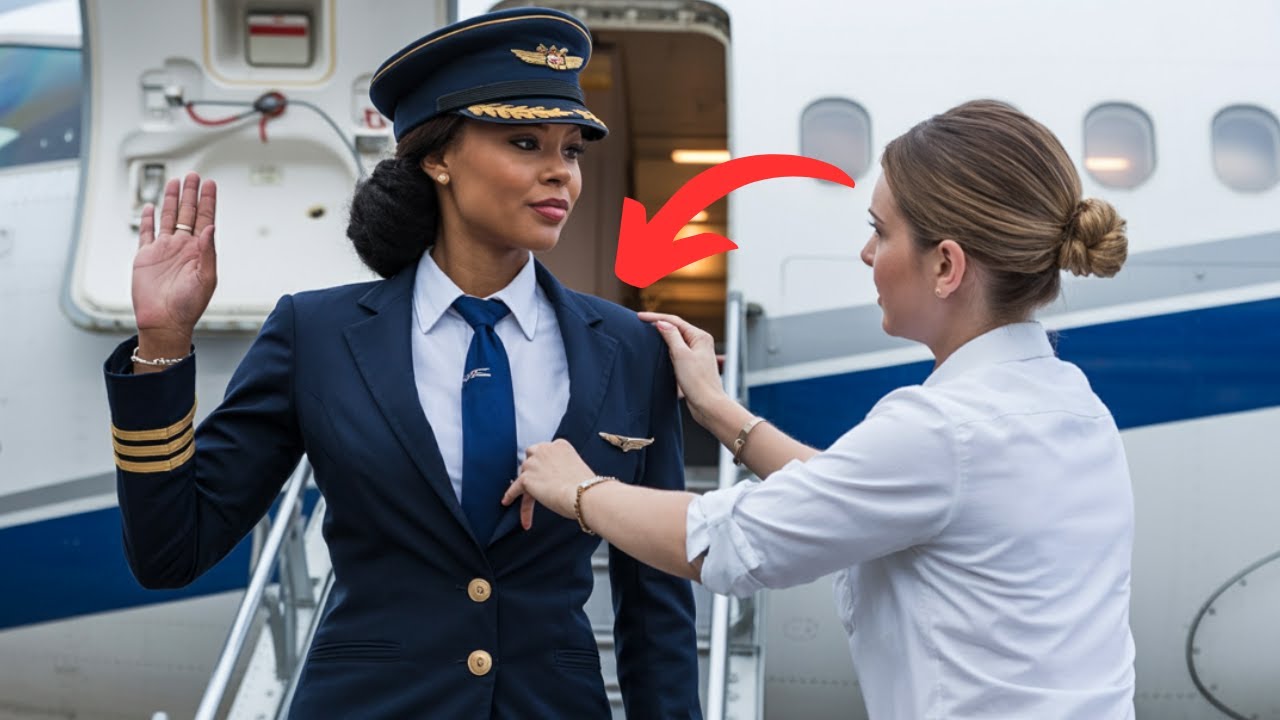
Elijah, who had been reduced to tears by that same authority, now stood tall beside his mother, reclaiming his dignity inch by inch. As the crowd began to disperse, a tall black woman in a pilot's uniform approached Maya and Elijah. The four stripes on her shoulders identified her as Captain Amara Johnson, one of Horizon's most experienced pilots, and as of a few moments ago, the pilot who would be taking over Captain Whitman's Chicago route.
Maya turned to greet her with a nod of recognition. “Captain Johnson, thank you for being available on such short notice. ” “Always, Miss Jackson,” Captain Johnson replied, her voice warm but professional.
Then her attention shifted to Elijah, and her expressions softened with understanding. She too had once been young and full of dreams in an industry that wasn't always welcoming. “And sometimes the sky does belong to everyone after all.
” As the door closed behind Captain Whitman and her escort, the tension that had gripped the terminal began to dissipate. Airport operations resumed their rhythm: announcements overhead, passengers moving to gates, and the distant roar of jet engines. But for Elijah and Maya Jackson, standing in the center of the Pilot's Lounge, something fundamental had changed.
Now, away from prying eyes with most of the crowd dispersed, Elijah's carefully maintained composure began to crumble. His shoulders trembled slightly, and when he spoke, his voice carried the weight of the fear he'd been holding back. “Mom,” he said quietly, “I was so scared.
I thought—I thought I might actually get arrested just for sitting here, just for watching TV in the wrong place. ” Maya pulled her son close, her executive demeanor giving way entirely to maternal concern. For all her power, for all her influence, she couldn't shield him from this moment—this harsh collision with reality that so many young black men face.
“I know, baby,” she said. “I know. ” There was both heartbreak and steel in those simple words: acknowledgment of the world's injustice and determination to face it nonetheless.
This moment between mother and son, intimate and raw, revealed the private burden carried by even the most successful black families in America: the knowledge that achievement and position offer only partial protection against prejudice. “When she took my badge, when she wouldn't listen,” Elijah continued, his voice steadying as he processed the experience, “I kept thinking about everything we've talked about, about how to handle situations like this. But it was different living it.
It was terrifying. ” Maya finished for him, her eyes reflecting understanding too deep to be merely theoretical. “It always is.
” Captain Amara Johnson approached them with respectful hesitation, aware she was interrupting a profound moment between mother and son. Her presence, a tall, confident black woman wearing the same uniform that had clothed Captain Whitman's prejudice, offered its own kind of healing. “Miss Jackson,” she said, then turned to Elijah with a warm smile.
“And Mr Jackson, I wanted to extend a personal invitation. My flight to Chicago doesn't leave for another hour. I'd be honored to give you a tour of the cockpit—a real one, with all the technical details I suspect a young aviation enthusiast might appreciate.
” Elijah looked up, surprise momentarily displacing the remnants of fear on his face. “Really? Even after all this?
” “Especially after all this,” Captain Johnson replied firmly. “The flight deck is where you belong, young man, if that's where your passion leads you. ” The simple validation in those words, the acknowledgment of belonging that Captain Witman had so callously denied, seemed to straighten Elijah's spine.
A tentative smile formed, then grew stronger. “I'd like that very much. ” “Captain Johnson,” Maya nodded her approval, squeezing her son's shoulder, “go ahead.
I have a few things to discuss with my team. I'll meet you both at Gate B17 in 30 minutes. ” As Elijah walked away with Captain Johnson, already asking detailed questions about the Boeing 787 flight control systems, Maya watched them go.
The expression on her face transformed from the protective mother to the visionary CEO—someone who had just witnessed a systemic failure and was already formulating how to address it at its roots. One month later, the Pilot's Lounge at Terminal C looked very different. Where once there had been only technical manuals and industry publications, now the walls displayed framed photographs of diverse aviation pioneers alongside current Horizon Airlines pilots of all backgrounds.
A large screen cycled through profiles of the company's mentorship program participants, young faces full of the same passion for flight that had brought Elijah to that lounge. Elijah himself stood before a group of high school students, no longer the scared teenager from a month ago, though the memory of that fear still lingered in his eyes when certain topics arose. He had grown in confidence, becoming one of the youth ambassadors for the New Horizon Futures program.
“Aviation isn't just about flying planes,” he was explaining to the rap group of diverse teenagers. “It's about understanding systems, communications, physics, and human factors. Every one of you has something unique to bring to this industry.
” Behind him, Captain Amara Johnson nodded in agreement. Now the official head of Horizon's mentorship initiative, she divided her time between flying international routes and nurturing the next generation of aviators. The captain's stripes on her shoulders represented not just her achievement, but a promise to those watching her that they too could earn them with hard work and persistence.
“The sky has room for all of you. ” She added, making eye contact with each student in turn, "Don't let anyone tell you differently. " The students asked questions: practical concerns about education requirements, technical queries about aircraft operations, and inevitably, more personal worries about belonging in an industry that hadn't always been welcoming to people who looked like them.
Elijah answered them all with honesty tempered by optimism. He didn't sugarcoat the challenges, but neither did he allow his own experience to discourage these younger dreamers. That balance between realism and hope marked him as someone who had begun the journey from adolescence to adulthood, catalyzed by that day in the Pilot's Lounge.
Later that evening, in Maya Jackson's elegant office overlooking the main terminal, mother and son sat together, reviewing the day's events. The formal CEO's desk had been abandoned in favor of comfortable chairs by the window, where they could watch planes taking off and landing—a view that never grew old for either of them. "How did it go today?
" Maya asked, though she had received glowing reports from Captain Johnson already. Elijah considered the question carefully. "Good, I think.
They asked tough questions about what happened to me, about Captain Whitman. " News of the incident had spread, of course; in an age of social media and instant communication, such stories rarely remained contained. Maya had chosen to address it directly, transforming a potential PR crisis into an opportunity for institutional change.
"And how did you answer? " she probed. "I told them the truth," Elijah said simply.
"That I was scared, that I thought my dream was over because I watched TV in the Pilot lounge, that for a few minutes I believed what Captain Whitman seemed to believe—that I didn't belong there. " Maya's expression softened with a mixture of pride and lingering pain. "And now?
" "Now I know better," his voice grew stronger. "But Mom, I keep thinking about what would have happened if you weren't who you are. What if my mom wasn't the CEO?
What if she was just a mom? Would anyone have believed me then? " It was the question that had haunted both of them since that day: the uncomfortable knowledge that Elijah's salvation had come not just from justice, but from privilege—the privilege of having a mother with the power to command attention and respect, to demand accountability, to enforce consequences.
Maya leaned forward, taking her son's hands in hers. "That's exactly why I started the mentorship program. Because not every child has a mother who owns an airline, but every child deserves to be treated with dignity.
Every child deserves to be believed. " She paused, then shared something she rarely discussed, even with Elijah. "When I was first training as a pilot 25 years ago, I was often the only woman in the room and almost always the only Black woman.
There was a chief instructor who was convinced I didn't belong there. He tested me harder than other trainees, criticized me more harshly, questioned my competence at every turn. " Elijah listened intently; his mother spoke often of her successes, but rarely of her struggles.
"One day, after I aced a particularly difficult simulation that he was sure would prove his point about my inadequacy, he told me that I might have passed the test, but I would never fit in with the culture of aviation. " She smiled slightly at the memory, but there was old pain behind the smile. "I was terrified every day that he would find some reason to wash me out of the program.
I second-guessed myself constantly. I worked twice as hard as anyone else, slept half as much, just to prove I deserved to be there. " "What happened?
" Elijah asked. "I graduated top of my class, got hired by a regional airline, worked my way up. Eventually, when I had enough seniority and influence, I made sure that instructor never had the power to discourage another student like me again.
" She squeezed her son's hands. "But here's what I wish someone had told me then, what I want you and every one of those students to know: fear should never be the price of following your dreams. The anxiety I felt, the terror you experienced in that lounge, that's not an inevitable cost of being a pioneer; it's a failure of the system, and it's a failure we can fix.
" Maya gazed out the window at a Horizon Airlines plane taking off, its lights visible against the darkening sky as it climbed steadily upward. "That's why the new diversity initiative isn't just about recruitment numbers or public relations. It's about changing the culture from the inside out.
It's about making sure that the next generation of dreamers doesn't have to be afraid. " On the wall behind them hung a large framed poster: "The New Face of Horizon Airlines Diversity Initiative. " Captain Amara Johnson stood confidently in her uniform, surrounded by a diverse group of young people, including Elijah.
Across the bottom, in bold letters, were the words that had become both slogan and promise: "Fear should never be the price of following your dreams. " In the six months since that day in the Pilot's Lounge, those words had come to represent more than a corporate initiative; they had become a rallying cry for an industry in transformation, a reminder that the sky, vast and boundless, truly does have room for everyone. If you enjoyed this story, don't forget to click on the Subscribe button and share it with others to enjoy more stories like this.
See you in the next video!