in this lesson we're going to focus on subtraction let's say we have 48 minus 32 and we want to subtract the two numbers the first thing we need to do is stack the two numbers and the way we write it matters 48 minus 32 should be written this way because this will give us positive 16. if we were to reverse the order we would get negative 16 so we shouldn't do that therefore the first number that's written goes on top the second number goes on the bottom now to subtract it we start with the first column on the right eight minus two is six and then we move on to the next column on the left so we start from the right and move to the left four minus three is one so we get the answer sixteen now let's work on some harder examples try this one what is 63 minus 28 so let's rewrite the problem we're going to put the first number on top and the second number on the bottom now if we subtract the two numbers in the first column three minus eight that's going to give us a negative result so that's not going to work because we have a large number subtracted by a smaller number we should get a positive result what we need to do is borrow a one from the next column so we're going to borrow a one from six six minus one is five and now the three is going to become because we borrowed a one and so we're gonna push that one next to the three making it thirteen so now we have thirteen minus eight which is five and then five minus two which is 3. so the answer is 35 and you can confirm that with a calculator 63 minus 28 is 35.
now let's move on to the next example let's subtract 146 by 28 feel free to pause the video and try this problem so let's rewrite it like this the first number goes on top and the second number will go on the bottom now six minus eight will give us a negative number so we're gonna borrow a one from four and the fours can become three and we're going to put the one next to the six making six or transforming six into sixteen so now we have 16 minus eight so that's going to be eight three minus two that's one and one minus nothing or one minus zero is one so the answer is one hundred and eighteen try this one one thirty two minus fifty nine so let's rewrite it starting with the first column we have two minus nine which will give us negative seven we don't want that so let's borrow a a one from three so three minus one is two and let's put that one on a two to the right so the two becomes a twelve 12 minus 9 that's 3 now 2 minus 5 that's not going to work so we're going to borrow a 1 this one becomes 0 and the 2 now becomes 12. so twelve minus five gives us seven so the answer is seventy three and if you wanna confirm it you could simply add these two numbers to see if it will give you the first number so if we add 59 and 73 we get nine plus three which is 12 carry over the one one plus five is six six plus 7 is 13 and it does give us our original number so that tells us that 73 is indeed the correct answer now let's move on to the next example 435 minus 186 go ahead and try that so let's rewrite it 5 minus 6 is a negative number so we can't do that we're going to borrow a 1 from 3 this is going to become a 2 and we're going to put the one next to the 5 making it 15. now 15 minus 6 is 9 2 minus 8 will give us a negative number so we need to borrow a 1 from 4 four minus one is three and let's put the one on the two making it twelve twelve minus eight is four and three minus one is two so this is going to be 249.
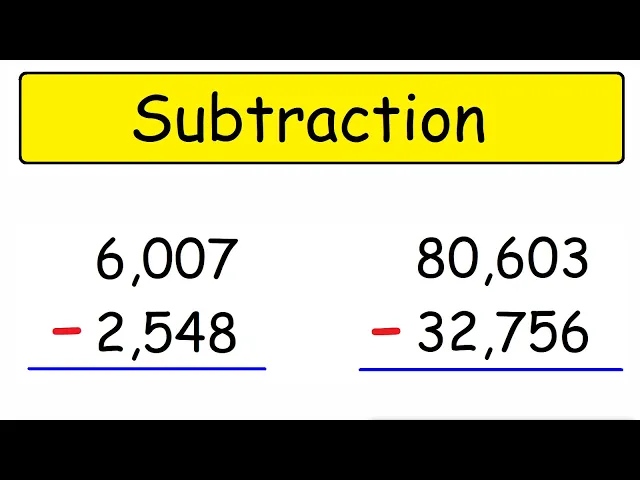
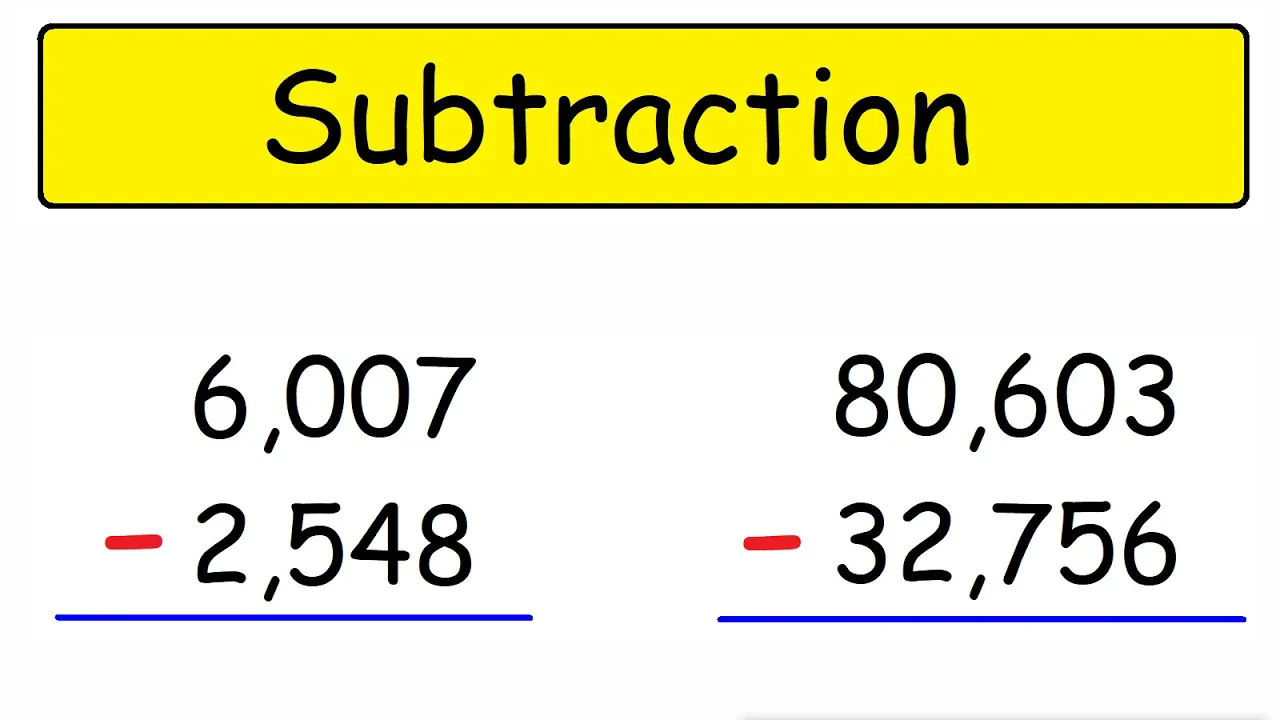
now this one is going to be a little different 506 minus 39. go ahead and try that one six minus nine this is going to give us a negative number so we need to borrow a one but how can you borrow one from zero well that could be a little confusing because if you take away one from zero you get negative one when you encounter a situation like that don't borrow one from zero instead borrow one from fifty fifty minus one is forty nine and we're going to put the one on the six making it sixteen so now we have 16 minus 9 so if you want to break this into columns see it this way so 16 minus 9 is seven and then we have nine minus three which is six and then four minus nothing is four so the final answer is four 467 for the next example let's take 803 and subtracted by 254 so this is similar to the last problem so three minus four is not going to work so we need to borrow a one we can't borrow it from zero but we're going to borrow a one from eighty eighty minus one is seventy nine and now we're going to put that one onto three making it thirteen so now we have thirteen minus four which is nine nine minus five that's four and seven minus two is five so the answer is 549 so that's what you can do if there's a zero in the middle now what if there are two zeros so let's say we have 6007 and we wanna subtract it by two thousand five hundred and forty eight what should we do here well first let's begin by lining up the numbers seven minus eight is negative one so we need to borrow zero so instead of borrowing i mean we need to borrow one instead of borrowing one from zero we're going to borrow one from six hundred six hundred minus one is five ninety nine so we're going to have a five nine and nine here and we're going to put the one on a 7 making it 17. 17 minus 8 is 9.
9 minus 4 is 5 9 minus 5 is 4 and then five minus two is three so the answer is three thousand four hundred and fifty nine so that's what you can do if you have two zeros in the middle if you need to borrow a one borrow a one from 600 making it 599. try this one for practice 5036 minus 2458. 6 minus 8 will give us a negative number so we need to borrow a one we could borrow a one from the three it becomes a two and notice that this is the same as borrowing a one from 503 which becomes 502 the six becomes sixteen so sixteen minus eight that's going to be eight now we can't subtract two from five so we're gonna borrow a one from 50.
so 50 becomes 49 and the 2 becomes 12. so now we have 12 minus 5 which is 7 9 minus four which is five and then four minus two which will give us two so the answer is two thousand five hundred and seventy eight now for the next problem we're going to have a number with three zeros thirty thousand and five minus fourteen thousand five hundred and twenty eight so go ahead and try that problem so 5 minus 8 will give us negative 3 so we need to borrow a one this time we're going to borrow a one from three thousand three thousand minus one is two thousand nine hundred and ninety nine now let's put the one on a five making it 15. so 15 minus 8 is 7 9 minus 2 that's going to give us 7 9 minus 5 is 4 and then 9 minus 4 is five and two minus one is one so the answer is going to be fifteen thousand four hundred and seventy seven now let's try one more problem in this example we're going to have two non-consecutive zeros in a large number so 80603 minus 32 756.