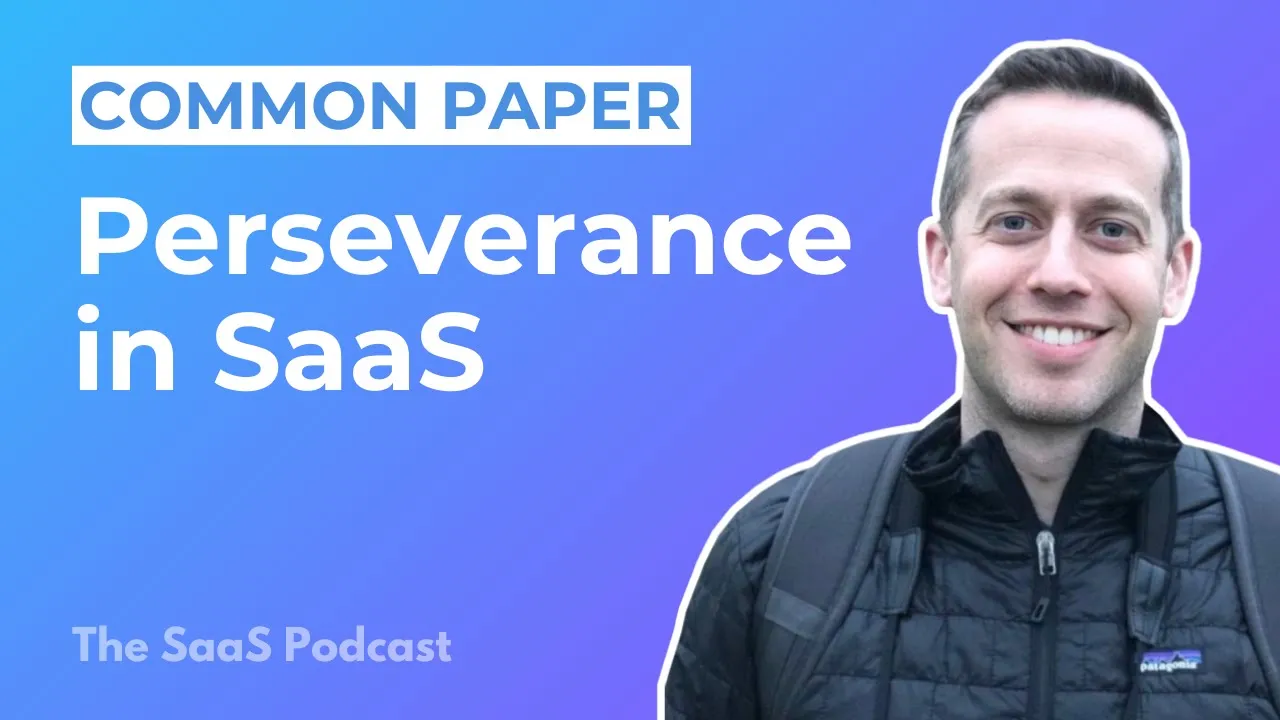
Jake welcome to the show thanks so much for having me my pleasure do you have a favorite quote something that inspires or motivates you that you can share with us yeah I I love there's a particular quote from Warren Buffett and it's not necessarily what you'd expect from him but it's a it's don't save sex for old age uh which is it's actually a career advice uh so if there's something that you want to do uh there's no time like The present uh and don't don't spend your life preparing for something that you might be
able to do right now I love that uh I love that so much um anyway this could become a therapy session I could talking about all the things that I wish I had done sooner but uh great great one so tell us about common paper what does the product do who's it for what's the main problem you're helping to solve yeah uh so uh who we're we're for and what we're Trying to solve is B2B software companies and specifically their contracts with their customers uh this a problem that I encountered a bunch of times in
my career uh there there's two pieces to to how we help one is standardization of the contracts themselves so we create open- Source standard contracts sort of like the safe but instead of for fundraising for sales um and then the other piece of what we do is build software for managing those Contracts so proposing negotiating getting them signed getting paid for them once they are assigned and keeping track of all the terms with all the different customers give us a sense of the size of the business where you in terms of customers Revenue Team all
that stuff sure yeah so we're a seed Stage Company uh we have eight people uh we have 140 paying customers hundreds of thousands of Revenue uh we have uh hundreds uh actually I take that back Now thousands of companies that have used common paper to uh close deals with their customers uh and tens of millions of dollars of deals have been closed on our platform Comm paper was founded 2021 but this story that we're going to tell our audience starts back in 2008 when you and Bob Moore who I interviewed on episode 396 uh founded
a business called RJ metrics it's a it's a really interesting Story and and the journey that you guys went on um and how you ended up exiting that business and then spinning off a feature which turned into be even more successful than the rest of the business that you had sold um and when I interviewed Bob he kept on talking about you we we we you know we talk about something that happened he'd say well you know I got to give Jake credit for that and then Something else is like well Jake was the guy
who really did that and Jake kind of helped me with this and and he was the level-headed person and he's the meditator and all of this stuff and I was like okay there's like he's he's mentioned Jake so many times I should just get Jake on the show and and and hear your side of the story and obviously what you're doing now all all my payments to Bob for promotion fees really paid off yeah so so tell us the Story I mean I we'll we'll we'll do a condensed version just so people who haven't heard
Bob's interview can can get you know a flavor of the story and if they want to dig deeper they can go and listen to episode 396 sure yeah so uh uh Bob and I met working at our first job at a college at a VC firm this was actually before 2008 uh a VC firm called Insight Venture Partners doing um basically all the Junior stuff that that you do trying to find deals trying to Help the partners to due diligence and RJ metrics came out of an idea that that Bob actually had around productizing some
of the analytics work we were doing um for the portfolio uh and so we we left in 2008 started RJ metrics and the business went through a couple iterations but ultimately we focused on business intelligence data analytics targeted primarily at e-commerce businesses and this was really the Heyday of you know new DTC e-commerce Businesses um and we had you know like we we it was a slow start um you know we didn't take a salary for the first year and a half we didn't fundraise for the first three years so we're really just working out
of his attic um trying to get customers and then you know eventually getting a crummy office uh convincing someone to to quit their excellent job to come join us and just sort of working from there uh eventually we we got product Market fit um had some Really amazing customers uh we had a phenomenal team that that we joined us and like there just weren't that many startups in the Philadelphia area at that point and so like I think we were able to sort of punch way above our weight in terms of who we hired and
my current co-founder at common p Ben is is one of the the people that we hired that I got to meet through that process um and we we ultimately ran that Business until 2016 when it was acquired by Magento who was our biggest partner they're an e-commerce shopping cart platform sort of a open- source Enterprise focused version of Shopify that company Magento was ultimately acquired by um Adobe um and so you know uh RJ metrics is now you know a subsidiary of a subsidiary of a very large company um but as always happens with these
sorts of things there's a lot of you Know twists and turns and ups and downs and I mentioned we got product Market fit ultimately we sort of lost it at various points so you know we were a rocket ship then we were not so much a rocket ship then we had some good ideas then we lost it and um ultimately what we found was we we created this small second product which um was sort of oriented around a new way of doing analytics rather than Everything sort of bolted together the idea was you get a
bunch of different tools that are each really good at one specific thing for the computer scientists in the audience it's more of like the Unix philosophy like small small tools that do one thing really well um and it eventually came under the name of the modern data stack and this feature that we had created for that we thought had a really bright future so we when we were selling that original Business to Magento we spun off this this other piece and rebranded it and called this Stitch let's talk about stitch in a second because um
the RJ metrics piece you you talked about sort of finding product Market fit and then sort of losing losing it and and so on so from what I recall the first three years of that business 2008 to 2011 I guess you you guys bootstrapped it was a struggle finding Customers you were just you know it was about just getting enough Revenue to stay afloat then eventually through that perseverance in 2012 you started to get traction and customers and and you know feel like you had product Market fit and then uh I can't remember exactly what
what happened but there there was um there was some something that Happened which which kind of ma made the sort of the the sort of the architectural decisions that You' made with the product a bit more irrelevant I guess is is that what yeah that's exactly right um so yeah there's you know with all these things there there's always a lot of moving pieces and it's complicated but in this case there's like a pretty clear before and after moment and it's when uh Amazon web services launched uh Red shift which was a cloud-hosted uh managed
data warehouse um there had been many D data warehouses before vertica nza lots of other things but this was the first one that in your AWS console you could just spin up and have working in like a minute or two um all of a sudden uh you know there there were already some competitors of ours companies like looker and mode which were primarily focused on the front end like the dashboard of of what You look at and they pushed all the work down to the database and common paper we we were much you know we
we proud at ourselves on being not com paper sorry RJ metrics uh we proud at ourselves on being uh much deeper than folks like that we had the data ingestion we had the data transformation we managed a warehouse a data warehouse for you uh and we built out the visualization layer and all those things were really tightly integrated together which had a bunch of Benefits like we could get you up and running super fast with very little work on your part and we also knew all about these e-commerce businesses so we knew what kind of
reports they wanted to have so the first time they logged in in it was all working and all there um but all of a sudden when red shift existed anybody in the world could get a much better data warehouse than the one that we had slaved over uh instantaneously and our product did not Work with red shift on that day so folks like looker and mode they could just point their front-end visualization and analytics layer at Red shift instead of at you know my SQL and all of a sudden their product had superpowers and our
product did not and we had to go through really uh long process to sort of decouple ourselves from our homegrown solution to that um and that was part of a broader shift in the industry of like when I talked about the Unix philosophy Before going from these big tightly coupled uh stacks of tools together to picking one thing for the analytics one thing for the data ingestion one thing for the visualization and sort of being able to mix and match those tools together so it was three years of just trying to get this startup off
the ground then eventually year four things start to happen and you're growing that lasts for a while and then suddenly things Flatline and it doesn't look like this is going anywhere things get pretty tough by 2015 that you guys had to do some layoffs right that's right yeah so um we uh we and this is you know ultimately mistake that that Bob and I made where we uh had a sales model that sort of assumed some things around the business and we uh created this this team for sourcing new business and it was you know
traditional you know you got AES You got uh sdrs uh and as we started growing you know in those in the time when we did have really strong product Market fit all the metrics look great uh we invested a dollar we got way more than a dollar out it was like you know sort of the in our analytical Minds we're like okay this is this is the green light this is what everybody is going for and our investors were like yes do it you you've got it Go and so we really staffed up that team
and we had Some really aggressive sales goals uh and then after another quarter or two the metrics of that team got somewhat worse but not not like terrible it was like okay this is still Roi positive but in order to meet our really aggressive sales goals we would actually need significantly more people and we thought okay if we need more people that's fine the the the math still works so let's uh go from aggressive hiring to really aggressive hiring uh and then fast Forward another quarter or two after that all of a sudden the metrics
got way worse and all of a sudden the math didn't work at all and in addition to it being harder to acquire a customer uh we were also like our churn rate was ticking up and we just sort of had to you know look our look look each other and the business in the eye and say like you know we we messed this up uh and you know like this this given the current reality of the business we are staffed Incorrectly for it and around this time this small second product called Stitch was in its
early days but had really promising characteristics uh and that was a product that was it was totally product L like we we had some salespeople that could assist with it but most of the customers just signed up and used it so we were like we have this fast growing new thing that requires a different Staffing model we have this existing thing where we now have the the Wrong Staffing model if we want this business to make it unfortunately we have to basically yet to do do a layoff uh and that was really rough I mean
I it was obviously worse for the people that were impacted by that but it was you know definitely the worst day of my professional life as it's uh yeah how many people are we talking about that you you guys had to lay off uh so it was 2 five people were impacted um yeah so it was about uh about a quarter of our Team that's uh pretty significant it was yeah okay so that you go through that and so when you get to 2016 and this this uh acquisition by Magento comes along I'm guessing you
guys are feeling pretty relieved that this is not going to end in a complete disaster that you East you'll you'll you'll walk away with with something from from what you've been doing for the last eight years that that You're you're right and Magento was always on our short list of like who we thought might make sense to buy us someday there were we had really good relationships with a bunch of people that worked there there was like a clear strategic alignment they had an unbelievably bad reporting interface and they knew it you know I'm not
saying you know uh Throwing Shade at them like that was they were great at other things and so like we were great at the thing that They were terrible at and we had a lot of customer overlap so seemed like a strategic fit and also yeah as you said the business was not a rocket ship anymore so we were not thinking how do we set this company up to go public we were thinking you know what is the the future of this company and this seemed like a great a great outcome I don't think it's
public what you sold AJ metrics for um Bob described it as an okay exit yeah I I think that's right But then he also uh told me about what happened I was it with looker some years later yeah so uh uh looker who was one of the competitors I mentioned who had made some very you know forward-looking architectural decisions that at the time we thought were dumb and obviously they they were right um they I believe sold their company for somewhere between two and three billion Dollars um and so that was uh that was better
that was better and I mean you know they they deserve it and the one of the great uh things that I've really come to be grateful for is that getting to know like the looker people and honestly most of our like competitors over the years both at RJ metric Stitch and common paper um and like I genuinely like was really jazzed when I saw the looker thing like for like a minute I was like But I uh yeah I think they they executed amazingly and they had some really smart product decisions and bunch of great
people on their team yeah yeah okay so the next chapter is you you mentioned Stitch which was basically uh a a feature uh in RJ metric that you guys spun off into a a standalone product and you you just you said earlier that it was totally product Le this was a very different Journey right I you you went from like working full-time on Stitch to uh a a pretty decent successful exit in what under two years yeah it was it was slightly over two years but uh but yes that that's right it was um really
an accelerated timeline and I think one of the advantages we had was just having spent eight years um trying things learning things having challenges trying to fix them at RJ metrics applying all those learnings into Stitch where we had Been selling into a very similar customer base with a similar sort of like oh trying to learn how to turn all those NOS into yeses um so yeah we we officially launch stitch in 2016 and sold the company in uh in 2018 okay and that number is public correct that that's a public number Talon disclosed at
Talon's the company that bought us that was H $60 million okay and then so you were at Talon for a couple of years and then 2021 you you founded common paper where did the idea come from for this this latest business yeah I um I feel like I've been thinking about what would eventually become common paper for basically my entire career so um in the early days of RJ metri I was you know much more on the the go to market side the the customers uh sales support everything like that and Bob was more on
on the product side um and we ended up you know wearing a bunch Of different hats over the years um but we had no money in the early days and so I was trying to save money any way that I could so I would just like read every contract we got and if I didn't understand it I would send it out to our lawyers um but like for a lot of these contracts I just seemed like I kept getting the impression over and over again like all the words in this are different but it seems
like they're all about basically the same thing and There's like some important things that are different here but um yeah like like why don't we all just say this the same way um and then this happened this ended up becoming a very big deal both at RJ and eventually when Stitch layered on a sales motion like we started entirely product Le we eventually had sales that we added for for bigger deals and at both those companies just the everything about contracts with customers seemed crazy to Me like it slowed down our deals which is very
important uh it was expensive to get these contracts negotiated um a and like it made the relationship with our customer like at a time when I felt like things should be really happy they they've self-identified a problem they believe in our solution they want to give us money for our product and then we get in a little fight about whose template we use and we trade red lines and then after all that eventually we Get the deal signed and then we actually had to do all the stuff that we promised to do um a and
that's like you know it's not really that hard to keep track of when you have five customers but we were you know fortunate to have some success and you know with hundreds of customers or thousands of customers it's really challenging to keep an inventory of what's in all those PDFs inside all your Dropbox folders um so it was all those problems sort of like percolating over The years um and then the the final thing that really sort of crystallized it for me just like how this is not just a me problem this is not something
that annoys me but this is more pervasive um after the talent acquisition uh I was attending their sales kickoff where their entire sales team plus the executive team you know goes to a ski Resort or something like that talks about what's coming for the year and I was on a panel with the other Members of the exec team and the general counsel was talking about what his team was focused on and he made just sort of like an offhand comment at the end like oh and we're going to release a new version of our MSA
um it'll be a little simpler and it will you know bring it bring it down to like 18 pages and then spontaneous Standing Ovation from the sales team uh and the the like GC for a second thought he was like being punked he was like what is going on but there Was so much pent up frustration with their sales contract and how long it took so anything that would streamline that was something they were super excited about and I was like okay this is not just a me problem this is an everybody problem yeah yeah
funny how how is common paper different from you know things like Buck you sign and those types of products uh Z it's like an amazing company they built this really big business um and the world is Much better for the fact that we are now you know signing contracts online rather than fedexing around dead trees um that I would say DocuSign is you know they now have some other product but they're primarily an e signature company and they're they're completely horizontal like you can upload your sales contract to DocuSign and get it signed you can
also upload your lease you can upload your employment contract you know anything and then effectively you're Putting a picture of a signature on top of a picture of a contract and what that contract about it doesn't really get impacted there's all this stuff that happens before the signature and after the signature where the actual contents of that contract are incredibly important it's deciding what template you're going to use with your counterpart and figuring out are you both okay with that it's negotiating the specific terms like are we going to have Unlimited liability or we going
to have a very small liability cap or are we going to have Delaware jurisdiction or California jurisdiction um there's all that back and forth there's when you're signing it making sure that what you're signing is actually the thing that you negotiated and then there's all the things that are Downstream from the contract it's one party paying the other it's um making sure you have the insurance you promis to have that you Have the compliance and so the difference with common paper is that we are more narrowly targeted at a certain kind of agreement and specifically
B2B software contracts and commercial contracts between vendors and customers we provide both the actual standard contracts themselves and we have software that manage those contracts at the level of structured data about the terms so yes we can put a picture of the signature on top of it but we're much Deeper because we're actually enabling both sides to like interact with the the semantic meaning of that contract rather than just let's put this thing that might as well be a contract about anything else so see you see this opportunity how did you go about validating this
idea did you feel like there was already enough from what you had seen um you know this would effectiv be your your your third was it your third Startup it depends how you count but well also I did have a landscaping company in high school that one that one didn't have an exit so yeah how did how did you go about just getting to the point where you felt confident enough that this was the thing that you were going to spend the next few years of your life on uh yeah so one thing we didn't
mention is after I left talend I had uh it was about a six-month period before we started com before Ben and I Started common paper uh and part of that time my wife and I were taking a road trip and we were camping and uh you know just uh just kind of hanging out um but all toward the later end of that time I was spending more and more time uh doing customer development on what would become common paper um and so like I I felt passionately about this this was something that had really bothered
me and I had like some ideas around what the solution looked like and I had you Know little anecdotes like that Talent example I mentioned at at sales kickoff uh but I wanted to go a lot deeper and so I had over the course of that period more than 100 uh customer development calls which is honestly Overkill in hindsight um like I I think it's useful to do customer development but I I I think I had too much time on my hands you must really like talking to people I just this conversation every other conversation
is no fun um but yeah I Talk to salespeople I talk to attorneys I talk to finance and operations um talk to a lot of people who' experienced this problem someone who had tried to solve it um yeah just spent a lot of time trying to understand uh what everybody's experience was of it and what they had tried uh and that really helped crystallize for me both how widespread it is the different personas that are impacted by it uh and you know what what The landscape of things were that at least those folks either had
done or were hoping to do to to address it when you when you launched the first version of common paper uh was it was it just focused on helping with with ndas is that how you started it that's right um yeah so we the way that our product and our whole development works is that we actually create one of these standard agreements first uh so actually maybe to to back up We we sort of model the standard agreement process after an open source project uh but instead of you know software developers contributing code through GitHub
pull requests uh we have a committee of more than 45 attorneys and they are meeting and sending red lines and responding to surveys about what ought to be in this agreement what do they hate to see in these kinds of agreement what are the things that get negotiated what are the things that are Standard and so that's a multi-month process for each agreement that we do um we started this with the simplest agreement which would be an NDA and ndas are a problem that a lot of people have um but it's rarely like a hair
on fire problem but it was like the thing that we thought we could do the fastest so that committee came out with an NDA we sort of built our software around that we started building the software before they were done with the agreement kind Of in parallel but yeah version one of the platform was we can help you create ndas we can help you negotiate ndas and we can help you sign ndas and then and then H how did uh the market respond to that it was not a rocket ship of success would be putting
it mildly uh yeah we we had a a rough time for a while uh and like in the days I think we I think we maybe had a pricing page just so we could like have something to point to but like we set up our pricing to make Sure that everybody would be free uh and so we were trying to get people to use our product we were not trying to charge anybody um we just like wanted to get feedback uh we were just trying to see like does this thing work does it actually add
value and uh it was a real struggle to get anybody to use it at all in those early days it was a struggle to get people to use the free product correct that must have felt great it did not feel great yeah it was uh I mean Honestly like I wish we were like I wish someone would report a bug I wish someone would tell us like you know because it's it's hard to keep you know trying to improve the product when you don't have any like feedback um and so I I think what it
really was was that you know we had uh it's just not a big enough problem that we bid off at first and I mean that's you know honestly that's the most valuable feedback you can get which is just that this is not It it didn't matter how good we were going to get at ndas uh and to be clear the first version of the product wasn't great on any Dimension uh but I don't think it was well if we just added these three more features around ndas or if we had just made the UI faster
or snappier it was just not enough and it was ultimately uh you know and it was helpful to continue talking to people some of those people that I talked to in The original conversations some you know brand new uh and trying to see you know why why won't they do it what what is what is missing there to motivate them to switch what they're currently doing and you know start actually using our platform so so what did you learn because I I think there's you described one problem which is it just wasn't a big enough
you know market in terms of uh you know you know that many people out there That that wanted to solve this problem but the people who did want to solve this problem what was what what do you think was holding them back from from using the product I mean they don't have to pay for it right I so I I think it actually the the market of people who need to sign ndas and who have a paino around ndas is actually gigantic the the issue was at least in the part of the market that we
were talking to which was mostly you know B2B software companies And in those days it was almost exclusively SAS companies ndas were not like the biggest problem they had and so if we were just solving that one piece of it they still had to have their other system they still H had to have everything else they were doing and like even if it's a slam dunk on this one thing it's like you know if um I don't know if there's a good analogy but like if you had a a second computer that was Just really
good at doing email like unless email is your whole job you're probably not going to be like switching to another one like you really want to do email on the same computer as you do everything else on got it got it so so so so basically it was like the the only people that would use the product at that point were the ones who cared enough about ndas but didn't have a solution in place exactly and there are you know Enterprise Enterprises that use NDA only solutions and there are like Outsource Services I've since learned
that there's a bunch of things there's entra there there's a bunch of stuff that is sort of like a Marketplace for getting your ndas uh reviewed but like those are first of all we were not talking to those buyers in the early days and they had these big entrench things that we were just not ready to so even if we had been talking to them we would not been able close any Of those deals in the early day okay great so well not great but okay you know we we've we've sort of unpacked that but
what did you what did you do next how did you kind of get past this issue so the the most important thing we did from there was we tackled a way more complex agreement so the cloud service agreement which is basically the sales contract for selling SAS and so we jumped to from the simplest thing to what was ultimately basically the most Complicated thing um but sort of realized like we need to go for the thing that really matters and nothing matters more to like the commercial side of a business than the sales contract um
and so the committee tackled that as the next agreement and we built out our software to handle multiple agreement types to handle the the CSA that cloud service agreement um and then that's when we actually did our like public launch on product hunt it was only after We had that second agreement and we had some at least some people doing some things in the product where like when we when we couldn't get anybody to do anything we were like all right well getting you know 10 times as many leads isn't going to help but once
we had the this second agreement type which was way more work for us we we found some people this was this was enough for some of them so now you've got a product which at least you've got one use case which Is important enough and painful enough that those same people are now at least willing to consider switching over to using commum paper that's right and in this case we actually also did a better job of even getting people to use the standard agreement before the software was ready so our standard agreements you know you
can use them in our software you can also just download a word doc or PDF from our site and go so we went out to a bunch of these people people and Said hey here's this great new contract it's that is free we're also building a platform for managing it but you can use the contract today and we got some more people to use that so that was more evidence that okay this is important enough to motivate Behavior change if we have a good solution okay uh I I know you you spent months of doing
calls with um Enterprise customers and there was a lot of enthusiasm and and Excitement and then it led to like zero conversions yes if you want to be precise it BS to zero so like when you say months like months of conversational how many roughly people were you talking to and and you know at that point what what was your sense of the opportunity with with Enterprise customers from based on what you were hearing from them so you know my original or our original vision for for Common paper was you know we we would focus
on a specific industry B2B software uh and this is something that has applicability from the earliest AG startup to the biggest Enterprise and we still strongly believe that that is true um but one of the one of the one of the things that's very different about how we started common paper versus how we started you know RJ metrics for example we talked before about how RJ metrics we bootstrap for the first three years so Common paper uh Ben and I raised a seed round before we had a product uh it was just a deck and
we went to some investors that we had you know worked with previously at RJ and Stitch uh and rais that seed round first and so we had like created our pitch for investors uh and then I uh I was doing most of the the sales calls so I would talk to all these Enterprise customers and I would paint this vision of standard contracts and what they Enable and how software that's made for them is better um and the network effect of standard contracts and how beautiful the world is when you know because there's other standard
contracts that are really valuable so wouldn't it be great if we if we had this here and you propose a contract to your counterparty they already know about it it's great uh and I had these conversations for maybe six months or so uh and once people got it they loved it Some people got it instantly some people got it a little later but as long as they did like everyone was rooting for us everyone was like yes that is the vision of the future that I want I want to live in that future please let
me know once you have that Network effect once everybody else is using these standard contracts I would love to use them then too uh and I sort of took this as yes they are so in they love this and then I would follow Up and I'd be like hey do you want to deploy this now can we help uh and you know they just never really did it um they sort of just like sort of faded away um and I think I wanted to hear yes uh and they were saying yes but they weren't saying
yes to yes I want to use this today they were saying yes I believe in your vision of the future uh and the issue was that I was pitching them with that same investor pitch of that future when everyone is using this And the network effect and this is really valuable uh but I wasn't really pitching them about like here is what is in this for you today and here are the things that you're concerned about today and here are the specific resolutions to those today and here's what's in it yeah here's here's exactly that
and once I started drilling into that with these people then it was extremely obvious that they were like yeah we don't we don't want to do this until lots of Other people are using it too we are not going to be early adopters of this but we're we're excited about when you get a bunch of other people to be early adopters and then on the flip side when I talk to an early stage startup they were like oh wow you have software and a contract that comes with it that is great I'm I'm ready like
you know sign me up um and then so I was seeing these like crazy diverging responses once I was drilling into like why do you Not or do want to do something right now versus like do you believe in this vision of the future and the vision of the future again is like I think the right pitch for you know a seed stage Venture firm before you've built a product but it's not the right pitch for a customer right right yeah the well actually had a question about that because I mean obviously focusing on the
specifics is kind of important When you're talking to customers right and exact what problems and and and how you're going about solving them and and and so on but isn't isn't it you know when you're you're talking to Enterprise customers you know you may not have a lot to offer especially as a startup early on and don't you need to compensate for The lack of features by it having the vision there as well yeah absolutely and uh I don't mean to say don't talk about your vision I think uh I was the the main benefit
I was selling to them was a benefit that sort of definitionally wouldn't be there on day one and so I think having that as the sweetener on like whatever slide 10 of 10 um is I think great or or maybe you know slide one of one and then you know you get into the specifics I think maybe a Better model uh and this is actually I think this was the the third agreement that we built out was the design partner agreement and I think what I what I could have done and what would have worked
better with some of these Enterprise customers is structuring it as as a design partnership where I get them bought in on the vision and then I talk about a program by What specifically I'm going to do and you're going to do and like We're going to have this working relationship where you're going to test out the product you're going to give me feedback and you're going to tell me up front if it does a b and c that is a product I'm interested in buying and we're going to build according to our vision and your
specific needs and hopefully within 3 months or six months the product gets to a point where you are actually a regular paying customer and maybe in in recognition of the fact That you're taking an early gamble on us you get a discount or you get a lot of influence on our road map or whatever and maybe you you know become a reference customer for us so I think structuring it that way is another great way to do it especially when the product doesn't do anything today it's just an idea but again I think it's the
vision is only one part of it you need to get really into like what is that person need to do to get promoted or to hit Their budget goal or or whatever and the vision alone is not enough right yeah totally makes sense so let's talk about customer acquisition you you told us earlier that you have about 140 customers today I'm sure the first 10 20 whatever was like Anyway anyhow kind of thing but in terms of growth channels like what what has been successful for you how have you being able to generate leads and
and you know Sales like what's what's work what's worked what's working right now so the the biggest thing that has uh is responsible for the the biggest source of our customers and the highest converting ones is ungated uh free products I would say those products like one of them is our our um standard contracts and the other category are these tools for customizing the contract for your particular Company we we think about this as they're not like necessarily the the same as our app you know our app has a free tier these are things that
you don't even necessarily need to sign up for you could just go to our website download the contract or go to the website you know answer some questions and then we generate like a word do for you for example with like you know the answers pre-filled in um and this was a big part of our strategy To sort of give give a lot away uh candidly like try to create a whole lot of value and have that and it's again very modeled after an open source company where like if you go to um you know
mongod db.com you can download the community version of mongod DB for free and run that and then never give [ __ ] Inc a dime but they get a bunch of traffic they get a bunch of a big audience some of those people use [ __ ] for hosting use the Enterprise version And whatnot so that has always been our strategy and that's I would say the single biggest thing that has and continues to drive a lot of traffic to our website and get people to sign up and convert to P customers so where are
uh how are people discovering these is it kind of through search uh so uh there's a decent chunk of people who come through search and this is actually something that I misunderstood uh for a big chunk of the company's life where I Thought we were killing it on SEO uh because we had all this traffic and search and it was growing uh it turned out that most of that traffic that search traffic is branded where it's people searching for common paper or common paper contracts or something like that which is awesome and like I think
that's that's basically brand its word of mouth it's people being sent the contract seeing it's from us and saying oh cool I want to check that out for Myself uh and so that's great but it's not like our crazy SEO skills it's basically people who don't want to type in common paper.com exactly right exactly and they're like I just got to go but I think like navigational queries or something like that um so so that was like aha moment when you're like oh all this all this SEO goodness and organic search traffic we thought we
were getting they kind of Already know about us cuz we know Google is just you know helping them kind of get to us again and again uh so what did you do to to fix that and then it's like were those were those free products or contracts already on the site at that point they were they were not on the site in I think a really ideal form uh because a lot of the stuff is like you can download a word doc you can download a PDF which is if you're Going to because our original
mental model is okay you don't want to use our software that's great we're going to give you it in the format that you you could just upload into DocuSign or there's a million other contract tools out there and that's great we want people to use the contracts and other tools as well um upon investigating this further we were like oh wow putting it in these file formats is really not great for SEO It's also not a great user experience like a lot of our Target users I mean some people they want to view the contract
in word and I think like lawyers and other power users are that way but especially if you're a startup founder you don't you're not thrilled about going into a word doc to to do it and so when we decided okay SEO is is really important to us we're not doing great on it uh what is a way we can do that but really you know provide a great User experience and that's when we actually were inspired by um you ever look up lyrics on genius.com used to be called Rap Genius no I'm not sure if
it's that site but yeah yeah that kind of stuff yeah okay well they've they've got this format where it's like annotations On Top lyrics they've got the lyrics and then if you click on any of the lyrics a little bubble pops up and it's like you know on this line Kanye is Referencing whatever or if you're looking at a Taylor Swift song it's you know they they have like Bas and I love that it's like the guided tour of the song uh sometimes they even get the artist to do it but a lot of times
it's just random people on the internet explaining it so we thought um could we do that but for our standard agreements and so we now embed the standard agreement in the web page but basically have another column where If you click on the clause in the contract this other column like Auto Scrolls and we either give you uh an explanation of this we have a benchmark report where we'll say whatever for this for this term the most common thing is this the most second common thing is that uh we'll say why someone might prefer a
or b in this situation and basically give all kinds of context so it made the content much easier for Google to crawl and understand helps us With SEO but most importantly it's just a huge user experience boost for the people that are coming to our site and trying to understand these contracts um so that's been a big push for us to create those we have those for about half our contracts now it's an insane amount of work for uh Tiffany the attorney on our team uh is like the person creating that um so she's working
through all of them and doing an amazing job uh but that's been really helpful For improving our SEO as well I mean it doesn't sound like it's cheap to create these things that that you've got you know dozens of attorneys on your committee I'm sure they're not working pro bono for for you guys and then multi-month kind of iterations and the time and then and then anyone can come and take this thing download it and never even use your product uh one thing I'll clarify so those attorneys uh that are like modeled after open source
Contributors they they are not paid for this that is something where wow yeah and so again they Tiffany the one on our team is sort of like the maintainer of this project so she's a full-time employee our company company but those folks have day jobs and they're doing this because they want they want the contracts that they get to be better because they it's they get a lot of nonsense um which I'm eternally grateful to them and we'll you know we take them Out to fancy dinners every once in a while or like send them
gift cards and as thank yous what not I never thought of attorneys as open-source contributors but that's uh pretty cool yeah it is extremely cool and I think not everyone would be into this but we have like a pretty special group that um that are participating in this um the the thing I'll say though is that like you're fundamentally absolutely right like the the RJ metrics model where we were in Bob's attic it was two of us and we just like immediately tried to sell someone on this product that barely existed yet common paper doesn't
really lend itself to that there's a lot more upfront investment that was required and you know the bet we're making is that means that there's a much bigger opportunity in in the long run um but uh but yeah you're right this is uh this is not uh an easy thing to get going uh but yeah we're starting the starting the Avalanche to happen right so I mean it's some from a from a users perspective it sounds pretty good that you've got access to this library of free standard contracts um you do you still have a
free plan today with we do yes yeah so you got you've got yeah of course you you've got tons of free users um generally what's the what's that Journey look like when somebody discovers these Contracts I'm sure you have probably a lot of people who end up downloading these things and you never see them again until they want the next contract but like are you able to track how someone maybe takes one of these contracts and then eventually becomes a customer so if someone just downloads a file we do not or cannot track them you
know what they do after that other than occasionally someone will sign up and I we might Happen to talk to them and we'll say how'd you find us and they say oh XYZ company sent me your sales contract or your NDA and I'm like oh cool I didn't know XYZ company was using us that's fun then maybe I'll like reach out to them and just say thanks or you know offer to get on a call um but yeah the overwhelming majority of users of the standard agreements we don't know about and we find out about
new ones all the time and occasionally we find out about Huge ones that are like um you know have bigger volume than like anybody else on on our platform which is really fun um but a subset of the people who go to the standard contract web pages they uh the final step in that contract customization flow that I mentioned that like free ungated product is hey you can download a word dock with their custom template right now um or you can click this button and go into common paper and we'll save this template for you
and You'll be able to manage it in the platform you'll be able to sign it you be able to do all this fun stuff um and you know your first couple contracts are free you actually get two free contracts a month uh two free like sends uh a month on on our free plan um and so that's you know our biggest source of new users for the app um one of the things I don't know if I mentioned it before after that challenge with the Enterprise customers we really Zeroed in on early stage companies and
specifically early stage BB SAS companies uh and oriented our go to market around them that's why we built design partner agreement for those early stage folks and really kind of like we we are now on iteration three of our pricing model and you know there's a free plan there's a startup Plan and there's a growth plan and then there's an Enterprise for some of the bigger folks but the when we were designing it We said okay this free plan is for people who like maybe are on the verge or have their first customer or two
you know they just don't have a lot of volume it's probably the founder selling and then there's a plan for you know okay it's probably founder selling Maybe one or two um you know sales people or Ops people that are pitching in and then eventually it's like okay you have a sales team that sales team probably has a manager uh and you're you're scaling And those different groups of people have different you know functionality needs they have different volume needs uh and that's how we think about the the monetization of our product I I really
like that most most companies especially with marketers involved would put the contracts you know behind some kind of gated thing right it's like yeah give us your email address you can download it And then we will harass you until the end of time until you know you become a customer I I really like the way you've done it it's very it's not pushy at all it's like here's all the all these contracts you can get access to you can you can see them you can download them oh by the way if you want to use
common paper you can and it's free okay so it's it's very pleasant journey and it's it's you know Uh do you do you guys ever sort of do you feel it's working well enough or do you ever sort of debate about hey should we put this stuff behind you know should we make the skated content uh so we never consider should we put um make make the contracts gated that we feel very confident that like the the big bet we're making is that like we are there are plenty of horizontal contract management companies in the
world we are not it's not that we're like not Building a good tool for horizontal contract management we are not building a tool that can do that so like if you have a bunch of leases that you need to manage you can't do it in common paper uh like again you could put signatures on them but like you might as well go use DocuSign um the we're making like a fundamental bet that uh this these contracts are going to become standards and we've built our software around them in a completely Different way than everybody else
in the world and so if you are using the standard agreements our our software is insanely better and if you're not using the standard agreements you can't be a customer of ours so our big bet is can we make these standard agreements standard and you know to to the point of you know is it working well enough I think we have an insane amount of space to go but they've been downloaded tens of thousands of times uh like I think I Think we have some early indications of success but yeah we we are not thinking
oh can we get more email addresses if we uh gate these behind it's it's can we make these things used by everybody as sort of the the way the safe is for fundraising um can we be that for software sales aside from these free contracts is there anything else that's helping you generate leads and sales Yeah sure um the the next thing after that that that has been pretty important to us is is content marketing and specifically we really focused on this once we zeroed in on early stage B2B software companies um we were talking
to more and more of these Founders and just had sort of like a set of questions that kept surfacing over and over again and partially because we were answering the same question over and over again partially because we thought it'd be Good content marketing partially also because I wanted to ask a bunch of other people like I know my answer to that I know you know our team's answer to that but you know very far from having all the the wisdom Under One Roof um so we've created uh some how-to guides some like explainers for
what kind of contract you might need depending on your go to market model your stage um how to run a design partner program things like that where um you know I've Now sent those links to you know probably more than a hundred people who've asked me the question because we keep getting the question asked but we used to just sort of like explain it live so th those have been really valuable Le genen assets for us as well those things are you know what What organic non-branded organic search traffic we get is mostly to those
things um but yeah that's been a powerful lever all right um I could keep going on but We we we should wrap up uh so let's get on to the lightning round I've got seven quick fire questions for you what's one of the best pieces of business advice you've received uh so one of the best pieces for sure it comes from my dad uh and he said uh basically often the best way to make more money is to take a pay cut um and he uh he did this in his career where he's an attorney
different kind of attorney um but uh basically had a Really nice job well-paying stable and quit to start like a little two person law firm with his former Professor from law school who at another point was his boss and took like a gigantic pay cut to do that and ultimately it worked out great and they had a great career together um and I think that's definitely top of mind for me where like I had a you know really nice well paying job right out of college and then took a 100% pay cut to you know
join Bob and do RJ metrics um and then similarly was you know making a nice living at uh talend and then left that and starting Comon paper with Ben so uh that really resonates with me yeah I love that what book would you recommend to our audience and why the uh lessons for Corporate America it's like the Consolidated excerpts from Warren Buffett's letter to shareholders like I've read that book I don't know probably three or four times best book on business I've ever read What's one attribute or characteristic in your mind of a successful founder
just not giving up often irrationally um like uh yeah the more you can be like Rocky baloa well you're a Philly guy right so I'm a Philly guy uh yeah if you're willing to not give up even if you're getting punched in the face I love that uh what's your favorite personal productivity tool or habit I'm I'm pretty simple I uh I make to-do list a lot I take a lot of notes and like It's partially for productivity partially for anxiety reduction but at the end of every day I like look through my to-do list
from that day see which things are crossed out I make my to-do list for the next day and then then so just every day when I start I've got that that list and then at the beginning of the day I'm prioritizing stuff um yeah it's helpful for me what's the new crazy business idea you'd love to pursue if you had the time yeah if I had the Time I would love to figure out a way to get I95 out of Philadelphia I want to reroute it around the city I think real estate is so valuable
in the city and I think this is the same in in some other cities um but it's so much less so much cheaper outside the city there's an amazing Arbitrage opportunity and I think it would make everybody's life a lot better what's an interesting or fun fact about you that most people don't know I am uh I'm really into ping pong Uh and in fact I uh when I was younger I was ranked uh from New Jersey and I was the 44th uh ranked table tennis player under 21 in New Jersey nice nice you so
you're a that's that's a pretty serious player yeah and in fact I've got behind me I don't know if you can see this there is a pingpong paddle printed on it is Warren Buffett playing ping no you combine your two loves yeah what more could you possibly have how cool is that and uh finally What's one of your most important passions outside of your work I really enjoyed meditation it's really helpful for me I got out of it for a little while but I've recently refound my practice and uh yeah that's really important to me
what kind is this kind of meditation you do or are you just a guy who just you know like close your eyes and that's it and like what's what's what's the deal yeah I think the the tradition I've studied the most is Just is Vasa um I I I do twice a day one day is solo I just go into our back Garden look at flowers and uh concentrate on my breath and then I also uh in the evenings I typically use like the Sam Harris waking up app um I find his guided meditations get
me in a good spot have you been on those vasar Retreats I signed up for one uh and then uh Co happened and so they canceled the retreat they did like a zoom version just like a one I was I think I signed Up for uh I remember it was three or five days um so I I hope to go on one eventually uh but since then uh we've had our first kid my wife and I so that complicates uh going away for longer periods I I I meditate every day or at least try to
you know I've probably been doing it for about 15 years have these moments where I fall off the wagon and then get back on again um my wife is has talked a lot about going on one of those vas a Retreats um I'm not sure I'm that That kind of there yet it feels like you know pretty advanced stuff to be able to do it for that many days but uh I I'll just say and you probably know people who have done it too but like I from the people I've heard from it's 100% uh
you know satisfaction rating basically like uh have a handful of friends who've been on them there's tremendous selection bias obviously the people who go on those um but yeah I um I hope to do it love it Great well thanks Jake for uh joining me and uh retelling part of the story but also helping us understand you know your journey with common paper and I I really appreciate you sharing you know a lot of the struggles that you've had along the way and and just you know the way we were able to unpack them and
and hopefully give listeners some some useful insights that will you know make a difference for them and for other Founders who are maybe Struggling with those things so I appreciate you doing that if people want to learn more about common paper they can go to common paper.com and if folks want to get in touch with you what's the best way for them to do that yeah I'm just Jake atom paper.com than can Dr me an email um or I'm Jak Stein on Twitter sweet thank you so much appreciate you joining me and uh I wish
you in the team the best of success thank you so much for having me This a lot of fun cheers