Maybe you've heard that you need bond ETFs in your portfolio. They reduce your risk and they give you passive income. But which bond ETFs are best for European investors?
I've invested many millions of euros into bond ETFs as a professional investor. And in this video, I will show you the four criteria that I use when choosing these ETFs. I will also explain some surprising new research which says that for many investors, adding bonds to your portfolio could be a mistake.
Now, the best place to find bond ETFs as a European investor is of course just ETF. com. And this database, if you click on bonds here, has over 1,100 different bond ETFs to choose from.
When you scroll down here on the left-hand side, you will see many different filters that you can use to choose between different ETFs. I would start at the ones right here, but instead of going for the first one, which is region, I would go down here to bond rating where you can choose between AAA rated bonds, investment grade bonds, mixed rating bonds, or subinvestment grade bonds. So, what does that mean and which is best?
Well, this comes back to my number one priority when investing, which is I want my money back. People say that bonds are safe investments, but it's not exactly true. Now it is true that if you compare the shares of a company with the bonds of the same company then yes the bonds are safer but there are many companies which borrow money and issue bonds and then go ahead and go bankrupt and then as a bond holder you might get only part of your money back or you might get nothing back.
To understand how much of this credit risk you are taking you can look at the bond rating. The most popular bond ratings come from standard and pores. For example, here we see investment grade ratings which start at AAA.
Those are the best ratings, very very strong bonds down to triple B, which is also pretty good bond quality. And then you've got these speculative grade, also called high yield bonds, which start from double B and down to B and triple C and all the way down to D. Okay?
And with these high yield bonds, you have a much higher risk that you might not get your money back. So for example, if you buy the bonds of the US government or the French government or maybe a big company like Apple, those are going to be investment grade bonds. But if you buy the bond of some government which has defaulted a lot in the past like Argentina or maybe um some company which is a startup, that's probably going to be a high yield bond that is quite risky.
These speculative grade bonds are also sometimes called junk bonds because of how risky they are. But if these bonds are junk, why would anybody buy them? Well, of course, when investing, you get compensated for risk.
The expected profit is usually higher. So, for example, we can look at a couple of examples of these investment grade and high yield bond ETFs and compare the expected profits. In our list here, we have the Eyesshares Core Euro corporate bond ETF, which is an investment grade fund.
And we have the iShares Euro high yield corporate bond ETF which is a high yield or junk bond ETF. And if we go to the fund website for these funds, we can look up what is called the weighted average yield to maturity. Now, don't worry about this term.
It sounds complicated. What it actually means is this is the best estimate of the profit you might get from investing in the ETF, assuming none of the issuers go bankrupt and all of them pay up. Okay.
So for the investment grade fund, right at the top here, I see that the expected profit would be around 3% per year. And for the high yield fund, it's around 5% per year. There is a 2 percentage point difference.
Now, you're not actually going to make 2% per year more with high yield bonds because remember, some of those bonds will almost certainly get into trouble. But historically, if you look at long time horizons, high yield bond investing has been more profitable. So maybe instead of 2% more, you might make 1% more per year, even taking into account all the problems you would experience along the way.
Now, it is important to understand if the government of France borrows money and issues a bond, you're not going to find that bond here. You might find a European government bond ETF which has hundreds of different government bonds. Okay?
So using ETFs, exchangeraded funds is an easy way for regular investors to invest their money in a diversified way with low costs. So going back to just ETF, what does this mean for us? Should you choose AAA rated bond ETFs, investment grade ETFs, mixed trading ETFs or subinvestment grade ETFs?
Well, it really comes down to why are you using bond ETFs? If your goal is to make as much money as possible, then you might want to look at these subinvestment grade, these high yield bond ETFs. But if you just want to make as much money as possible, you might just be better off buying stock ETFs instead.
So for regular investors, I don't think that is so attractive. If your goal is to use bond ETFs to reduce risk in your portfolio, then you want to look at investment grade. So that's going to be my selection for the rest of this video.
And looking at just investment grade ETFs, we've got 844 different ETFs to choose from. Okay, but now let's look at the second half of the bond risk equation. Which of these filters do we need to target next?
Well, to understand this, let me ask you this. What if I told you that you can buy a bond from one of the safest issuers in the world, the German government, where there is basically no risk that they're not going to pay you, and you could still go ahead and lose half of your money in just 12 months. That is exactly what happened to people who invested in this bond.
In December 2021, the price was 104 and then in October 2022, it was just 52. So basically, if you wanted to sell this bond less than a year later, you could only get half of your money back. Now, how is this possible?
Well, the answer to the mystery lies in a concept called maturity. Okay, looking at just ETF, this is going to be our next criteria. We're going to look at the maturity where you can choose between bonds which mature in 0ero to 1 years, 1 to 3 years, 3 to 5 years, 5 to 7 years, 7 to 10 years or 10 plus years.
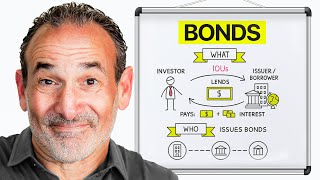
Now maturing just means paying the money back. A bond with a 5year maturity is going to pay your money back in 5 years and until then every year it's going to pay you a coupon. Okay?
Pay you some interest. Now, our tragic bond, which lost half of its value in just a year, happened to be a really long-term bond. It was issued in 2021, and it had a maturity of 2050, 29 years in the future.
So, with these long-term bonds, you get locked into a certain coupon payment for a very long time. In this case, you got locked into receiving 0% per year for 29 years. And the problem with this is that once interest rates in the market go up, you are stuck with this underperforming bond for a really long time.
So back in 2022, there was high inflation across Europe. The European Central Bank wanted to slow down inflation. So it pushed up interest rates.
As a result, other bonds started paying a lot more money. But people who invested in this bond, they were still getting 0% per year. They were getting nothing.
So this bond became a lot less attractive. Nobody was willing to pay 100% for this bond. They would only pay 50%.
And if you wanted to sell it a year into the bond's existence, you only got half your money back. So this is the second half of the bond risk equation. This covers interest rate risk.
The longer the maturity, the higher your interest rate risk and of course in most cases also the higher your yield or expected profit when buying. Now, what kind of maturities should you choose as an ETF investor? Well, in my professional opinion, unless you are a professional, you should stay away from really longterm bonds.
They are so risky. Unless you know what you're doing, I don't see a good reason to use them. The kind of maturities you should choose really depend on your own investment time horizon.
If you are investing for just a few months, I would use what are called money market funds. They are actually in a separate section here on just ETF. You can click here and uh see 34 different money market funds to choose from.
These are funds which invest in really really short-term bonds with a very very high credit quality. It's basically the alternative to putting your money in a high yield savings account. It's a very very safe way to park your money for just a few months, but you also don't get paid a lot.
Now if your time horizon is a bit longer at least a few years then you can start playing with different maturities. A simple rule of thumb is that your time horizon should be no shorter than the average maturity times two. Okay.
So for example if we look here at bond ETFs where the maturities are between 1 to 3 years. Okay. So the average maturity might be two years.
Well, those could be appropriate if your time horizon is 2 years times two, which is four years or longer. Okay? So, if I will need some money in four years to pay for my kids education or to buy a house, then I could invest in one of these different bond ETFs.
Now, if you don't have a set time horizon, if you're simply investing for the long term for passive income during retirement, then I would look at this category, all maturities. Okay? So that has a combination of many different bond maturities in the same ETF.
For corporate bonds, the average maturity tends to be around maybe 5 years. For government bonds, it's a bit longer. This gives you a significant amount of interest rate risk.
So as interest rates go up and down, the bond prices will go up and down as well. But you're a long-term investor, so that is okay, and you get compensated for it with a relatively higher yield. Now, there is a critical mistake that many bond investors make with bond maturities.
They assume that an ETF, average maturity, works the same as a bond maturity. Okay? So, when you buy a five-year government bond, in five years, you're going to get your money back.
So, no matter what happens in between, the price can go up and down. You don't really care. In five years, you get the money back.
When you buy a bond ETF with the average maturity of 5 years, you're not going to get your money back in 5 years. The only way to get your money back is to sell the fund. How the fund works is that it's going to maintain the average maturity of the bonds inside the fund to be around five years.
It's going to do that today. It's going to do that a year from now. It's going to do that five years from now.
It's just going to keep rotating the bonds so that the average maturity is always around five. Now, a lot of investors don't like that because this makes bond ETFs a lot less predictable than individual bonds. you're a lot more subject to interest rate movements which affect the price of the fund.
Fortunately, if you want to avoid this risk, there is a good solution in the market today. Okay? If you know that specifically in 2029, you will need a set amount of money to buy a house or start a business or do something else.
You can now buy a bond ETF with a specific maturity date. For example, you can look up these ibonds ETFs from Eyesshares which have a specific maturity like December 2028 or December 2030. Or you can look at the XTrackers target maturity ETFs and they do the same thing.
Okay, so these I bonds or target maturity ETFs, they kind of combine the best of individual bonds where you have a very predictable schedule of when you get the money back and the diversification and low costs of using a bond ETF. All right, so that covers our second criterion, bond maturity. For our example, I'm going to pick all maturities because I'm going to assume we are investing for long-term passive income.
So now looking at investment grade bond ETFs that include all maturities, we've got 430 different funds to choose from. The next criterion I want to look at is bond type. If I open this up, I can choose from aggregate bonds, convertible bonds, corporate bonds, covered bonds, government bonds, and inflation linked bonds.
Now the main big categories are really government bonds and corporate bonds. Okay, so what's the difference? Well, corporate bonds are issued by companies.
Government bonds are issued by governments. As a generalization, you could say that government bonds are a bit safer and less profitable and corporate bonds are a little more risky but a little more profitable. But it's not quite as simple as that because of course you have to look bond by bond.
Some governments are not very responsible with their money. So you want to be careful with those bonds. And some companies are just amazingly strong and and those bonds can be fantastic.
Now which category do I prefer? Well, I look at it from a tax perspective. Government bonds pay lower yields because in many many countries if you buy a government bond you don't have to pay taxes on the interest that you receive.
But in most European countries if you buy a government bond ETF you do have to pay taxes. So basically you are at the disadvantage as a fund investor. So for example in my country in Latvia I prefer corporate bond funds for this reason.
But uh you should check the local tax rules um to see if in your case a government bond fund could be attractive. So that's the bond type. Now you will also see that there are these aggregate bond ETFs.
So these aggregate funds include both corporate and government bonds. Now many investors are curious about these inflation linked bond funds. There's a common misconception that these inflation linked bonds protect you from inflation.
It's not quite true. Technically speaking, you can buy an inflation linked bond and still underperform inflation. Okay, what these bonds protect from is if inflation goes up significantly.
Okay, so if there's unexpected inflation in the future, you can protect yourself by using these inflation linked bonds. But of course here in Europe it's a bit tricky because for example a few years ago we had wildly different inflation in different countries as high as 20% in my country in Latia as low as five or 6% in some other parts of Europe. So using these instruments to protect you can be a little hard in any case.
So for now I'm just going to select corporate bonds and move on to our criterion number four. A lot of my students in recent years have been asking how do I invest in US treasuries? these US government bonds and it's easy to understand why the US government has a strong credit quality.
It's unlikely that they will not pay their debts and the yields on US bonds have been a few% per year higher compared to European bonds for many years now. But in finance there's always a catch and in this case the catch is currency risk. If you are investing in dollar bonds, but you want to spend in euros or Franks, well, it's great that you have a really safe bond, but it doesn't really help if the US dollar gets 10% weaker against the euro and suddenly you have big losses in your account from this very safe investment.
So, if your goal with bond investing is to lower the risk in your portfolio, then you would either stick to bonds denominated in your local currency. So for example, that could be euro denominated bonds or pound denominated bonds or maybe Swiss Frank denominated bonds depending on where you live. Or you can use what are called currency hedged ETFs.
You can scroll down here to currency hedge and you can find some bond ETFs which are hedged to Swiss Franks or to euros or to pounds. Now hedging means you remove the currency risk but hedging costs money. So for example, if you buy a US government bond ETF and then hedge it to euro, removing the currency risk, this is actually going to remove the yield premium, okay, you will not get the extra 1 or 2% per year in profits that you would get by investing directly into these US government bonds.
So for investors who are based in the Euro zone or in Switzerland or the UK, you can scroll through here and either find a hedged ETF or an ETF which only holds your needed currency. For example, I could choose euros and I would have 66 different ETFs to choose from. And that's fantastic.
Now, if you live in a country like Poland or Norway or Sweden, which doesn't use the euro and doesn't have ETFs with bonds in your currency, then you will probably not want to use bond ETFs. But it's not the end of the world. You can usually find local investment funds which do offer bonds in your local currency or hedged to your local currency.
So, simply go to your local broker or bank and ask what they have available. So these are the four main bond specific criteria that I would look at when selecting ETFs. Now I do need to share this really important recent research that changed the way I look at bond investing.
This actually means that for many investors putting a lot of money into bonds could be a mistake. But before I do that, I should mention if you look here, you will see that there are many other criteria for selecting ETFs as well, such as fund size or the replication method, the use of profits, whether you have these accumulating or distributing funds. Picking the right ETF as a European investor can be a bit tricky.
So, that's why I've put together a step-by-step training on this topic. You can find it by following the first link in the description. Okay, but what is this new controversial research that I'm talking about?
Well, it comes from Professor Scott Cedarberg in the US as well as his co-authors. Basically, these finance professors have looked at historical data in many different stock and bond markets and they've discovered that over the long term there's a significant problem with bond investing. It's simply not profitable enough.
In many cases, it's not enough to cover inflation. And actually in the vast majority of scenarios, you would get a better result by just putting a 100% of your money into stocks for all of your life. Now this is controversial because it goes completely against what most investment experts advise.
The standard advice is when you are young, you can take a lot of risk. Put 100% in stocks. Then as you get older, start putting bonds into your portfolio to control the risk.
Okay? so that when you retire, you don't have such a huge amount of risk in your portfolio. If the market drops, you are protected.
What this research says is that this is actually quite risky because you have a high risk of running out of money before the end of your life and you would have a better chance if you simply kept everything in stocks even though stocks do have these big drops from time to time. Now, this research is very interesting and it has changed the way I look at investing. I'm not planning to use bond investments nearly as much as I once thought in my own portfolio, but there is a big potential risk with uh believing this research too much, which is it completely falls apart if you're going to put 100% in stocks and then get scared when there's the first big crash and sell your portfolio.
This 100% stock approach is only going to work well if you can stay calm even as there happen to be big losses in your portfolio when the market crashes when there are these big downturns. And the reality is that in the stock market you'll have big crashes from time to time. It is unavoidable and most people find it very difficult to stay calm and not make mistakes when that happens.
So I would say that for the typical amateur investor, it does make sense to include bonds in your portfolio. This is actually why investing can be a bit tricky for beginners because in the beginning you imagine I just need one good ETF when I'm set. But then you have all these questions like how much do I put into stocks versus bonds and how do I generate passive income for my portfolio and how much money can I afford to take out and what do I do about taxes and which investment app is best for long-term investing and many people just get stuck and never get started.
So to fight that I've built a step-by-step training program for beginning investors in Europe. It's called the index masterclass and you can find out more by following the first link in the description.