[Music] understanding the universe and the vastness of space is at the Forefront of physics and astronomy research today everything from white dwarfs and red giants to neutron stars and black holes but imagine trying to make sense of the cosmos before telescopes were even invented well between the 9th and 14th centuries Scholars from the Islamic World Consolidated and refined the astronomy of earlier civilizations and came up with ideas that have deeply influenced astronomy right through to the present day I'm Jamal KH a British professor of physics but born in Baghdad and I'll be taking a look
at modern-day astronomy and navigation and exploring the contribution made to these fields by the scientists of the golden [Music] age [Music] [Music] [Applause] [Music] why were the scholars of the Islamic world so interested in astronomy one reason is for navigation people have been using the sun and the stars to find their way around for thousands of years I'm heading into the desert outside of Doha and Qatar and I'm using the satnav to help me so in a sense I'm still looking to the sky to navigate well now it's getting late and I think I'm really
lost I think I'm going to have to call someone to help [Music] me Ali sutan alhajri is a katari businessman and bedwin with a deep knowledge of the desert and the bedin way of life navigation has always been a crucial skill for the BNS so Ali as a bedin how do you find your way around the desert so so accurately there's two two typ during the day uh we know by the sun if it's this side or this side if it's in the middle sometime we get lost during the night we go by stars you
know and you're familiar with the which is in the north yes it's always there and we have some uh other names likea these are all famous star names they're all Arabic names aren't they yes yes and we know the direction by by that by the Stars by the Stars bedwin by by the way they have a very unusual sense of direction it's in their DNA and when I'm driving uh walking I know if you just stop sto me instantly said Ali where is North I was said this North immediately yes of course let's go [Music]
now have a seat thank you as well as navigation astronomy was also important for the measurement of time for example the Islamic calendar is a Luna calendar where the months are determined by the phases of the moon during the Golden Age astronomers studied the movements of the Moon to predict the calendar more accurately the 12 months making up the Islamic year are shorter than the Earth's orbit of the Sun so Islamic months and religious observances like Ramadan move from year to year yeah the Lun calendar is a shorter by 11 days and every 33 years
about uh it will it's a cycle for example the lunar and the the Gregorian yes for example if I start Ramadan Starts Now in January which is in the middle of the of the winter yes after 33 years it will come back again in January Ali I think these days even someone like me can pretend to be as knowledgeable about the night sky because I want to show you this app I have on my tablet you see it shows wow it Maps the night sky yes yes I know know let me see if I can
see the North Star you so oh you know that's North do you yeah yeah it has have to yeah that's it Polaris I thought they call it the North the star well that's that's another name for it but it's it's wow see I don't need to know that's North I can hold that app up if I know the North Star is there then we you know their directions right then I should know my [Music] directions this app on my tablet allows me to scan the night sky and identify the stars and planets it's the modern
day equivalent of the ancient star chart known in Arabic as a z now in the early 9th century the Abbasid cff El mmon the ruler of the powerful Islamic empire was a man obsessed with scholarship and learning and he commissioned a group of astronomers to produce a new zege now they already had the astronomical tables of the ancient Greeks but they were tasked with improving on them correcting errors and making more accurate measurements they produced a new star chart the became known as Al alahan or the verified [Music] [Music] [Music] tables here in Istanbul I'm
standing on the very edge of Europe but I can look across to Asia on the other side of the Bosphorus from the 7th Century the Islamic empire and its people spread out of Arabia to Asia in the East all the way to Spain in Europe but to conquer so much land they had to be great Navigators throughout Antiquity Maps were drawn by hand and relied on Traveler accounts for example before the Golden Age the Greek astronomer Tommy had compiled lists of over 8,000 coordinates detailing the positions of oceans landmarks and cities in the 9th century
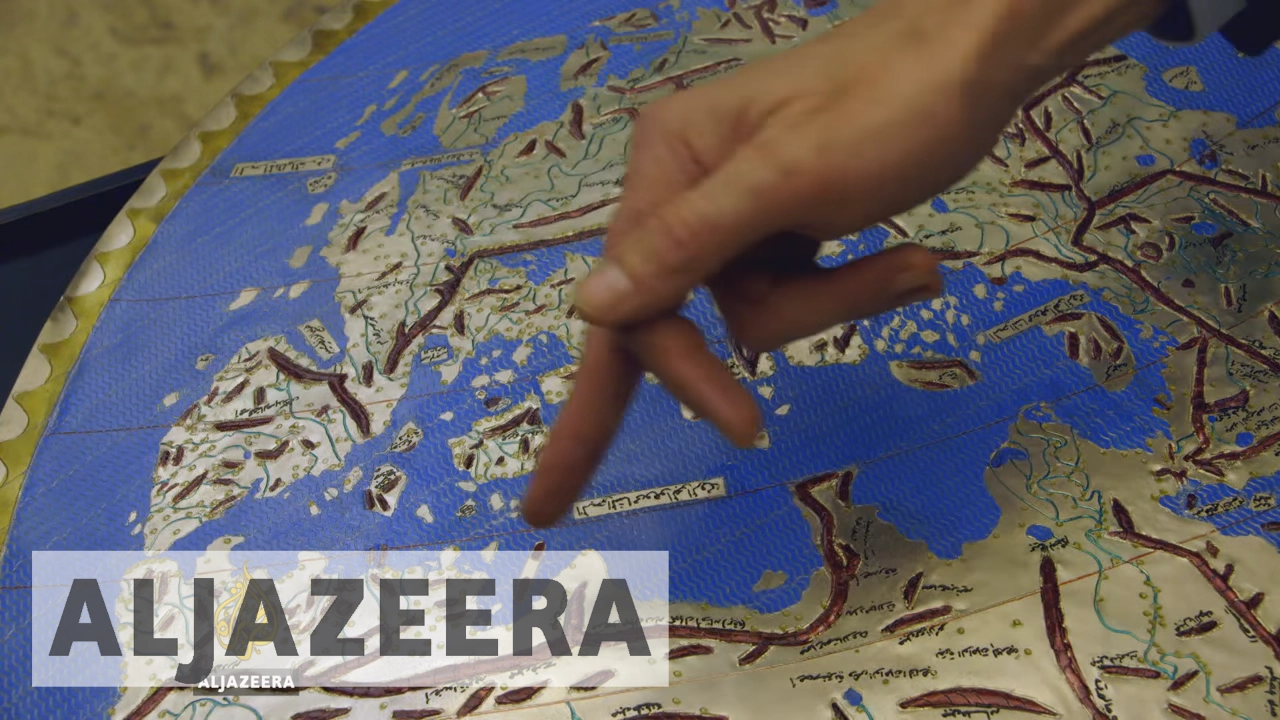
the ruling kff of Baghdad al- mmon commissioned a group of his Scholars to make a new map of the world and to improve on tm's data at Istanbul's Museum of the history of Science and Technology in Islam Dr de LEF Quinter is a scholar of ancient geography together we're looking at Elma Moon's map this map dates back to the reign of Alma moon in the first third of the 9th century the flourishing period of Arabic Islamic science in bhad I guess what was different about it is that they wanted to improve on on the Greeks
Maps absolutely they measured the longitude and altitude of Bagdad and of course the Bagdad didn't even exist dur the time of so they had to I guess add all these new cities Mecca as well Mecca as well absolutely so there were a lot of more precise coordinates Elm Moon's map was from the very early years of the Golden Age here we have an example of a map several centuries later the culmination of of of geography in the in the Islamic empire it's a map of the world but it's not one that I recognize I don't
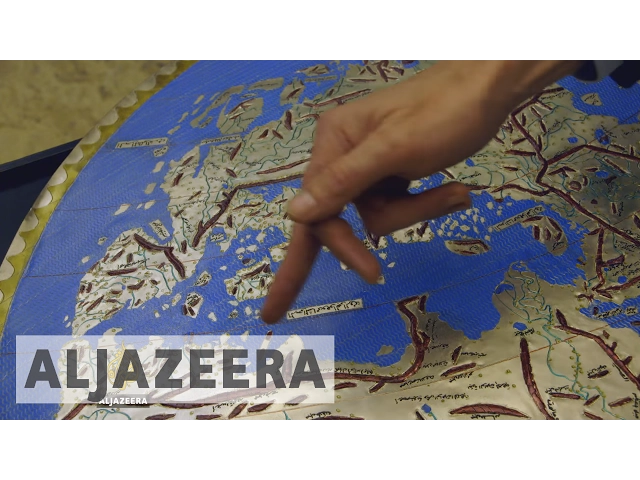
see any countries that look the shape they should look all Arabic maps are southwards oriented so Africa is always on the top at the top so in fact so this is upside down it is upside down we can turn it recognize it yes right that's better okay so now I see Arabia and the Mediterranean so what was new or different about this map you can see the shape of the med Mediterranean and the shores and it becomes more precise even also the shape of the Caspian Sea and it was this map that then of course
LED on to advances in Europe Absolut the map that was so important for navigation so how did the map makers of the Golden Age determine such detailed measurements they used a versatile scientific instrument called an astrolab I've come to the Museum of Islamic Art in hatar where among their many artifacts they have a wonderful collection of Astral leaves spanning back almost a thousand years and I'm hoping that one of their curators Dr Nur Khan is going to tell me what's special about a couple of [Music] them the lovely thing about astrales nor is that before
the invention of the telescope these devices were incredibly important how far back astrolabes go when were they first invented uh historians say they go back to 300 BC in Greece and word astrolab comes from the Arabic aab asab exactly which is originally from the Greek to grasp the stars because actually what you have here is a handheld model of the sky early astrolabes offered only a few functions but during the Golden Age astronomers developed more sophisticated astrolabes this one is very very elaborate and it's multifunctional astres in many ways were the the computers of their
day um and they basically served a number of purposes you can use it to find the time of day or night um you could decide prayer times you could navigate you could measure the heights of buildings or distances there are all sorts of you do all of that with this with this disc because of course these are all moving Parts is it possible to to to take it apart and see the components we can a single map of the Stars would only be correct for one location on the Earth but these sophisticated astrolabes were designed
to work in many places a later asab such as the 17th century astrode had a number of different plates engraved on both sides and each one could be used for a different city to uh tell the time to plot the Motions of the stars or whatever it is that you needed your astrol to do so wherever you were in the world you'd use the appropriate map of the sky AB yeah with all its intricate markings and measurements to use an astrolabe you already needed a good working knowledge of astronomy so here we have five plates
inside you then adjust this the re I see so so you you you put the right plate in position yes you take a measurement of of of of a particular star or of the Sun and then you adjust the re over the correct plate and that gives you a map of the sky where you [Music] are astrolabes were powerful tools for astronomers in the golden age but modern astronomers have access to a vast array of instruments such as this the LEL radio telescope in jodal Bank in the UK during the Golden Age astronomers would come
to together from across the world to cooperate and that way of working is still embedded in Astronomy Today astronomers working with this telescope often collaborate with other telescopes and astronomers internationally unlike a conventional telescope it doesn't capture light through a lens but rather uses a massive dish that collects very weak radio signals from Deep In Space allowing us to map the universe in ever greater detail now Tim because the lavel telescope is a radio telescope it's seeing the sky in a way that we can't see yeah I mean it basically sees the invisible Universe I've
got a a picture here of what the LEL telescope sees if we could see radio waves this is the way the sky would appear That's our Milky Way galaxy um what we see in that picture is not the stars that we see with our eyes it's the stuff between the Stars one of the really interesting things I think is is is looking at planets around us of stars there's a picture here of a young star in our galaxy um called HL to the star is at the center and then around it there is a disc
of gas and dust but the interesting thing here are the dark circles we think that they're formed by planets that have that have formed inside the disk and as those planets circle around they sweep up the gas and the dust and they leave behind these empty gaps it's amazing isn't it that we're not talking about planets going around our own sun in our system these are planets going around distant Stars hundreds of light years away and many many thousands of these planets are many billions in fact in our own milkare Galaxy and you mentioned that
image was taken by another telescope this is part of a larger collaboration to get these sort of sharp views we have to combine signals from many telescopes spread across the country and even across the planet itself so this shows us all the locations of the various radio telescopes across Europe out into China down into South Africa and we even link up these telescopes with a Russian spacecraft that's orbiting the Earth so we so we end up making telescopes the size of the planet or even larger than the plan because they're all contributing their own data
so a single telescope will give you a blurred view by working together with these telescopes in in these other countries we all joined forces to make this plane sized telescope that shows us the detail this idea of scientists working collaboratively together particularly in astronomy is something that goes back a thousand years to the Golden Age it was in in Baghdad around the the 9th century when we first start to see astronomers working in groups to solve big problems in astronomy something that the the Greeks didn't do something that only really emerged in the Golden Age
and has survived so successfully to this [Music] day one of the most important observatories of the golden age was called the Moraga Observatory built in 1259 in Persia for the great astronomer alusi when the Mongols invaded they captured the Mountain Fort of alamut where alusi worked not only did he convince the Mongol general hako or Huga Khan to spare his life he convinced him to build him a new observatory in return alosi promised to provide the general with his astrological chart so that he'd know what day to go to battle the Moraga Observatory became the
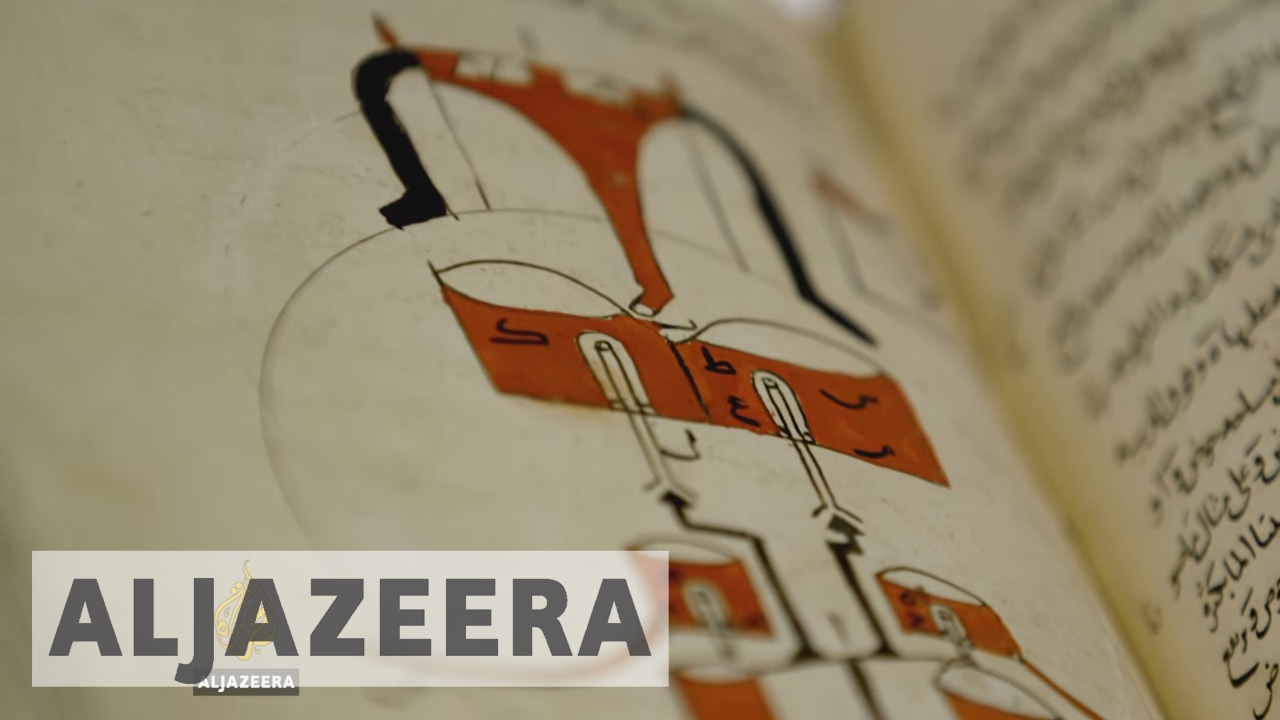
most important of its day and a great hub for international scientific collaboration of course what's great about the Moraga Observatory and the astronomers that work there isn't the observations they made they didn't have telescopes but it's the mathematical tricks they developed that will be influential in astronomy for centuries to come and I wanted to show you something here so this is a diagram from ts's work people like torsi when they're looking up trying to explain how the stars and planets moved they were trying to develop the math to make it sensible and of course you
know they were using the Greek model yeah which had got incredibly complicated of course the Greeks believed that the the Earth was at the center of the solar system and in order to make the mathematical model fit the observations of the way in which the planets appeared to move on the sky they had to put all these ridiculously complicated features in into the model it got very very messy circles within circles going around other C CES did and and that's that's where to's genius comes in because this diagram the Tosi couple simplified a lot of
that for show you what's supposed to happen you see this small circle going around the big one if you trace a point on the perimeter it's moving up and down in a straight line and that turned out to be a very useful trick that simplified a lot of that complicated math but what's really fascinating compare this text written in Arabic with this one it's an identical one but written in Latin and what's fascinating is the letters labeling the points follow the Arabic alphabet not the Latin alphabet so El if B J Dal a b g
d clearly whoever Drew this knew about ts's work and the torsi couple well the man who drew this was kernus so this is cernus who came up with the idea that rather than the earth being at the center of the Soul system it was the Sun at the center and all the planets including the Earth revolved around revolv around it and and that's the picture that we have today kernus was and is regarded as the father of modern science because of this great Revolution and yet what's so fascinating is that this was built on on
T's ideas yes so it shows the continuity of science cernus owes this debt to these medieval astronomers from the golden age that's [Music] incredible Islam itself was a significant reason behind many of the early Explorations and discoveries in astronomy during the Golden Age there was a need to know the accurate time for prayer the direction to face towards Mecca and the dates of religious festivals according to the lunar calendar astronomical instruments like the astrolab played a very important role in [Music] this [Music] [Applause] [Music] one of the requirements of Islam was to know which direction
Mecca was in order to face towards it during prayer now during the early days of the Empire it wasn't so large and this wasn't a problem the scholars of the Golden Age were very proficient at mapmaking but as the empire grew and stretched from India in the East all the way to Spain and alissia in the west it was much more of an issue because the scholars also knew that the Earth wasn't flat now why does this matter well if you were say a Muslim in Cordoba then facing towards Mecca if you just looked at
a flat map would involve pointing roughly Southeast but on the globe it's different if I attach this string one end to Cordoba and the other to Mecca then you see the line actually takes you East to begin with and then curves down to the southeast so it's not at all obvious without understanding that the Earth is a sphere this meant that these Scholars had to develop an area of mathematics called spherical geometry which was exceptionally Advanced for a thousand years ago but to use this spherical geometry the scholars first needed to know the size of
the Earth the ancient Greeks had provided several estimates of this their method was clever but crude it involved measuring the angle of the Sun at a particular time of day and then walking in a straight line in a particular direction until that angle Changed by one degree all they then needed to do was calculate how far they'd need to walk for the angle to change by 360° that would give them the circumference of the Earth the early 9th century Abbasid kff al- mmon wanted to improve on this estimate so he commanded a group of astronomers
to repeat it however the method involved them trudging through the desert for over a 100 kilometers a method that was prone to error 200 years later in the 11th century the Persian astronomer elboni came up with a much easier and more accurate method of estimating the size of the Earth but it did involve climbing a m Mountain that looked out over the horizon Al Ro was a prolific scholar who even debated about whether the Earth was moving he explained how to work out the size of the Earth in his book on the determination of the
coordinates of cities first he measured the Mountain's height albaron then had to climb to the top of the mountain and armed with an astrolabe and a plum line he then measured the angle of dip from the horizontal down to the distant Horizon now this was just half a degree so he had to be incredibly precise but armed with this information he could then use some more clever geometry to calculate the circumference of the earth let me show you imagine this circle is the Earth and this is Bon's Mountain now looking across horizontally he measured the
angle of dip to the Horizon this angle here now if you draw two lines one through to the Center of the Earth from the mountain and the other from where the line touches the Horizon you end up with a right angle triangle now beon knew that the angle he'd measured is the same as this angle inside the earth armed with these two pieces of information the size of this angle and the height of the mountain he was able to use geometry to work out the radius of the Earth multiplying this number by 2 pi gives
him the complete circumference he got to within 1% of the accurate value we know today about 40,000 kilm which is pretty remarkable [Music] it's easy to think that astronomy went to sleep after the ancient Greeks and didn't wake up again until cernus in the 15th century but developments in astronomy continued in Spain the Middle East and Central Asia throughout Medieval Times the Renaissance scientists of Europe who created modern astronomy were building on the work of people like elboni and alusi who in turn were building on the knowledge passed over to them from early earlier civilizations
today in the 21st century International Teams of scientists are still looking to the stars and mapping the cosmos using ever larger telescopes but we must remember that they owe a huge debt of gratitude to those astronomers of the Moraga [Music] Observatory next time we uncover how the scholars of the Islamic World mathematized science we delve into the equations of flight and discover how the mathematicians of the Golden Age laid the foundations of algebra it's extraordinary that they made that step to the cubic equation we see the role they played in the evolution of numbers themselves
everywhere today we use this decimal system and we forget how difficult it was before it existed and we reveal how their legacy has led to the mathematics behind the fastest car in the world it is the longest standing record in history and up till this point nobody has broken it that's about to change we're building a new car to go a lot [Music] faster


![[FILM] 1001 Inventions and the Library of Secrets - starring Sir Ben Kingsley (English Version)](https://img.youtube.com/vi/JZDe9DCx7Wk/maxresdefault.jpg)