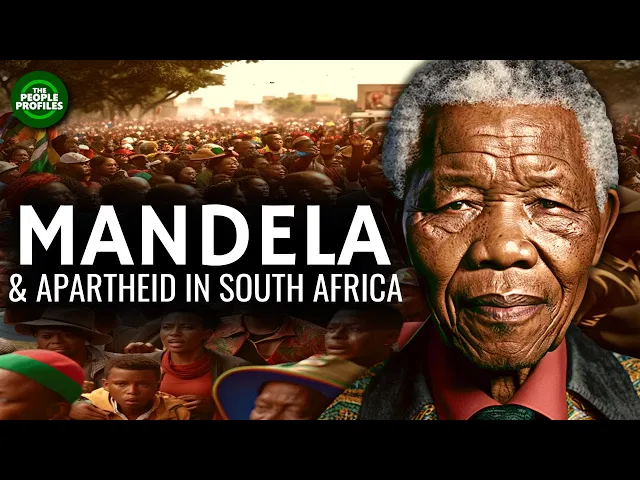
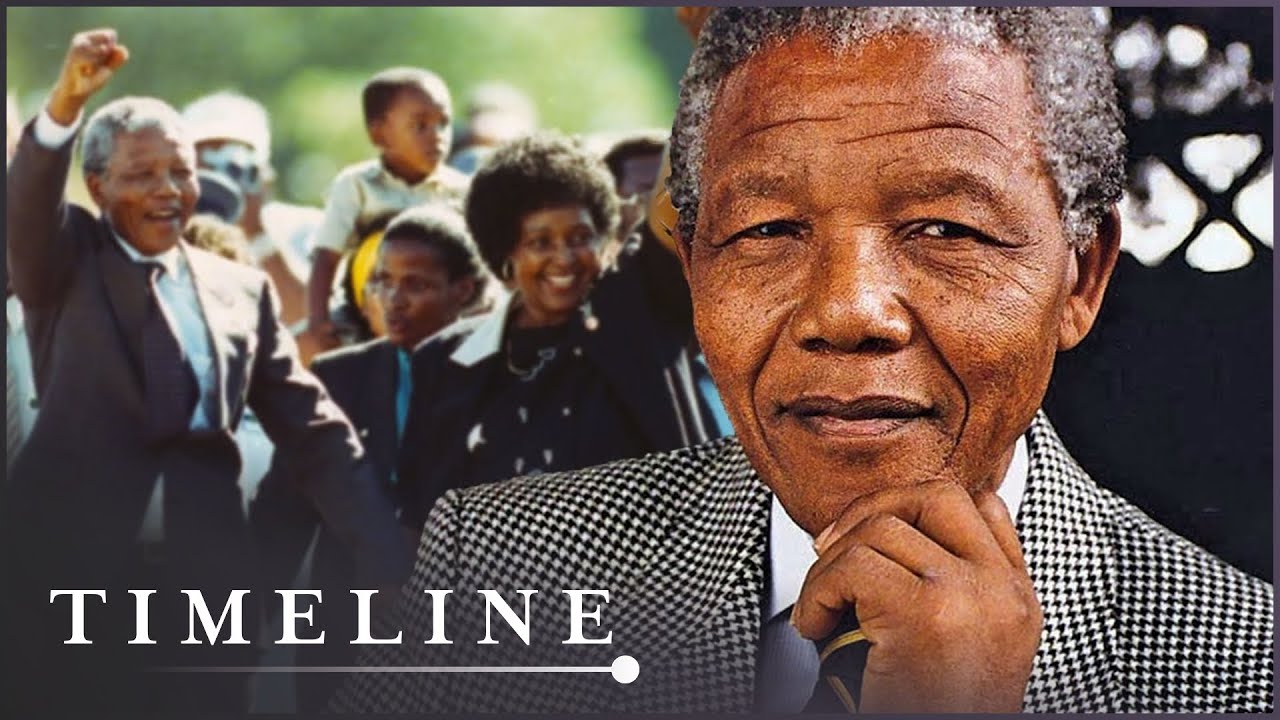
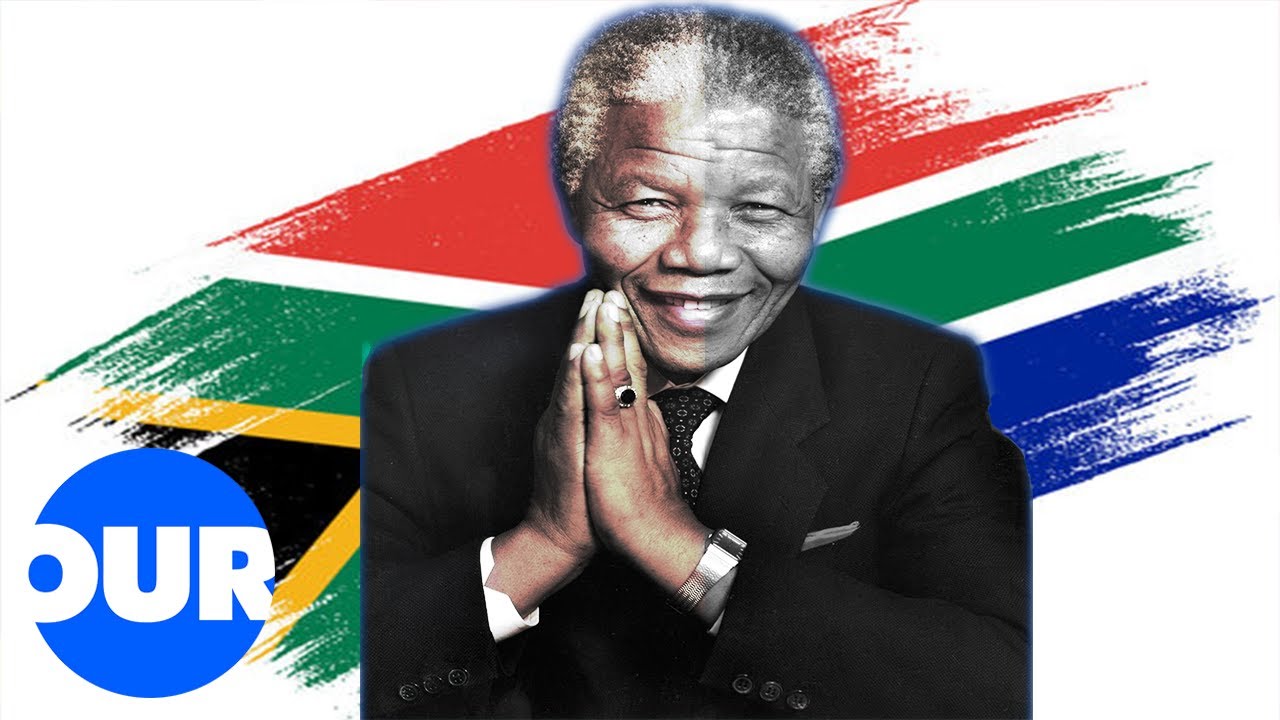
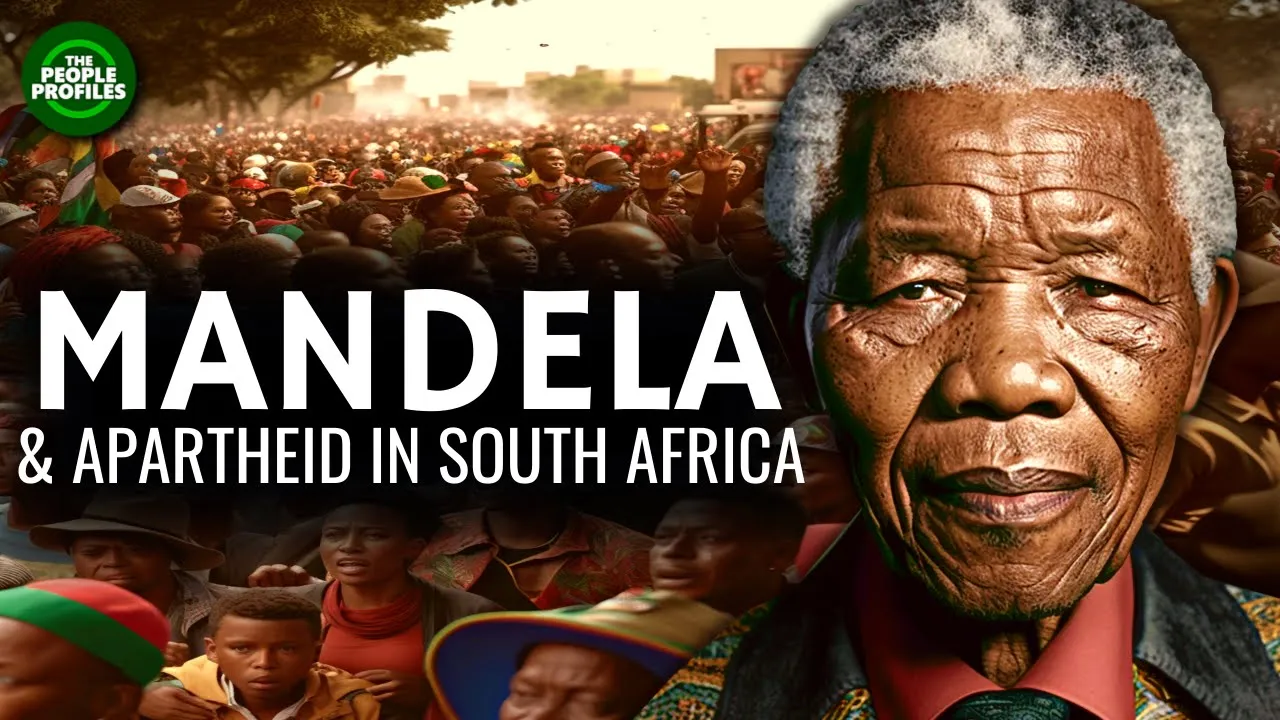
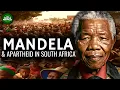
The man known to history as Nelson Mandela was born on the 18th of July 1918 in the village of Mvezo in the Cape Province, the southern-most province of what was then the Union of South Africa. His given name at birth was Rolihlahla Mandela, Rohlilahla meaning something akin to ‘troublemaker’ or ‘pulling the branch of a tree’. Nelson’s father was Gadla Henry Mandela, a local chief of the Xhosa people and councillor to the Xhosa king of Aba Thembu at a time when the native Bantu people still maintained many of their own traditional structures of authority, even while
existing within the Union of South Africa politically. Gadla’s grandfather, Ngubengcuka, was the king of the Kingdom of Aba Thembu. Consequently, Nelson was descended from native royalty and was theoretically a prince. Gadla Mandela, in keeping with the customs of South Africa at the time, was a polygamist and had four wives. Rohlilahla was the son of his Third wife, Nosekeni Fanny. Given his father’s marital relations, he had many siblings and half-siblings, some of whom lived in different households and even in different villages. Rohlilahla’s early life was lived between two worlds. On the one hand his father lived
much like many local chiefs had in the region for centuries, also serving as a councillor to the Aba Thembu king between the mid-1910s and the mid-1920s as Rohlilahla was growing up. But the country was also modernising and the traditional Bantu peoples such as the Xhosa and Zulus were beginning to adopt Western social customs. Rohlilahla’s early years reflected this. On the one hand he grew up according to Xhosa tradition in his mother’s kraal or homestead, tending their herd. However, western influences were to be seen, such as the fact that his mother had converted to Christianity and
decided to send her son to a local Methodist missionary school. It was here that he was given the name Nelson on his first day of education, one which he has become known to the world by. Mandela, whose parents were both illiterate, Was the first member of his family to attend school. When he was nine years old, his father died from a lung ailment, at which time he was taken largely under the wing of the Xhosa royal court, though he continued to attend school, developing a love of history and also adopting his mother’s Christian beliefs. In
these early days, his view of colonial rule was that it was broadly beneficial in introducing major social and economic development into southern Africa. The country Mandela came of age in had been fashioned over a period of 300 years since the mid-seventeenth century. Prior to this time there was no nation of South Africa. Rather the mass of land at the southern point of the African continent was a broad tapestry of kingdoms ruled by different tribes such as the Zulu, Xhosa and Swazi peoples, many of them deriving from the broad Bantu ethnic group. These kingdoms had contact
with the Arab and Indian world through their trade with Great Zimbabwe and other cultures to the north, but it was not until the late fifteenth century that they first encountered Europeans, When the Portuguese reached the Cape of Good Hope. Supply stations were established here in due course by the Portuguese, but it was not until 1652 when the Dutch established the Cape Colony where Cape Town lies today that a permanent European settler colony was established here. This expanded over the next century and a half, but in the early nineteenth century the Dutch colony was occupied and
taken over by Britain during the Napoleonic Wars. The British Cape Colony began aggressively expanding in the second half of the nineteenth century, moving its borders north and north-east to cover much of the region approximating to modern-day South Africa, an expansion that was fuelled by the discovery of gold and diamond mines. Conflicts ensued, with both the native Zulus and the Boers, the descendants of the Dutch, German and French settlers who had made southern Africa their home in the seventeenth and eighteenth centuries, resisting British colonial expansion. However, with victory in the Second Boer War in 1902 the
British had come to control the entire region. In 1910 it was formed into the Union of South Africa. The Union was quasi-independent of Britain, but still tied to it in many significant ways, notably in its foreign policy and the retention of the British monarchy as the head of state. It was a troubled country from its birth. The overwhelming majority of the population were black Africans, but the ruling class was a minority of people descended from European settlers, primarily the Dutch, German and French Boers, and to a lesser extent the British. These monopolised the extensive wealth
of the country and political power and had already shown tendencies towards creating a colonial underclass by retaining settlers from the British Raj in India as indentured servants. There were tens of thousands of such indentured servants here by the early twentieth century. The Boers even began to develop their own national identity in South Africa, conceiving of themselves as Afrikaners and speaking Afrikaans, a Dutch-West German dialect which had evolved amongst the settlers in South Africa since the seventeenth century. These Afrikaners were determined to cling on to power in South Africa, despite only constituting about 20% of the
country’s population. Their efforts to monopolise political power, wealth and control of South Africa would define the country’s history in the twentieth century and Nelson Mandela’s life. When he was 16 years of age, Nelson was officially declared to be a man after undergoing the traditional ulwaluko circumcision ritual which was standard amongst the Xhosa. By that time he had already commenced his secondary education with a view to becoming a counsellor to the Xhosa monarchy, like his father before him, his belief being that the Xhosa kingdom would need educated officials to survive in a changing world. To that
end he attended Clarkebury Methodist High School from 1933 onwards and then the Methodist College in Healdtown in Fort Beaufort in the Cape Province. Thereafter he began studying for a Bachelor’s degree at the University of Fort Hare in Alice in the Eastern Cape, a leading third level institution for black Africans not just from South Africa, but wider afield in the British colonies north in Rhodesia and the rest of Sub-Saharan Africa. Here Mandela studied law, politics and history, while he was also a notable long-distance runner and boxer during his student days. In 1939, as the Second World
broke out in Europe, Mandela began attending Fort Hare. At this time he supported South Africa’s involvement as a British colony, an indication that even in his early twenties, Mandela still viewed colonial rule positively. Mandela had lived a relatively isolated life up to this point, largely confined to his experiences of traditional Xhosa society and Fort Hare in the East Cape. All that would change in the 1940s. At the start of the decade, a prominent chief of Aba Thembu Jongingtaba set up an arranged marriage for Mandela. Nelson wished to avoid this and so he fled to the
city of Johannesburg in the spring of 1941, before eventually relocating to George Goch Township. Here he met and befriended Walter Sisulu, a prominent activist in the African National Congress or ANC. This had been founded back in 1912 as the South African National Native Congress to agitate for the rights of black South Africans within the Union of South Africa. It was renamed As the African National Congress in 1923. The party was primarily comprised of well-educated black Africans who lived in the major towns of the Union, many of whom were Christians, however it also enjoyed considerable, though
unofficial support, from native power groups such as the Xhosa. Mandela was impressed by the political views of Sisulu and others, a large number of whom were left-wing activists, and by 1943 he had become a member of the ANC. Just months later, at Easter 1944, he was central to the establishment of the ANC Youth League, after convincing the ANC president at the time, Alfred Bitimi Xuma, that if their struggle was to be successful they would need to gain mass support from the younger generations of South Africans. It was also around this time, in early 1944, that
Mandela married his first wife, Evelyn Mase, a trainee nurse whom he had met at a gathering at Walter Sisulu’s house, Evelyn being a close friend of Sisulu’s partner, Albertina. Mandela and Evelyn started dating within days of first meeting and were soon engaged. They married in a civil ceremony at the Johannesburg Crown Commissioner’s Court on the 5th of October 1944. The wedding was a muted affair, as the couple could not afford a wedding feast on Evelyn’s salary as a trainee nurse and the income from Mandela’s various jobs in law clerk’s offices. For a time they lived
in a room in Evelyn’s sister Kate’s home. Their own first home in the Johannesburg township of Soweto, which they moved into in 1946, was also a very modest affair, being a small brick building with a cement floor and a galvanised tin roof. Together they would eventually have four children, a son Thembekile born in 1946, a daughter Makaziwe born in 1947 and who unfortunately died of meningitis in infancy, another son named Makgatho born in 1950 and another daughter in 1954 whom they named Makaziwe in honour of their first daughter who had died so prematurely. As Mandela
and Evelyn were starting their family, the ANC’s struggle for the rights of black South Africans was becoming an even more bitter battle. The war years had seen many black Africans migrating to the cities and towns of South Africa and increasing their agitation for Political representation and economic equality through movements like the ANC. This perturbed many amongst the Boer-descended white minority who wanted to retain control of South Africa politically, socially and economically. This political view prevailed in the 1948 national elections, which only whites were eligible to vote in. In this the Herenigde Nasionale Party led by
D. F. Malan, which was a staunchly anti-black, right-wing party, considerably increased its vote share and allied with the similarly right-wing Afrikaner Party to outflank the more moderate United Party of Jan Smuts, which had been in power since the mid-1930s. Malan became Prime Minister in 1948 and the HNP and Afrikaner Party would unite in 1951 into the National Party. It would dominate South Africa’s politics for the next four decades. More immediately, in 1948 Malan began overseeing the introduction of the policy of Apartheid, meaning ‘apartness’ or ‘separateness’ in Afrikaans. This aimed to create a two-tier society in
South Africa, one in which the white minority would continue to monopolise political, Economic and social power and society would be segregated, so that whites and blacks would live in completely different neighbourhoods, use different restaurants, swimming pools, public transport and public toilets, while also introducing legislation which limited the civil liberties of the black majority. To a considerable extent it mirrored the policy of Segregation which had been developed in the southern states in the USA following the failure of Reconstruction in the aftermath of the American Civil War. Even before the introduction of Apartheid in 1948, Mandela was
already increasing his involvement in South Africa’s politics. In 1947 he was elected to the executive committee of the ANC in the Transvaal Province in the north-east of South Africa. Following the election of 1948 he was involved with Sisulu and others in effectively overthrowing Alfred Bitini Xuma as President of the ANC, Xuma being regarded as too conservative, he was succeeded by James Moroka, with Sisulu serving as the new Secretary-General of the ANC. A more militant approach was now adopted in light of recent political developments at home in South Africa and the emergence of black nationalist movements
all over the African continent following the Second World War. Mandela also emerged as a considerable figure in the party, becoming a member of the party’s national executive committee in 1950. The early-to-mid-1950s also saw Mandela increasingly embracing Communist thought. He had first encountered South African Communism in the early 1940s and while he had been impressed by its desire for racial equality, he was unhappy with the movement’s anti-religious stance, which did not fit well with Mandela’s Christian beliefs. However, as his political views became more militant in the early 1950s and the policy of Apartheid spread across South
Africa, Mandela began reconsidering his approach to the Communist movement. In reading the works of Marx and Lenin at this time he found their thoughts of a classless society where all were economic equals appealing. Moreover, The introduction of the Suppression of Communism Act in 1950 by the Apartheid regime had the effect of drawing many black South African militants to the South African Communist Party in the 1950s. In 1952 Mandela spoke at several ANC rallies which attracted thousands of supporters, in the process becoming one of the most notable figures in the movement. He was duly appointed as
President of the ANC in the Transvaal region that year. Meanwhile, he continued to work for several law firms, eventually passing the exams to practice as an attorney in 1953 and opening his own law firm in Johannesburg shortly afterwards. He would spend much of the mid-1950s representing black South Africans who were being persecuted by the Apartheid government. The mid-1950s were a period of considerable change in South Africa. The Apartheid government stepped up its efforts to relocate tens of thousands of black South Africans from parts of certain cities and towns with the goal of creating monolithically white
neighbourhoods. This was aided from a legal and logistical point of view by the passage of the Natives Resettlement Act of 1954. With this Prominent ANC leaders such as Sisulu and Mandela came to the conclusion that black South Africans would only be able to redress the institutionalised inequality and oppression which pervaded society through militant, violent action. Consequently, in 1955 it issued the Freedom Charter which called for a non-racial society of equals in South Africa. At the same time the ANC began acquiring weapons from other powers. Inevitably, in the context of the Cold War, given that the
Apartheid regime was an ally of the western powers, these came from the Communist bloc and the People’s Republic of China in particular. At the same time, Mandela’s first marriage to Evelyn broke down in the mid-1950s. She accused him of physical abuse and left with their children in 1956, following which divorce proceedings were initiated. Mandela denied the charges and filed for custody of their children, though it appears clear that he was unfaithful in his marriage. Eventually the divorce was finalised by 1958, quickly after which Nelson married Winnie Madikizela, whom he had met and begun dating the
previous Year. They would have two daughters together, Zenani and Zindziswa born in 1959 and 1960. Winnie would play a major role in Nelson’s life and South African politics for decades to come. Mandela’s second marriage and his meeting Winnie very nearly never happened at all. In December 1956 he and several other senior members of the ANC had been arrested by the South African government and were accused of high treason on the grounds that they were inciting revolution against the government, however after mass protests they were eventually bailed early in 1957. The prosecution of 156 individuals including
Mandela, which has become known in South African history as the Treason Trial, would drag on throughout the late 1950s and into the early 1960s. As it did the number of defendants continued to decline and the charges were watered down as dozens of defendants were acquitted over time and the government realised its case was extremely weak. It would eventually end in 1961 with the acquittal of all defendants. In the meantime Mandela and his colleagues were free to continue their activities. This period was notable for Mandela’s opposition To the newly formed Pan-Africanist Congress, a new South African
political movement which was exclusionary of non-black South Africans. Mandela was already convinced by this time that any future South Africa which would include liberties for the black majority would also have to be tolerant and inclusive of the white minority and the significant community of people of Indian heritage in the country. The end of the Treason Trial instilled in the South African government a fresh desire to bring the leaders of the ANC to court. Years of persecution had also given Mandela a keen sense of how important it was to carry out his work in a secretive
manner. Thus, in the early 1960s he spent much of his time travelling around South Africa incognito, establishing new cells of the ANC in different towns and villages. The goal was to expand the ANC’s network and sphere of activity so that it had a truly national presence throughout South Africa, with supporters in every region should a militant insurrection be launched against the Apartheid government. Mandela’s preferred mode of transport in carrying out This activity was non-descript cars which he pretended to be a driver for hire of. This consequently earned him the nickname ‘The Black Pimpernel’, a reference
to The Scarlet Pimpernel, a novel published in 1905 by Baroness Emma Orczy in which an English gentleman, Sir Percy Blakeney leads a double life during the French Revolution, travelling around to try to save the country’s aristocrats from the revolutionaries. Mandela’s activities, though, were not unnoticed and shortly after the Treason Trial ended a new warrant for his arrested was issued by the government. The increasingly militant actions of the ANC in the late 1950s and early 1960s must be viewed in the international context. A wave of independence movements had spread across Africa in the post-war period and
this soon resulted in Britain, France, Belgium and Italy granting independence to their former colonies across the continent, beginning with Ghana in 1957. However, there was considerable resistance to independence in some parts of Africa, notably the southern end of the continent in the Portuguese colonies of Angola and Mozambique and The British colonies such as Rhodesia around what is now Zimbabwe. By the early 1960s armed militant movements began to emerge amongst the native African people in these regions. While South Africa had a different constitutional status, having acquired independence from Britain gradually from the early twentieth century onwards,
the struggle against Apartheid in the country was viewed as a quasi-colonial struggle for the black majority to acquire political representation and an end to their social and economic disenfranchisement. Thus, from the early 1960s the ANC had growing connections to groups such as the Zimbabwe African People’s Union, the Zimbabwe African National Union, the Liberation Front of Mozambique and the People’s Movement for the Liberation of Angola, while successive National Party governments in South Africa supported the Portuguese government and the Rhodesian government after it became independent from Britain against the liberation movements in Angola, Mozambique and Rhodesia. It
was in this context that Mandela headed to Addis Ababa, the capital of Ethiopia, To attend the Pan-African Meeting for East, Central and Southern Africa in the city in the spring of 1962. This was just the first leg of a wider tour of Africa which brought Mandela to Tanganyika, Egypt, Tunisia, Algeria, Morocco, Mali, Guinea, Liberia, Senegal and Sierra Leone, meeting leaders of these newly independent nations such as President Gamal Nasser of Egypt, President William Tubman of Liberia, President Ahmed Sekou Touré of Guinea and President Julius Nyerere of Tanganyika. Through these summits he was able to acquire
extensive funding for the ANC and in some cases promises of arms and ammunition for any future revolutionary struggle in South Africa. Nor was this the only success of the ANC on the international stage during these years. The organisation’s president, Albert Luthuli, had brought the injustice of Apartheid onto the international stage and in the summer of 1959 the Anti-Apartheid Movement was established in London, attracting considerable support from members of the main political parties in Britain and international leaders. It was just one of many Anti-Apartheid movements which were established Over the next thirty years which would place
increasing political and economic pressure on successive National Party administrations in South Africa to bring Apartheid to an end. While all of this was occurring a split was growing within the ANC. The party’s president, Luthuli, was largely committed to non-violent opposition to the government of the kind pioneered by Mahatma Gandhi in India decades earlier. However, Mandela, Sisulu and others within the ANC had concluded by the early 1960s that the position of black South Africans in the country would only improve if they engaged in an armed struggle. Accordingly in the summer of 1961 they established uMkhonto we
Sizwe, meaning ‘Spear of the Nation’, as a paramilitary wing of the ANC. Mandela, Sisulu, Joe Slovo, Raymond Mhlaba and Wilton Mkwayi were the first overall commanders of the organisation, which began armed attacks on South African government targets from December 1961 onwards. By this time, Mandela was effectively the leader of uMkhonto we Sizwe, which not only began a bombing campaign but was also planning for a more sustained guerrilla war, Like the one which had been started in Angola earlier that year and which would soon follow in Rhodesia and Mozambique. Mandela’s tour of Africa in the first
months of 1962 was undertaken with the aim of acquiring the resources necessary to begin such a guerrilla war in South Africa, where the wealthy white minority, supported by many western governments, had modern weaponry and extensive resources at its disposal in the event of such a war. The war which Mandela and his associates were planning in the early 1960s was stopped in its tracks in 1962. On the 5th of August that year Mandela was arrested in north-eastern South Africa, his arrest aided by the American CIA who feared that uMkhonto we Sizwe and the ANC would pull
South Africa into the Soviet Communist camp in the Cold War if they succeeded in their aims. This was the most significant in a series of arrests of leading members of uMkhonto we Sizwe, the ANC and the South African Communist Party such as Walter Sisulu, Lionel Bernstein and Govan Mbeki which occurred in 1962 and 1963. They were soon placed on trial in what became known as The Rivonia Trial, named for the Johannesburg suburb which uMkhonto we Sizwe was based out of. Mandela was listed as ‘Accused No. 1’ in the indictment and Sisulu as ‘Accused No. 2’.
The trial ran for eight months between October 1963 and June 1964, with Mandela and his co-accused facing a series of charges including sabotage, fomenting guerrilla warfare, furthering the objectives of Communism and conspiring with foreign governments to undermine the government of South Africa. During the trial Mandela and several others admitted they had engaged in some of the actions they were accused of and used the trial to promote their political beliefs. On the 20th of April 1964 Mandela gave arguably his most famous political speech from the dock: “I have fought against white domination, and I have fought
against black domination. I have cherished the ideal of a democratic and free society in which all persons will live together in harmony and with equal opportunities. It is an ideal which I hope to live for and to see realised. But if it needs be, it is an ideal for which I am prepared to die.” In the end it was not a cause which Mandela Would die for, but it was a cause for which he was sentenced to life imprisonment when the trial ended in June 1964, narrowly escaping the death penalty which the prosecution had called
for. Mandela and his co-accused such as Sisulu were transferred from Pretoria, where they had been held while their trial was underway, to Robben Island. This small oval-shaped island measuring just over three kilometres by two kilometres lying in Table Bay not far from Cape Town had been used at various points in the past as a leper colony, a whaling station and a military base during the Second World War. In 1961 the National Party government had begun developing it into a maximum security prison to house political prisoners whom they feared might be broken out of prison on
the South African mainland. Mandela and his fellow members of the ANC and other revolutionary movements would spend the next twenty years here in crude concrete cells which measured eight foot by seven foot, with no furniture of any real kind other than a straw mat to sleep on and a small table. During the day Prisoners were made to work in quarries and to undertake back-breaking physical labour without medical care of any major kind. Over the next several years Mandela’s eyesight was permanently damaged from working long hours outside without eye protection of any kind. Visits were heavily
restricted for the prisoners, as was access to all political news from the outside world. While Mandela and his associates may have been largely shut off from the outside world, the struggle against Apartheid in South Africa continued throughout the 1960s and 1970s. Although the ANC had been robbed of much of its leadership it remained central to the opposition to the National Party which from 1966 to 1978 was headed by John Vorster as Prime Minister, an Afrikaner nationalist of Boer heritage who as Minister for Justice had overseen the Rivonia Trial in 1963 and 1964. Under Vorster’s leadership
the South African government increased its Apartheid policies and began spending enormous sums of money on military spending to enforce its laws and prevent an uprising. During this period non-white political representation of any kind was Terminated across South Africa. Political violence continued, most notably the Soweto Uprising of June 1976 when approximately 20,000 students protested against the government in Soweto, a major suburb of Johannesburg. The government crackdown was brutal, with at least 170 deaths and perhaps as many as 700. Hundreds more were badly injured. These and other atrocities perpetrated by the ruling National Party continued to make
South Africa a pariah for many on the international stage, one which was refused entry into the British Commonwealth in 1961, was condemned by the United Nations in 1966 and faced opposition from many public-civil organisations globally throughout these years. Back on Robben Island conditions for Mandela and the others who had been convicted in 1964 were improving by the end of the decade, in large part because the ANC had successfully made their detention a subject of international interest. As a result, Mandela was visited by numerous high-ranking political figures from the late 1960s onwards, notably the British Defence
Minister, Denis Healey. But in other ways their Treatment remained harsh. When Mandela’s mother and his son Thembi died in 1968 and 1969 he was refused leave to attend either funeral, while his second wife, Winnie, who had become a senior figure herself within the ANC, faced constant harassment throughout his time on Robben Island, often being detained herself for lengthy periods of time. Mandela used this time to continue his legal studies, while he also organised several hunger strikes to protest at the treatment of him and his fellow political prisoners. Beyond this he devoted much of his time
to reading, while his behaviour was generally sanguine enough that in 1975 he was classed as a Class A prisoner who was allowed increased visits and correspondence with the outside world. By the late 1970s a campaign was underway both within South Africa and internationally to have those who had been imprisoned back in 1964 following the Rivonia Trial released from incarceration. Mandela became the figurehead of this drive for several reasons. Firstly, he was a figure whose stated views on South African politics had remained consistent Since he first became a public figure and he could not be accused
of being anti-white, but simply anti-apartheid. Moreover, his wife Winnie had a public profile herself and was able to act as his spokesperson. The ANC also deliberately pursued a policy of making Mandela the central figure in their movement in the 1970s and 1980s, with ‘Free Mandela’ becoming a synonym for ending Apartheid in South Africa. The South African government was concerned by all of this and in 1982 made the decision to transfer Mandela, Sisulu and several others from Robben Island to Pollsmoor Prison in the suburbs of Cape Town. They were able to present this to the international
world as an easing of the terms of Mandela’s sentence, but in reality the move was designed to prevent the elder ANC members from further radicalising young detainees on Robben Island. The conditions here were no better than on Robben Island and in some ways worse. Mandela would later describe Pollsmoor as, quote, “the truth of Oscar Wilde’s haunting line about the tent of blue that prisoners call the sky”, a reference to the Irish poet’s Ballad of Reading Gaol. Mandela would remain at Pollsmoor Prison for over six years. During that time South Africa’s politics entered a period of
crises which would combine to bring about the end of Apartheid. Firstly, the South African economy was badly hit in the early 1980s by the economic downturn which had hit the western world since 1973. As South Africans lost their jobs they became more restless and agitated for greater political change, a common precursor to political revolutions. Secondly, 1983 saw the foundation of the United Democratic Front in South Africa, an organisation which became an umbrella group for trade unions, South Africa’s churches, students and other civil society organisations to protest against Apartheid. Over the next several years its membership
swelled to several million South Africans, creating a broad organisation in opposition to the National Party and Apartheid supporters. Finally, on the international stage, the Cold War began drifting inexorably to a conclusion from the mid-1980s following Mikhail Gorbachev’s assumption of the leadership of the Soviet Union. As this occurred, countries like the United States and Britain, which had been steadfast supporters of the South African government as a bulwark against Communism in southern Africa, became increasingly critical of the regime. By the mid-1980s these events had begun to exert immense pressure on the government of Pieter Willem Botha, the
leader of the National Party and consecutively the Prime Minister of South Africa from 1978 to 1984 and then President of the country from 1984 to 1989. In particular social unrest within South Africa and the economic damage that was being inflicted on the country by international trade boycotts owing to the white minority’s continuing adherence to Apartheid were major issues which Botha and his ministers could not ignore. Accordingly, as early as 1985 talks were underway between the government and Mandela and other ANC leaders about how to transition to a more democratic country where black South Africans would
be fully enfranchised, earlier constitutional reforms in 1983 to create a tricameral parliament, one wherein blacks, Indians And other non-whites would each have a say of some kind, having been viewed as simply a smokescreen. These talks moved slowly from 1985 onwards, with Botha only willing to countenance a slow transition to a broad democracy in South Africa, but as the international situation changed in the late 1980s and the pressure on the Apartheid government rapidly increased, it became evident that Botha’s position was untenable. He resigned in August 1989 and was replaced by the individual who alongside Mandela would
be most responsible for dismantling Apartheid in South Africa, F. W. de Klerk, a member of a prominent Afrikaner family who had been a member of the House of Assembly for the National Party since 1972 and who had garnered a reputation as a firm supporter of Apartheid. However, in the late 1980s and early 1990s he would dramatically shift course in order to avoid plunging South Africa into a racial civil war. By the time de Klerk became President of South Africa in the autumn of 1989 Mandela had been moved from Pollsmoor Prison to Victor Verster Prison near
the city of Paarl in the Western Cape. He had developed tuberculosis in 1988 while at Pollsmoor from the damp there and was moved to Victor Verster to recover. Within weeks de Klerk was debating with his cabinet about legalising the ANC and releasing Mandela from prison, moves which he believed could not be prevented once the Berlin Wall fell in Germany in November 1989 and the western rationale for supporting the Apartheid government began to crumble along with the wall in Germany. Thus, in December 1989 de Klerk met with Mandela and indicated that he was to be released
from prison after a quarter of a century in detention. In a surprise move, though, Mandela requested that this be delayed as he needed to liaise with the other heads of the ANC and to prepare for his release. Consequently, it was not until the 11th of February 1990 that Mandela finally walked out of Victor Verster Prison as a free man. The images of him walking out holding his wife Winnie’s hand in the air are some of the most iconic of the politics of the late twentieth century. While Mandela was released early in 1990 and there were
concerted efforts underway to bring Apartheid To an end, this was a long and complicated process. A society which had been divided in such a way for over 40 years could not be radically overhauled in just a few weeks. First, the ban on the ANC was lifted and this allowed for bilateral talks between the party and de Klerk’s government. Concerted negotiations were undertaken at the Convention for a Democratic South Africa held in the Johannesburg Trade Centre in December 1991. Here the remaining divisions between both sides were clearly on display, with de Klerk asserting that the ANC
had effectively been a terrorist organisation and Mandela denouncing Apartheid rule in his speech. On top of this both figures had to contend with hardliners within their respective parties who did not want to accommodate the other side. Talks through 1992 focused on whether a federal South Africa should be established which would grant significant autonomy to individual regions. This would allow the white Afrikaner community to retain significant control over the Cape Province and other regions where they were largely concentrated. De Klerk also mooted the idea Of a rotating presidency with white South Africans assured of terms in
office. These major points of contention aside, by the end of 1993 both sides, led by de Klerk and Mandela, had managed to agree on the holding of elections in the spring of 1994, the first of which would involve a wide franchise in which black South Africans and other non-white communities would have an equal vote with the Afrikaner community. On the back of this, Mandela and de Klerk were jointly awarded the Noble Peace Prize in 1993 for their collective work in bringing Apartheid to an end. It was during the early 1990s as well that Mandela finally
managed to publish his well-known autobiography, entitled Long Walk to Freedom. Mandela had begun writing this while imprisoned on Robben Island in the 1970s, but efforts to smuggle the text out of prison and have it published in London had failed and at various times pages of it had been found by guards and confiscated. Now, most likely with the aid of a ghost-writer, he published it in 1994. The book provided an extensive account of his youth and early years, before delving into his political career and Beliefs in the second part. Yet it was also a product of
its time and Mandela either toned down certain sections or emphasised others in line with the political needs of the transition away from Apartheid. For instance, almost nothing is said of de Klerk’s complicity in some of the more violent actions of the National Party government in the 1970s and 1980s, while many aspects of the terror campaign engaged in by the ANC, much of which involved Mandela’s second wife Winnie, were obfuscated. These issues aside, the book went on to become a bestseller and is a striking statement of one man’s adversity over a period of nearly thirty years
in various prisons. The first free and fair elections in South Africa’s history were held between the 26th and 29th of April 1994. Nearly 20 million votes were cast, a huge proportion of the eligible electorate in what was then a country of 43 million people. Mandela stood for election as president as head of the ANC and won a clear majority, with 62% of votes cast, while de Klerk and the National Party won just over 20%. The continuing divisions Within South African society were seen in the fact that the Inkatha Freedom Party, a right-wing black South African
party which did not want reconciliation with the Afrikaner community, received over 10% of the vote, while the Freedom Front, a right-wing Afrikaner party whose core goal would become the establishment of an independent Cape Colony dominated by white South Africans, also received hundreds of thousands of votes. While this pointed towards the fact that there was still much to be done to effect national reconciliation, the election brought Mandela and the ANC to power. He was sworn into office in Pretoria on the 10th of May 1994. He would head up a government of national unity which included seats
in the cabinet for members of any party which obtained more than 20 seats in the parliament, as had been agreed by the ANC and the National Party prior to the elections. Thus, de Klerk, along with Thabo Mbeki, the deputy president of the ANC, became Deputy Presidents of South Africa There were many problems facing South Africa upon Mandela’s entry into the Presidential office in the early summer of 1994. While Apartheid had come to an end, South African society was still bitterly divided. Perhaps more significantly, the economic state of the country was not good. Most of the
wealth was concentrated in the hands of the white minority, with most black South Africans entrenched in poverty. There was also a dire need for investment in schools, hospitals and other social services countrywide, while large sections of the country did not have access to electricity or clean water. Crime was also pervasive. To compound matters, many white Afrikaners were leaving the country, fearing that they would have their wealth stripped from them by state policies in the new South Africa. This resulted in a wealth drain and a brain drain as the white community was better educated than the
black majority owing to the educational inequality which had prevailed during Apartheid. Finally, South Africa's international trade was in a dismal state following years of international boycotts of South African exports in protest at Apartheid. The problem was added to for Mandela as the ANC had campaigned on a platform of significantly improving the economic and social circumstances of black South Africans. Yet it was not at all clear how this would be achieved. Mandela perceived his primary role as President to oversee the transition to a new post-Apartheid South Africa and to effect national reconciliation. There was no guarantee
in 1994 that the country would not descend into racial violence. Mandela aimed to avoid this by appealing to South Africans of all backgrounds to forge a new ‘Rainbow Nation’, a term devised by the Archbishop of Cape Town, Desmond Tutu, to describe a new multiracial country. Mandela led the way in doing so. He was openly respectful of the history and culture of the white Afrikaner population and tried to cultivate ties with former enemies. He spoke often of peace and reconciliation, though it was not always easy. His relationship, for instance, with de Klerk in the unity government
was strained, the National Party leader finding it difficult to perform the role of the junior partner in government after nearly half a century of uninterrupted National Party Rule. A major symbolic event in this wide process of national reconciliation was the rugby World Cup of 1995, which was hosted by South Africa. Rugby was generally seen as a white sport in South Africa, but Mandela urged black South Africans to support the team in the event. It was a symbolic moment in the forging of the new nation when Mandela presented the trophy to the victorious South Africa team
when they defeated New Zealand in the final. More broadly, while national reconciliation was not an absolute triumph, with many Afrikaners leaving South Africa and racial tensions persisting in many cities and communities, Mandela was successful in it in so far as major racial violence was avoided in post-Apartheid South Africa. Mandela’s government had a mountain to climb to develop South Africa economically. Yet it did have several advantages. Firstly, it was able to redirect much of the spending which had gone into the military and security services under the National Party towards welfare spending and infrastructure development. Secondly, foreign
investment arrived after years of South Africa Being boycotted internationally as a result of Apartheid, while foreign markets also opened up to South African goods. Finally, the second half of the 1990s was a period of immense economic growth globally as the end of the Cold War created a truly globalised economy and China’s economic miracle began. The government also took action to increase its economic power and better the lot of ordinary South Africans, nationalising some industries and assets and reforming labour laws to benefit employees and small business owners. Yet progress was still slow, compounded by a rapidly
growing population which expanded by nearly seven million people alone in the decade between when Mandela was released from prison in 1990 up to 2000. Nevertheless, millions of people first obtained access to running water, electricity, basic health care and education during Mandela’s term as President, though he has, with a fair degree of legitimacy, been criticised for a failure to address both the spread of HIV/Aids in South Africa and the country’s crime problem. One of the key concerns of the government of national unity in the mid-1990s under Mandela’s Leadership was to devise a new constitution for South
Africa in light of the end of Apartheid and the enfranchisement of the majority of the population. This was to be a formalisation of the interim constitution which had been agreed in 1993 prior to the elections of 1994. This provided for universal suffrage to elect a 400 member National Assembly who would then elect a President to serve as both head of state and head of government for a maximum of two terms of five years. In acknowledgement of the quasi-federal nature of the South African state, one in which the Cape Provinces of the south of the country
have very different demographics and history to other provinces such as KwaZulu Natal and the Free State further to the north-east, an upper house was also created one with 90 delegates, ten from each of the nine provinces into which South Africa was newly divided. Unusually, the constitution also provided for South Africa to effectively have four different capitals. The seat of government was to be in Cape Town where parliament would sit, the president and cabinet would operate out of Pretoria, While the Supreme Court and Constitutional Court would sit in Bloemfontein and Johannesburg respectively. This unorthodox arrangement was
designed to provide symbolic representation to the various communities within South Africa, different parts of which had a closer affinity to different cities. Nevertheless, the new constitution proved unsatisfactory to the National Party and just weeks after it was enshrined as the new constitution of South Africa, de Klerk and his colleagues withdrew from the government of national unity. Mandela established himself during his term as President of South Africa as one of the world’s leading statesmen, a curious shift in position after having spent decades being condemned by governments in Washington and London as a terrorist. In this new-found
role he became one of the leading voices calling for an end to regional conflicts. For instance, he was critical of Israel’s actions against Palestine and a firm advocate of the now largely abandoned Two State Solution, while he also urged India and Pakistan to develop Better relations in the hopes of offsetting a new war between these longstanding adversaries, both of which are nuclear-armed states and which were still in disagreement over the status of the Kashmir region. Closer to home Mandela played a leading role in mediating an end to the violence in Rwanda following the end of
the civil war there between the Hutus and the Tutsi, though his close relationship with the dictator of Libya, Muamar Gaddafi, does not look good in hindsight. More broadly Mandela was elected as secretary-general of the Non-Aligned Movement in 1998, the large group of dozens of states which had emerged during the Cold War as a group which wished to remain aloof from the world’s major military alliances such as NATO. Despite the fact that Winnie Mandela had emerged as a leading figure within the ANC herself, one who in the 1990s was viewed as a potential President of South
Africa someday in the future, Nelson and she had grown apart quickly after his release from prison in 1990, their relationship understandably strained after nearly thirty years of separation. She was also Engaging in an affair and Nelson was a serial womaniser whose first marriage had also come to an end on the back of his infidelity. They separated in 1992 and Nelson applied for a divorce in 1995, one which was finalised the following year. His motives in finally seeking a divorce were clear. In 1995 he had begun a relationship with Graca Machel, the widow of the deceased
President of Mozambique between 1975 and 1986, Samora Machel. They eventually married in 1998 on the occasion of Mandela’s eightieth birthday. They would live a quiet life and Mandela, despite his position as President and his wider international renown continued to live a simple life, one largely free of the trappings of wealth. Courteous and polite to all, he was also a paradoxically private man, who kept his own counsel on many issues. In his later years he also revelled in his role as a grandfather to 17 grandchildren, while the first of his 19 great-grandchildren had been born in
1984, while he was still in prison. When he became President of South Africa in 1994 Mandela was already in his mid-seventies and was Suffering from numerous ailments owing to the harsh conditions in which he had lived while imprisoned between the early 1960s and 1990. He had consequently never intended to run for a second term as head of state and had viewed his role primarily as being the individual who would oversee the transition to a post-Apartheid South Africa. Moreover, there was a younger generation of ANC members who viewed themselves as being the primary power within the
party. None was as powerful as Thabo Mbeki, who had been a member of the ANC since he joined it in 1956 at 14 years of age. He spent much of his adult life up to 1990 abroad studying economics in London and then acting as an ANC representative in various African countries. In 1994 he had been elected as Deputy President of South Africa in conjunction with de Klerk and Deputy President of the ANC. Once the new constitution was in place in 1996 Mandela began transferring control of the government to Mbeki. In 1997 he revealed publicly that
Mbeki was effectively in charge of the government and in December of that year this new dispensation was formalised when he succeeded Mandela as the leader Of the ANC, though Mandela had favoured Cyril Ramaphosa as his successor. Thus, while Mandela would remain as the official President of South Africa until the end of his five year term in the summer of 1999, he was already stepping back from the position from 1996 onwards once the new constitution was in place. Following the end of his presidency Mandela had intended to largely retire from front-line politics, but such was his
status as one of the world’s foremost and most respected elder statesmen, in addition to his own restless nature, that he was soon involved in new initiatives on the African and international stage. In 1999 he established the Nelson Mandela Foundation through which he undertook extensive work in South Africa to try to combat HIV/Aids, a disease which had, and continues to have, its epicentre there, with prevalence rates significantly exceeding 10% in South Africa. Mandela also had a personal concern for the issue by the late 1990s as his son Makgatho was suffering from Aids and would die from
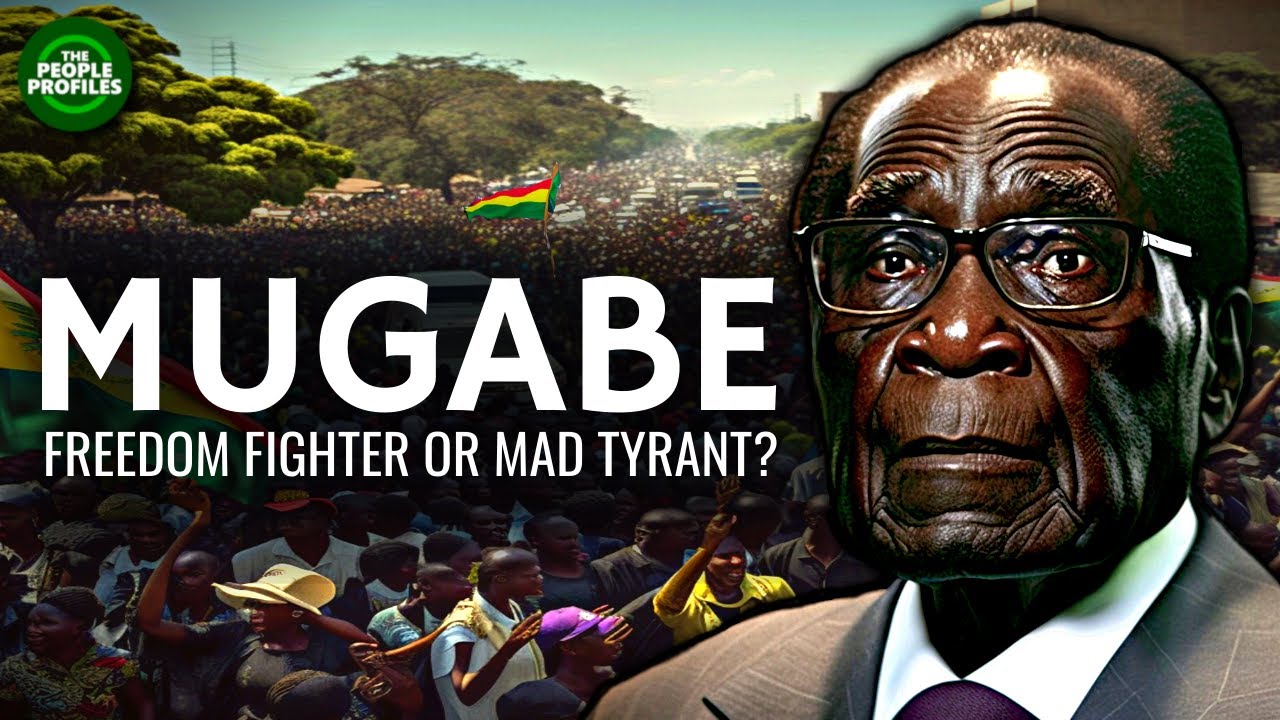
the illness in 2005. On the international Stage he also tried to apply pressure on western nations to improve the economic state of Africa. He was critical of the US-led invasion of Iraq in 2003, while closer to home he urged Robert Mugabe, the leader who had ascended to power in Zimbabwe after its own white minority rule ended in the late 1970s, to step down as leader of the country. Mugabe and the ZANU-PF party which he led in many ways mirrored Mandela and the ANC during their early days, but had diverged enormously from them in the 1980s,
with Mugabe becoming the virtual dictator of Zimbabwe and ZANU-PF engaging in acute corruption and human rights abuses. When Mugabe refused to step down Mandela publicly condemned him. Other notable aspects of Mandela’s retirement years included his campaigning for the 2010 football World Cup to be held in South Africa and his leading role in establishing the Elders in 2007, a collection of prominent, experienced and well-respected former world leaders who would act in conjunction with one another to try to promote world peace and human rights. Despite his continuing activity during the 2000s, Mandela’s health was deteriorating. In 2001
he had to go undergo treatment for prostate cancer and in the years that followed Mandela’s aides made it clear that he was only available for public appearances on a limited basis in line with his health requirements. When the football World Cup was held in South Africa in the summer of 2010 Mandela could only make a limited number of appearances, despite having campaigned for it to be held in the country, and there was much discussion of his deteriorating health, now being in his early nineties. The following spring he was hospitalised owing to a respiratory issue and
lung ailments continued over the next two years. It was this which would eventually lead to his death. On the 5th of December 2013 Mandela died at his home in the suburbs of Johannesburg at 95 years of age, a remarkable lifespan for an individual who had endured harsh living conditions for nearly three decades while imprisoned. His body lay in state in Pretoria between the 11th and 13th of December, before a state funeral on the 15th of December, one which was attended by over 100 heads of state from around the world. He was Buried in Qunu near
where he was born in the Eastern Cape on the plot of ground which he had selected himself. He is widely revered today as the father of modern South Africa. Unfortunately South Africa has not lived up to the ambitions which Mandela held for it in the aftermath of Apartheid. On the one hand the end of Apartheid brought it into the fold of fully democratised nations with much improved civil liberties and political transparency. It is also classed today as a newly industrialising nation with one of the largest economies in Africa, but much of this is owing to
the comparatively large population of the country which is touching on sixty million today and the legacy of the wealth which was generated here in the late nineteenth and early twentieth centuries. But there are still vast problems in the country. Crime is endemic, over half the population live below the poverty line and, most worryingly, the unemployment rate is 30%, the highest official unemployment rate of any African state, although others probably exceed this unofficially. In addition to this, the ANC, Like many parties which assumed power in Africa after revolutionary struggles, has become quite corrupt, with many controversies
involving senior members of the party in recent times, most notably the country’s third post-Apartheid president, Jacob Zuma, who was President between 2009 and 2018. Thus, the potential of South Africa in the post-Apartheid era has yet to be fully realised. Nelson Mandela is one of the truly iconic figures of the late twentieth and early twenty-first centuries. He is revered today as the individual who peacefully led South Africa away from one of the most unjust political systems of the twentieth century. There is an element of contradiction here, as Mandela’s early life was one in which he gradually
became opposed to European colonialism in Africa and white minority rule in South Africa to the extent that he was willing to engage in terrorism to overthrow Apartheid. But despite his arrest and incarceration for over a quarter of a century, in often brutal conditions, he showed no desire to persecute the white minority in South Africa when Apartheid was finally overthrown at the end Of the Cold War and the ANC finally came to power. Instead, he attempted to build a new South Africa, one which was inclusive of all its people and would look beyond its fractious past.
What do you think of Nelson Mandela? Would it have been impossible to bring about an end to Apartheid as peacefully had it not been for his leadership and have his successors as leaders of the African National Congress betrayed his legacy? Please let us know in the comment section, and in the meantime, thank you very much for watching.