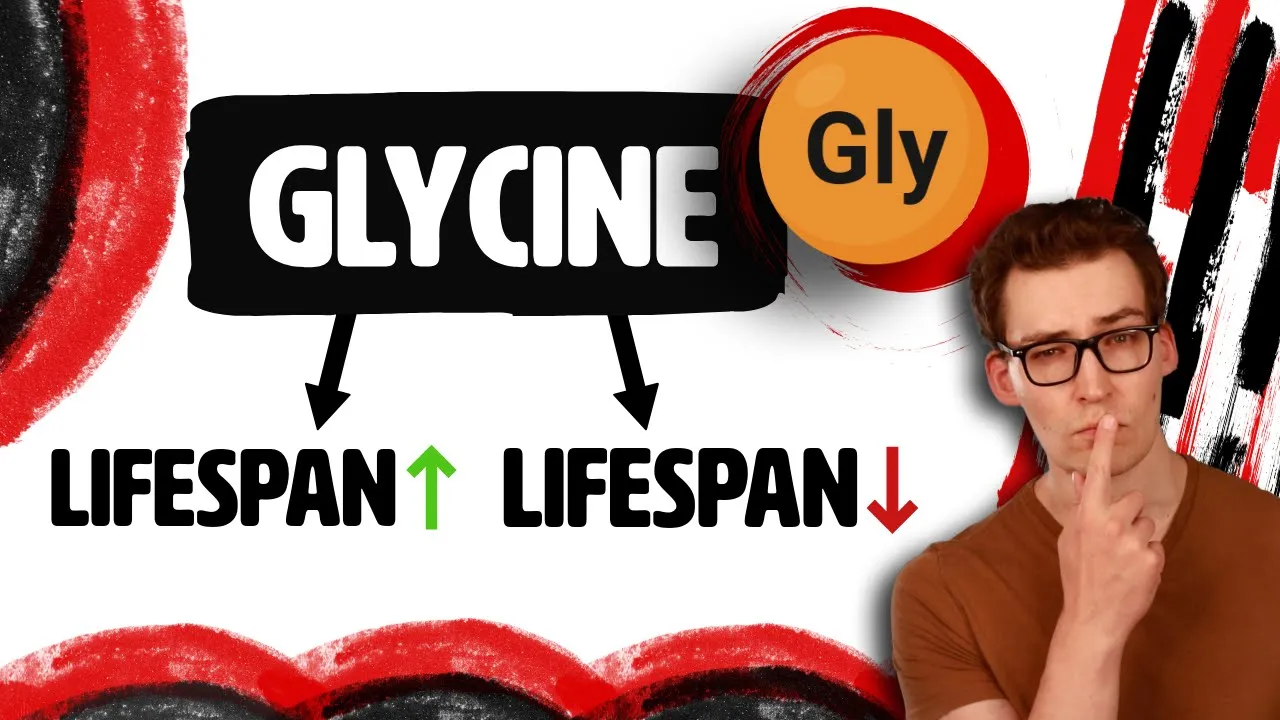
there are a few molecules that have been linked to have a longevity effect and one of them is the amino acid glycine however ging's mechanism of action is not well established and that's because there is a paradox in how glycine functions one mechanism would typically be linked to worse longevity and another to improved longevity so what's going on here well in longevity studies which are performed in model organisms like this influential One released by The interventions testing program glycine supplementation to the diet improved lifespan we can actually see that evidenced here note the percent alive
on the vertical axis so the higher up the line is the better the horizontal axis is the length of time so the further right the line goes the better it's tough to see the color so I'll point out which condition is which as we can see the glyc supplemented lived longer confirmed statistically with the P value well below 0.05 on average about a 5% extension of lifespan now keep in mind we can't do these kinds of studies in humans unless we look at associative studies so we're making some assumptions here that it translates to humans
which is not always the case yet as I mentioned the mechanisms by which glycine enacts this longevity effect are incredibly confusing why well one of the molecules proteins found inside of our cells is called mtor this mtor protein is a master protein meaning that it influences many cellular functions it's been thought that elevated to entor activity is linked to aging disease and reduce longevity so it may make sense to reduce entor activity well glycine is believed to do exactly that this was mentioned in this first study that we just went over but also mentioned in
more detail in this study essentially glycine removes entor activating molecules it's times like this where I genuinely feel like a nerd let me repeat that entor activating molecules I'm talking about other amino acids like Lucine methionine and others to be clear not all amino acids robustly activate mtor but certain ones do and our Focus falls on methine methine is converted inside your cells to S adeny methionine or Sam Sam molecules bind to a protein called samor I promise this isn't a Dr Seuss episode it literally is called samor which is different from mtor Once Sam
binds to samor it inhibits Sor from inhibiting mtor additionally methionine binds another protein called prmt which activates entor so through two intracellular mechanisms methine activates mtor okay so how does this have anything to do with glycine well glycine molecules change the molecular structure of Sam by taking what are known as methyl groups off of Sam through an enzymatic reaction meaning an enzyme is involved in the process called gnmt I'm mentioning that specifically because genetic Knockouts of gnmt leads to massive increases in cellular methionine and Sam as well as increased rates of cancer and other diseases
exactly what has been in line with overactive mtor over time okay so glycine reduces mtor activity by removing methine Sam from the cell reducing the molecule that actually activates m door great so where's the confusion well what if I told you that glycine activates mtor with like a little minion I'd also have the reaction of what pretty confusing isn't it I mean considering I just explained how Kine inactivates mour how can it also do the opposite well keep in mind that the answer isn't known but the researchers do provide some explanation includ including a molecule
that is produced from Glycine and its effects on autophagy we'll get into that in just a minute first let's discuss this uh Paradox actually first I'm also going to be covering some of the other preclinical benefits from glycine as well as take a stab at dosing glycine for humans based on the scientific review that we're discussing if you're interested I'll be covering that in the extended version of this video which is part of the physic insiders if that isn't enticing for thee I also release a monthly podcast on all the research for the month applicable
takeaways product recommendations and many many more videos the link is in the description if you care to join I would love to have you board okay the researchers point out that while glycine May activate mtor the magnitude of the activation is smaller than that of methionine so potently reducing methine concentration in the cell has such a potent effect that it overshadows the entour stimulating effect so yes in isolation glycine May activate mtor but in the context of a cell filled with methine it has a net reduction in mtor activation which might imply its increased potency
with increasing age but that's not all this feels like a infomercial you know the ones where they just keep adding sweeteners to the deal that's not all folks you get this vacuum attachment called the super sucker 9,000 free did I mention it's free anyway that's not all about glycine when glycine is used to eliminate methionine it is turned into a molecule called sarcosine by the gnmt enzyme that we've been discussing earlier so sarcosine is believed to induce autophagy which is a system inside our cells wherein these vesicles Encompass different components of the cell especially dysfunctional
components and destroys them while thinking of autophagy as only positive is a shortsighted view of autophagy it's being described by the researchers as positive in this context likely because it tends to be the opposite of mtor activation which is known to build and grow the cell while autophagy is a major degradation pathway these mechanisms aren't even to mention the other effects that glycine has like its important role in the production of the antioxidant glutathione which robustly buffers the cell from incurring too much damage from damaging molecules like reactive oxygen species so all in all you
can see why there's such confusion around the molecule however regardless of the mechanisms the evidence points to glycine being a net positive for longevity in fact you might be interested in more on its effects which I discuss right here here [Music]

![Does Glycine extend Lifespan? [Study 297 Study Analysis]](https://img.youtube.com/vi/ovTdkYyrkWQ/maxresdefault.jpg)



![Can we reverse Atherosclerosis? [Study 241 - 246 Analysis]](https://img.youtube.com/vi/obD1GBU8gik/maxresdefault.jpg)


![C15 Fats: What No One is Telling You [7 Studies Later]](https://img.youtube.com/vi/1AP8wX_MhkE/maxresdefault.jpg)