I'm going to teach you how to build a trading plan so strong that you have no choice but to become profitable. And I guarantee that 90% of the people that are watching this video right now, and yes, that includes you, are approaching the markets randomly. Random setups, random strategies, random management, random execution.
And the funny thing about that is you have random input, but you're expecting consistent results. It makes absolutely no sense. And by the end of this video, I'm going to teach you how to build a trading plan specifically tailored to you so you could 2x, 3x, even 5x your trading profits.
And it doesn't matter if you're trading on a small account or a large account, or what market you trade in. It doesn't matter if you trade stocks, options, futures, crypto, forex. This video is going to save you hundreds of hours.
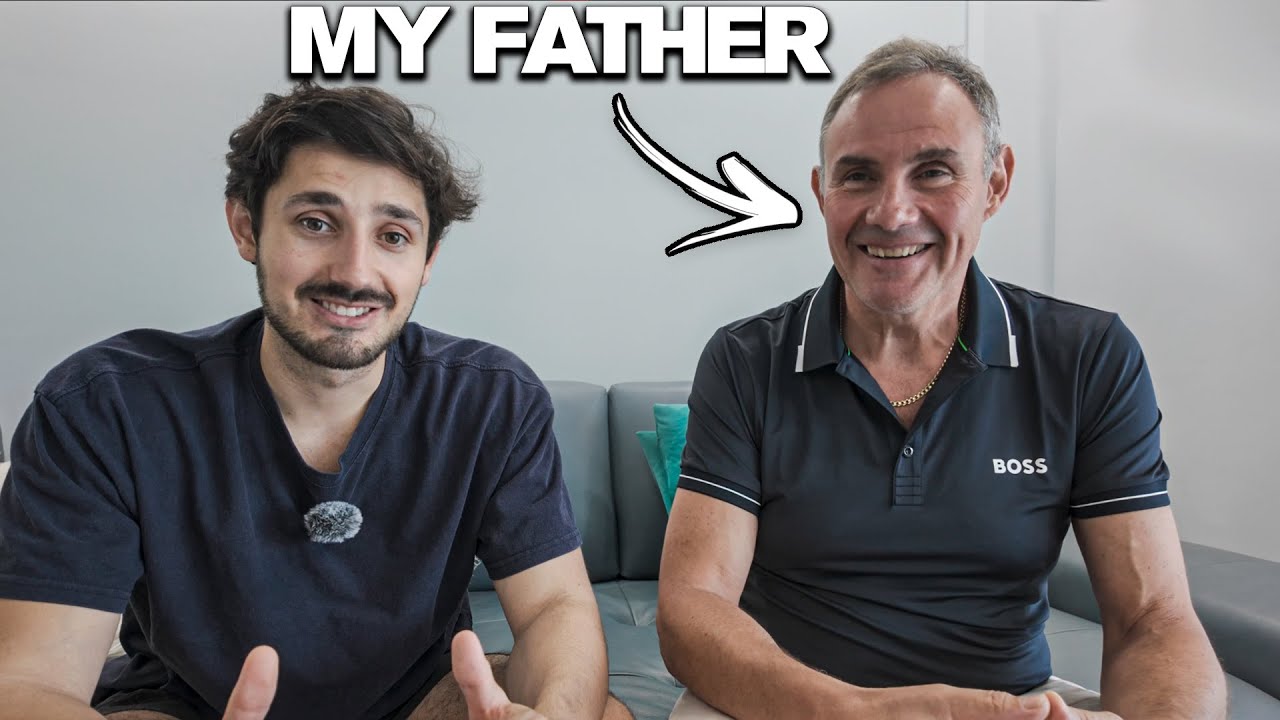
And if you actually apply what I'm teaching you, it could dramatically increase the amount of money that you're making in your trading. And before we get into the video, I want to go ahead and introduce myself to anyone who is new to me or new to the channel. My name is Emanuel Malurovich and 5 years ago, my father taught me how to trade.
He was my mentor and without him, I would not be where I am today. And in fact, this picture was literally day one of him teaching me how to trade. My mom took this.
This is where it all started. And if you want more information about our journey um obviously from my perspective from but also from my dad's persu uh perspective and if you want to know my dad's journey as well I created a YouTube interview video with my dad where he details everything you know what he had to go through to become profitable and of course how he taught me. So after you're watching this video I would highly recommend watching this one.
It's on the same channel so definitely check that out. And here are my last five months of trading statements. And the reason I'm showing you this is to be as transparent and as real as possible.
I use Charles Schwab. That's my brokerage account. And I use Think or Swim platform.
I want to show you that I actually make money doing this. That everything I'm going to be teaching you today, I actually implement within my own trading to make money. This is what I do full-time.
This is my career. This is how I make a living. And I trade live every single day.
So, in this statement, you'll see my deposits. I didn't make any deposits. You'll be able to see my withdrawals, my beginning balance, ending balance, cash activity, all that good stuff.
In November, I made $77,571. December, I made a little bit over 53K. January, I made 73K uh and then $656.
February, I made a little bit under $69,000. And in March, I made a little bit under 44,000. And it is currently April 27th.
I'm going to have my April statement uh ready for next video next month once that statement is prepared. But I think I'm up a little bit over $57,000 for the month of April. Hopefully a little bit more.
There's still a couple more trading days. And by the way, I post my profits every single day on my Instagram, Mtrades, and I give you kind of like a sneak peek of my life as a trader. And I try to be really transparent.
So definitely follow up on my Instagram if you want to know kind of dayto-day what I'm doing as a trader and how much I am making. But let's go ahead and jump right into the video. I want to keep this video around 20 minutes long or so.
So I have a shot clock, 20 minutes on the clock. Let's get this going. Build a trading plan so strong it's impossible to lose.
And when I say it's impossible to lose, I'm not talking about that you're not going to have any losing trades. Losing is inevitable in trading. It's a part of the profession.
You're going to have losing trades. All of the best traders have losing trades. But I'm talking about impossible to lose longterm.
To build a plan, to build a system that can make you money in one year, in 5 years, in 10 years, and you need a plan in order to do this. And it blows my mind how many beginner traders don't put any attention to building a profitable plan. every serious profession where money and risk are involved, a plan is required, a pretty intricate plan, right?
Why would trading be any different? I mean, think about it. If you're an entrepreneur, if you're a, you know, business owner, you create a business plan, right?
You have a marketing plan, marketing budget, you know exactly how much you're going to be playing uh paying your employees. You have a strategy for how you're going to scale your business, right? You can't, you know, start a business and expect to make money without a plan.
Trading without a plan is like starting a business with no idea how you'll make any money. It doesn't make any sense. If you're starting a business, you need a plan.
If you're going to be a trader, you need a plan. Um, pilots have a flight plan, right? When you go on a plane, you're not hoping, oh, I hope my pilot just flies in hopes that he lands, you know, at the right spot.
No, they have a clear flight plan on how they're going to fly, what altitude, whether there's going to be crazy weather conditions, you know what I mean? If there's going to be a storm. And trading without a plan is like literally flying without a blindfold.
It sounds ridiculous, right? But trading without a plan is also ridiculous. Next, engineers and architects create blueprints, right?
Before they even start constructing the building, they have every single detail completely planned, right? Because without that, well, the building would inevitably collapse or it wouldn't be properly built. A lack of a trading plan in that sense could lead to an emotional collapse.
Just like not having a plan if you're constructing a building could lead to the building collapsing. Right? Does that make sense?
We need a plan. This is something that you need to be focusing on right now. It's extremely important because your job isn't to trade.
Your job is to follow your trading system. And your trading system is built through time and experience. And I'm going to show you how to build one literally today.
So let's go ahead and literally create a trading plan together. So what goes into creating a trading plan? What's the first step?
So number one, strategy requirements. What is your edge? What strategies or setups are you trading?
What is your methodology? And I'm going to be going over a strategy today, but I highly recommend watching my free 10 plus hour course. If you don't have any strategies or you don't have a methodology or you don't have a foundation behind your trading, my free course, it's in the description of this video.
It's genuinely better than most paid courses on the internet. So, you could use the free course uh in conjunction with this video. But what should your strategy actually have, right?
So number one, you cannot trade random setups, right? That's not what we do as traders. Nothing in our trading should be random because guess what?
Random actions lead to random results. And we don't want random results. We want to be consistently making money with trading.
You're only as profitable as you are consistent. So in order to get consistent results, you need to have consistent actions, consistent input. And in order to have consistent input, you need a plan, right?
So what is your edge? You have to think about that like what's your methodology? Why are your strategies going to work over the long run?
They need to be defined. They need they need to be repeatable. They need to be identifiable.
So when you look at a chart, you know what you're seeing. And the same setups will make you money over the long run. And you need to have a template of the requirements that you that you need, the criteria that you need to see for a trade.
Right? There are lowquality setups and there are highquality setups. There are specific criteria that make a setup highquality and then there are also or I should say a lack of criteria that make a lowquality setup lowquality.
You need to you need to know all this criteria. You need to know what specifically goes into a highquality setup. And we're going to do that right now.
Right? We're going to do a little bit of a sample little plan. All right.
So, what we're going to be talking about is a buy, setup, and retracement. That's the strategy, right? So, in your plan, you have the strategy listed.
And then you want to have a template of the criteria that you need to see in that setup, the criteria that you would like to see in that setup, and specific cannot haves, which will literally um restrict you from doing the trade in the first place. So, what is a buy setup? That's like a retracement pattern, right?
A buy setup is it's kind of like buying the dip, right? It moves up and it retraces. It's one of the most simple strategies out there and it's actually one of my primary strategies.
I keep my trading extremely simple. I don't have fancy strategies. I don't have fancy, oh well, you know, the liquidity divergence on the 15 ICT time frame creates uh an RSI uh Ballinger band speculation.
Like I I keep I keep it simple. I use like two moving averages and that's it. All right.
So, buy setup, retracement, uh, buy the dip type of setup. That's what we're talking about. So, mustave.
What do I need to have in my buy setup? And by the way, as we're constructing this plan here, you don't need to have everything that I have, right? This is just an example.
You can move bits and pieces around based on your own psychology, based on your own preferences, based on your style. This is just a framework on how to create your plan, right? So, you don't need to copy me.
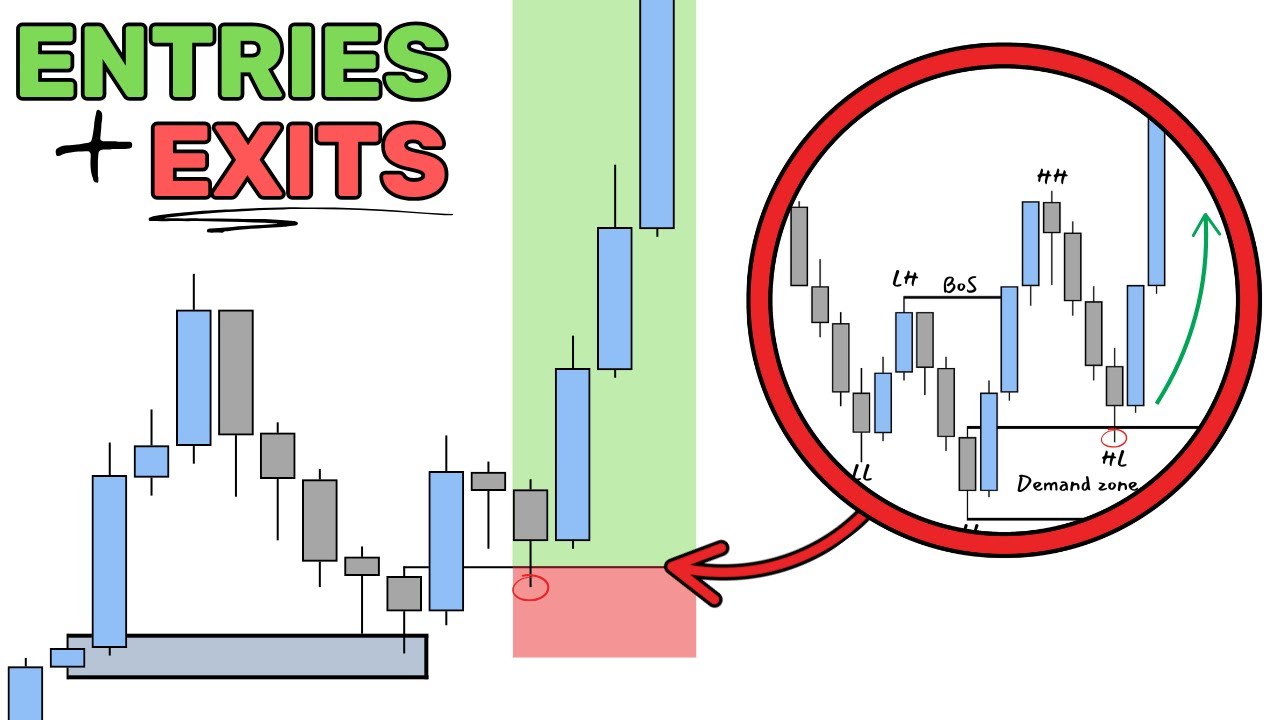
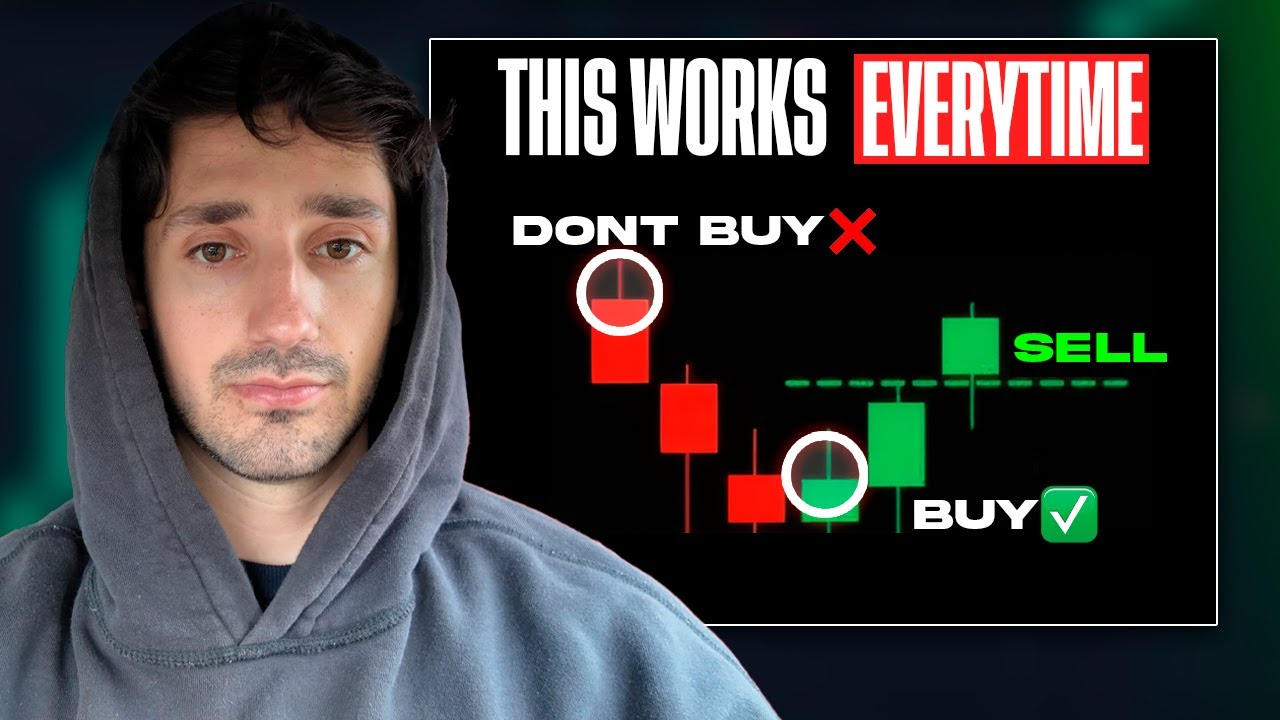
You can take what I'm doing and apply it in your own way to your own system. So, for me, in order to trade a buy setup or a retracement, I need to have a rising 20 MA and I need to have an entry bar. Now, I have here kind of a diagram of a really almost picture perfect buy setup or retracement pattern.
By the way, I teach all of this in my free course. So this if this is confusing I would watch the free course. This is going to teach you all these criteria that I'm about to talk about.
So rising 20 MA requirement. I have the rising 20 period moving average under price trending higher. Check entry bar.
For my entry bars I either want a dogey bar or a narrow range bar. Those are kind of like my requirements for the setup. I must have these two in order for me to take the trade.
I need three or more consecutive red bars in a row on the retracement. So, red bar, red bar, red bar, red bar, or red bar, red bar, red bar, green bar, three in a row, or four in a row. What I don't want to see is red bar, green bar, red bar, green bar, red bar, green bar.
I don't want to see Christmas lights. I want to see consecutive red bars in a row. I need to see that.
That's a part of my mustave. 40 to 60% retracement. So, prices moved up and then we got a 40 to 60% retracement, which is like between probably here and here.
So, did we retrace into this 40 to 60% area? I call this the golden zone, the golden retracement zone, right? 40 to 60% retracement is great because um if it's over 60% of a retracement, well, it's a little bit too weak.
Why would we retrace over 60% if this was actually bullish and if this was a legitimate uptrend? And if it's below 40%, let's say it only retraces like 10 or 20%, well, it hasn't corrected enough. We need to see more of a dip before I'm going to be interested in playing the uptrend or playing the buy setup.
Right? So, there's like a golden zone 40 to 60%. I need to see that.
I don't want to see deep retracements. I don't want to see shallow retracements. So, these are my must haves.
Next, uh I want to see an interesting overnight gap, right? I trade gapping stocks. I trade stocks that had overnight changes in price.
I have another video that's explaining that. So, I would watch my morning routine video and I would watch the uh my boring strategy that makes me 50k a month video. Those will kind of go into in overnight gaps and how they work.
I also want to see 2 to1 reward to risk. I need to have 2 to1 reward uh R to R. If I risk $100 on the trade, I need to be at least making $200, right?
So, what are these must haves? These are criteria that I need to have for me to trade this setup. If I don't have these musthaves, I don't trade the setup.
That's, you know, what's great about having a plan because I know what I'm looking for. Like, it's obviously it's in my mind, but I can even write it down. I know exactly what I'm looking for.
So, when I see a setup, I can look, hey, does this fit my must haves? And if it does, great. If it doesn't, then I can't take the trade.
Now, I also have would like to have retracement into minor support. This is like when you have an uptrend and the previous high um becomes support for the next pullback, right? So, I'm going to see if I can kind of draw this here.
Uh pen. All right. The pen is kind of So, right.
So, it's kind of thin, but let's say you have an uptrend like this. You get a pullback. Do you get another move higher?
And then you get a pullback where this pullback essentially pulls back into this previous high. So all of a sudden this prior resistance becomes what's called minor support for the stock. And this is where we would want to go long, right?
So I'm not going to go too deep into that, but that is um minor that's a retracement into minor support. I would like to have 3:1 reward to risk. I would honestly like to have 4:1, 5:1 reward to risk, but my must haves says I need at least 2:1, but I'd like to have 3 or 4 or 5 to one.
Right? Volume requirement. we tend to want to see a volume spike on the actual uh trigger of the buy setup.
So when when this candlestick finishes or when this candle takes out the entry, right, which is over the highs of this entry bar, I want to see a volume spike. They're showing that the buyers are stepping up to the plate and uh buying this stock. All right.
Um I also want to see market alignment, relative strength to the market. I love to see when the market is dropping, I love to see stocks that are basing at the highs or or are within an uptrend because then it's showing relative strength to what the market is doing, right? The market's pulling back, but this stock is holding strong within its uptrend and it looks, you know, it's showing relative strength, right?
There's something unique about that stock that's causing it to not drop with the market. I'd love to see that. or market alignment where let's say the market is pulling back uh getting ready for a buy setup retracement pattern.
Maybe the market is at this point right here before it continues higher. I can time my entry into the stock that I want to trade with the market triggering higher with the market triggering on the buy setup. Right?
I also ideally want to see a readable level two which is orderflow. Not going to go too deep into that but ideally I want to see a really good um level two. All right.
cannot have I can't have conflict within the time frames right I can't have the five minute chart look in a downtrend 15-minute in an uptrend hourly is sideways daily is bearish right there's no um alignment among time frames if there's conflict between time frames I don't take the trade literally ever all right so very very important next I don't want it to be sloppy and I don't want it to have high spread right no so I no high spread no sloppiness and If it's under 2 to1 reward to risk, I do not take the trade. So, this is a really good framework of what I look for in a buy setup. And here are some really good examples of buy setups.
Right? We moved up 40 to 60% retracement, a bunch of entry bars, 2:1 reward to risk, entry above the highs here, stop-loss here. Right?
What other criteria does this match? Um, the overnight gap, there wasn't interesting overnight gap. Uh, we got three consecutive red bars in a We did have one green bar, but that's not too big of a deal.
And of course, we have the rising 20 period moving average requirement. Perfect. Next, right here, we moved up.
We kind of retraced into the rising 20 period moving average. Beautiful uh uh follow-through pullback 40 to 60% retracement. Entry bars right into the rising 20 MA entry over these entry bars, stop loss below.
Maybe this didn't have quite 2:1, but you guys get the idea. These are really good setups based off the criteria that I like to see for a retracement pattern. This is just a sample of what you can do.
Next, the next criteria within a trading plan is determine your risk. What is your risk? That is the maximum amount that you could lose on a trade.
That is your risk. You don't lose more than your predetermined risk. And that's the important word here or two words predetermined.
You're you don't like guess what your risk is going to be when you enter a trade. You know the worst possible outcome of that trade before you get into it because you know what you're risking, right? So what risk are you comfortable with losing?
You have to pick an amount where you're comfortable with losing it. It's not going to affect you emotionally or psychologically, but it's also not low enough where it's like you're you don't even care. Like if I risk $10 on a trade, I don't I don't care.
But if I risk 500, which is what I do, $5 to 600 bucks on a trade, it's not going to really impact me if I lose it, but I I'll feel it, right? Like it's it's not high enough where it's going to affect me, but it's not low enough where I don't I'm going to dismiss it. All right?
Before you enter a trade, you have to accept the risk that that trade may not work out. Very important. You always have to accept the risk, right?
Cuz losing in trading is is inevitable. It's not about being right or wrong. It's about having high probability strategies and then over the long run, if you take enough of those high probability strategies, even though some of them are going to lose you money, over the long run, it'll ultimately make you money, right, with a large enough sample size.
But in order to do that, you have to accept the risk that you take on every trade. You're okay with losing the amount that you're risking. If you're paper trading, I recommend risking the same amount that you would use with real money just to keep it as realistic as possible.
And if you're a beginner, risk$1 to$10 per trade. Risk extremely small amounts because guess what? If you can't be consistently profitable risking small amounts, you're not going to be profitable risking large amounts.
Develop consistency. Develop your feel, your intuition on small risk. So even if you make mistakes, even if you experiment, even if things go wrong, you're not losing a ton of money, uh focus on the consistency.
And then once you're noticing that you're becoming consistently profitable, everything is coming together, that's when you can begin to scale your risk. All right, next guys. So trade management.
So a lot of people, you know, they think that getting into the trade is the most important part. That is not the case. That's like literally 25% of the battle.
the other 75% of the battle is managing, you know, your while you're in the trade. That's the entire thing. Like your intrade management is what's most important to make sure you extract as much value from that trade as possible while keeping your downside relatively low.
All right? So, you need to know how you're going to manage the trade before you even enter it. You need to know when are you going to take profits?
Do you have a specific target? How much profits are you actually taking? Are you going to leave a runner on the position?
Are you raising your stop loss at any point to break even or to a specific point on the chart? If so, when are you going to do that? Like, if you hit a certain reward to risk, if you're up two to three hours on your position, are you going to raise your stop-loss?
How much profits are you going to take out? Right? If you hit two to three Rs, are you going to take out 100% of your profits or 50% of your profits?
Right? All of these trade management concepts you need to have predefined, predetermined within your trading plan. So when you're in the trade, you don't need to guess how am I going to manage this trade, when do I exit, when do I raise my stop loss, uh uh how do I manage?
You don't do that. You know exactly what you're going to do before you even take the trade. Now, as you become more and more experienced, this is going to become more and more discretionary where you can literally make um like in the- moment type of decision where you're managing a specific trade and you can make an impulsive decision based on the management right now.
That's once you have experience, you can kind of do it on the fly. Like myself, like I have a trading plan that I do, but a lot of my decisions are discretionary. But in the beginning, you have to keep it systematic.
I'd recommend writing on a piece of paper and then once you get a feel, once you develop intuition and experience, you can go more discretionary and you'll know your style. You know, you'll know what psychologically you like to do, right? So, let's create a little bit of a sample trading plan here for you guys.
So, you guys know um you know, you guys know the structure of what to actually do. We're kind of running low on time here. We're at two minutes, but whatever.
We're going to make this video a little bit longer for you guys. So, if you're below 2:1 reward to risk on the position, you're going to stick with your original stop-loss, right? So, let's say you get into the trade and it's moving in your favor, but it's below 2:1, right?
In that case, just stick with the original stop-loss, right? And by the way, you don't have to do this, right? This is just a sample.
This is just a framework. This is just me trying to teach you how to think. From here, you need to create your own that will fit your own psychology, right?
But let's say you get into a trade, it's maybe one to one reward to risk. At that point, you just stick with your original stop-loss. Or you could raise your stop loss to break even.
That's another option for you. You hit one to one reward to risk, raise stop loss to break even. That's an option, right?
And let's say the trade doesn't work out. It doesn't even go in your favor. You cut you get out at your stop loss.
That that part of management is actually really easy. If it's a losing trade, it's incredibly easy to manage because you just stick with your stop-loss. If it's a winning trade, that's where it gets difficult because you want to extract as much profit as possible.
So, under 2:1 R to R, stick with the original stop-loss, right? You could do that. If you hit 2:1, right, let's say you're risking $100, the trade is now $200 in profit.
What you could do is take 50% of profits. You take $100 off the table. You move your stop- loss to break even, and then you trail the back half of your position.
And there's a bunch of strategies that you could use to trail your trades. Trailing just means raising your stop-loss when you're in the position. I would just watch my free Temple Hour course.
It'll teach you how to do that. So, this is an option for you. Or at 2:1, you could take 100% of your profits.
Or at 2:1, you could stay completely in the trade and just move your stop loss to break even. It's up to you. Whatever you want to do, right?
This is just a framework. Next, let's say you're up more than 2:1. Let's say you're up 3:1.
You made three Rs on the position. You take another 50%, right? So, we took $100.
So, we took $100 off the table here. We have $100 left in the position. From here, it goes up to three Rs.
You take another 50% out. So, now you have a quarter left in the trade. And then you trail the rest of it where you raise the stop loss and you let it stop you out for the rest of the position.
Or if you make five to seven Rs, you take full profits no matter what. So, if you're in a trade, hits five Rs really fast, let's say, you take full profits no matter what, right? This is another really, really great option.
So, it's up to you what you want to do, right? And a couple of other things uh I like to have in my plan is if a trade triggers you in but doesn't give you follow-through, like let's say you get into a trade but it doesn't go right away, it doesn't go in your favor right away and it sort of just chops around at your entry, look to get out quickly, right? This is a great uh thing that you can do, right?
Like if the trade doesn't immediately work in your favor, look to trail tightly. Look to get out quickly because there's something wrong with it, right? If the trade's not, you know, uh playing out to your thesis and to your conviction and it's just chopping around your entry, you could just get out close to break even.
If you have really high conviction on a trade, you're going to have looser management, right? You're not going to be trailing as tightly. you're going to give the trade room to fluctuate to ultimately continue in your direction to your, you know, uh, prof uh, to your target.
If you have low conviction on the trade, let's say there's a trade where it's good enough to take, but you're not that confident, you could have tighter management, so you limit your losses or you could take faster profits. This is just a framework, guys, you know, and this is how I would structure it. If you're up one to one, what are you going to do?
If you're up two to one, what are you going to do? If you're up 3 to1, what are you going to do? When are you raising your stop loss?
When are you going to trail to break even? These things should be on your mind, guys. So, trade management, very important.
Another, are you leaving a runner, which is kind of what we talked about as well, but you have to think about how you're going to manage a trade before you're even in it. Next, guys, I have a bunch of super good rules that we could follow. I'm going to kind of hurry up here.
We only got around what, two more minutes, not even. So, trading rules, your system is only going to be as profitable as how strict your rules are. I don't even know if that makes sense, but you get the idea.
Your plan needs to be extremely strict of what you can and can't do in the markets, right? If you're building a building, right, you're going to have it's going to be very strict for where you put the blocks, how you build the foundation, how you build the support for the structure. Same thing with trading.
You need to be extremely strict with your rules. So, here are a couple rules that you could use. All right, protecting profits, right?
Um, one really good thing you could do is protect 70% of your daily profits. If you're up $1,000 on the day, you have to protect 700. This is a really good way of making sure you're retaining the money that you're making, that you're keeping the money that you're that you're working on, right?
A lot of people don't do this. They'll make thousands of dollars and then they'll give it all back that day and then lose money. You need to have rules.
If you're up a certain amount, you have to keep by the end of the day a certain percentage. Another example of this is you're up three hours on the trade, you need to protect two. All right?
So, very important. If you're up three Rs, you're up, let's say you're risking 50 bucks and you're up 150 on the trade, you have to protect at least $100. You need to have rules to protect profit.
So, you actually keep what you're making. Okay. Next, cannot overrisk.
This this is I mean obvious. Predefine your max risk. We already talked about that in the determine your risk.
You you risk what you're okay with losing and you can't over risk. You have a maximum risk. You stick to it.
You're strict with your maximum risk. And you need to predefine your max risk before you take the trade. And then you have to size it accordingly.
Size the position accordingly. So if it does hit your stop-loss, you lose what your max risk is or you lose less than your max risk. Okay?
Very, very important. Next, what do we got? Never add to a losing trade.
Guys, please don't do this. I saw my dad uh do this at some point when I first started trading. He did it.
He ended up making money on the trade, but after he was like, "Do not ever do this. " If there if you're in a losing trade, it's probably for a reason. Why would you add to a losing trade if it's not working?
Why would you add to a failing trade? Doesn't make any sense. Never do it.
Never DCA in. I know your thought process. I know you're like, "Oh, yeah.
Well, if I add to it, it decreases my average price and then if it moves up a little bit, then I'm going to be back to break even or in profit. Don't do it. Save yourself the money that you're going to lose.
Just don't do it. Trust me, it's a cardinal rule. Next, you have to have rules when to step away.
If you feel emotionally or psychologically compromised or if you have more than five losing trades in a row or if you lose your maximum daily risk or if you feel those emotions trickling up within you, step away. Very very important. You have and and this is like personal, right?
Like you have to think about it yourself like like when you feel certain emotions, you have to step away or go on a walk or or go um talk to your friends or whatever you got to do. But if you're feeling emotional, you h you have to know when to step away from your office. All right, guys.
Next, no outside beliefs or biases. This should be a very, very important rule. Don't read earnings reports.
Don't read the news. Don't read financial statements. Don't listen to your friend who thinks he's an expert on investing who only took like one college course.
Don't listen to your financial advisor that your dad recommended you. Maybe for investing, but we are trading. As traders, we exclusively focus on price action.
That's what we do as traders. We don't focus on outside news, outside beliefs because most of the time all these beliefs, all these news, all this information are already priced into the stock. Only focus on price action and the relationship between the buyers and the sellers.
Now, these are rules that you could have just example, but you need to have rules, right? Very important rules. Another rule that you could have is if you lose two or three trades in a row, right?
Lower your risk to a certain amount. And then once you have one or two trades in a row uh winning trades and you're feeling confident again, that's when you could scale your risk back to what you're comfortable with. All right, guys.
We're we we went way over 20 minutes, but I don't care. This is going to be a banger video. All right, next.
Practice pair, right? What's pair? Prepare, execute, analyze, refined.
You're going to be doing this through journaling. All right, it's very, very important, guys. The only way you improve as a trader is to improve your system.
So, what do you do? You prepare your trading plan. Exactly what we just did.
You're going to do it for yourself. Once you prepare it, you execute that plan. Take 10 trades, 20 trades, 50 trades, what, however many is enough for your own style.
That establishes a large sample size. From there, analyze what you did wrong. Analyze what you did right.
Analyze what makes you money. Identify what loses you money. Identify strengths, weaknesses, how you executed your trades.
Did you follow your risk? Did you follow your plan? Did you follow your rules?
what setups are working for you, what setups are not working for you. Once you analyze all of that through journaling all of your trades, which is very, very important. You're going to refine your plan.
This is when you go back into this giant plan that we just made and you refine it. You could refine the certain qualities that you need to see for a setup, right? Or you um change your risk or you trade your uh change your management, right?
Analyze what management ends up making you more money. Does raising your stop loss to break even after one one R to R make sense for you or does taking half profits at 2:1 make sense? You have to analyze all of this and ask yourself, right?
Ask yourself, is this making me money? Is this actually effective for me? And from there, you make the changes.
You go back to your plan and you change stuff up. And then what do you do as you're changing it? You're repreparing your plan.
Then you execute it again on a large sample size of trade. Then you analyze and you improve. Pair guys, if you build this plan out based off your style, you do all of this right.
You have clear rules that you can and can't do in your trading. You have very clear trade management on where you're taking profits, how you're trailing, how you're raising your stop-loss, what to do when you're when it hits target one, two, or three. You actually like if you have all of this, you know what your risk is.
You know what setups you're looking or what qualities you're looking for in your setup. you know the setups that make you money. Like if you have all this listed and then you're actually executing it, analyzing, refining it through journaling, it's impossible to not improve.
You will 1,000% improve over time. All right, guys. This is what I would do.
This is what I did when I first started. Um, at this point, guys, I don't really have a plan on paper. My plan is ingrained within me.
It's ingrained within my br uh my brain, ingrained within my DNA. Now I just know what my plan is. I am my plan.
I am the system that I created for myself through five years of experience. That's who I am. My system.
The reason I'm able to make money consistently is because I have a system that works for me. And you need to find a a system that works for you. That is the goal here.
All right. Please actually apply everything that I just taught you in this video. Make sure you get started with my free 10 plus hour course.
And I'm just going to throw it out there for anyone that's interested. If you're someone who's actually looking to go full-time with trading, you want a hands-on mentor, you want to trade live with me every single day, you want me to personally work with you, mentor you, and scale you to 10 to $50,000 a month with trading. I do take a select number of students every month into my mentorship where I personally scale you to 10 to 50,000 a month.
Uh in the description of this video, you could apply and see if this is a good fit for you. I usually cancel around 77% of the applications just because I only like to work with serious traders who are actually looking to go full-time. All right, hopefully you enjoyed the video.
Subscribe to the channel. Apply everything that I just taught you into your own trading. Let me know if you improve.
Let me know if you have any questions in the in the comments and follow up on my Instagram and feel free to DM me there as well if you have any questions. See you guys on the next video.