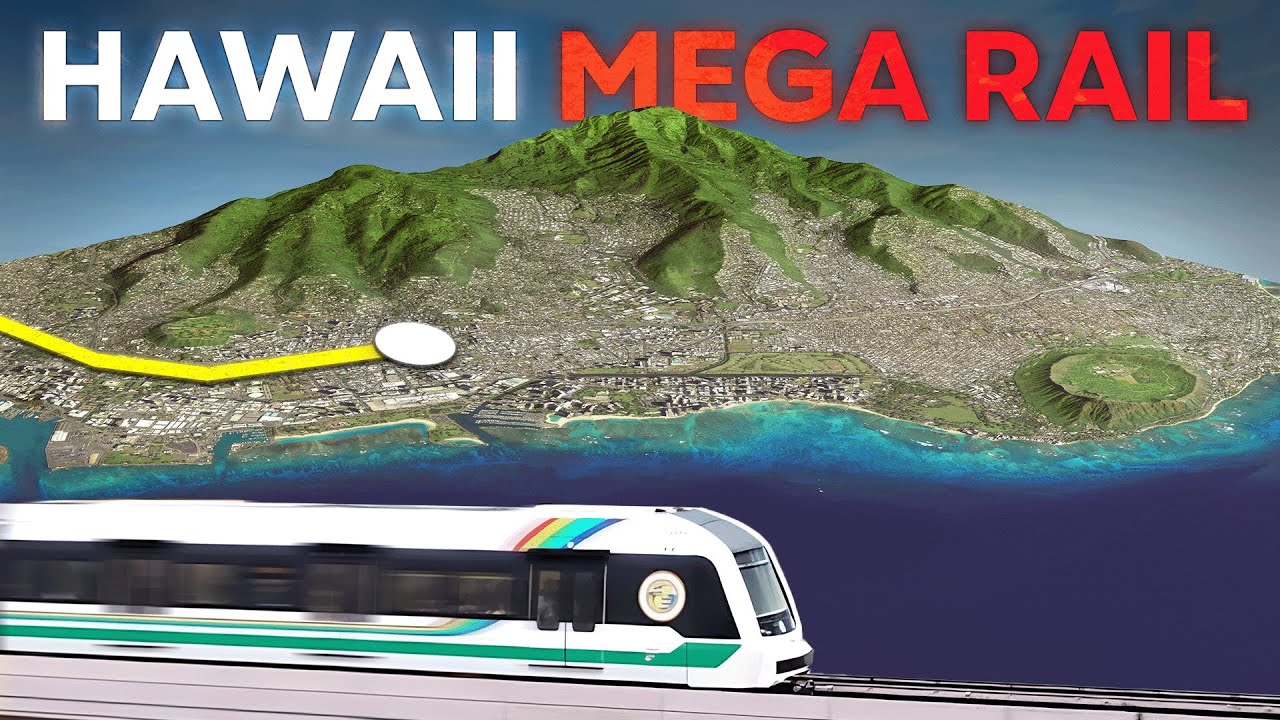
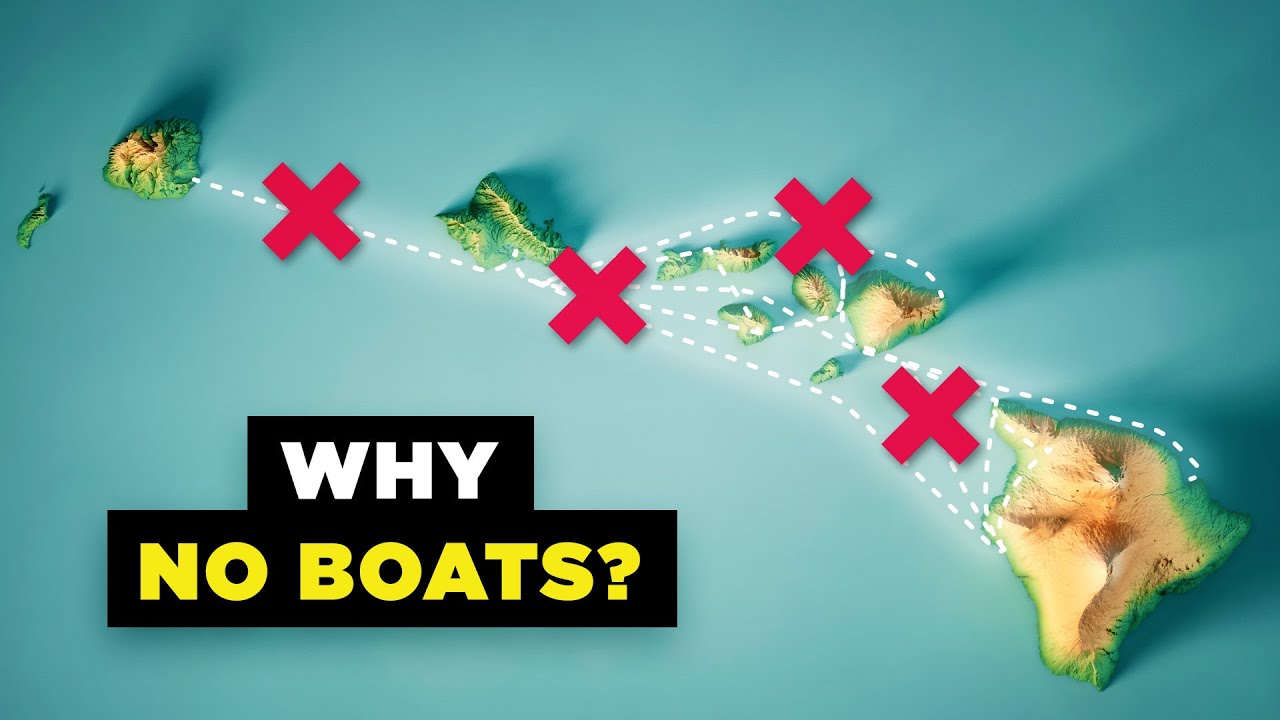
ah look at those perfectly strategically placed islands in the middle of the Pacific Ocean wouldn't there be a valuable place to dock our nil Fleet as we trade and expand our presence into Asia was to some degree exactly what the US government was thinking in the 1890s they wanted to own the archipelago of the Hawaiian Islands so that's exactly what they did the United States annexed the region in 1898 the annexation resulted in mixed feelings among the local people some saw it as a way to boost economic growth and improve their living standards whilst others
felt as if it would undermine their sovereignty and a traditional Hawaiian way of life but the people who opposed it had no say whatsoever against the might of the US what exactly would Hawaii do against such an Almighty power the us at the time had a population of around 75 million whereas Hawaii just 150,000 61 years after the annexation the territory officially became a US state cementing itself as the 50th this transition occurred after the results of a referendum by the people of Hawaii but do you have any idea what percentage of Voters voted in
favor of becoming a US state maybe close to 50/50 maybe even 6040 well no the results were overwhelmingly in favor of becoming a US state with some 93% of Voters voting in favor but why was this the case why did so many of the local population want to effectively lose their identity and become part of the us well as a US Territory Hawaii had limited political representation and lacked voting rights in Congress becoming a state offered full representation which in turn would give them a greater voice in decisions affecting the islands there were also many
economic and quality of life improvements that would come with transitioning to a state such as increased funding for infrastructure education and Social Services post World War II there was also a real sense of national Unity Hawaii was effectively already part of the us and contributed greatly so becoming a state really sealed the unity between the two today Hawaii has a population of around 1.4 million ranking it as around the 10th least populated USA state it is known for its high living standards amazing climate and incredible geography which we'll investigate into today's video so as mentioned
earlier Hawaii is found within the Pacific Ocean around 3,800 km west of the US's Mainland the entire archipelago is actually found further south than the entirety of the contagious us alongside Alaska Hawaii is one of only two non-contagious US states meaning states that are not physically connected to the mainland however Alaska and Hawaii couldn't be any more different Hawaii is of course a smallish tropical archipelago whereas Alaska is a gigantic landas with arctic likee conditions what's kind of interesting which most people probably don't know is that Alaska has many islands far more than what is
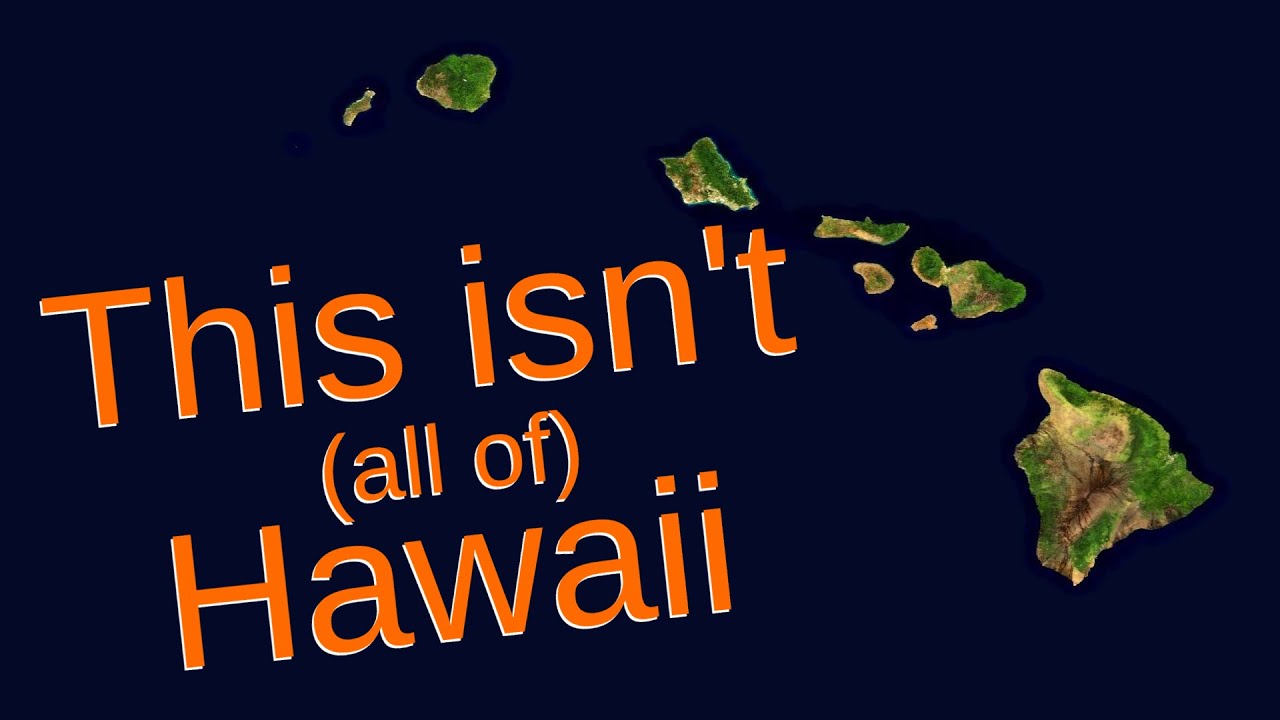
found in Hawaii in total there are are just 137 Islands across the Hawaiian archipelago whereas Alaska has some 2,670 around 20 times more so these 137 Islands combined cover an area of around 28,300 km squared making it the eighth smallest state out of the 50 if Hawaii were its own independent country it would rank as the 141st largest larger than Equatorial Guinea but smaller than Albania out of all of its Islands its largest is Hawaii island or Big Island as it's known as today the island isn't just the largest but the youngest too the island
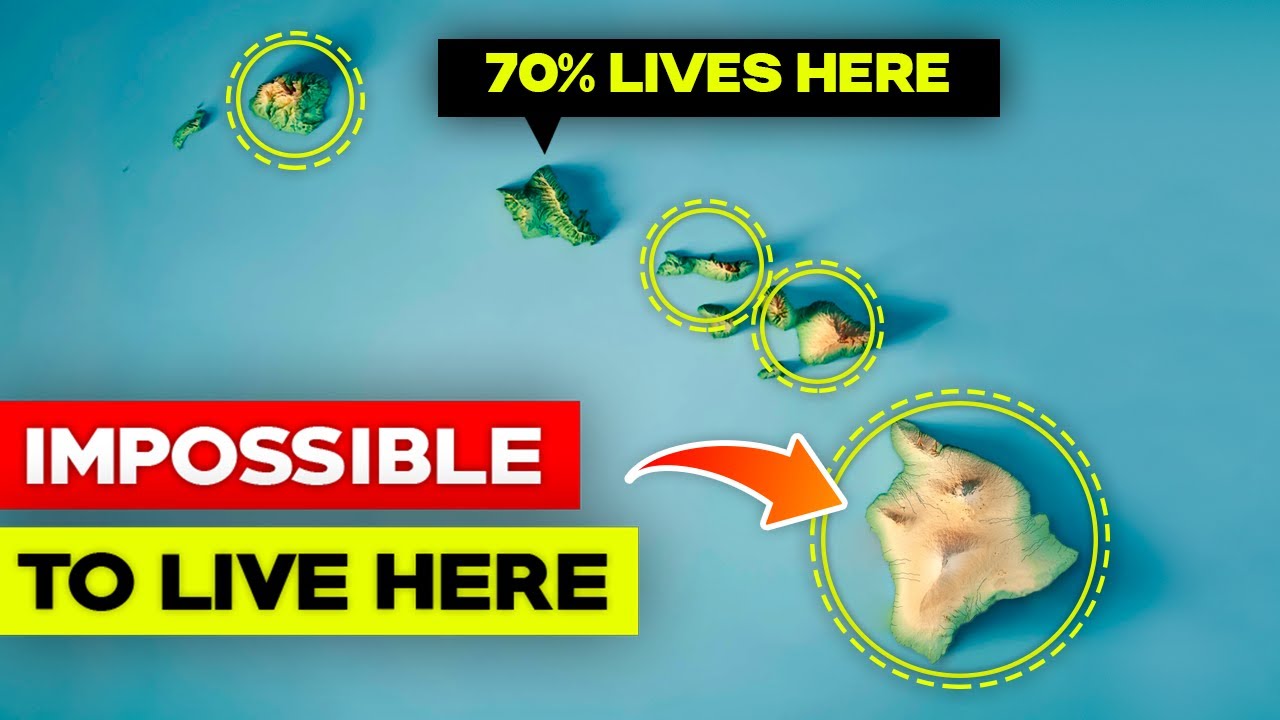
is around 10,400 km squared so it makes up just over a third of the state's entire size although the largest it is not the most populated as with a population of some 200,000 it has only around a fifth of the population of Oahu Island which is where you'll find the capital Honolulu so let's take a further look into where exactly Hawaii is found and how close it is to other land masses and civilizations so with the mainland us being some 3,800 km away it is obviously not the closest country to the archipelago the closest country
is in fact kirbas which is still found pretty far away you're looking at about 1,700 km pretty much directly south if you were to travel in the opposite direction you'd end up in Alaska the uian island specifically which are about 3,700 km directly north of Hawaii traveling directly east would take you to Mexico and West to the Philippines sitting in this part of the Pacific Ocean means that Hawaii is part of the Polynesia sub region quite frankly one of the most beautiful regions our planet has to offer now one of the things that fascinates me
about Hawaii is its extreme geographical diversity correct me if you think I'm wrong here but in terms of geographical features I don't think you can get more diverse than Hawaii in terms of small Islands anywhere maybe New Zealand or New Guinea could compete but it's hard to disagree with the fact that Hawaii is unbelievably geographically varied the archipelago offers dozens of terrains Landscapes and geographical features ranging from rainforests to volcanoes to coral reefs to waterfalls beaches and even desert yes you heard that right Hawaii technically has a desert the caou desert is found on Hawaii's
Big Island it is known as a lewood desert although only covering an area of around 28,000 km squared Hawaii is kind of home to the world's tallest mountain now I'm sure we've all heard this one before it's one of those geography facts that is often thrown around to try and catch people out by sea level measurements of course Mount Everest is the tallest mountain on Earth standing some 8,849 m above sea level but when you measure the height of all mountains from B to tip then monar on Hawaii's big island is the tallest the mountain
is actually an inactive volcano which is 4,27 m above sea level but when you include its base which goes all the way down to the sea floor then it stands over 10,000 M tall but how does this compare to our Solar System's tallest mountain that's Olympus Mons found on Mars well at 22,000 M Mount Kia as impressive as it is is only 46% of the height of Olympus Mons in fact Olympus Mons is taller than Mount Kia and Everest combined plus three Burge khalifas so Hawaii isn't just home to the US's tallest mountain by this
measure but also the country's tallest waterfall So at around a 900 M total drop Olo UPA FS on the island of mikai is the world's fourth tallest waterfall for reference the tallest by this measure is Angel Fs in Venezuela which Falls around 79 M more so that's pretty impressive that a state so small can hold two records like this well it gets even more impressive as the country's largest active volcano and in fact the largest active above water volcano on Earth is also found in Hawaii some Mona lower by mass and volume is the largest
of its kind on Earth it's a shield volcano meaning it has relatively gentle slopes the volcano isn't just the largest but also known to be the most active large volcano on the planet with estimates suggesting that it's been active for some 700,000 years so I'm sure we've all heard of the Grand Canyon in Arizona but have you heard of the Y maale Canyon in Hawaii this Canyon understandably is often referred to as the Grand Canyon of the Pacific it is some 16 km long and over 900 M deep in some places which produce incredible views
like this another record that Hawaii sets although not the most favorable of Records is that it is the wetest state in the US the island of Kawai in the north is said to be the wetest of the bunch seeing some 450 in of rainfall per year that's around 10 times more than what New York City sees this abundance of of rainfall comes to No Surprise as the archipelago sits within the tropics the biggest benefit of seeing so much rain is that the islands are generally very green and Lush in Flora now sticking with the theme
of the Region's climate let's take a look at how it looks in terms of the climate classification now most people would probably assume that the entire region will be classed as tropical or some form of variation close to that however the region actually sees many different types of climate around 12 in total so you've got rainforest climate Monsoon desert and arid as we spoke about earlier and then you've even got climates like subpolar Oceanic and even polar tundra at the very peaks of its tallest mountains temperatures in the L lands have consistent temperatures throughout the
year honolulu's monthly temperature for example barely changes which helps to make it such a nice livable place speaking of livable places let's take a look at where her Hai ranks in the human development index for all US states so the state ranks in a very impressive equal 7th place with a HDI score of 0.940 which is classed as very high if Hawaii were its own independent country it would rank 15th the same as the UK and ever so slightly higher than New Zealand at the time of making this video now due to its position not
far from the equator as just mentioned its temperature variation is very low in fact the highest temperature ever recorded in the state was just 38.7 de C of course that is still very hot however this is the same as the highest ever recorded temperature in the Arctic and in 2022 London in the UK saw temperatures some 2° C higher so I'm sure we all know about Hawaii's incredible white sand beaches but did you know that the state also has black Reds and even green sand beam bees well the unique sand colors come from the Island's
volcanic Origins red sand beaches are created by Iron rich volcanic minerals green sand beaches get their color from Olivine crystals within the lava and black sand beaches are formed from bassal a type of lava rock that's shattered into small grains so of course we know that Hawaii is a very tropical volcanic island chain that spews out piping hot lava but what if I was to tell you that there are actually Ice Caves on this island and what's even crazier is that they are found within volcanoes these caves are formed in lava tubes When lava cools
quickly and leaves behind empty spaces if water seeps into these spaces and the conditions are cold enough the water can freeze and create ice inside the caves So speaking of lava tubes guess where you'll find the world's largest that's right in Hawaii this lava tube known as as kazumura cave is found on big island and has been measured at some 65 km long and 1,100 M deep making it the longest and deepest lava tube on Earth so I think you get the gist Hawaii is an incredibly impressive Place geographically it's somewhere I hope to visit
one day it's just a shame that it's so far away from the UK from London you're looking at over 31 hours of travel time or 18 hours but that will set you back over £2,300 for a single like And subscribe for more content like this and as always thank you very much for watching